Colorful Scarves for Men Without Looking Try-Hard (Real Outfit Formulas)
You know the vibe: you want to look more put-together in winter, but you also don’t want to feel like you’re cosplaying “Fashion Guy” because you bought one electric-blue scarf and now it’s screaming louder than your whole outfit.
The trick is this: a scarf sits right under your face, so it’s doing more work than your shoes or your pants. If the color is wrong for your undertone/contrast, you’ll feel it instantly. If the color is right, it looks intentional even with the most basic coat + jeans situation.
This guide is the “buy it once, wear it a ton” version:
- how to pick a color that flatters you
- how to pick a scarf that matches the coat you already wear
- how to do patterns without clashing
- and outfit formulas so it doesn’t live in your closet as a guilty purchase
So what even counts as a “colorful scarf” (and what doesn’t)?
Let’s define it without being annoying.
A “colorful scarf” can be:
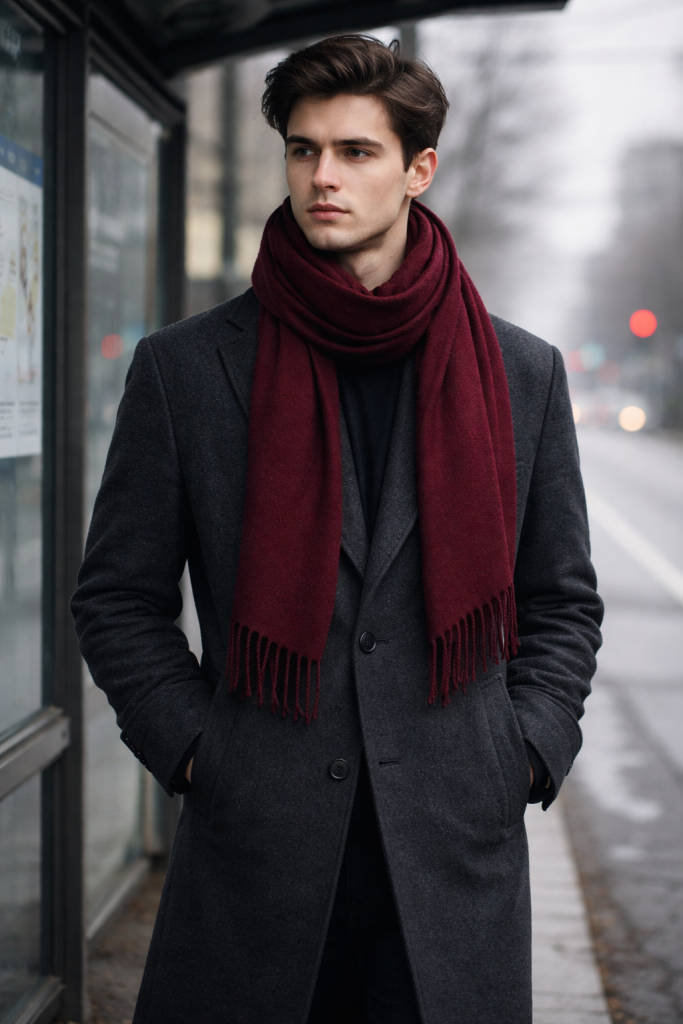
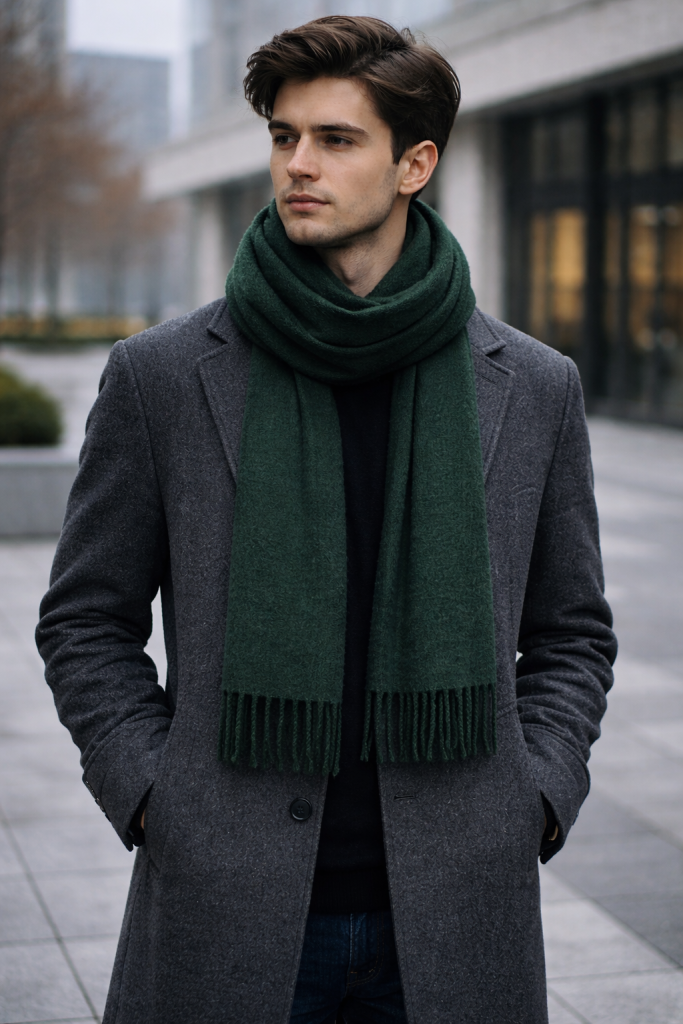
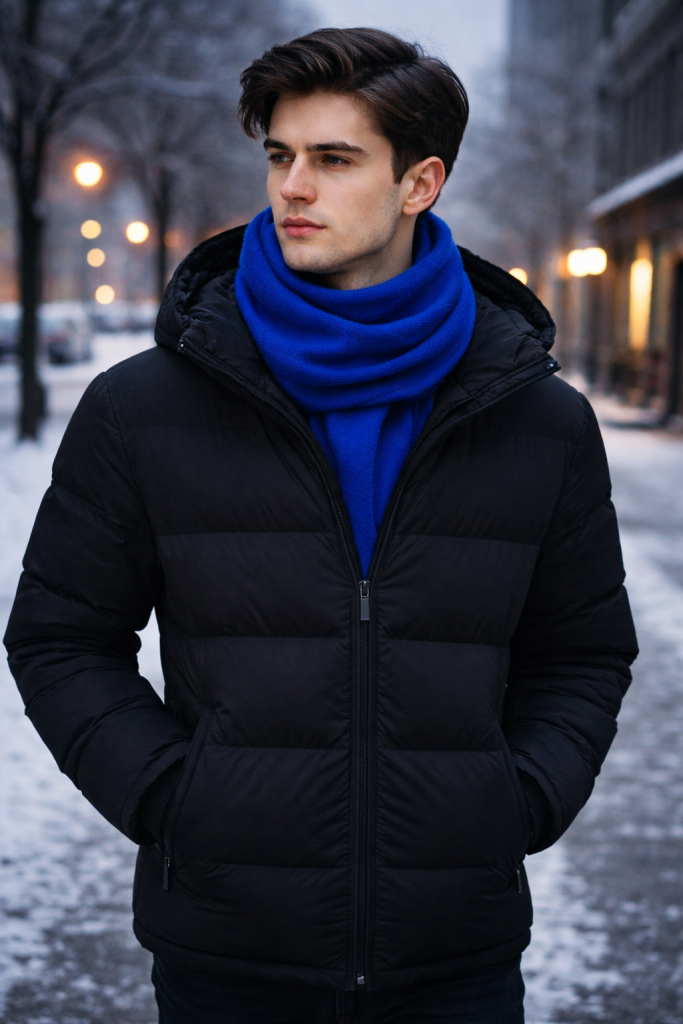
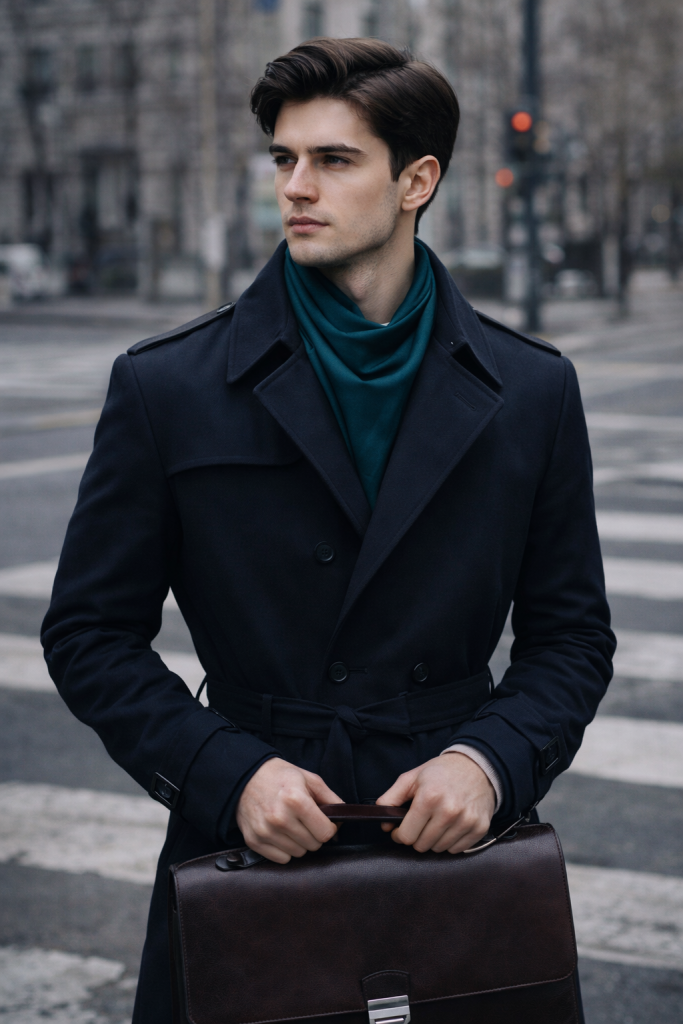
- a bold solid (cobalt, burgundy, forest green, saffron)
- a jewel tone (deep, saturated colors that look rich instead of loud)
- a patterned scarf where color is the point (plaid, stripes, geometric, paisley)
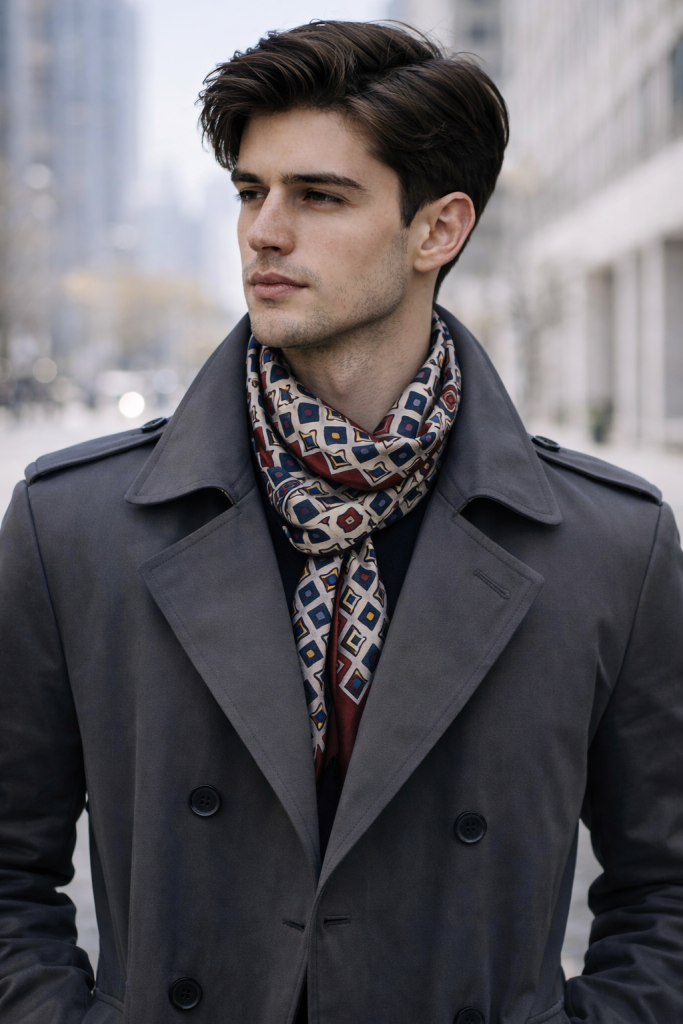
- a silk scarf with print (if you want that elevated “I know what I’m doing” look)
A “colorful scarf” is not:
- neon unless you’re committed to streetwear styling
- a chaotic multicolor print and a loud jacket and loud shoes (that’s not color, that’s noise)
If you want a sense of what “statement but still wearable” looks like in the real world, editor roundups can be useful for scanning options and silhouettes, like this one from GQ’s best men’s scarves.
The 60-second check: warm vs cool vs neutral undertone
Undertone sounds like makeup talk, but it’s basically: what temperature of color looks natural on you. It matters because scarves sit right next to your face.
Quick tests (no special tools needed)
- Vein test: bluish/purplish veins often = cooler; greener = warmer; mixed = neutral.
- Jewelry test: if silver consistently looks “clean” on you, you may lean cool; if gold looks “healthy,” you may lean warm.
- Sun reaction: burn-first often leans cool; tan-easier often leans warm (not perfect, but helpful).
If you’re not sure (most people aren’t)
Pick from “neutral-friendly” colors that flatter a lot of faces:
- navy
- charcoal
- burgundy
- deep teal
- olive
Those shades still read colorful, but they’re hard to make look weird. If you want a deeper explanation of undertone logic (warm/cool/neutral), a simple starting point is a seasonal color overview like The VOU’s seasonal color analysis for men.
Your contrast level matters more than you think
Contrast is about how much your features “pop” against each other (hair vs skin, eyes vs skin). This is the reason one guy looks amazing in bright red, and another guy feels like the scarf is wearing him.
Here’s the easy version:
Low contrast: hair, eyes, and skin are closer in depth (example: light hair + light skin, or deep skin + deep hair where the overall look is blended). Best scarf colors: muted or “soft saturated” shades (dusty blue, muted green, soft burgundy).
Medium contrast: most people live here. Best scarf colors: jewel tones, earthy brights, controlled patterns.
High contrast: very dark hair with light skin, or very sharp hair/eye/skin contrast. Best scarf colors: clear, saturated colors (true cobalt, crisp red, emerald), bolder patterns.
If you’re unsure: take a selfie in natural light with a white tee. Do your features look sharp and defined (high contrast) or blended and soft (low contrast)? Then buy accordingly.
Color families that almost always work for men
Jewel tones (the safest “bold”)
Jewel tones look rich because they’re deep and saturated, not bright-for-the-sake-of-bright:
- emerald / forest
- burgundy / wine
- deep teal
- sapphire / cobalt (especially for cool undertones)
They’re the easiest way to be colorful without feeling costume-y.
Earth tones (warm, low effort, surprisingly stylish)
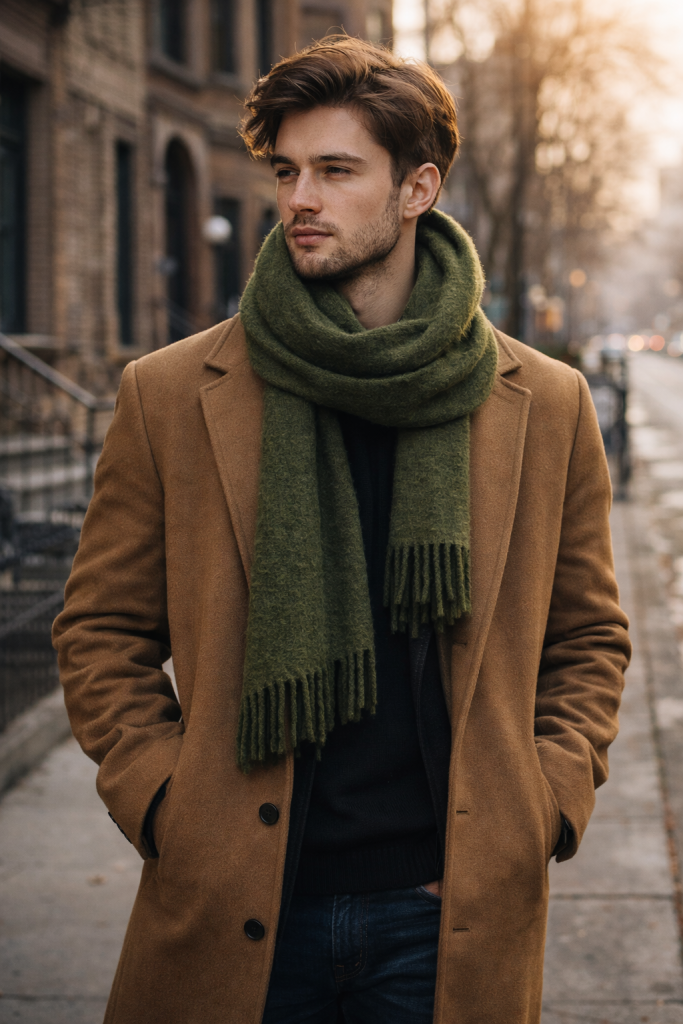
Earth tones read “grown” and easy:
- olive
- rust
- camel
- mustard/saffron (used carefully)
These are especially friendly for warm undertones.
Brights (fun, but needs one rule)
Brights can work, but they need structure.
If the scarf is loud, the outfit gets quiet.
Quiet outfit = neutrals, simple textures, minimal pattern.
Pattern rules: plaid/stripes/prints without clashing
Pattern mixing is where good scarf intentions go to die. The fix is not “never wear patterns.” It’s “pick one main pattern and make everything else support it.”
Three rules that keep you safe:
- Don’t stack the same pattern category. Two checks together often compete; mixing categories (like stripes + checks) is usually cleaner.
- Play with scale. If your scarf plaid is big, keep other patterns small or absent.
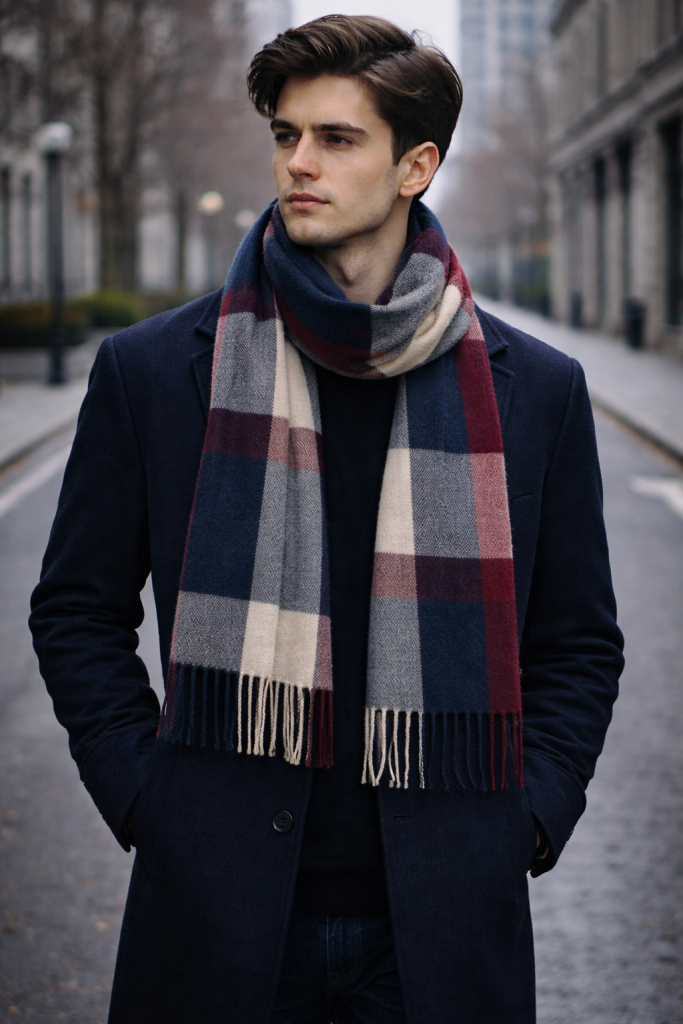
- Keep the palette tight. Even bold patterns look intentional when they share a color story (navy + cream + red, for example).
If you want to go deeper on “pattern rules without chaos,” a practical guide is Real Men Real Style’s pattern mixing guide. Another useful framing (especially on pattern categories and visual balance) is He Spoke Style’s pattern mixing rules.
Bonus: if you want a color pairing cheat, complementary colors (opposites on the color wheel) are high-contrast and energetic; analogous colors (neighbors) are smoother and calmer. In everyday outfits, “calmer” tends to be easier to wear daily. For a simple refresher, see Color Matters’ basic color theory.
Match the scarf to the coat you actually wear
This is the part most guides skip, and it’s the part that decides whether your scarf becomes your “thing” or becomes clutter.
If you wear a black coat
Black is a blank canvas. You can do:
- jewel tones (emerald, burgundy, cobalt)
- bold plaids (as long as you keep the rest simple)
- even brighter accents (red, orange) if you like the energy
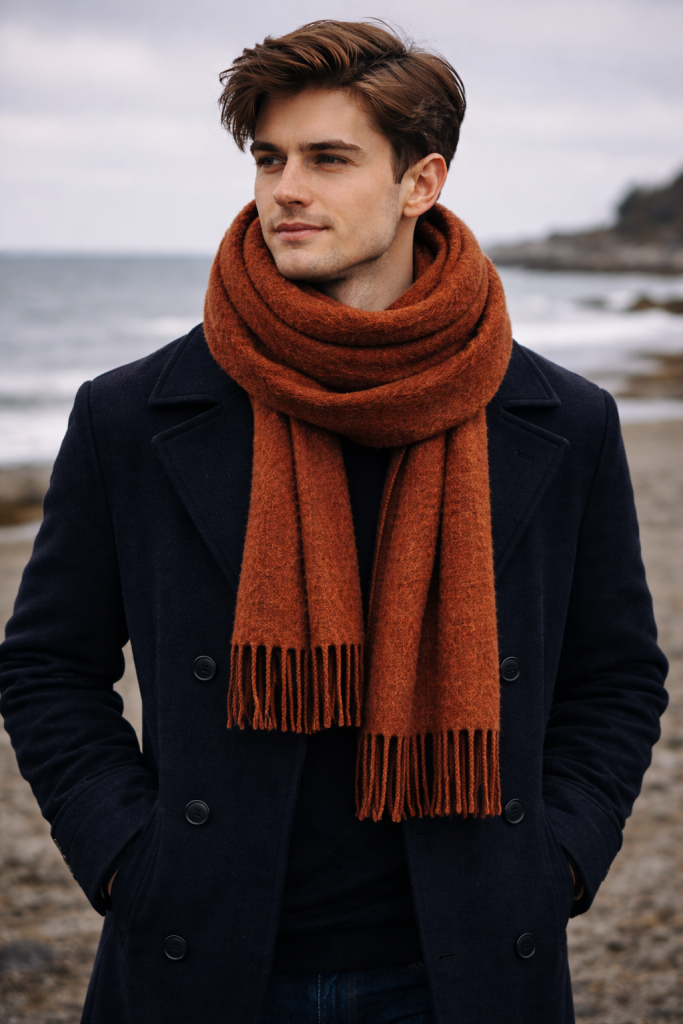
If you wear a navy coat
Navy already counts as color, so your scarf can go:
- warm accents: rust, camel, mustard
- cool accents: lighter blues, gray, deep green
- patterns that include navy so it ties back easily
If you wear a gray coat (charcoal or light gray)
Gray loves:
- burgundy
- forest green
- cobalt
- black-and-white patterns with one accent color
If you wear camel/tan
Camel is warm and luxe by default. Pair it with:
- deep greens
- navy
- burgundy
- cream + warm plaids
If trench coats are your winter personality, a hooded trench layered over a hoodie is built for color play—swap hoodie colors, swap scarf colors, change the whole vibe. If you’re shopping outerwear or just want options, see best hooded trench coats for men.
Material + size: what to buy for your climate + your vibe
Color matters, but if the scarf is itchy or floppy or too bulky, you’ll stop wearing it. Fabric is the “will I actually use this” factor.
Wool
- warm, classic, great for winter
- can be itchy depending on weave and sensitivity
- looks best with structured outerwear (coats, trenches)
Cashmere
- soft, warm, elevated
- more expensive, but high “cost per wear” value if you actually wear it
- tends to drape nicely, which makes color look more premium
Silk
- lighter, glossy, very “styled”
- great for fall/indoor layering, or under a coat when you want polish
- works especially well in prints (it reads intentional fast)
Cotton (or cotton blends)
- casual, easier for mild climates
- less “luxury,” more everyday
- good if you hate itch and want something you can throw on
Size basics (so it sits right)
A “standard” length is usually enough for a drape or single loop; go longer if you’re tall/broad so it doesn’t look short after a wrap. Also: slim scarves sit cleaner under tailored looks; chunkier knits balance puffers and casual outerwear.
If you want a simple, practical scarf breakdown (materials + how to choose), this guide is a solid reference: Trendhim’s scarf guide.
The decision matrix: pick your scarf color
Here’s the “don’t overthink it” table. Use it like a menu.
| Undertone | Contrast | Best colorful scarf picks | Avoid (usually) | Easy coat pairings |
|---|---|---|---|---|
| Cool | Low | dusty blue, muted teal, soft burgundy | neon brights, harsh orange | gray, navy, black |
| Cool | Medium | cobalt, emerald, wine, navy-based plaids | overly warm mustard | black, charcoal, navy |
| Cool | High | crisp cobalt, true red, high-contrast patterns | muddy warm browns | black, charcoal |
| Warm | Low | olive, rust, muted mustard, warm plaids | icy pastels, very cool purple | camel, brown, warm gray |
| Warm | Medium | forest green, burgundy, saffron accents, earth-tone plaids | ultra-cool cobalt (unless it’s muted) | camel, navy, black |
| Warm | High | rich rust, clear warm red, bold earth patterns | dull gray-beige blends | camel, black |
| Neutral | Any | burgundy, deep teal, olive, balanced plaids | extreme neon | basically all neutrals |
If you want more “why this works,” seasonal color analysis resources can help you connect undertone + contrast to palette choices. A beginner-friendly overview is this guide on seasonal color analysis for men.
Outfit ideas (so you actually wear the scarf)
No 47-knot tutorial. Just outfit formulas that work.
1) The “quiet base + pop scarf” uniform (easy mode)
- black/gray/navy coat
- neutral sweater or hoodie
- jeans or dark trousers
- scarf in one bold color (cobalt, burgundy, emerald)
This is the cleanest way to do bright color without it feeling like a costume. If you want shopping inspiration for scarf silhouettes and colors that are popular, browse a roundup like GQ’s best men’s scarves.
2) Streetwear version: hoodie + puffer + scarf accent
- puffer (black, navy, olive)
- hoodie (gray/cream)
- sneakers
- scarf that repeats one small color detail (logo, hat, shoes)
That “repeat an accent shade somewhere else” trick makes color look intentional. If your vibe is more outfit-planning and you want a quick jump into put-together basics, see best first day of school outfits.
3) Office / smart casual: texture over loudness
- wool coat or trench
- knit sweater or button-down
- simple trousers
- scarf in deep color (wine, forest) or subtle pattern
Want to lean into “expensive” styling without overspending? The logic behind “rich detail + calm base” shows up in a lot of aesthetics—scarves are a perfect place to do it. This is a fun adjacent read: look expensive on any budget.
4) Date night: darker base, softer fabric, cleaner drape
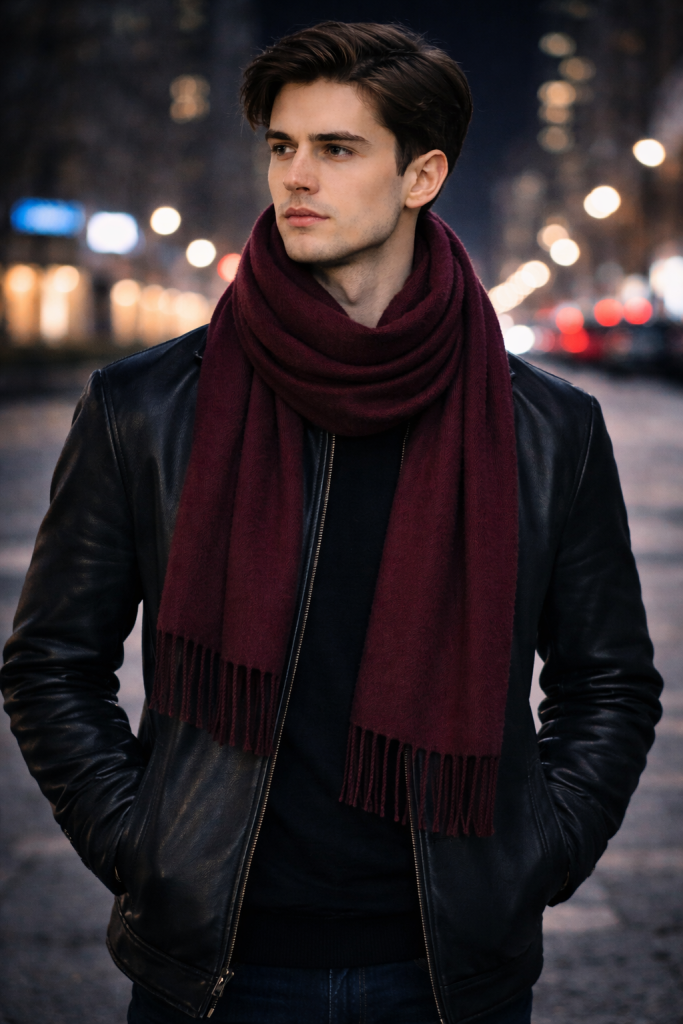
- dark coat or leather jacket
- fitted knit or clean tee
- scarf that’s soft (cashmere) or sleek (silk)
- color: burgundy, deep teal, or a black/white pattern with one accent
If you’re going for that “intentional” vibe head-to-toe, you might also like romantic hairstyles for date night.
5) Outdoor hang / winter party: warm scarf, controlled color
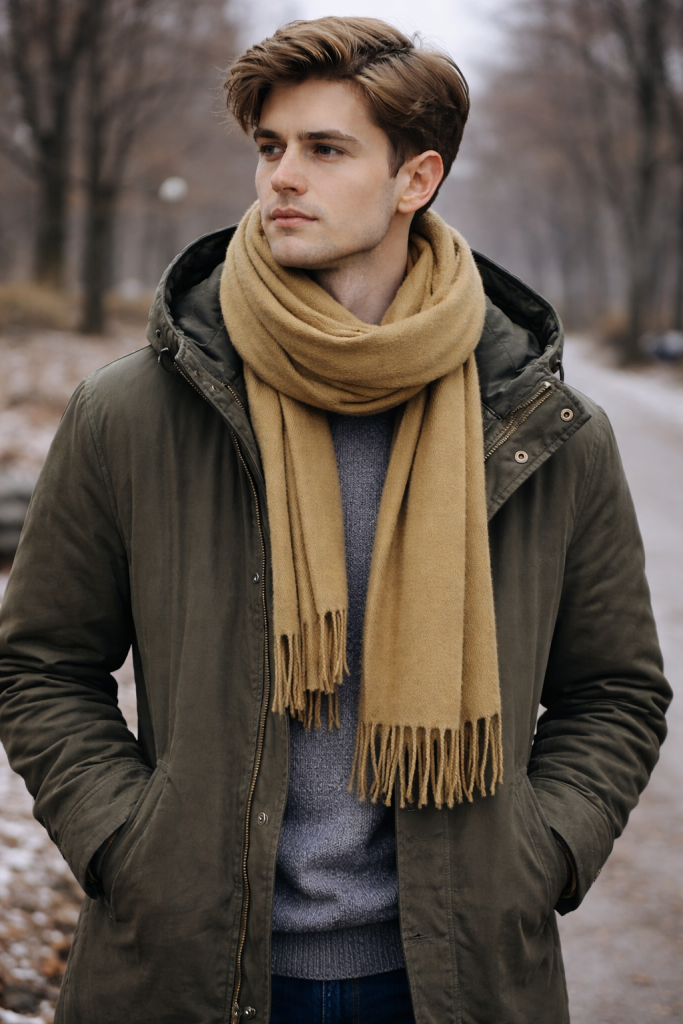
For outdoor parties, warmth matters more—go wool/cashmere, but keep color controlled:
- chunky scarf in one rich shade
- coat in neutral
- boots or sturdy sneakers
If you’re planning something with friends and want the “good vibe, not fussy” energy, see outdoor parties your 30-something friends will love.
The part people get wrong (common mistakes)
Mistake 1: Too many loud pieces at once
If you want a colorful scarf to be the statement, let it be the statement. Keep everything else quiet.
Mistake 2: Wrong scarf thickness for the jacket
Slim scarf + tailored coat. Chunky scarf + puffer/casual outerwear. Proportions matter more than people think.
Mistake 3: Oversaturated color on low-contrast features
Low-contrast faces tend to look better in softer shades. If you go super bright, it can overpower.
Mistake 4: Pattern chaos (no shared color story)
If your scarf has navy in it, tie it back with navy jeans, a navy coat, or even a navy beanie. Shared color = cohesive.
Quick buying checklist (save this for shopping)
You’re in a store (or doomscrolling a product page). Ask:
- Does this flatter my undertone? (warm/cool/neutral)
- Does it match my contrast level? (muted vs bright)
- Can I wear it with at least 2 coats I already own? (black/navy/gray/camel logic)
- Is the fabric comfortable on my neck? (wool vs cashmere vs silk vs cotton)
- Is the pattern “one main thing,” or is it chaos? (scale + palette rules)
If you’re buying a scarf as a gift, it helps to think in “repeat outfits,” not “this looks cool on the product photo.” For gift brainstorming in general, you can skim Father’s Day gift ideas and use the same logic: choose something that fits the person’s real life.
FAQs
What color scarf goes with everything for men?
If you want colorful but universal: burgundy, deep teal, olive, navy-based plaid. They behave like neutrals but still add life.
Can guys wear bright scarves without looking “too much”?
Yes. Do bright scarf + neutral outfit. One loud piece, the rest quiet.
What scarf colors look best on cool undertones?
Often: blues, grays, jewel-toned greens, wine tones, and “icy” clarity rather than earthy warmth. If you want a deeper dive: seasonal color analysis for men.
What scarf colors look best on warm undertones?
Often: olive, rust, camel, warm reds, mustard accents, and earthy palettes.
Are silk scarves wearable casually?
They can be—especially with a simple outfit (tee + jacket) so the silk looks like a choice, not an accident. For modern styling inspiration, see a men’s scarf roundup like British GQ’s best men’s scarves.
How do I mix a scarf with a patterned coat?
Either keep the scarf solid, or choose a scarf pattern in a different category and different scale, and keep the palette tight. If you want rules that are easy to follow, check this pattern mixing guide.
What’s the easiest scarf wrap that looks good?
A simple drape or single loop is usually enough. If you want quick visuals, this is a solid reference: how to wear a scarf for men.
What’s the best scarf material for winter warmth?
Wool and cashmere are top picks for colder weather; silk is lighter and better as a style layer than a deep-winter warmth solution.
Closing thought (and your next step)
If you only take one thing from this: buy the scarf that matches your face and your coat, not the scarf that looks cool by itself on a product page.
Pick your bucket (warm/cool/neutral), match the intensity to your contrast level, and choose a color you can wear with at least two coats. That’s how “colorful scarf” becomes your signature instead of your once-a-year experiment.
And yep—this is still very much colorful scarves ideas for men, just with the part everyone skips: making it wearable in real life.