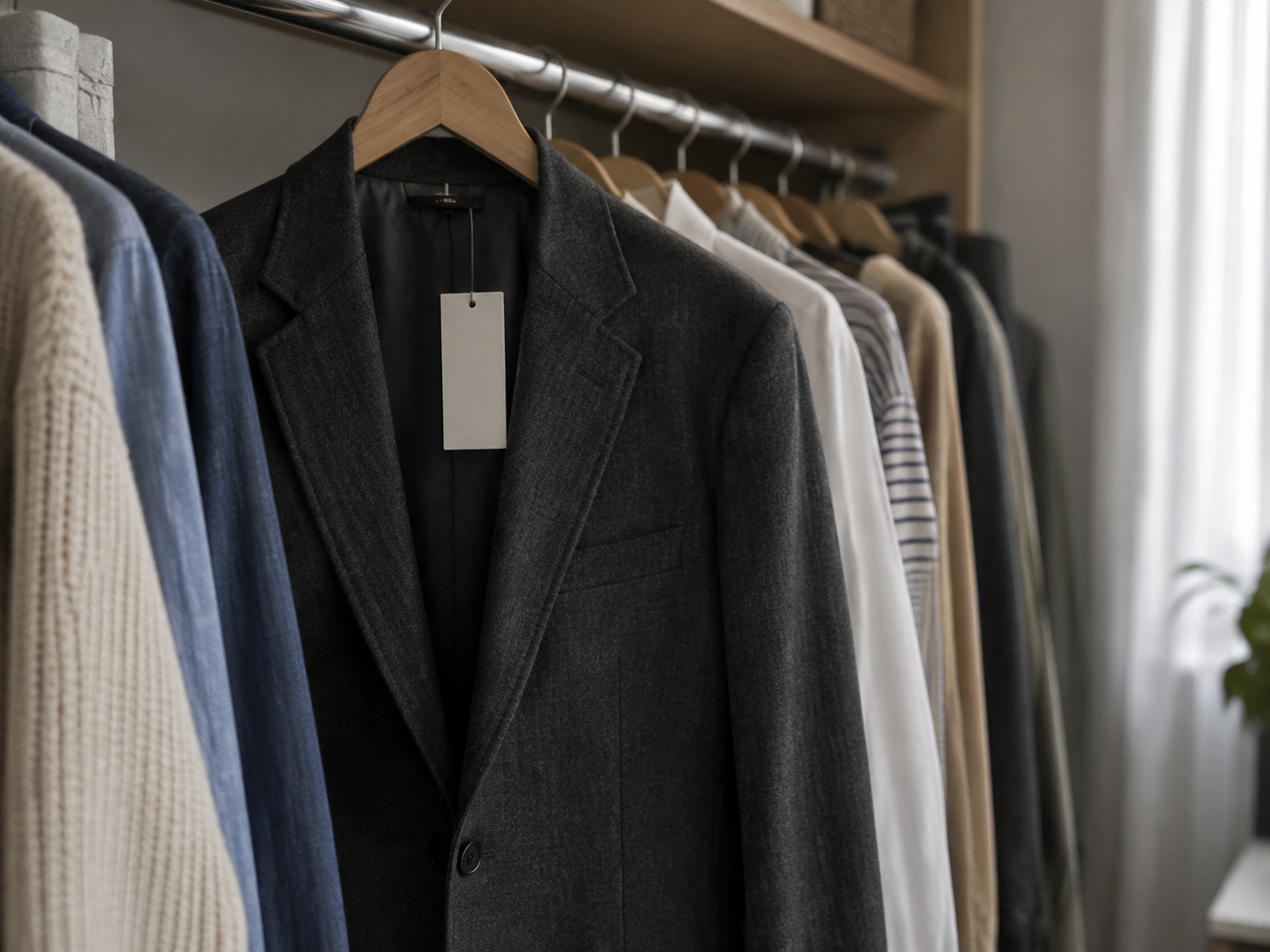
There’s a blazer in my closet with the tags still on.
I bought it in March, for a job I didn’t have. It’s a good blazer. Structured shoulders, a color somewhere between charcoal and midnight, the kind of jacket that makes you sit up straight just by looking at it. I tried it on in the fitting room and watched a version of myself appear in the mirror. She had a calendar full of meetings. She said “let’s circle back” without wincing. She knew what she was doing.
I bought the blazer for her. Eight months later, she still hasn’t shown up, and the blazer is still waiting.
If you have your own version of this (the gym set, the wedding guest dress for a wedding that was never booked, the boots for a trip you haven’t planned), this one’s for you. Because dressing for a life you haven’t started yet is one of the most hopeful things a person can do. It can also be one of the quietest ways to stay stuck. The difference is smaller than you’d think.
The Blazer With the Tags Still On
Let me say it plainly. Buying clothes for a future self is not a character flaw. It’s a very human reflex.
You see yourself at the edge of something. A new job, a new city, a new relationship, a body that feels different, a season of life that hasn’t started. And the one thing you can do right now, today, with a credit card and a free afternoon, is get dressed for it. It feels like progress. It feels like proof that you’re serious.
Sometimes it is. Sometimes it isn’t. The trick is figuring out which kind of blazer you own.
I’ll tell you what I learned from mine. The tags are still on because I didn’t buy it for the job. I bought it for the feeling of being someone who already had the job. Those are two different purchases. One is a tool. The other is a daydream with a return policy.
Why We Shop for a Person Who Doesn’t Exist Yet

There’s real psychology behind the impulse, and it’s more tender than guilty.
In a piece on why we end up with wardrobes we hate, behavioral psychologist Dr Carolyn Mair describes how clothing reflects “the identity you would like to portray,” and how nerves can stop people from wearing what they’ve bought [3]. She also describes people buying clothes that don’t fit yet, in the belief they will fit after reaching a certain goal [3]. In other words, the closet becomes a waiting room for a person we haven’t turned into.
Fashion psychologist Dr Dawnn Karen adds another layer. Owning clothes you dislike or never wear can feel like a personal failure, because the clothes stand for the distance between who you are and who you want to be [3]. Every unworn piece is a tiny, silent reminder: you’re not there yet.
I want to be careful here. This is commentary from two experts, not a controlled study, and it doesn’t mean everyone who owns an unworn dress is in crisis. But it matches what I see in my own closet, and maybe in yours. We don’t just shop for clothes. We shop for permission. If you’ve ever stood in front of your closet unable to find a version of yourself you recognize, the outfit I wear when I need to feel like myself again explains how I started sorting the real from the wishful.
And that’s the part worth pausing on. Most of us aren’t buying fabric. We’re buying a story where the next chapter goes well.
What the Research Actually Says About Dressing Ahead

Here’s where people get overexcited, so let me keep both feet on the ground.
The idea that clothes change how we think is real, but it’s more specific than the internet makes it sound. In a 2015 paper in *Social Psychological and Personality Science*, researchers Michael Slepian, Simon Ferber, Joshua Gold and Abraham Rutchick looked at formal clothing and thinking style [1]. In one experiment, 54 college students were randomly assigned to change into either a formal outfit, described as something to wear to a job interview, or a casual outfit, described as something to wear to class [1]. Afterward, the students in formal wear leaned toward big-picture thinking over detail-focused thinking more often than the students in street clothes [1].

That is a long way from “wear a blazer and get promoted.” The study measured a specific kind of thinking in a lab, with a small group of students, and the researchers themselves noted that larger, more diverse samples are needed [1]. It says nothing about confidence or career success.
What it does suggest is that what we wear can nudge how our minds work, at least a little. Dr Mair calls this enclothed cognition, the idea that “what we wear can influence how we think and behave” [2]. She also describes clothing as “one of the most immediate tools for identity expression,” a bridge between who you are now and who you’re becoming [2].
Then comes the sentence I want you to underline. Mair says clothing works as support, and it “is not a substitute for action” [2]. A blazer can help you step into a room. It can’t walk you through the door.
When Dressing for Your Future Helps
Used well, dressing ahead is one of the kinder things you can do for yourself. Here’s where it earns its place.
It Shortens the Distance
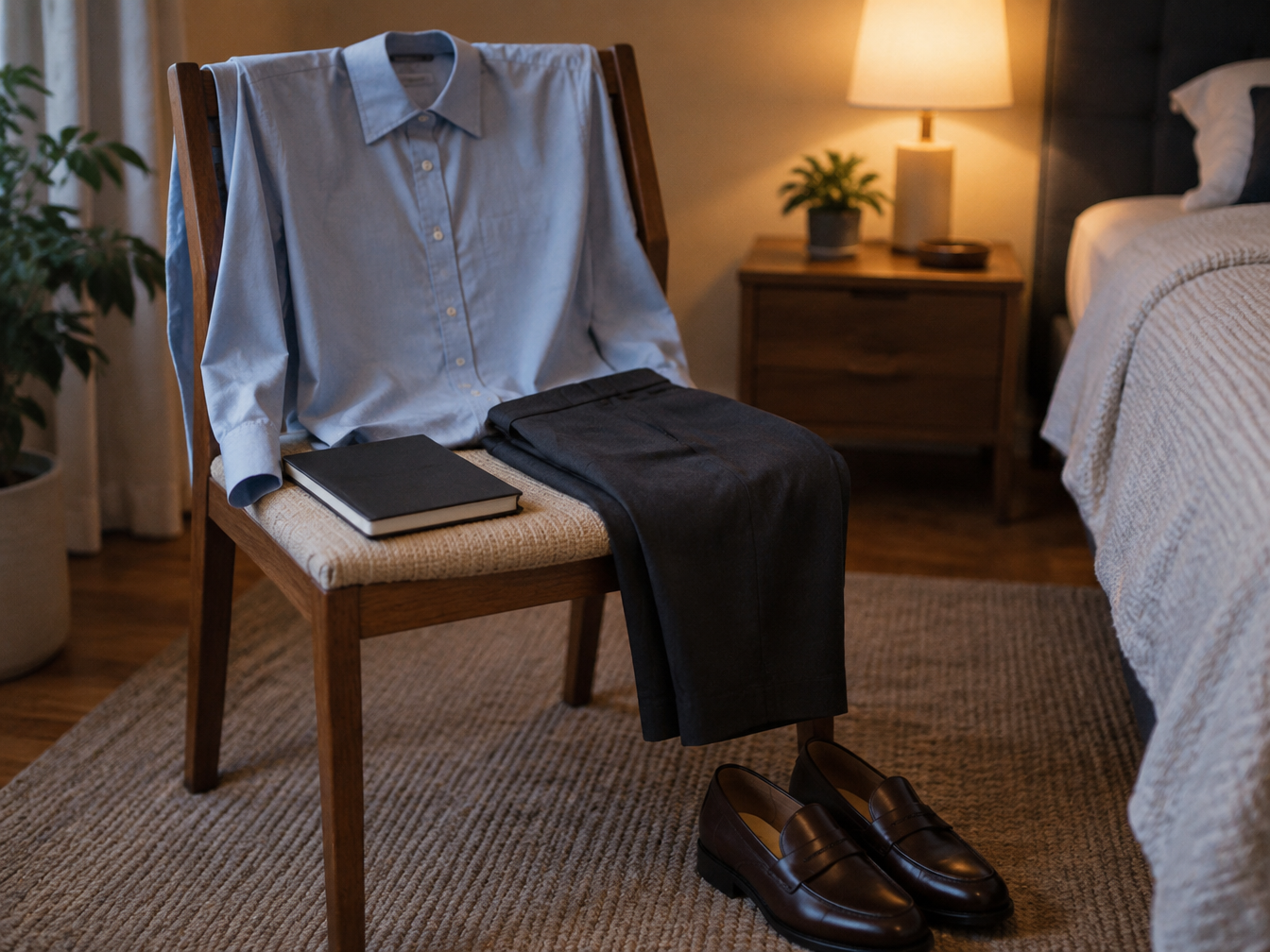
A future that feels abstract is easier to avoid. A future with a specific outfit in it feels closer. When I picture an interview, I get a knot in my stomach. When I picture a particular shirt on a particular chair the night before, the whole thing becomes a plan with a dress code.
If your next chapter involves an office, a good blue shirt outfit is the sort of thing that works on the first day and still feels like you on the weekend.
It Gives You a Rehearsal
Putting on clothes for an event you haven’t had yet is a way to practice. You find out whether the shoes hurt, whether you can sit down in the skirt, and how you feel standing in the hallway in front of the full-length mirror. That’s useful information, and it’s much better to find it out at home than at 8:50 a.m. on a Monday.
It Changes How Other People See You
Mair notes that when you dress to reflect where you’re heading, others may respond to that version of you as well [2]. I think this one is underrated. People take cues from presentation, fairly or not. If you’re trying to be seen as a leader, a designer, a writer or a person who takes herself seriously, your wardrobe can signal that before you say a word.
It also works as a quiet promise to yourself. If you’re starting something new, a small ritual helps, like choosing one outfit that makes you feel a little braver. Plenty of people find that the right piece on the right morning works like a small intention for the day.
When It Quietly Hurts You
Now the harder half. Because dressing for the future can curdle into dressing *instead* of living it.
The Someday Pile
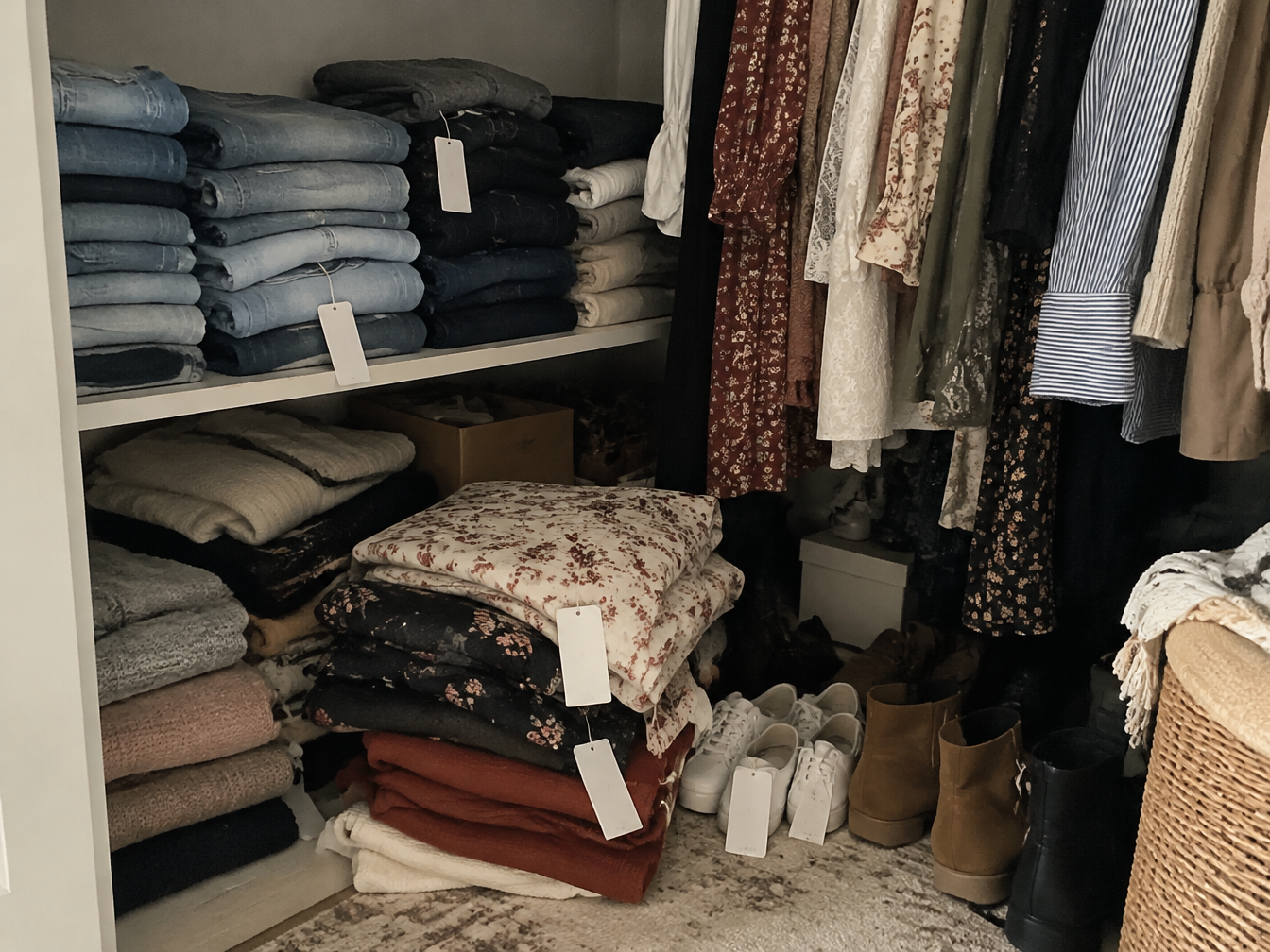
You know this pile. The jeans one size down. The dress you’re saving for an occasion that never arrives. The shoes too nice for your actual life. They stay in the closet, each one a small suspension of your present.
Karen says an overstuffed closet can even trigger a stress response she compares to fight or flight [3]. That fits with how it feels. Opening a closet full of “someday” is like opening an inbox full of tasks you haven’t done.
The Body You’re Waiting For
This one is delicate, and I’ll keep it short. If you’re buying clothes for a body you hope to have later, you might be telling your current body that it doesn’t deserve nice things now. Mair’s advice is blunt and kind: “Ultimately, our wardrobe needs to reflect our lifestyle” [3]. Your body today is part of your lifestyle. It gets to be dressed.
The Costume Trap
Sometimes we dress for a role we don’t actually want. The polished professional, the effortless minimalist, the girl who is always at brunch. If an outfit only works when you’re pretending, it’ll feel like a costume by the third wear. The point of dressing ahead is to move closer to yourself, not further from her.
That’s the line I try to keep in mind. The best clothes for a future life are clothes your real self would wear on a good day. They stretch you a little. They don’t replace you.
How to Dress for What’s Next Without Faking It
Here’s the version I use now. It’s less romantic, and it works better.
Buy One Piece, Not a Wardrobe
You don’t need a full new life of clothes. Pick one anchor piece for the chapter you’re stepping into. A coat, a shirt, a pair of shoes. If you’re heading into a cooler season of change, a classic trench coat outfit is the kind of anchor that works with what you already own.
Wear It This Week
If you won’t wear it before the big moment, you’re probably not buying a tool. Put the piece on in an ordinary context. Grocery store. Coffee with a friend. A Tuesday. If it only works in an imaginary room, it’s a costume.
Slow Your Purchases Down
Mair and Karen both suggest slowing down before you buy: delay online purchases, try the piece on, imagine wearing it in a room full of people, and ask friends for honest opinions [3]. Karen’s observation is a good test, too. If you delay a purchase, the chances are you’ll forget about it [3]. If you still want it a week later, it’s probably real.
Do the Clear-Out First
Mair recommends clearing out items you haven’t worn for ages or that no longer fit as “a good start” [3]. Make room before you add anything. Keep what suits the person you are now and the person you’re realistically becoming.
Pair It With One Action
This is the part Mair would approve of. Every time you buy something for the future, do one thing that moves the future closer. Send the email. Book the appointment. Apply for the thing. The clothes are the cheering section. You still have to run the race.
The Pieces That Bridge Both Lives

My favorite clothes belong to two worlds at once. They fit the person I am on a Tuesday and the person I’m hoping to be in a year.
A well-cut jacket. Good boots. A shirt that makes you feel a bit sharper than the day requires. These pieces are low-risk because they work now, and they’re hopeful because they can carry you forward. They aren’t a costume. They’re a bridge.
If you’re not sure what that looks like for you, think back to the clothes that made you feel most yourself. Your future self probably dresses a lot like your best present self, only a little braver. A well-worn leather jacket outfit is a good example of a look that fits both lives.
You Are Allowed to Start Before You’re Ready

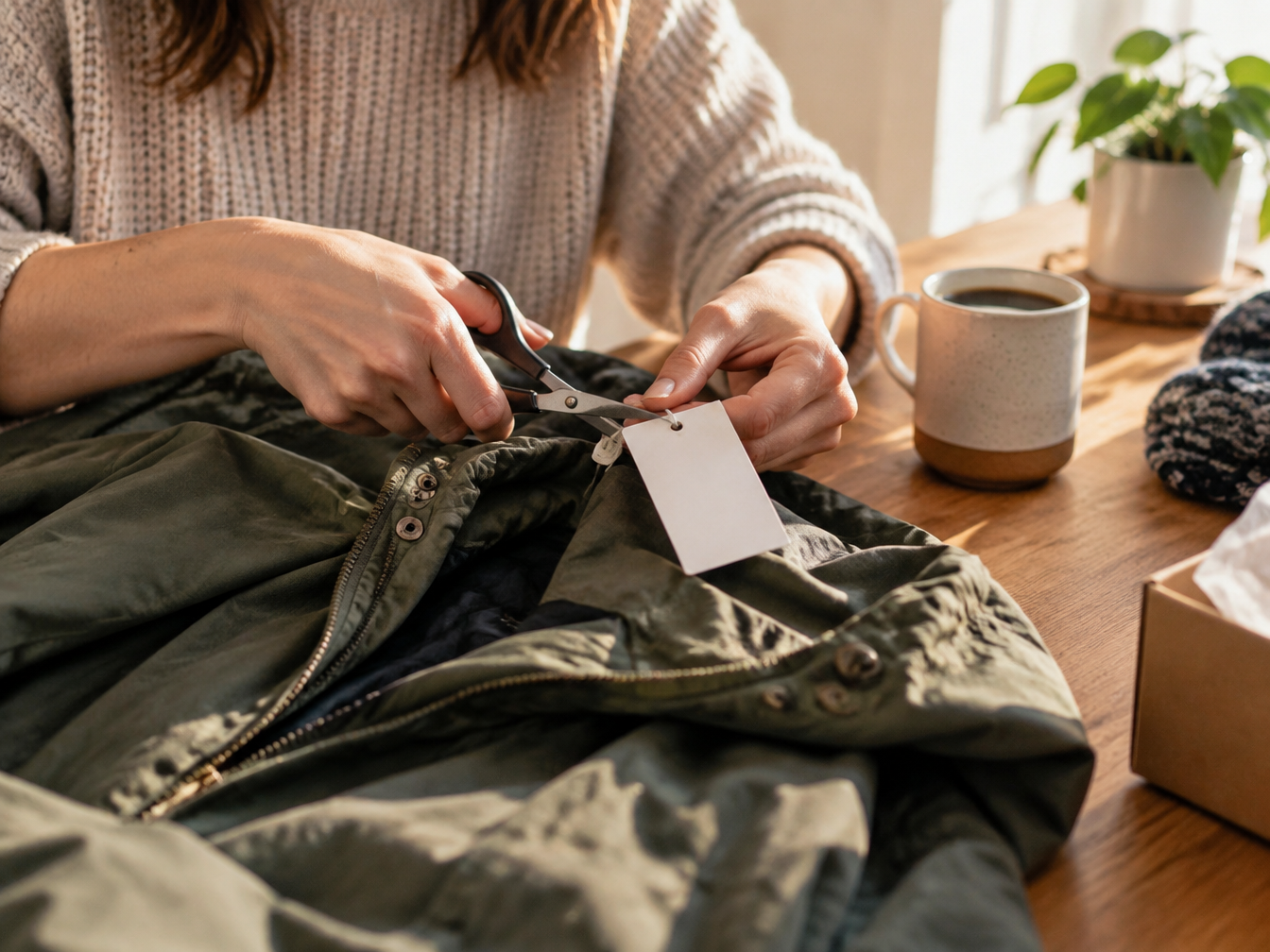
I took the tags off the blazer last week.
I didn’t have a new job. I didn’t have an interview. I just had a Thursday and a feeling that I’d been keeping that jacket in a glass case for no reason. So I wore it with jeans and boots to run errands, and it felt weirdly good. Not like someone else’s life. Like mine, with its shoulders back.
That’s the thing I wish I’d known in March. The future version of you doesn’t arrive all at once, wearing the right outfit. She builds herself slowly, out of Tuesdays. Out of small brave choices made in clothes you actually wear.
So go ahead and buy the thing. Then wear it before you feel ready.
Ready is just a feeling that shows up after you start.
Sources
- Association for Psychological Science. “When Clothing Style Influences Cognitive Style” (discussing Slepian, M. L., Ferber, S. N., Gold, J. M., and Rutchick, A. M., “The Cognitive Consequences of Formal Clothing,” *Social Psychological and Personality Science*, 2015). psychologicalscience.org/news/minds-business/when-clothing-style-influences-cognitive-style
- Essence. “Dressing for the life you want, according to a fashion psychologist” (comments from Dr Carolyn Mair). essence.com/fashion/dressing-for-life-you-want-according-to-fashion-psychologist
- Mr Porter. “Why We Buy Clothes We Like and End Up With a Wardrobe We Hate” (comments from Dr Carolyn Mair and Dr Dawnn Karen). mrporter.com/en-pl/journal/fashion/why-we-hate-our-clothes-full-wardrobe-nothing-to-wear-2022-17464068
Leave a Reply