
Table of Contents
- Introduction
- What Actually Matters In Jewelry Color Choices (And What Doesn’t)
- How To Figure Out Your Undertone So Jewelry Stops Being A Guess
- What Metal Color Looks Best On Me Based On Undertone?
- How To Choose Jewelry Color For Your Skin Tone, Hair, And Eyes
- Jewelry Color And Seasonal Palettes (Spring, Summer, Autumn, Winter)
- Gold Vs Silver Vs Rose Gold: A Practical Comparison Guide
- How To Mix Gold And Silver Jewelry Without Looking Like A Thrift Bin
- Styling Jewelry Color With Clothes, Makeup, And Your Overall Aesthetic
- How To Build Your Signature Jewelry Color Story
- Kokkuvõte (Putting It All Together)
- Frequently Asked Questions
Introduction
Your friend puts on a chunky silver chain and suddenly looks like the main character. You try the exact same piece and somehow your face looks tired, so *jewelry color choices* start to feel cursed.
To pick jewelry colors that actually match your skin, you first figure out your undertone, not how light or dark you are. Cool undertones usually glow in silver, white gold, and icy stones, warm undertones light up in yellow or rose gold, and neutral undertones handle both. Once you know that, you can choose metals and gemstones that make your skin look brighter instead of washed out in every photo.
This guide breaks that down without gatekeeping. You will see how undertone, hair, eyes, clothes, and even selfie lighting shape what looks good on you. You will also see how to bend the rules on purpose, mix metals, and build a jewelry color stash that actually matches your life.
If gold vs silver has been stressing you out, keep going. The patterns behind your best pieces are about to make sense.
Key Takeaways
Here is the quick version of the frameworks you will keep coming back to. Think of this as a cheat sheet you can screenshot and check while you shop or scroll.
-
Your Skin Undertone Is The Real Boss. The temperature under your skin decides most *jewelry color choices*, not how pale or deep you are. Cool undertones usually look clearer in silver or other white metals, warm undertones usually glow in yellow or rose metals, and neutral undertones work with both. Once you know which lane you sit in, shopping gets a lot calmer.
-
Gold, Silver, Rose Gold: What Actually Flatters You. Metals that echo your undertone look like they belong on your body instead of sitting on top of it. Cool skin pairs easily with silver, white gold, and platinum, while warm skin loves yellow gold, rose gold, and copper tones. Rose and champagne shades often act like a middle ground when classic yellow feels too strong.
-
How Eyes, Hair, And Outfit Change The Game. Your eyes and hair are the frame next to your jewelry, so color can either echo them or contrast them. Blue eyes with silver and sapphire feel icy, while brown eyes with gold and amber feel deep and rich. Clothes, makeup, and even bag hardware tip the balance from soft to sharp in a second.
-
Mixing Metals Without Looking Chaotic. Mixed stacks work when they look planned, not random. One metal should clearly lead, every metal should repeat at least twice, and pieces should share a similar size or vibe. That way your mix reads like a style choice, not like you got dressed in the dark.
-
Build A Signature Jewelry Color Story. Instead of buying random cute things, you pick a main metal, a backup metal, and two or three stone colors that flatter your features. Everything starts to layer together, selfies look consistent, and your friends begin to say things like that green stone ring is so you. That is the point where your *jewelry color choices* stop being guesses and start feeling like a personal brand.
What Actually Matters In Jewelry Color Choices (And What Doesn’t)
The real factors behind smart *jewelry color choices* are your undertone, your natural contrast, and the mood you want. Everything else is background noise, even the old rule that fair people must wear silver and deep skin must wear gold.
Dermatology experts at Cleveland Clinic explain that undertone stays the same while your surface color tans or fades, which is why your best metals do not change every summer. Hair, eye color, outfits, and aesthetic still matter, but they tweak the picture instead of rewriting it. Once you separate what actually changes from what does not, the whole topic feels way less mystical.
There is also the internet myth that price or brand decides whether jewelry looks good. It does not. A simple stainless steel ring that matches your undertone will beat an expensive piece in the wrong metal in every selfie and every mirror.
Personal style sits on top of all of this. For an everyday polished approach, explore this guide to casual chic style and let your jewelry follow the same easy, intentional mood. According to McKinsey, younger shoppers care far more about self expression than old school fashion rules, so color guidelines are just building blocks. Use them to understand why silver hoops look clean on your roommate but dull on you, then choose how much you want to follow or break them.
Skin Tone Vs. Undertone: Why You’re Probably Asking The Wrong Question
Skin tone and undertone sound similar, but they are doing different jobs in your mirror. *Skin tone* is about depth—fair, medium, and deep—and it shifts with sun, skincare, and time indoors. *Undertone* is about temperature under the surface—cool, warm, or neutral—and it stays stable for your whole life.
You can have very fair warm skin, deep cool skin, or medium neutral skin. All three people might tan differently and wear different foundation shades, but they can still reach for the same metal color and look great. Most gold vs silver advice online secretly talks about undertone even when it says light skin or dark skin.

Once you focus on undertone, confusing things start to click. That friend who looks unreal in yellow gold even though she burns in ten minutes at the beach probably has a warm undertone with fair skin. Another friend with deep, cool skin might look sharp in platinum and bright jewel tones but a bit off in very orange gold.
You do not need a degree in color theory here. You just need a simple label for your own undertone so the rest of your *jewelry color choices* have a clear starting point.
How Gen Z Actually Uses Jewelry Color (Vibe, Selfies, Aesthetic)
Jewelry color sits right next to all the TikTok aesthetics floating around your feed. Clean girl stacks tiny silver chains, soft grunge leans on heavy silver or steel, old money leans on yellow gold and pearls, and artsy kids layer mixed metals and bright stones without apologizing. Metal color is one of the fastest ways to signal which lane you are in before you even speak.
Color also hits hard in photos. Research from Nielsen Norman Group shows that color contrast changes how quickly people notice details, and the same logic holds on your face. Cool metals can make your skin look clearer and your teeth a bit whiter, while strong yellow tones can make everything look warmer or softer.
This is why the same ring looks completely different on two friends. One person’s icy platinum engagement ring reads minimal and sharp, another person’s looks slightly gray and flat because it fights their warmth. Once you see that, you stop blaming your face and start blaming the metal choice.
The point of this guide is freedom, not more rules. You will learn how to read what a piece is doing to your features so you can decide whether you want glowy, icy, soft, or high contrast on any given day.
How To Figure Out Your Undertone So Jewelry Stops Being A Guess
Figuring out your undertone turns random *jewelry color choices* into decisions with receipts. You do not need a ring light, a paid quiz, or a color consultant; you just need a few quick tests and common sense.
Dermatology sources like the American Academy of Dermatology describe undertone as that base hue underneath everything else. You can not scrub it off or tan it away, which is good news, because once you spot it, you are done. The trick is to use more than one test and look for patterns instead of obsessing over a single detail.
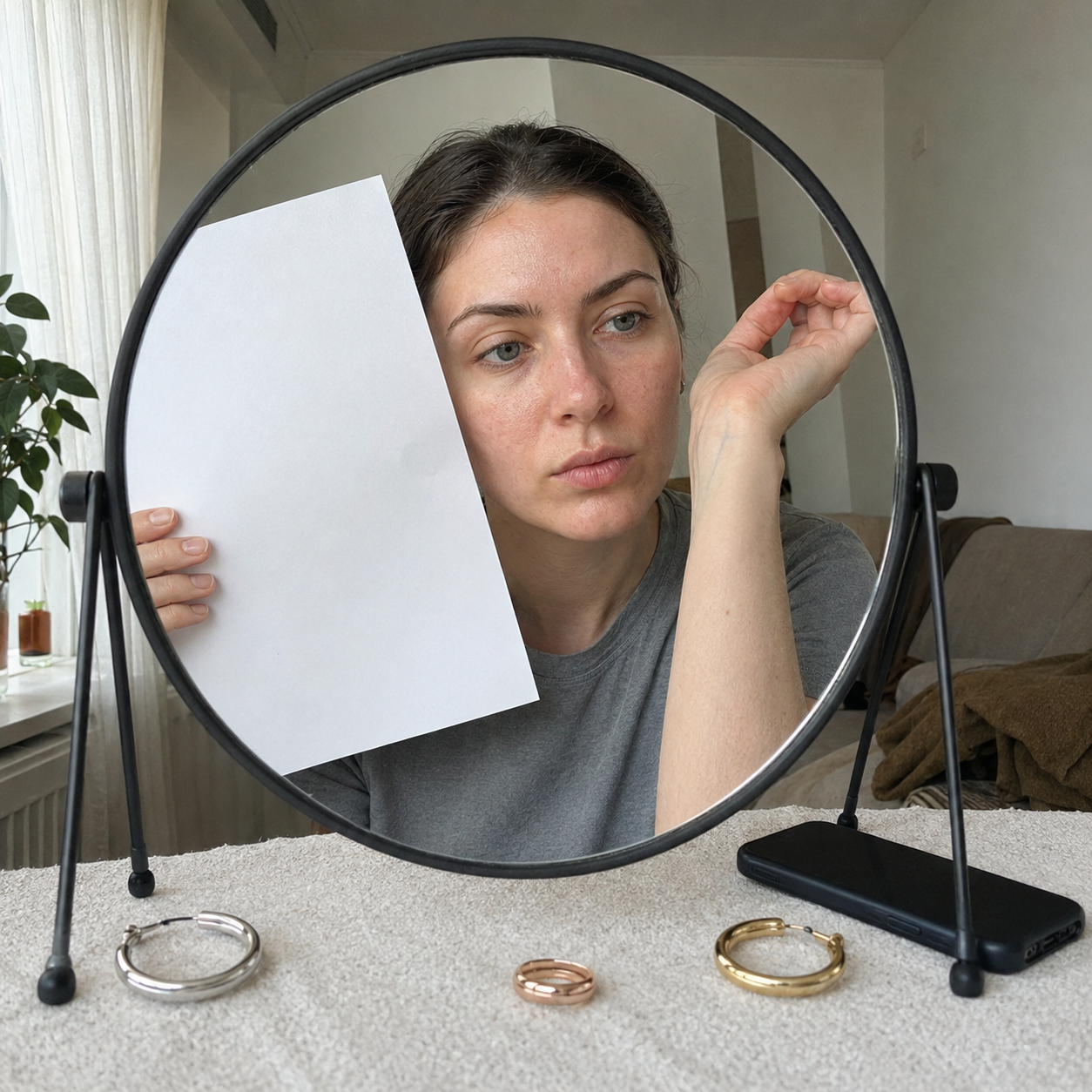
Stacking a few simple checks gives you a solid answer. You look at veins, remember how your skin reacts to sun, compare your face to plain white paper, and think back to which jewelry people already compliment the most. When three out of four clues point in the same direction, you can stop scrolling for more tests.
The Real-World Tests: Veins, Sun, White Paper, And Jewelry
These tests sound like TikTok hacks, but color experts and dermatologists use versions of them all the time. None of them is perfect by itself; together they build a pretty clear picture. You can run through the whole set in five minutes with a window and a scrap of printer paper.
Here is a simple table you can screenshot while you check yourself.
| Test | Cool Hint | Warm Hint | Neutral Hint |
|---|---|---|---|
| Veins | Look blue or purple | Look greenish | Mix of blue and green |
| Sun Reaction | Burn fast, tan slowly or barely | Tan easily, rarely burn | Burn a little, then tan |
| White Paper | Skin looks pink, rosy, or slightly blue | Skin looks yellow, peach, or golden | Nothing strong, looks balanced |
| Jewelry Vibes | Silver or white metals look clean | Yellow or rose metals look glowy | Both metals look fine |
Start with the vein test in natural light, because it is quick and does not depend on your memory. Then think about what your skin usually does in the sun when you forget SPF. According to CDC guidance on sun safety, burning easily often links with lighter, cooler skin types, while easy tanning shows up more in warmer types.
The white paper test works best with no makeup and daylight from a window. Hold the paper next to your face and notice whether your skin looks more pink and cool, more golden and warm, or somewhere between. Finally, remember which metal people notice or compliment on you without any prompting, because your friends’ brains are doing fast color math even when they do not realize it.
If three tests shout the same answer and one feels off, go with the majority. You are looking for a lean, not a perfect label, and that is enough for better *jewelry color choices*.
What Cool, Warm, And Neutral Undertones Usually Look And Feel Like
Cool undertones often have a pink, rosy, or slightly bluish cast under the surface. People with cool skin usually feel at home in blue based reds, berry lipstick, gray hoodies, and icy or jewel toned clothes. Silver jewelry tends to look clean and bright on them, while very orange gold can make their skin look a little flushed or dull.
Warm undertones have more golden, peach, olive, or honey tones. Warm skin often looks great in bronzer, terracotta, mustard, and warm browns, and coral lipstick feels natural instead of loud. Yellow and rose metals usually make warm undertones look sunlit and alive, while super icy silver can sometimes look flat next to their warmth.
Neutral undertones sit in the middle. Nothing screams pink or yellow, and both warm and cool makeup usually look fine. According to Healthline, many people with neutral undertones can switch between cool and warm color families without any strange cast, which is why they can wear both silver and gold without feeling off.
Think about your shopping habits too. If you always grab taupe, greige, and muted shades, there is a good chance you lean neutral. If you constantly move toward either icy tones or spicy, earthy tones, your undertone probably lines up with that pattern.
What Metal Color Looks Best On Me Based On Undertone?
The best metal color for you comes from matching your undertone with the right family of metals, then using taste to fine tune it. Once that is clear, most day to day *jewelry color choices* become easy instead of emotional.
Cool undertones usually shine in white metals like silver and platinum, warm undertones look extra alive in yellow or rose metals, and neutral undertones get to play in both lanes. Research on color effectiveness in jewelry notes that humans read tiny shifts in color temperature very quickly, which helps explain why the difference between bright white and deep yellow metal changes how fresh your skin looks.
The other piece is intensity. Extremely deep yellow metals can be too strong for very cool or very fair skin, just like super bright, almost blue toned silver can feel harsh on very warm skin. You are adjusting the brightness dial, not switching the family.
Best Metals For Cool, Warm, And Neutral Skin
Cool undertones usually look best in white or icy metals. Sterling silver, white gold, platinum, and polished steel tend to brighten their face, especially near the eyes and mouth. If your skin leans cool and you put shiny yellow metal near your face, you might notice more redness or dullness in photos. Lighter, less yellow versions of gold can still work if you keep them delicate or mix them with lots of white metal.
Warm undertones usually glow in yellow and rosy metals. Classic yellow gold, rose gold, brass, and bronze echo the golden cast in warm skin, so they create a soft, sunlit effect. On very warm or deep warm skin, bright white silver can sometimes look almost gray against the warmth, especially under indoor lighting. If you love silver, pairing it with warm stones like citrine or amber balances that icy edge.
Neutral undertones can handle both families. You can decide by mood, outfit, or aesthetic instead of feeling locked in. Many people with neutral undertones like to pick one metal as their everyday base and use the other for contrast or certain outfits. For the most flattering effect, use your best metal on earrings and necklaces close to your face, then experiment more with rings, bracelets, and anklets where metal sits farther from your skin.
Beyond Gold And Silver: Rose Gold, Champagne Gold, Copper & Bronze
Once you understand the main metal families, the more interesting ones start to make sense too — and research into jeweler-in-the-loop: personalized alloy color optimization shows just how much subtle variations in metal hue can shift the visual impression a piece creates. Rose gold looks soft and slightly pink, which is why it flatters both warm and many cool undertones. On warm skin, it feels romantic and glowy, and on cool skin it reads like a rosy, less harsh alternative to strong yellow metal.
Champagne or light yellow shades feel more muted than flashy, bright gold. They work well if strong yellow metal feels too loud with your coloring but straight white metal feels too icy. Many fashion stylists use these softer tones as a bridge when mixing white and yellow metals in the same stack.

Copper and bronze bring serious warmth. They sit beautifully on warm and Autumn style palettes, especially on deep or olive skin where their richness does not overpower. These metals lean boho, vintage, or earthy, so they fit right next to crystals, chunky rings, and soft fabrics. If you are building mixed stacks, copper and bronze pieces can help your warm jewelry talk to cooler items without clashing.
How To Choose Jewelry Color For Your Skin Tone, Hair, And Eyes
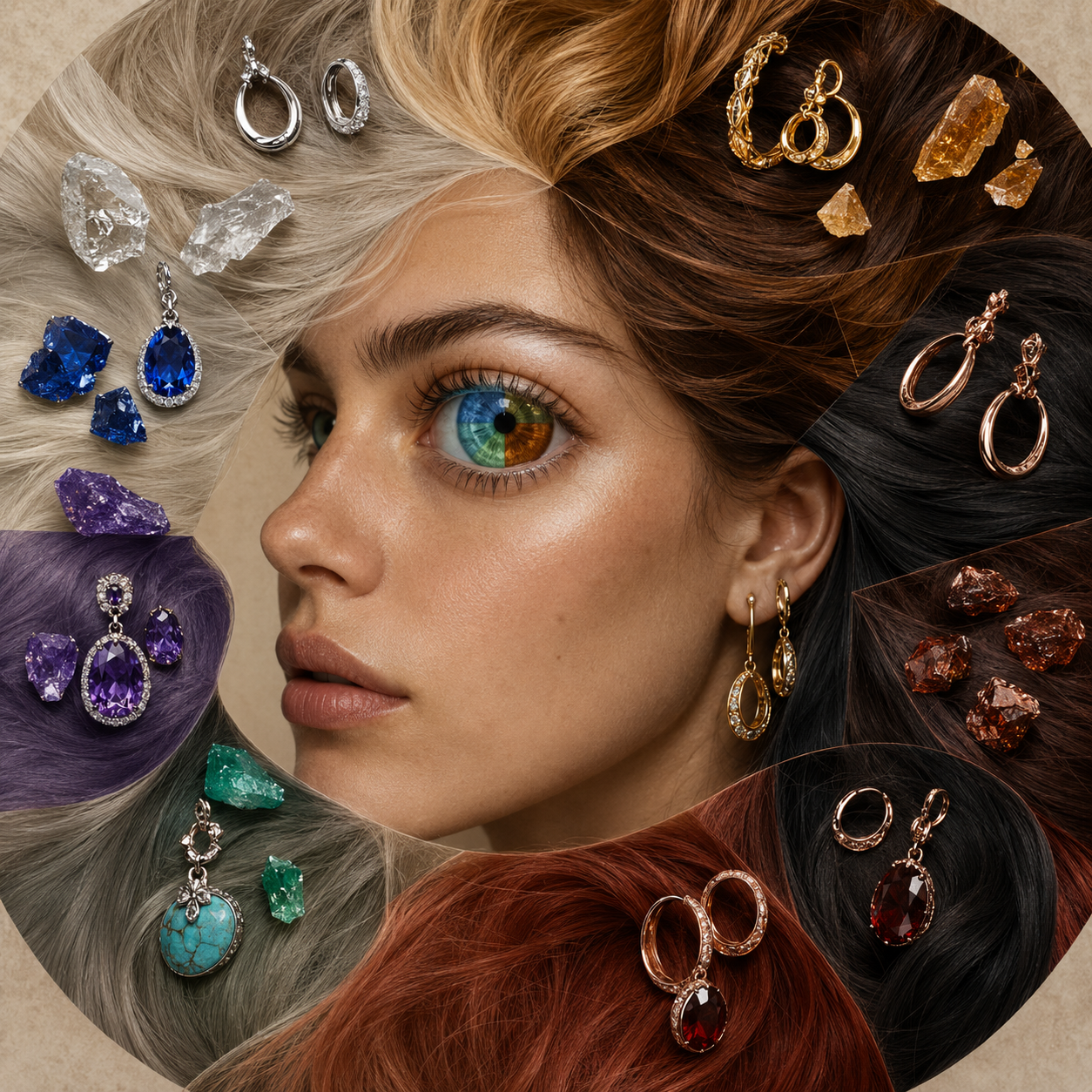
Choosing jewelry color for your whole face means lining up your undertone with your eye color and hair color. Metals frame your skin, gemstones talk to your eyes, and everything sits against your hair.
When those three elements agree, your features look brighter even if you slept four hours. Research on the effectiveness of color perception in jewelry design shows that people respond strongly to color harmony in selfies, which is why certain combinations quietly gain more likes and shares. Jewelry is just a fast, shiny way to build that harmony.
Think of metal color as your base, then use gemstones to either echo or contrast your eyes. Finally, look at your hair as a background that can boost or soften everything happening on your face and neck.
Best Jewelry Colors For Your Eye Color
Blue eyes tend to love cool metals. Silver, white gold, and platinum echo the cool temperature of blue and keep everything feeling crisp. If you stack that with blue stones like sapphire, blue topaz, or aquamarine, your eyes can look almost neon in direct light. Purple stones like amethyst also work nicely because they sit close to blue on the color wheel, so the contrast is soft instead of loud.
Green eyes usually look intense with warm metals. Yellow and rose metals create a warm frame that makes green stand out, especially in sunlight. Amethyst is a classic choice here because purple sits opposite green, so it creates instant color pop. Warm green stones, citrine, and amber also help the green tones in your eyes show up more clearly.
Brown eyes are flexible. Yellow and rose metals echo their warmth, especially with earth toned stones like garnet, smoky quartz, or honey topaz. On the other hand, strong jewel tones like emerald or sapphire set against silver can make brown eyes look dramatic and deep. Because brown eyes work with so many directions, you can decide whether you want cozy and earthy or high contrast and sharp on any given day.
Hazel eyes are shape shifters. Gold or rose metals can pull out the brown and golden parts, especially with amber or warm green stones. Silver or white metals paired with green stones tend to bring out the greener areas. If you like playing with your look, hazel eyes give you room to flip which color is dominant just by swapping metals and gemstones.
Hair Color, Contrast, And Your Best Metals
Hair color changes how jewelry reads because it sits right behind your earrings and many necklaces. Cool blondes with ashy or platinum shades often look freshest in silver, white gold, and icy pastels like aquamarine or pale amethyst. That combo leans into the clean, minimal mood you see all over Pinterest boards labeled Scandinavian or clean girl.
Warm blondes with honey or strawberry tones usually glow in yellow or rose metals. Turquoise, warm pinks, and golden stones bring out both their hair color and any tan they have picked up. Brown hair adds depth, so it pairs well with both metallic families. Yellow metal looks rich and classic against brown, while silver or steel feels modern and sharp, especially with strong jewel tones like sapphire or emerald.
Very dark or black hair creates strong contrast with both skin and metal. Silver near dark hair looks edgy and futuristic, while yellow metal reads royal and dramatic. Bright stones like emerald, cobalt, and clear crystals stand out in a big way against that backdrop. Red, copper, or auburn hair already has a lot going on, so warm metals and green or navy stones work well, since green sits across from red on the color wheel.
On deep skin tones, it helps to pay attention to both undertone and hair. Cool deep skin with dark hair plus silver and jewel tones looks rich and intense. Warm deep skin with dark hair, bold yellow metal, amber, and teal stones looks grounded and luxurious. Once you start seeing those combinations on yourself and others, your *jewelry color choices* stop feeling random.
Jewelry Color And Seasonal Palettes (Spring, Summer, Autumn, Winter)
Seasonal color palettes take undertone, depth, and contrast and sort them into four easy buckets: Spring, Summer, Autumn, and Winter. Each season comes with clothing colors, and those same ideas apply directly to *jewelry color choices*.

Color analysis creators on TikTok have pushed these palettes hard, and the hashtag for color analysis has gathered hundreds of millions of views, according to Vogue Business. That attention exists because people really do notice when metal and gemstones line up with their season. You can treat seasons lightly, but if you already know yours, you can speed up metal and stone decisions.
Think of seasons this way. Spring and Autumn are warm, with Spring lighter and brighter and Autumn deeper and earthier. Summer and Winter are cool, with Summer soft and muted and Winter bold and high contrast.
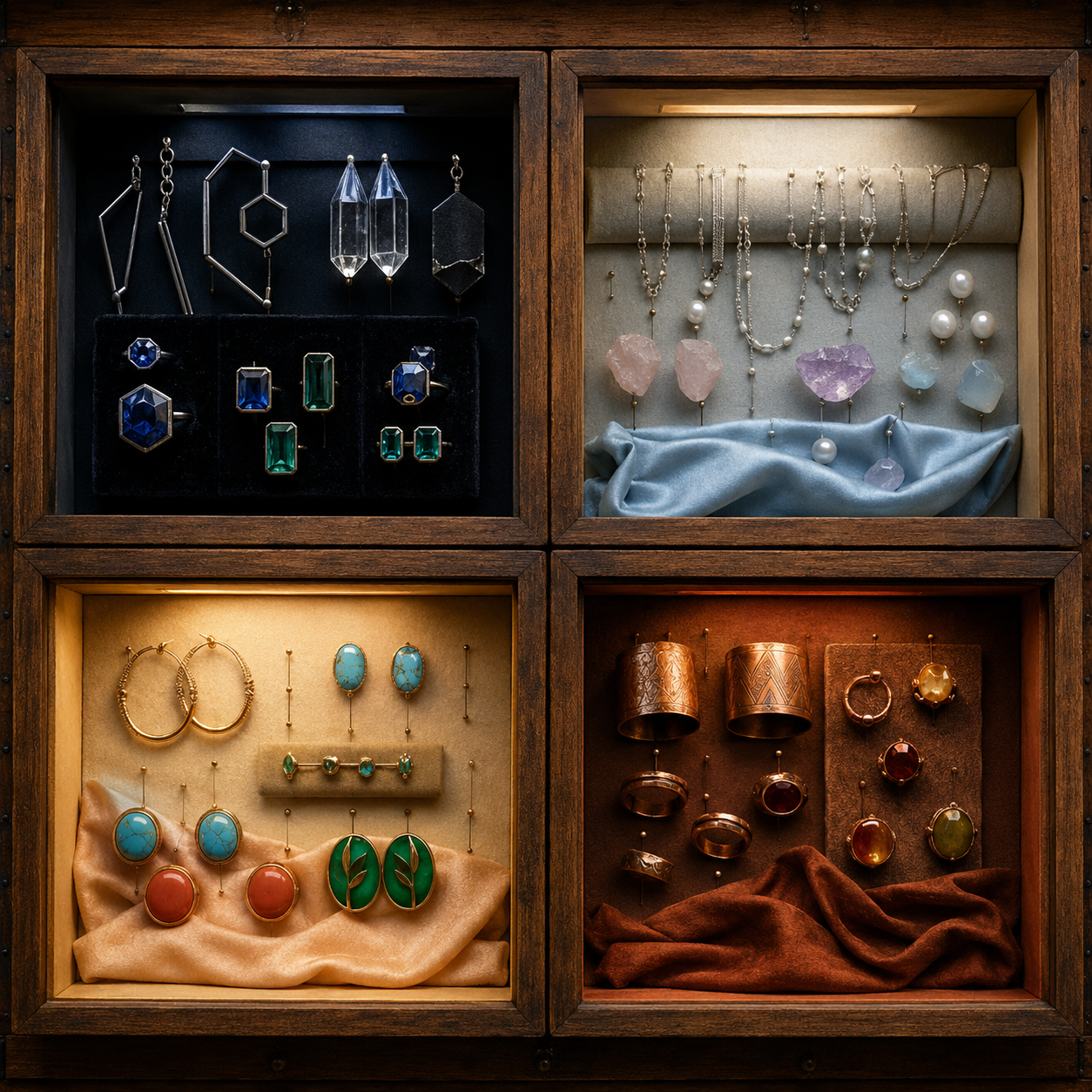
Which Jewelry Colors Work Best For Your Season?
Winter types are cool with sharp contrast. Silver, white gold, and platinum sit best next to their skin, especially with bright jewel tones like royal blue, emerald, amethyst, and true red. Clear crystals, diamonds, and icy stones mirror that crisp energy. Winter outfits often look incredible with bold, structured jewelry and high contrast stacks.
Summer types are cool but softer. They usually look great in silver and white gold, but their stones should be more muted: lavender, dusty rose, soft blue, and milky pearls. Anything too neon can overpower them fast. Minimal, delicate pieces layered lightly tend to feel more natural than huge, chunky items.
Spring types are warm, bright, and light. Yellow and rose metals bring out their peachy or golden skin, while stones like turquoise, coral, and fresh greens keep things playful. Pastel warm tones like peach or light melon look especially good. Their jewelry can be bright without feeling heavy, which matches the lightness of their features.
Autumn types are warm and rich. Deep yellow metal, rose gold with a brassy cast, brass, and copper all sit comfortably on their skin. Stones in teal, olive, amber, and brick red fit right in with earthy clothes. Autumn people often look amazing in slightly vintage or boho styles that use textured metals and warm stones.
Jewelry Color Trends 2026: How To Use Them Without Trashing The Rules
Jewelry color trends in 2026 lean loud and reflective. Fashion reports from sources like Vogue and Business of Fashion point to chunky chrome finishes, colored enamel, bright glass stones, and mixed metal chains everywhere. The trick is using those trends in ways that still flatter your features.
Cool seasons like Winter and Summer can ride the chrome and silver wave hard with layered white metals and neon cool stones. Warm seasons like Spring and Autumn can tap into the trend with warm toned enamel, gold based chrome finishes, and bright stones in coral, teal, or lime. You treat the trend pieces like accents and keep your everyday earrings or main necklace in your best metal so your face still looks its best.
One smart move is to keep a small trend section in your collection instead of rebuilding everything each season. You can keep your base palette stable and rotate fun color experiments in and out without blowing up your whole look.
Gold Vs Silver Vs Rose Gold: A Practical Comparison Guide
Choosing between gold, silver, and rose gold is not just about color; it is also about budget, skin comfort, and how your pieces age. This section gives you a fast comparison so your *jewelry color choices* line up with your wallet and your skin, not just your eyes.
Metals that look the same color can act very differently in real life, especially with water, sweat, and daily wear. According to consumer research from Statista, spending on fine jewelry keeps growing faster than pure fashion pieces, which suggests people care more about longevity now. That does not mean everything has to be solid gold, but it does mean quality and metal type matter.
Think of each metal color as a family with several budget levels. You can decide where to invest and where to chill based on how often you will wear something and how close it sits to your skin.
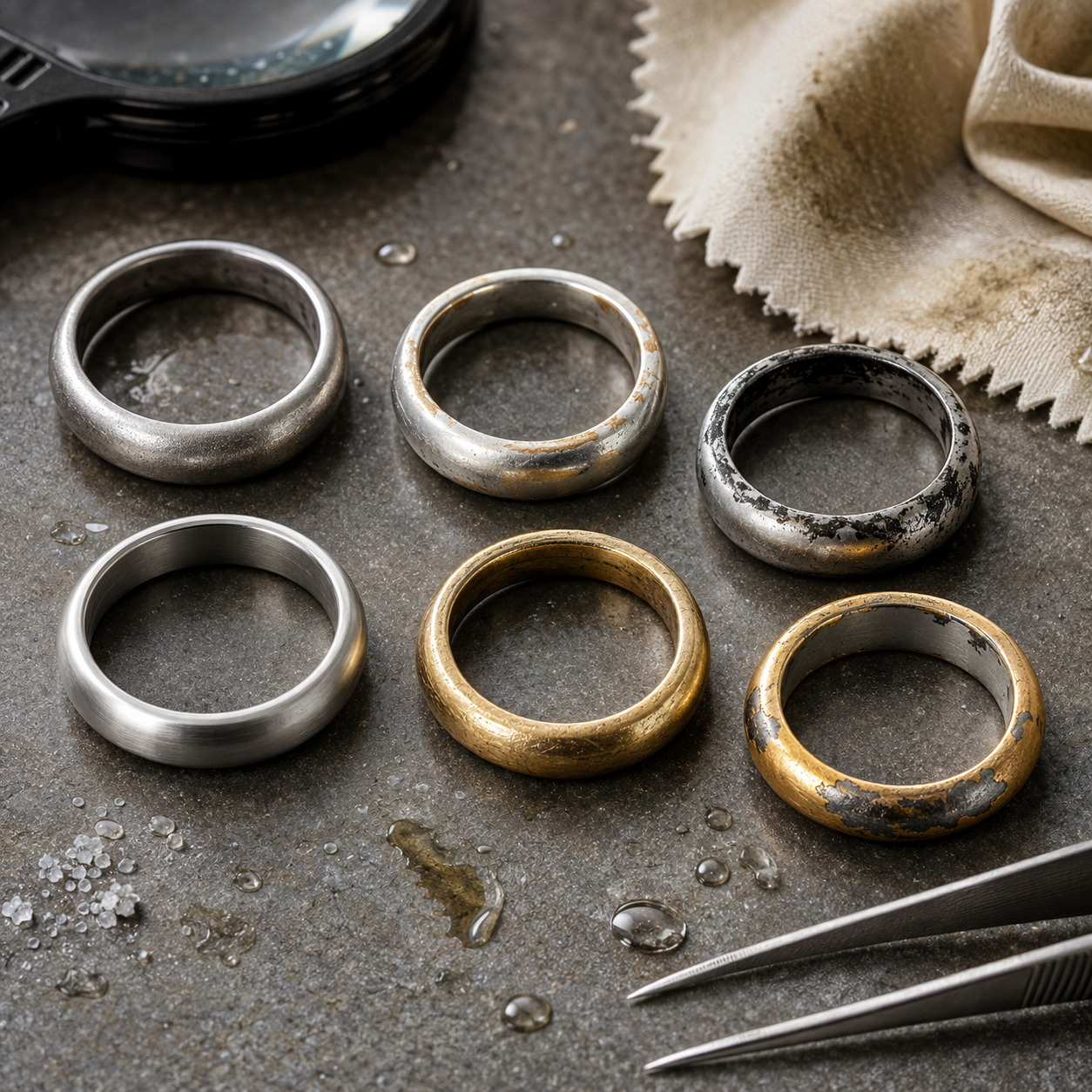
Aesthetic, Cost, And Longevity: Gold-Tone Vs Silver-Tone Vs Rose Gold
Gold tone pieces live on a spectrum. Solid yellow metal in 10k, 14k, or 18k holds color for the long haul and stands up to daily wear, which suits rings and earrings you never take off. Vermeil and gold filled pieces give you real metal on the outside with a lower price, which works for bracelets and necklaces you wear often but not every single day. Ultra thin plated pieces and plain brass are fine for short trend phases, but they will fade or discolor faster with water and sweat.
Silver tone options range from platinum to steel. Platinum is pricey but very strong and naturally white, so it keeps its shine and resists scratching, which is why it is popular for engagement rings. White gold gives a similar look at a lower cost, but it usually has a rhodium coating that can wear down and need refreshing over time. Sterling silver is more affordable and easy to polish, while stainless steel is very tough and cheap, perfect for casual rings and chains.
Rose metal shades usually sit at the mid to fine level. Solid rose gold behaves much like yellow gold but with copper mixed in for color, while rose vermeil and filled pieces feel similar to their yellow cousins in cost and wear. The rosy tone often looks softer on the skin, which makes it a favorite for everyday stacks. When you choose where to spend more, focus on pieces you wear daily near your face, like small hoops or a main chain, since those affect your look the most.
Metal Sensitivity And Hypoallergenic Color Choices
If your ears get itchy or your neck breaks out, your *jewelry color choices* also need to factor in allergies. The American Academy of Dermatology notes that nickel allergy is one of the most common metal allergies worldwide, especially in people who wear a lot of body jewelry. Many cheap alloys and some white gold mixes use nickel to harden the metal, which is where the problem starts.
Better options for sensitive skin include platinum, titanium, surgical steel labeled hypoallergenic, high quality sterling silver, and nickel free white gold. These still come in silver tone and gold tone looks, so you do not have to give up on your color preferences. If you want a gold look with less risk, solid 14k or higher from a reputable source tends to be safer than mystery base metals under thin plating.
Comfort always wins over trend when it comes to piercings and rings you never remove. No metal color is cute enough to justify constant rashes, so use your best, safest pieces in high contact spots and keep any questionable finds for short wear windows or areas with tougher skin.
How To Mix Gold And Silver Jewelry Without Looking Like A Thrift Bin
Mixing gold and silver used to be called a mistake; now it is a whole aesthetic. Done well, mixed metals make your *jewelry color choices* look intentional and layered instead of matchy and flat.
Style writers at places like Refinery29 and Who What Wear keep calling out mixed stacks as a lasting trend, so this is not going anywhere. The secret is structure. You give your stacks a clear leader and make sure both metals repeat enough that your brain reads a pattern.
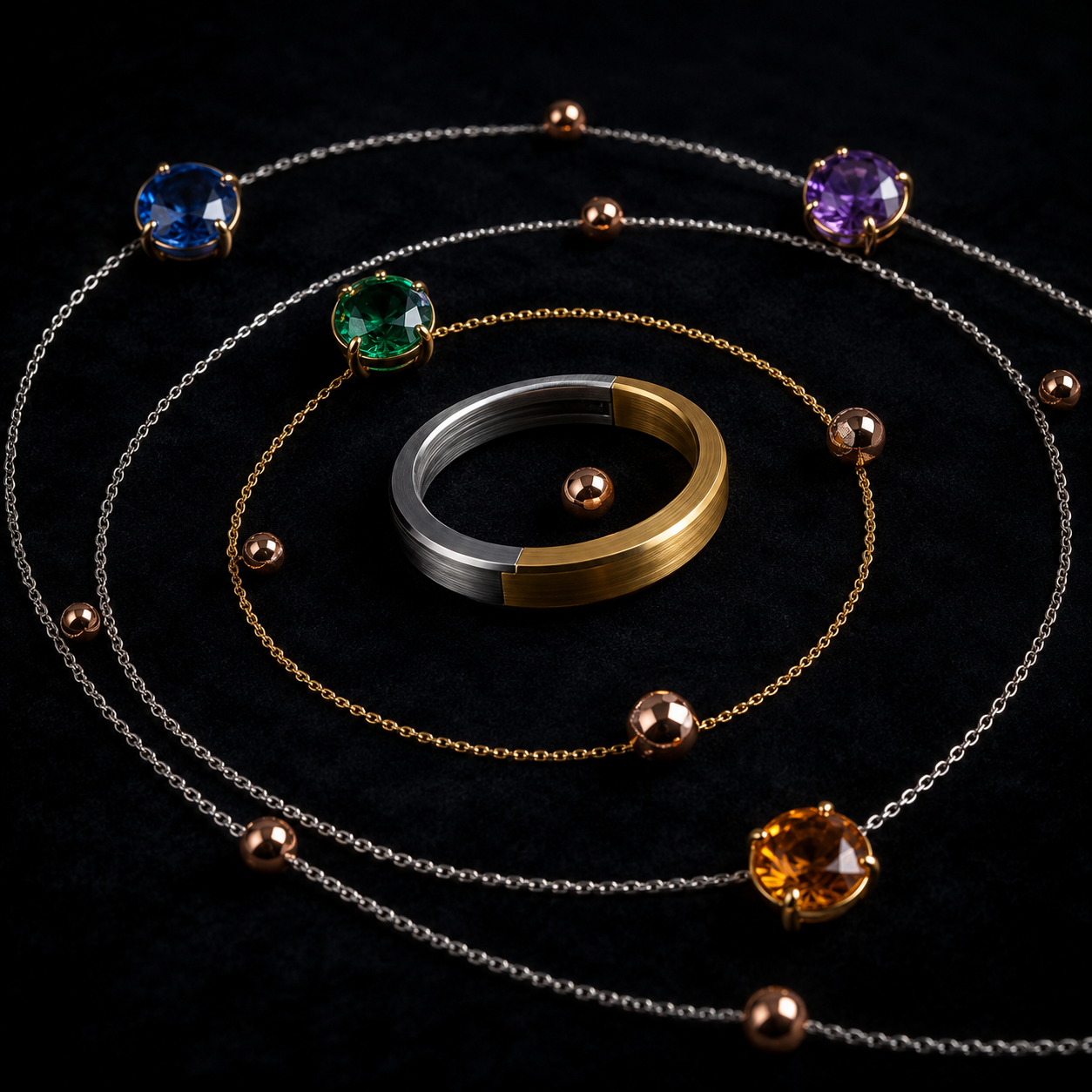
You also respect your undertone near your face and get wilder farther away. That is why mixing tends to start with rings and bracelets before people feel brave enough to mix their necklaces and earrings.
Rules-That-Aren’t-Rules For Mixed Metal Jewelry Styling
Pick one metal to lead the group. If about two thirds of your visible jewelry is silver, your stack will still feel mostly cool even if gold sneaks in. The same works in reverse when gold is your base. This keeps your look from feeling like a random fifty fifty split, which can confuse the eye.
Repeat each metal at least twice. One lonely silver ring in a sea of yellow metal feels like a mistake, but a silver ring plus silver chain plus silver hoop start to look planned. Repetition tells your brain this is a pattern, not an accident. As designer Miuccia Prada once said,
“Fashion is instant language.”
Your repeating metals are part of that language.
Use bridge pieces when you can. Rings or bracelets that already combine gold and silver in one design glue the stack together. Keeping scale similar also helps, so wear all dainty chains together or all chunky pieces together. Mixed metal stacks look messy mostly when the sizes, textures, and colors all fight each other at once.
Where To Bend Your Undertone Rules With Mixed Metals
Mixed metals let you stay loyal to your most flattering metal near your face while still playing around. If you have a cool undertone, you might wear silver or white gold hoops and a short silver chain, then add a couple of thin yellow metal rings and maybe a gold bracelet. Your face still gets the best highlight, but your hands show off more variety.
Warm undertones can flip that recipe. They might keep yellow or rose metal in earrings and main necklaces, then slide in some silver or steel rings for contrast. Neutral undertones get to be the chaos agents who put both metals everywhere, as long as the stacks feel balanced.
Intentional clashes can look amazing too. A very cool Winter type in an all black outfit with a stack of bold yellow chains looks editorial instead of wrong, as long as the rest of the styling supports that contrast. The more you understand why something usually works, the easier it is to break the pattern on purpose for drama.
Styling Jewelry Color With Clothes, Makeup, And Your Overall Aesthetic
Jewelry does not live alone; it lives inside outfits, makeup, and whatever vibe you are going for that day. Matching your *jewelry color choices* to those elements makes your look feel planned without turning you into a walking catalog.
Color psychology research shared by the Pantone Color Institute shows that warm colors feel energetic and cozy while cool colors feel calm and crisp. Metals work the same way. Warm metals sit best with warm outfits when you want harmony, while cool metals sharpen cool outfits when you want clarity.
Your aesthetic labels also influence your metal choices. A sporty outfit with a smartwatch and minimal studs often feels better with clean silver or steel, while a romantic dress might match layered yellow metal chains and soft stones. None of this is a rule, but understanding it makes getting dressed faster.
Matching (Or Clashing) Jewelry With Outfits And Hardware
Warm outfits with cream, beige, rust, orange, or olive tones usually look smoother with yellow, rose, or copper metals. The warmth of the clothes and the metals stack together and make your skin look extra toasty. Cool outfits built on black, white, gray, and icy blues feel sharper with silver and white metals. That combination leans more minimal and edited.
If you want a polished take, match your metal to your visible hardware. Silver zippers, belt buckles, and bag chains pair nicely with silver jewelry, while gold buttons or bag chains connect easily with yellow metal. When you want a more relaxed Gen Z feel, you can ignore hardware matching and instead make sure your jewelry stack itself has a clear plan.
The loud versus quiet rule helps with color too. If you are wearing neon enamel hoops or huge chrome cuffs, keep your clothes simple so your accessories carry the attention. If your outfit is already doing the most with bright prints or strong color blocking, calmer metal and stone choices will keep the whole look from crossing into costume territory.
How Jewelry Color Plays With Makeup, Teeth, And Selfies
Makeup sits right next to your jewelry, so they need to get along. Cool toned looks with berry lips, gray or silver eyeshadow, and cooler contour shades usually vibe with silver and icy stones. Warm makeup built on bronze, peach, coral, and gold lids naturally fits with yellow or rose metals and warm stones like amber or citrine.
On low effort or bare face days, either metal works; you can let outfits or undertone lead. If you are worried about how your teeth look in photos, remember that cool reflections can make teeth appear slightly whiter. Silver, white gold, and cooler lip shades do that, while very warm metals plus very warm lipstick can emphasize any yellow in your teeth under certain lighting.
One easy trick is to run a quick selfie test. Take the same photo with the same makeup and outfit, first in mostly silver near your face, then in mostly yellow metal. Scroll between them and see which one makes your skin and eyes look cleaner and brighter. According to Pew Research Center, most teens and young adults are already taking and sharing photos daily, so you might as well use that habit as a styling tool.
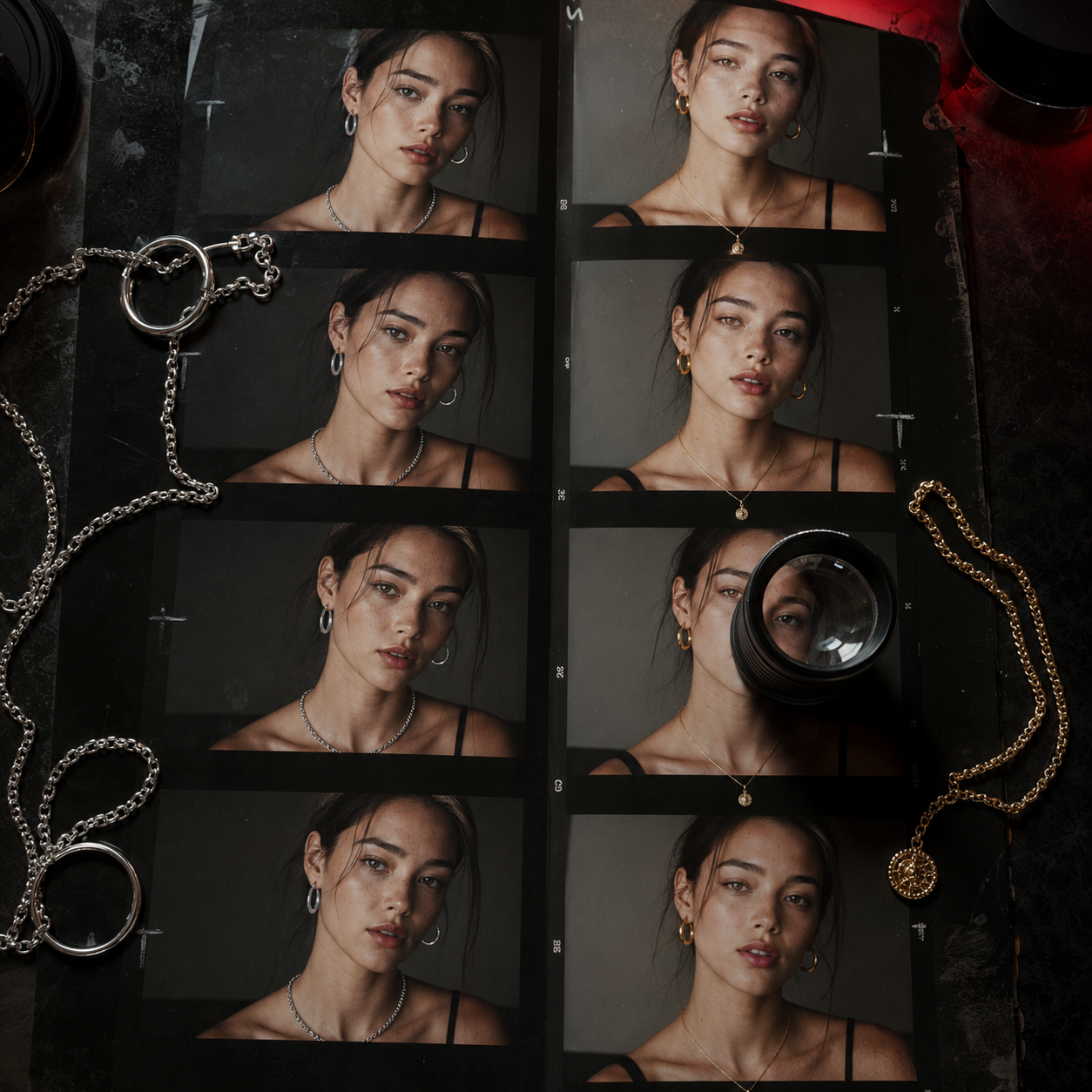
Virtual try on tools and filters can add another layer here. You can simulate different metal colors and stone shades before you spend any money, which keeps your future jewelry box from turning into a pile of almost right mistakes.
How To Build Your Signature Jewelry Color Story
A signature jewelry color story is just a fancy way of saying everything you own works together. Instead of random impulse buys, your *jewelry color choices* follow a simple palette that fits your face and your life.
Think about how people build capsule wardrobes. They pick a base of neutral clothes, then add a few accent colors that all work across outfits. You can do the same thing with metals and gemstones so that any combination of your rings, necklaces, and earrings looks intentional.
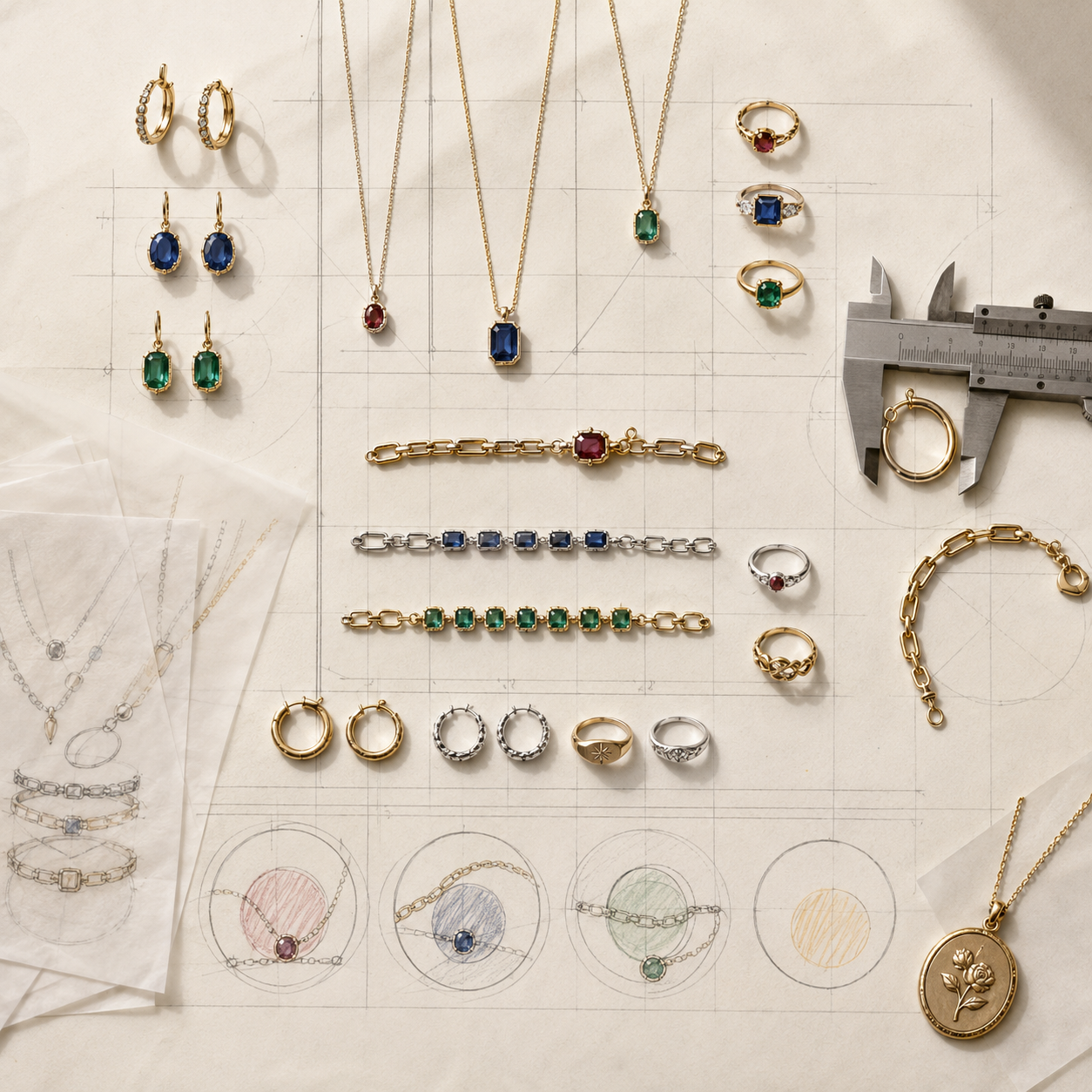
The goal is a small group of pieces you actually wear, not a giant box of items that never leave the tray.
Everyday, Occasion, And “This Is So Me” Jewelry Color Choices
Everyday pieces should match your undertone first. If silver flatters you most, build your daily studs, small hoops, and a simple chain in silver or white gold. If yellow or rose metal treats your warm skin better, make those your default base. Everyday stones can be clear crystals, simple blues or greens, or soft neutrals that match almost any outfit.
Occasion jewelry is where you can break your usual rules a bit. Big events, graduations, weddings, or photoshoots might call for bolder or higher contrast choices. A cool Winter type in a black outfit with yellow metal statement pieces can look dramatic in pictures, even if silver is usually more flattering in real life. You can think of these moments as style cosplay for a night.
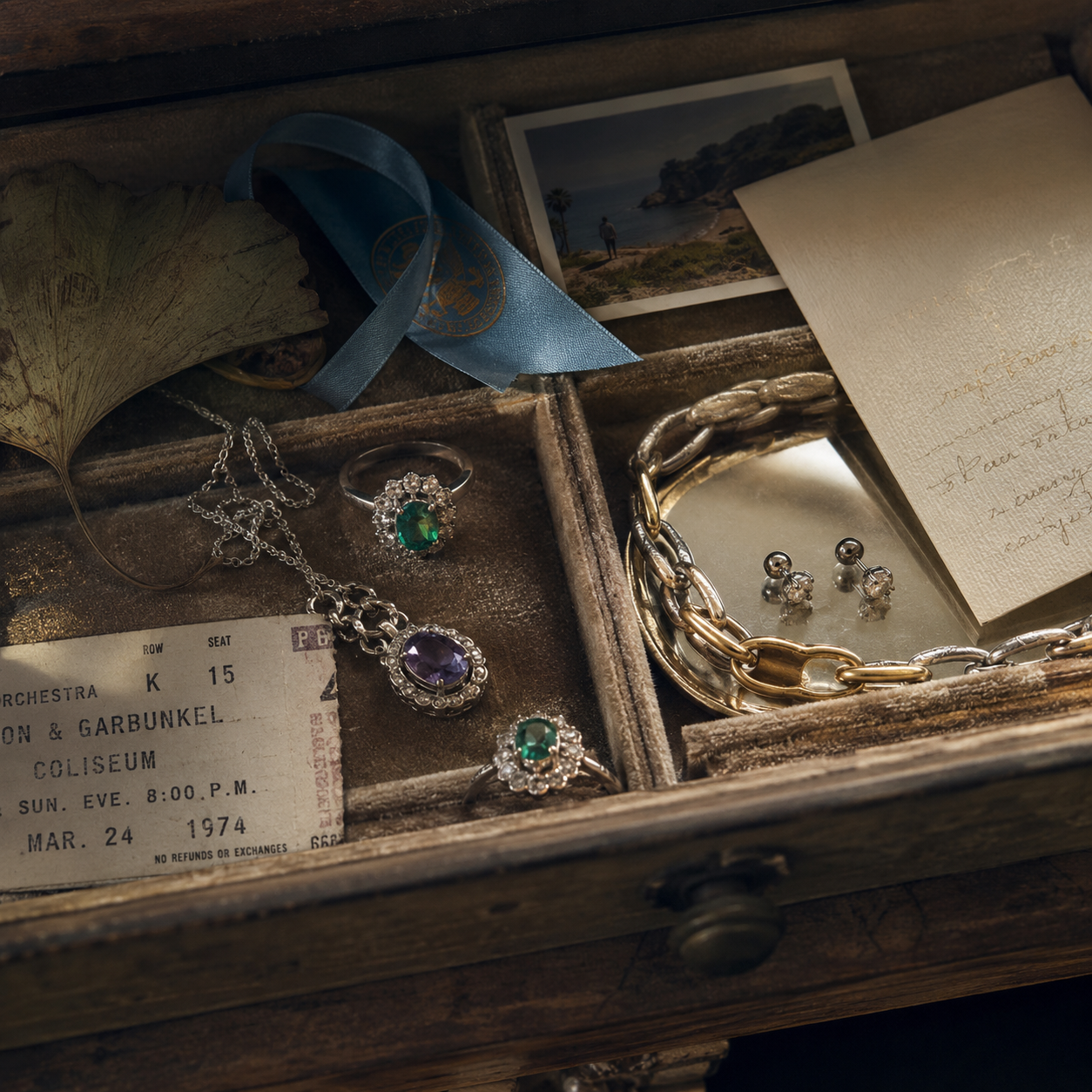
Signature pieces fall somewhere between everyday and special. They might be a gold and emerald ring everyone recognizes on you, a silver and amethyst pendant tied to a memory, or a particular stone color that shows up in half your photos. Sentimental value easily beats color theory here; rather than skipping an important item because the metal is not textbook perfect, you work the rest of your stack around it.
Step-By-Step: Build A Capsule Jewelry Color Palette
Step one is to confirm your undertone and main metal with real photos. Use the tests from earlier, then take a few selfies wearing mostly silver near your face and a few wearing mostly yellow or rose metal. Whichever set makes your skin smoother and your eyes brighter is your starting base. That does more for your confidence than any random trend.
Step two is to choose a primary metal for about seventy percent of your collection and an optional secondary metal for the rest.
Step three is to pick two or three hero stone colors that flatter your eyes, hair, and favorite outfits. For example, a cool neutral person might decide on silver, plus sapphire, amethyst, and clear stones, while a warm Autumn type might go for yellow metal with teal, amber, and garnet.
Step four is to audit what you already own. Pull everything out, sort it by metal and stone color, and notice which pieces fit your new palette, which can be restyled, and which should probably be donated or sold.
Step five is to plan your next few purchases based on gaps, not passing vibes. Maybe you realize you own ten loud rings but zero simple everyday studs, or all your necklaces are different colors, which makes stacking hard.
If you like tech, you can test combinations with color matching filters and AR tools — a approach supported by research on combining AIGC and virtual simulation technology to enhance personalization in jewelry design. That way you can experiment with future stacks on your face, not just on a website model who looks nothing like you.
Kokkuvõte (Putting It All Together)
Jewelry stops being confusing once you see the pattern. Your undertone picks the metal family that flatters you most, your eyes and hair help you choose stone colors and contrast, and your clothes and makeup tie the whole thing into a story.
Gold vs silver is not a moral decision, it is just one of many tools you can use to guide your vibe. Mixed metals, seasonal palettes, and 2026 trends all fit into that picture once you know which shades make you look bright, awake, and like yourself. The goal is not perfection; the goal is to understand why something works so you can repeat it on purpose.
From here, start small. Pick your main metal, pull out what you already own, and see which pieces truly support your face and your style. Build a simple, color aware collection instead of panic buying every cute bracelet you see online. Once your *jewelry color choices* line up with your actual features, getting dressed feels less like a puzzle and more like a mood board you can wear.
Frequently Asked Questions
Question: How Do I Choose Between Gold Vs Silver Jewelry If I’m Still Not Sure About My Undertone?
Pick between gold and silver by using your own selfies as the judge. Take close photos in natural light wearing only silver near your face, then only yellow or rose metal. Whichever set makes your skin smoother and your eyes brighter should be your default near your face. You can still experiment with the other metal on rings and bracelets while you gather more clues.
Question: What’s The Best Jewelry Color For Fair Skin Tone?
The best jewelry color for fair skin depends on undertone, not lightness. Cool fair skin usually looks great in silver, white gold, and icy stones or jewel tones. Warm fair skin often glows in light yellow or rose metals with soft warm gems like peach, turquoise, or light greens. Neutral fair skin can wear both and can let hair, eyes, and outfit colors decide day to day.
Question: What Jewelry Colors Look Best On Dark Skin Tones?
Dark skin looks incredible in strong metals and rich stones when undertone is matched. Cool deep skin often shines in silver or white metals with jewel tones like emerald, sapphire, and amethyst. Warm deep skin usually loves bold yellow metal, bronze, and copper with amber, teal, and deep red stones. High contrast and bright color both sit especially well on deep complexions.
Question: Is White Gold Or Silver Better For Cool Skin Tones?
Both white gold and silver work well for cool undertones, so the choice comes down to cost and maintenance. White gold feels more formal and usually has a rhodium coating that may need redoing over time. Silver is cheaper, can tarnish, but is easy to clean at home. Pick based on budget, how polished you want to look, and how often you wear the piece.
Question: Can I Wear Rose Gold If I Have A Cool Undertone?
Yes, many cool undertone people wear rose metal really well. The pink base often harmonizes with rosy skin instead of fighting it. Look for softer, less orange versions and pair them with cool stones like amethyst, icy pinks, or clear crystals. If strong rose metal feels odd right next to your face, keep it in rings or longer necklaces instead.
Question: How Do I Layer Gold And Silver Necklaces Without It Looking Messy?
Layer gold and silver necklaces by giving one metal the lead and keeping lengths organized. Start with mostly one color of chain, then add one or two pieces of the other at clearly different lengths so each layer reads separately. Keep all chains either mostly delicate or mostly chunky for cohesion. Repeat each metal at least twice somewhere in your stack so nothing feels random.
Question: What’s The Difference Between Yellow Gold Vs White Gold Vs Platinum For Everyday Wear?
Yellow gold gives a warm tone that flatters many warm or neutral skins and is durable in 14k or 18k for everyday wear. White gold looks cool colored and polished, but usually has a rhodium coating that can wear down and need refresh over the years. Platinum is naturally white, very durable, and hypoallergenic, but usually costs more. Choose with your preferred color, skin sensitivity, and budget in mind.
