
One day, your usual hoodie stops working. It feels wrong.
Every outfit in your closet whispers, “blend in.”
Then your brain goes, “absolutely not.”
That’s where punk fashion history and influence lives.
That tiny, explosive moment when clothes quit being “nice” and start shouting for you.
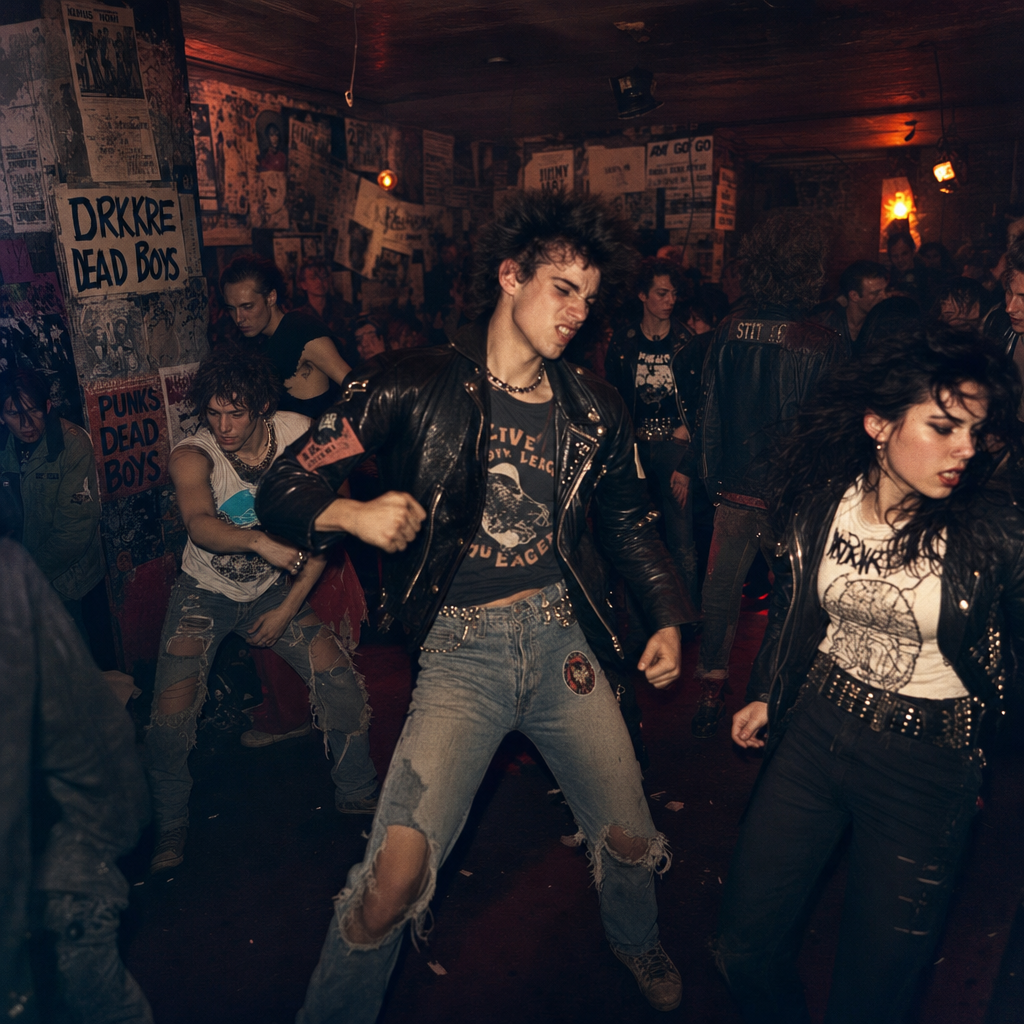
Ripped jeans that look like they made it out of a knife fight.
A safety pin jammed through a shirt collar because buttons were too polite.
A cracked leather jacket with DESTROY slapped across the back in messy paint.
The kind of outfit that makes at least one stranger squirm on the train.
Now picture doomscrolling a site selling “punk-inspired” hoodies for twelve bucks, pre-ripped and pre-faded in a factory.
Click add to cart. Free shipping. Done.
Somewhere, an old-school punk screamed into the void.
So what happened in between?
How did a style born from rage, thrift bins, and actual garbage bags turn into a filter-friendly aesthetic?
So what does punk fashion history and influence even mean when you’re getting dressed in 2026 and don’t want to look like you’re wearing a costume?
This article tracks the real thing.
Where punk came from. What those ripped clothes were yelling.
How the look split into subcultures, hit the runway, and slid into TikTok feeds.
Most of all, it shows you how to borrow from punk fashion history and influence now without losing yourself along the way. If head-to-toe punk feels like wearing a costume in 2026, borrowing elements into a casual chic framework keeps the attitude without the theater.
Sources used: museum exhibits on punk clothes, fashion history books on 1970s subcultures, designer interviews, and archives on CBGB, Vivienne Westwood, and the Sex Pistols.
Where Punk Was Born: Streets, Rage, And Safety Pins
Before punk fashion history and influence turned into catnip for think pieces, it was anger. With a beat.
Mid‑1970s Britain and the US were a mess. Jobs disappeared, politicians lied, and whole neighborhoods got written off.
Young people weren’t bored. They were furious. And invisible.
In New York, all that fury crashed into a grimy club called CBGB.
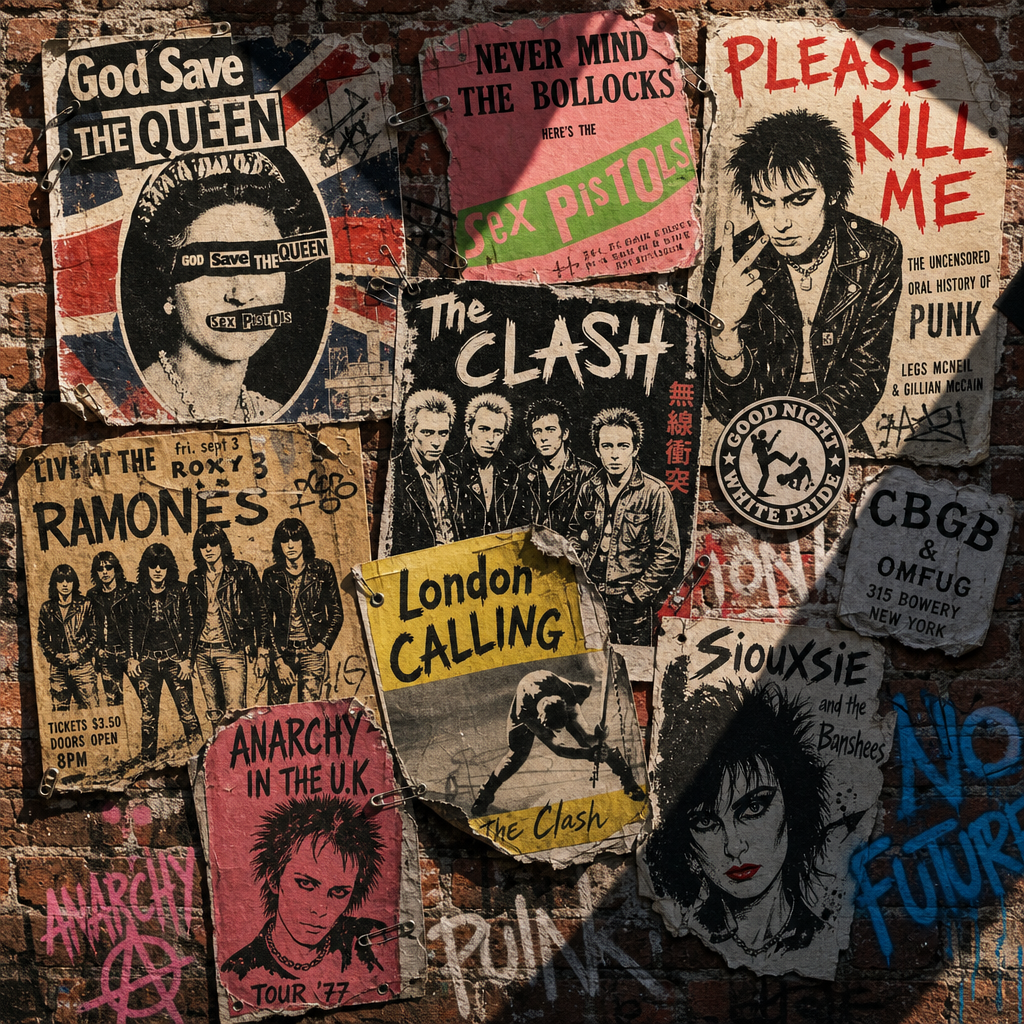
The Ramones kept rolling onstage in the same outfit: leather jackets, skinny jeans, beat‑up Converse. Today, leather pants carry that same rebellious DNA into 2026, having evolved from stage gear to versatile minimalist staples. No glitter. No sequins. No drama. Just a uniform that said, “We’re not here to impress you.” That utility-first attitude also lives on in outerwear like hooded trench coats for men, where function and edge meet in one practical layer. That low-effort, high-attitude mix still shows up in Veronica Mars outfits, where practical pieces and grit do the talking without trying too hard.
Richard Hell, first with Television and later his own band, cranked the look up a notch. Punk also helped normalize clothing as provocation, a thread you can see again in surrealism in fashion, where garments use shock and visual disruption to make a point.
He hacked up T‑shirts. Tore them apart, pinned them back together, and scrawled “Please Kill Me” across the front.
The clothes looked like they were coming apart on purpose. That was the point.
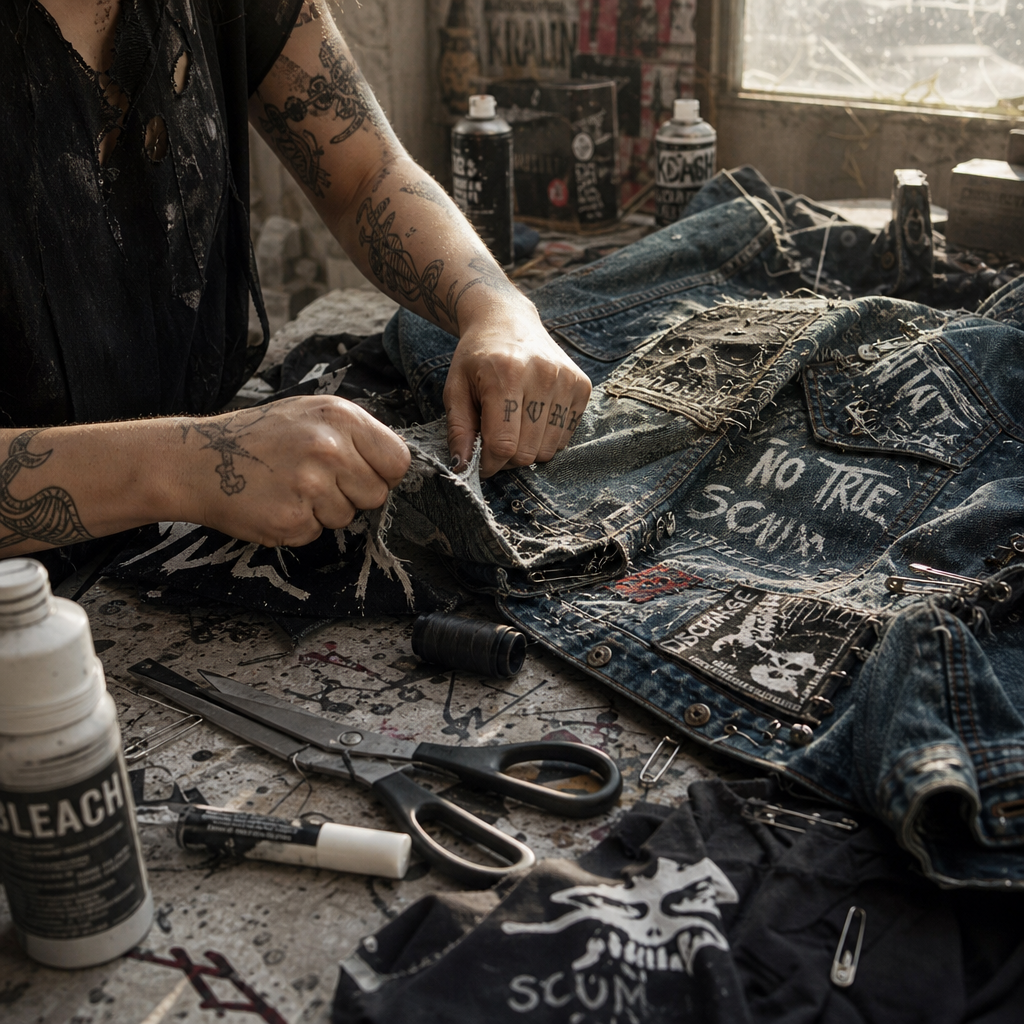
That New York side of punk fashion history and influence stayed minimal, cheap, and anti-glam.
Across the Atlantic, London poured on gasoline.
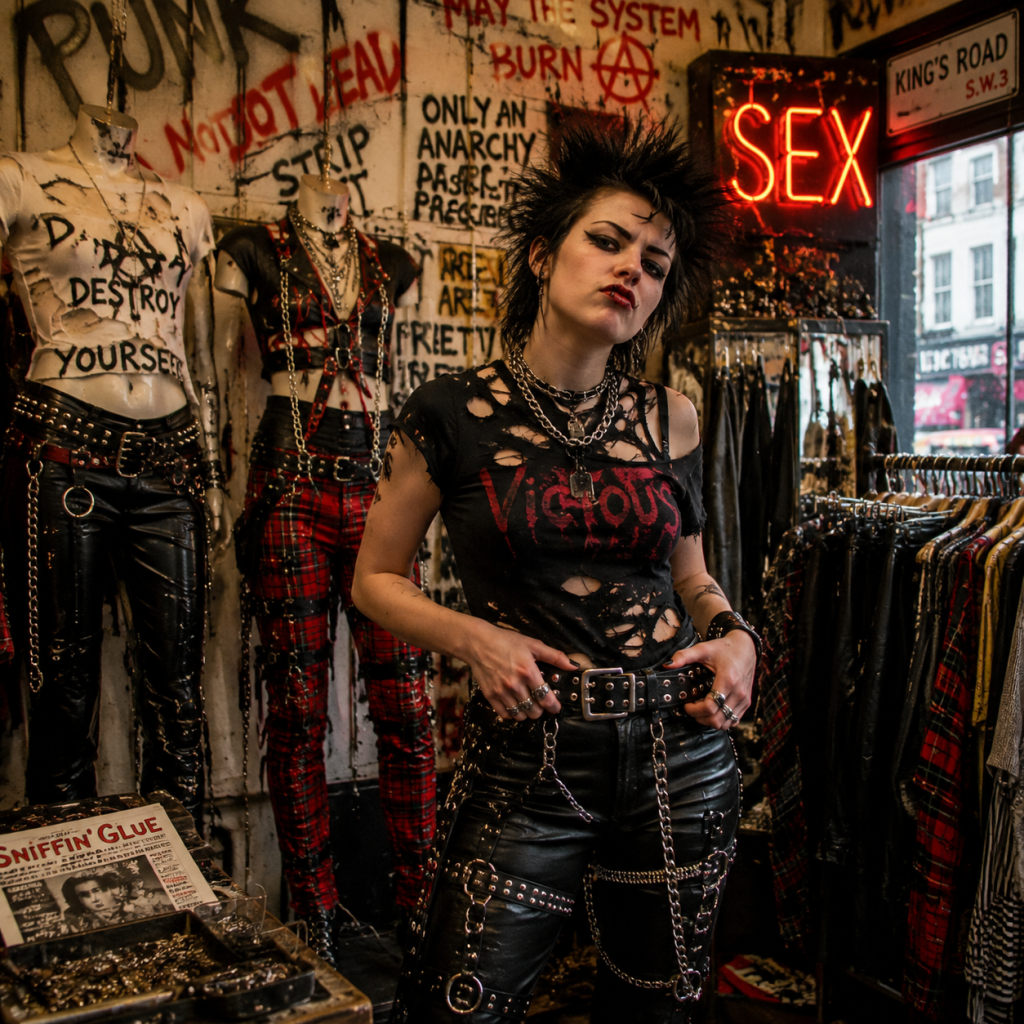
Vivienne Westwood and Malcolm McLaren ran a tiny shop on King’s Road. It kept shape-shifting: Let It Rock, then Too Fast to Live, Too Young to Die, then plain old SEX.
Inside, they sold bondage trousers, fetish gear, ripped shirts, and tees printed with stuff meant to offend everyone at Sunday lunch.
McLaren managed the Sex Pistols. He dressed them straight off the shop racks.
The band turned into walking ads for Westwood’s vision. Safety‑pinned shirts. Disturbed graphics. Chains. Sneers.
New York sneered under its breath. London screamed in your face. Then it threw a safety pin.
McLaren caught the New York scene while working with the New York Dolls. Then he hauled that raw energy back to London and turned the volume up with Westwood’s designs.
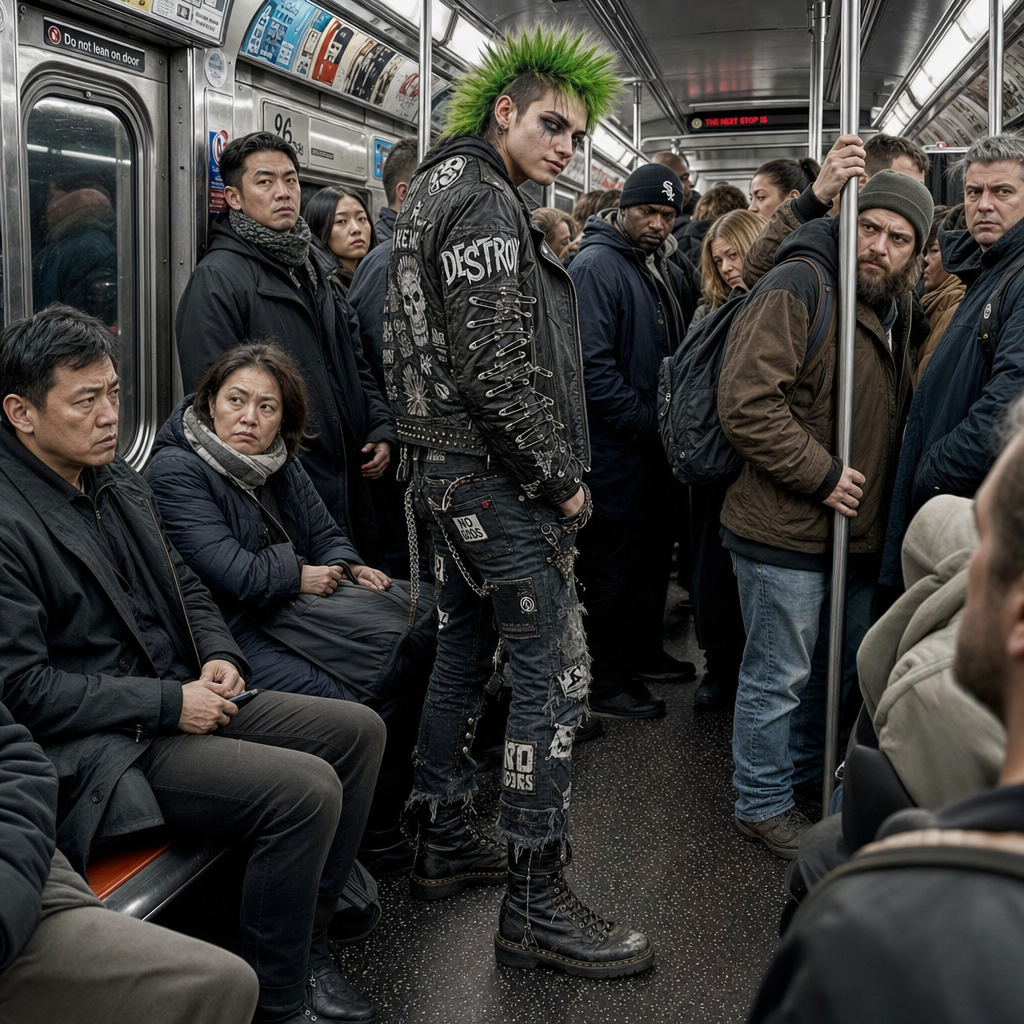
New York and London bickered and flirted through music, clothes, and attitude. Together, they built early punk fashion history and influence.
“You have a more interesting life if you wear impressive clothes.”
— Vivienne Westwood
Quick cheat sheet for the vibe:
| Feature | New York Punk | London Punk |
|---|---|---|
| Main Venue | CBGB | King’s Road, SEX / Seditionaries, tiny clubs |
| Core Style | Simple leather jackets, jeans, sneakers | Bondage trousers, fetish wear, shredded tees |
| Attitude | Minimal, deadpan, anti‑glam | Loud, theatrical, openly confrontational |
| Key Faces | The Ramones, Richard Hell | Sex Pistols, Siouxsie Sioux, Jordan, Westwood & McLaren |
| Politics | Vague rage, boredom | Direct attacks on monarchy, class, and respectability |
The Punk Aesthetic: What The Look Actually Meant
At first glance, those early outfits look like a mess.
Rips everywhere. Offensive graphics. Trash turned into clothes.

But punk fashion history and influence tells a different story. Every rip and slogan hit like a sentence in a louder language.
Clothes quit being decoration and turned into protest signs.
You didn’t just wear punk. You fought with the world using fabric, pins, and ink.
The DIY Ethos: Why “Broken” Was Beautiful
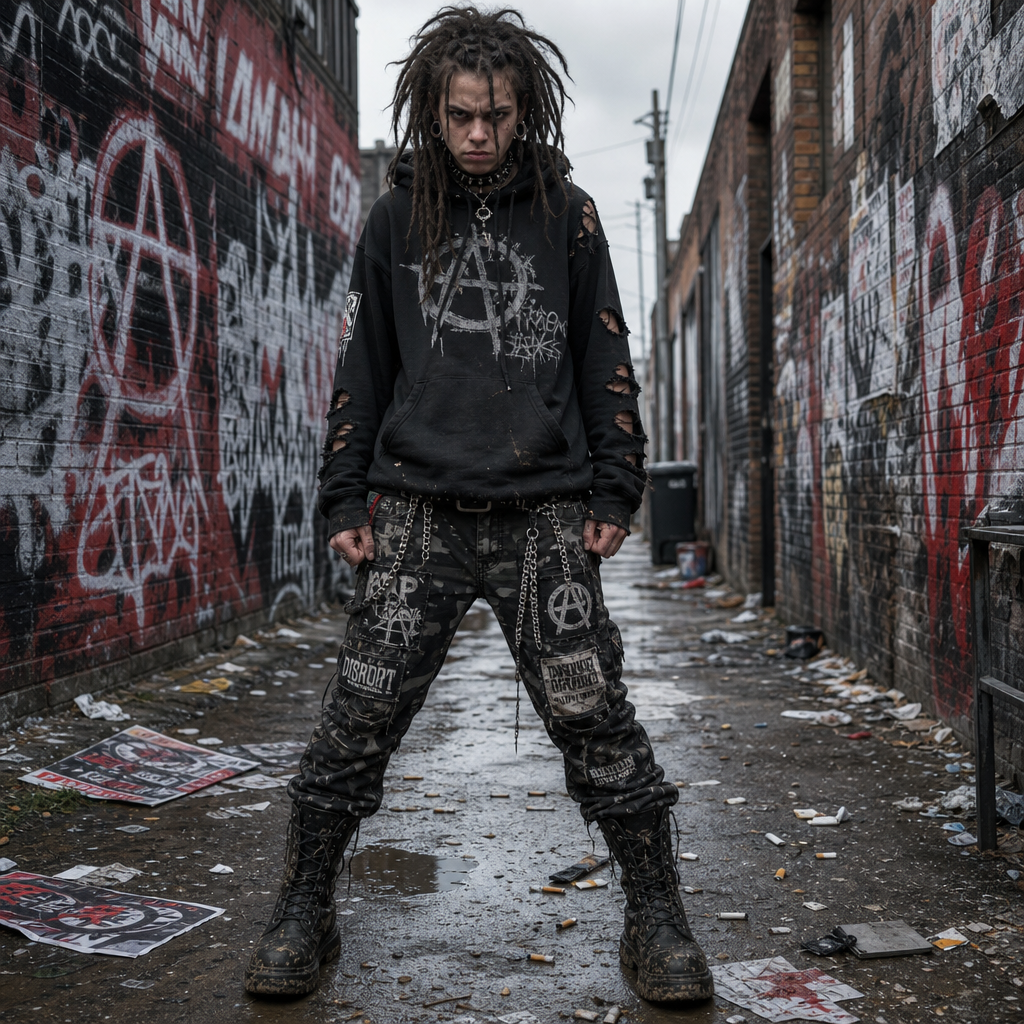
DIY ethos was the whole point of the look.
Punk kids didn’t have money for fancy gear. The same rebellious instinct shows up beyond clothes, too, especially in vampire haircut styles that lean dark, dramatic, and deliberately anti-polished. And they weren’t about to fake it.
They hit thrift stores, markets, and closets. That scrappy approach to sourcing clothes mirrors how modern wardrobes still rely on secondhand finds to build authentic style without draining your bank account. Then they ripped it all apart.
A black garbage bag turned into a dress. A school blazer picked up studs, marker, and an attitude problem.
Wrecking stuff wasn’t an accident. It was the whole point.
T‑shirts looked like scissors went feral, then someone tried to save the mess with tape or safety pins. Jeans got bleached, burned, or painted on.
High fashion calls that rough look “deconstruction” now. Early punk fashion history and influence did the same thing on almost no budget.
Safety pins became tiny legends.
They held clothes together.
They also went through ears, noses, and sometimes cheeks.
They suggested something fragile getting forced to hold together. It matched the mood of that time a little too well.

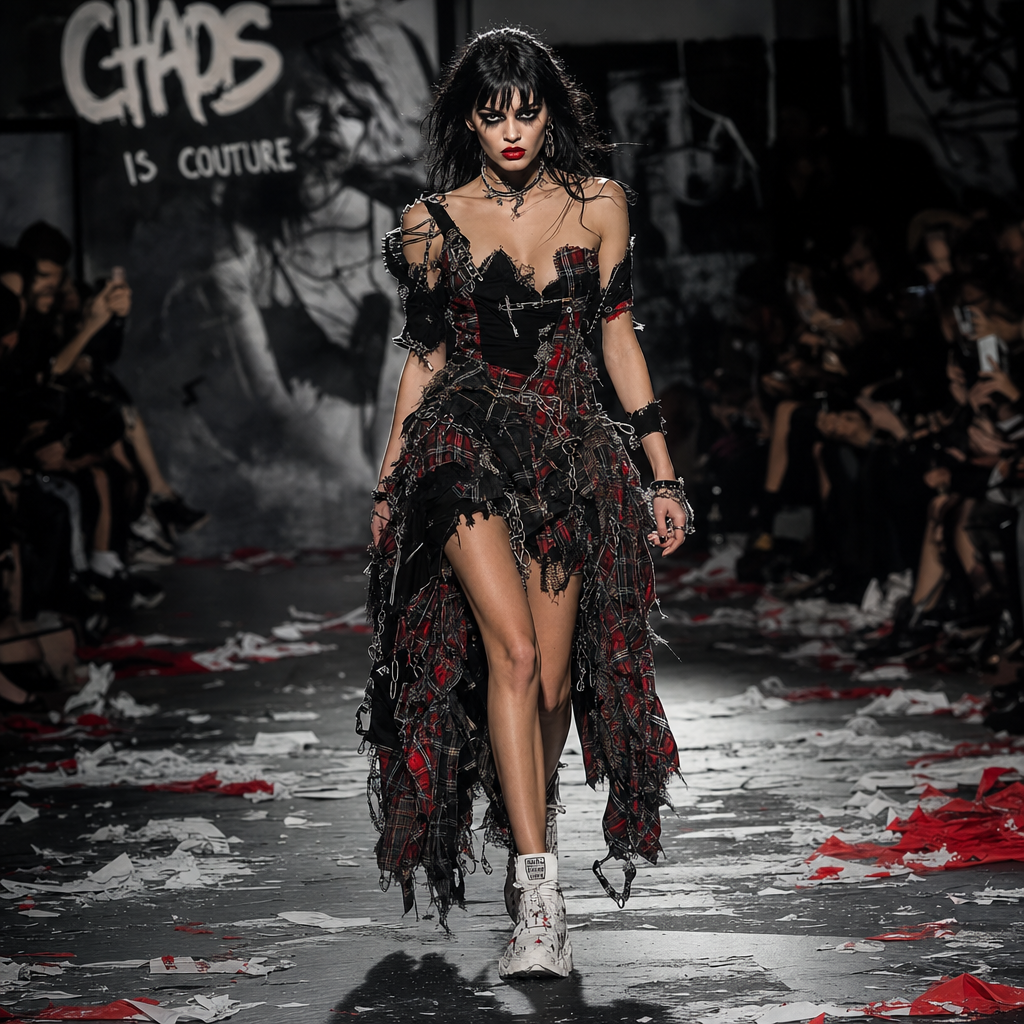
A few classic punk pieces said exactly what they meant:
-
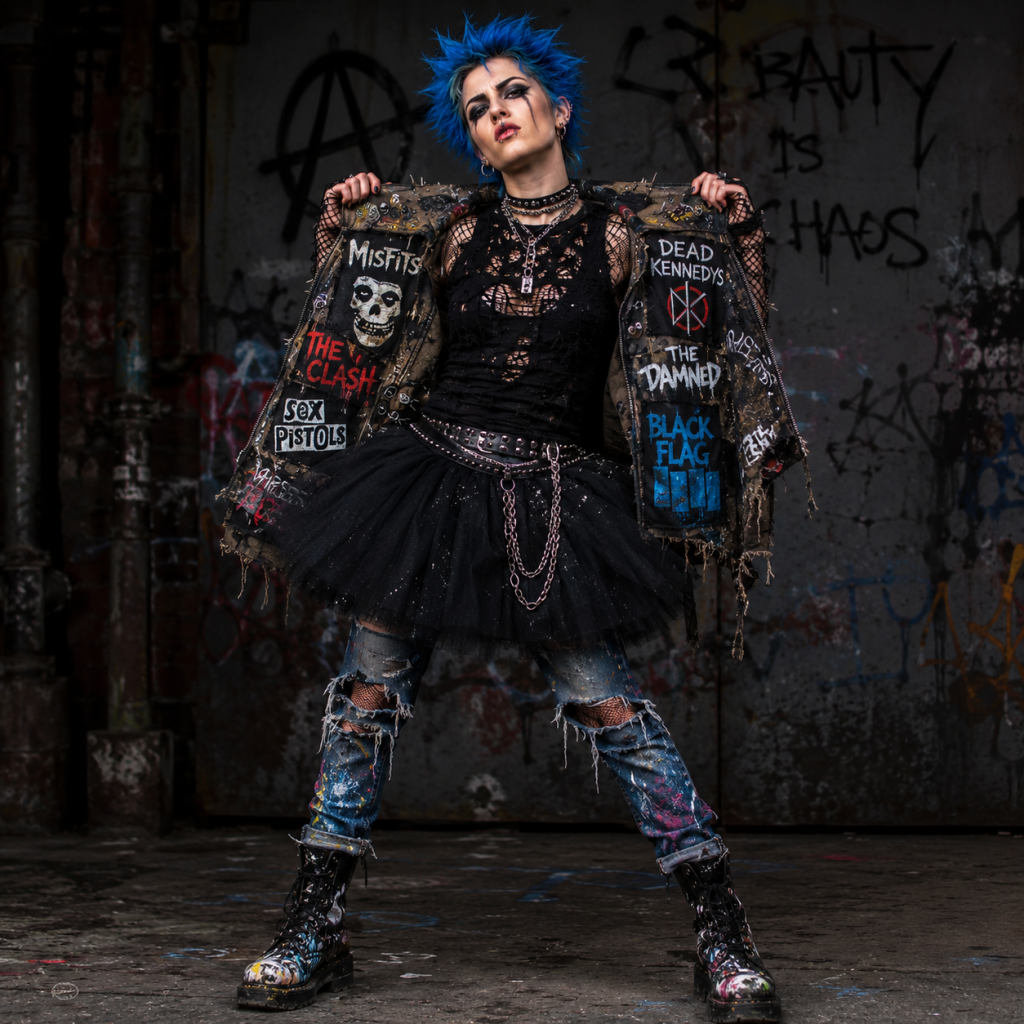
Leather jackets worked like walking billboards. People slapped on band names, paint, and patches, turning a plain jacket into a loud take anyone could read on the bus. More scratches. More dents. More stories.
-
Bondage trousers stole their look from fetish wear and turned it into a statement. Straps, zips, and chains said, “Not here to behave,” especially in public places where that outfit wasn’t “supposed” to show up. Wearing them on the street laughed in the face of polite dress codes.
-
Slogan tees were tiny, sharp essays. “God Save the Queen” stamped on the monarch’s face, or “DESTROY” smashing into a swastika, never stayed neutral. They made people react. That’s what punk fashion history and influence kept doing long after the first wave faded.
Gender? Punk Didn’t Care
Mid‑1970s gender rules were a grind.
Men’s clothes did one thing. Women’s did another. And everyone was supposed to stay in their lane.
Punk looked at that and shrugged.
Men and women wore the same leather jackets, ripped jeans, combat boots, and smeared black eyeliner.
Spiky hair, heavy makeup, chains, and studs ignored every neat line the store layout tried to set.
That androgyny sits at the heart of punk fashion history and influence, and you can still spot it in gender‑fluid style now.
Women in punk didn’t wait for permission.
They grabbed “feminine” stuff and turned it into armor:
-
A ballet tutu with combat boots.
-
Fishnet tights with a ripped band tee and smudged lipstick.
-
A prim dress hacked shorter, worn with studs and snarls.
The contrast said, “You think you know what this means. You don’t.”
Some women became the style blueprint.
Siouxsie Sioux went all-in on theatrical eye makeup, jet-black hair, and bondage-inspired outfits. Myth come to life.
Debbie Harry blended glossy pop-star beauty with street tees and denim. She proved glamour could stomp around onstage.
Poly Styrene rolled in with braces, loud colors, and clashing prints. She shredded beauty standards by refusing to hide.
Pamela Rooke, aka Jordan, took Westwood’s designs and made them streetwear with teeth. She walked King’s Road like a moving art piece.
When people talk about gender‑neutral clothes or “wear what feels right” now, they’re following the trail punk fashion history and influence cut decades ago.
How Punk Splintered, Went Mainstream, And Never Really Left
By the early 1980s, the original scene started to fade. The look didn’t die.
It multiplied. Punk fashion history and influence splintered into subcultures, and each one grabbed a different piece of the original chaos.
The biggest branches went something like this:
| Subculture | Style Snapshot | Core Vibe |
|---|---|---|
| Goth | Black layers, lace, corsets, fishnets, dramatic dark makeup | Romantic, spooky, melancholic |
| Hardcore | Band tees, work pants, sneakers or combat boots, shaved hair | Practical, aggressive, anti‑fashion |
| Pop‑Punk | Baggy shorts, skate shoes, logo hoodies, spiky hair | Goofy, high‑energy, mall‑friendly |
| Grunge | Flannel shirts, ripped jeans, thrifted knits | Slouchy, detached, Pacific Northwest gloom |
| Crust Punk | All‑black or camo, heavy patches, studs, often messy dreadlocks | Anarchist, nomadic, zero‑luxury |
Every spin-off held onto something from early punk fashion history and influence.
-
Hardcore kept the anger and stripped away the styling.
-
Goth kept the drama and pushed it into dark fantasy.
-
Grunge swapped leather for flannel but held onto the DIY, secondhand spirit.
Then high fashion crashed the party.
Designers like Zandra Rhodes started ripping up couture dresses and sticking on safety pins.
Jean Paul Gaultier and Alexander McQueen pulled in tartan, chains, and deconstructed seams. By the time the Met Gala ran Punk: Chaos to Couture in 2013, the style that once freaked out parents strolled up red carpets.
So yeah. That raised a big question.
Punk started out anti-consumer. So what happens when a “punk” dress costs more than a car?
Some people called it a sell‑out.
Others said punk fashion history and influence isn’t about the price tag. It’s the idea: rage, DIY, refusing to blend in.
“Punk rock means freedom.”
— Joe Strummer
Now?
TikTok and Instagram work like global CBGBs. Kids in tiny apartments show how they slice thrifted tees or stud their jackets.
Hashtags spread the look faster than any record label ever could.
Meanwhile, fast‑fashion brands crank out “punk” plaid skirts and faux‑ripped shirts stripped of any politics.
That tension runs through the whole story of punk fashion history and influence.
One side sells the costume. The other still tries to sell the attitude.
How To Channel Punk’s Spirit Today (Without Losing Yourself)
So what do you do with all this when you’re standing in front of your closet, phone in hand, trying to figure out what feels real?
The biggest lesson from punk fashion history and influence is simple: it was never “buy the right jacket.” It was “mess with what you already have until it feels like yours.”
DIY still runs the show.
You don’t need a perfect stud gun or fancy paint pens. You need curiosity, old clothes, and a willingness to mess up on purpose.
A few ideas that stick to that same spirit:
-
Add patches to a denim jacket, messenger bag, or backpack. Choose band logos, causes, or jokes you care about. Then sew or iron them on. You want one piece that tells your story before you say a word.
-
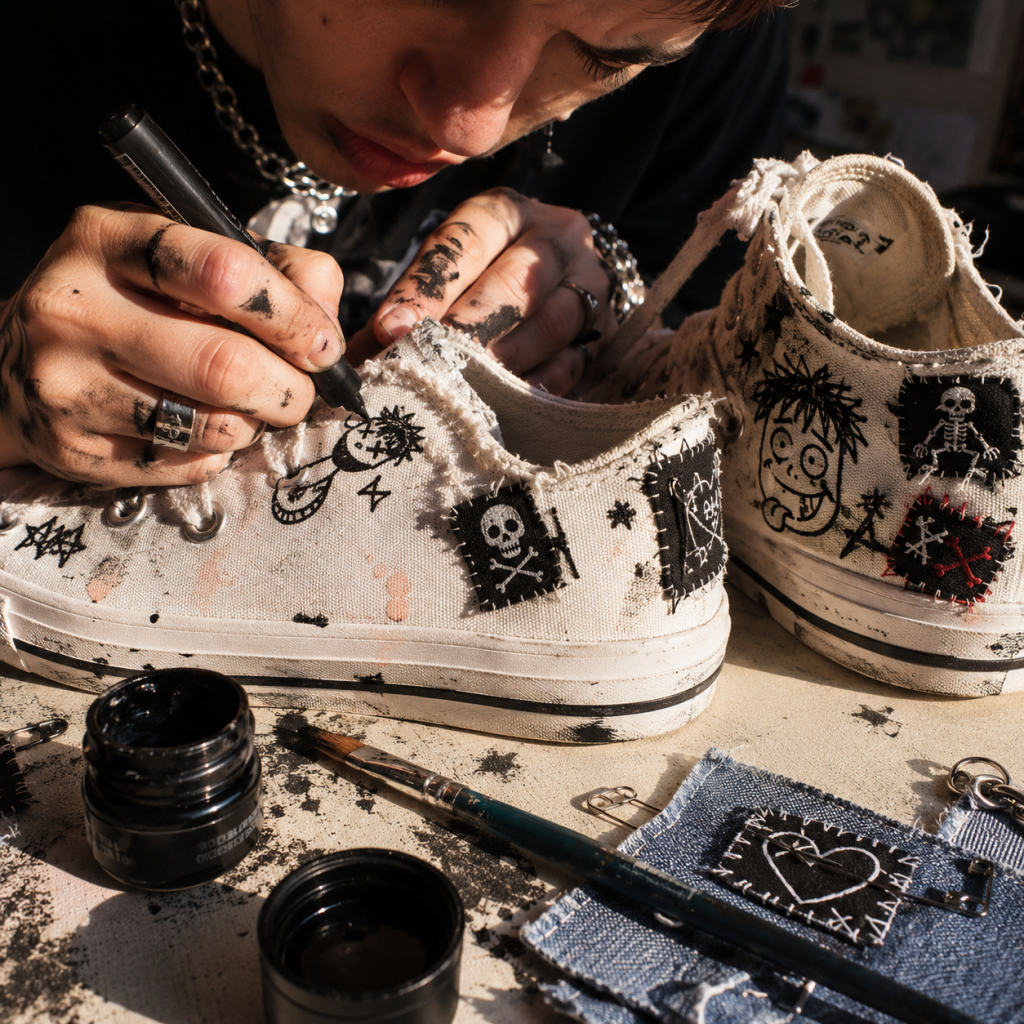
Grab plain sneakers and give them a second life with markers, paint, or even bleach. Add small doodles, lyrics, or tiny edge patterns. Suddenly, your generic shoes become something no one can buy off a rack.
-
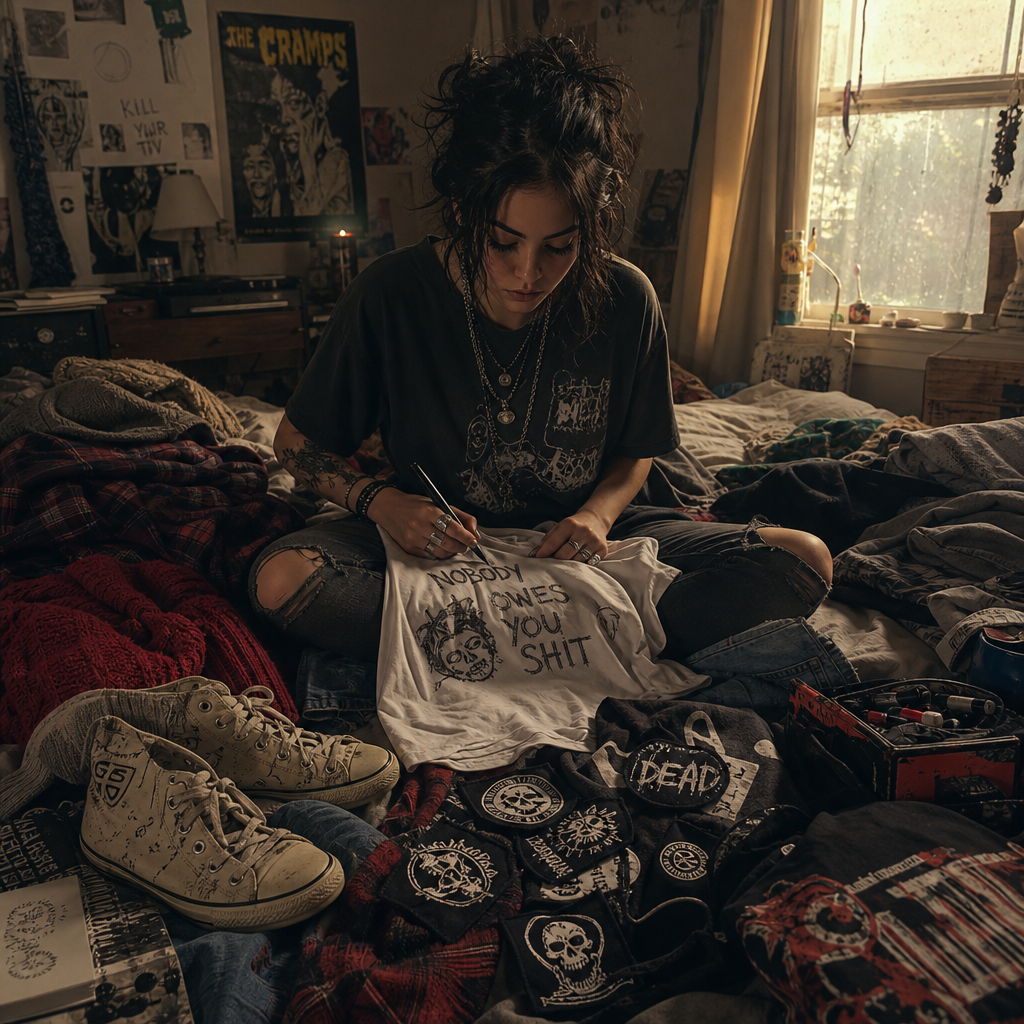
Take a tired T‑shirt and mess with it: tie‑dye, spray bleach, or cut up the neckline. Even a basic tee feels special once your hands have changed it. Stains and screwups give it personality. They don’t ruin it.
-
See your old stuff differently. – A skirt becomes a skinny scarf. – A stretched sweater gives up fabric for patches. – A faded hoodie gets new buttons or laces. Making “trash” into something you love is the whole heart of punk fashion history and influence.
-
Walk into thrift stores with a plan, not panic. Touch the good fabric. Ignore the size tag. Picture what scissors and a needle can do. That’s basically how early punks shopped, and it cuts waste.
“Buy less, choose well, make it last.”
— Vivienne Westwood
The most punk move? Dress like you.
Platforms like Shownd get that.
They share tips on customizing, upcycling, and styling, so people can build a look from what they already own, not some shiny new haul.
That tracks with the deeper punk fashion history and influence: it’s less “nail the aesthetic,” more “my clothes say, ‘This is me—deal with it.’”
Punk didn’t start in some design office.
It started with kids who got shoved to the edge and decided their clothes wouldn’t sit there quietly with them.
Those jackets, pins, and ripped shirts weren’t styling. They were shouting.
They said, “I exist. I am angry. I am not going to pretend everything is fine.” That’s the thread running through punk fashion history and influence, louder than any one boot or haircut.
Right now, when algorithms keep feeding everyone the same outfits, dressing like you takes guts.
You don’t need a full mohawk or a vintage Sex Pistols tee.
You need one thing on your outfit that you changed with your own hands.
Try one tiny punk move this week.
Scribble on a tee. Add a patch. Clash some patterns on purpose.
Not to look like a punk from 1977. But to feel that little spark of “I’m not like everyone else” that kicked off the whole thing.
FAQs
Where Did Punk Fashion Come From?
Punk fashion kicked off in the mid‑1970s in New York and London, almost at the exact same time.
In New York’s CBGB scene, bands like the Ramones and people like Richard Hell made ripped tees and leather jackets the move.
In London, Vivienne Westwood, Malcolm McLaren, and the Sex Pistols took fetish‑inspired pieces and made them loud, public, and angry.
Right out of the gate, punk fashion history and influence came from money problems, political rage, and a hard no to dressing “respectably.”
How Did Punk Fashion Shape Modern Style?
Punk fashion history and influence is everywhere.
High-end designers steal its ripped seams and sharp graphics.
Streetwear runs on its obsession with logos and loud statements.
Gen Z trends like thrift flipping, DIY customization, and “soft grunge” dressing channel punk’s old-school formula: secondhand clothes, hand-done tweaks, and breaking the rules.
What Makes Punk Fashion Punk?
Classic punk style loves ripped, deconstructed clothes. They look wrecked on purpose, like a middle finger to neat, perfect outfits.
Leather jackets are everywhere. People splash them with paint, slap on patches, or stud them with metal hardware, so a plain layer turns into a protest sign.
Bondage trousers. Slogan tees. Safety pins. Combat boots. Heavy makeup. A lot of it leans androgynous.
None of it’s random. Every detail says something, which is why punk fashion history and influence still fires up designers and DIY fans now.
Does Punk Fashion Still Matter Today?
Yeah. And it might matter more than ever.
Social platforms are packed with thrift flips, hand‑painted jackets, and gender‑fluid looks pulled straight from punk fashion history and influence.
Fast‑fashion brands can copy the look. But the core stuff—DIY, individuality, and skepticism toward trends—keeps growing.
When someone tweaks a piece instead of trashing it, that punk thread stays alive. Same deal when they dress for comfort, not approval. That same idea matters for students too, which is why first day of school outfits work best when they feel like identity, not a costume.
