
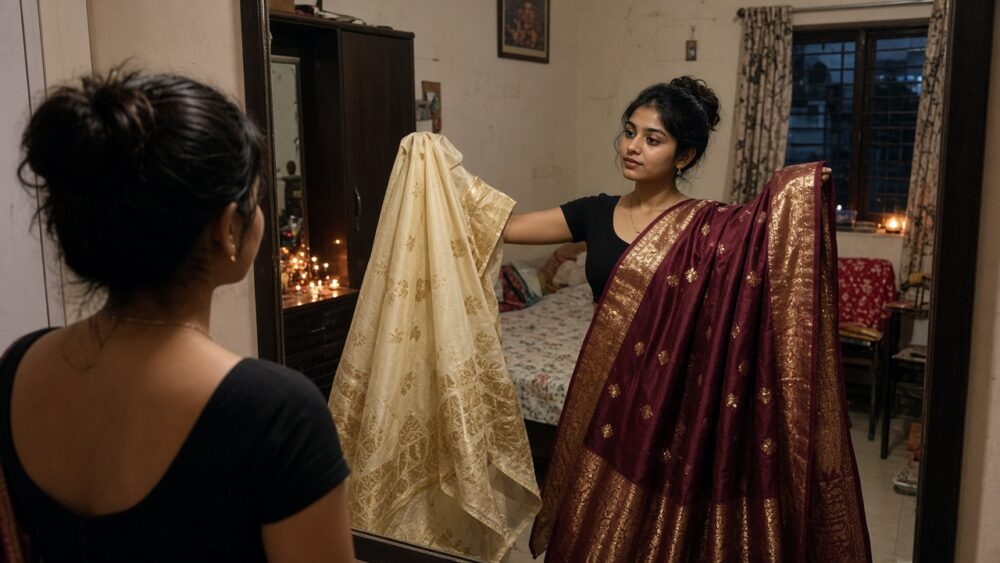
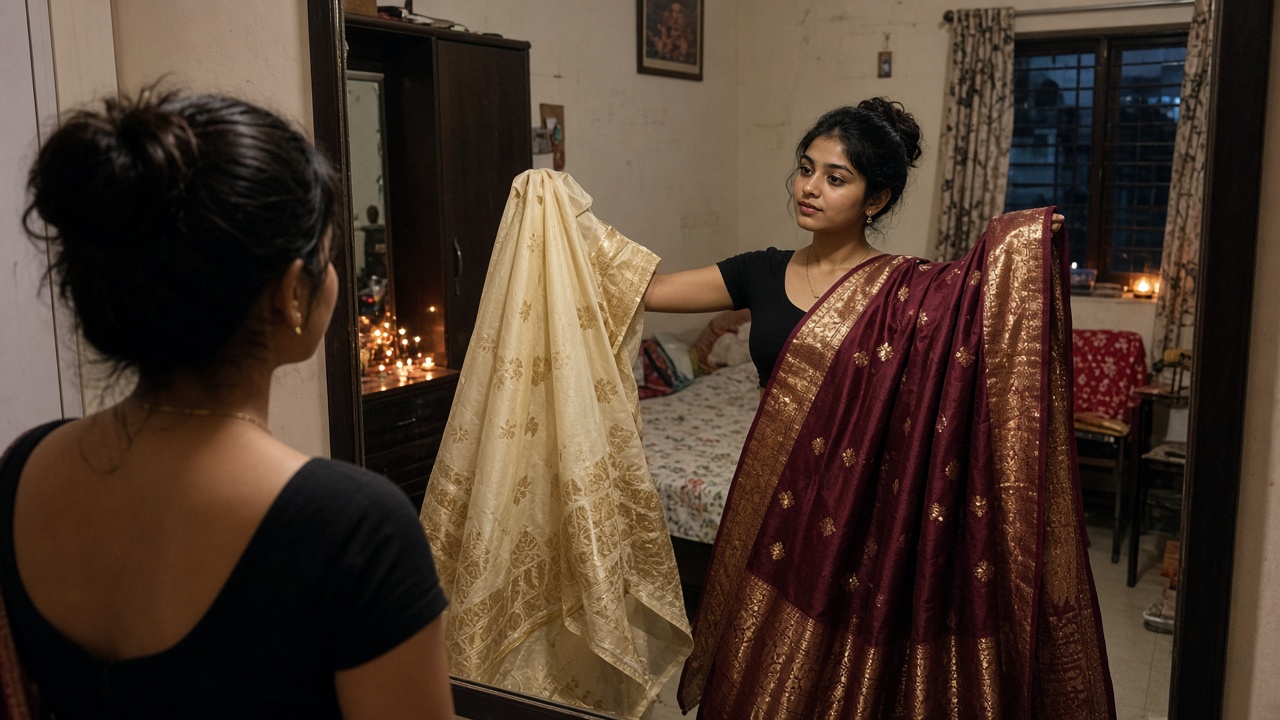
It’s 6:15 p.m. on Diwali, the puja is at seven, your mother has asked “are you ready?” four times in a tone that is getting less like a question, and you are standing in front of the mirror holding two sarees like a game show contestant who can’t choose a door.
Somewhere downstairs someone is frying something. Somewhere outside a kid has already started on the crackers, three hours early, as kids always do. Your phone is buzzing with the family group sending “Happy Diwali” GIFs that sparkle so hard they should come with sunglasses. And you’re thinking: I had a whole month to plan this.
Here’s the thing about Diwali. It isn’t one event. It’s five days of events wearing a trench coat. There’s the puja, the card party, the office lunch, the relatives who “just dropped by,” the night on the terrace with sparklers, and the one cousin’s house where everyone shows up dressed like it’s a wedding even though it absolutely is not a wedding. One outfit can’t cover all of that. One strategy can.
So here’s the plan. Outfits first, sorted by what you’ll actually be doing in them. Then makeup that can survive diya heat, mithai and forty aunty hugs. If your outfit is understated, colorful eye makeup techniques can add a festive flash without requiring a full face of glitter. Then a quick rangoli and decor section for people who think they can’t draw (you can). For balconies and terraces, rustic garden decor ideas can make your Diwali setup feel warm, layered and intentionally unfussy. Diwali 2026 lands on Sunday, November 8, which means you have just enough time to get this right without a panic.
Diwali Outfit Ideas: Dress for the Diwali You’re Actually Having
The most common Diwali outfit mistake isn’t picking the wrong color. It’s picking clothes for a photo instead of for a night. You will sit cross-legged for the puja. A thoughtfully arranged sacred prayer space can also make the puja feel calmer, especially when guests and decorations are competing for room. You will bend over a rangoli. You will carry a tray of diyas up two flights of stairs. You will eat. A lot. Whatever you wear has to do all of that and still look good in the group selfie at 10 p.m.
One quick rule before we get into specifics: stay away from flimsy synthetic fabrics near open flames. Cotton, silk, and silk blends are your friends on a night that is literally lit by fire. The same breathable fabric choices that make summer wedding outfits comfortable work beautifully for a long Diwali evening too. Loose dupattas and pallus need pins. More on that later.
Sarees: The Main Character Move
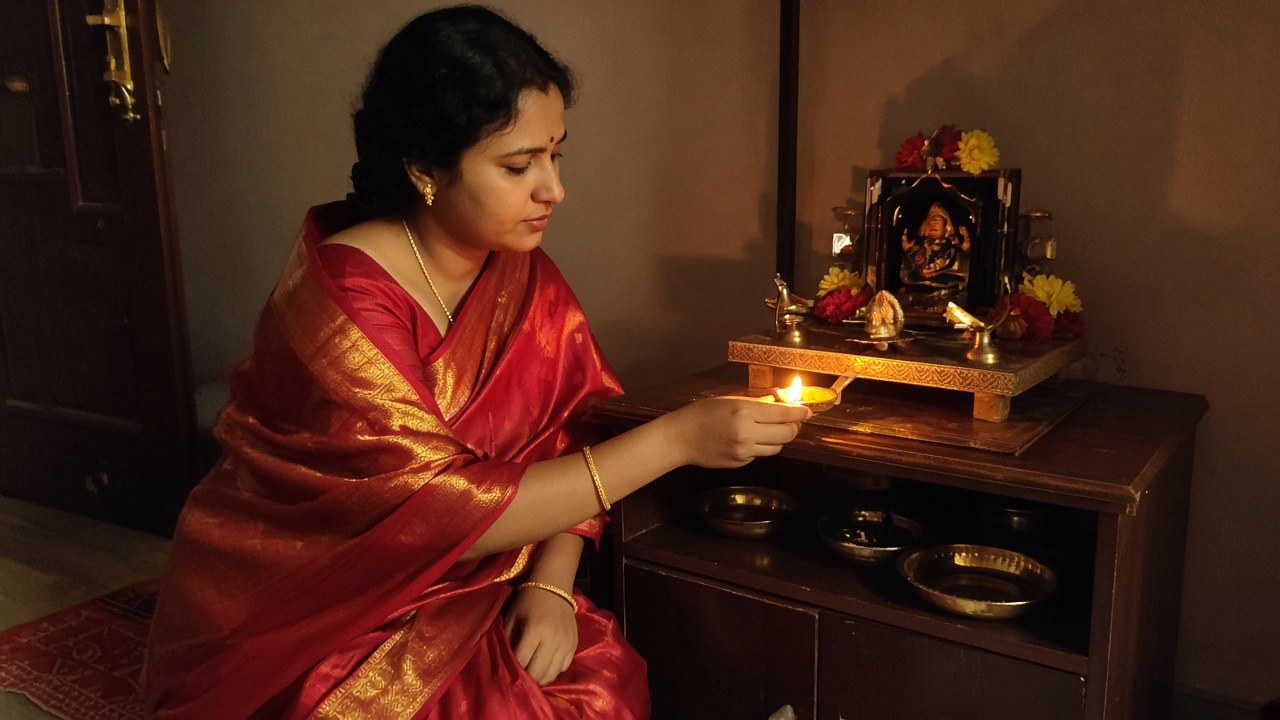
A saree on Diwali is never wrong. It’s the outfit equivalent of showing up with homemade sweets: everyone respects it immediately.
But “saree” covers a huge range, so pick based on the plan:
- For the puja at home: a soft silk or silk-cotton saree in red, maroon, mustard or deep green. Think Chanderi, Maheshwari, or a light Banarasi. These drape easily, breathe better than heavy silks, and look rich in diya light without making you sweat through the aarti.
- For a Diwali party: this is where the heavier Kanjeevaram or a full Banarasi gets its moment. Or go modern: a solid georgette or organza saree with a statement blouse.
- For the office celebration: a printed cotton or linen saree with a crisp sleeveless blouse looks festive but still says “I have a 3 p.m. call.”
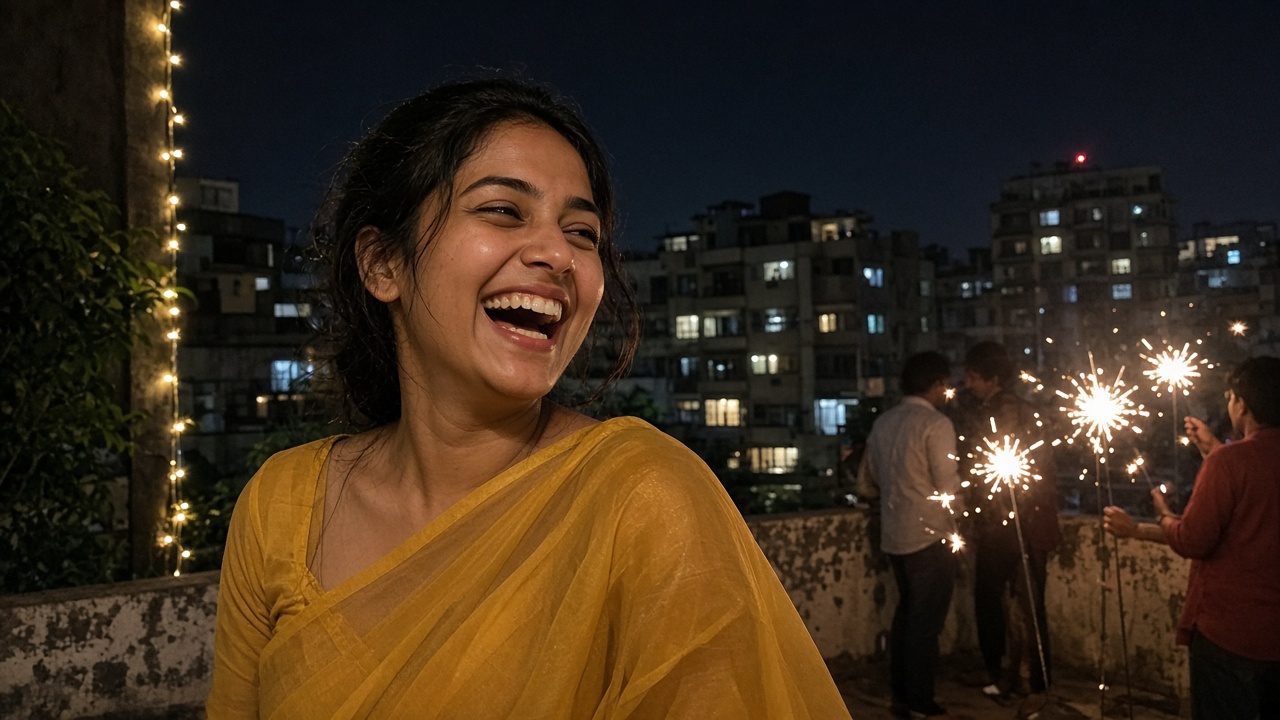
The blouse is where you get to have fun. A contrast blouse, say a pink blouse with a green saree, or a velvet blouse with a silk saree, makes an old saree feel brand new. Which matters, because half the sarees at any Diwali party are borrowed from someone’s mother. That’s not a weakness. That’s tradition.
Pro move: pin your pleats and your pallu properly, then wear flats or low block heels. Nobody has ever regretted being able to run from a rogue chakri. Finish the look with winter sparkly nails in champagne, bronze or a sheer gold that catches the diya light when you lift your glass.
Lehengas: For When You Want to Make an Entrance
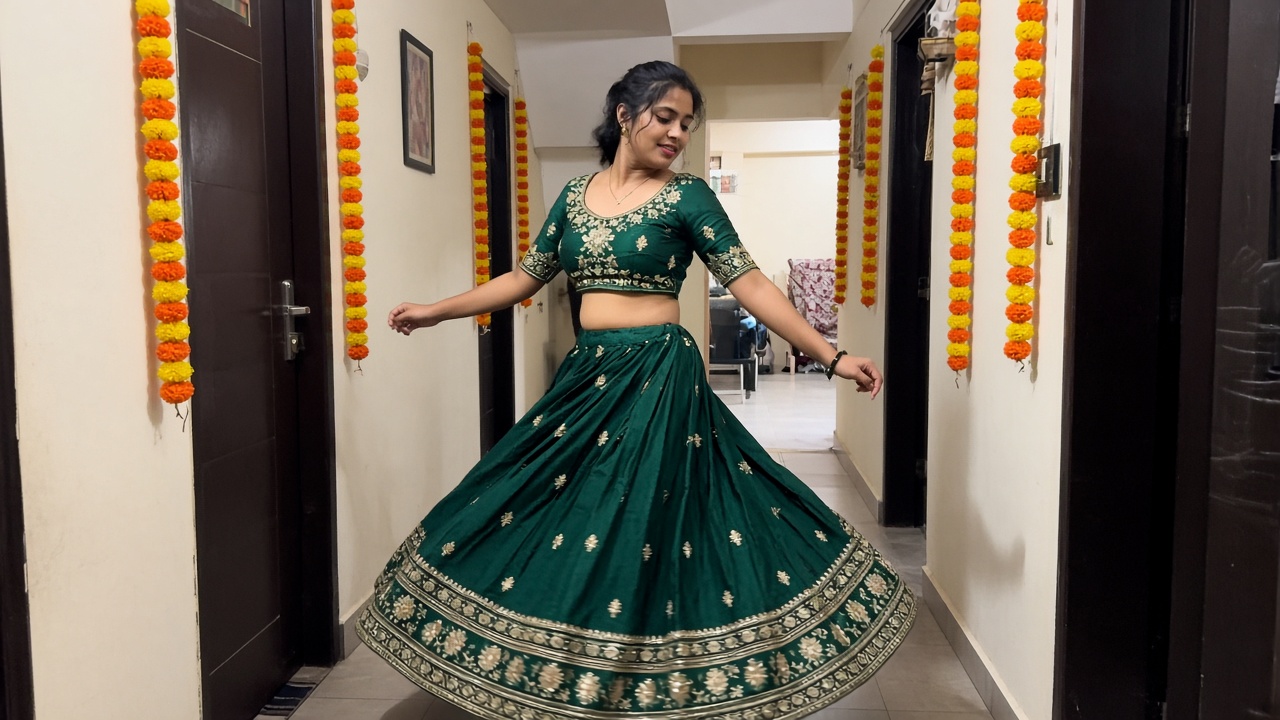
A lehenga says “I’ve arrived, and I would like to be photographed.” Which is a perfectly valid thing to say on Diwali.
The trick is choosing a festive lehenga, not a bridal one. You want something lighter than what you’d wear to a wedding reception. Look for:
- Cotton, chanderi or georgette lehengas with gota patti, mirror work or block prints. They move, they breathe, and they don’t weigh as much as a small child.
- Jewel tones like emerald, magenta, royal blue or wine. They glow in candlelight in a way pastels can’t quite manage.
- A shorter, flared skirt that sits just above the ankle, so you can climb stairs and dodge diyas without holding your skirt up like a Victorian.
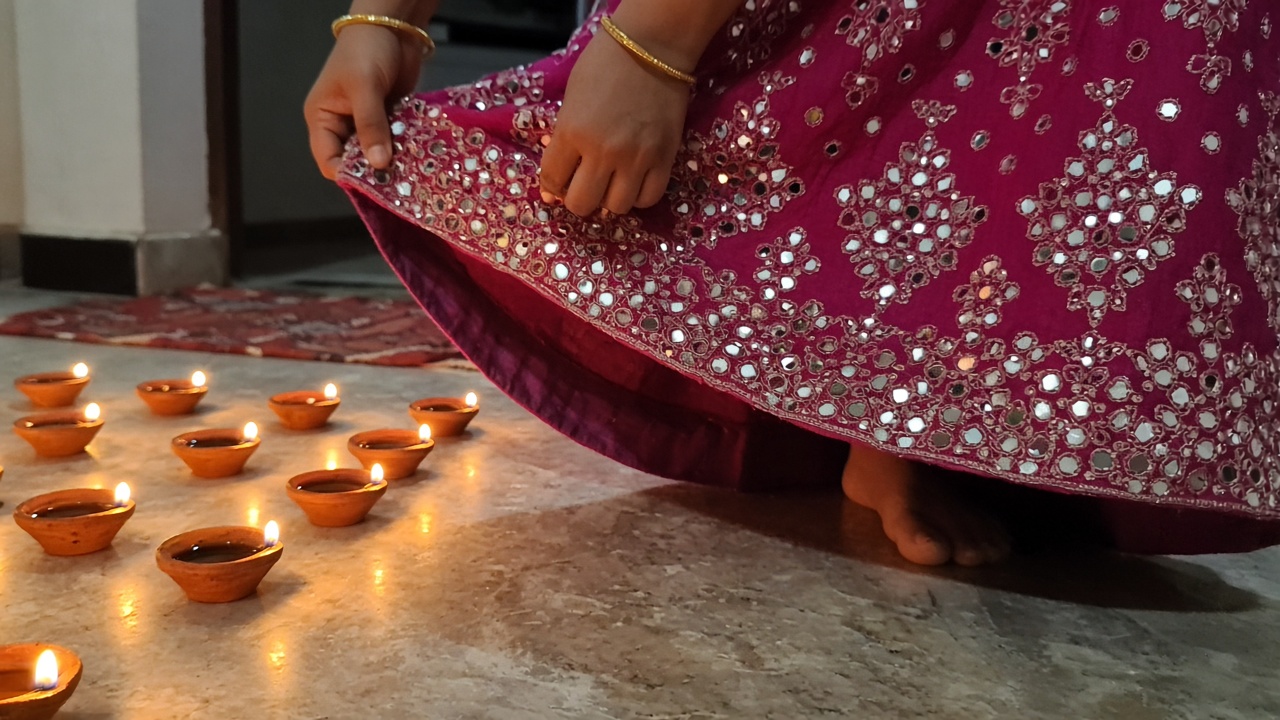
If a full lehenga feels like too much, try a lehenga skirt with a simple shirt or crop top. A white cotton shirt tied at the waist over a bright printed skirt is one of the most underrated Diwali looks out there. It’s festive, it’s easy, and you can reuse both pieces separately for the rest of the year.
Anarkalis: Maximum Drama, Minimum Effort
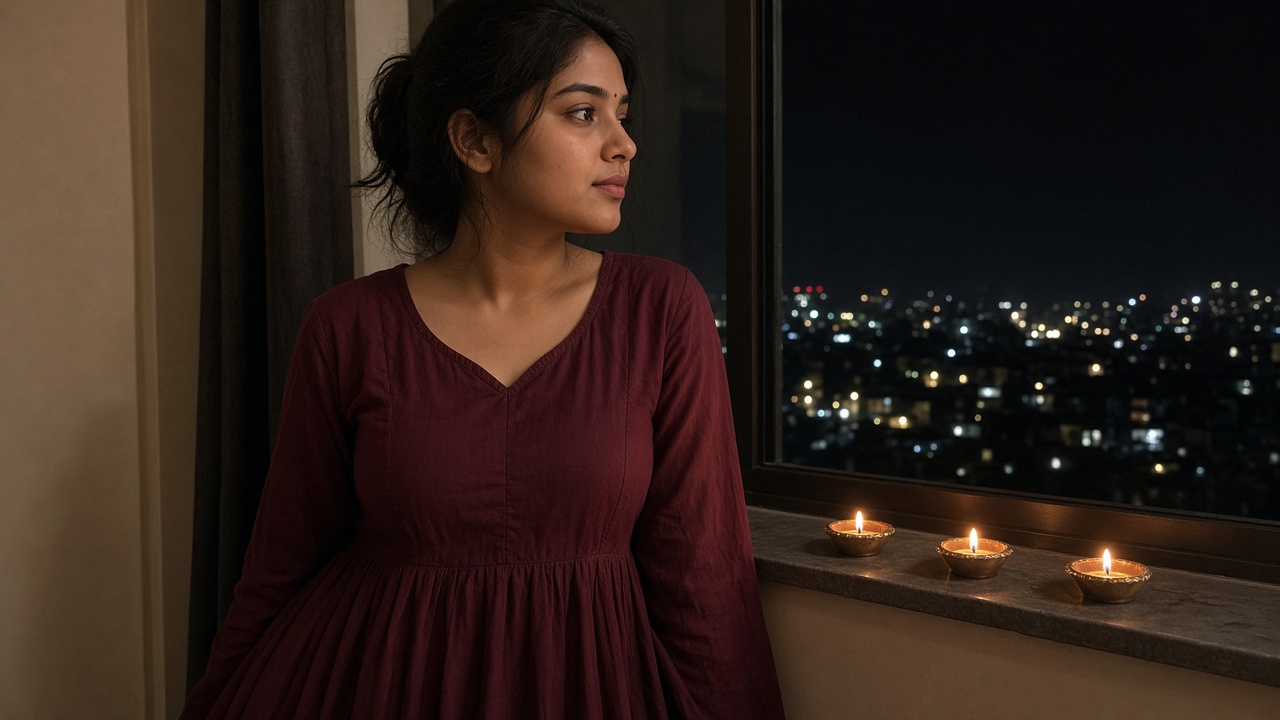
The anarkali is the cheat code of Diwali dressing. One piece. One zip. Instantly regal. It looks like you spent an hour getting ready even if you got dressed in the time it took the pressure cooker to whistle. For hair, romantic hairstyles with soft texture or pinned-back sections pair especially well with an anarkali’s movement.
What makes an anarkali work:

- Length: floor-length looks the most festive, but a calf-length one is easier for a long day of visiting relatives.
- Flare: the more panels, the better the twirl. And yes, you will twirl. Everyone twirls.
- Detailing: zari at the neckline and hem is enough. You don’t need embroidery covering every inch.
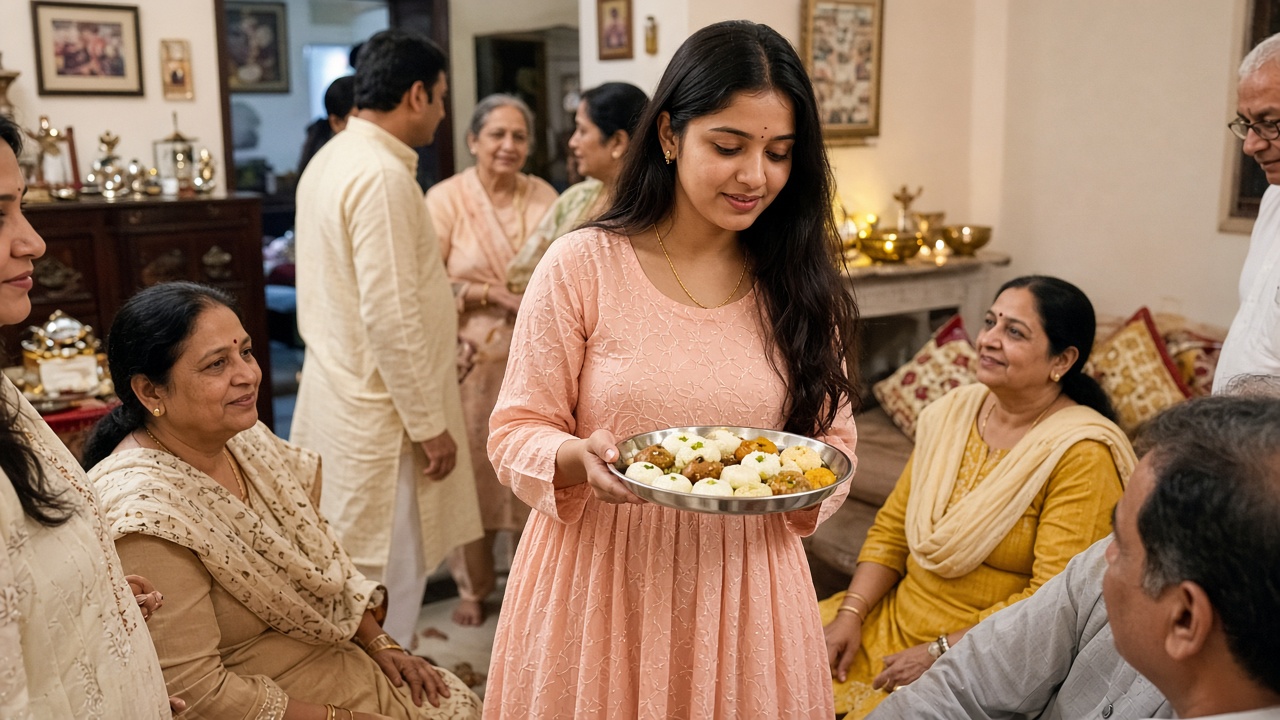
Pair it with a light dupatta draped on one shoulder (and pinned, seriously), juttis or kolhapuris, and a pair of jhumkas. That’s the whole look. If you want a more modern edge, skip the dupatta and wear the anarkali with a statement belt at the waist. Your grandmother may have opinions. Let her.
Indo-Western: For the Card Party and the Rooftop
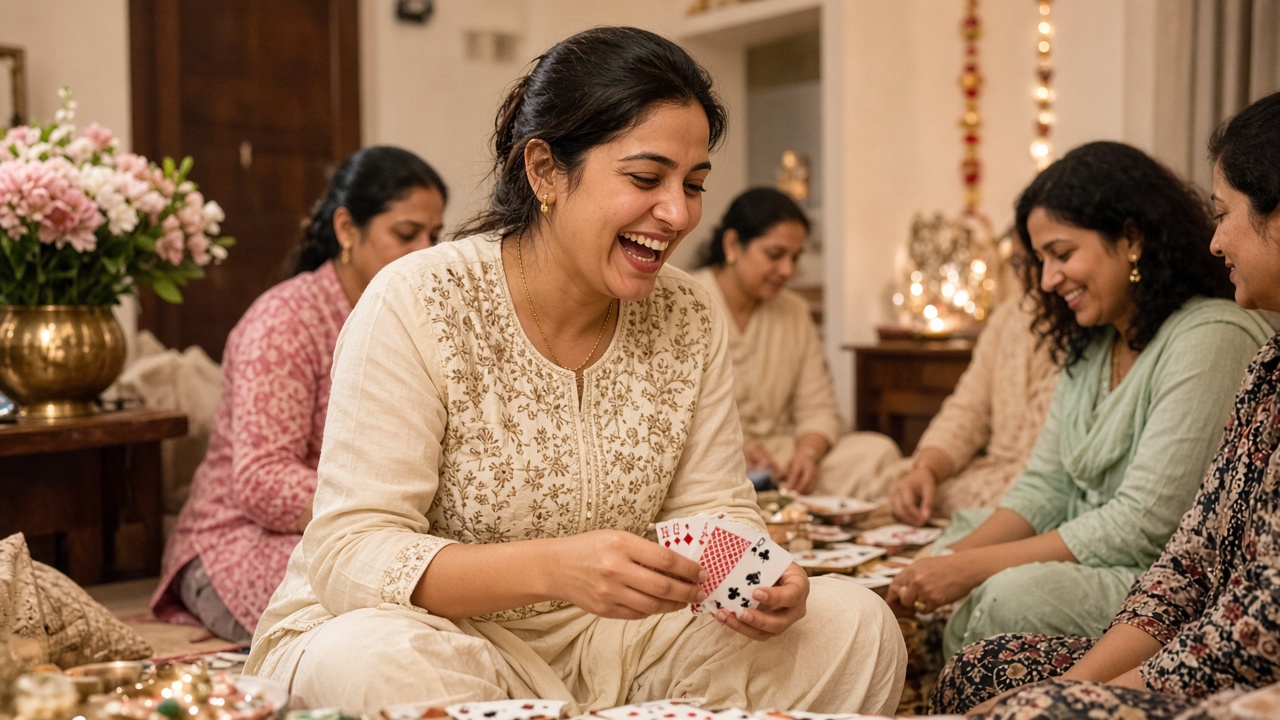
Not every Diwali event wants a saree. The card party at a friend’s flat, the rooftop gathering, the dinner where everyone is under 35 and someone brought a speaker: this is indo-western territory.
Some easy combinations:
- Dhoti pants plus a short kurta or crop top, with an embroidered jacket or cape on top.
- A pre-draped saree gown or a saree with a belt: all the drama of a saree, none of the “can someone please help me with my pleats.”
- Palazzos plus a long silk shrug, which looks festive and lets you sit cross-legged on the floor during a game of teen patti.
- A kaftan in silk or brocade, possibly the most comfortable festive outfit ever invented.
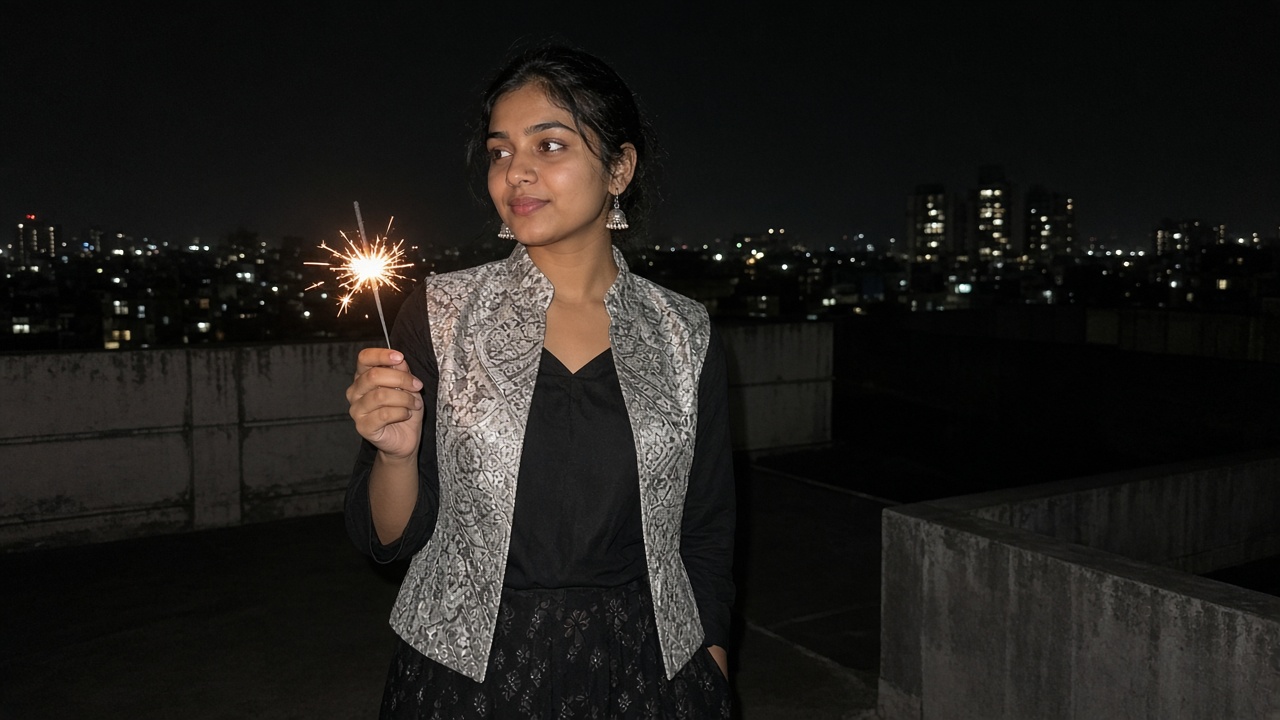
The rule with indo-western: one traditional element, one modern element. Brocade jacket with a plain dress. Jhumkas with a jumpsuit. Kolhapuris with wide-leg trousers. Mix them, but don’t stack five “statement” pieces on top of each other or you’ll look like a mood board.
Men’s Kurtas: More Options Than You Think
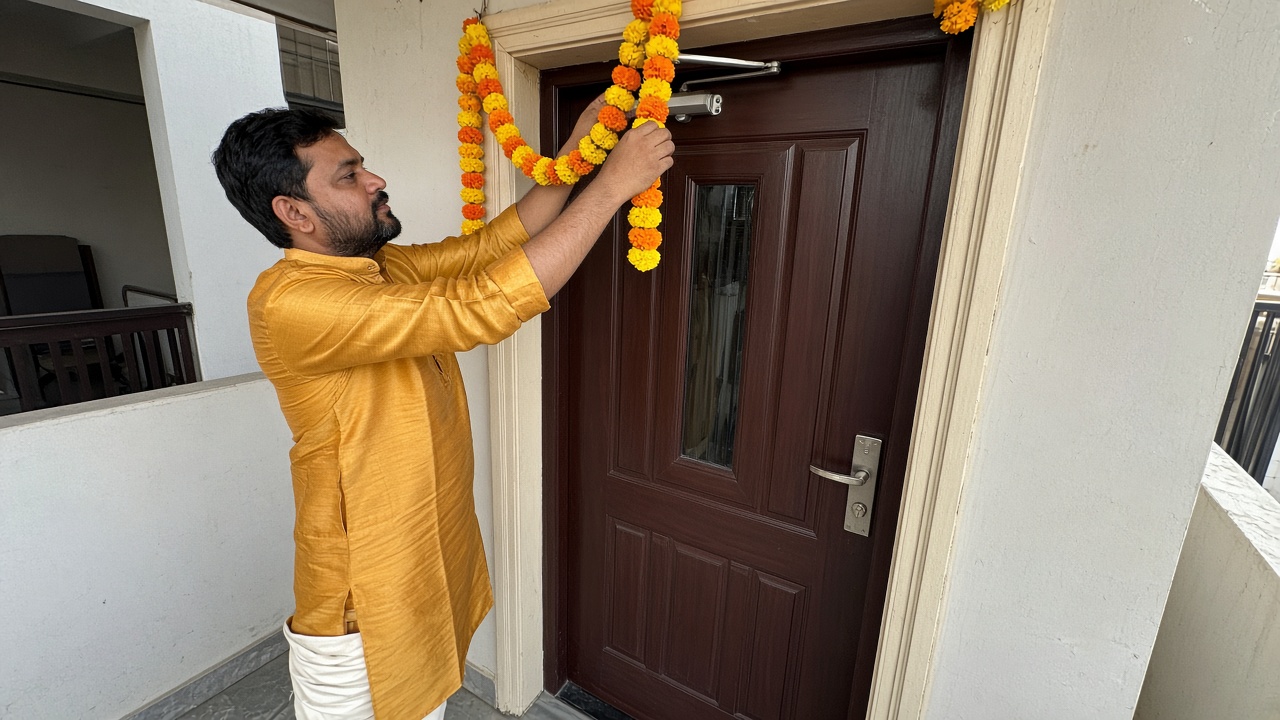
Men, this one’s for you, because every year the same thing happens. Someone buys you a kurta in a mall two days before Diwali, it’s beige, it fits like a tent, and you wear it in every photo for the next decade.
You can do better. And it’s easy:
- Color: go beyond beige and white. Mustard, bottle green, maroon, navy and deep teal all look sharp in diya light.
- Fabric: cotton silk or linen for the day, raw silk or jacquard for the evening. Pure polyester near crackers is a hard no.
- Fit: the kurta should skim your body, not drape like a bedsheet. Shoulders should sit at your shoulders. Length around mid-thigh to knee is the sweet spot.
- Bottoms: churidar for classic, straight pants for clean, dhoti pants for drama. Jeans with a short kurta work fine for a casual card night.
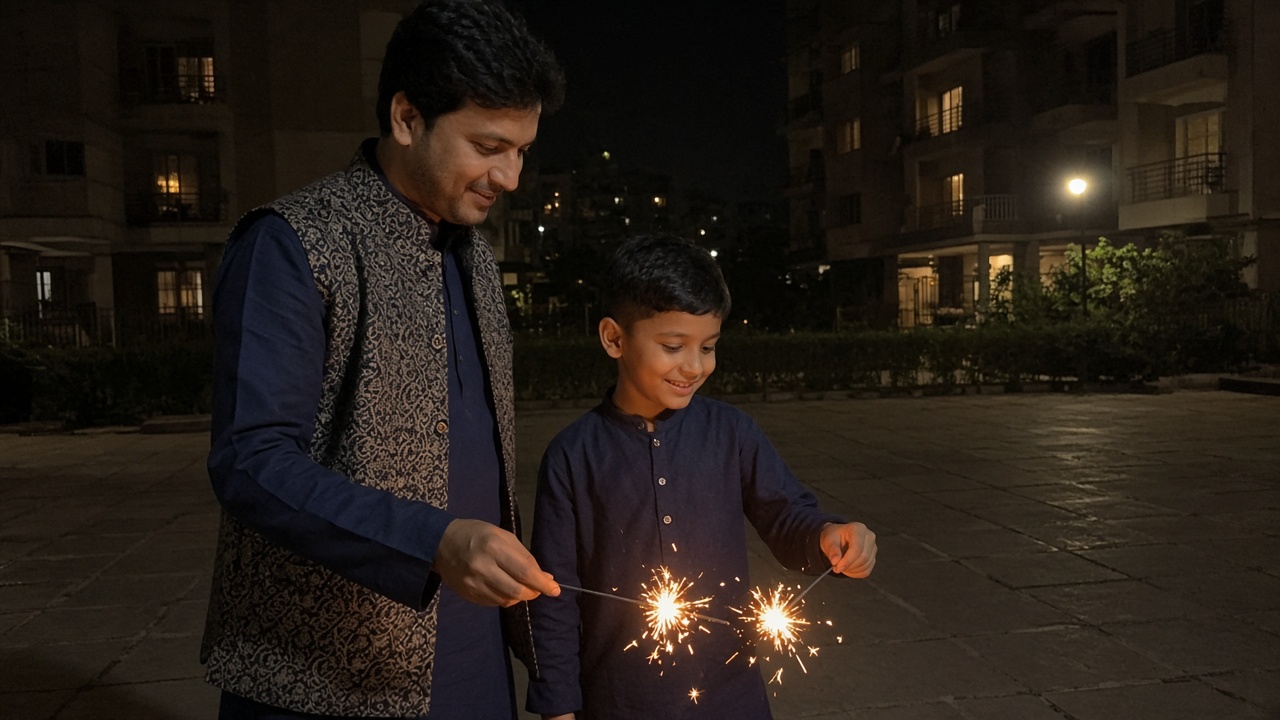
The fastest upgrade is a Nehru jacket. Throw a printed or brocade one over a plain kurta and you’ve gone from “guy at the puja” to “guy whose outfit everyone asks about.” Finish with mojaris or clean leather sandals. Not sports shoes. Please. Your mother is begging you through me.
Festive Makeup That Survives Diyas, Mithai and Forty Hugs
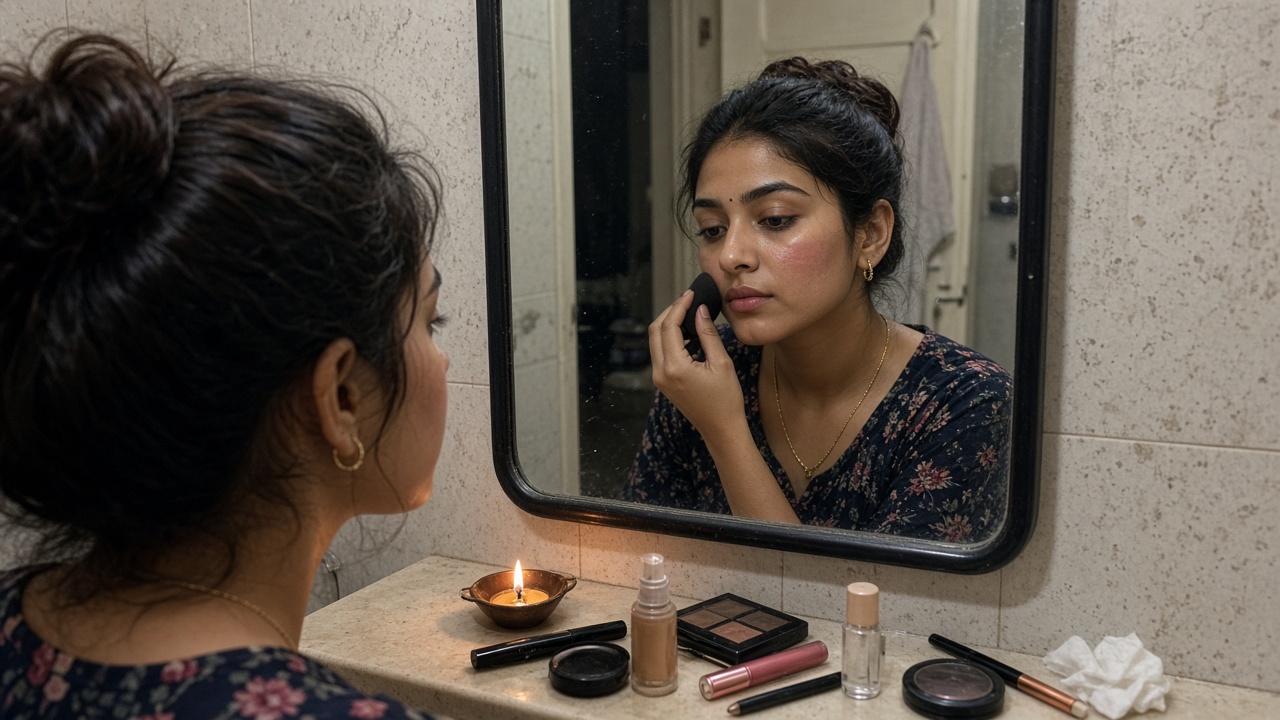
Diwali makeup has a tough job. It has to look good in warm, flickering diya light, under the harsh tube light in your aunt’s living room, and in a flash photo outside. It has to survive heat, sweat, food and being kissed on both cheeks by relatives who don’t know you’ve been contouring.
The answer is not “more makeup.” It’s smarter makeup.
Skin: Glow, Not Grease
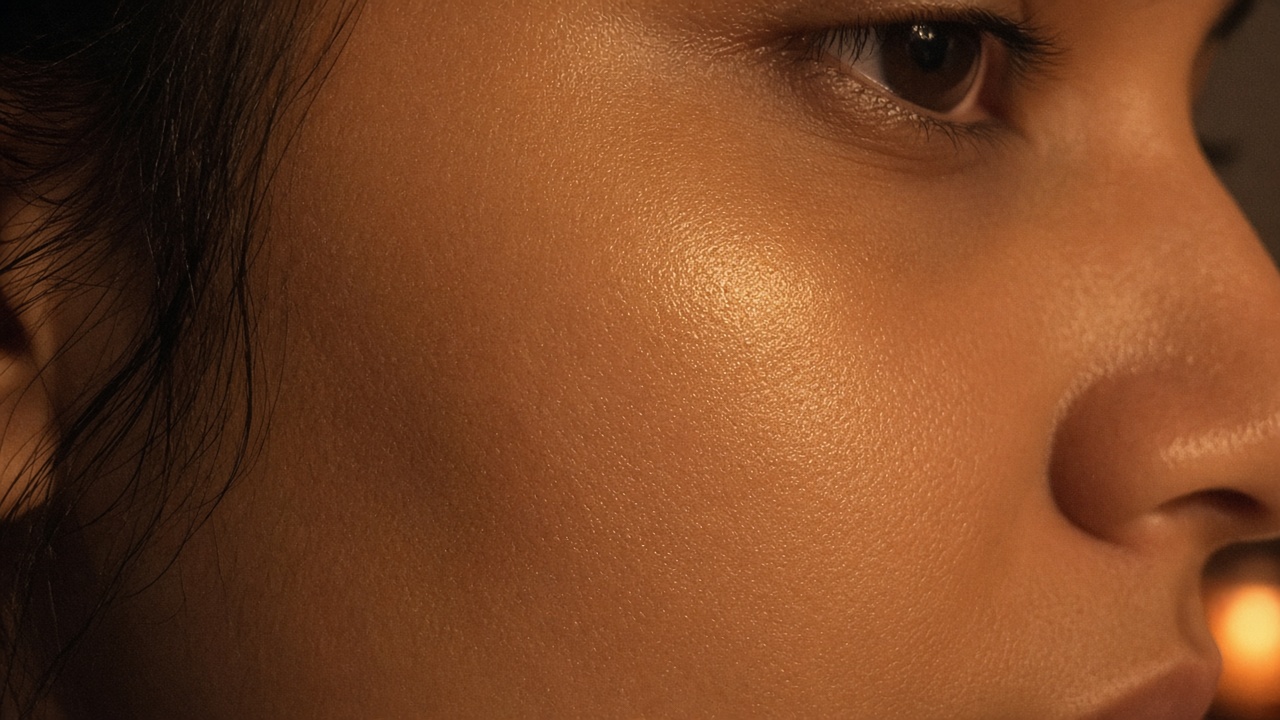
Diya light is the most flattering light on earth, so let it do some work. Start with a lightweight, long-wear base: a skin tint or light foundation with a primer underneath. Heavy full-coverage foundation in November heat, close to a lot of open flames, is a recipe for melting before dessert.
Then add warmth. A cream blush in coral, peach or rose looks healthy on Indian skin tones and blends right in. A golden or bronze highlighter on the cheekbones, brow bone and inner corners catches the diya light like you planned it. (You did.)
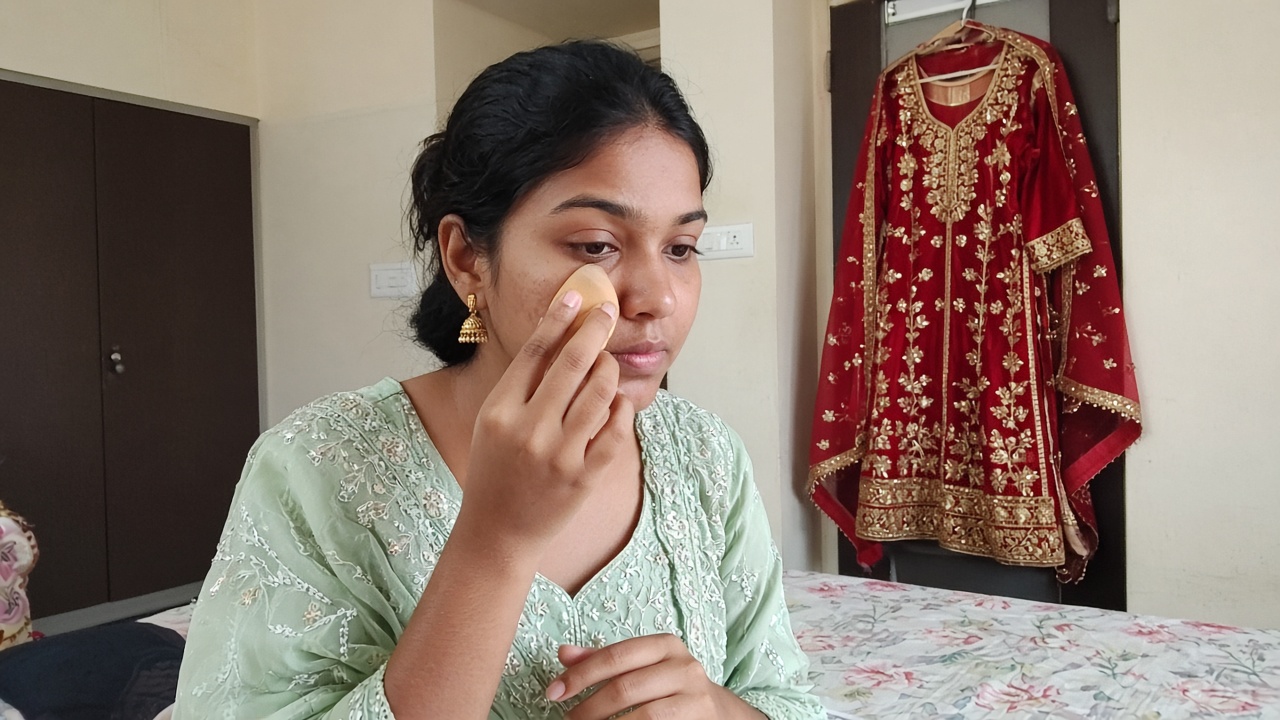
Finish by setting with a light powder on your T-zone and a setting spray all over. If your skin gets oily, keep blotting papers in your clutch. They’re tiny, they’re cheap, and they’ll save you from the dreaded “why is my face shining in every photo” moment.
Eyes: Let Kohl Do the Heavy Lifting
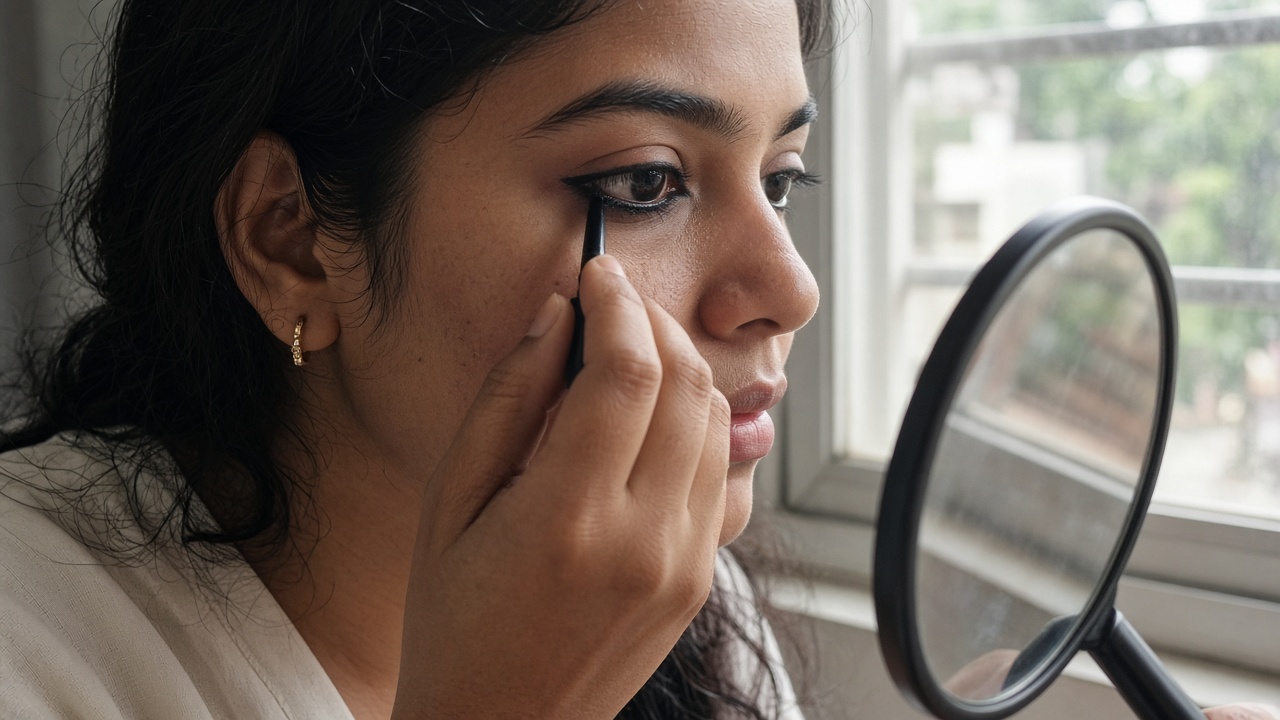
If you only do one thing for your eyes, do kajal. It’s been the backbone of festive Indian makeup for centuries for a reason: it makes eyes look bigger, darker and more expressive, and it works with every outfit you own.
Smudge it slightly with a brush or fingertip for a soft, smoky look. Then choose one upgrade:
- A gold or bronze shimmer on the lid. Pat it on with your finger for the most intense color.
- A winged liner. Classic with sarees and anarkalis.
- A pop of color in the outer corner, like emerald, royal blue or plum, if your outfit is neutral.
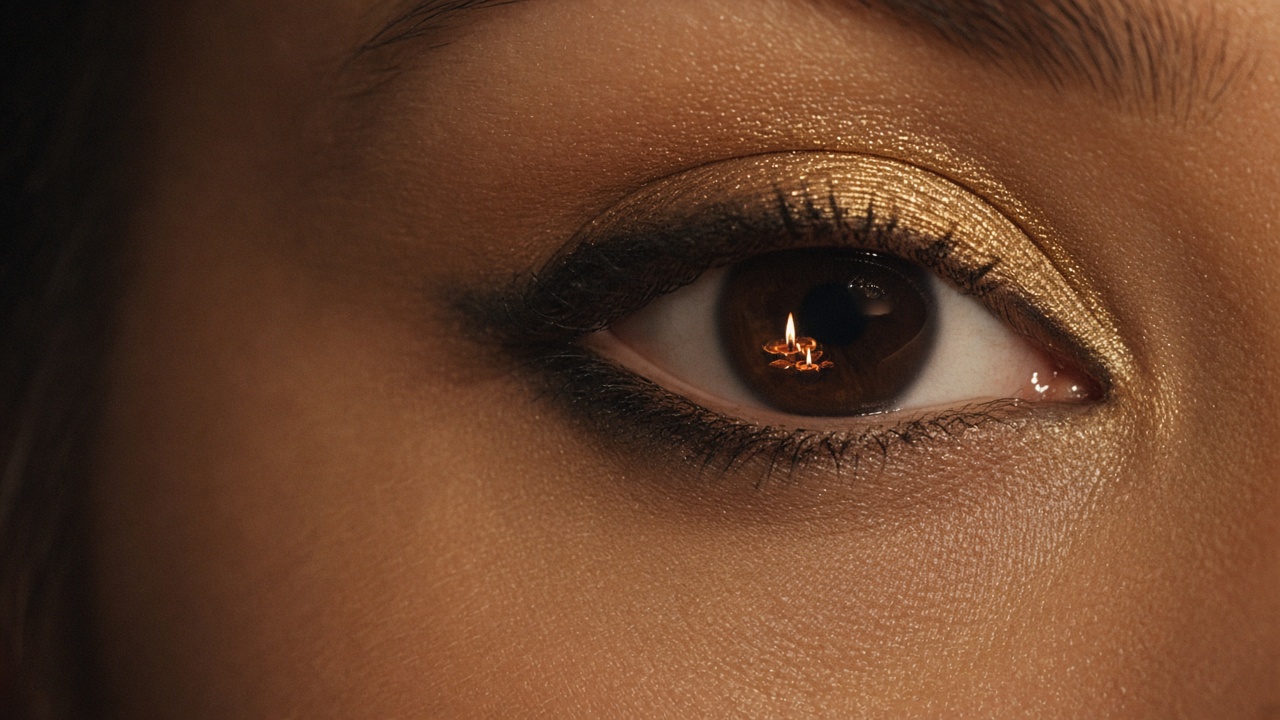
Use waterproof kajal and mascara. You’ll be near smoke, you’ll probably laugh until you cry at the card table, and someone will definitely make you emotional with a story about your grandfather. Plan for it.
Lips and Bindi: The Finishing Signature
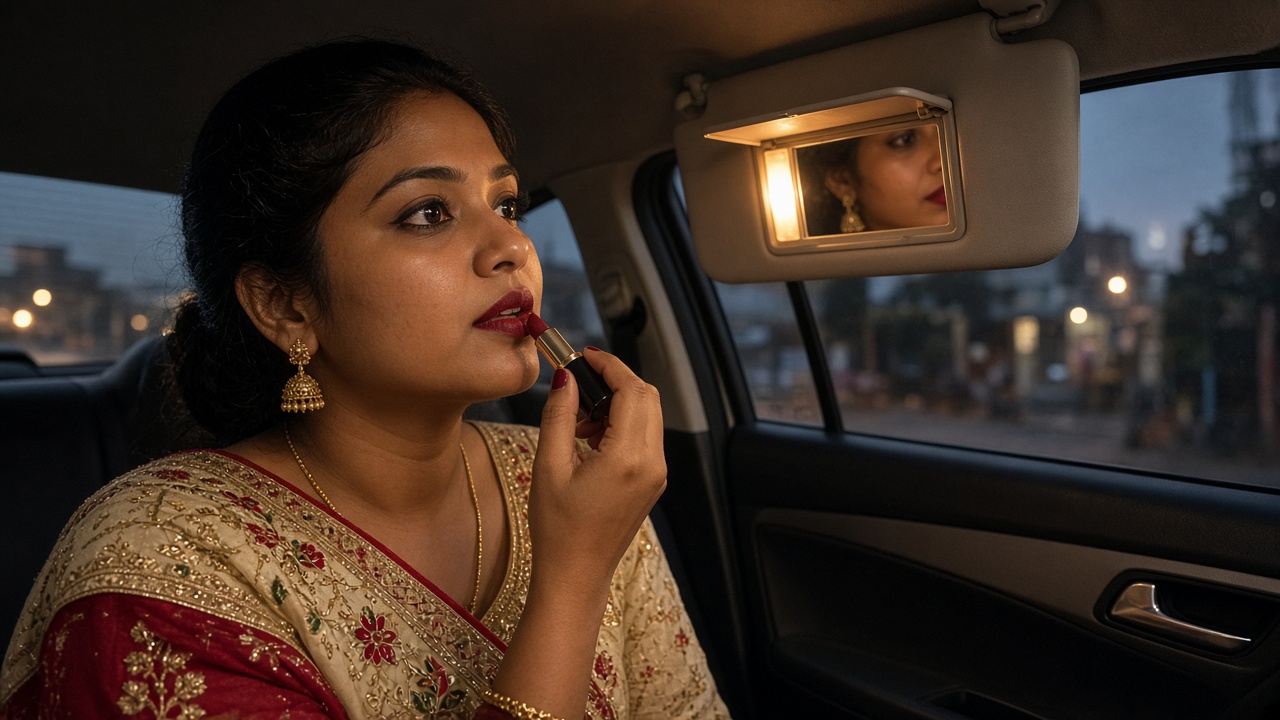
A classic red lip with a red or maroon saree is a power move that never gets old. A transfer-proof matte liquid lipstick is your best bet if you’ll be eating sweets all evening (you will be). If matte feels too dry, go for a satin finish and carry the bullet with you for touch-ups.
Other great Diwali lip shades: brick, berry, rose nude and terracotta. Match the intensity to your eyes: bold eyes, softer lips; soft eyes, statement lips.
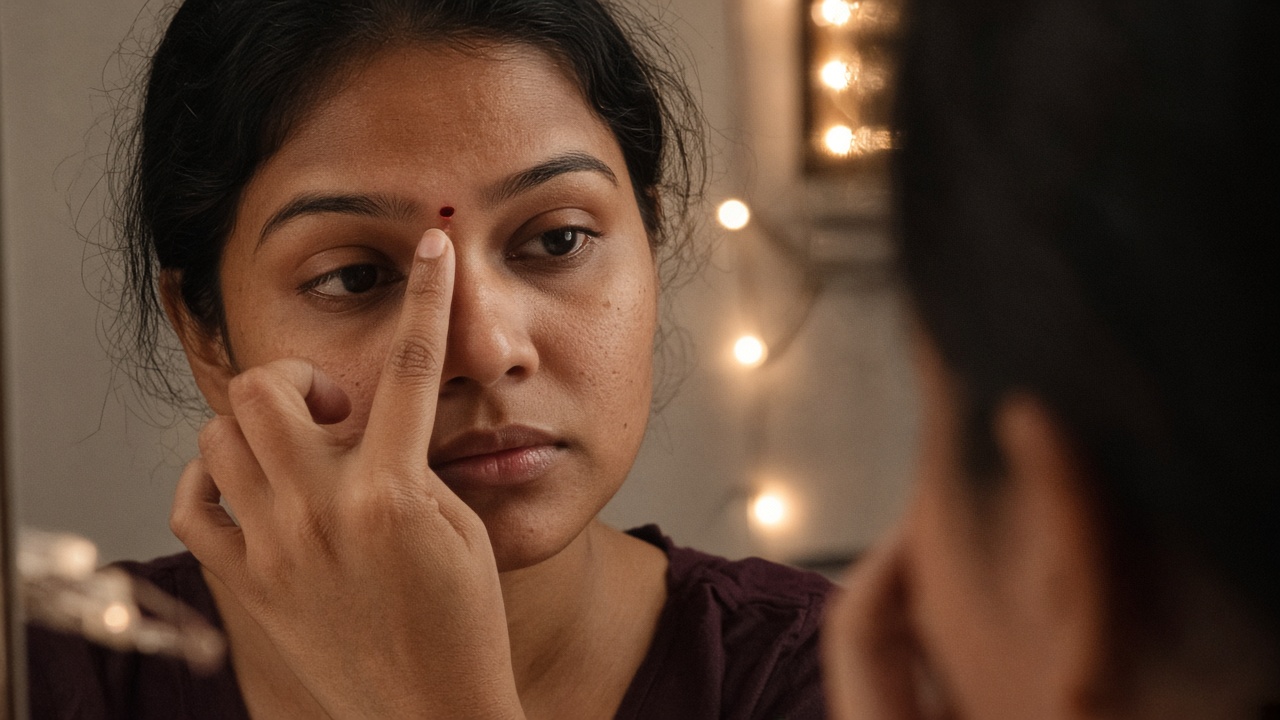
Then the bindi. A small red dot, a slim line, or a tiny embellished one between the brows instantly makes even a simple look feel festive. It’s the full stop at the end of the sentence.
Hair: Gajra, Waves and Things That Stay Put
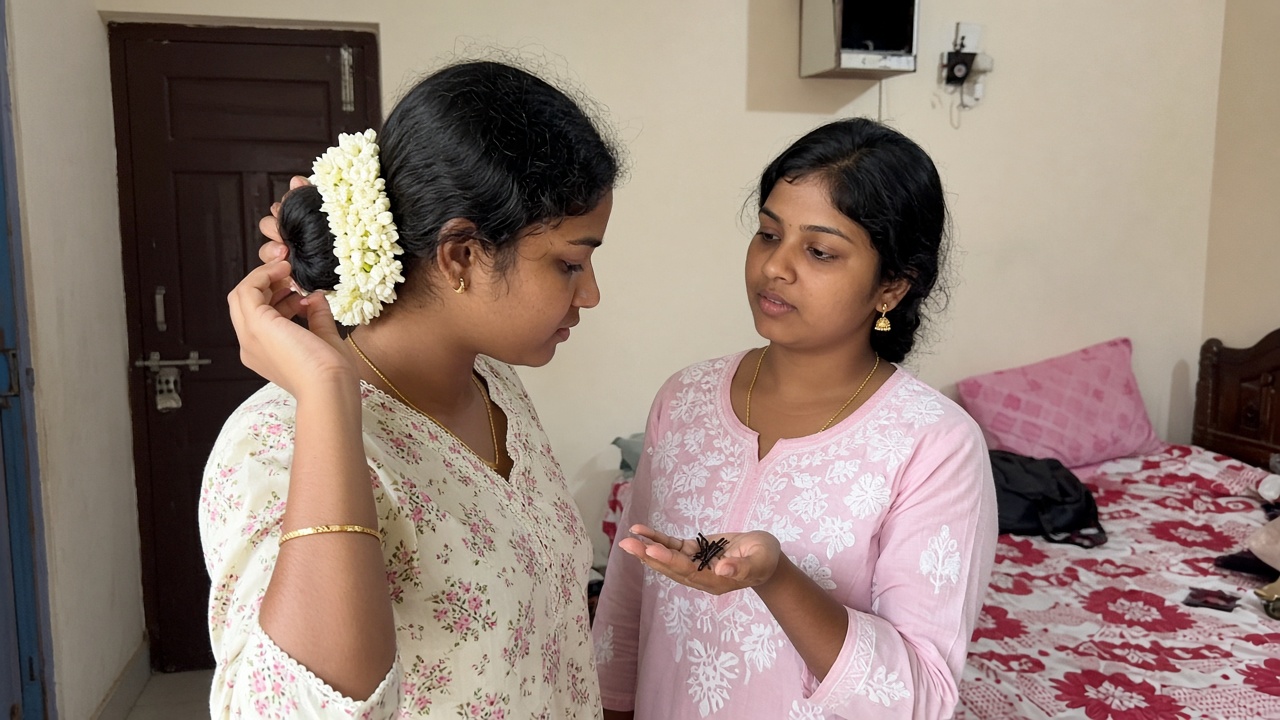
Hair on Diwali should look good and stay out of the way of the diyas. That means:
- A low bun with a gajra. Fresh jasmine smells incredible and looks timeless. Your entire block will know you’re coming.
- A side braid with small flowers or hair jewels woven in. Pretty, practical and easy to do yourself.
- Soft waves with one side pinned back using a decorative clip, if you want to wear it open.
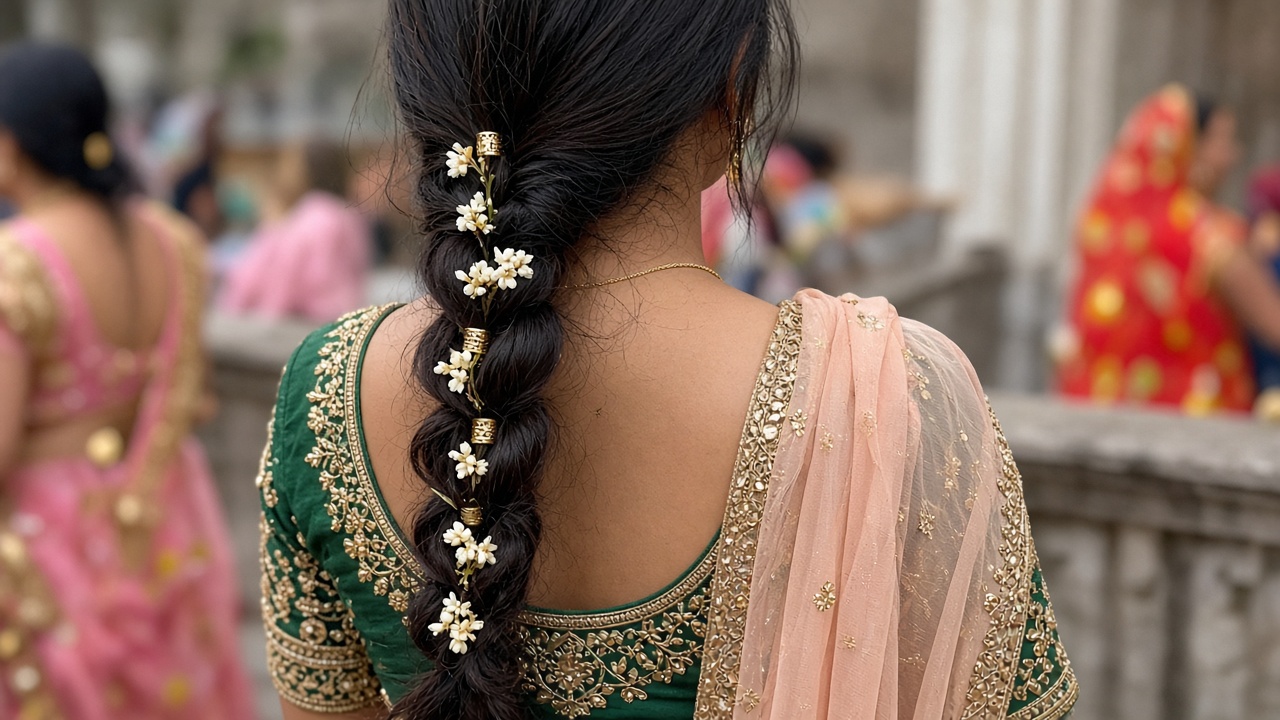
Whatever you choose, use hairspray and plenty of pins. And if you’re wearing your hair open, tie it up before you light anything. Hair and fire have never had a good relationship.
Easy Rangoli and Decor Touches (No Art Degree Required)
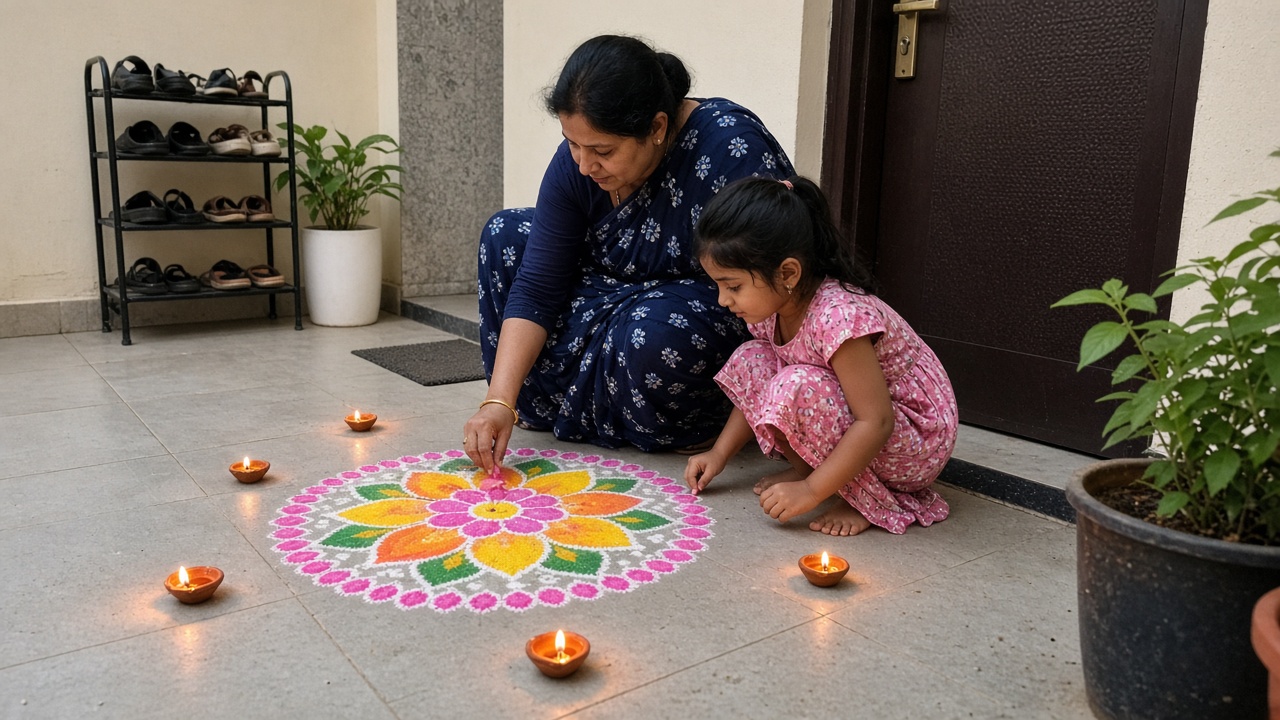
Diwali decor doesn’t need a professional or a Pinterest board with 400 saves. It needs light, color, and a few things done with care. Your home doesn’t have to look like a magazine shoot. It has to look like someone is happy to welcome people in.
Rangoli for People Who Swear They Can’t Draw
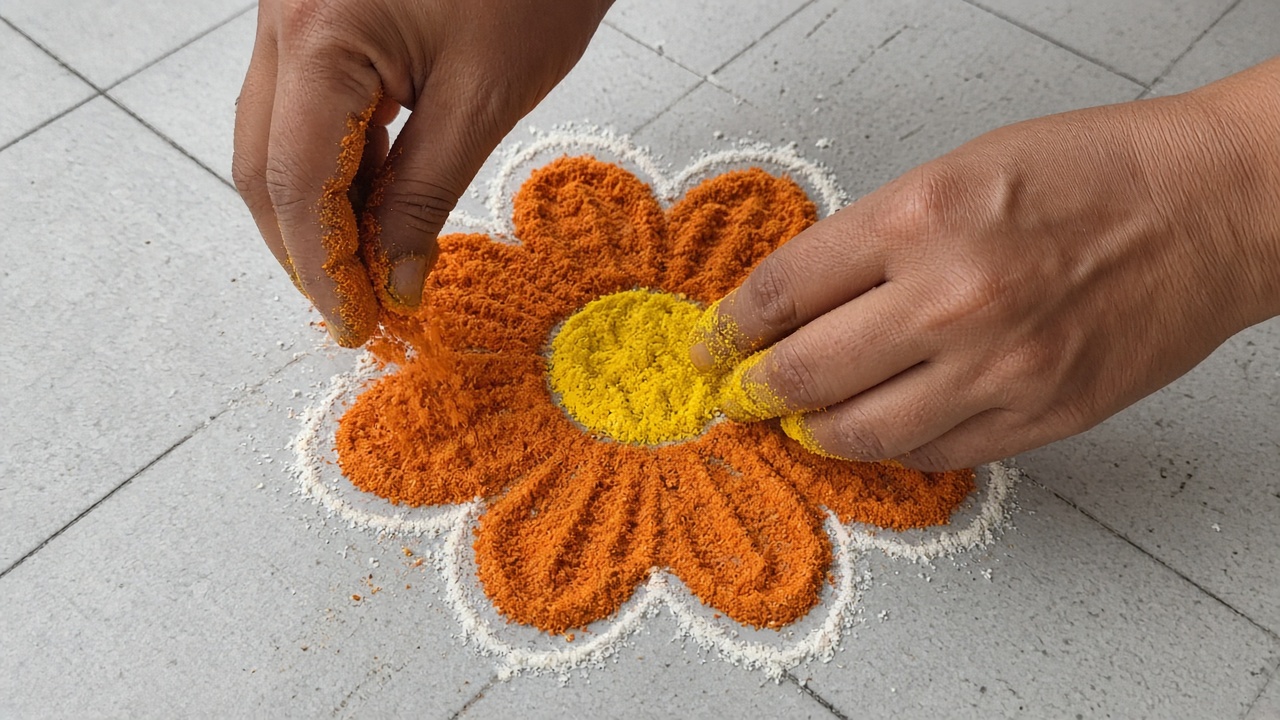
You can make a good rangoli. Here’s how:
- Start with a circle. Trace around a steel plate with chalk. Add petals around it. Congratulations, you’ve drawn a flower.
- Use stencils or a rangoli sieve. No shame in it. Your neighbors are using them too.
- Pick three or four colors, not twelve. Orange, yellow, pink and white always look happy together.
- Try a flower rangoli. Marigold petals, rose petals and a few green leaves look gorgeous, smell great and you don’t need any skill to arrange them in rings.
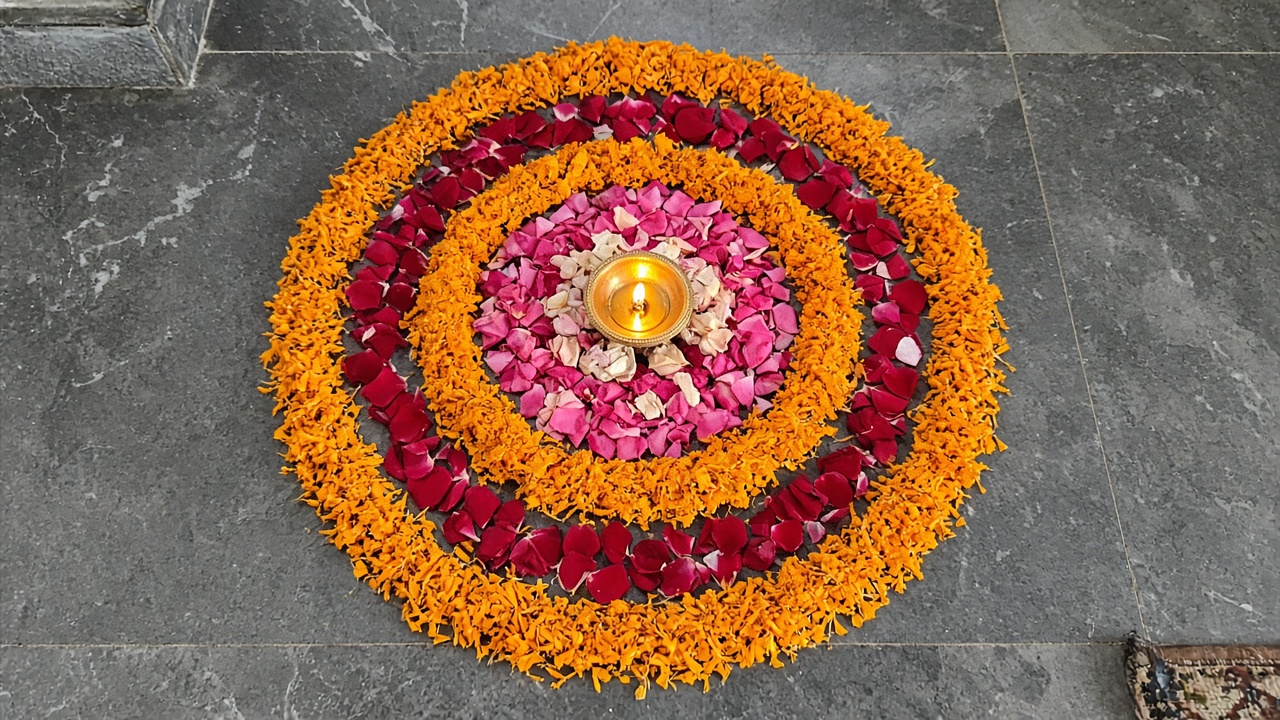
Short on space? A small rangoli at the door, or even on a plate, can be just as beautiful as a giant floor design. Put a diya in the middle and you’re done.
Diyas, Marigolds and Lights That Do the Work for You
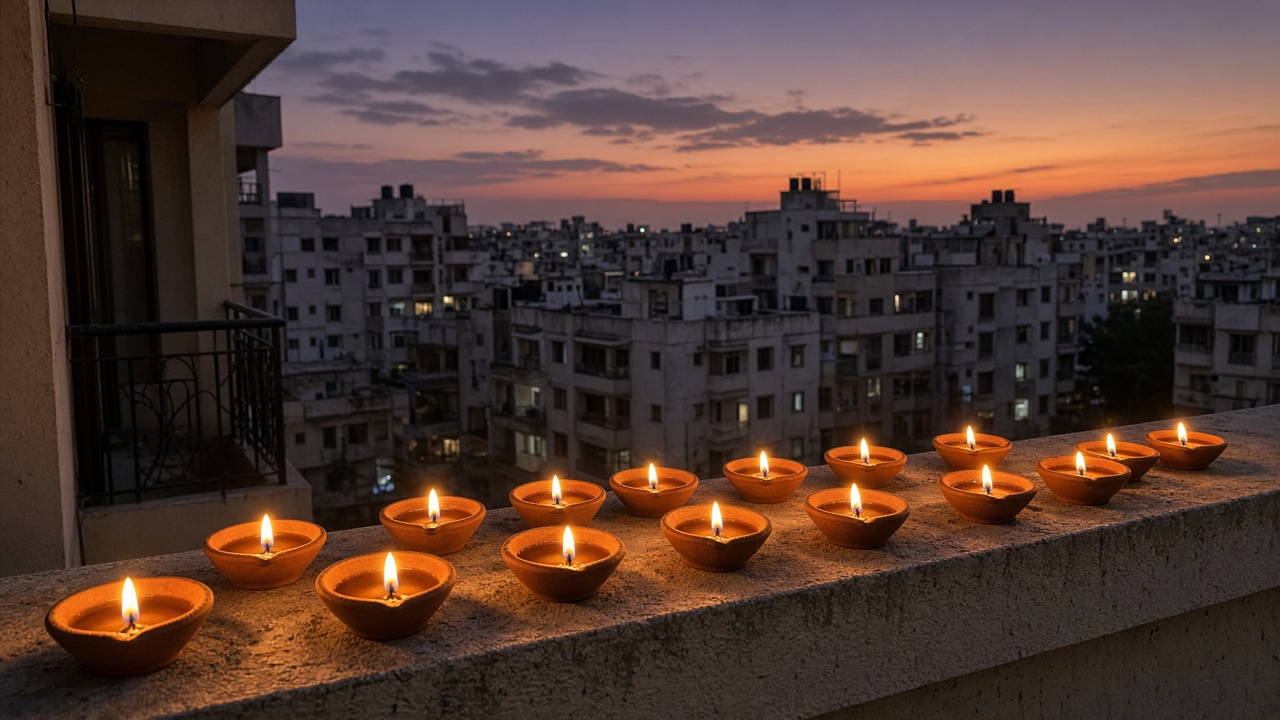
The whole point of Diwali is light, so this is where you can’t go wrong.
- Clay diyas along the windowsill, balcony ledge and entrance. Soak them in water for a few hours before you light them so they absorb less oil.
- Marigold garlands (toran) across the door frame. Real flowers look and smell better than plastic ones, even if they only last a few days.
- Warm string lights over the balcony railing. Warm white, not cold blue. Cold blue makes your home look like a pharmacy.
- Floating candles in a bowl of water with a few petals on top. It takes two minutes and looks incredibly elegant.
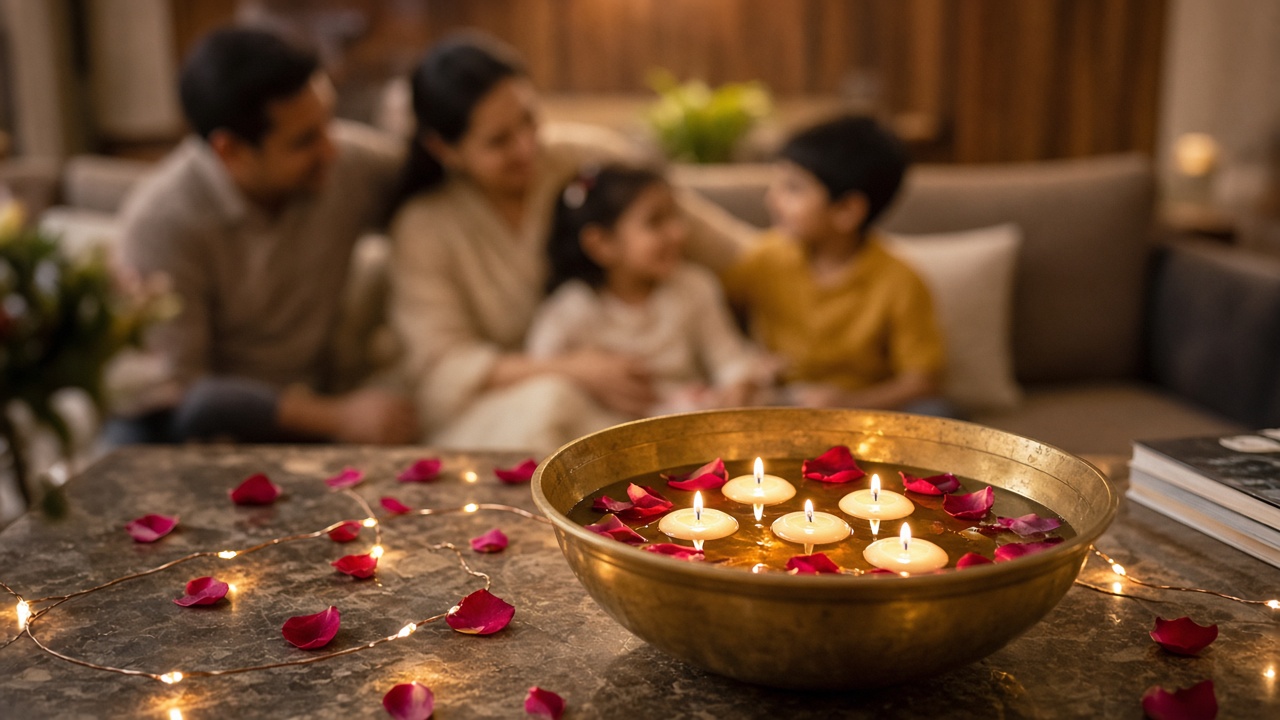
Keep the lighting low inside and let the diyas glow. Turn off the tube lights for an hour. You’ll be surprised at how magical a normal living room looks.
Quick Diwali Survival Tips Nobody Tells You
A few small things that make a big difference by the end of the night:
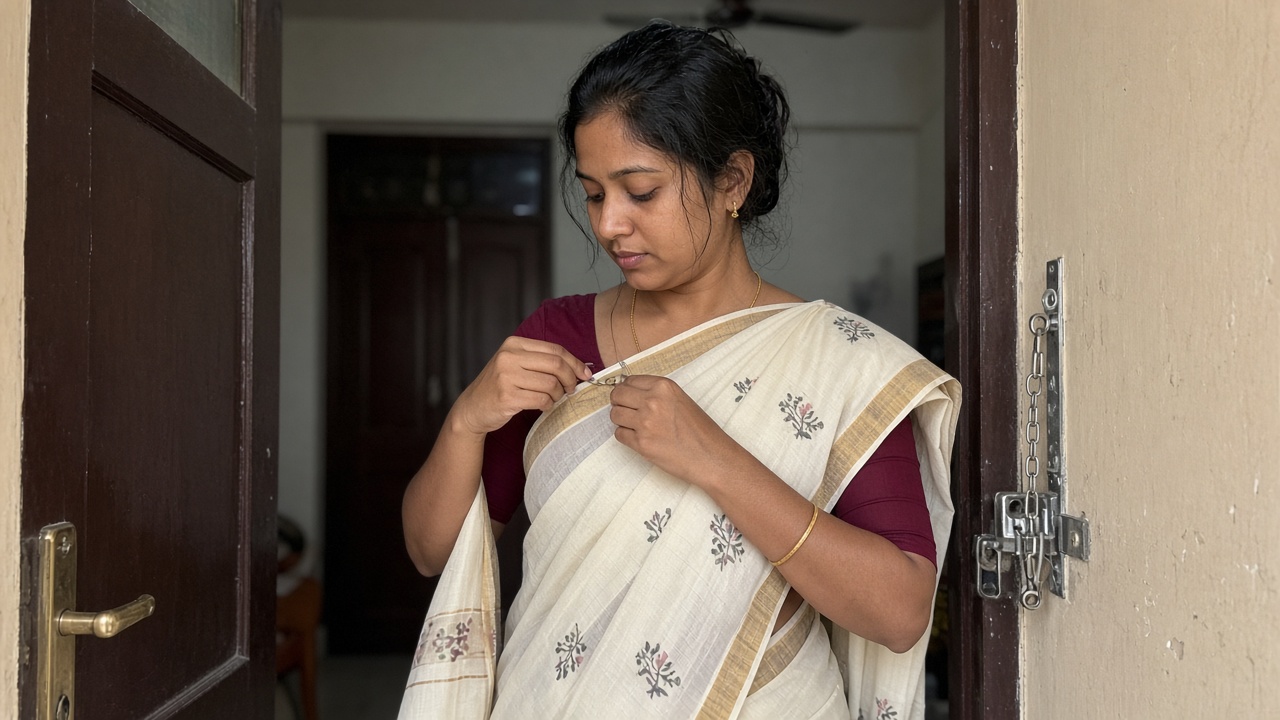
- Pin everything. Pallus, dupattas and loose sleeves near diyas are a real hazard. Pin them and keep them away from the flame.
- Pack a tiny kit. Safety pins, blotting papers, lipstick, kajal, a hair tie and a few bobby pins. It fits in any potli bag.
- Comfortable footwear wins. You’ll be on your feet for hours. Low heels, juttis or kolhapuris will save your evening.
- Plan outfit repeats. Five days of festivities means five outfits is a lot. Mix and match: same saree with a different blouse, same kurta with a different jacket.
- Eat before you get dressed. Or at least eat before you put on lipstick. You know why.
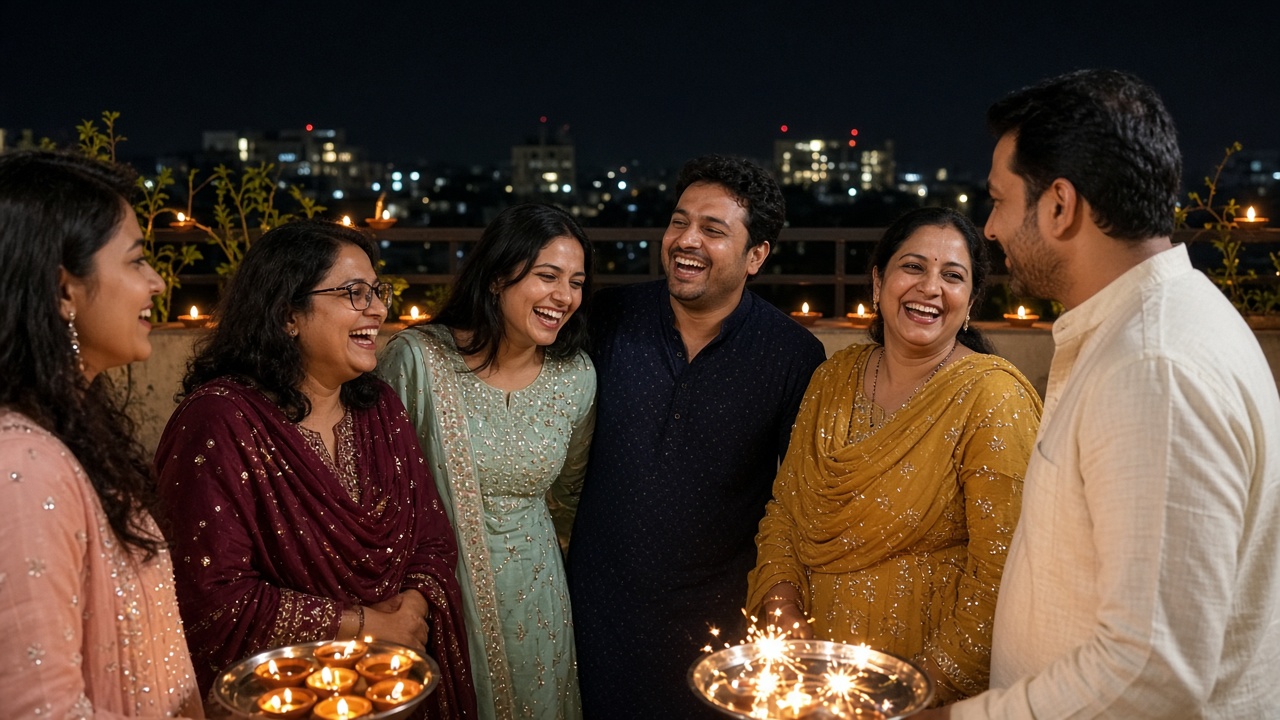
The best Diwali outfit isn’t the most expensive one or the one that gets the most likes. It’s the one you’re wearing when your nani laughs at your terrible joke, your cousin hands you the last kaju katli, and the whole street lights up at once.
Dress up, light everything, and let yourself glow. That’s what the night is for.
