
You’re standing in front of your closet, already running late, scrolling through outfit options in your head. Nothing feels right. The jeans-and-tee combo is tired. The dress feels too formal. The matching set is in the laundry.
Then you spot it: your green jumpsuit.
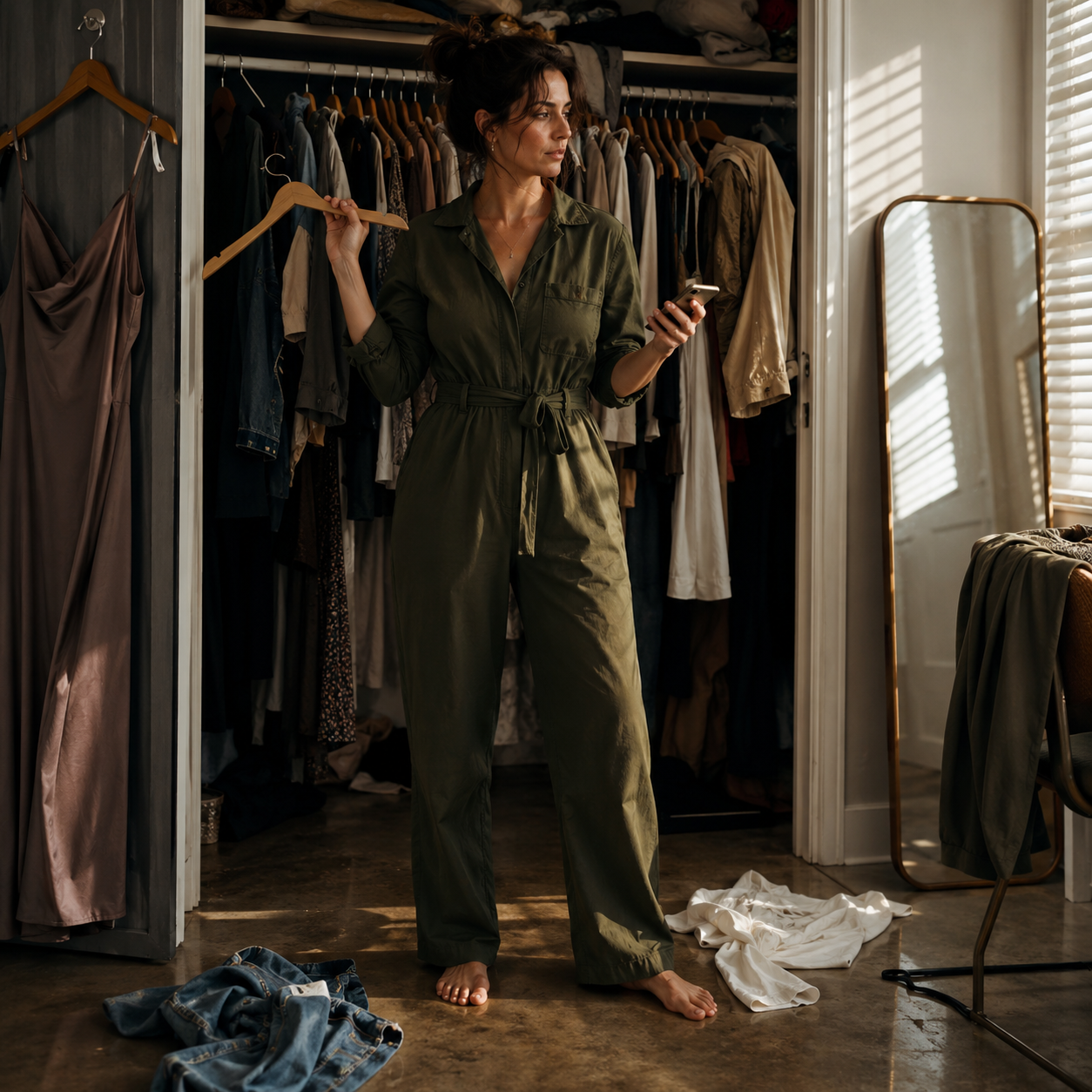
One piece. Zero decisions. Instant outfit.
That’s the magic of a well-chosen green jumpsuit. It solves the “what do I wear” crisis while making you look like you actually tried. But here’s the thing most people miss: not all green jumpsuits work the same way. The shade you pick, the cut you choose, and how you style it completely change whether you look effortlessly cool or like you borrowed your dad’s coveralls.
This guide breaks down exactly how to find, style, and wear green jumpsuit styles that actually work for your body, your life, and your vibe. From understanding which shade of green matches your energy to nailing the perfect silhouette for your frame, you’ll walk away knowing how to make this one-piece wonder work 30+ different ways.
Let’s get into it.
Table of Contents
- Key Takeaways
- Understanding Green Jumpsuit Shades: Finding Your Perfect Match
- The Best Green Jumpsuit Styles by Silhouette
- Styling Green Jumpsuits for Every Body Type
- Seasonal Styling: Green Jumpsuits Year-Round
- Occasion-Based Styling Guide
- Accessorizing Your Green Jumpsuit: The Finishing Touches
- Fabric and Quality Considerations
- Common Green Jumpsuit Styling Mistakes (And How to Avoid Them)
- Frequently Asked Questions
- Final Thoughts
Key Takeaways
Body type matters less than silhouette choice — the right cut flatters everyone when you understand proportion.
Shade selection changes everything — olive reads casual and grounded, emerald screams formal luxury, sage channels soft-girl energy.
Strategic styling transforms one jumpsuit from coffee run to cocktail hour through accessories and layers alone.
Fabric dictates seasonality and formality — linen for summer ease, velvet for winter drama, jersey for travel-friendly comfort.
Accessories make or break the look — belts define your waist, shoes set the tone, jewelry completes the vibe.

Understanding Green Jumpsuit Shades: Finding Your Perfect Match
The green you choose isn’t just a color preference. It’s a mood, a message, and a styling roadmap all in one.
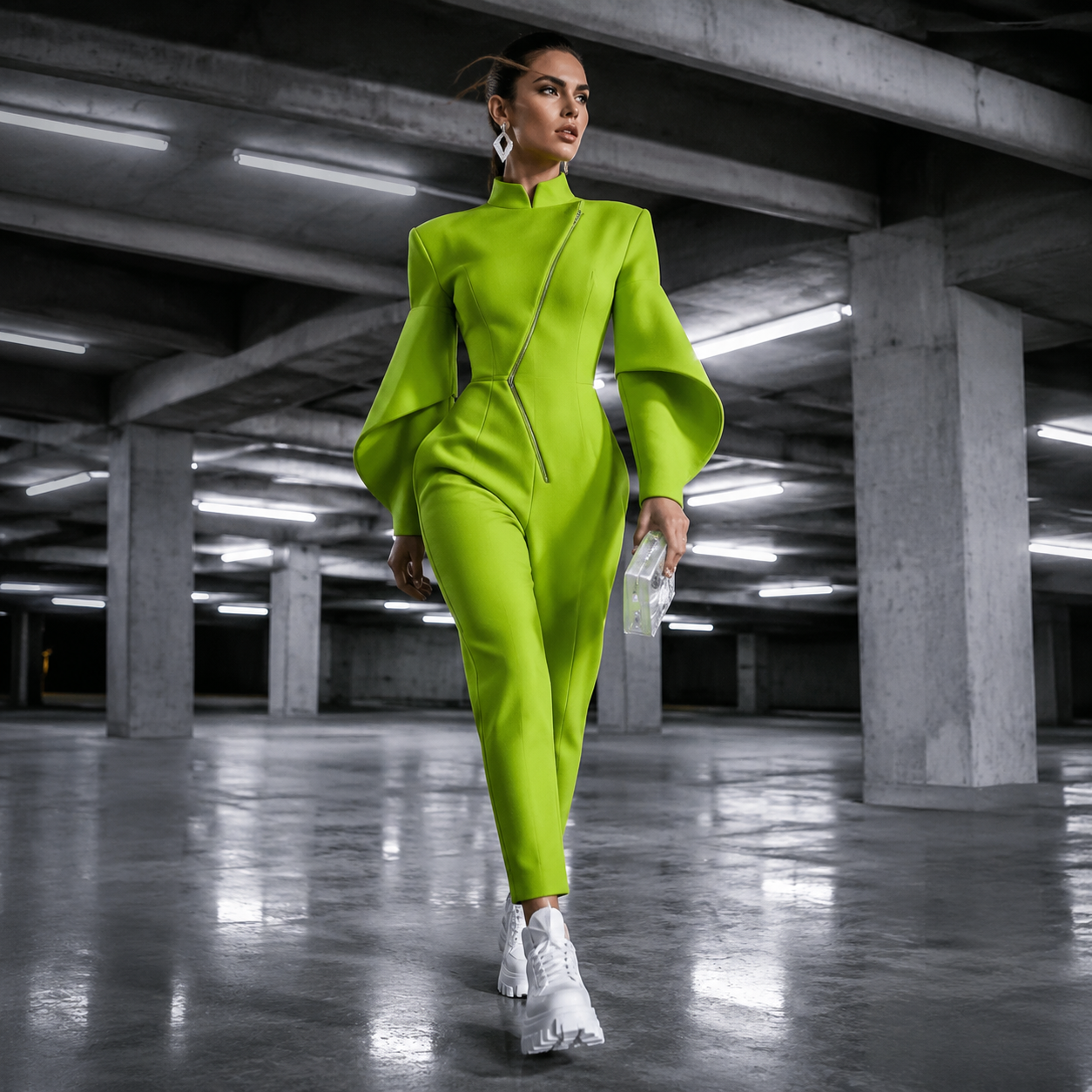
Different shades of green carry completely different energy. Olive feels grounded and versatile. Emerald commands attention and sophistication. Sage whispers soft, romantic vibes. Lime screams confidence and dopamine dressing.
Your shade choice determines where you can wear your jumpsuit, what you pair it with, and how people perceive your style. Get this right, and everything else falls into place.
Olive and Army Green: The New Neutral
Olive green is the MVP of the jumpsuit world.
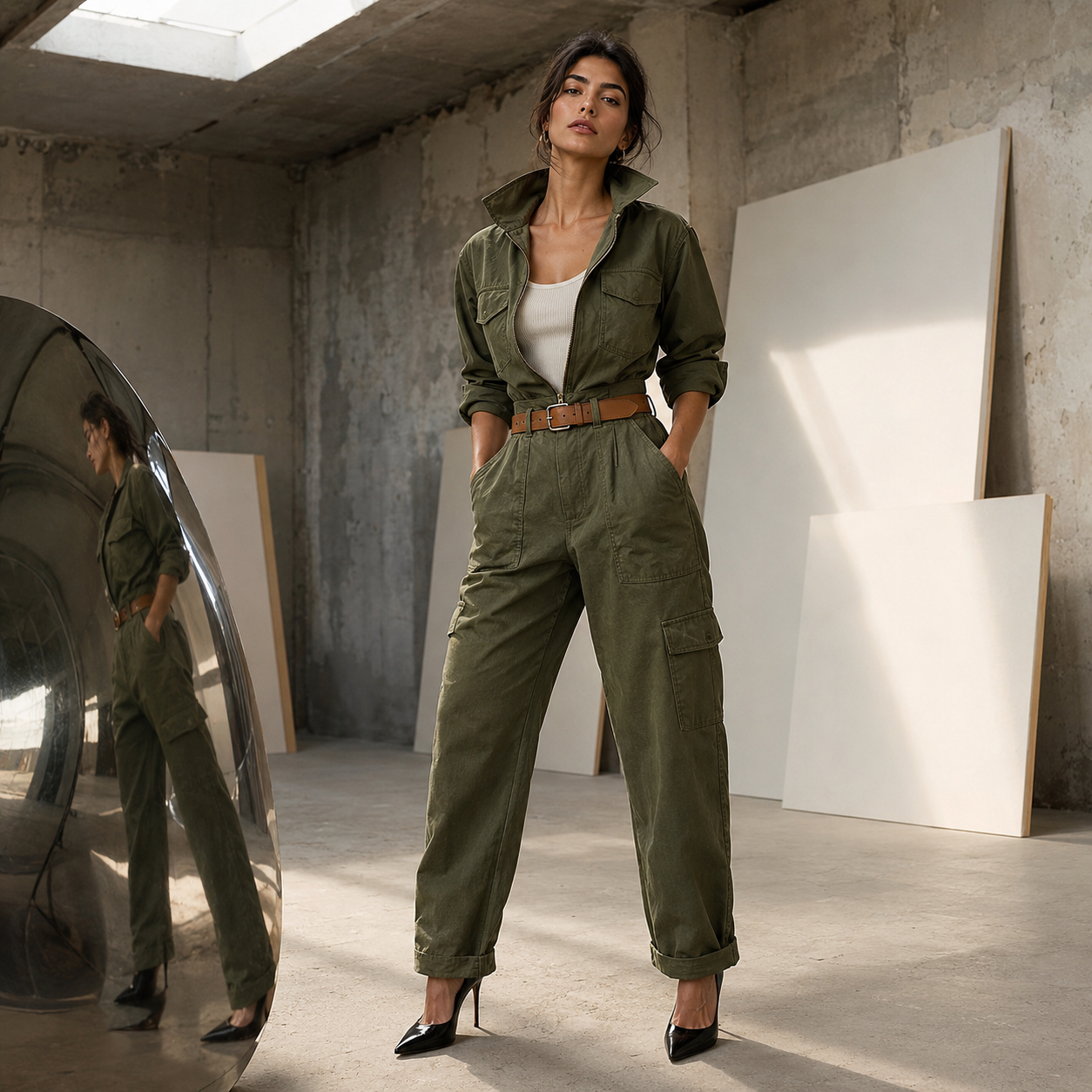
It functions like a neutral, pairing effortlessly with nearly every color in your closet. Earth tones like tan, cream, and terracotta feel natural. Denim jackets layer seamlessly. Gold jewelry adds warmth without competing.
This shade works for casual outings, weekend errands, travel days, and coffee runs. It’s the jumpsuit you reach for when you want to look intentional without overthinking it. The grounded, earthy quality of olive makes it universally flattering — it doesn’t wash anyone out or demand a specific skin tone to pull off.
For body types, olive is forgiving. The muted tone doesn’t add visual weight, and because it reads as a neutral, it creates a streamlined, cohesive look that elongates rather than chops up your silhouette.
Pair olive with white sneakers for daytime ease or pointed-toe heels to elevate it for dinner. Add a canvas belt to define your waist. Layer a leather jacket when the temperature drops. Olive adapts to your life without requiring a complete accessory overhaul.
Emerald and Forest Green: Statement Luxury
Deep, jewel-toned greens are for when you want to make an entrance.
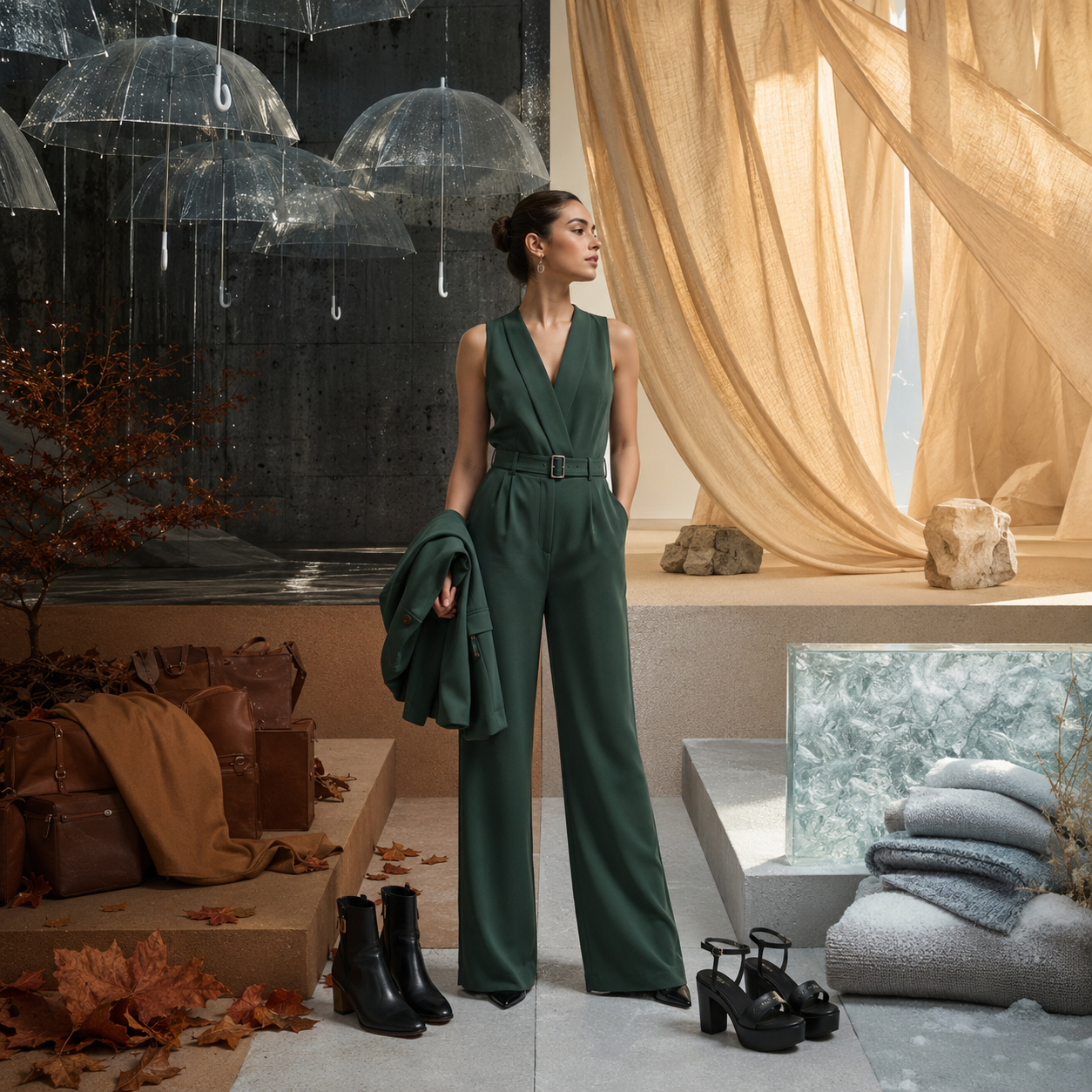
Emerald and forest green carry an “Old Money” elegance that feels sophisticated without trying too hard. These shades work beautifully for weddings, holiday parties, date nights, and any event where you want to look polished and memorable.
The richness of these tones demands quality fabrics. Velvet, silk, and georgette amplify the luxurious feel. A well-cut emerald jumpsuit in a structured fabric can replace a cocktail dress entirely — offering the same level of formality with more comfort and versatility.
Styling these shades requires restraint. The color itself is the statement, so keep accessories minimal. Gold jewelry complements the warmth of emerald beautifully. A simple metallic clutch and strappy heels complete the look without competing for attention.
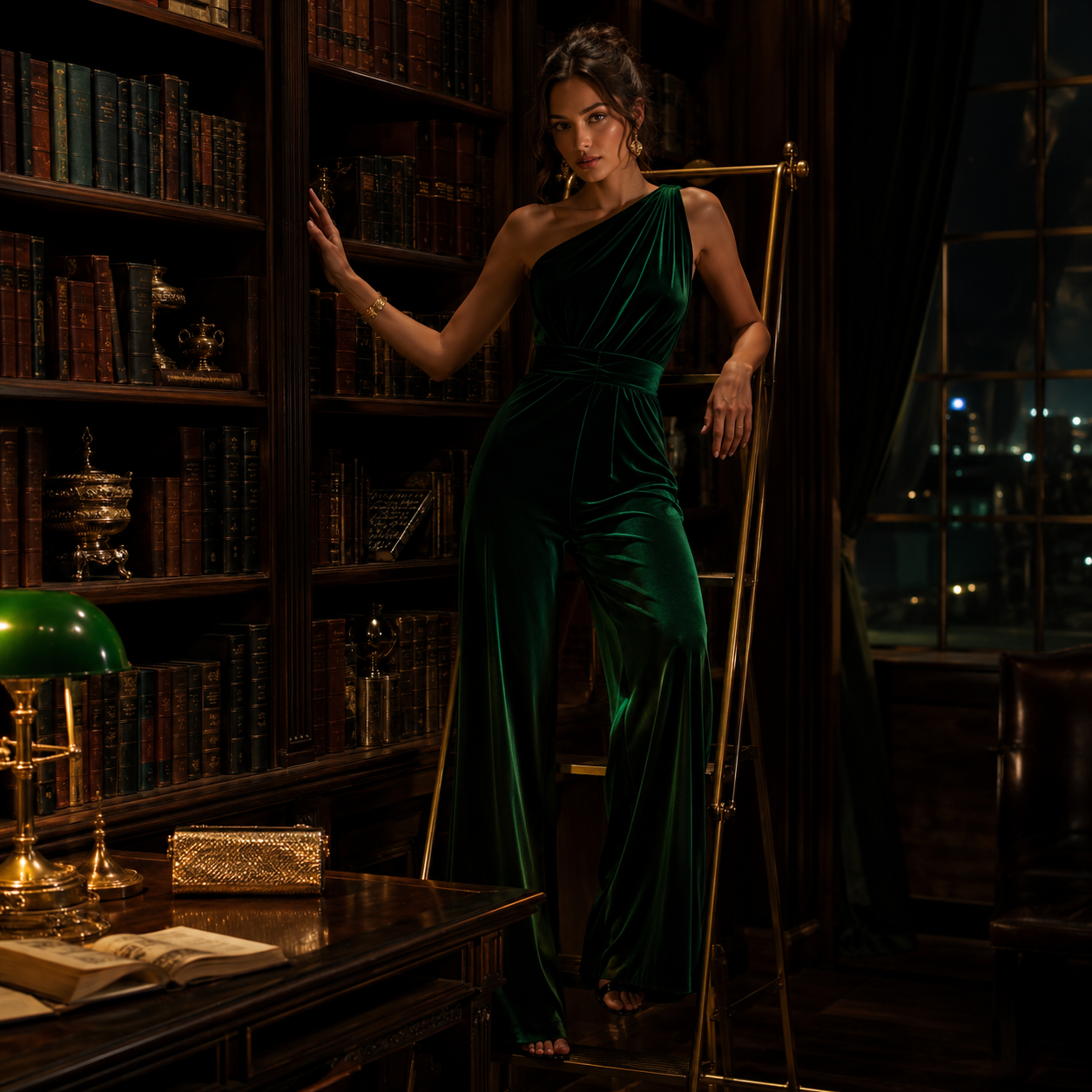
These deeper greens also photograph incredibly well, making them a smart choice for events where photos matter. The color pops against most backgrounds and flatters a wide range of skin tones, especially those with warm or neutral undertones.
Sage and Mint: Soft Girl Energy
Lighter greens are having a major moment, thanks to cottagecore and soft aesthetic trends.
Sage and mint greens feel fresh, romantic, and effortlessly feminine. They’re perfect for spring brunches, beach vacations, garden parties, and any occasion where you want to channel breezy, approachable energy.
These shades work best in breathable fabrics like linen or cotton gauze. The airy texture matches the lightness of the color, creating a cohesive, natural look. Pair sage green with natural textures — straw bags, woven sandals, delicate gold jewelry — to lean into the organic, earthy vibe.
Styling lighter greens requires a softer touch. Heavy boots or chunky accessories can overpower the delicate color. Instead, opt for minimalist jewelry, white sneakers, or flat cream mules. Add a patterned silk scarf or a floral hair clip for a romantic finishing touch.
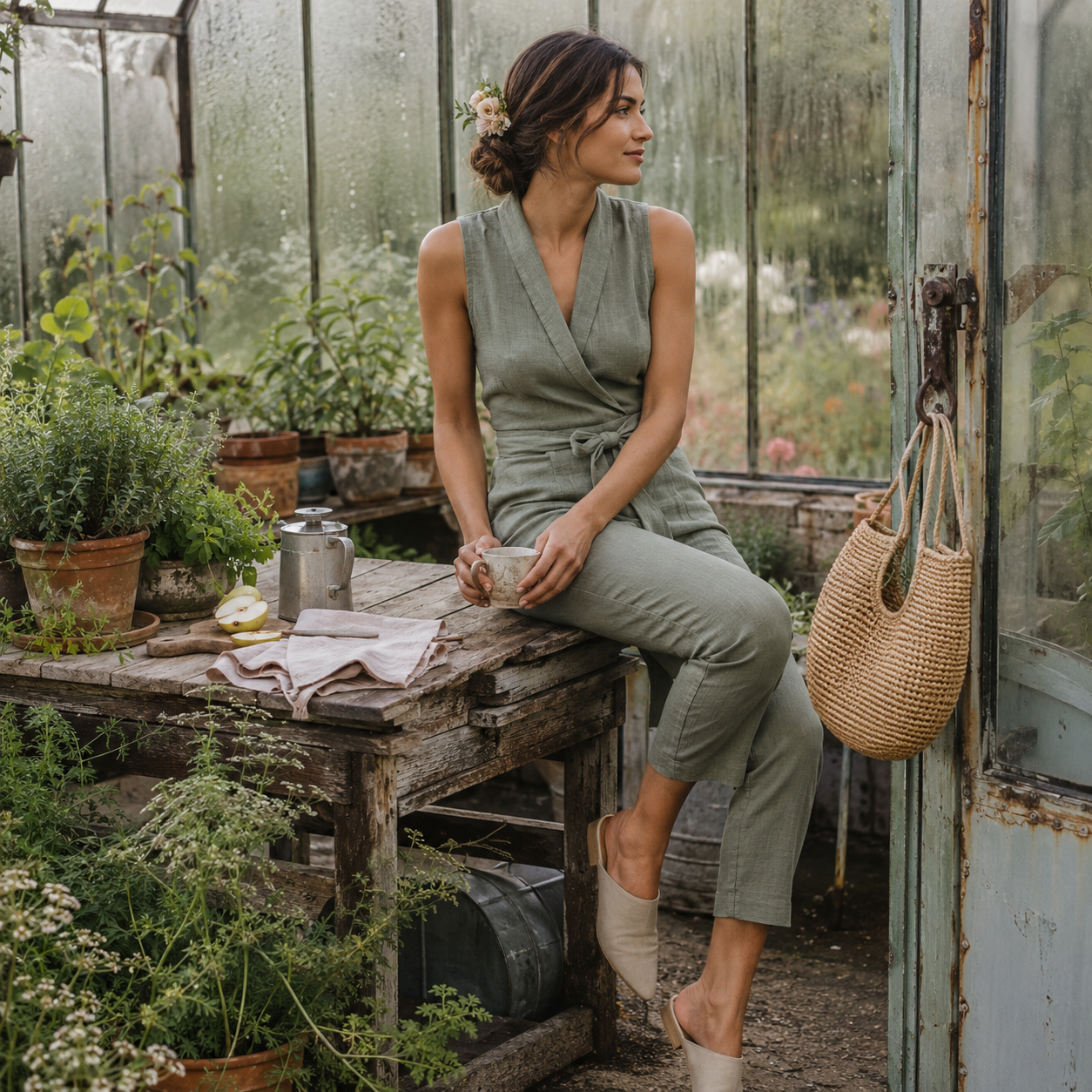
These shades also work beautifully for daytime events where you want to look polished but not overdressed. A sage linen jumpsuit with platform sandals and a crossbody bag hits the sweet spot between casual and intentional.
The Best Green Jumpsuit Styles by Silhouette
The cut of your jumpsuit matters just as much as the color.
Different silhouettes create entirely different aesthetics, flatter different body types, and work for different occasions. Understanding the major jumpsuit styles helps you choose the right one for your wardrobe and your life.
Utility and Cargo Jumpsuits: The Streetwear Essential
The utility jumpsuit — also called a boiler suit or coveralls — is the most iconic iteration of this garment, and its functional design principles share surprising parallels with performance-focused apparel research like A Soft Wearable Robot study, which explores how garment structure and articulation affect body movement.
It’s rugged, functional, and effortlessly cool. Characterized by heavy cotton or denim fabric, a front zipper or button closure, and a cinched or belted waist, the utility jumpsuit balances structure with ease.
Cargo jumpsuits take this aesthetic further with multi-pocket details on the thighs and chest. This Y2K-inspired design leans into “tomboy chic” and streetwear energy. The key to pulling this off without looking like you’re headed to a construction site? Strategic styling.
Try the half-zip look: unbutton or unzip the top half and layer a fitted crop top or sports bra underneath. This adds visual interest and breaks up the one-piece silhouette. Cinch the waist with a canvas or leather belt to create shape and avoid looking shapeless.

Footwear is critical here. Combat boots or chunky platform sneakers lean into the utilitarian vibe. White sneakers keep it fresh and casual. Pointed-toe heels create an unexpected high-low contrast that feels fashion-forward.
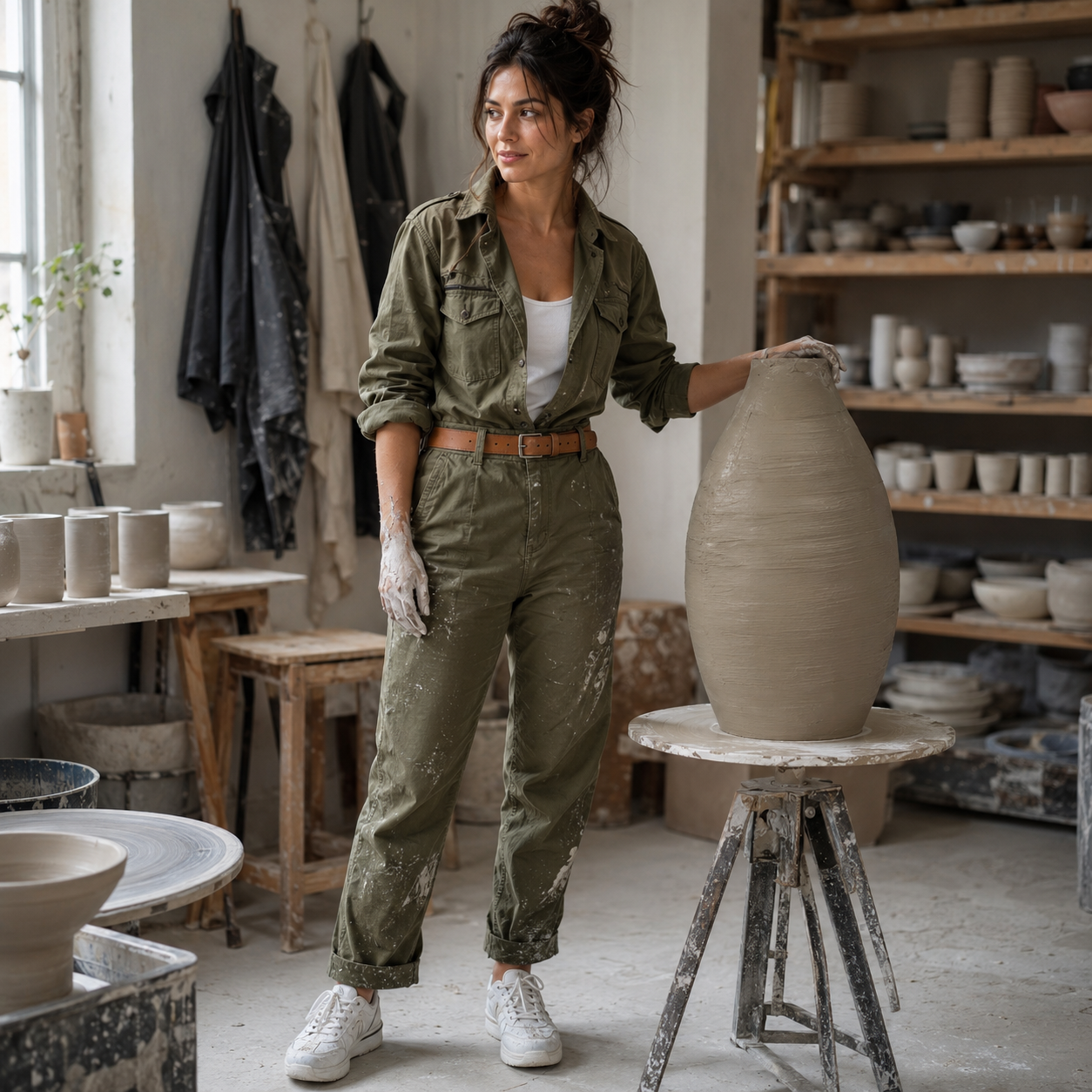
This silhouette works universally when properly styled. Petite frames should look for high-rise styles to elongate the leg line. Curvy bodies benefit from belted options that define the waist. Tall frames can embrace the oversized, relaxed fit without drowning in fabric.
Wide-Leg Jumpsuits: Elegant and Elongating
Wide-leg jumpsuits are the sophisticated, formal option.
They create a gown-like elegance while maintaining the comfort and practicality of pants. The flowing leg creates a dramatic, elongated line that mimics the movement of a maxi dress.
For petite frames, this silhouette requires careful styling. High heels are non-negotiable to avoid fabric pooling at the ankles. Look for styles with a high-rise waist to maximize the leg-lengthening effect.
Neckline variations add versatility. Halter necks highlight the shoulders and work beautifully for formal events. One-shoulder designs add asymmetrical drama. Deep V-necks elongate the torso and balance the volume of wide-leg bottoms.
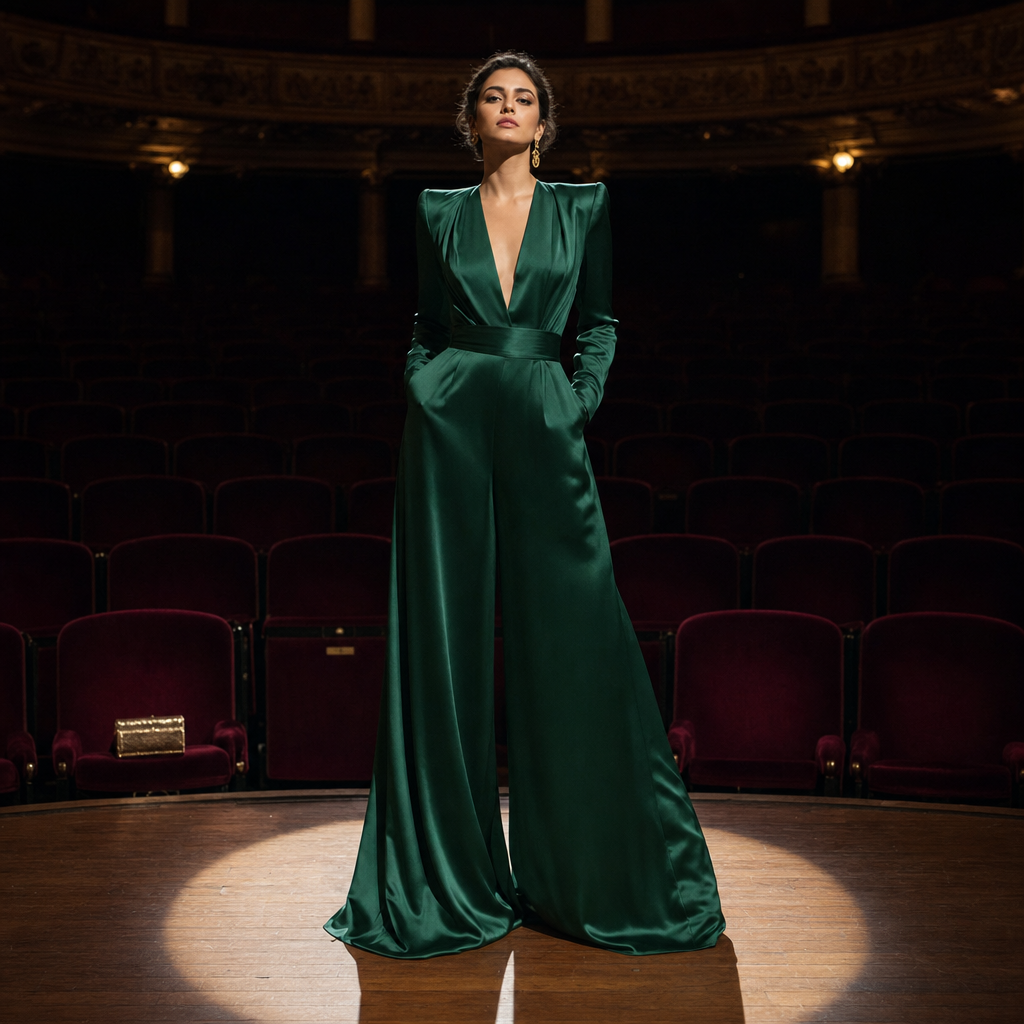
This silhouette transitions seamlessly from office to evening. A tailored wide-leg jumpsuit in forest green with a structured blazer works for professional settings. Swap the blazer for statement earrings and strappy heels, and you’re ready for a wedding or gala.
Fabric choice matters here. For formal occasions, look for pleated details, embellished accents, or luxurious fabrics like silk or georgette. For work settings, stick to structured cotton or ponte knit in muted shades.
Wide-leg jumpsuits flatter most body types when cut properly. The key is ensuring the waist sits at your natural waistline and the legs flow without clinging. This creates a balanced, streamlined silhouette that feels polished and intentional.
Fitted and Belted Jumpsuits: Hourglass Definition
Fitted jumpsuits with built-in or added belts are the secret weapon for creating shape.
A defined waist transforms a jumpsuit from shapeless to structured. For curvy bodies, this is especially powerful — it highlights your natural shape rather than hiding it. For straight body types, a well-placed belt creates the illusion of curves.

Built-in belts offer convenience and ensure the belt placement is exactly where the designer intended. Added belts give you flexibility to adjust placement based on your torso length and personal preference.
Fabric is critical for fitted styles. Look for high-stretch jersey or structured fabrics with a bit of give. You want the jumpsuit to hug your body without feeling restrictive or creating unflattering lines. Avoid overly thin fabrics that cling to every bump or overly stiff fabrics that don’t move with your body.
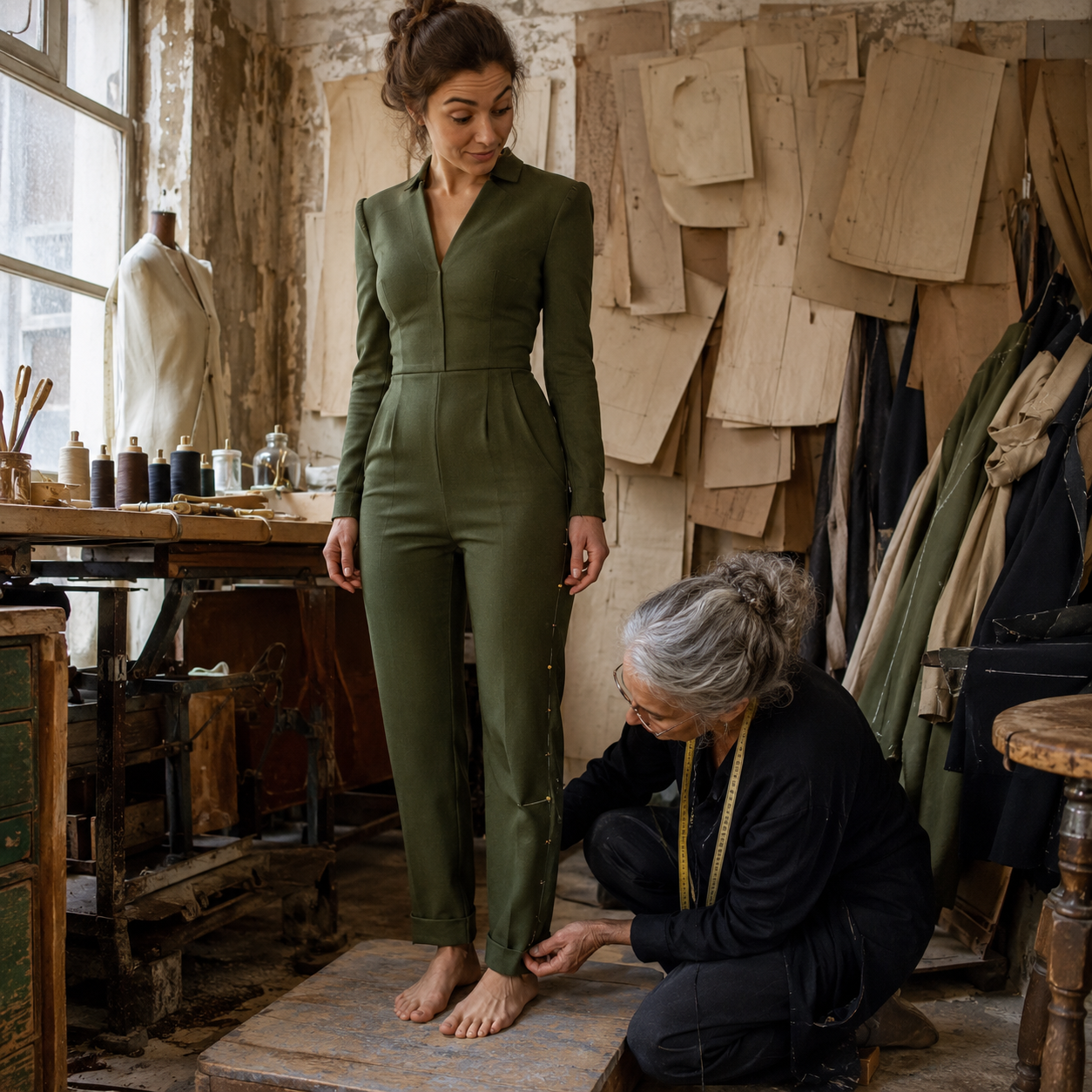
For curvy and plus-size bodies, fitted jumpsuits work beautifully when paired with the right neckline. V-necks and wrap styles balance proportions and draw the eye upward. Wide-leg bottoms create a balanced silhouette by adding volume below the waist.
Styling fitted jumpsuits requires restraint. The silhouette itself is the statement, so keep accessories simple. Delicate jewelry, a small crossbody bag, and classic heels or loafers complete the look without overwhelming it.
This silhouette works for a wide range of occasions. A fitted olive jumpsuit with a denim jacket and sneakers feels effortlessly casual. Swap the jacket for a blazer and heels, and you’re ready for a professional setting or dinner date.
Styling Green Jumpsuits for Every Body Type
Every body can rock a green jumpsuit. The trick is matching the right silhouette to your proportions.
Forget the myth that jumpsuits are only for certain body types. The truth is simpler: understanding proportion and choosing the right cut makes any jumpsuit work for anyone.
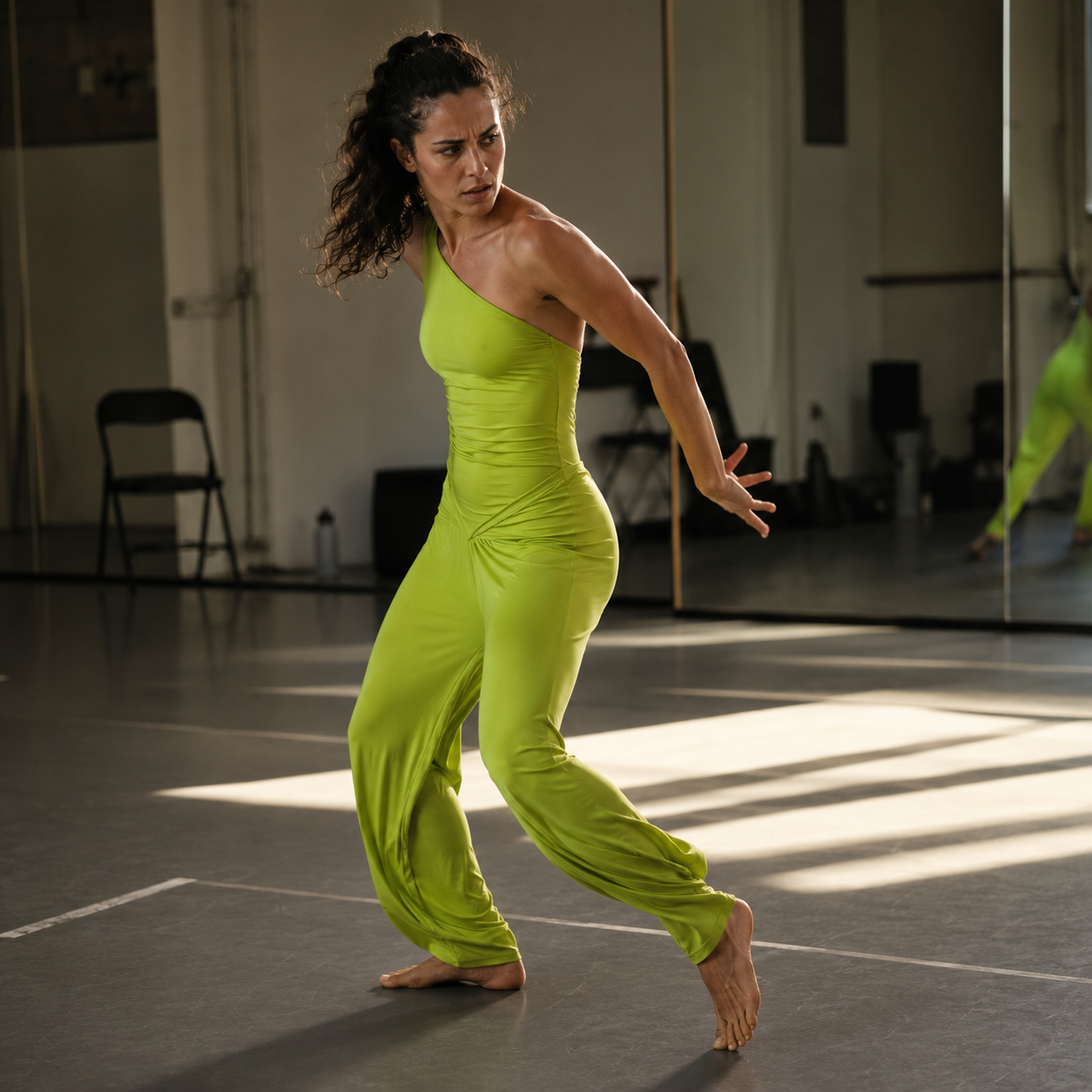
Petite Frames: Creating Length and Balance
When you’re petite, the goal is elongation without drowning in fabric.
High-rise styles are your best friend. They sit at your natural waist, creating the illusion of longer legs. Avoid low-rise or drop-crotch styles that visually shorten your frame.
Tapered or slim-fit legs work better than wide-leg styles unless you’re committed to hemming them properly. Excess fabric pooling at the ankles chops up your silhouette and makes you look shorter.
Vertical details are your secret weapon. Front zippers, center seams, and monochromatic styling all create unbroken vertical lines that elongate your frame. Avoid horizontal stripes, color-blocking, or busy patterns that cut your body into sections.
Heel height matters. Even a modest heel — a block heel, a platform sneaker, or a kitten heel — adds length and ensures the jumpsuit hits at the right spot on your ankle. Flat shoes can work, but only if the jumpsuit is hemmed to the perfect length.
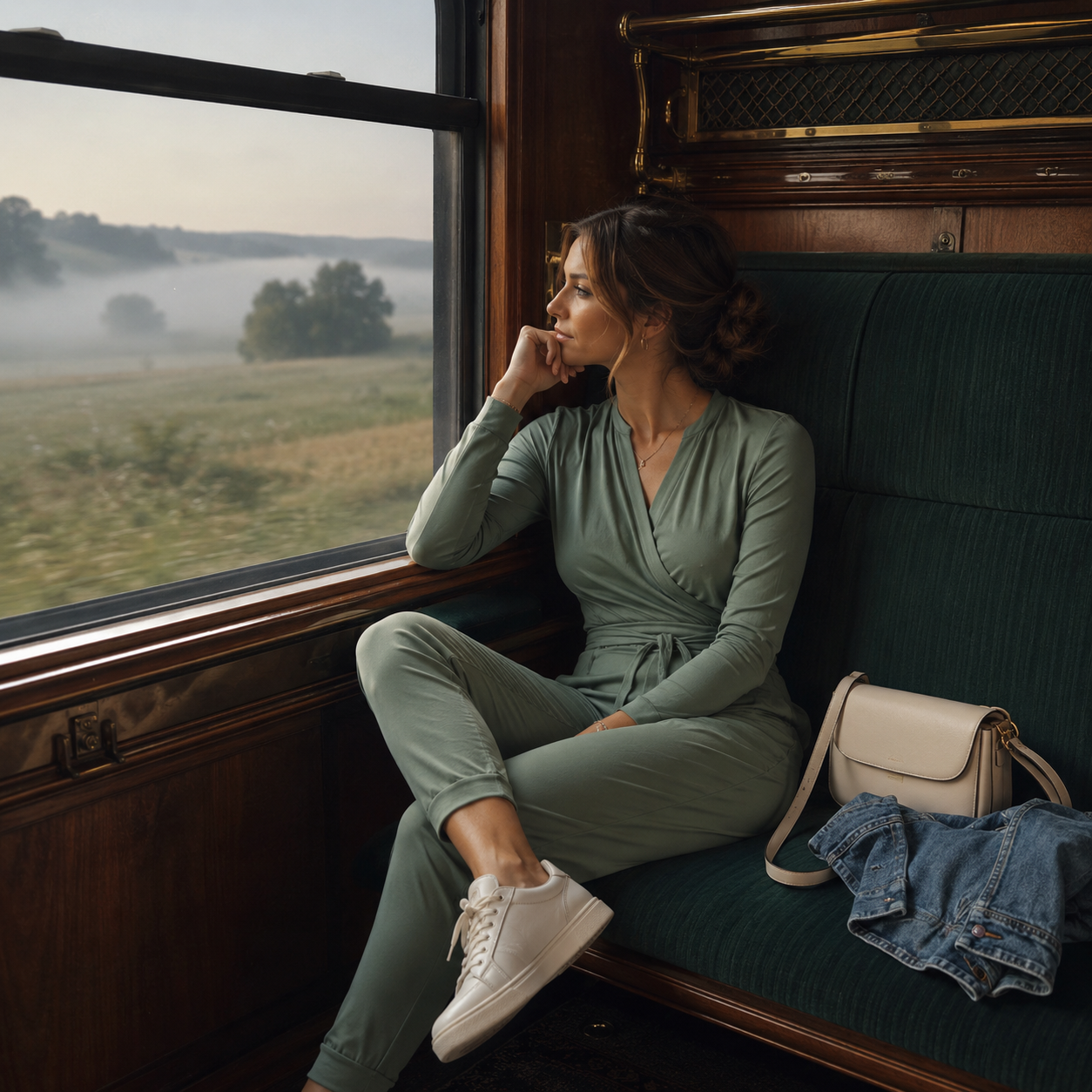
Look for brands that offer petite sizing or styles specifically designed for shorter torsos. A jumpsuit that fits properly in the torso length makes all the difference in how polished and intentional the outfit looks.
Curvy and Plus-Size Bodies: Embracing Your Shape
Belted styles are game-changers for curvy bodies.
A defined waist highlights your natural shape and creates an hourglass silhouette. Look for jumpsuits with built-in belts or add your own to create structure and proportion.
Fabric choice is critical. Structured fabrics with stretch offer the best of both worlds: shape and comfort. Avoid overly thin fabrics that cling uncomfortably or overly stiff fabrics that don’t move with your body.
Neckline strategy matters. V-necks and wrap styles draw the eye upward and balance proportions. They create a flattering vertical line that elongates the torso and prevents the jumpsuit from feeling boxy.
Wide-leg bottoms work beautifully for curvy bodies. They balance the volume of hips and thighs, creating a streamlined, proportional silhouette. Pair wide-leg styles with a fitted top half to maintain definition.
“The goal isn’t to hide your body — it’s to dress it in a way that feels balanced, intentional, and confident.”
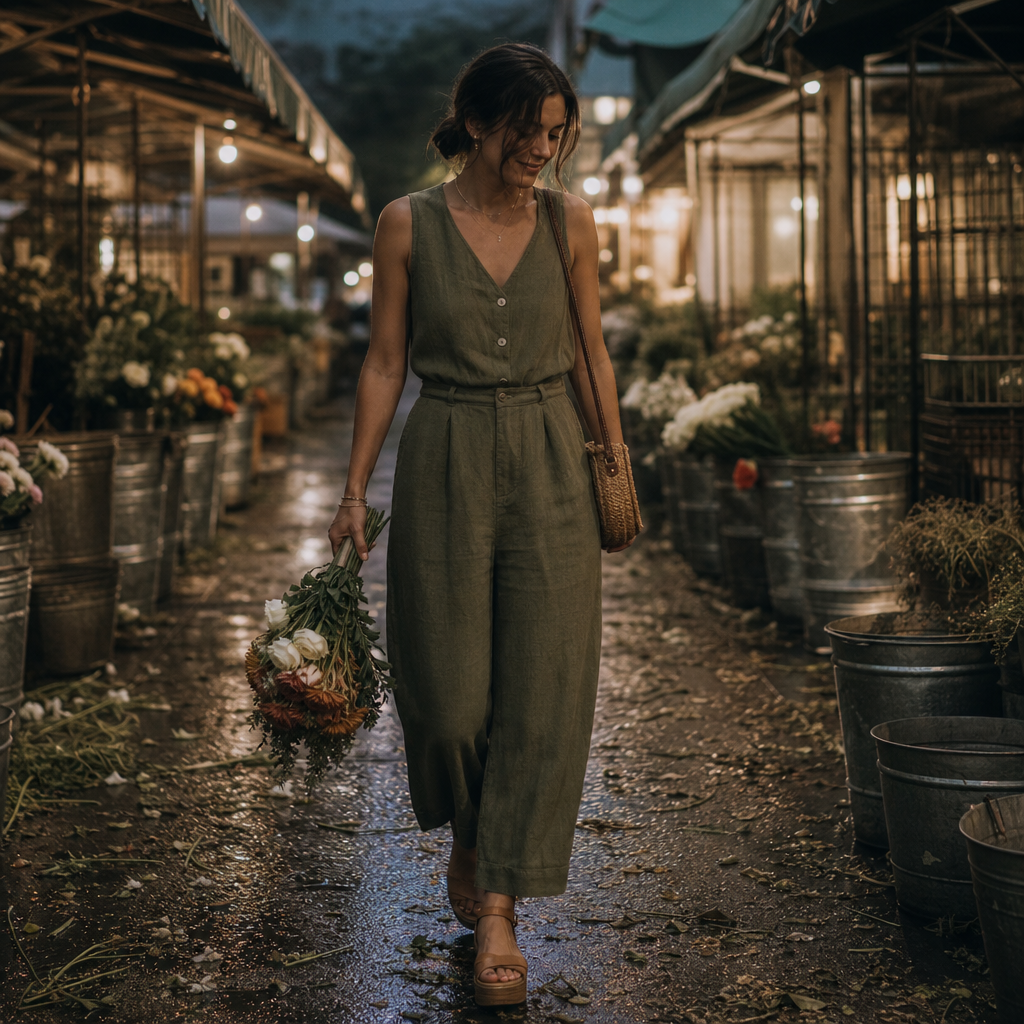
A well-cut jumpsuit that fits properly in the shoulders, waist, and hips does exactly that.
Tall Frames: Finding Adequate Length
If you’re tall, the biggest challenge is finding jumpsuits with enough torso and inseam length.
Seek out brands that offer “tall” ranges. These styles are specifically designed with longer torsos and inseams, ensuring the jumpsuit doesn’t ride up or feel uncomfortably short.
Inseam measurements matter more than general sizing. Check the product details and compare the inseam to your own measurements. A jumpsuit that’s too short in the crotch is uncomfortable and unflattering, no matter how great the color or style.
If you find a jumpsuit you love that’s slightly short, consider styling it intentionally with ankle boots. This turns a fit issue into a design choice, making the cropped length look deliberate rather than accidental.
Proportion tips for tall frames: balance long legs with structured tops or layered jackets. A cropped leather jacket or a tailored blazer adds visual weight to the upper body, creating a more balanced overall silhouette.
Embrace your height. Tall bodies can pull off dramatic, oversized silhouettes that would overwhelm shorter frames. A relaxed, wide-leg utility jumpsuit in olive green with chunky boots creates a powerful, confident look that feels effortlessly cool.
Seasonal Styling: Green Jumpsuits Year-Round
A green jumpsuit isn’t limited to one season. With the right styling, it works all year.
The key is adjusting fabric weight, layering strategically, and choosing accessories that match the temperature and vibe — a challenge addressed in forward-looking sustainable fashion concepts like Stillsuit‑π & The 0‑Water, which examines how adaptive layering and material innovation can respond to climate extremes.
Spring and Summer: Light Fabrics and Breezy Vibes
Warm weather is when green jumpsuits truly shine.
Prioritize breathable fabrics: linen, cotton gauze, and lightweight jersey. These materials keep you cool while still looking polished and intentional.
Shade-wise, lean into lighter greens. Sage, mint, and lime feel fresh and energizing in warmer months. They pair beautifully with white, cream, and natural textures like straw and rattan.
Styling approach: keep it minimal. The heat doesn’t allow for heavy layering, so let the jumpsuit stand on its own. Add a straw tote, white sneakers or flat sandals, and delicate gold jewelry. A silk scarf tied around your bag handle or neck adds a feminine touch without adding warmth.
Occasion ideas: spring and summer jumpsuits work beautifully for brunches, beach vacations, outdoor festivals, and casual weekend plans. A sage linen jumpsuit with espadrilles and a crossbody bag is the ultimate effortless summer outfit.
For evenings, swap sneakers for strappy sandals and add statement earrings. The same jumpsuit transitions seamlessly from daytime ease to evening polish with one or two accessory changes.
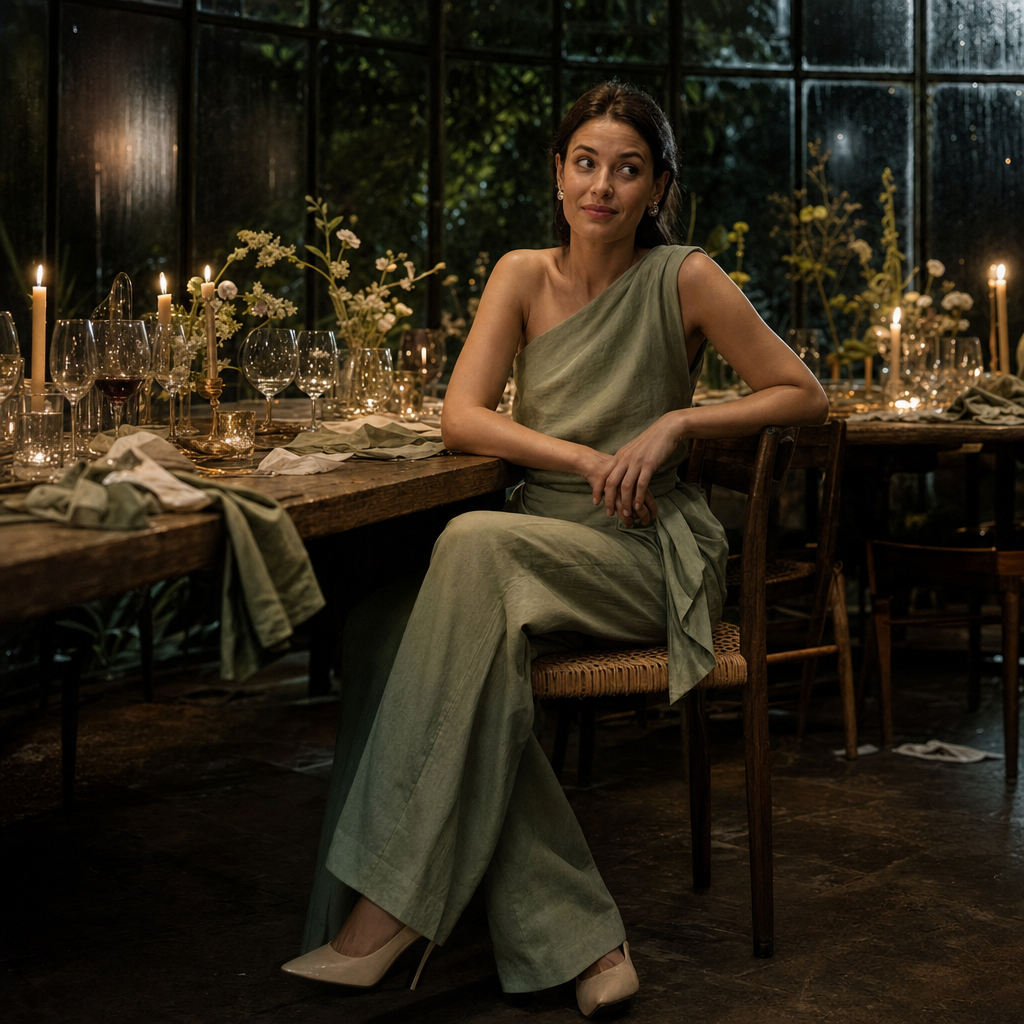
Fall and Winter: Layering for Warmth and Texture
Transitioning a green jumpsuit into colder months requires strategic layering.
Start by shifting to deeper shades. Forest, emerald, and hunter green feel seasonally appropriate and pair beautifully with fall and winter color palettes like burgundy, camel, and black.
Under-layering is your secret weapon. Wear a thin turtleneck, a mock-neck top, or a long-sleeve bodysuit underneath your jumpsuit. This adds warmth without adding bulk. For sleeveless or V-neck styles, this technique also creates visual interest and breaks up the one-piece silhouette.
Outerwear pairings completely change the vibe. A black leather biker jacket over an olive utility jumpsuit creates a rugged, edgy street-style look. A tailored camel blazer over a forest green wide-leg jumpsuit feels polished and professional. A cropped puffer jacket adds warmth and a sporty, modern edge.
Fabric transitions matter. Swap linen and cotton gauze for velvet, heavier cotton, or structured denim. These fabrics provide insulation while maintaining a polished, intentional look.
Footwear for fall and winter: combat boots, lug-sole styles, and heeled booties. These options provide warmth, traction, and style. Pair an emerald velvet jumpsuit with black ankle boots and gold jewelry for a holiday party look that feels luxurious and confident.
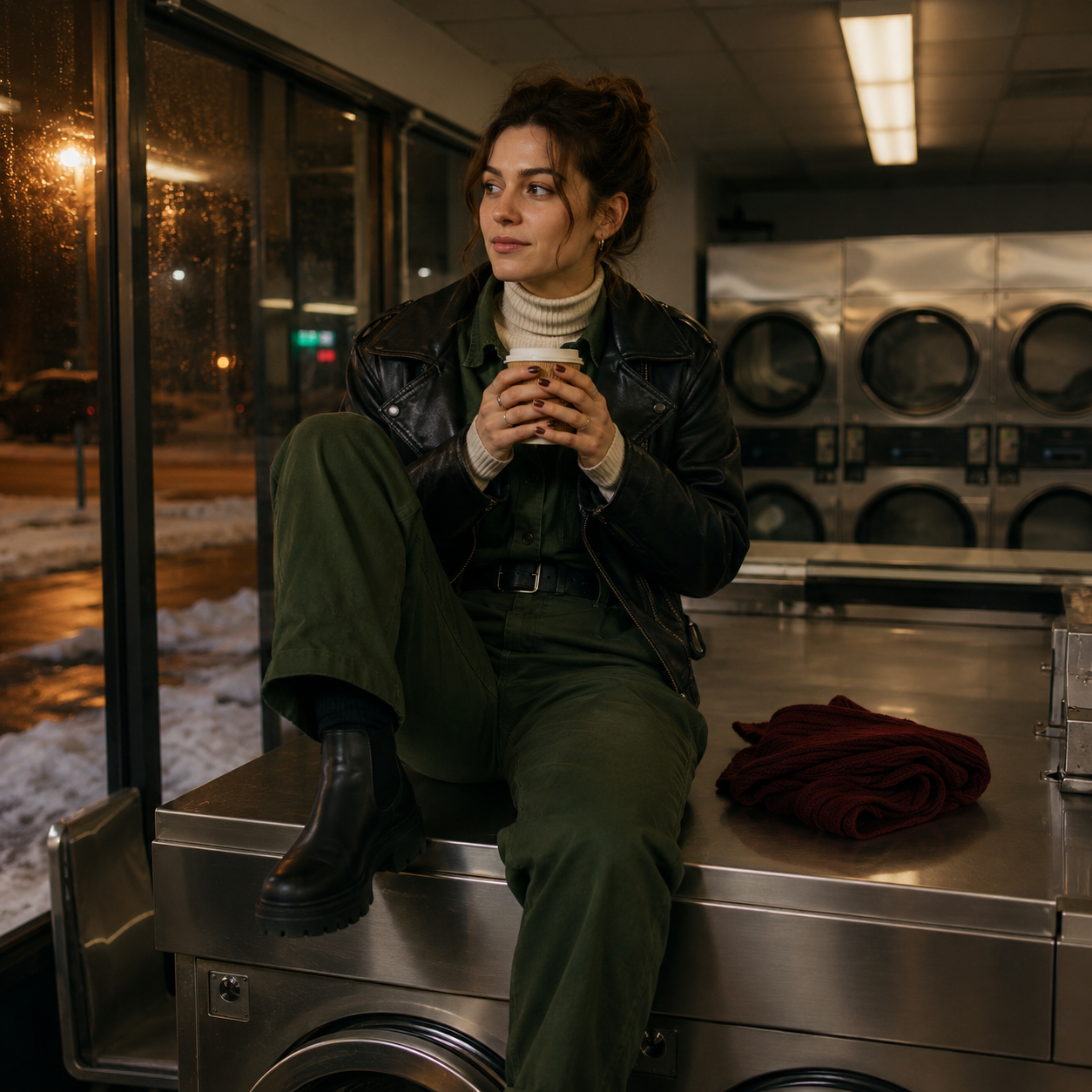
Accessory additions: scarves, tights, and statement coats. A chunky knit scarf in cream or burgundy adds texture and warmth. Opaque tights under a short-sleeve or sleeveless jumpsuit extend its wearability into colder months. A long wool coat in a contrasting color creates a dramatic, layered silhouette.
Transitional Seasons: Mastering the In-Between
Spring-to-summer and summer-to-fall transitions are tricky. The weather is unpredictable, and you need flexibility.
The power of removable layers: cardigans, denim jackets, and lightweight blazers. These pieces add warmth when needed and come off easily when the temperature rises.
Mix fabric weights intentionally. A lightweight linen jumpsuit with a heavier denim jacket creates balance and works for fluctuating temperatures. A structured cotton jumpsuit with a lightweight trench coat offers polish and practicality.
Footwear flexibility is key. Closed-toe flats, ankle boots, and loafers work for transitional weather. They provide coverage without the heaviness of winter boots or the exposure of sandals.
Accessory swaps shift the vibe without changing the base outfit. Swap a straw bag for a leather crossbody. Trade white sneakers for tan loafers. Replace delicate gold jewelry with chunkier, more substantial pieces. These small changes adapt your jumpsuit to the season without requiring a complete outfit overhaul.

Occasion-Based Styling Guide
The same green jumpsuit can work for wildly different occasions. The secret is knowing which accessories and layers to add.
Casual Everyday: Errands and Coffee Runs
For daily life, you want ease without sacrificing style.
Start with an olive or sage utility jumpsuit as your foundation. The relaxed fit and practical details make it comfortable for running errands, grabbing coffee, or casual hangouts.
Sneaker pairings are your go-to. White classics keep the look fresh and intentional. Chunky platforms add a trendy, streetwear edge. Either option works with the utilitarian vibe of the jumpsuit.
Keep accessories minimal. A crossbody bag in a neutral color, simple gold hoops or studs, and a baseball cap if you need a “didn’t wash my hair” option. The goal is effortless, not overdone.
Try the half-zip styling trick: unbutton or unzip the top half of the jumpsuit and layer a fitted tank or tee underneath. This adds visual interest and breaks up the one-piece silhouette, making the outfit feel more intentional.
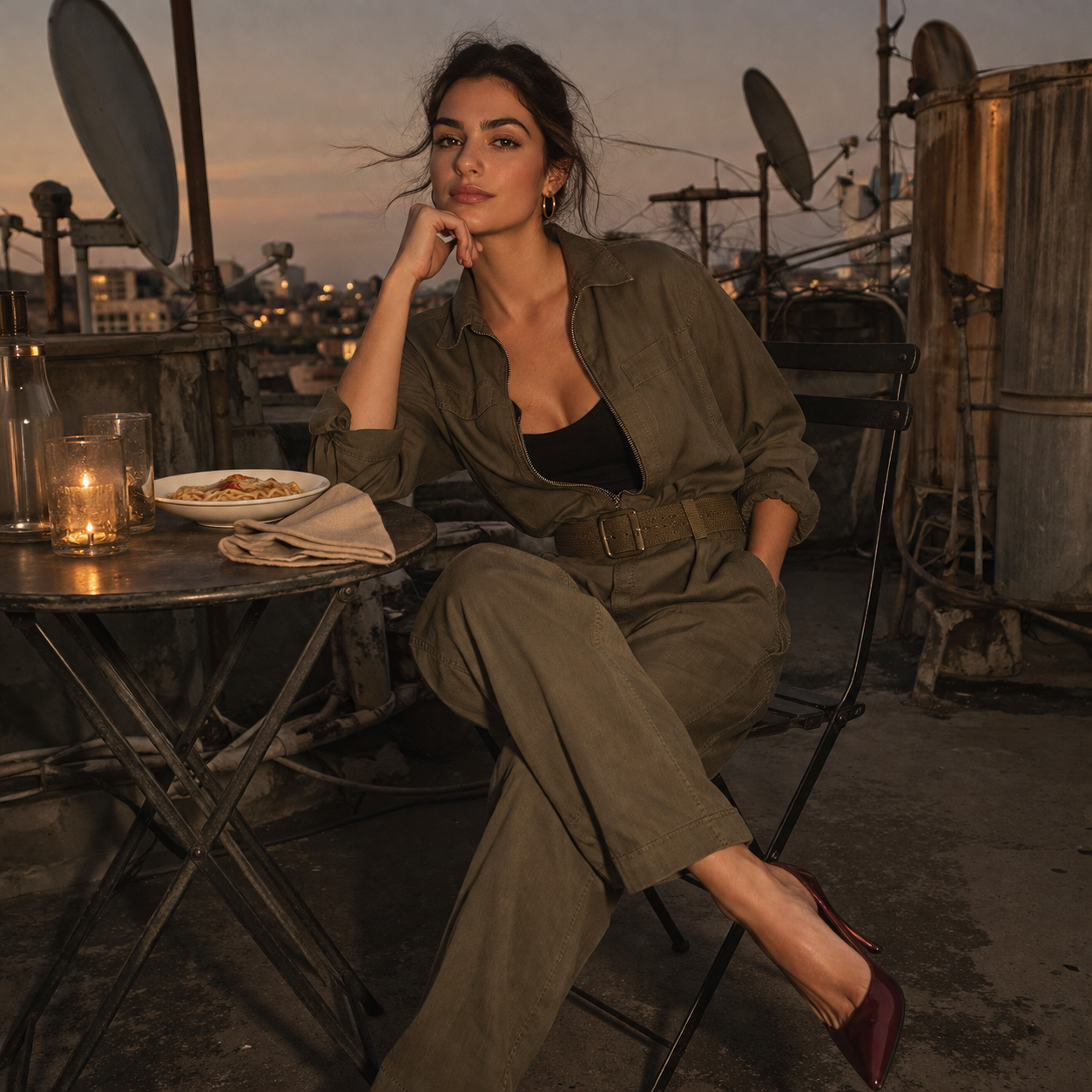
Comfort is the priority here. Choose stretchy fabrics, relaxed fits, and practical shoes. The jumpsuit should feel like an elevated version of loungewear — comfortable enough to wear all day but polished enough that you don’t look like you just rolled out of bed.
Work and Professional Settings: Office-Appropriate Styling
Jumpsuits absolutely work for professional environments. The trick is choosing tailored silhouettes and styling them with polish.
Stick to muted greens: dark moss, forest, or muted olive. These shades feel sophisticated and professional without being boring.
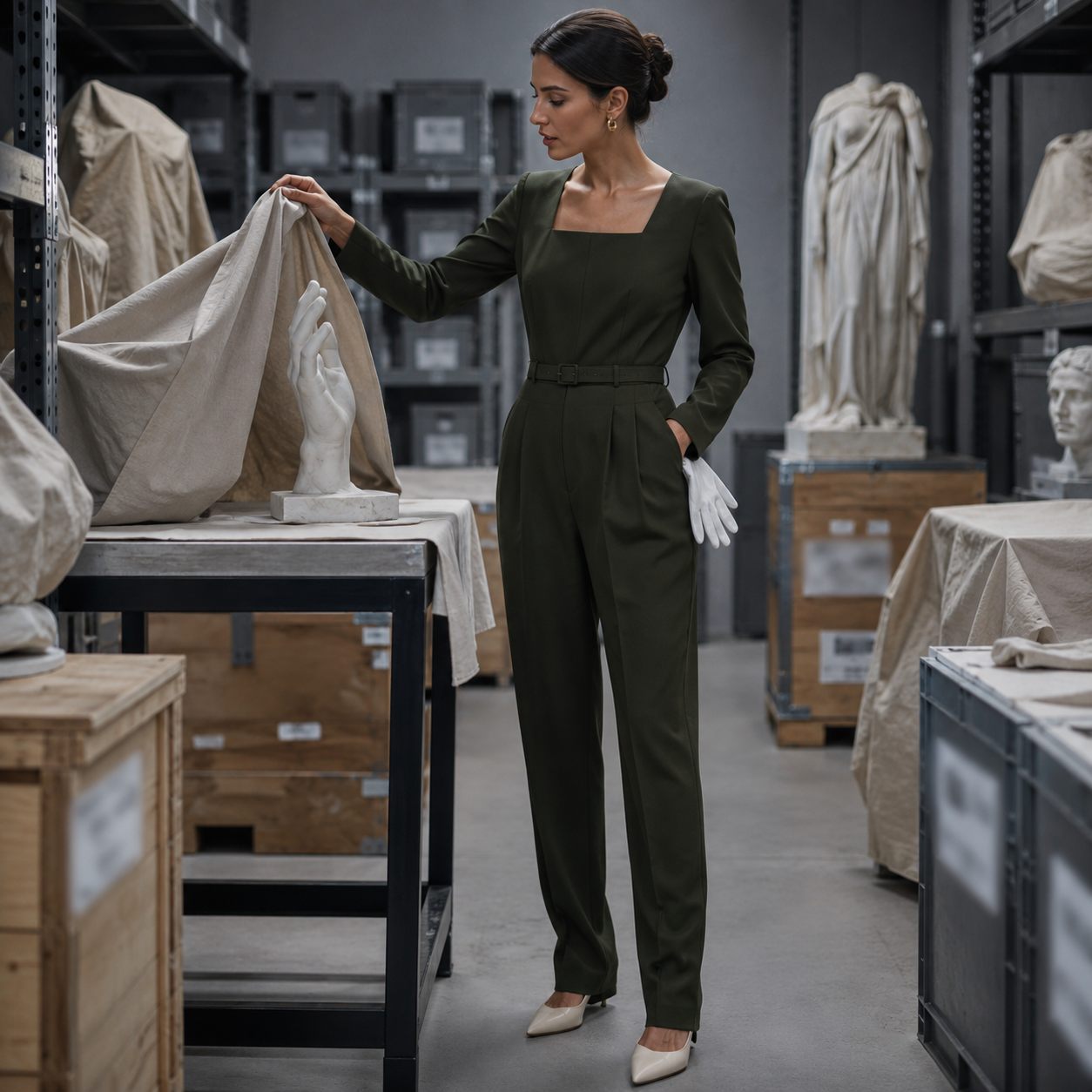
Choose tailored, structured silhouettes. Avoid overly baggy boiler suits or cargo styles. Look for jumpsuits with a defined waist, clean lines, and minimal hardware.
Layering strategies elevate the look. Add a crisp white button-down underneath a sleeveless jumpsuit for a preppy, polished vibe. Top a fitted jumpsuit with a long-line blazer in a complementary color. These layers add structure and formality.

Footwear matters. Loafers, pointed-toe flats, or modest heels work beautifully. Avoid sneakers, combat boots, or overly casual styles.
Keep accessories professional. A structured leather bag, simple jewelry, and a classic watch complete the look without distracting from the outfit.
A well-styled jumpsuit in a professional setting shows you understand how to dress for your environment while still expressing personal style.
Date Nights and Evening Events: Elevated Glamour
Dressing up a green jumpsuit for evening events requires fabric upgrades and strategic accessory choices.
Fabric is everything here. Silk, velvet, and embellished details instantly elevate the look. A forest green velvet jumpsuit feels luxurious and special — perfect for date nights, holiday parties, or evening events.
Heels are non-negotiable for proper evening proportions. Strappy sandals, pointed-toe pumps, or heeled booties all work. The heel adds elegance and ensures the jumpsuit hits at the right spot on your ankle.
Statement jewelry completes the look. Gold jewelry pairs beautifully with emerald and olive greens. Silver works better with cooler forest and sage tones. Choose either statement earrings or a layered necklace — not both.
A clutch or mini bag is the standard for evening events. Choose a metallic or jewel-toned option that complements the green without competing with it.
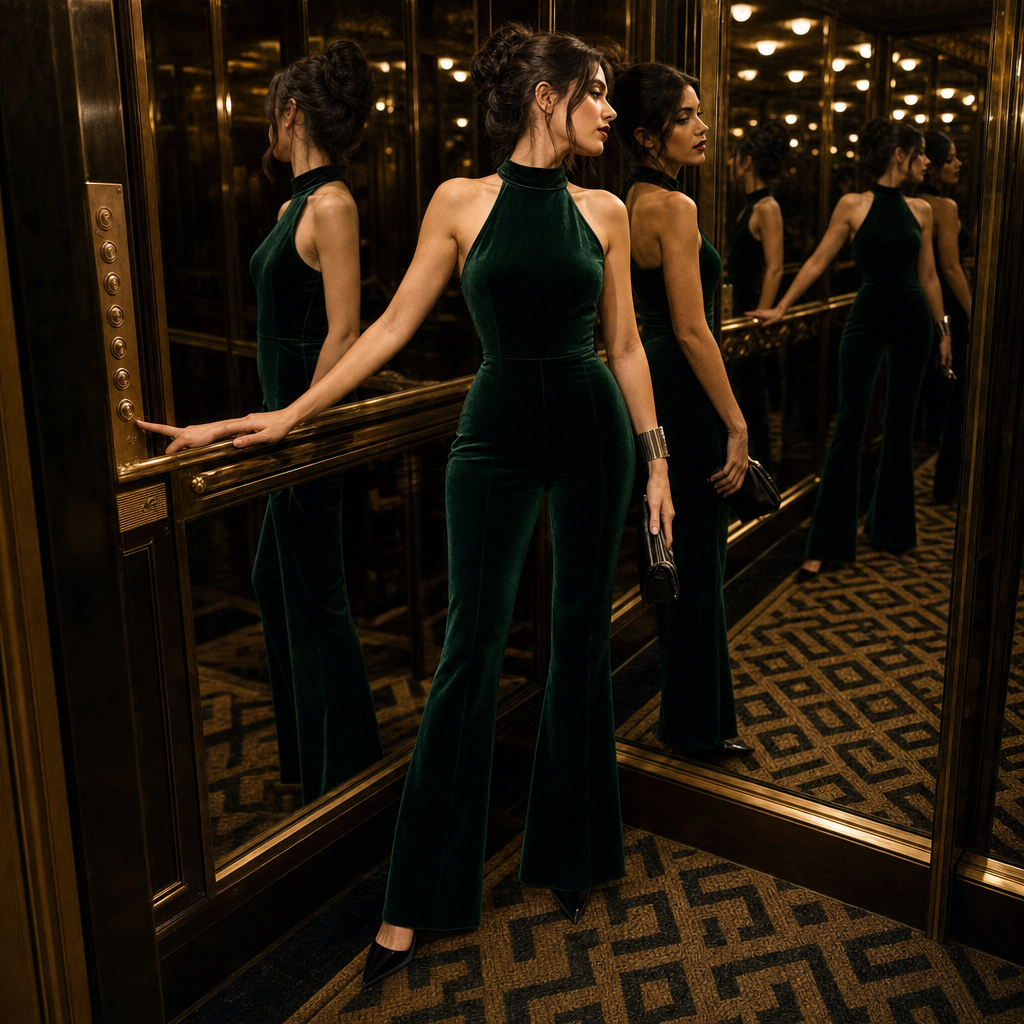
Hair and makeup considerations: an updo or sleek ponytail highlights the neckline and shows off statement earrings. A bold lip in a complementary shade (think berry or nude) adds polish without overwhelming the look.
Weddings and Formal Events: Guest-Worthy Elegance
Green jumpsuits are becoming a go-to alternative to cocktail dresses for wedding guests.
Shade selection matters. Emerald and forest green feel formal and sophisticated. Avoid lime or bright greens, which can read as too casual for formal events.
Silhouette requirements: wide-leg, tailored, and embellished styles work best. Look for jumpsuits with pleated details, embroidered accents, or luxurious fabrics that match the formality of the event — technical considerations around suit fit and aerodynamic silhouette explored in Frontiers | The influence of suit size on performance underscore how precisely a garment’s cut affects both appearance and functional elegance.
Neckline drama adds visual interest. One-shoulder, halter, or deep V-neck styles feel elegant and special. These necklines also photograph beautifully, which matters at weddings.
Accessory elevation is key. Metallic heels, statement earrings, and a simple clutch complete the look. Keep jewelry minimal if the jumpsuit has embellishments or busy details.
Understanding dress code boundaries is important. A green jumpsuit works beautifully for “cocktail attire” or “black tie optional” events. For “black tie” or “white tie” events, stick to traditional gowns unless the dress code explicitly allows for creative interpretations.
Accessorizing Your Green Jumpsuit: The Finishing Touches
Accessories aren’t optional. They’re what transform a green jumpsuit from a one-piece garment into a complete, intentional outfit.
Belts: The Waist-Defining Essential
A belt is the most important accessory for any jumpsuit.
It creates shape, defines your waist, and breaks up the one-piece silhouette. Without a belt, even a well-cut jumpsuit can look shapeless and unfinished.
Choosing belt width depends on your torso length. If you have a shorter torso, opt for a thinner belt to avoid overwhelming your frame. If you have a longer torso, a wider belt creates more visual impact and balances your proportions.
Color coordination: contrasting belts create visual interest and break up the monochrome. A tan leather belt over an olive jumpsuit adds warmth and texture. A black belt over a forest green jumpsuit creates a sleek, modern look. Tonal belts (green on green) create a streamlined, cohesive silhouette.
Material selection matters. Leather belts add structure and polish. Fabric or canvas belts feel more casual and relaxed. Choose based on the occasion and the overall vibe you’re going for.
Placement strategies vary by body type. If you have a shorter torso, place the belt slightly higher to elongate your legs. If you have a longer torso, place the belt at your natural waist for the most flattering proportion.
Footwear: Setting the Tone
Your shoe choice dictates the entire outfit’s vibe.
Combat boots create an edgy, utilitarian aesthetic. They pair perfectly with olive cargo jumpsuits and boiler suits. The rugged, tough vibe works beautifully for streetwear and casual settings.
White sneakers offer effortless casual styling. They keep the look fresh, clean, and approachable. This is your go-to for errands, coffee runs, and weekend plans.
Pointed-toe heels add instant sophistication. They transform a casual utility jumpsuit into an evening-ready outfit. The contrast between the rugged fabric and the delicate shoe creates a high-low fashion moment that feels intentional and stylish.
Loafers create a preppy, professional look. They work beautifully for office settings and polished casual outfits. Pair a forest green jumpsuit with cream loafers and a structured bag for a “light academia” vibe.
Platform sandals provide summer elevation. They add height without the discomfort of stilettos and work beautifully with linen and lightweight jumpsuits.
Heel height affects proportion and formality. Higher heels elongate the leg line and feel more formal. Flat shoes feel casual and approachable. Choose based on the occasion and your comfort level.

Jewelry and Metals: Complementing Your Green
Simplify metal pairing by following one rule: warm greens get gold, cool greens get silver.
Gold jewelry enhances the warmth of olive, army, and emerald greens. It adds richness and complements the earthy, grounded quality of these shades.
Silver jewelry provides a cool, modern contrast to forest, sage, and mint greens. It feels fresh and contemporary, especially for lighter shades.
Statement earrings work beautifully when the jumpsuit has a simple neckline. They draw the eye upward and add visual interest without overwhelming the outfit.
Layered necklaces work best with V-neck or open necklines. They fill the space and add texture. Avoid layered necklaces with high necklines or busy details — they compete for attention and create visual clutter.
Keep the approach minimalist if the jumpsuit has embellishments, patterns, or busy details. Let the jumpsuit be the statement and keep jewelry simple and understated.
Bags and Outerwear: Completing the Ensemble
Bag size and style depend on the occasion. A crossbody bag works for casual settings. A structured tote works for professional environments. A clutch or mini bag works for evening events.
Jacket layering changes the vibe instantly. A denim jacket keeps things casual and approachable. A leather jacket adds edge and attitude. A tailored blazer adds polish and professionalism. A cropped puffer adds warmth and a sporty, modern feel.
Texture mixing creates visual interest. Pair a smooth linen jumpsuit with a textured leather jacket. Pair a structured denim jumpsuit with a soft silk scarf. These contrasts add depth and dimension to the outfit.
Fabric and Quality Considerations
Fabric choice determines longevity, comfort, and styling versatility — a principle also central to sustainable fashion development frameworks like the HyFiDress-Green Lab Guide, which details how fabric selection intersects with green design practices. Investing in the right fabric pays off in wearability and cost-per-wear.
Linen: The Summer Staple
Linen is unbeatable for warm weather.
It’s breathable, lightweight, and has a natural texture that feels effortlessly chic. The expected wrinkling is part of the aesthetic — it adds to the relaxed, organic vibe rather than detracting from it.
Linen works best for sage and light green shades. The airy fabric matches the lightness of the color, creating a cohesive, natural look.
Care requirements: linen wrinkles easily and requires careful washing and drying. Hang or lay flat to dry to maintain the shape. Iron on a low setting if you prefer a crisper look, but embrace the wrinkles for a more relaxed vibe.
Longevity: high-quality linen lasts for years. It softens with each wash, becoming more comfortable over time. This makes it a smart investment for warm-weather wardrobes.
Denim and Cotton Drill: Structured Durability
Heavier fabrics like denim and cotton drill offer structure and durability.
A green denim jumpsuit has a vintage appeal that feels fresh and intentional. Olive denim stands out from standard blue and creates an unexpected look.
These fabrics work beautifully for olive and army shades. The rugged texture matches the utilitarian vibe of these colors.
Durability is a major advantage. Denim and cotton drill hold up to frequent wear, making them ideal for everyday jumpsuits. They’re perfect for music festivals, outdoor hangouts, and casual weekend plans.
Styling versatility: these fabrics work across seasons. Wear them solo in warmer months or layer them with turtlenecks and jackets in colder months.
Silk, Velvet, and Luxury Fabrics: Special Occasion Investments
Luxury fabrics justify higher price points for formal styles.
Silk and velvet offer beautiful drape, movement, and a luxurious feel. They elevate a jumpsuit from casual to formal, making them worth the investment for special occasions.
Care requirements are more demanding. Dry cleaning is often necessary, and these fabrics require careful storage to avoid damage. Factor this into your cost-per-wear calculation.
Best for emerald and forest shades. The richness of these colors pairs beautifully with the luxurious feel of silk and velvet.
A well-made velvet jumpsuit that you wear to multiple holiday parties, weddings, and date nights offers better value than a cheap dress you wear once and discard.
Jersey and High-Stretch: Comfort Without Compromise
Jersey and high-stretch fabrics offer comfort and low maintenance.
They’re travel-friendly, wrinkle-resistant, and easy to care for. These fabrics work beautifully for fitted and belted silhouettes, offering structure without sacrificing comfort.
The key is choosing structured stretch over loungewear stretch. Look for fabrics with enough weight and recovery to hold their shape. Avoid overly thin fabrics that cling uncomfortably or lose their shape after one wear.
Styling techniques elevate jersey jumpsuits. Add a belt to define the waist. Layer a blazer or denim jacket for structure. Pair with elevated footwear like loafers or heels to avoid looking too casual.
Best for fitted and belted silhouettes. These styles benefit from the comfort and stretch of jersey while maintaining a polished, intentional look.
Common Green Jumpsuit Styling Mistakes (And How to Avoid Them)
Even the best jumpsuit can fall flat if you make these common styling mistakes.
Mistake #1: Skipping the Belt
A shapeless jumpsuit looks unfinished and unflattering.
Without a defined waist, even a well-cut jumpsuit can make you look boxy and shapeless. A belt creates structure, defines your waist, and breaks up the one-piece silhouette.
How to choose the right belt: match the belt style to the jumpsuit vibe. A leather belt works for structured, polished looks. A canvas or fabric belt works for casual, relaxed styles. Choose a belt width that flatters your torso length.
Placement techniques vary by body type. Place the belt at your natural waist for the most flattering proportion. If you have a shorter torso, place the belt slightly higher to elongate your legs. If you have a longer torso, experiment with placement to find what looks best.
Mistake #2: Wrong Shoe Choice for the Occasion
Footwear mismatch undermines the entire outfit.
Sneakers with a formal emerald velvet jumpsuit look jarring and unintentional. Heels with a casual utility jumpsuit feel forced and uncomfortable.
Match shoe formality to jumpsuit fabric and occasion. Formal fabrics (silk, velvet, embellished details) require heels or polished flats. Casual fabrics (denim, linen, cotton) work with sneakers, loafers, or boots.
The proportion problem: flat shoes with wide-leg jumpsuits can make you look shorter and the outfit look unbalanced. Add at least a modest heel — even a block heel or platform sneaker — to maintain proper proportions.
Mistake #3: Over-Accessorizing a Statement Piece
Bold green jumpsuits need minimal accessories.
Emerald and lime greens are already visually striking. Adding too many accessories creates visual clutter and competes for attention.
The “one statement piece” rule: if the jumpsuit is the statement, keep accessories simple. If you want to make a statement with accessories, choose a more neutral jumpsuit.
Balance color, pattern, and texture. If the jumpsuit has embellishments or busy details, keep jewelry and accessories minimal. If the jumpsuit is simple and clean, you have more room to add visual interest through accessories.
Mistake #4: Ignoring Proportion and Fit
Fit issues are the most common jumpsuit mistake.
Torso length problems make jumpsuits uncomfortable and unflattering. If the crotch sits too low or too high, the jumpsuit won’t fit properly no matter how great the color or style.
Inseam adjustments matter. The hem should hit at the right spot on your ankle. Too long, and you’re tripping over fabric. Too short, and the jumpsuit looks like it doesn’t fit.
When to size up vs. tailor down: if the jumpsuit is tight in the shoulders or hips, size up. If it’s too long in the torso or legs, consider tailoring. A well-fitting jumpsuit that’s been tailored looks infinitely better than a poorly fitting one in the “right” size.
Frequently Asked Questions
What Color Shoes Go Best With a Green Jumpsuit?
Neutral shoes are your safest bet: nude, tan, black, and white all work beautifully with green jumpsuits. For metallic options, choose based on the green shade. Gold complements warm greens like olive, army, and emerald. Silver works better with cool greens like sage, forest, and mint. For bold contrast, try burgundy with olive or blush with sage. The key is ensuring the shoe doesn’t compete with the jumpsuit for attention.
Can I Wear a Green Jumpsuit to a Wedding?
Absolutely, as long as you choose the right shade and style. Emerald and forest green feel formal and sophisticated, making them appropriate for cocktail attire or black tie optional events. Avoid lime or bright greens, which can read as too casual. Choose a wide-leg, tailored, or embellished silhouette in a luxurious fabric like silk or velvet. Pair with metallic heels, statement earrings, and a simple clutch. Always check the wedding dress code and avoid upstaging the wedding party.
How Do I Style a Green Jumpsuit for Work?
Choose tailored silhouettes in muted shades like dark moss, forest, or muted olive. Avoid overly baggy boiler suits or cargo styles. Layer a crisp white button-down underneath a sleeveless jumpsuit or top a fitted jumpsuit with a long-line blazer. Pair with loafers, pointed-toe flats, or modest heels. Keep accessories professional: a structured leather bag, simple jewelry, and a classic watch. The goal is polish and intentionality without sacrificing personal style.
What’s the Difference Between a Romper and a Jumpsuit?
The main difference is length. Rompers have shorts instead of pants, making them more casual and better suited for warm weather. Jumpsuits have full-length pants and work across more occasions and seasons. Styling approaches differ slightly: rompers feel playful and casual, while jumpsuits can range from casual to formal depending on the fabric and silhouette. Both are one-piece garments, but jumpsuits offer more versatility and year-round wearability.
How Do I Avoid Looking Like I’m Wearing Workwear?
Strategic styling is key. Try the half-zip look: unbutton or unzip the top half and layer a fitted crop top or bodysuit underneath. Add a belt to define your waist and create shape. Choose jumpsuits with tailored details, feminine accents, or interesting necklines rather than purely functional designs. Elevate the look with polished footwear like heels or loafers and add delicate jewelry. The contrast between the utilitarian garment and elevated accessories creates an intentional, fashion-forward look.
What Body Type Looks Best in a Jumpsuit?
This is a myth. Every body type can rock a jumpsuit when you choose the right silhouette. Petite frames should look for high-rise styles with tapered legs. Curvy bodies benefit from belted styles that define the waist and wide-leg bottoms that balance proportions. Tall frames should seek out brands with tall ranges for proper torso and inseam length. The key is understanding proportion and choosing a cut that flatters your specific body, not avoiding jumpsuits altogether.
Can I Wear a Green Jumpsuit in Winter?
Absolutely. Transition to deeper shades like forest, emerald, or hunter green. Choose heavier fabrics like velvet or structured cotton for insulation. Layer a thin turtleneck or mock-neck top underneath for warmth. Add outerwear like a leather jacket, tailored blazer, or cropped puffer. Pair with combat boots, lug-sole styles, or heeled booties. Add accessories like scarves and opaque tights for extra warmth. With strategic layering, a green jumpsuit works beautifully in cold weather.
Final Thoughts
The green jumpsuit isn’t just a trend. It’s a versatile, confidence-building wardrobe staple that works for every body, every occasion, and every season.
Understanding shade, silhouette, and styling transforms this one piece into dozens of outfit possibilities. Olive for everyday ease. Emerald for formal impact. Sage for soft, romantic vibes. Utility cuts for streetwear energy. Wide-leg styles for elegant sophistication. Fitted silhouettes for shape and structure.
The beauty of the green jumpsuit is its adaptability. One piece, styled with intention, solves the “what do I wear” crisis while making you look effortlessly put-together. It’s the investment piece — versatile, flattering, and endlessly rewearable.
Experiment with your personal style. Try different shades, cuts, and accessory combinations. Break the “rules” if it feels right. The best outfit is the one that makes you feel confident and like yourself.
Own your style. Make the green jumpsuit work for your life, your body, and your vibe. That’s where real style lives.
