
Key Takeaways
- Switzerland in winter is genuinely worth visiting even if you never touch a ski slope.
- January and February deliver the most dramatic snow scenery; March is quieter and slightly cheaper.
- The Swiss Travel Pass is the single most important purchase you’ll make for this trip.
- Sledding, frozen-lake skating, thermal spas, igloo stays, and hot air ballooning rival skiing for pure experience.
- Staying just outside the famous resort towns saves serious money without sacrificing the views.
Table of Contents
- Why Switzerland in Winter Hits Different (Even Without Skis)
- When Should You Actually Visit Switzerland in Winter?
- How to Get Around Switzerland Without a Car (Or Going Broke)
- The Best Non-Ski Winter Activities in Switzerland
- Thermal Spas: The Most Underrated Swiss Winter Experience
- What to Eat: Fondue, Raclette, and the Coop Strategy
- Best Places to Visit in Switzerland in Winter (Without the Tourist Tax)
- Switzerland Winter Travel Tips: What Actually Saves You Money
- The Takeaway
- Frequently Asked Questions
Why Switzerland in Winter Hits Different (Even Without Skis)
Picture this: you’re on a red train threading a snow-covered viaduct, fondue warming your hands, the Matterhorn sliding past the window — and you haven’t strapped on a single ski. That’s the version of Switzerland most travelers never plan for, and it might be the best one.
Switzerland in winter isn’t a ski trip with a few non-ski options bolted on. It’s its own thing entirely: frozen lakes, thermal spas steaming against alpine peaks, fondue at mountain huts you can only reach on foot, and train rides so cinematic they look computer-generated. The non-skier isn’t missing out. They’re just running a better itinerary.
Here’s the part travel content usually glosses over: Switzerland is expensive. According to Mercer’s Cost of Living City Ranking, four Swiss cities — Zurich, Geneva, Basel, and Bern — sit in the global top 10 most expensive cities. That’s not a rumor. That’s just the reality.
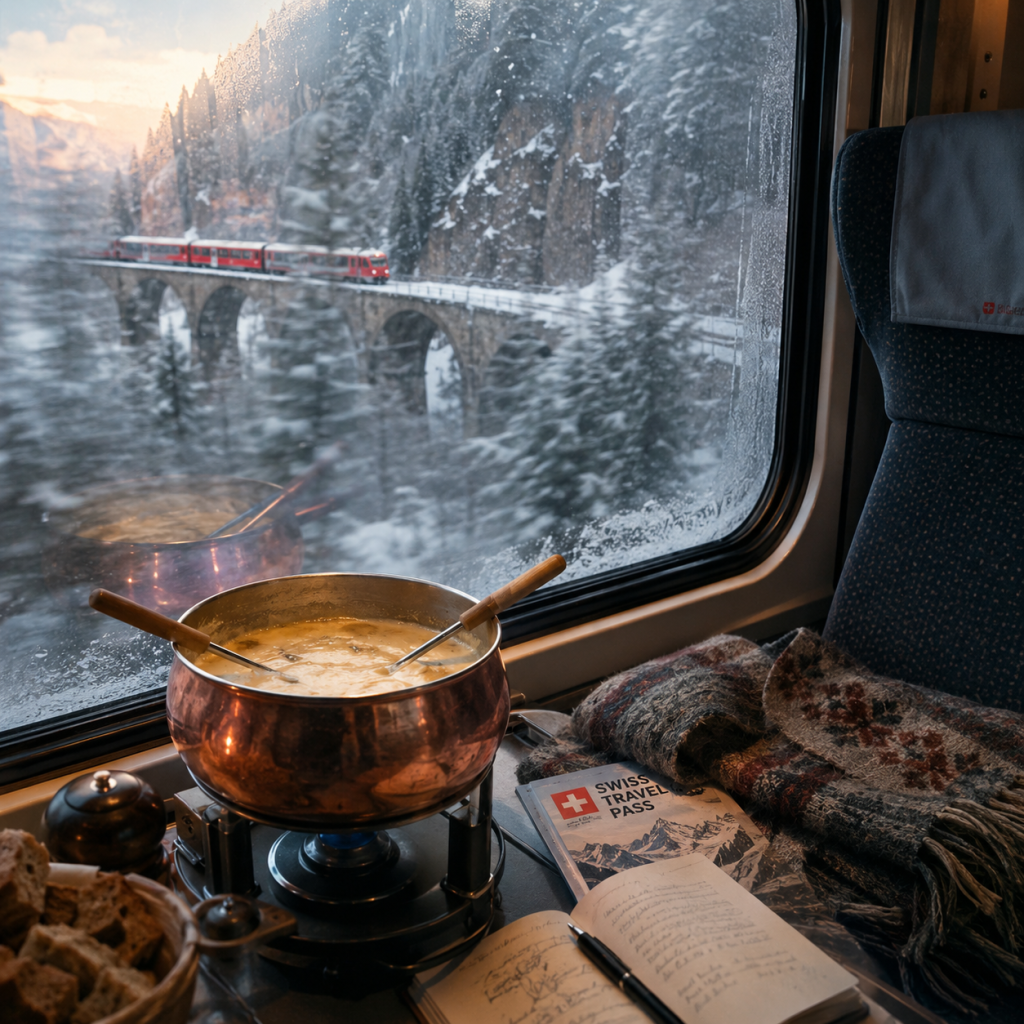
But manageable? Absolutely. The Swiss Travel Pass alone changes the economics of the whole trip. Eating lunch from Coop instead of a resort restaurant cuts daily food costs significantly. And staying one valley over from the famous resorts — Lauterbrunnen instead of Grindelwald, Pontresina instead of St. Moritz — saves hundreds of dollars without sacrificing any of the views.
One thing worth setting expectations on early: winter days are short. Expect daylight from roughly 8 a.m. to 5 p.m. in January, with the sun dropping behind the peaks in mountain valleys even earlier. Front-load outdoor activities into the morning and early afternoon, and save the spas, fondue, and Christmas-market wandering for after dark. Switzerland rewards the traveler who plans smart — done right, the cost-to-experience ratio here is genuinely hard to beat anywhere in Europe.
When Should You Actually Visit Switzerland in Winter?
January and February are the peak months for a reason. Snow coverage is at its most reliable, frozen lakes are fully locked up, and the landscapes look like someone cranked the contrast up on the whole country. This is also when the Château-d’Œx International Hot Air Balloon Festival runs — a nine-day event held January 23–31 in 2027, with up to a hundred balloons rising over the snow-covered Vaud Alps. If that’s on your list, plan around it, and book accommodation early: it’s a small town and rooms go fast.
December brings festive Christmas markets and a cozy, fairy-lit atmosphere in cities like Zurich, Geneva, and Bern. If you’re lingering in town after dark, the holiday decor inspiration is worth noticing too, especially if you love vintage Christmas tree decorations and old-world sparkle. You can bring that cozy alpine look home later with a few ideas from vintage Christmas tree decorations. Two heads-ups for December, though: the Glacier Express is shut for its annual maintenance window (in 2026 it runs roughly October 11 to December 4), and the Christmas-into-New-Year stretch is the single most expensive, most crowded period of the entire winter. If a scenic-train itinerary or a tight budget is your priority, December is the wrong month.
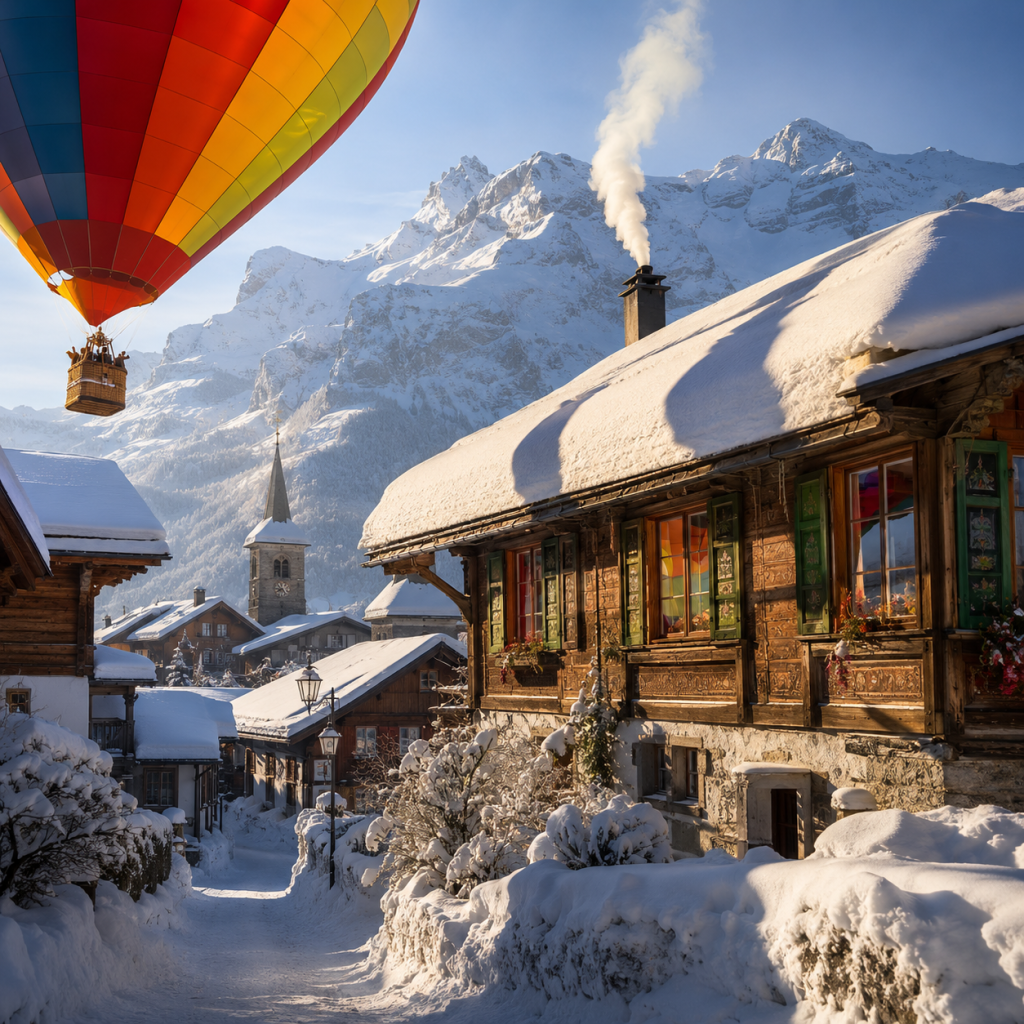
December: The Christmas Market Window
If festive atmosphere is the whole point of your trip, a few markets are worth building an itinerary around. Montreux Noël lines the lakefront with chalets and even runs a “flying Santa” over the water. Basel hosts what’s regularly called Switzerland’s largest and most atmospheric market, spread across Barfüsserplatz and Münsterplatz. Zurich’s Christkindlimarkt packs the main station with a towering, crystal-draped tree, and the monastery town of Einsiedeln offers a smaller, more traditional alternative away from the crowds. Bring gloves — you’ll be holding a lot of mulled wine.
March: The Underrated Sweet Spot
March is the move if you want snow coverage without the peak-season crowds and prices. Swiss tourism figures show a measurable dip in visitor numbers and accommodation rates after the February peak, yet higher elevations still hold solid coverage and the slopes are noticeably less packed.
Silsersee near St. Moritz typically stays frozen through March, giving you that natural outdoor ice-rink experience later in the season. Mountain weather stays unpredictable no matter the month, so build buffer days into any weather-dependent plans — balloon rides, gondola trips, and outdoor activities can all flip on short notice. A practical rule: don’t schedule a single must-do weather-dependent experience on your last day, because if it’s cancelled, you’ve run out of room to reschedule.
How to Get Around Switzerland Without a Car (Or Going Broke)
Switzerland has one of the densest rail networks on earth, and for a winter trip you genuinely don’t need a car — arguably you’re better off without one, since mountain passes close and snow tires and parking add cost and hassle. Trains, regional PostBuses, trams, and boats connect almost every destination worth visiting, including small mountain villages with no rail link at all. The infrastructure is immaculate, the trains run on time, and the SBB app works flawlessly in English, with real-time updates, platform changes, and carriage layouts.
The Swiss Travel Pass is the single most important purchase of the whole trip. It covers unlimited travel across 90+ towns and cities — trains, buses, trams, and lake boats — plus the base fare on scenic routes like the Glacier Express and Bernina Express (you pay only the seat reservation separately). It also includes free entry to over 500 museums, and a tier of mountain discounts: a handful of summits like Rigi, Stanserhorn, and Stoos are fully free, while most others — including the Gornergrat above Zermatt — are 50% off.
For 2026, a 2nd-class adult pass runs from CHF 254 for 3 consecutive days up to CHF 499 for 15 days, with 1st class roughly 60% more. The break-even is low: a single Zurich–Zermatt journey alone can cost CHF 80–120 one way, so even two intercity legs plus a mountain trip usually justifies the pass on day one. One traveler ran 16 trains across a 10-day trip, all covered. The math heavily favors buying it — especially if your plans are still loose, since unplanned, multi-stop travel is exactly where the pass earns its keep.

Entry airports are Geneva, Zurich, and Basel. Geneva works well if you want to start in the French-speaking west. Zurich is ideal for beginning or ending in a major city.
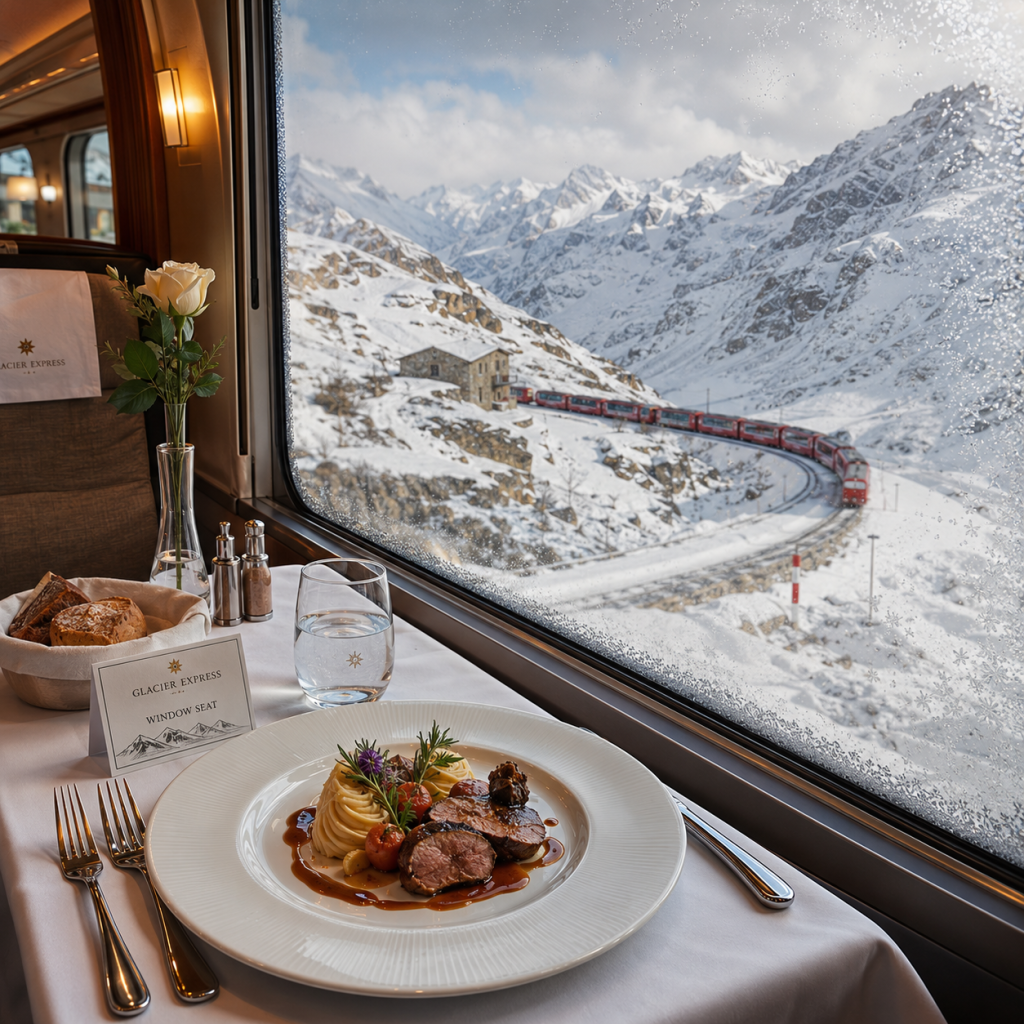
Glacier Express and Scenic Trains: What You Need to Know
The Glacier Express runs between Zermatt and St. Moritz — an 8-hour journey past glaciers, gorges, the UNESCO World Heritage Landwasser Viaduct, and the Oberalp Pass at 2,033m. It’s nicknamed “the slowest express train in the world,” and the nickname is a flex, not a complaint.
Practical logistics that actually matter:
- A seat reservation is mandatory and is not covered by any pass. For 2026 it’s a flat CHF 54 per person in 1st or 2nd class, whatever distance you travel (Excellence Class is a steep CHF 540).
- Reservations open 93 days in advance — set a reminder and book the moment they drop, because popular winter dates sell out.
- The train doesn’t operate during its autumn maintenance window (roughly mid-October to early December), so January to March is your window.
- Book seats on the right-hand side (in the direction of travel) for the best views.
- Pre-order a meal when booking — you can’t add the meal service on the day.
- Money-saving tip: if you don’t have a Swiss Travel Pass, book the reservation first, then cover the ride with an SBB Saver Day Pass rather than the full-price Glacier Express ticket — it’s often a fraction of the cost.
- The GoldenPass Express from Montreux is a more accessible, equally beautiful alternative; the base fare is covered by the Swiss Travel Pass and the reservation is only around CHF 20.
The Best Non-Ski Winter Activities in Switzerland
Non-ski winter activities in Switzerland aren’t backup plans — they’re world-class experiences that stand completely on their own. Sledding runs spanning kilometers, natural frozen-lake skating rinks with no crowds and no entrance fees, dog sledding through alpine snowscapes, igloo hotels built fresh each winter, and hot air ballooning over peaks that don’t look real. Each of these deserves real logistics, not just a passing mention.
The non-ski itinerary here might actually be richer than a week on the slopes. That’s not spin. It’s just what Switzerland offers.
Sledding, Ice Skating, and Snow Activities
Swiss sledding is not the gentle-hill stuff you did as a kid. These are multi-kilometer mountain runs with real speed and real terrain. Some of the best options:
- Les Diablerets in western Switzerland has a 7km run down the Meilleret ski area — one of the longest in the country.
- Leysin runs a full toboggan park with banked curves designed by a Swiss Olympian, rebuilt from scratch each winter.
- Preda to Bergün near St. Moritz is a classic, cult-favorite sledding route, accessible by train — and floodlit on certain evenings for night sledding.
- Les Paccots in canton Fribourg is a low-key gem: sled down from a mountain fondue hut (Buvette Le Vipuy at 1,478m), following trail markers shaped like fondue pots. Yes, really.
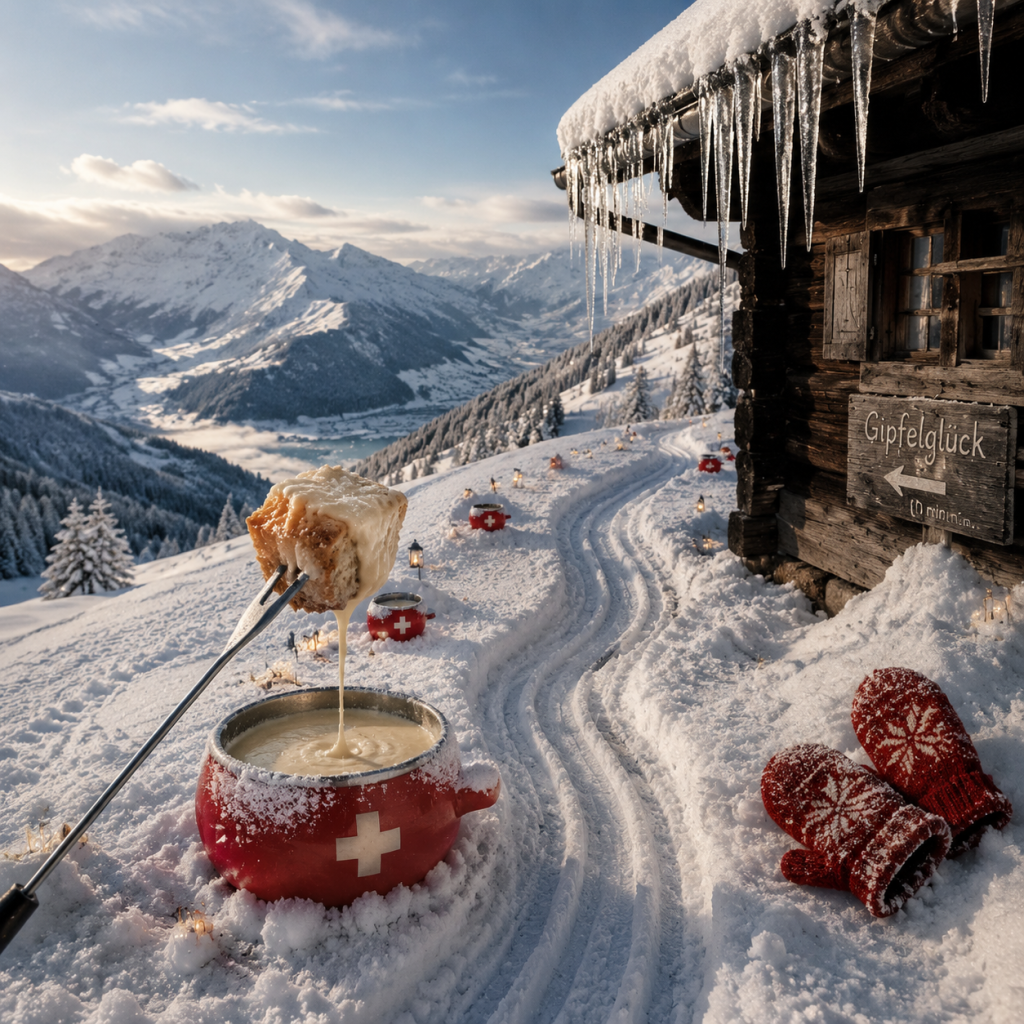
Gear note: waterproof pants and boots with real grip are non-negotiable. You brake with your feet.
For ice skating, Silsersee near St. Moritz freezes from roughly January through March, creating a free, natural open-air rink with alpine views and zero crowds. Bring your own skates — rentals aren’t available on-site.
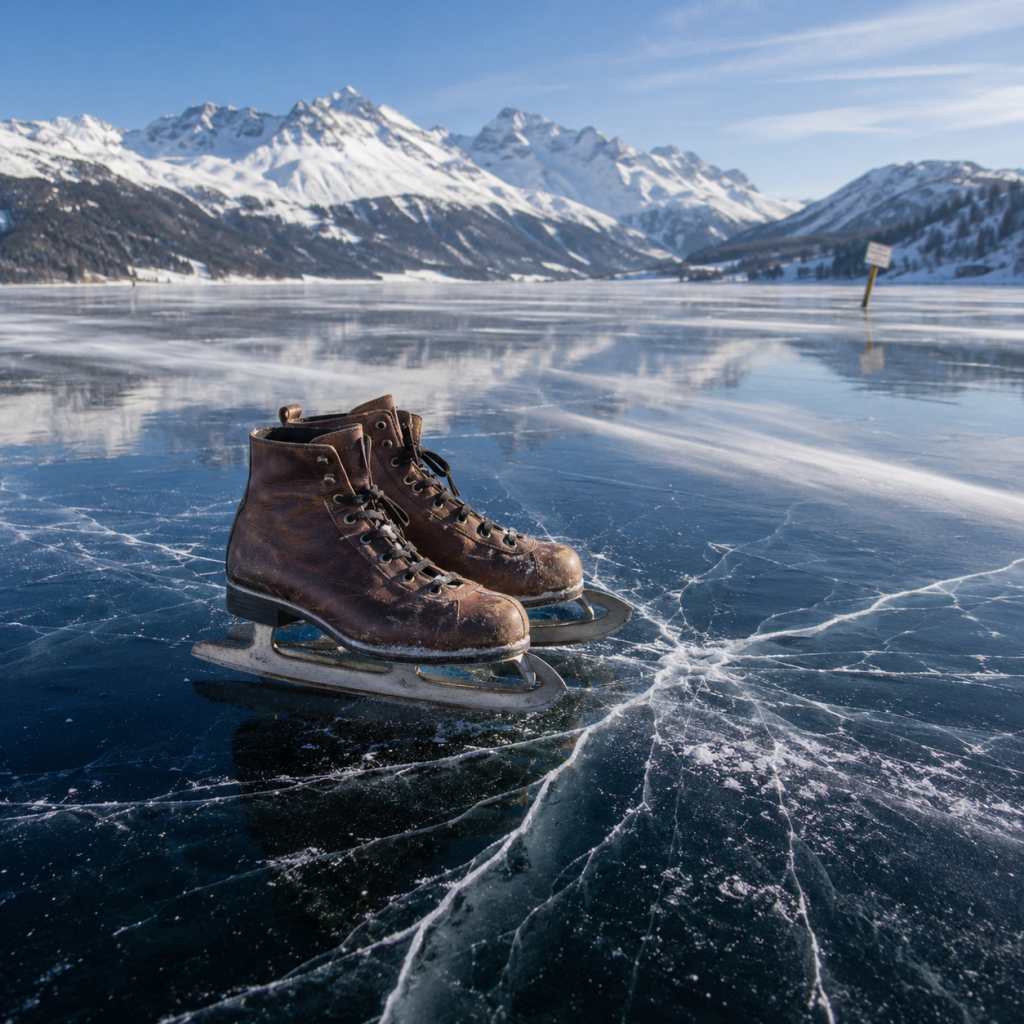
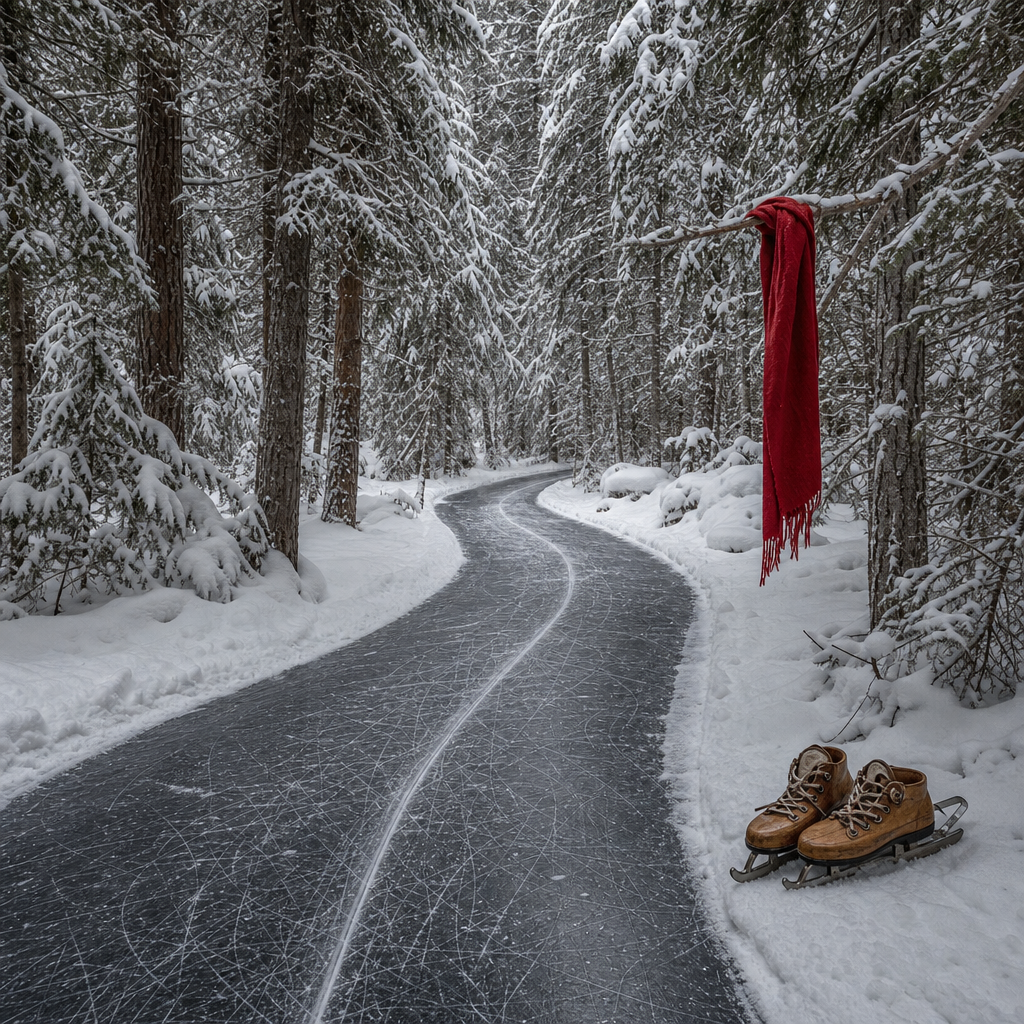
Eiswegs (frozen skating paths) are one of the most distinctly Swiss winter experiences out there. The Eisweg Madulain runs alongside a river, is accessible by train, and is pay-what-you-can. The Eisweg Engadin near Scuol is a 3km trail through a forest — entrance is around 12 EUR plus 5 EUR skate rental. Skating through trees in total quiet is genuinely surreal.
Dog Sledding, Igloos, and Hot Air Ballooning
These are the bucket-list ones — the experiences that end up in the “best trip of my life” conversation years later.
Dog sledding at Glacier 3000 near Gstaad runs on select days through the season (often Wednesdays and Saturdays), and spots are limited, so book ahead and confirm the current schedule. Pair it with the Glacier 3000 suspension bridge — the Peak Walk, the world’s first bridge to connect two mountain summits — for panoramic 360-degree alpine views, and you’ve got a full day that needs no padding.
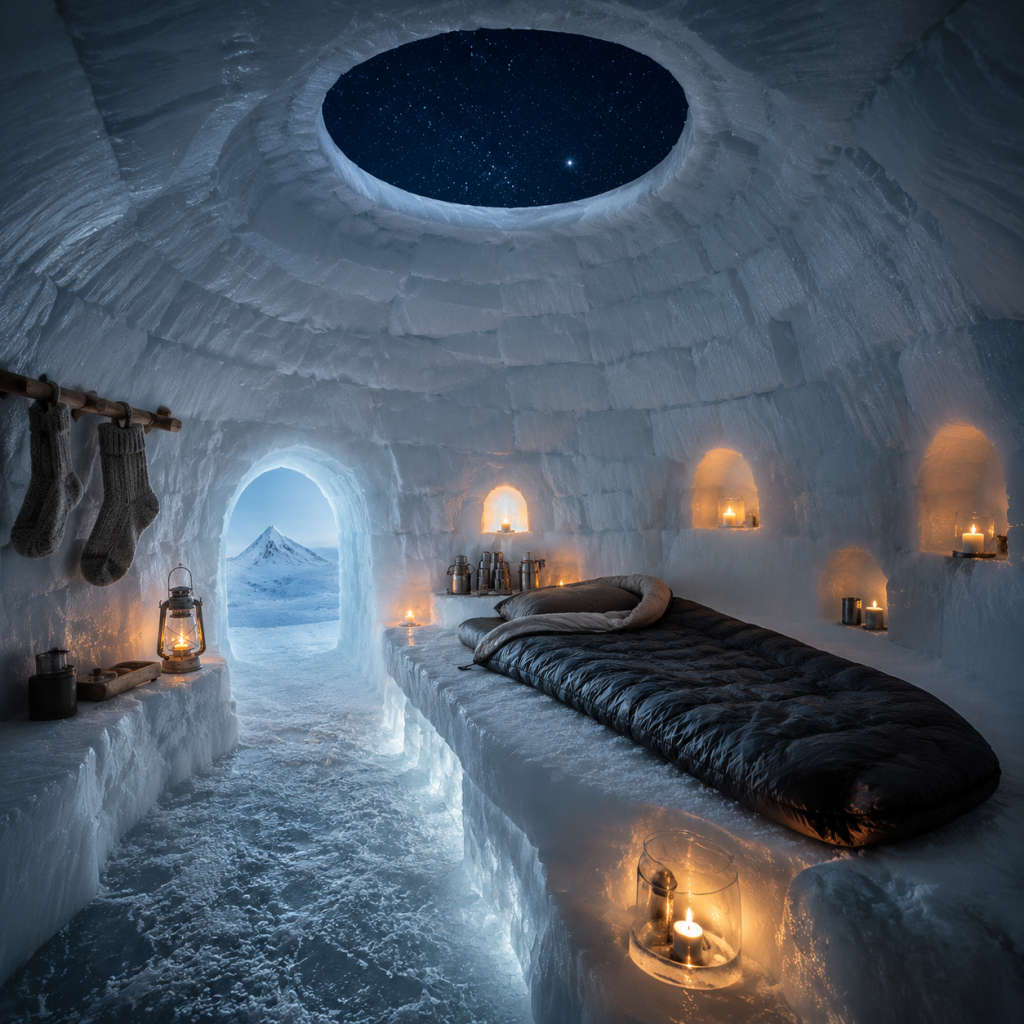
Iglu-Dorf builds igloo accommodations from scratch every single winter at multiple Swiss locations. You sleep in a thermal sleeping bag rated for the cold inside genuine ice architecture, usually with a fondue dinner and an outdoor hot tub thrown in. The Zermatt location pairs perfectly with a trip up the Gornergrat Railway for direct Matterhorn views. It sounds gimmicky and turns out to be completely unforgettable — though it’s a one-night novelty, not a week-long base.
Hot air ballooning over the Swiss Alps is the splurge travelers consistently report as worth every franc. Around the Château-d’Œx festival, expect roughly 350–450 CHF per person for a shared flight, with private flights running well over a thousand. If the timing or budget doesn’t work, tandem paragliding from Interlaken is a more accessible, cheaper alternative, with departures running through the winter months whenever conditions allow.
“Always allow 2–3 buffer days for weather-dependent bookings in the Alps. The mountains don’t care about your schedule.”
Thermal Spas: The Most Underrated Swiss Winter Experience
If there’s one thing the typical Switzerland itinerary skips and absolutely shouldn’t, it’s the thermal baths. There is nothing quite like sitting chest-deep in steaming mineral water while snow falls on the peaks around you. After a day of sledding or train-hopping, it’s the perfect counterweight — and a fraction of the cost of a spa day back home.
A few of the best:
- Leukerbad (Valais) is the largest thermal spa resort in the Alps, with multiple pools fed by hot springs, all ringed by sheer mountain walls. It’s reachable by train and PostBus.
- Bogn Engiadina in Scuol (Engadine) pairs alpine views with a Roman-Irish bath circuit, and sits conveniently near the forest skating paths mentioned above.
- Therme Vals (Graubünden) is the architecture lover’s pick — a quartzite bathhouse designed by Peter Zumthor that’s a destination in its own right (note that day access can be limited to hotel guests, so check ahead).
- Bad Ragaz (near the Liechtenstein border) is the polished, full-resort option fed by the famous Tamina Gorge springs.
- Thermalbad & Spa Zürich (Hürlimann) is the city option — a rooftop pool on a former brewery with views over Zurich, ideal for your urban days.
Bring flip-flops and your own towel where you can (rentals add up fast), and check opening hours, since some smaller spas close one day a week.
What to Eat: Fondue, Raclette, and the Coop Strategy
Winter is melted-cheese season, and Switzerland leans all the way in. Fondue — bread dunked into a communal pot of melted cheese and white wine — is best in a mountain hut you’ve hiked or sledded to. Raclette is the other essential: a half-wheel of cheese melted and scraped over potatoes, pickles, and onions. Both are hearty, social, and exactly what you want after a cold day outside.
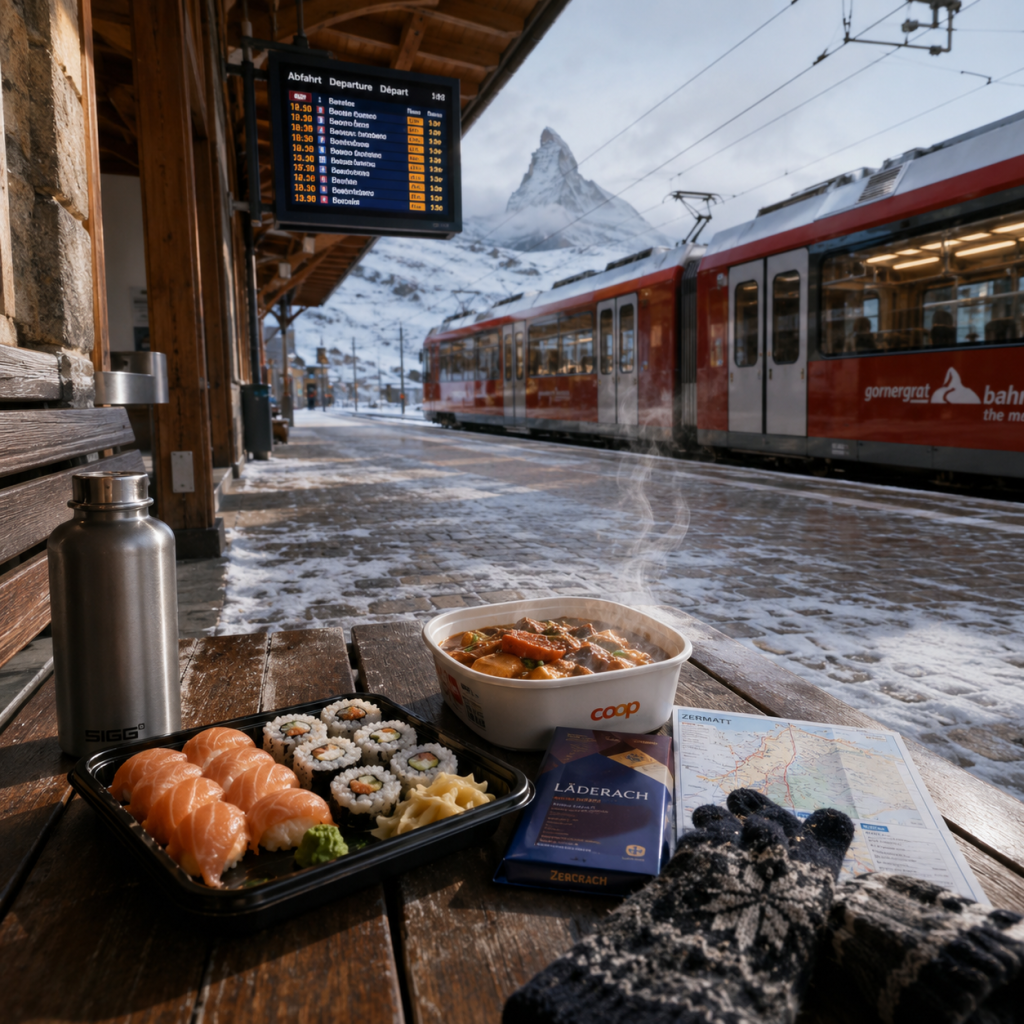
The catch is the price: a sit-down fondue at a resort restaurant can easily run CHF 30–45 per person. The fix isn’t to skip it — it’s to be strategic. Have your splurge fondue once, with a view, and balance it out with the Coop strategy: Switzerland’s supermarket chains (Coop and Migros) sell hot meals, sushi, poke bowls, salads, and pastries at real-person prices, and many have seating. Grabbing lunch there instead of a restaurant can cut your daily food spend roughly in half — which is exactly the money you then spend on the experiences worth paying for.
Best Places to Visit in Switzerland in Winter (Without the Tourist Tax)
The most famous Swiss winter destinations — Zermatt, Grindelwald, Gstaad — are iconic for legitimate reasons. The Matterhorn is real. The scenery is genuinely that good. But the prices at these spots match the fame, and for many travelers the crowds undercut the magic.
Each of these places has a less-obvious neighbor that’s just as beautiful — sometimes more so — and costs significantly less. City stops like Geneva, Montreux, and Zurich each carry their own winter energy and deserve more than a quick transit mention.
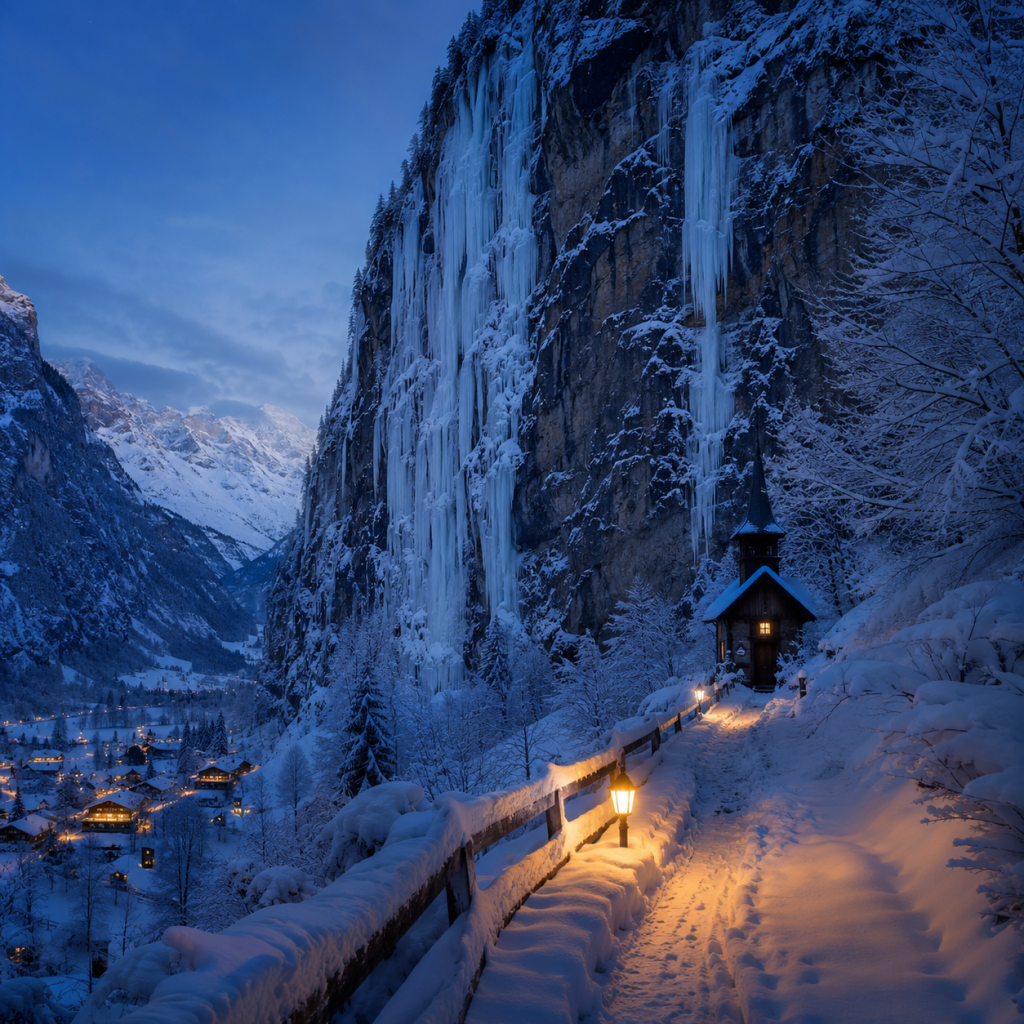
Lauterbrunnen, Bettmeralp, and Rougemont: The Smart Alternatives
Here’s the straightforward breakdown:
| Famous Spot | Budget Alternative | Why It Works |
|---|---|---|
| Grindelwald | Lauterbrunnen | 72 waterfalls, J.R.R. Tolkien’s Rivendell inspiration, hotels often under $300/night |
| Zermatt | Bettmeralp / Aletsch Arena | Stunning alpine views, car-free village, UNESCO Aletsch Glacier nearby, lower costs across the board |
| Gstaad | Rougemont | Same skiing via gondola, French-speaking village vibe, local cheese (L’Étivaz), a fraction of the price |
Lauterbrunnen in winter is a glacially carved valley flanked by towering cliffs and 72 waterfalls — scenery so dramatic that Tolkien reportedly based Rivendell on it. Train access goes up to Wengen and Kleine Scheidegg for Eiger views; the valley itself earns its keep just standing still.
Bettmeralp sits in canton Valais and is part of the Aletsch Arena. The 23km Aletsch Glacier — the longest in the Alps and a UNESCO World Heritage Site — runs right through this area. It’s a car-free village reached by cable car, and costs across food, lodging, and activities run meaningfully lower than in Zermatt.
Rougemont, 10 minutes west of Gstaad, shifts you into French-speaking territory and a genuinely local feel. A gondola connects to La Videmanette at 2,151m, from where you can ski all the way over to Gstaad if you want the bragging rights. The Château-d’Œx balloon festival is right next door, and the local cheese caves at Maison de l’Étivaz are worth a visit.
Switzerland Winter Travel Tips: What Actually Saves You Money
Skipping skiing is the single biggest cost move you can make. No lift passes (which can run CHF 70–100+ per day at major resorts), no equipment rentals, no ski school. Switzerland’s non-ski winter activities are genuinely competitive in experience value, and most cost a fraction of a day on the slopes.

The smaller moves compound fast:
- Eat from Coop or Migros for lunch — hot meals and prepared food at supermarket prices roughly halve your daily food spend.
- Stay just outside the famous resort towns — Pontresina instead of St. Moritz, Rougemont instead of Gstaad, Lauterbrunnen instead of Grindelwald — to save hundreds over a week without losing any scenery.
- Book panoramic-train reservations the moment they open (93 days out for the Glacier Express) so you get seats instead of scrambling.
- Carry a refillable water bottle — Swiss tap water and public fountains are excellent and free, and bottled water is absurdly expensive.
- Match your pass length to your trip — price out your actual journeys on the SBB app first; a Half Fare Card plus individual tickets sometimes beats the pass on a fixed, single-base itinerary.
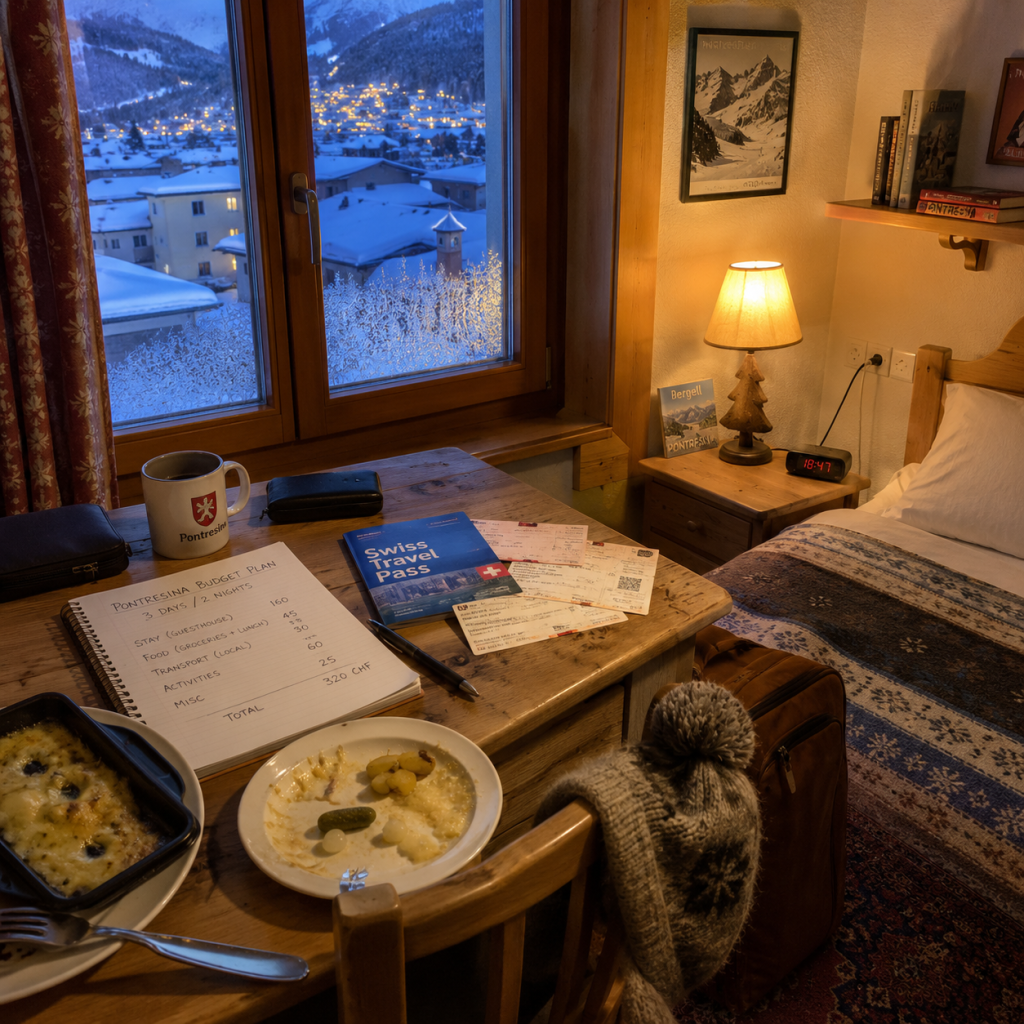
These aren’t hacks. They’re just the smart moves experienced Switzerland travelers figured out the hard way.
A Simple Switzerland Winter Itinerary That Actually Works
A 10-day framework that connects the dots without overloading the schedule:
- Days 1–2: Geneva (Old Town, Cathédrale Saint-Pierre, lakefront) → Montreux
- Day 3: GoldenPass Express train → Château-d’Œx (balloon festival if in season)
- Day 4: Day trip to the Gstaad or Rougemont area
- Days 5–7: Zermatt (Gornergrat Railway, Sunnegga Funicular, fondue with Matterhorn views, Iglu-Dorf)
- Day 8: Glacier Express → St. Moritz (stay in Pontresina for better rates; Engadine spa or skating)
- Days 9–10: Zurich (Lindt Home of Chocolate, Old Town, Bahnhofstrasse, rooftop thermal baths, raclette dinner)
Budget stack: Swiss Travel Pass + no skiing + Coop lunches + staying outside resort centers = a Switzerland trip that doesn’t destroy your account.
The Takeaway
Switzerland in winter isn’t a consolation prize for people who don’t ski. The non-ski itinerary — scenic trains, thermal spas, sledding runs, fondue at altitude, frozen forest skating paths, hot air balloons over the Alps — is more varied and arguably more interesting than a week locked to a single mountain resort.
The cost is real. No point pretending otherwise. But it’s manageable with the right moves, and the experience sits in a category of its own. Very few places on earth look like Switzerland in winter.
Show up with curiosity rather than a perfect plan — Switzerland in winter rewards exactly that. You don’t need to have it all figured out. You just need to book the train, trust the pass, and go.
Frequently Asked Questions
Is Switzerland worth visiting in winter if you don’t ski?
Yes, without question. Non-ski activities — scenic train rides, sledding runs, thermal spas, fondue culture, frozen-lake skating, and hot air ballooning — are genuinely world-class, not fallbacks. Winter is arguably the most visually dramatic season in Switzerland. Skipping skiing also saves serious money that can go toward bucket-list experiences instead.
What is the cheapest time to visit Switzerland in winter?
Late January and March tend to offer lower prices than the Christmas and New Year peak, which is the most expensive stretch of the season. Avoiding the Château-d’Œx balloon festival week also helps if budget is the priority, since demand spikes around that event. Combining shoulder timing with accommodation outside the main resort towns produces the biggest combined savings.
Do I need a Swiss Travel Pass for a winter trip?
It’s not mandatory, but it’s strongly recommended for any multi-city trip. The pass covers trains, buses, trams, and boats, plus the base fare on scenic routes like the Glacier Express and Bernina Express, free entry to 500+ museums, and 50% off most mountain railways including the Gornergrat. For 2026 it starts at CHF 254 for 3 days (2nd class). A single long intercity journey can cost CHF 80–120, so the pass usually pays for itself almost immediately on a multi-stop trip.
How cold does it get, and how short are the days?
City temperatures typically hover around freezing, while mountain towns are colder, often well below it, especially at night. Daylight is short — roughly 8 a.m. to 5 p.m. in January, and even shorter inside deep mountain valleys where the sun disappears behind the peaks early. Plan outdoor activities for the morning and early afternoon, and save spas, fondue, and city wandering for the evening.
What is Lauterbrunnen like in winter?
Dramatically beautiful — a glacially carved valley with 72 waterfalls and possible snow cover throughout the season. It’s quieter and more affordable than neighboring Grindelwald. Train access goes up to Wengen and Kleine Scheidegg for direct Eiger views. J.R.R. Tolkien reportedly modeled Rivendell on this valley, and the scenery makes that entirely believable.
What should I wear for Switzerland in winter without skiing?
Waterproof boots with solid grip are essential — both for sledding (you brake with your feet) and for navigating cobblestone streets in the cold. Thermal base layers, a mid-layer, and a windproof outer layer cover most conditions. Add waterproof pants for any snow activities, plus a warm hat, gloves, and a swimsuit for the thermal spas. Mountain towns are genuinely cold even when you’re not on the slopes.