
You want the costume that makes someone stop halfway through a sentence. The one that gets a delighted, slightly confused, “Wait. What are you?”
That usually starts with a character, not a shopping basket. Give an ordinary person an impossible job and suddenly a navy coat, a handful of felt scraps, and your everyday boots have a reason to exist together.
These Halloween costume ideas build on that trick. Each has a clear visual hook, a manageable wardrobe base, and room for your own weird little additions. Pick the story first. The outfit can catch up. That visual logic has a little in common with surrealism in fashion, where familiar objects are pushed into wonderfully strange territory.
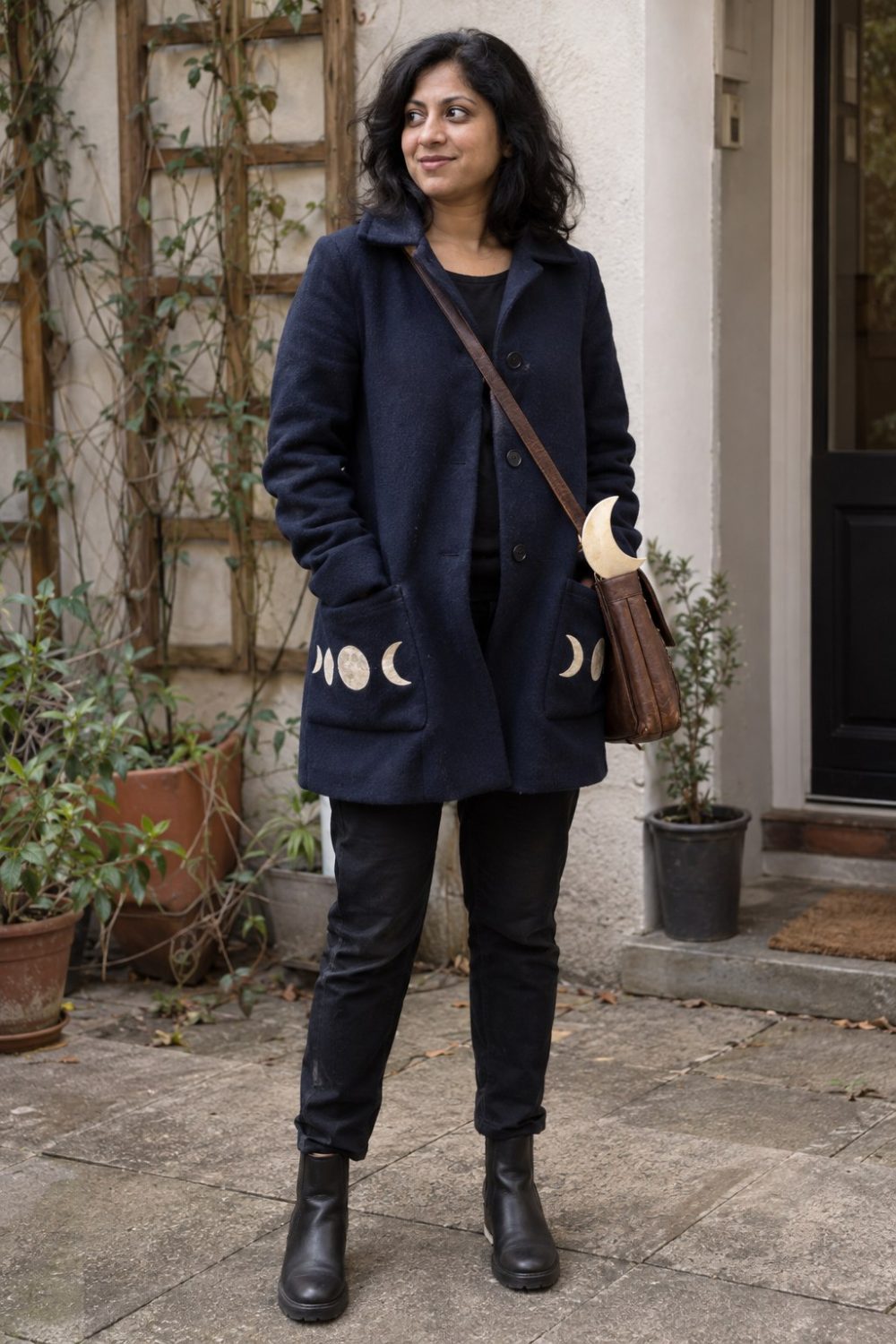
The keeper of lost moons
Someone has to collect the moons that fall out of the sky. Apparently, that someone is you, and the working conditions involve excellent outerwear. A dark coat with pale moon shapes gives this character a strong silhouette without needing a giant prop. For an even darker silhouette, pair the look with one of these vampire haircut ideas.
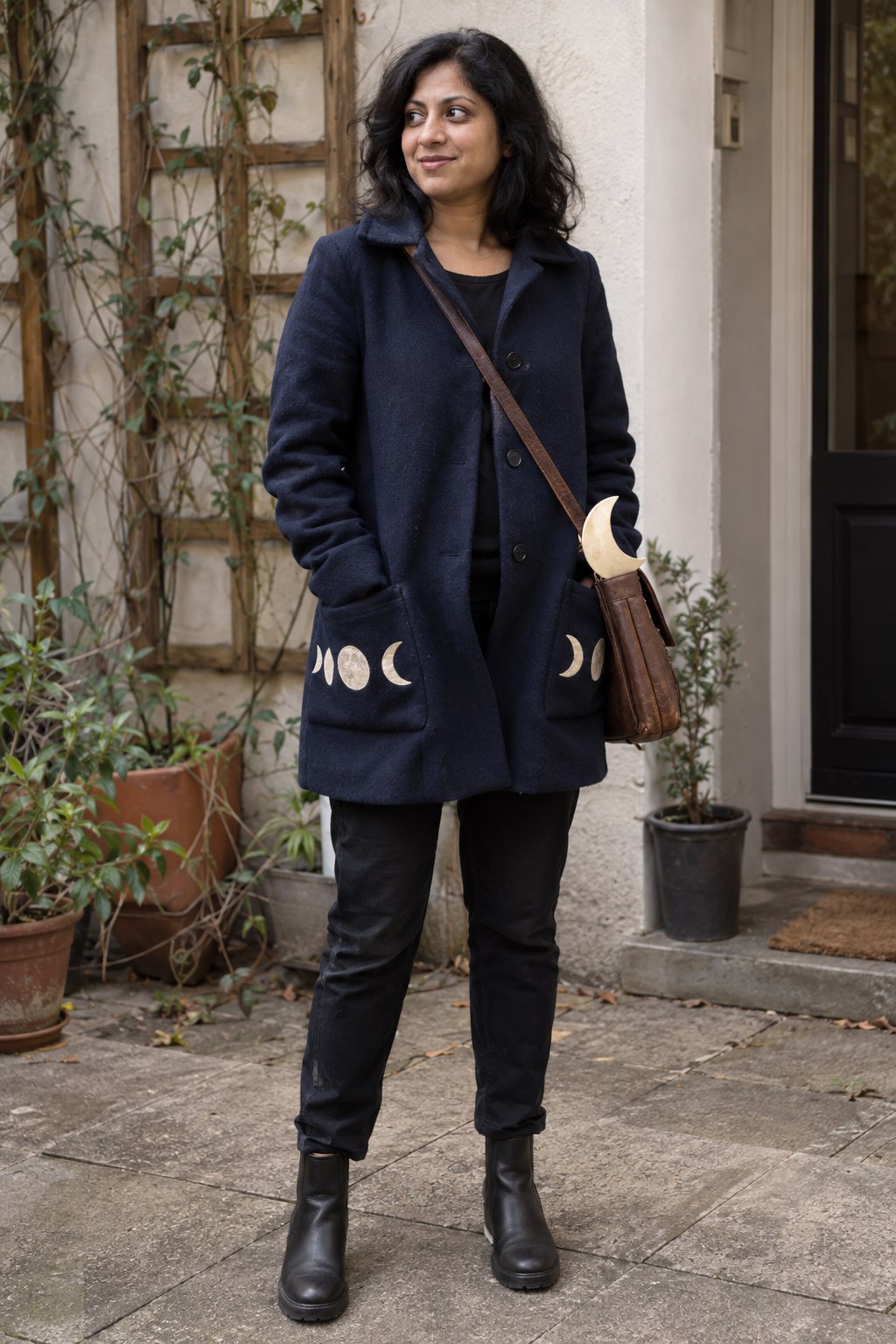
Start with a navy coat or long cardigan over dark trousers. For a base you can actually rewear, borrow a few casual chic layering ideas and let the moon details do the storytelling. Cut a full moon, two crescents, and a half moon from ivory felt; attach them to a removable fabric panel or a few pockets. Let one larger cardboard crescent peek out of a satchel. Keep it small enough that the bag still closes around your actual belongings.
The secret is treating the moons like work supplies. Add a pencil behind your ear or a little notebook of imaginary sightings. Skip a whole galaxy of accessories: the contrast between an ordinary uniform and its ridiculous cargo does the work.
The haunted greenhouse caretaker
Your plants are thriving. Unfortunately, they are also dead. This costume lives in that lovely gap between a practical gardener and someone whose potting shed probably whispers after midnight.
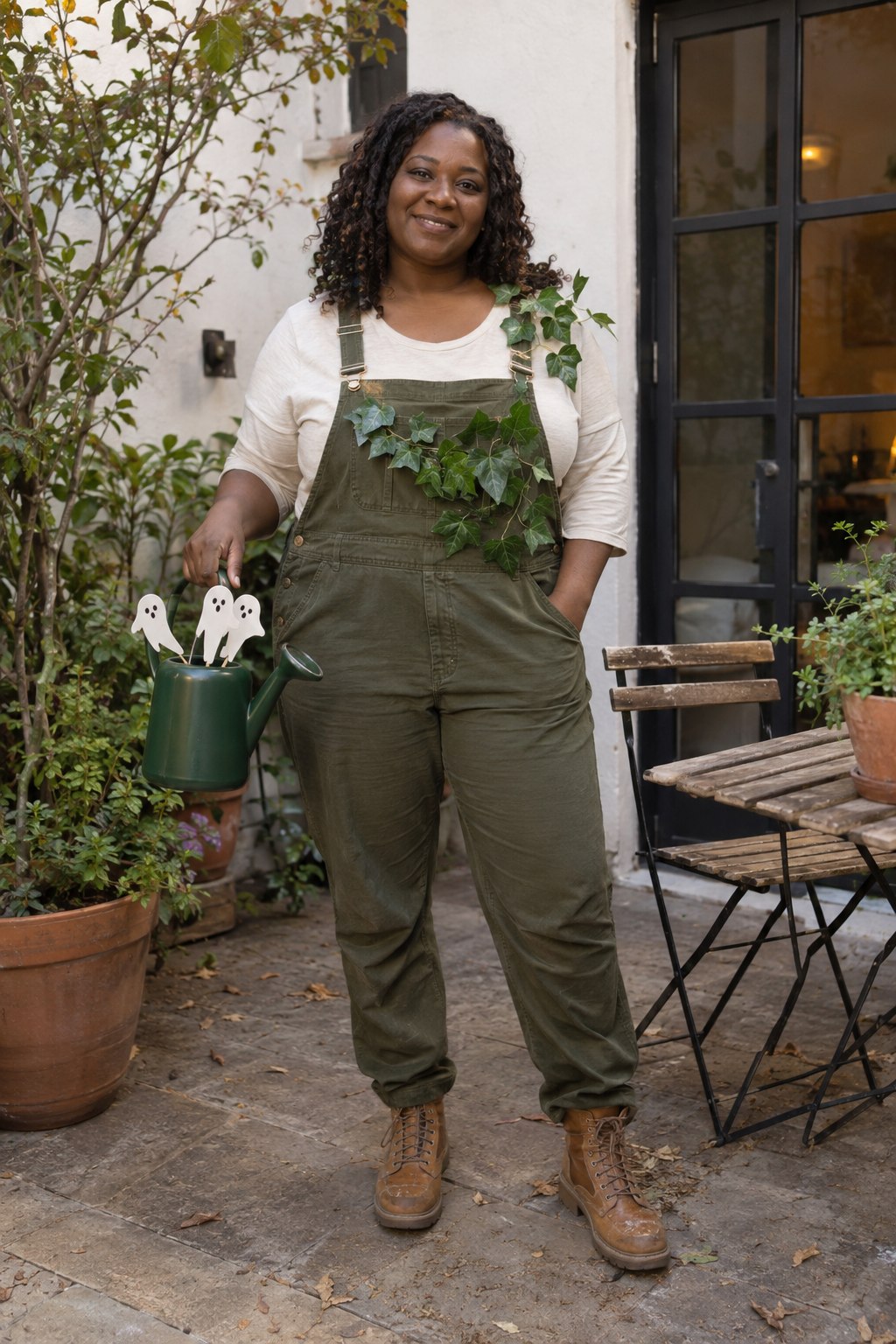
Wear olive overalls, work trousers, or an apron over a plain shirt. Stitch a short fabric vine around one shoulder and add a few pale felt leaves. Make ghost-shaped plant markers from card and tuck them into a lightweight watering can. Two dark dots are enough to give each marker a face. For extra texture, borrow the weathered pots, worn metal, and imperfect layering of rustic garden decor.
Keep the greenery clustered rather than covering every inch. You want the person tending the haunted greenhouse, not the entire greenhouse on legs. A small packet of imaginary ghost seeds makes a good pocket detail, especially if you like a costume that rewards a closer look.
The unfinished constellation
Picture a constellation that wandered off before the sky finished drawing it. The missing connection is the point. This is a good choice when you want something graphic and a little eerie without wearing a heavy costume.
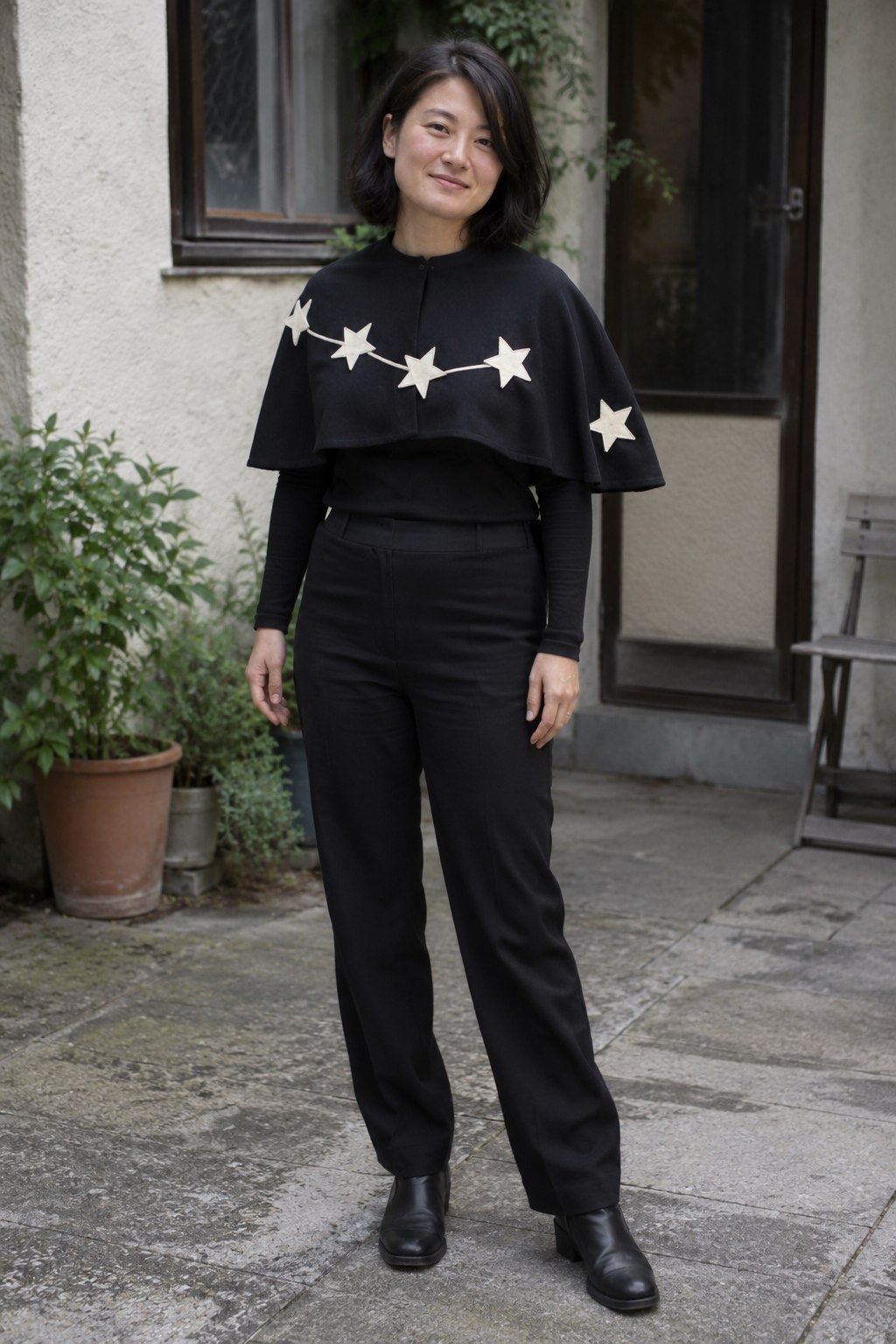
Use a black outfit and a short black cape, scarf, or overshirt. Arrange five or six felt stars across the fabric, then connect most of them with narrow ivory ribbon. Leave the final star deliberately isolated. Tack everything down instead of letting loose strands hang from your arms. A small pop of color around the eyes can push the eerie graphic effect further; borrow ideas from colorful eye makeup techniques.
Draw the arrangement on paper before attaching anything. A few large stars will read more clearly than dozens of tiny ones. If you are dressing with a friend, each person can wear half of the same invented constellation; stand together and the last connection suddenly makes sense.
The midnight lost-and-found clerk
A single glove. A missing hour. The shadow somebody left on the last train. Your counter handles all of it. The outfit should look almost boring until people notice what has been checked in.
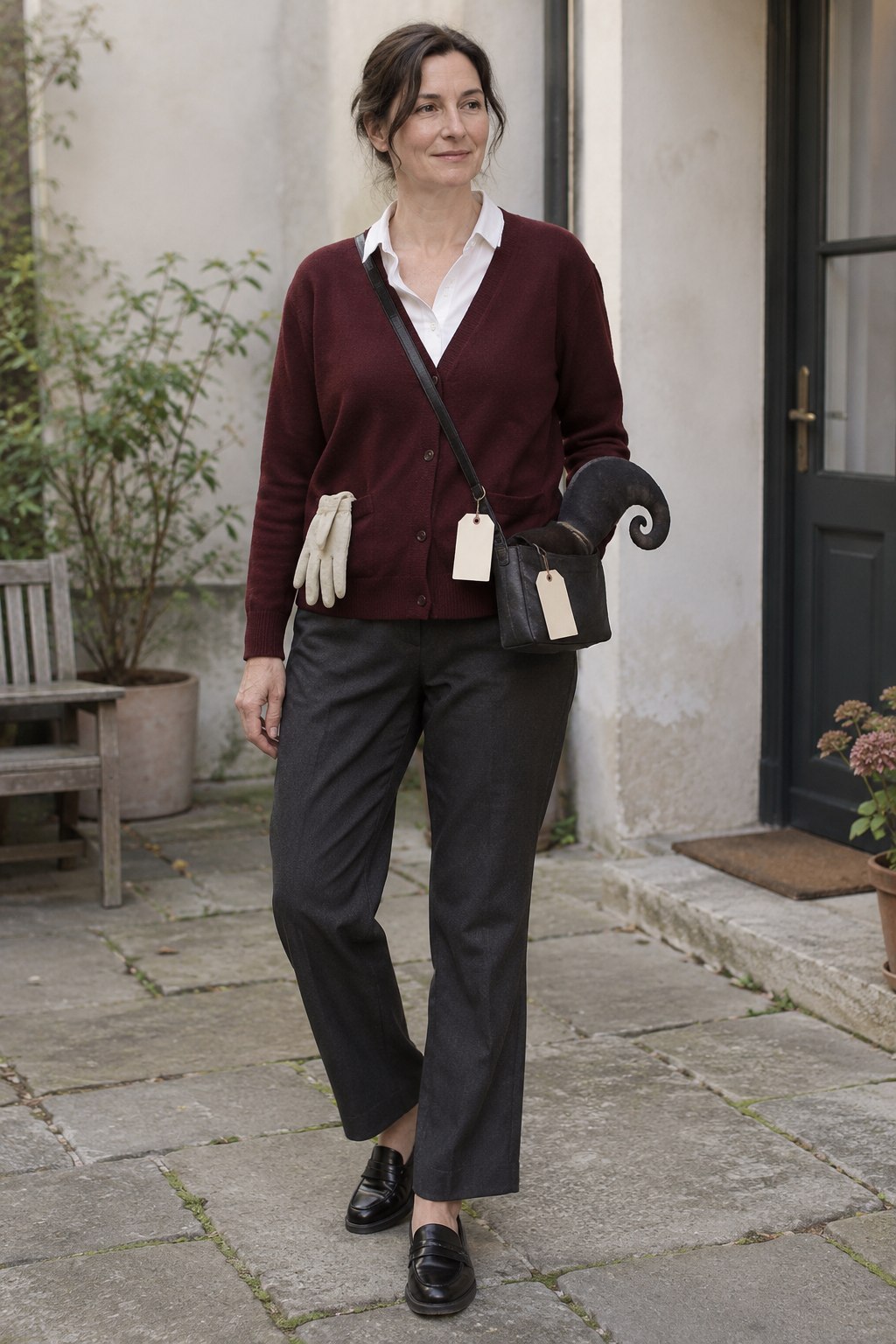
Build the uniform with a cardigan, button-up shirt, and trousers. Attach a few blank luggage tags to your pockets and carry one small bag of peculiar lost objects: a silver felt shadow, a lone glove, a cardboard key much larger than it needs to be. Choose two or three objects so the story stays readable.
For a quick version, make the felt shadow your only prop and wear a handwritten job badge. This character also gives you an easy answer when people ask about the costume: “Have you misplaced anything that shouldn’t be possible to lose?” Deadpan delivery optional.
The raincloud weather reporter
The forecast has become personal. A little raincloud has followed the weather reporter home, and now it is part of the uniform. Keeping the cloud small makes the joke sharper and the evening considerably easier.
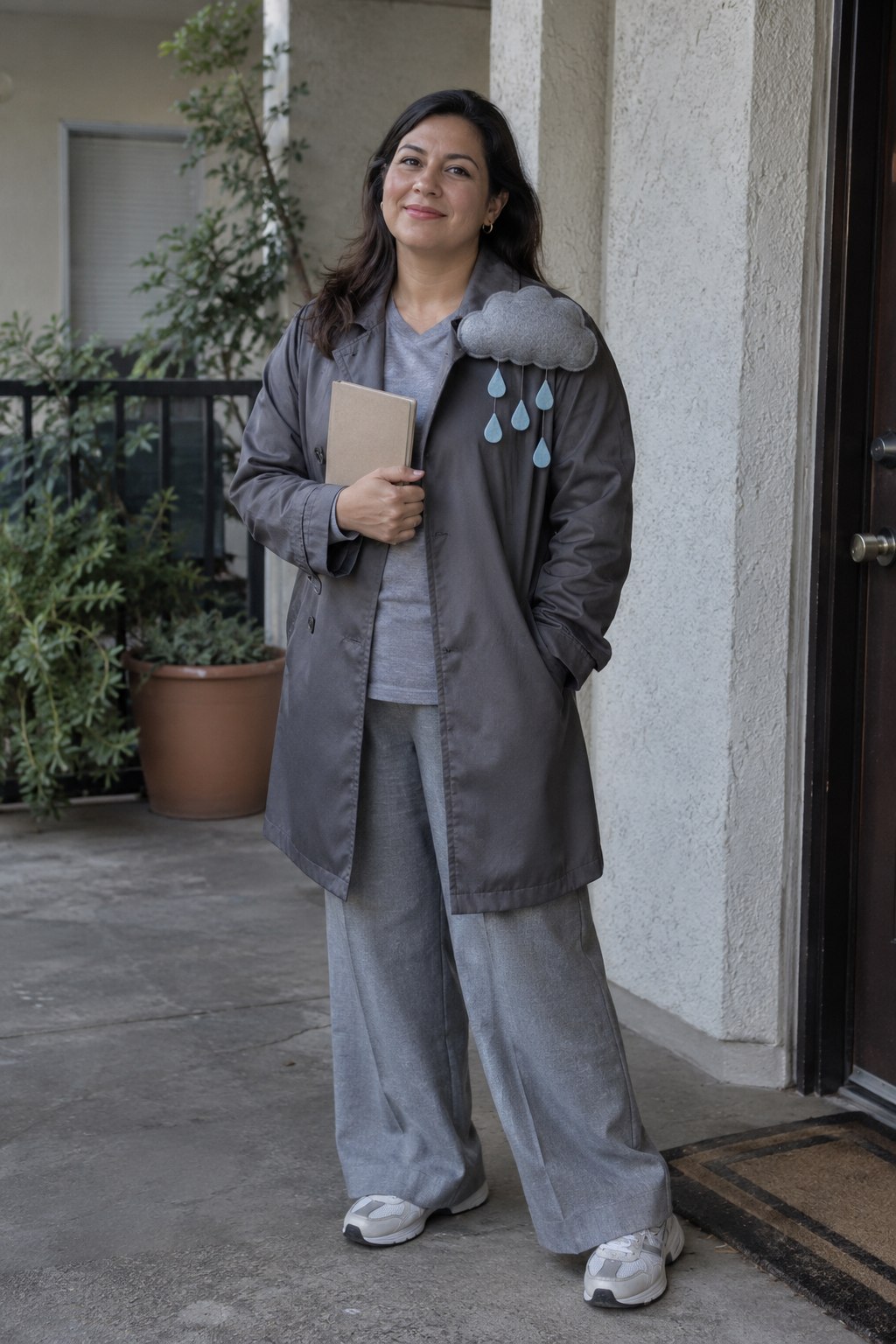
Wear gray separates or a trench over simple clothes. Make a compact cloud from two pieces of gray felt with a little stuffing, then attach it securely to one shoulder. Add a few short blue ribbon drops that finish above the elbow. A notebook gives your free hand something useful to do.
Avoid building a huge overhead weather system unless your plans genuinely involve standing still all night. A cloud on the shoulder stays part of the outfit when you sit down. You can make the whole look softer with pale blue details or moodier with charcoal and a single silver lightning shape.
The escaped paper theatre
A tiny theatre has grown legs and left the building. This is the most craft-heavy idea here, but the finished effect comes from one contained object rather than an entire wearable set.
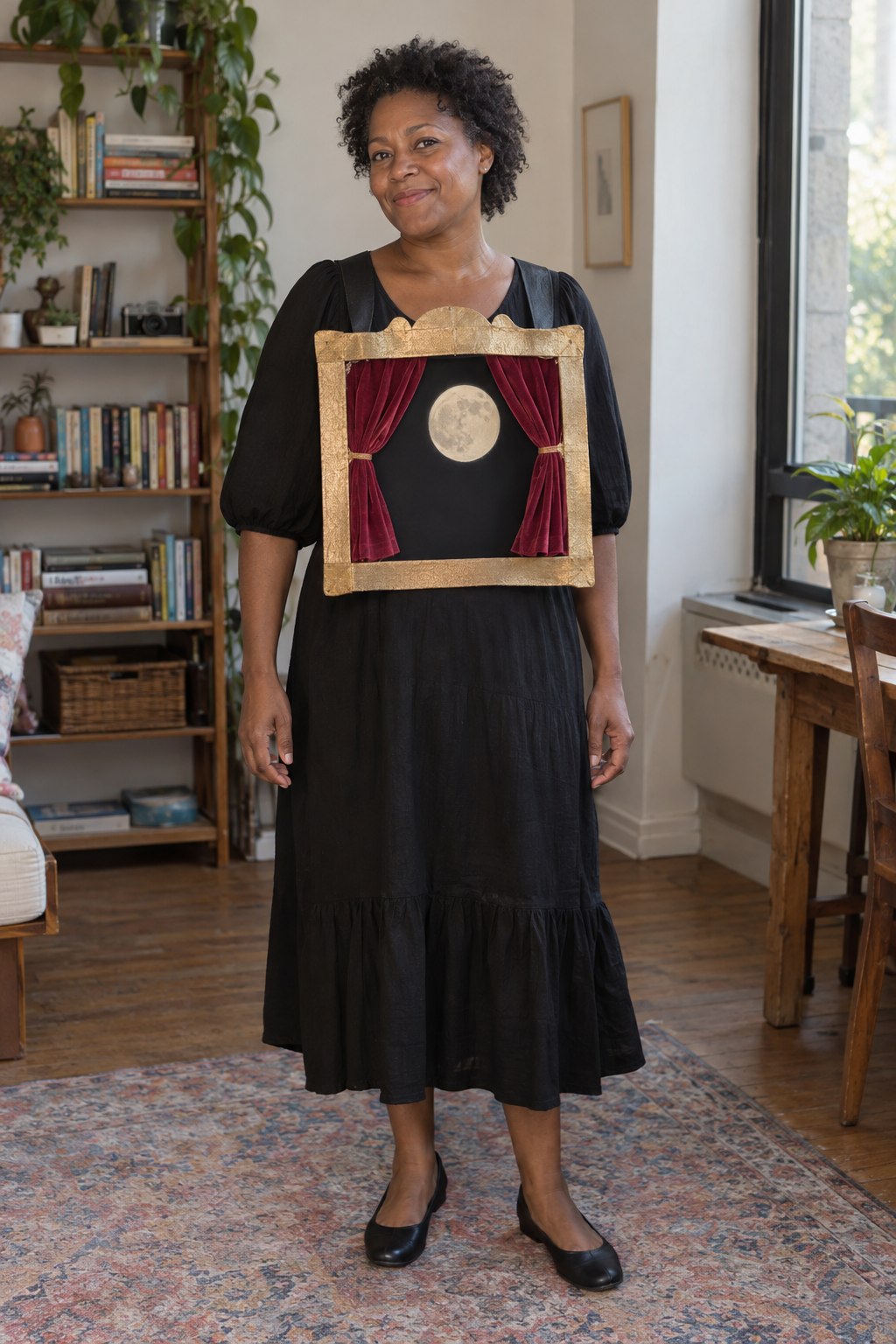
Cut a lightweight cardboard frame roughly the width of your torso. Paint it muted gold, add two scraps of burgundy fabric as curtains, and place a paper moon against a dark backing. Wear it over a black dress or separates using broad fabric straps. Keep the frame on your chest, below your face and clear of your elbows.
Make a paper mock-up before decorating the real piece. If you cannot sit or reach a pocket comfortably, shrink it. The strongest version looks like a miniature stage you could almost open, with just one scene inside. You do not need moving puppets to get the idea across.
The moth mail carrier
Night deliveries require unusual staff. Give a moth a postal route and you get a costume with warm colors, soft wings, and a very good excuse to carry a bag.
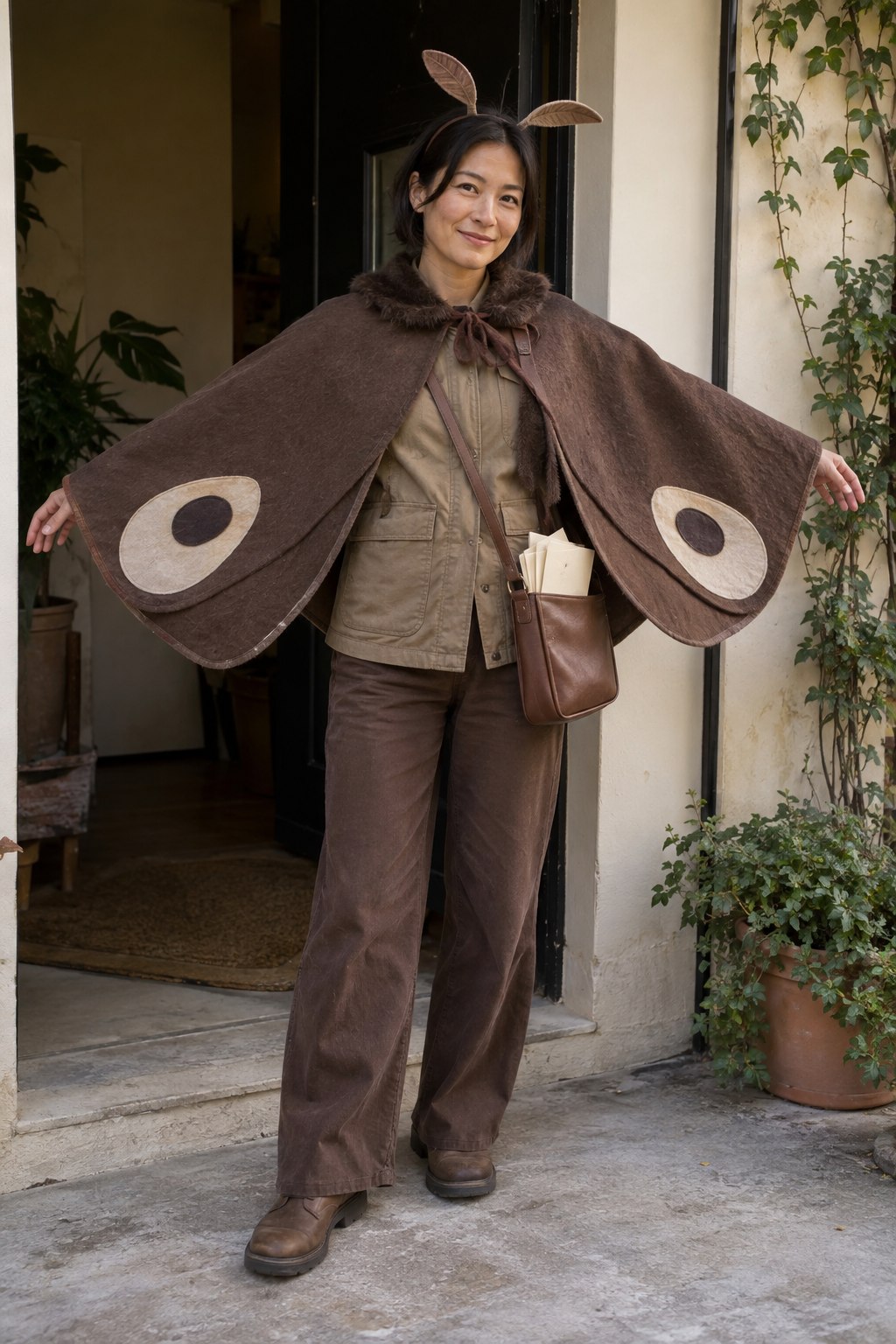
A tan utility jacket and brown trousers form the base. Add a short cocoa cape with two cream oval markings, then put a few plain envelopes in a crossbody satchel. The cape can be as simple as a semicircle of fabric with a finished edge; let the wing pattern suggest the creature.
Keep the wing length around your elbows so the costume still behaves like clothing. No antennae are required, although a small felt pair on a headband can make the character more literal. For a group, give each carrier a different wing pattern and the same envelope color. A whole night shift, assembled.
The curator of tiny monsters
The exhibition is small. The residents are badly behaved. You are doing your best. This costume works because an otherwise sensible curator appears to have allowed the collection onto their jacket.
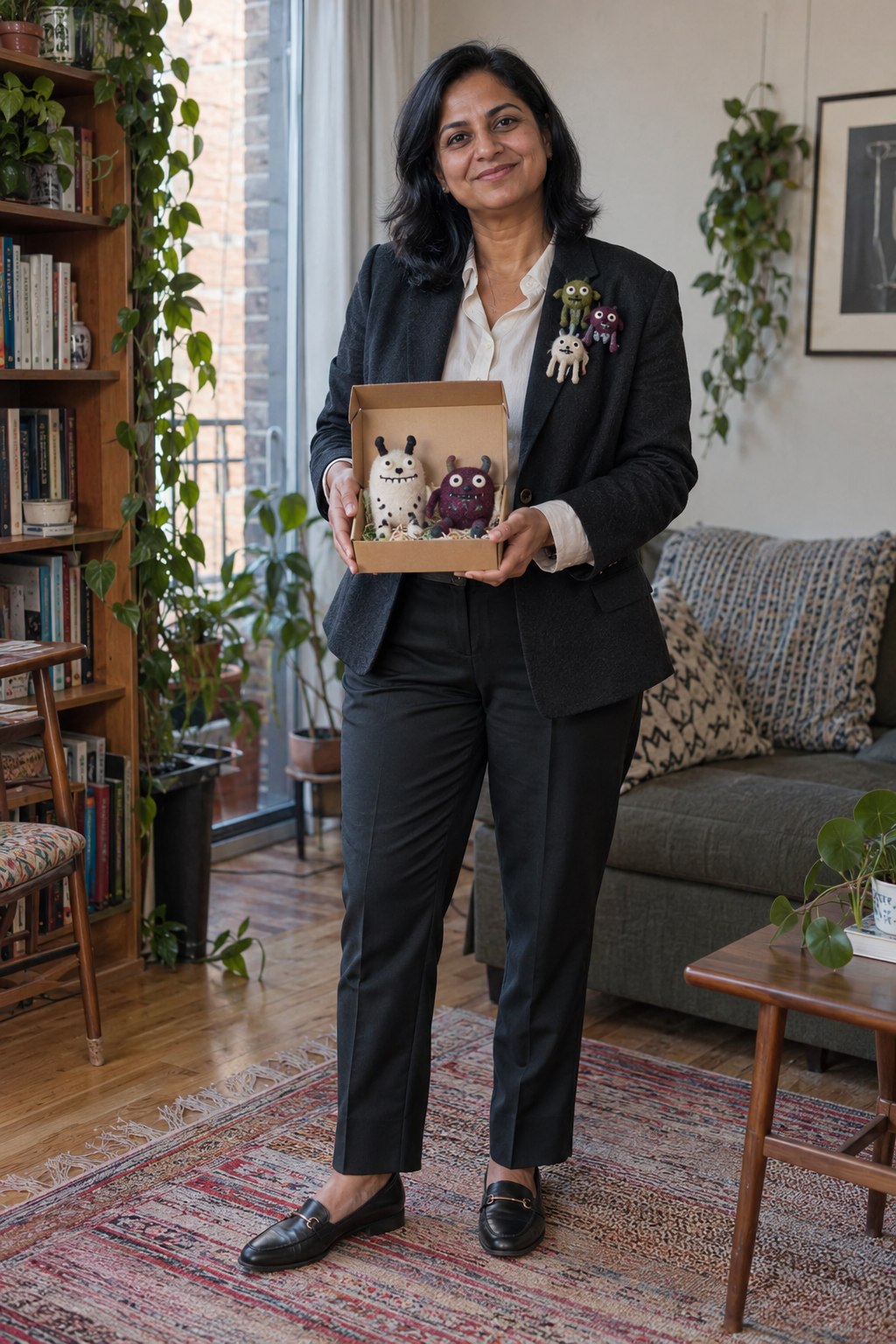
Wear a blazer or neat cardigan and make three small felt creatures for the lapel. Give them different shapes: a moss-green blob with tiny feet, a plum triangle with one eye, an ivory creature with enormous ears. Use sewn details or securely attached felt pieces, then mount each on a brooch backing.
A shallow cardboard display box adds context, but the jacket should tell the story without it. Leave space between the creatures so each gets its moment. You could also give friends individual monsters to wear: suddenly the exhibition has escaped, and you have an excellent reason to look mildly concerned.
Give the costume a real-life rehearsal
A costume can look brilliant in a mirror and become deeply annoying fifteen minutes later. Put on the complete version before the event: shoes, bag, coat, props, all of it. Sit down, walk through a doorway, and pick up your phone.
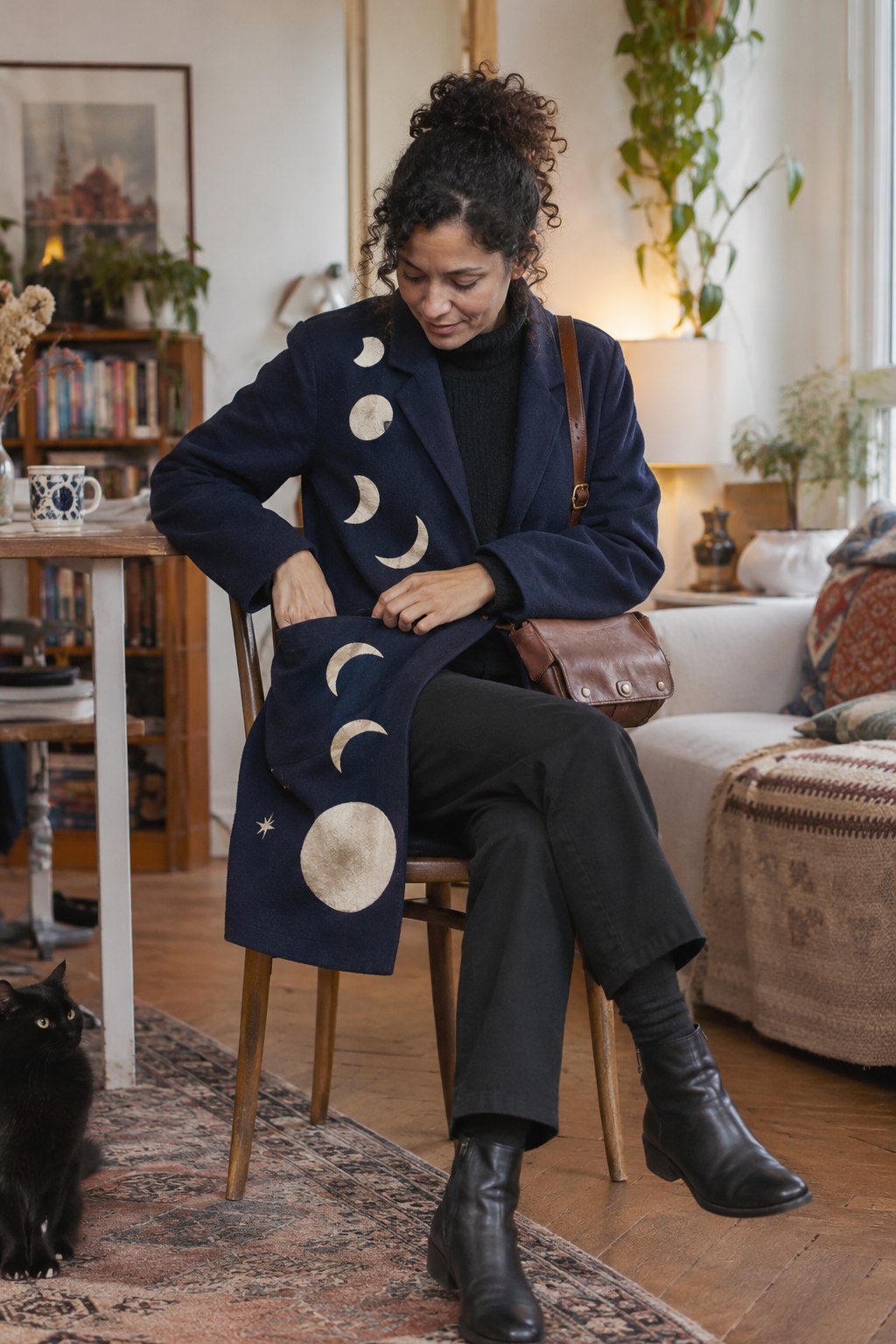
Check whether the main idea survives when you put your bag down or add an outer layer. If it disappears, move one defining motif onto the clothes themselves. The moon keeper needs a moon on the coat; the monster curator needs at least one creature on the lapel.
Then remove the least useful detail. Most of these outfits get stronger when the central idea has breathing room. You should be able to explain the character in one sentence and enjoy wearing it for longer than the time it takes to get a photo.
Give an ordinary outfit an impossible job. Let everyone else wonder where you work.
