The Dressing Room Moment
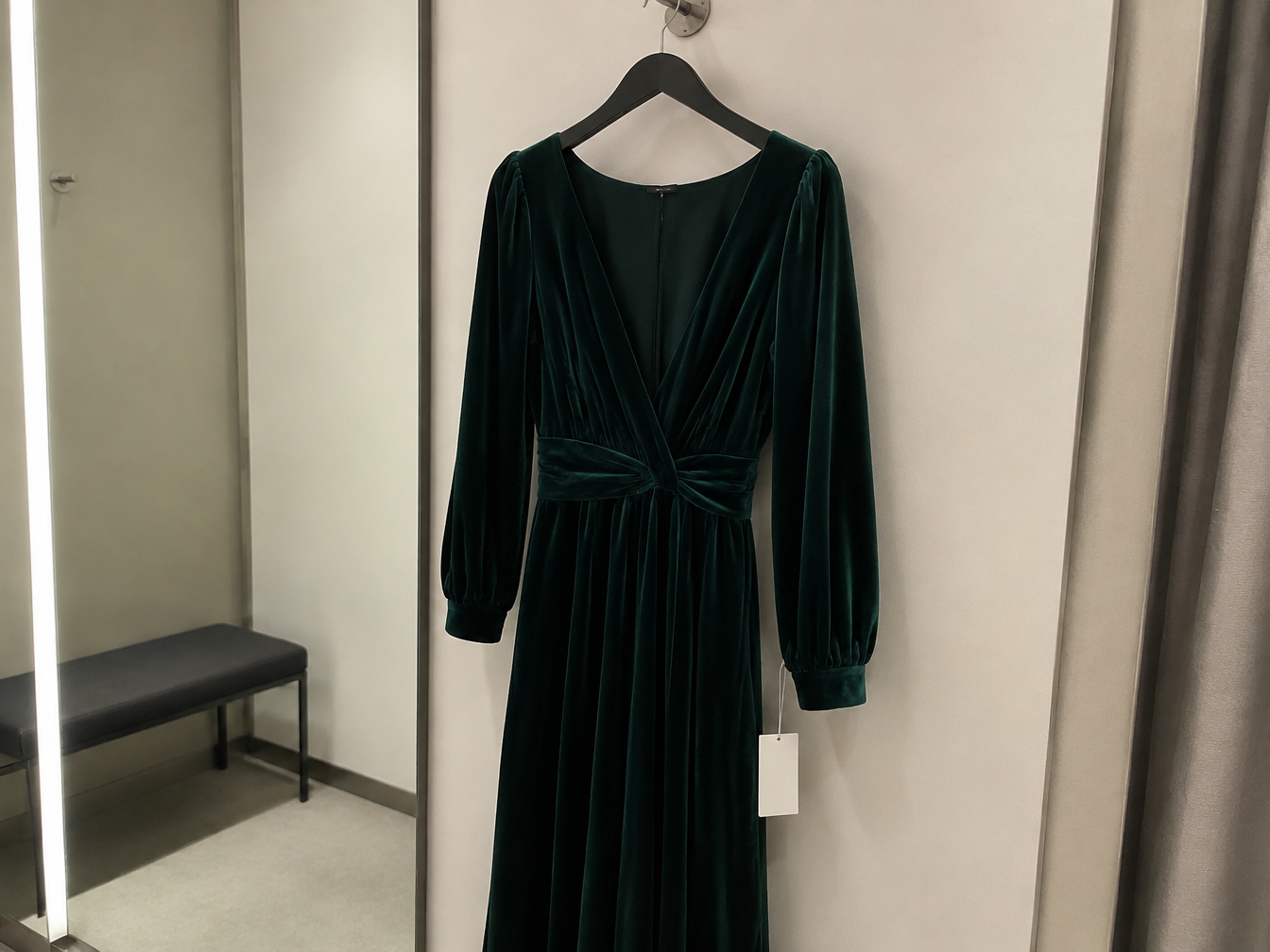
The dress was deep green velvet with a neckline that did exactly what it was supposed to do and a price tag that did exactly what I was afraid it would. I stood in the dressing room under the unforgiving light, turned slowly, and heard myself think, very clearly: he is going to see this.
He was not going to see this. That’s the part that still makes me laugh. The holiday party was my friend Dani’s annual open-house thing, which is held in her small apartment, features a cheese board and an overheated playlist, and had never once in its history included anyone from my past. He wasn’t invited. He wasn’t going to be there. He lived two time zones away and hadn’t texted me in five months.
But I was buying the dress for him anyway. Not on purpose. Nobody wakes up and says, today I will shop for an audience that does not exist. It just crept in, the way these things do, disguised as practicality. It’s a holiday party. I need something nice. This color looks good on me. And then somewhere between the hanger and the register, an imaginary scene started playing: me walking into a room, him looking up, a pause just long enough to be meaningful.
I paid for the dress. I told the cashier it was for a party. Both of those statements were technically true.
If you’ve ever bought an outfit for an audience of one who was nowhere near the room, this one is for you. I don’t think it makes you silly. I think it makes you human. But I do think it’s worth looking at what we’re really buying.
The Guest List in My Head

Every party has two guest lists. There’s the real one, with names and a plus-one count and someone who always arrives forty minutes late. And then there’s the one in your head, which is much more crowded and a lot less forgiving.
On my mental guest list that night were: the ex, obviously. A girl from college who always seemed to be doing better than me. My own mother, who would never say anything but would notice. A stranger at the party who, in my imagination, would take one look at me and understand that I was a woman who had her life figured out.
None of those people were coming. Or if they were, they weren’t thinking about me even a tenth as much as I was thinking about them. The psychologists have a name for the feeling that everyone is watching you, but I don’t need a study to tell me what the inside of my own head looked like that December. It was a packed theater and I was the only person on stage.
I wrote a whole post about why getting ready for a party is my favorite part of the night, and I stand by it. But I’d be lying if I said the getting ready was always joyful. Sometimes it’s an audition. And that year the part I was auditioning for was the woman who was totally fine, thank you.
Dressing for an Audience of One
Here’s the pattern I’ve noticed, in me and in nearly every woman I’ve talked to about this. When a relationship ends in a way that feels unfinished, the dressing doesn’t stop. It just changes address.
You stop dressing for the person. You start dressing against them. Every outfit becomes a small piece of evidence in a case you’re building about how well you’re doing without them. Look at my arms. Look at my collarbones. Look at this color. I’m thriving. I don’t need an answer.
The tricky thing is that it works, a little. You do feel sharper in the green velvet. You do stand taller. But the confidence is borrowed, and it’s secured against someone else’s opinion, which means you can never fully relax into it.
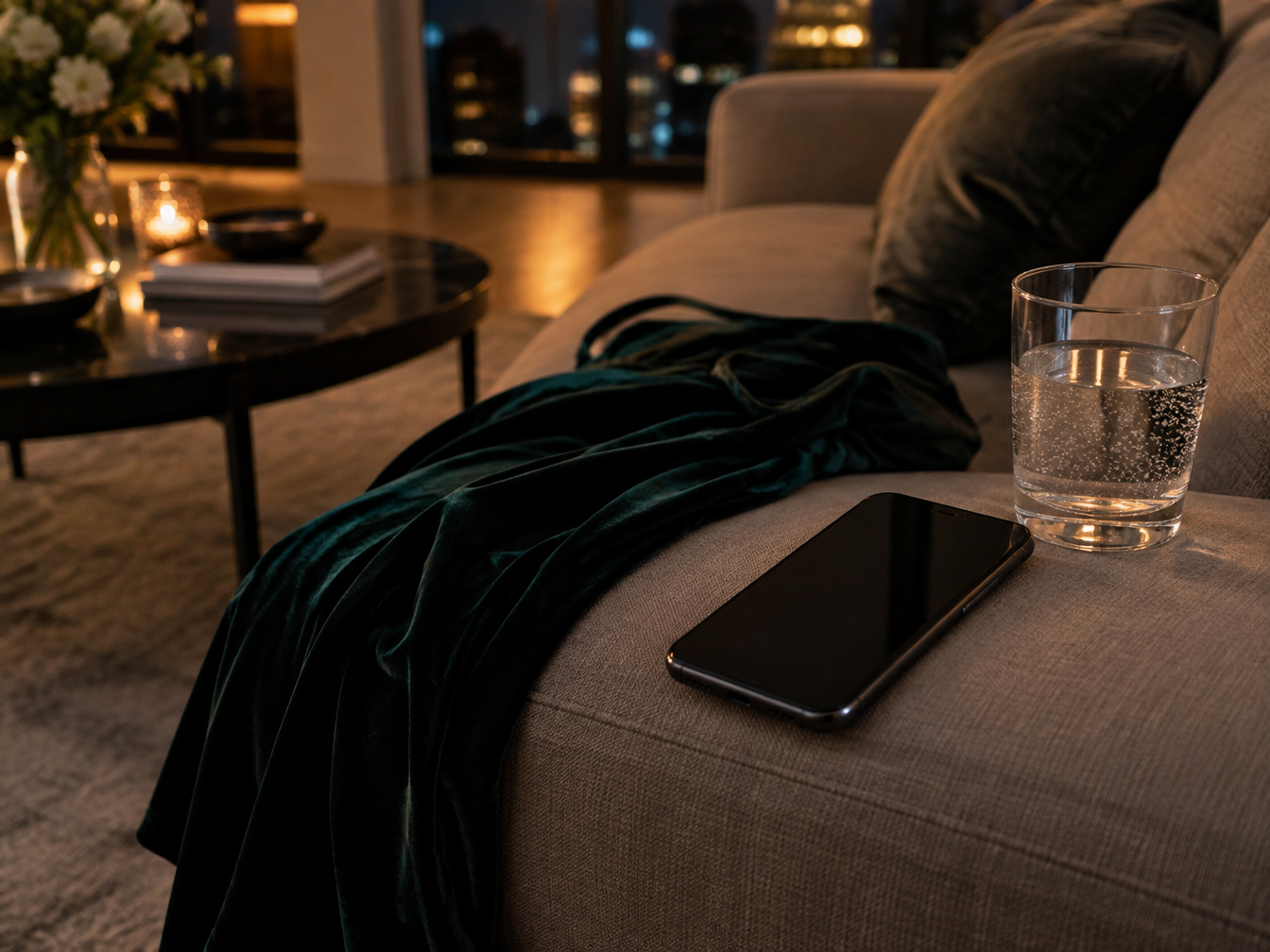
My dress was saying I’m over it, loudly. My phone, sitting face-up on the arm of the couch all night, was saying something else.
That’s the thing about performing for a ghost. You can’t hear the applause, so you keep doing the number. I spent a long time trying to understand why people send mixed signals in romantic situations, and what I eventually realized is that I was sending my own, which is its own kind of exhausting. When you’re dressed for someone who isn’t there, you’re sending a message with no recipient, and then waiting for a reply that can’t come.
What the Dress Actually Cost
Let me do the math I avoided in the dressing room.

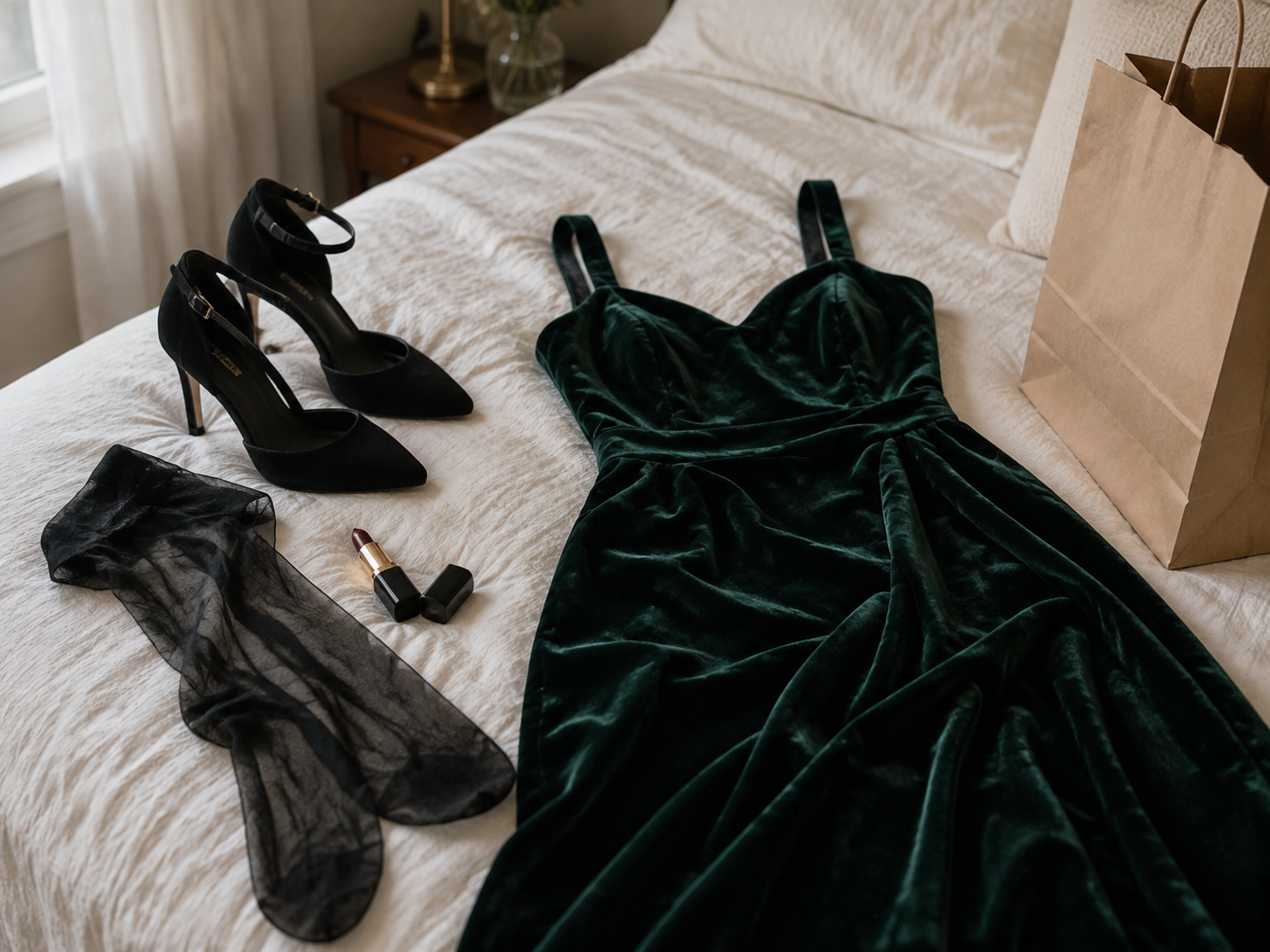
The dress cost more than I wanted to spend. Shoes to match, because the old ones suddenly looked wrong next to it. A new lipstick, because the green made my usual one look washed out. Tights, because I’d laddered mine. By the time I was done, one evening of imaginary eye contact had cost me what I’d normally spend on a whole month of groceries.
I wasn’t unusual in that. A Credit Karma survey reported by NBC News found that 52 percent of U.S. adults say they’ve made impulse purchases to cope with feelings of stress, anxiety and depression [1]. Psychologist Teodora Pavkovic compares stress spending to drinking coffee when you’re already stressed: it feels like it will calm you down, but it mostly makes you more jittery [1]. And Kelli Saginak, a life coach and professor quoted in the same piece, describes the cycle where excessive holiday spending drives people deeper into debt, which raises feelings of fear, anxiety, guilt and shame [1].
The article also notes that retailers know shoppers are vulnerable at this time of year and lean on messages that a purchase will improve your life, plus urgency like “get it before it’s gone” [1]. The dress had a little tag on the rack that said it was one of the last in my size. I’m sure that was a coincidence.
I want to be fair to myself, though. Not every nice purchase is an emotional spiral. Sometimes you need a dress, you find a dress, and you buy it. The difference, for me, is whether the purchase is moving me toward something or away from something. If you want an easier pick that doesn’t cost a month of groceries, I once rounded up red dress outfits that make getting dressed feel easy, which proves you can feel striking without a velvet price tag.
One more cost I didn’t count: the energy. Planning an outfit for a person who isn’t coming is a part-time job with no pay. I thought about that dress while I was supposed to be working, while I was supposed to be sleeping, and while I was supposed to be listening to a friend tell me about her week.
The Night Itself

You probably want to know what happened.
Nothing. That’s the answer. Nothing happened, at least not the way I’d scripted it. I arrived at Dani’s, she screamed “that dress!”, and I felt good for about eleven minutes. Then I got a plate of cheese, stood in a corner, and discovered that velvet is warm. Very warm. Dani’s apartment was already overheated, and by nine o’clock I was fanning myself with a cocktail napkin like a Victorian woman who had received bad news.
I had a nice time anyway, mostly because of a conversation with a woman I’d never met who was wearing a mustard sweater and a pair of jeans and told me, in a ten-minute rant I’ll treasure forever, about her disastrous attempt to learn the cello at thirty-four. We laughed until we had to wipe our eyes. She never once mentioned my dress. I never once thought about the ex.
My lipstick had worn off by nine, which, for a woman who once spent a decade too scared to wear red lipstick at all, felt like a small, quiet victory. I just let it go.
Around ten, I realized I hadn’t checked my phone in over an hour. That was when it hit me. The only person who had been watching me all night was me. The only critic in the room was the one wearing the dress.
I walked home feeling lighter than I had in months, partly because my feet were killing me and partly because something had loosened in my chest. I’d gone to a party to be seen by someone who wasn’t there, and I’d accidentally been seen by someone who was.
How to Tell Who You’re Really Dressing For
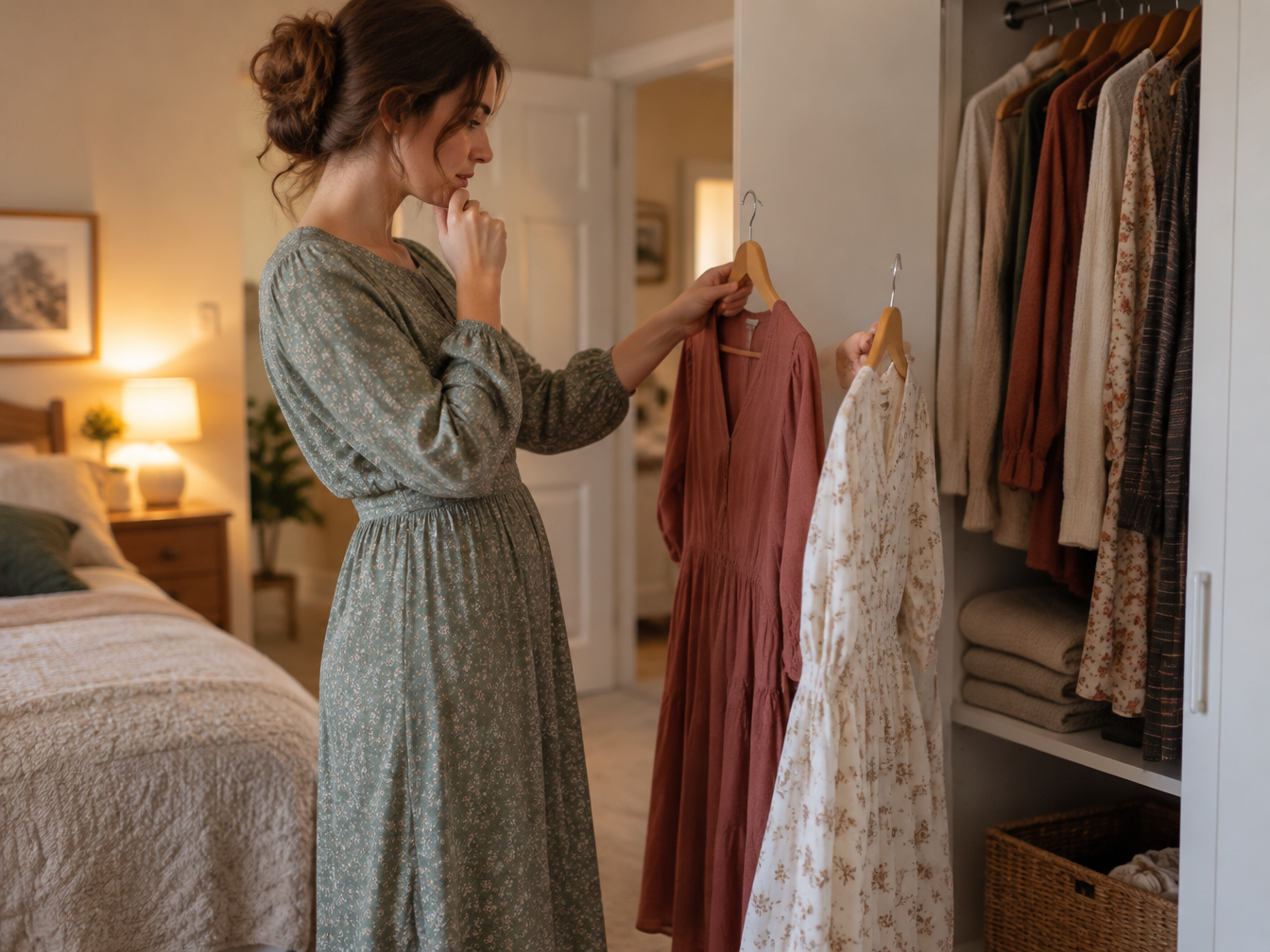
After that night I started asking myself a short list of questions in the dressing room. They’ve saved me money and a fair amount of heartache.
Who is the first person I picture seeing me in this? If the answer is anyone who isn’t at the event, put it back.
Would I still want this if nobody commented on it? Strip away the compliments and the reaction and see what’s left. (I learned how sticky one remark can be when I wrote about the compliment I never forgot about my style.) If the dress still feels like me, it’s a keeper.
Can I sit, eat, hug and dance in it? A dress that only works for standing and being looked at is a costume. Beautiful, sure, but you’ll spend the party managing it.
Does it make me feel like myself on a good day, or like someone I’m trying to be? There’s research behind the idea that clothes can shape how we feel and behave, a concept called enclothed cognition, in which certain garments prepare us to act a certain way [2]. That cuts both ways. A dress that means something kind to you can lift you. A dress built to prove something to someone else can leave you stuck in a role.
I’d add one more, which is practical: does it suit the room? If it’s an office party, the advice I’ve seen is to step up your style with statement accessories and a more flattering cut than your everyday workwear, while avoiding outfits that are too tight, too short or too “holiday,” unless the party is an ugly sweater event [3]. That matches my experience. The goal is to look like you, only a little more festive.
Choosing a Dress That’s On Your Side
This year, I’m doing it differently. Here’s the rough plan.
I start with what I own. I pull out the three outfits I’ve felt best in over the past year and notice what they have in common. A neckline I never think about. A fabric that breathes. A color that makes me feel awake. That’s my real brief, and it costs nothing.
Then I decide what the night needs. For a cozy house party, I’d rather have a soft knit dress and good boots than a statement piece I’ll be nervously tugging at. For something with dancing, I want movement and pockets, if I’m lucky. For a big countdown evening, I’ll go back to my guide to New Year’s Eve outfits and sparkly makeup and let myself have a little glitter.
And if I do buy something new, I wait twenty-four hours. If I still want it tomorrow, great. If the urge disappeared with the sale email, then the dress was never really mine.
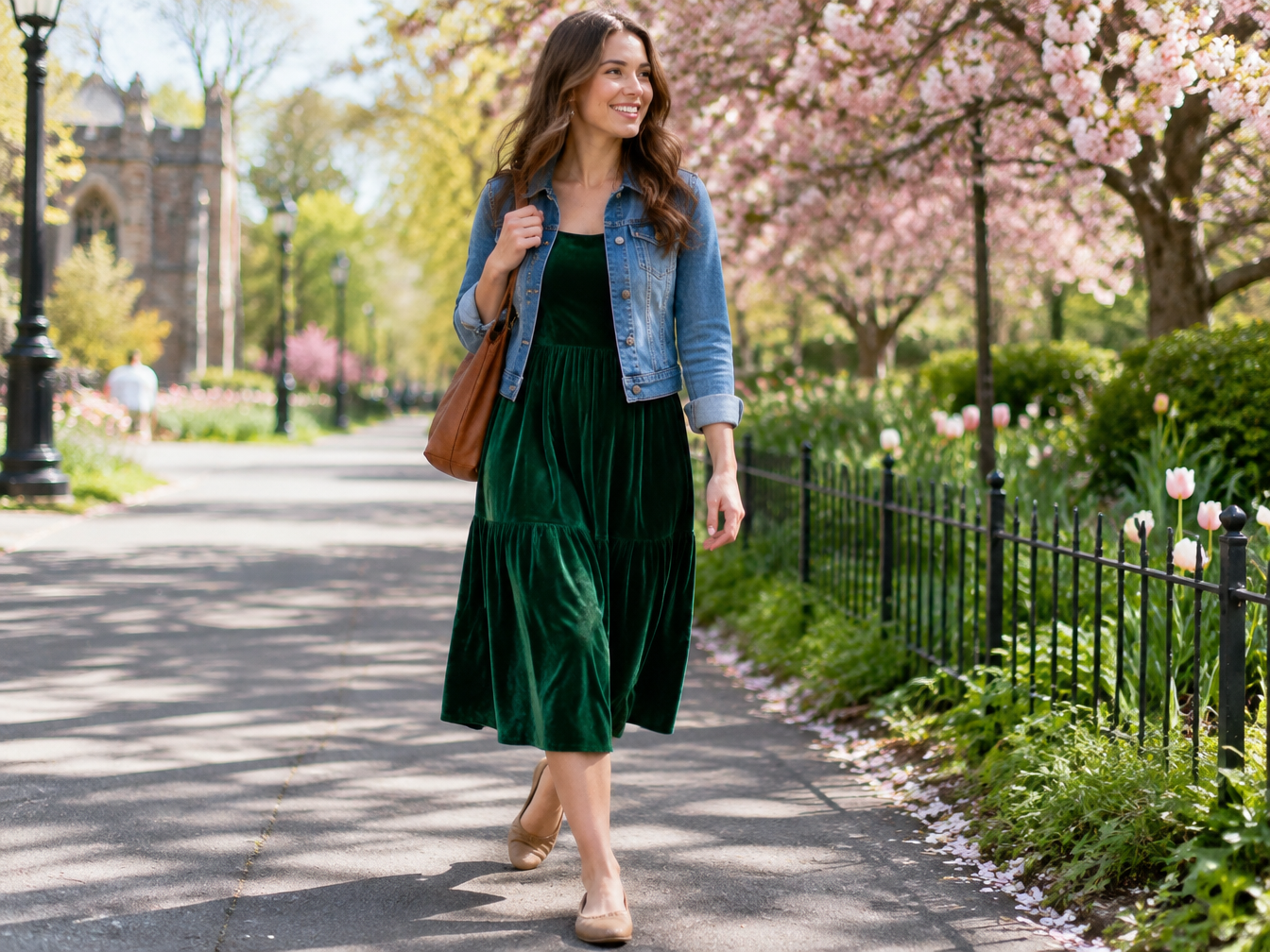
The green velvet dress is still in my closet. I wore it again last spring to a friend’s engagement dinner, with flats and a denim jacket, and it looked completely different. Younger, somehow. Less like a statement and more like a dress. I loved it, which surprised me, because I’d assumed it was ruined by the story I’d attached to it.
Maybe that’s the best thing I can tell you. A dress doesn’t hold a grudge. The meaning you gave it can be taken back.
Wear the thing for you. The person who needs to notice already did, the moment you walked into the room.
Sources
- Nicole Spector, NBC News BETTER, “Why we stress-spend during the holidays — and how to stop” (2017). https://www.nbcnews.com/better/business/why-we-stress-spend-during-holidays-how-stop-ncna824156
- Big Think, “Clothes Make the Mind: How What We Wear Changes How We Think” (2013). https://bigthink.com/articles/dress-to-impress-yourself/
- HuffPost Canada archive, “How To Successfully Navigate Your Office Holiday Party.” https://www.huffpost.com/archive/ca/entry/how-to-successfully-navigate-your-office-holiday-party_b_8739780
Leave a Reply