Somewhere in my head there is a filing cabinet, and two sentences about my style have been sitting in the top drawer for years. One of them made me stand a little taller every time I thought of it. The other made me quietly retire half my closet.
Guess which one I remembered more clearly.
I’d like to say this is a story about a stranger’s kindness beating a family member’s careless comment. It isn’t. It’s a story about how a kind sentence and a cruel one can get filed in the same drawer, and about the year I finally took both of them out and read them again.
The Stranger Who Stopped Me on the Stairs

I was twenty-three and running late, taking the subway steps two at a time in a thrifted green coat that was a size too big and a pair of mismatched earrings I’d put on in the dark. An older woman, maybe seventy, in a camel scarf and bright orange lipstick, caught my elbow at the top.
“Excuse me,” she said. “You dress like someone who has a secret.”
I laughed because I didn’t know what else to do. She patted my sleeve and said, “Keep it.” Then she went down the stairs the other way, and that was the entire interaction. It lasted maybe fifteen seconds.
I thought about that sentence for weeks. Not because it was flattery, though it was. It was because it was specific, and it described something I hadn’t known was visible. I thought I was just wearing a coat. She thought I was wearing a point of view.
For a while after that, I dressed like I had a secret. I wore the green coat everywhere. I bought odd earrings on purpose. I let myself be a little strange on the way to work, and nobody died.
The Compliment With a Hook in It
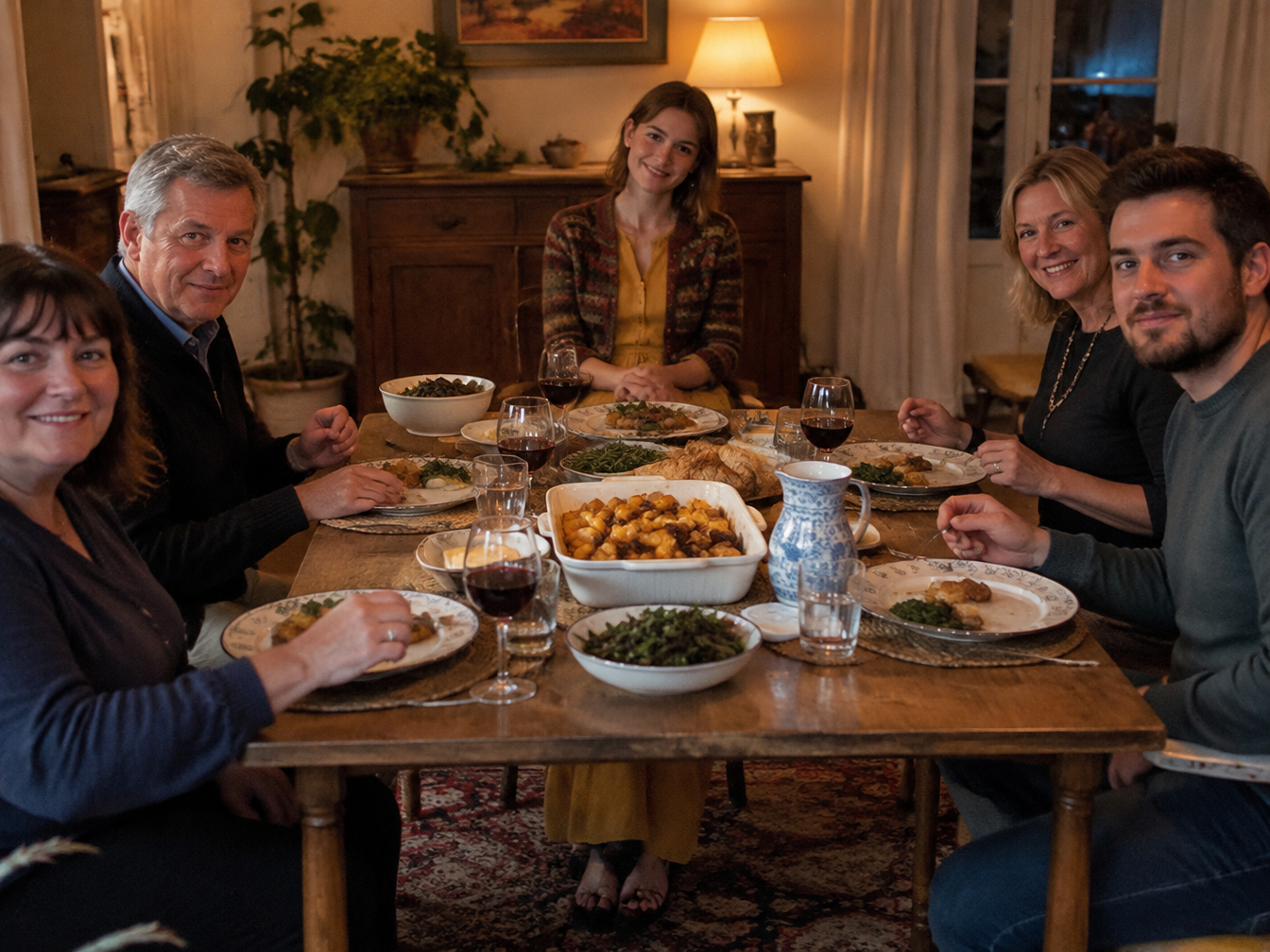
The other sentence arrived at a family dinner, over a platter of roasted potatoes, from someone who loves me.
I had shown up in a mustard yellow dress, a fitted one, with chunky boots and a vintage jacket. My relative looked me over, smiled warmly, and said, “You’re so brave to wear that.”
Brave. It was delivered as a compliment, and everyone at the table nodded along as if it were. I smiled and said thank you. Then I spent the rest of dinner wondering what I’d done that required bravery, and whether it was the color, the boots, or just me.
That is the particular cruelty of the backhanded compliment. You can’t be angry, because it was technically kind. You can’t enjoy it either. It leaves a small hook in you, and the hook says that what you chose was a risk, and that the safe version of you would have worn something else.
I’ve since learned there’s a whole genre of outfit mishaps that feel exactly like this, the moment you realize you’ve misread a room, which I got a little obsessed with in wrong occasion outfits for a party you definitely misread. But this wasn’t a misread. It was a verdict, delivered gently.
Why One Sentence Outweighs Ten

For a long time I thought my brain was just broken, that other people could shrug off one weird comment, while mine lived rent-free forever.
Then I read about negativity bias, and I felt oddly relieved. Psychologists have documented for decades that bad outweighs good: negative stimuli grab attention faster, and people recall insults with more precision than compliments, even years later [1]. The idea goes back to a famous review titled “Bad Is Stronger Than Good,” and researchers Rozin and Royzman described what they call negativity dominance, where a mix of positive and negative comes out more negative than the sum of its parts [1]. One critical remark in a page of praise is what you remember. A spoonful of sewage ruins a barrel of wine, goes the old line, but a spoonful of wine does nothing to a barrel of sewage [1].

That is the arithmetic of my filing cabinet. The stranger’s sentence was a spoonful of wine. The “brave” comment was a drop of something that made every other compliment taste different.
The explanation is evolutionary. Missing a threat could be fatal, while missing an opportunity usually just meant waiting for the next one [1]. My brain was built to remember the predator. It was never calibrated for dinner table commentary on a yellow dress.
I found that comforting, because it meant the problem wasn’t my sensitivity. It was a setting. And settings can be worked around.
The Years I Dressed Around Someone Else’s Opinion
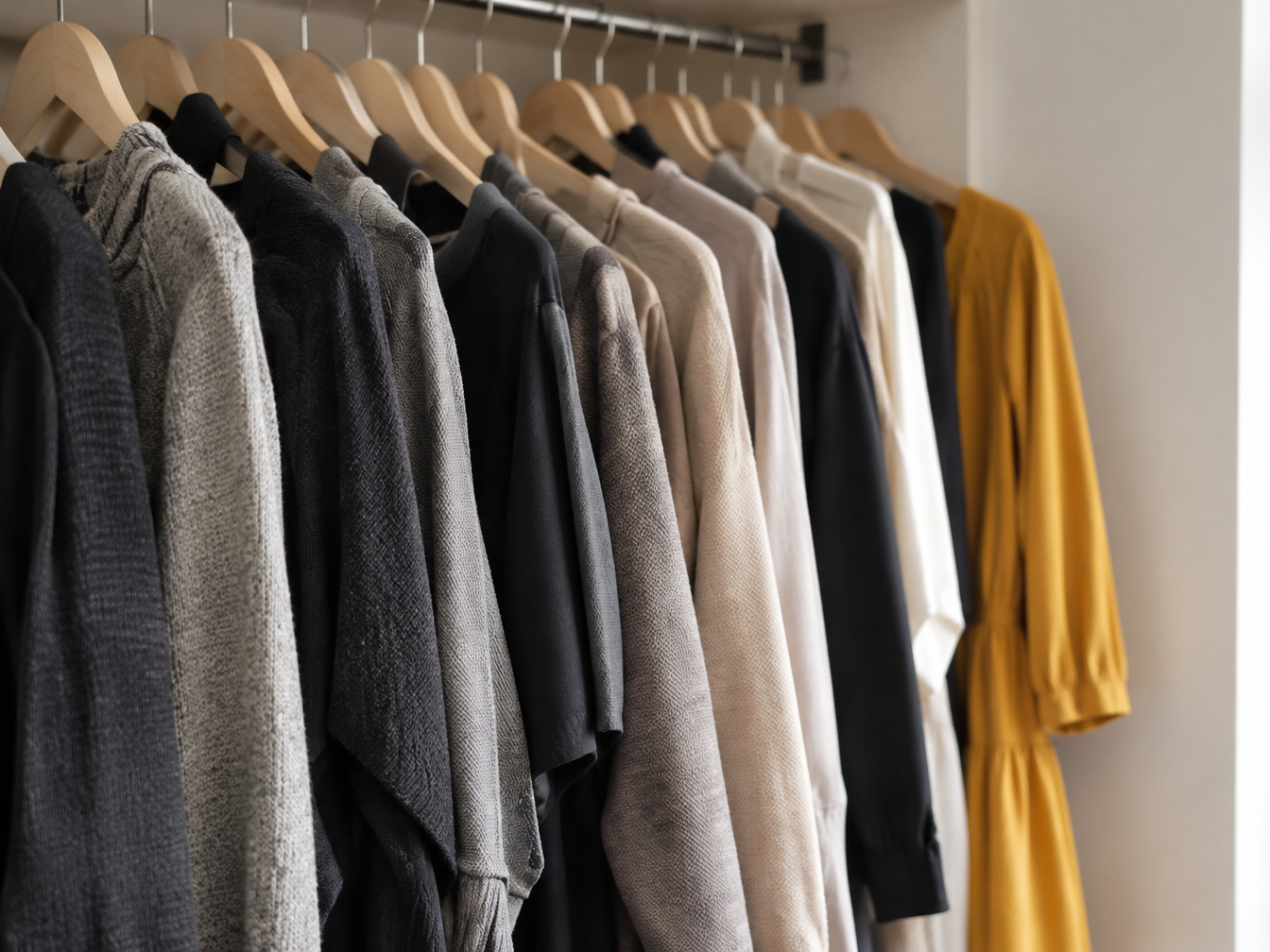
Here’s what I did after that dinner, and I’m a little embarrassed to type it. I started dressing for the table.
Not in some dramatic way. I just began to pre-edit. I’d put on the yellow dress, picture the potatoes, and swap it for something navy. I’d reach for the chunky boots and hear the word brave in my head, and reach instead for flats. I wasn’t dressing for the stranger on the stairs anymore. I was dressing for the person at the head of the table.
The weird part is that nobody asked me to. No one said, “Please tone it down.” One casual remark became a rule, and I enforced it better than any critic ever could.
A few years of that and my wardrobe got very, very safe. Gray. Black. A single beige trench. I told myself I was growing out of my loud phase, that this was maturity. In reality I’d become the museum guard of my own personality, standing in front of the interesting exhibits with my arms crossed.
It’s a feeling I came back to when I wrote about dressing for a life you haven’t started yet. When your clothes are all hedging, they’re usually protecting a future you’re scared to step into. Mine were protecting me from a dinner that happened years ago.
What the Spotlight Effect Gets Right and Wrong

So I tried to figure out how much anyone was actually watching.
Psychologist Thomas Gilovich and colleagues ran a now-famous experiment where students were made to wear an embarrassing Barry Manilow T-shirt and walk into a room of peers. The students guessed that about half the room had noticed. In reality only about a quarter did [2]. The researchers named it the spotlight effect, our tendency to overestimate how closely others are noticing what we do or how we look [2]. Strangely, it worked the same way with a shirt the students thought was cool, and they still overestimated how many people noticed [3].
If you’re prone to spiraling, this is the point where you’re supposed to exhale and say nobody cares. And partly, that’s true. The people at that table probably forgot my yellow dress by dessert.
But the researcher behind the study told a journalist something I liked better. Retellings of the work can flatten into “nothing matters, no one is watching,” when the point is closer to this: fewer people than you think will notice, so go do the thing that’s pulling on you [2]. There’s also newer research on what’s called the invisibility cloak illusion, the idea that we assume we’re not being watched while we watch everyone else [2]. It’s a reminder that people are noticing, just not the way we picture it.
What I took from this was permission, not indifference. One person said one sentence. The spotlight in my head was much brighter than the one at the table. So I started small, with something as simple as a red dress that makes getting dressed feel easy, worn on a regular Tuesday.
How I Started Writing the Good Ones Down
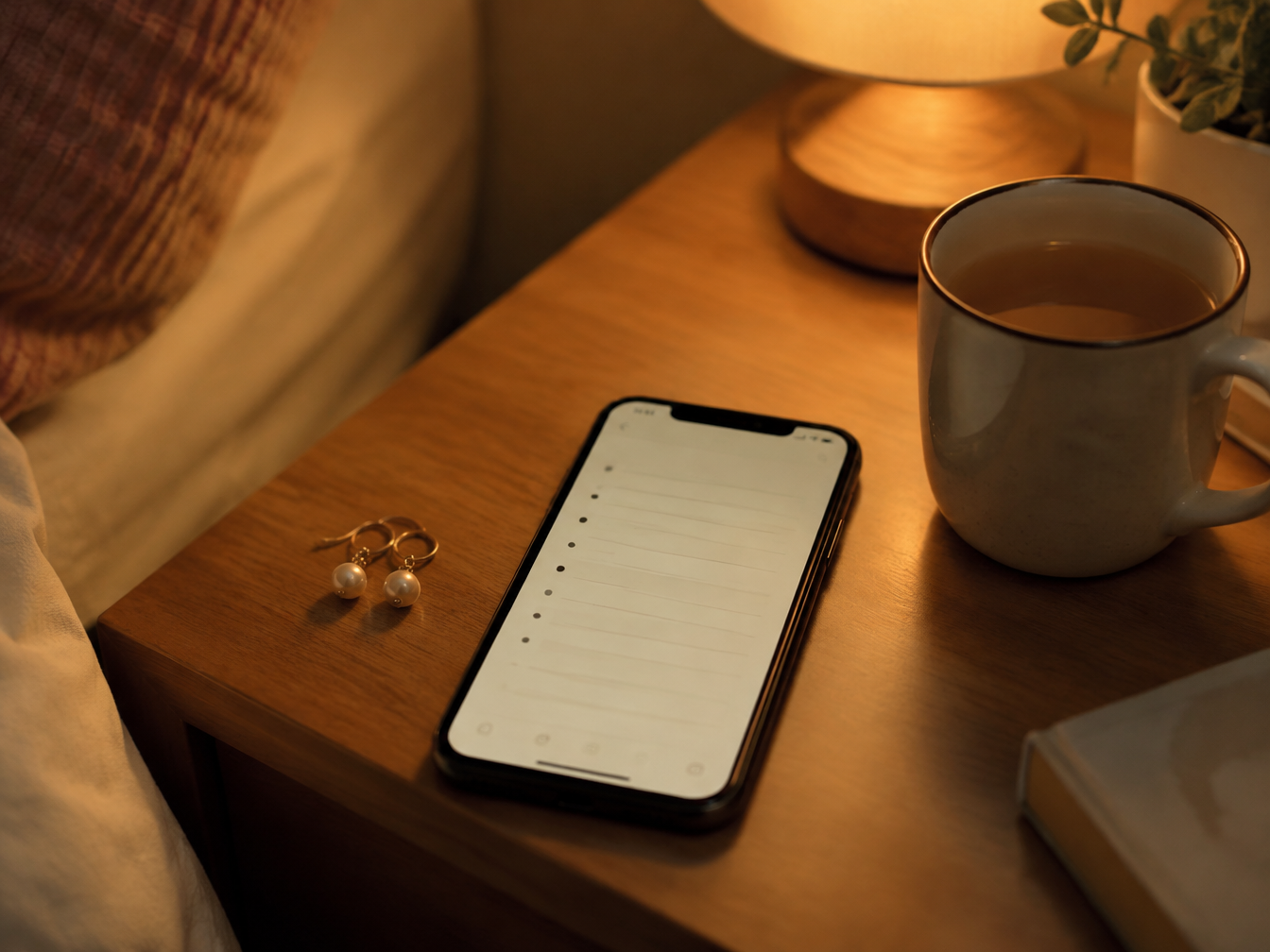
My favorite tip from that negativity bias research was almost laughably simple. Write things down. A written record isn’t subject to memory’s weighting, and positive events are under-encoded by default, so writing them down partially corrects that [1].
So I started a note on my phone called “Things People Say.” Every time someone said something nice about what I was wearing, the date and the exact words went in. Specifics, not summaries. The research notes that vague positives disappear while specific ones survive [1], and I found that to be true.
The first month I only had four entries. I was embarrassed. Then I realized the entries weren’t rare, I just wasn’t catching them. A coworker once said, “That color looks like you.” A friend told me she copied my scarf knot. A barista said, “I love your jacket,” and I’d answered with a mumble and a wince.
I also added the old ones I’d been carrying for years. The stranger’s secret sentence went first. I read the list when I’m getting dressed on bad days, and it works the way a friend works: gently, with receipts. I also began swapping one gray piece a week for something with color, and the plum outfits for when black feels a bit too familiar were a lovely place to begin.
Counting the base rate helped too. When I asked how often my clothes had actually drawn an unkind remark in my adult life, the answer was once. One time in nine years. I had built an entire dress code around it.
Learning to Hear Compliments Without Flinching

The next skill was harder. I had to actually receive compliments instead of deflecting them.
Deflecting was my specialty. “This? It’s old.” “Oh, it was on sale.” “I just threw it on.” Each one was a little way of handing the compliment back before it could hurt me, or before I could be caught believing it.
I practiced saying only two words. Thank you. Then I made myself stop talking, which is the hard part. Silence after a compliment feels like standing on a ledge. But the person across from me always smiled. Nobody has ever said “I take it back.”
As for the backhanded kind, I learned to ask a gentle question in return. When someone said I was “so brave” to wear something, I tried, “Brave how?” Mostly they stammered, and then they said something kind and real. One time my relative admitted that she wished she’d had the nerve to dress like that at my age. The hook turned out to be envy in a polite coat.
I also gave myself the ritual of dressing out loud. I’d wear something I loved to a place where the stakes were low, like a bookstore or a friend’s kitchen, and notice how my body felt in it before anyone had a chance to comment. Armor was out. I wanted a feeling, and I wanted to get it first.
If you’re in the same bind, the same logic applies to boldness in general. Some days the answer is a glamoratti outfit for days you refuse to blend in, worn mostly for the person you’re becoming.
The Outfit That Finally Matched the Sentence
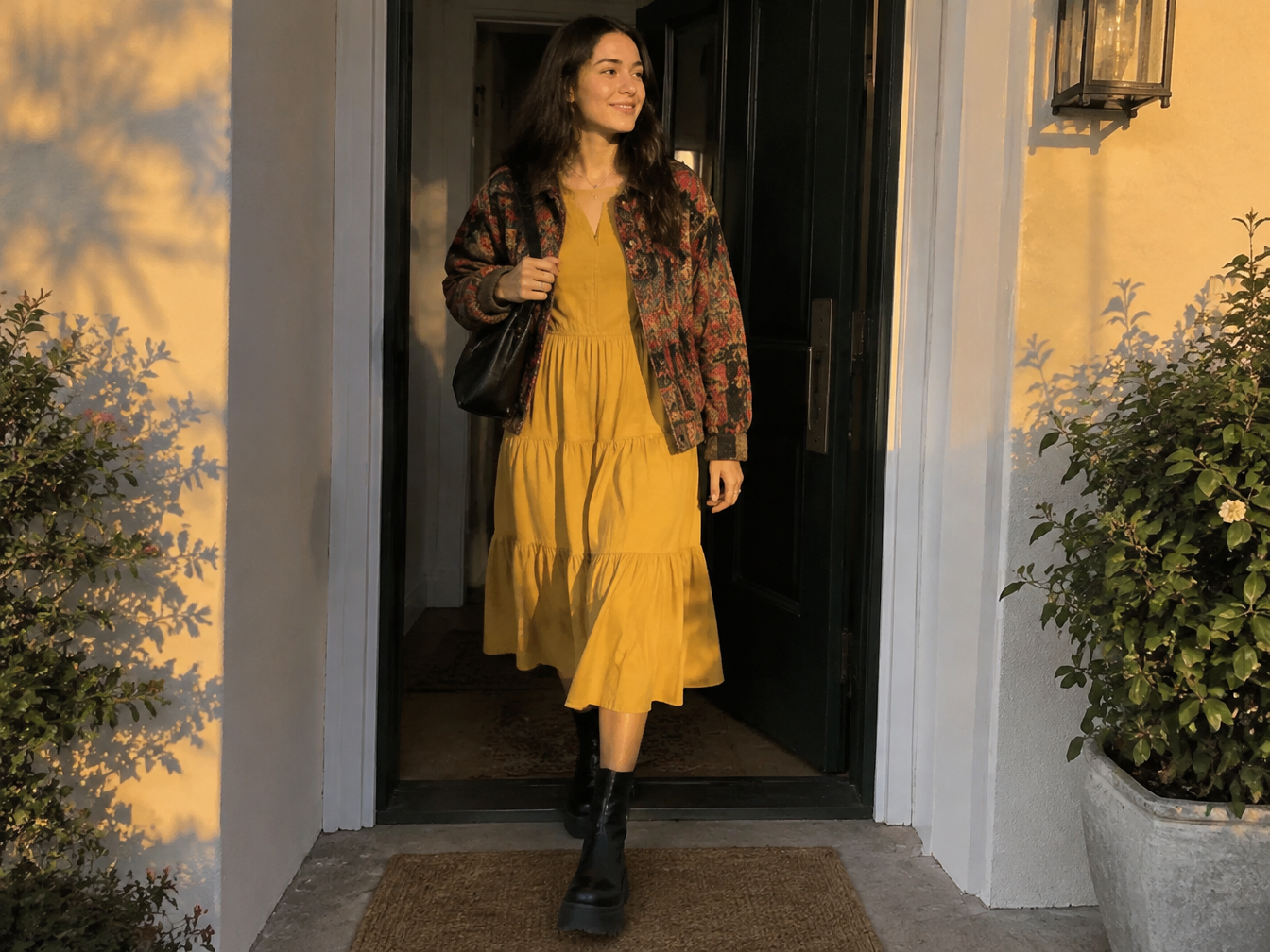
Last month I wore the mustard dress to another family dinner. I wore the chunky boots too, and a new jacket that probably qualifies as brave by anyone’s measure.
Nobody said a word about it. The potatoes got passed. My cousin asked where I’d found the boots. My relative looked at me for a second and said, “That color really suits you.” I wrote it down in the car.
I’ve learned that a bold outfit rarely needs a grand statement to work. Sometimes it’s just one piece with nerve, the way a red leather jacket can wake up an entire bag of basics. Start with one thing that has a little more personality than you think you’re allowed, and wear it somewhere nothing is on the line.
The woman on the subway stairs is probably gone from my city by now, or maybe she’s still out there, handing sentences like that to girls in oversized coats. I never got her name. I hope she knows that her fifteen seconds outlasted every dress code I ever built.
You dress like someone who has a secret. Keep it.
Sources
- Negativity Bias: Why Bad Weighs More Than Good, Simply Psychology.
- The psychological case for being less self-conscious, Melissa Dahl, NBC News.
- Experiment shows that you aren’t the center of attention you might think you are, High Plains Public Radio.
Leave a Reply