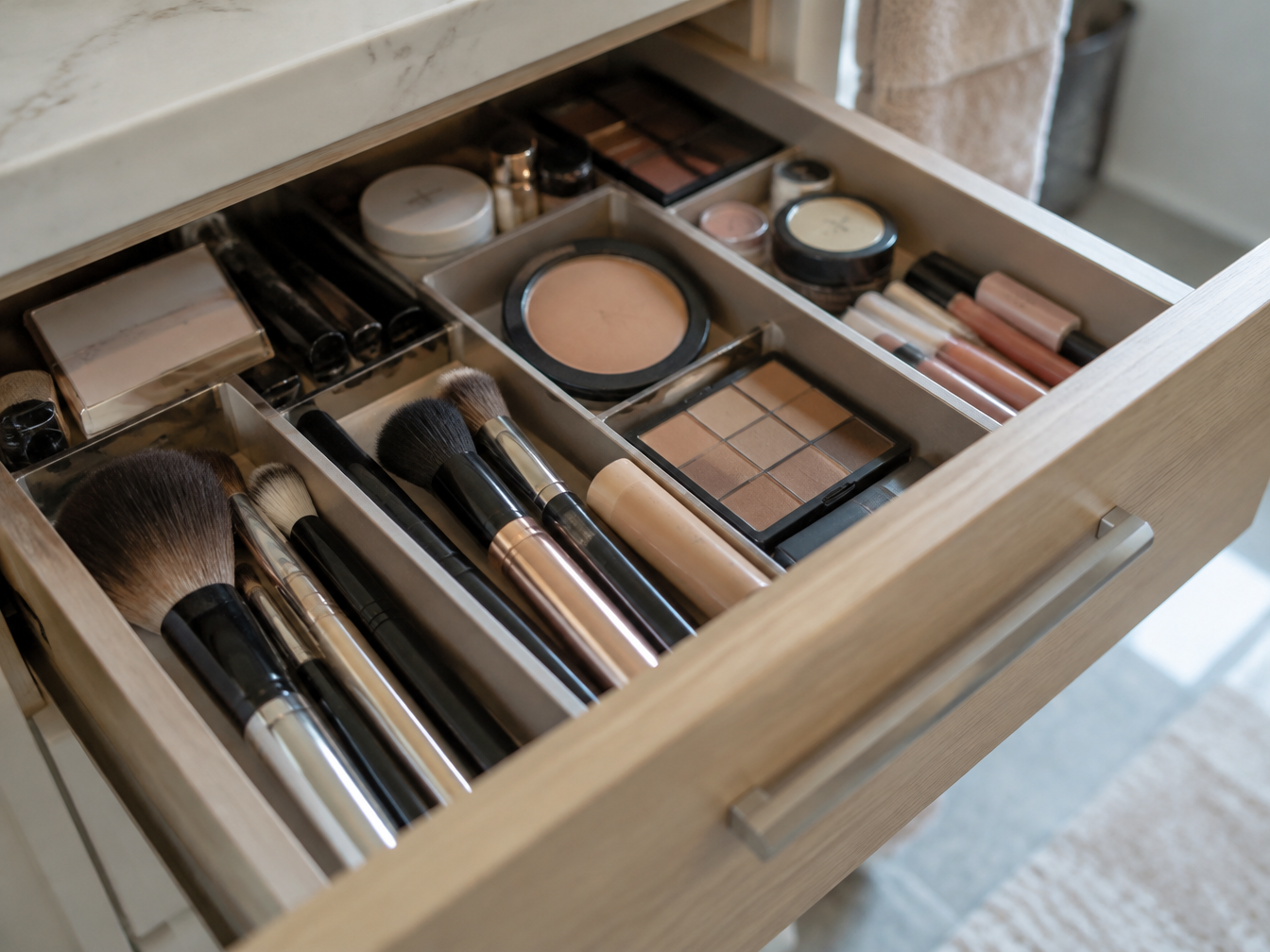
There is a drawer in my bathroom that I used to open before I opened my eyes all the way. Concealer first. Then foundation, brow gel, mascara, a little blush so I wouldn’t look “tired,” which is what I was convinced everyone saw the second they looked at me. It took eighteen minutes on a good day. I did it to go to the grocery store. I did it to take out the trash.
One Tuesday in September, my roommate walked in while I was getting ready and said, completely casually, “You know I’ve never actually seen you without it, right?” We’d lived together for two years.
I laughed it off. Then I stood in the shower and felt my chest go tight, because she was right, and because I couldn’t remember the last time anyone had. So I made a deal with myself. Thirty days, no makeup, not even the invisible stuff. I wanted to find out what I was actually hiding, and whether I could stand to meet her.
The Morning I Realized I Was Hiding
Let me be clear about something first. I love makeup. I love the little ritual of it, the click of a compact, the first sweep of color on a sleepy face. This was never going to be an essay about how makeup is a patriarchal scam and I’m free now.
It was about the gap between loving something and needing it. When I thought about leaving the house bare, my stomach dropped the way it does before a presentation. That wasn’t love. That was a rule I’d never questioned.
I didn’t tell anyone about the thirty days at first. I didn’t want an audience for something I might fail at in the first week. I just put the whole drawer in a tote bag, zipped it, and stuck it on a high shelf. The bag looked a little like a hostage.
Then I washed my face, patted it dry, and looked at it for the first time in daylight. There was a faint shadow under each eye. A cluster of freckles I’d forgotten I owned. One stubborn spot near my chin. And underneath all of it, someone who looked a lot more like a person than a project.
Day One Looked Like Panic
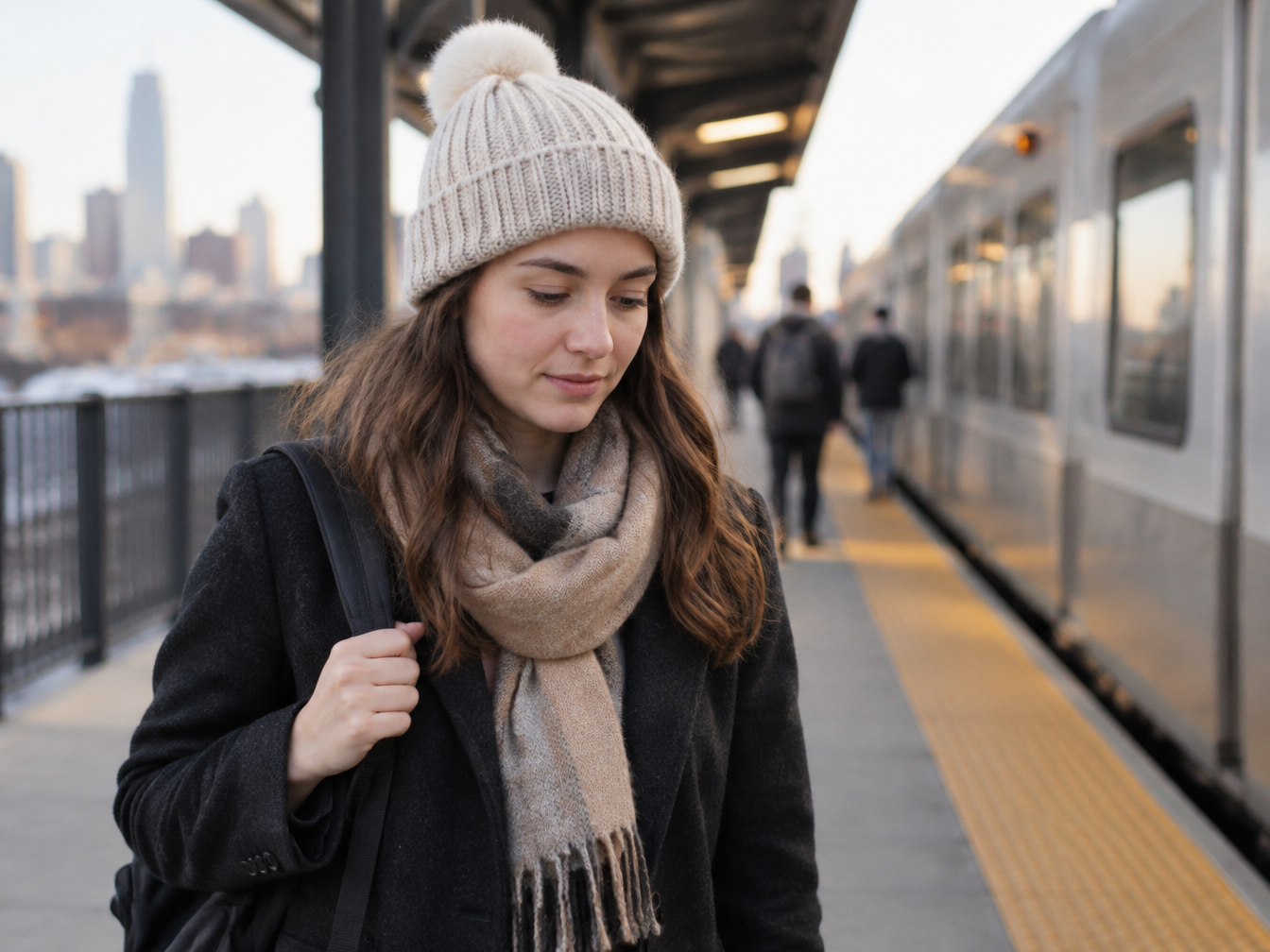
I walked to the train with my head slightly down like I was carrying a secret. I checked my reflection in the window of the bakery. And again in the train door. A man glanced at me for maybe half a second and I was sure he had noticed every pore.
He had not noticed anything. He was reading his phone.
That first week was mostly an exercise in catching myself. My hand would drift toward my bag for a lip balm and a compact that wasn’t there. I’d brace before video calls, then remember nobody had ever commented on my face in a meeting in my life. I wore a lot of hats. I kept my hair down like a curtain, which turned out to be a whole other way of hiding, and I wrote about that for my own sanity in why your hair deserves better than just looking good.
Around day four I noticed something odd. I was getting ready in six minutes instead of eighteen, and I didn’t know what to do with the extra twelve. I drank my coffee sitting down. I fed my plant. I felt like a woman in a movie about someone who has her life together.
It was also lonelier than I expected. Makeup had been a kind of company, a costume I put on to meet the day. Without it I was just me, at 7:30 a.m., with nothing between me and the world.
What Research Says About Makeup and Confidence
Eventually I got curious about why my reaction was so big, so I went looking. The research is more complicated than either side of the internet argument wants it to be.
On one hand, makeup works. In a study by Nash and colleagues, people rated the same women with and without cosmetics, and the women wearing makeup were seen as healthier and more confident. Participants even credited them with greater earning potential [1]. A survey from the Renfrew Center found that 44 percent of women felt more unattractive and uncomfortable without makeup, and only 3 percent said going without made them feel more attractive [1]. So no, I wasn’t being dramatic. I was reacting to a real social signal.
On the other hand, a 2008 study by Robertson and colleagues found a link between frequent cosmetics use and anxiety, self-consciousness and conformity, and women who wore makeup less often tended to report higher social confidence and self-esteem [1]. Correlation isn’t cause, of course. Anxious people might simply reach for makeup more often. Psychologist Tara Well, who summarized this work, notes that it could be a self-fulfilling loop, where self-conscious women wear more makeup and act more confident in it [1].

I took two things from this. First, the pressure I felt was real, and I should stop treating it as a personal flaw. Second, I’d been outsourcing my confidence to a drawer. Those two ideas can both be true. If you want to love the craft side without the fear, a primer like colorful eye makeup for beginners is a gentle way to play.
The Week My Skin and I Called a Truce
Here’s the part nobody warns you about. Your skin has opinions too.
By the second week my skin was doing something it hadn’t in years. It was just kind of calm. Without layers of foundation sitting on it all day, I wasn’t scrubbing as hard at night, and I noticed my cheeks felt less tight. I’m not a dermatologist and I won’t pretend a month off fixed my face. I did still break out around day ten, and I stared at that spot on my chin like it had personally betrayed me.
What I can tell you is what experts say about the flip side. Dermatologist Dr. Ejikeme told Marie Claire that sleeping in makeup can interrupt your skin’s overnight repair and irritate the barrier, because makeup traps oil, sweat and pollution against the skin and can lead to clogged pores, breakouts and dullness [2]. Flaking mascara can even irritate the eyes [2]. That made me realize how many nights, exhausted, I’d let my face carry a day’s worth of products to bed.
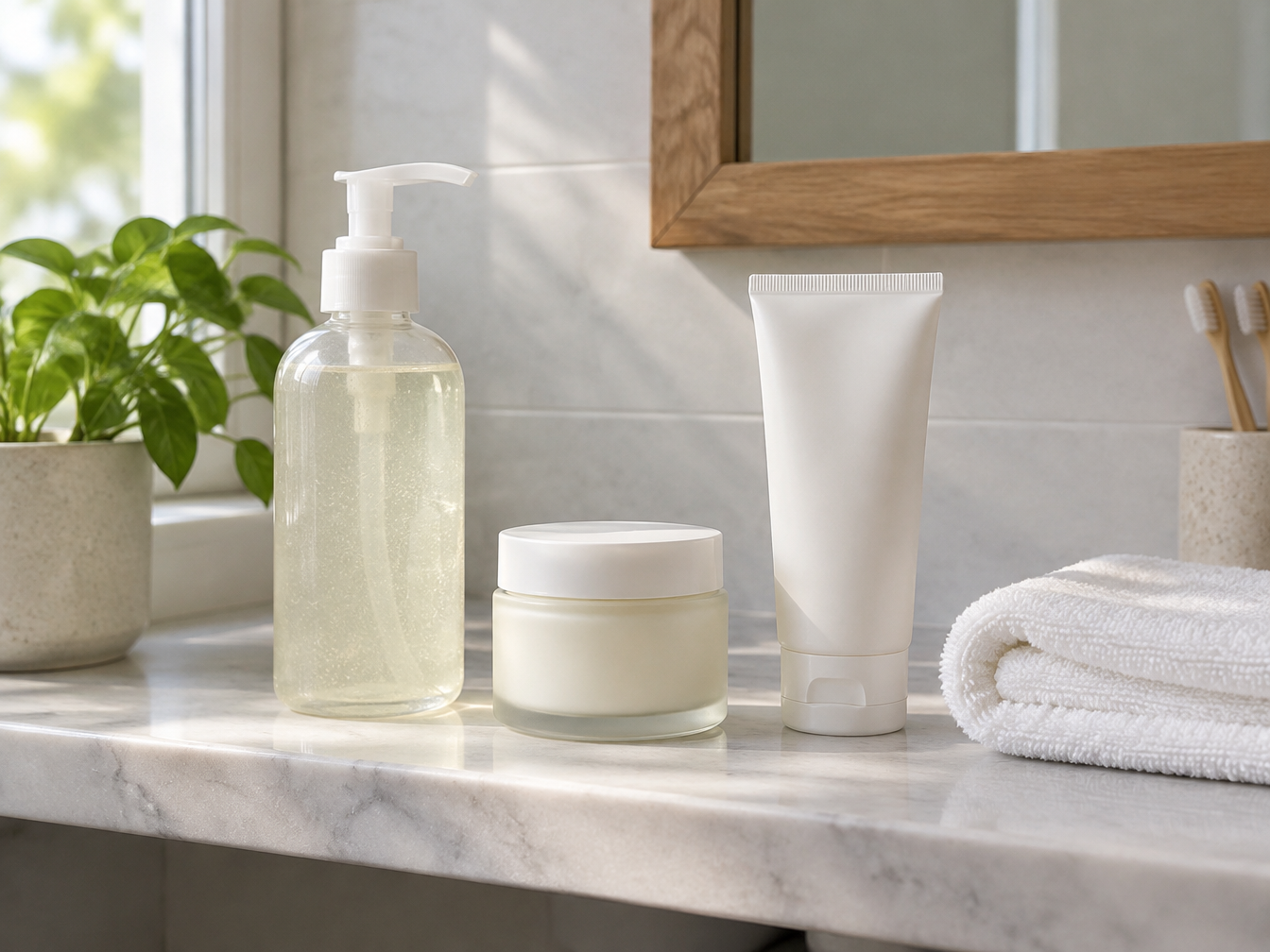
During my thirty days, I kept the routine tiny. A gentle cleanser, a moisturizer with ceramides, sunscreen. Dr. Ejikeme’s advice for a stressed barrier was to skip strong exfoliants and lean on ingredients like hyaluronic acid, ceramides and niacinamide [2], and that simple formula got me through.
My skin didn’t turn flawless. It turned familiar, and that was more valuable.
The People Who Noticed and the Ones Who Didn’t
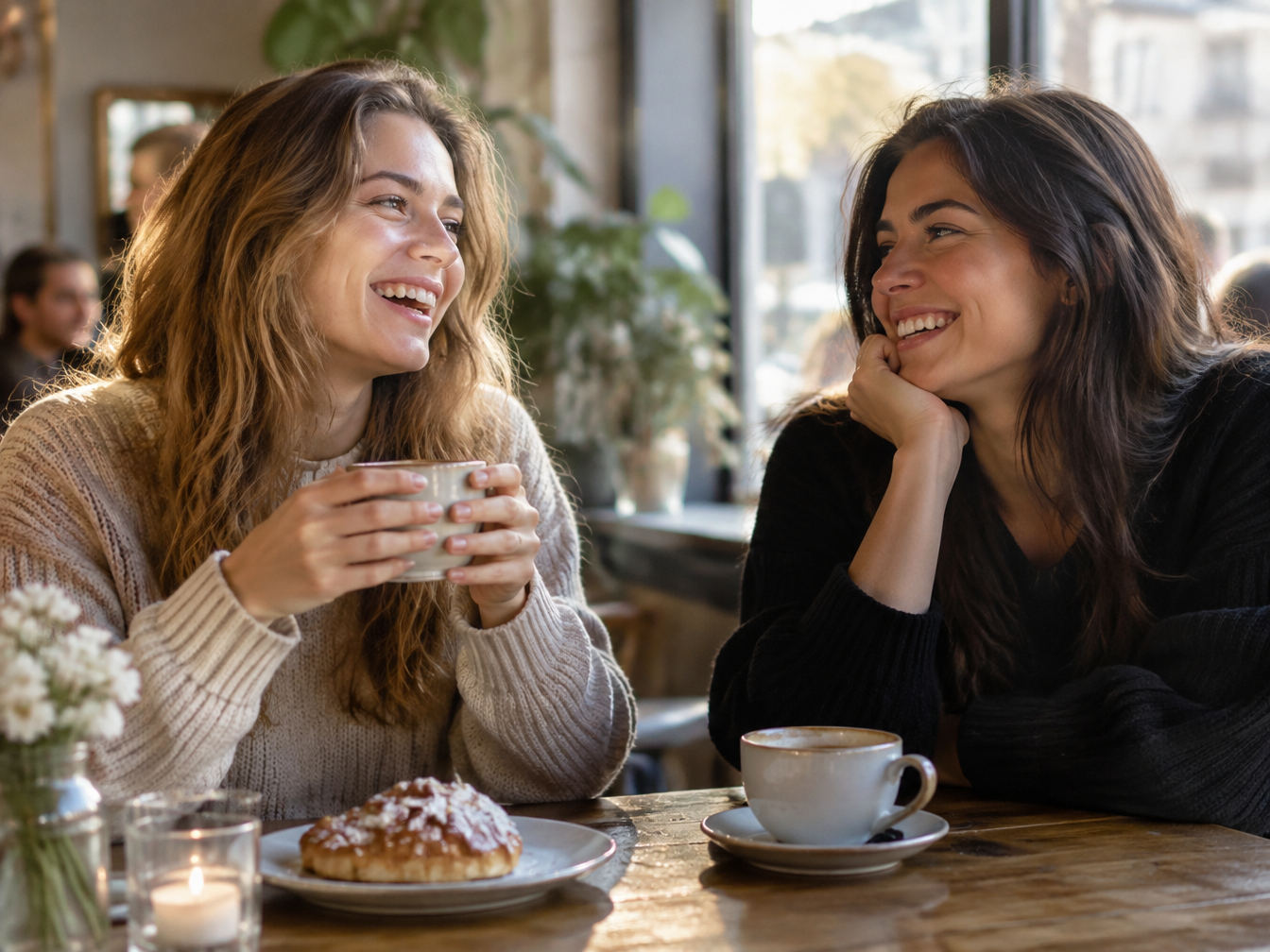
I was terrified of two things: that everyone would notice, and that no one would.
A coworker did say, around day nine, “You look so rested!” I haven’t slept any better in my life. I smiled and said thanks and wondered what she’d seen before.
My mom looked at me over coffee and said, “There you are.” That was it. I had to go sit in my car for a minute.
Most people, though, said nothing. The barista was the same. My boss was the same. The friend I’d been convinced would judge me the hardest didn’t mention it until day twenty-two, and then only to ask whether I’d changed my moisturizer. It was a quiet lesson in how little most people are cataloguing your face. They’re thinking about their own.
What I leaned on in the thin weeks was clothes. When my face felt blank, a good outfit felt like a handshake. I kept returning to the idea in the outfit I wear when I need to feel like myself again, a piece that does the talking so my face doesn’t have to.
Still, some days I felt invisible. A bare face doesn’t change how people treat you in a dramatic movie way. It just removes the performance and shows you who stays the same.
The Mirror Experiment
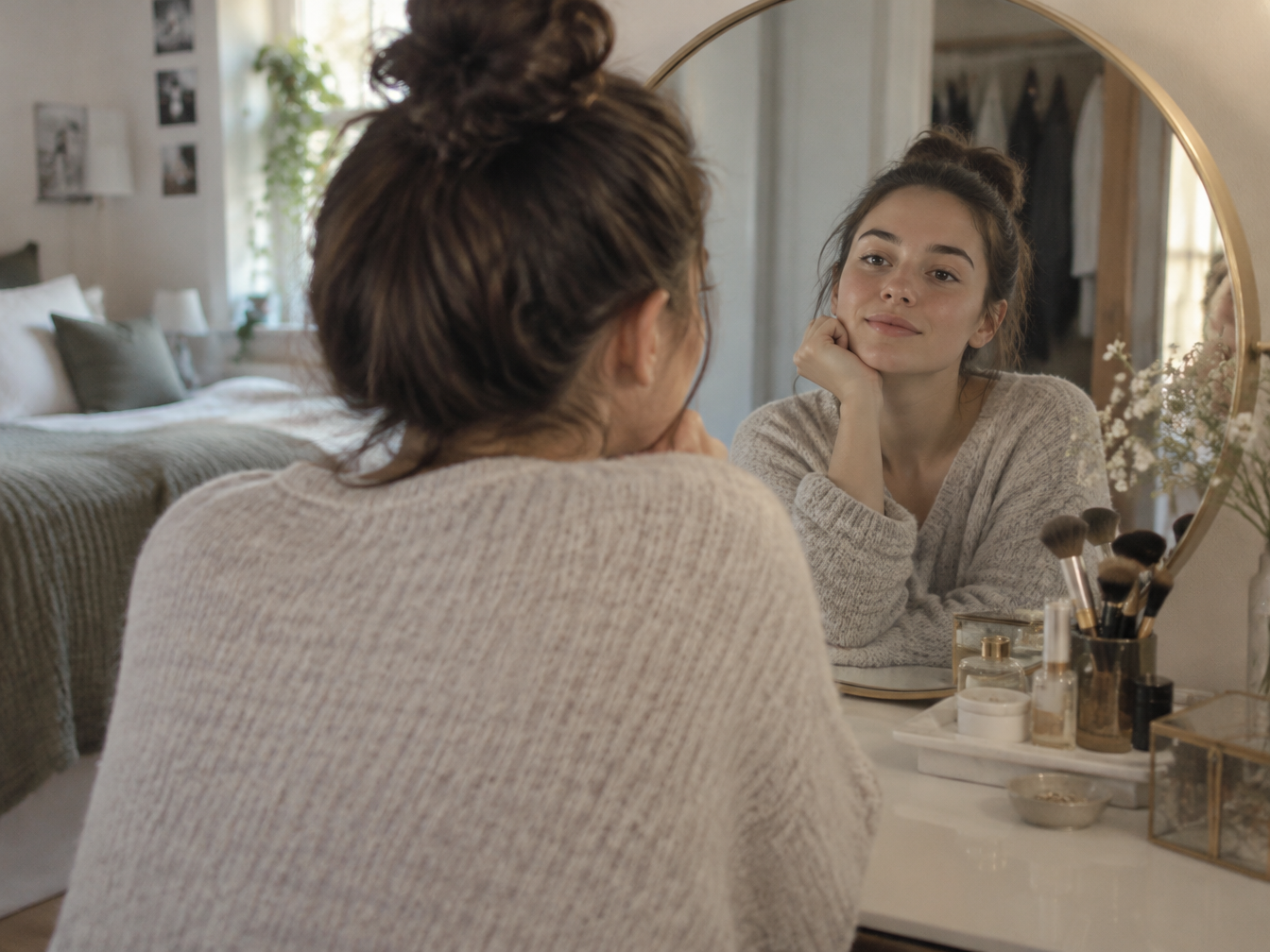
About halfway through, I got stuck. The panic had faded but something quieter replaced it, a kind of restless boredom with my own reflection. So I tried a small experiment I’d read about.
Tara Well mentions a preliminary study where women simply looked at themselves in a mirror every day with no goal other than staying present. After two weeks they reported being more comfortable with their appearance and less concerned about wearing makeup, with less stress and more self-compassion [1]. Her suggested version is easy to try. Sit in front of the mirror for ten minutes with no makeup, and just look, without fixing anything [1].
The first three days were brutal. I catalogued every flaw like a prosecutor. On day four I got bored of my own cruelty. On day six I laughed at something stupid my face did when I was thinking. On day eight, I noticed I looked like my grandmother, which I took as a compliment.
I think I know now why walking helped, too. The same quiet unease I felt in front of that mirror is the one I described in the hot-girl walk that made me realize I hate being alone with my thoughts. Turns out my reflection and my thoughts were on the same team. They just both needed me to stay a little longer.
What I Was Actually Hiding
Somewhere in week three, I stopped asking what my face looked like and started asking why I’d needed it covered.
It wasn’t the under-eye circles. It was the story attached to them. I had spent years believing that looking tired meant looking weak, that looking weak meant being passed over, and that being passed over meant I had done something wrong. Makeup was my insurance policy against a version of myself I was afraid of.
That fear didn’t come from nowhere. It came from a hundred little comments, from teen magazines, from a family friend who once told me I’d be “so pretty if I tried.” Years later I was still trying, eighteen minutes at a time.
When I wrote all this in my journal, the insight arrived without fanfare. The thing I was hiding wasn’t a blemish. It was the belief that my natural face was unfinished work. And a person who believes that will never feel done, no matter how well she blends.
I also thought about all the times I’d changed something about my looks to mark a transition, like I explored in what your hair color change is actually about. Sometimes a change is an announcement. Sometimes it’s a hiding place. I wanted to start knowing which was which.
How I Wear Makeup Now
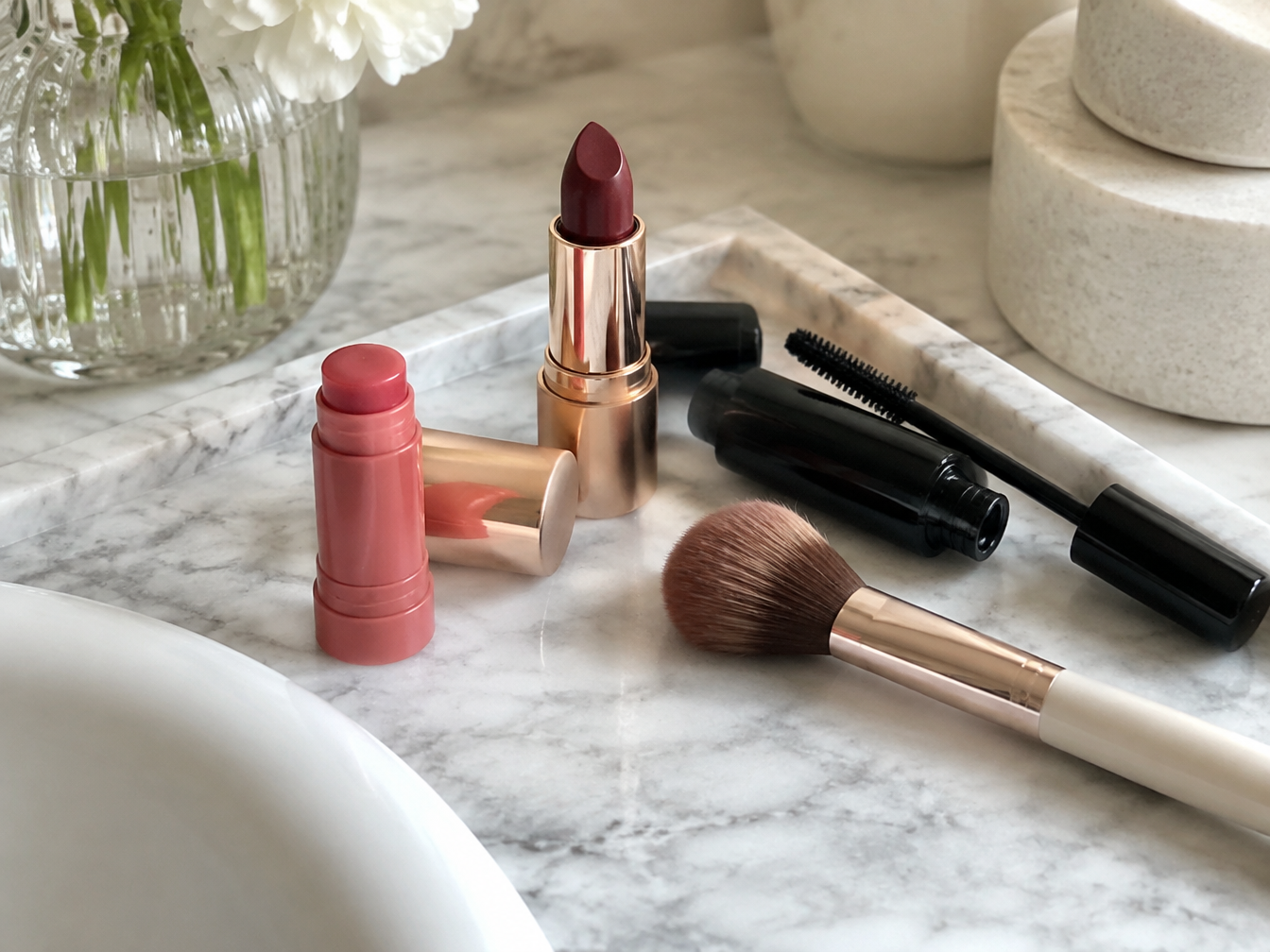
On day thirty-one I took the tote bag off the shelf and sat on the edge of the bathtub with it in my lap like a nervous teenager.
I did not throw it away. I did not wear all of it either. I put on a little mascara and a tinted lip balm, looked in the mirror, and felt strangely delighted, as if I were visiting a friend I hadn’t seen in a month.
Now I wear makeup when I want to, which is not the same as when I have to. Some mornings it’s a bold lip and a long, slow ritual. Some mornings it’s sunscreen and a hello to my freckles. I pay attention to what I’m reaching for and why, and if it’s fear, I put the brush down.
Getting ready has become the part of the day I actually look forward to, the way I described in why getting ready for a party is my favorite part of the night. When you’re not afraid of your own face, the whole ritual changes from armor into play.
My roommate, by the way, now borrows my lip balm and tells me when I look “very you.” It’s the best compliment I get.
If you try this, go gently. Give yourself a hat, a good moisturizer and a friend who knows what you’re doing. And when you meet whoever’s under there, don’t be surprised if she’s been waiting for you the whole time.
Sources
- Why More Women Are Happily Going Without Makeup, Tara Well, Ph.D., Psychology Today.
- The Real Impact on Your Skin When You Sleep in Your Makeup, Marie Claire UK.
Leave a Reply