I used to stand in front of my closet at 7:40 in the morning, surrounded by roughly two hundred things I owned, and feel a very specific kind of grief. Not dramatic grief. The quiet kind, where you realize you’re about to leave the house dressed as a stranger again.
Every item had a story. The mesh top I bought because three girls on my feed wore it in the same week. The chartreuse cardigan that looked incredible on a mannequin and like a highlighter on me. The wide-leg trousers that were supposed to turn me into a woman who has her life together. I had so many clothes and so little to say in any of them.
So last spring I did something that felt almost rude. I stopped buying trends. Not forever, and not with a spreadsheet and a vow of poverty, just long enough to find out what my closet would say if I finally let it talk. This is what I learned, and why my wardrobe now sounds like me.
The Closet Where Nothing Sounded Like Me
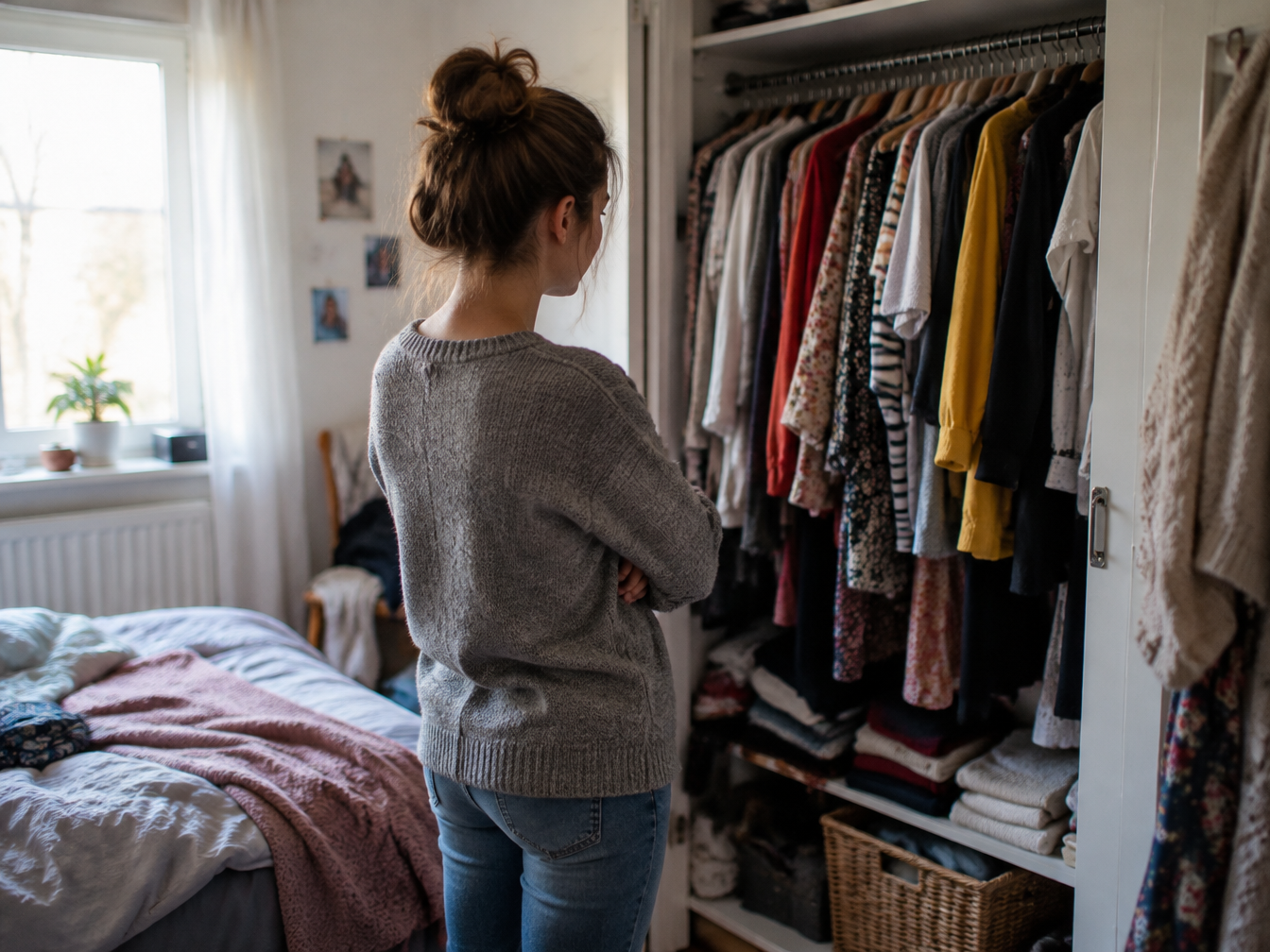
Here is the strange part. I never felt underdressed. I felt unrecognizable. I could assemble an outfit that photographed fine and still walk out the door feeling like I’d borrowed it from a girl with better opinions.
The turning point was small. A friend texted me a photo from two years earlier, and I was wearing a plain gray sweater, old jeans and a tiny gold necklace. I looked like myself. Not trendy, not curated, just there. I stared at that picture for a full minute and realized I had spent two years buying my way away from that girl.
So I emptied everything onto the bed and sorted it into three piles: things I reach for, things I keep meaning to wear, and things I bought for a person I’m not. The third pile was embarrassingly tall. The first pile was a short stack of cardigan and jeans outfits kind of basics, the clothes I wore on the days nothing was going on and I felt most like a human being.
That first pile was the whole answer. I just hadn’t been listening to it.
What the Numbers Say About Our Closets
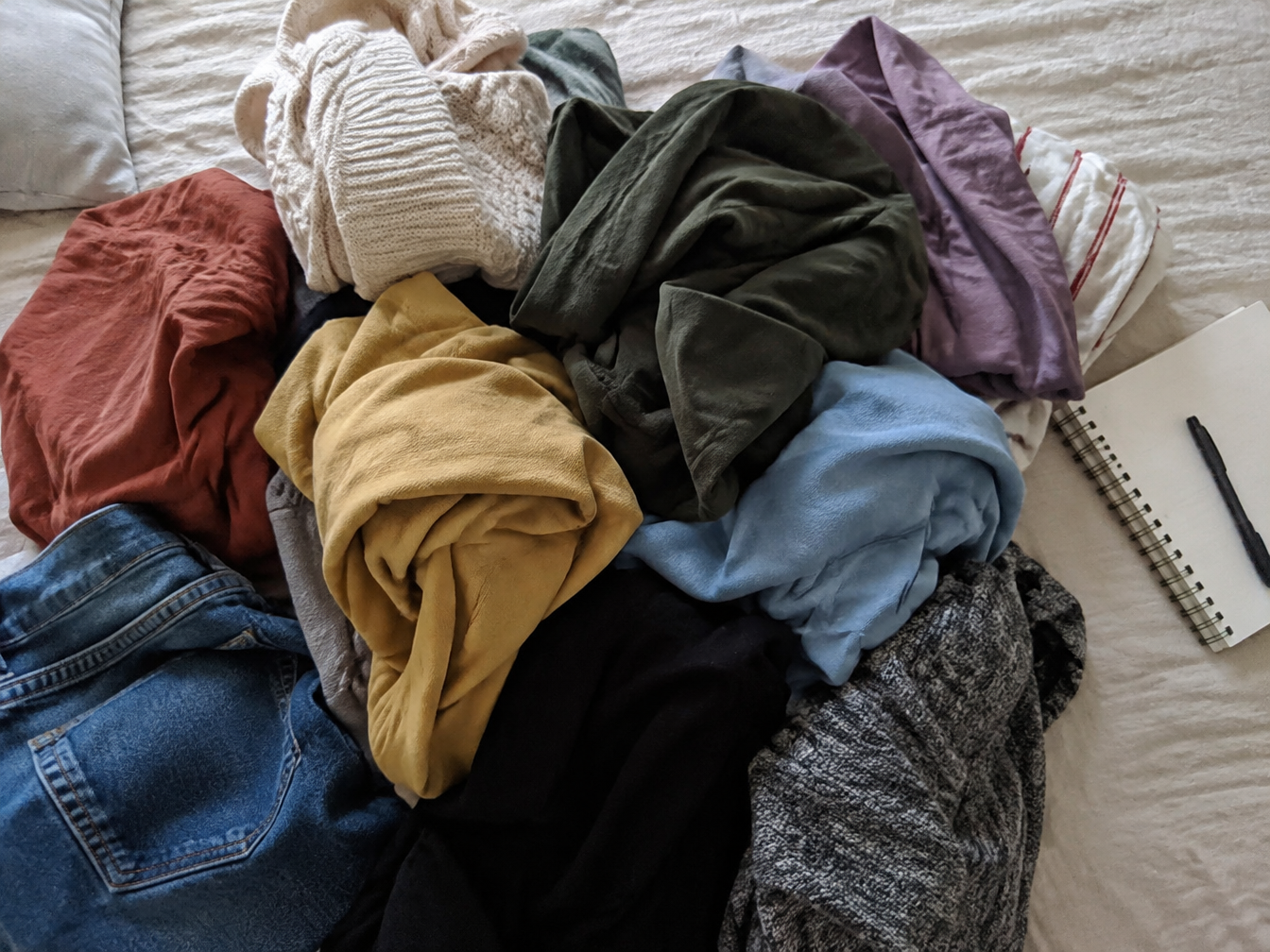
It turns out my pile problem is everyone’s pile problem. A design officer at a closet company once estimated that people in wealthy countries regularly wear only about 20 percent of what they own [3]. A UK survey of 2,000 women found that the average item gets worn just seven times [3]. Seven. That is less than two months of Mondays.
Part of the reason is speed. A traditional trend cycle can run up to 20 years, and a micro trend is said to last three to five, but TikTok-fueled ones sometimes burn out in a matter of months [4]. You can order the thing, wait for the package, and watch it become cringe before the tracking says delivered.
The waste is not abstract either. People go through an estimated 80 billion pieces of clothing every year, and the average American produces about 82 pounds of textile waste annually [2]. I’m not telling you this to make you feel guilty in your own bedroom. I’m telling you because when I saw those numbers next to my overflowing closet, the shame turned into curiosity. If most of us wear a fifth of what we own, then four fifths of our shopping is not about clothes at all. It’s about something else.
The Week I Counted Every Wear
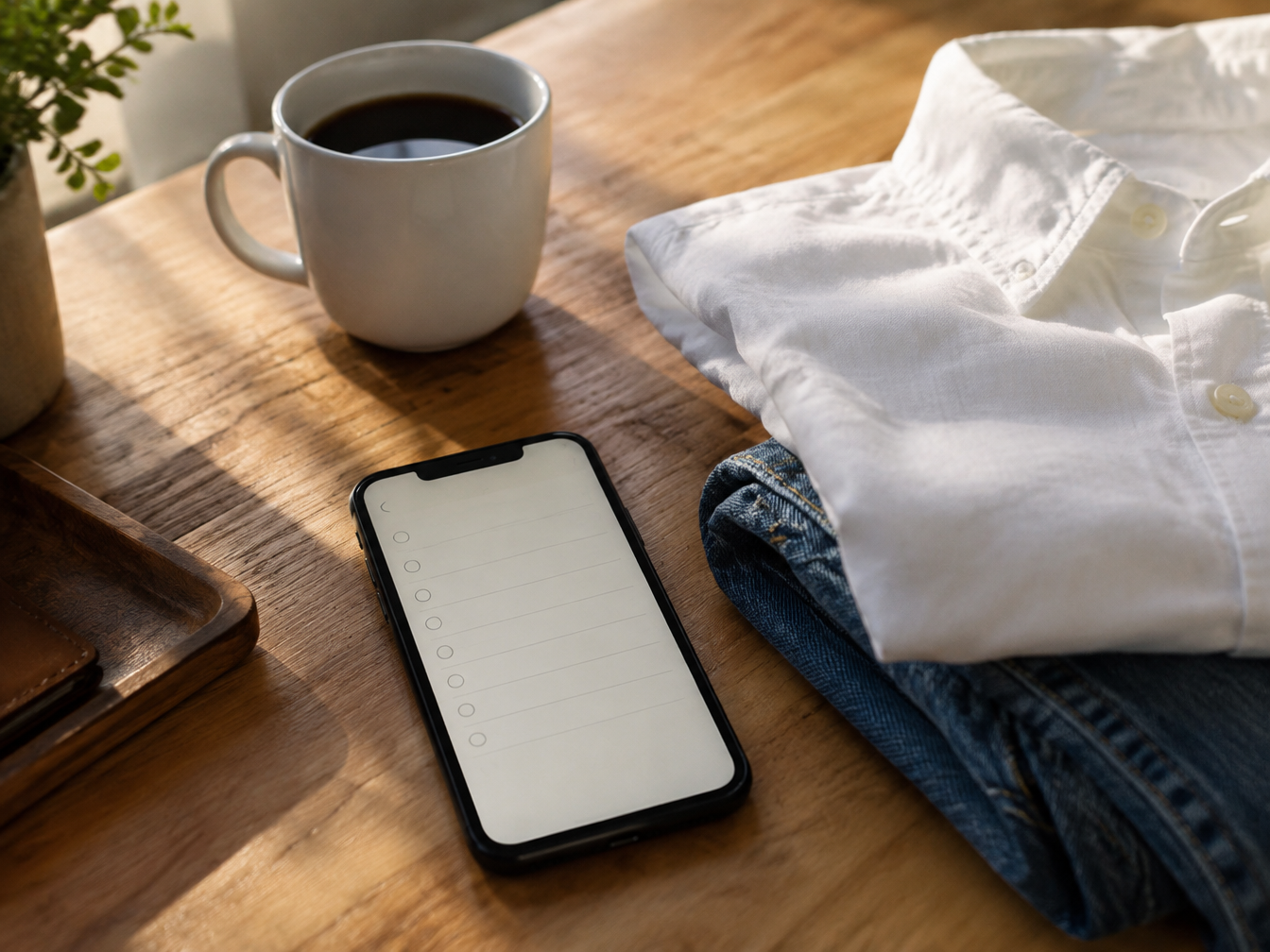
I started with a boring experiment. For seven days I kept a note on my phone and wrote down every single thing I put on. By Wednesday I felt a little silly. By Friday I felt something close to clarity.
The same eleven items showed up again and again. A white button-down. Two pairs of jeans. A black knit dress. A worn leather belt. My loafers. These were not my most exciting clothes. They were just the ones that never asked me to be someone else.
Then I borrowed a tool from a fashion writer at the World Economic Forum called cost per wear. You divide what you paid for an item by how many times you’ve worn it [3]. His example sticks with me: a $50 pair of jeans worn ten times costs $5 per wear, while a $100 pair worn fifty times costs $2. The cheaper thing was the expensive one all along.
When I ran my own numbers, the trendy $38 top I wore twice cost me $19 each time. The $90 shirt I’d worn for two years cost pennies. I started thinking about a casual chic wardrobe on a real budget differently, because it turns out the budget move is rarely the cheapest tag. It’s the thing you actually wear.
Why Clothes Change the Way You Think

I used to think caring about clothes made me shallow. Then I read about a study that made me stop apologizing.

Researchers Hajo Adam and Adam Galinsky had students take attention tests. The students who wore a white lab coat made half as many errors on the critical trials of a Stroop test as the students in their own clothes [1]. Even better, the effect depended on meaning. People who wore the coat described as a doctor’s did better than people told the same coat belonged to a painter [1]. The researchers called it enclothed cognition, and their conclusion was that clothes hold a strange power over the people wearing them.
I’m not claiming a cardigan will make you a genius. But I noticed my own version of the lab coat effect. On the days I wore something that felt like me, I spoke up more in meetings. I walked faster. I stopped checking my reflection in every window.
That’s the same feeling I wrote about in the outfit I wear when I need to feel like myself again. Clothes aren’t magic. They’re reminders, and a wardrobe full of someone else’s reminders gets loud.
The Rules I Wrote for My Wardrobe
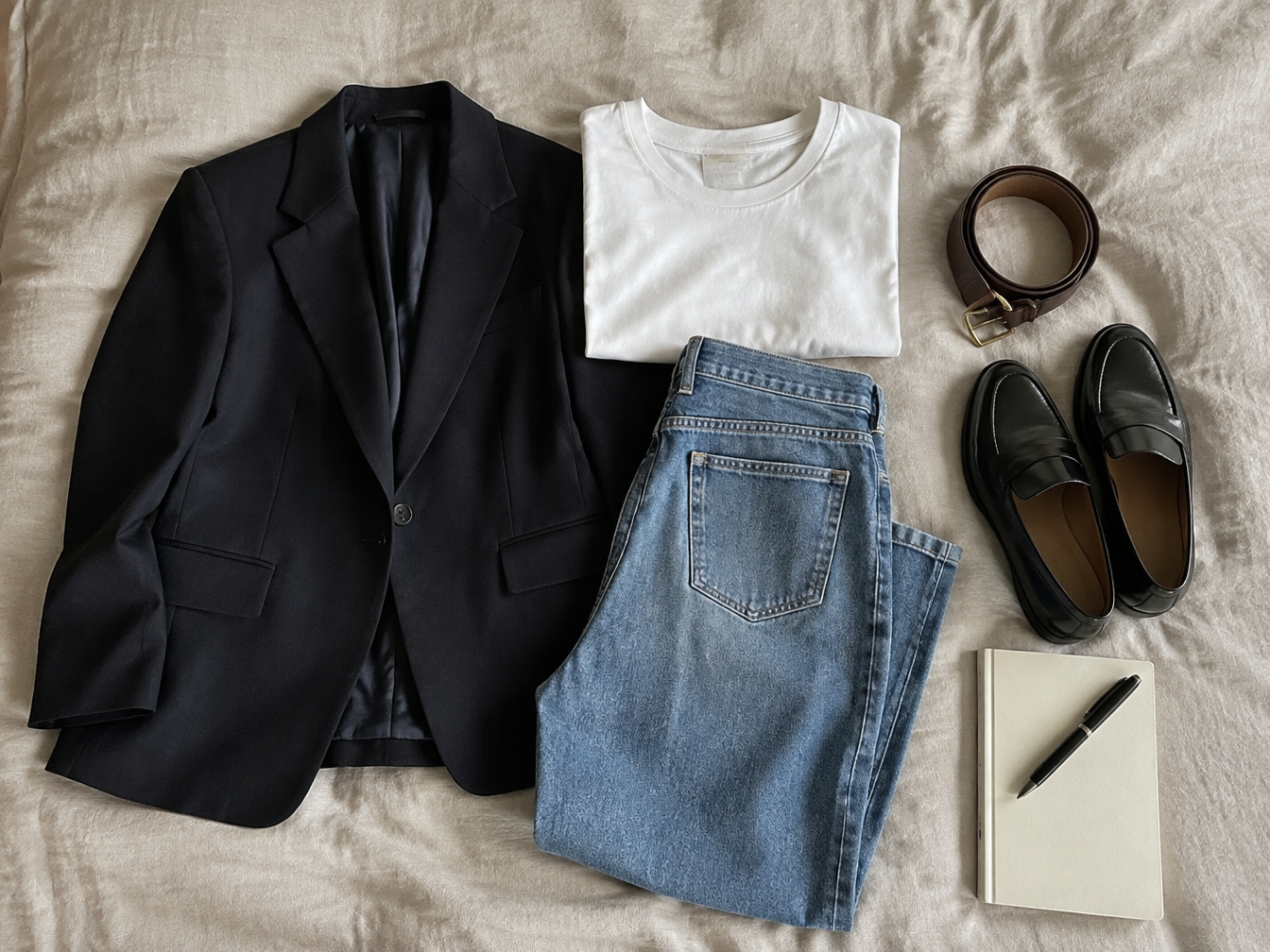
I’m not a rules girl, but I needed a few. Mine came partly from other people and partly from trial and error.
The first one is borrowed from designer Michael Kors, who has said about 70 percent of your wardrobe should be meat and potatoes, the things you wear constantly, and only 30 percent dessert, like the sparkly top for going out [3]. Most of us, he points out, get the proportions backward and then can’t figure out why we can’t get dressed. That was me exactly. My closet was all dessert.
The second came from Susie Faux, the London boutique owner credited with inventing the capsule wardrobe in the 1970s. Her advice was to spend on fit and fabric, because cut and cloth are the things that make clothes expensive and worth it. She even suggested building around one great jacket [2].
Then I added three of my own. Nothing goes in the cart until it sits in a note on my phone for two weeks. Anything new has to work with at least three things I already own. And I have to be able to answer one question out loud: who does this make me feel like? If the answer is a version of someone from my feed, it goes back.
These rules are my own invention, not research findings. They just happen to be the ones that stuck.
The Pieces That Stayed
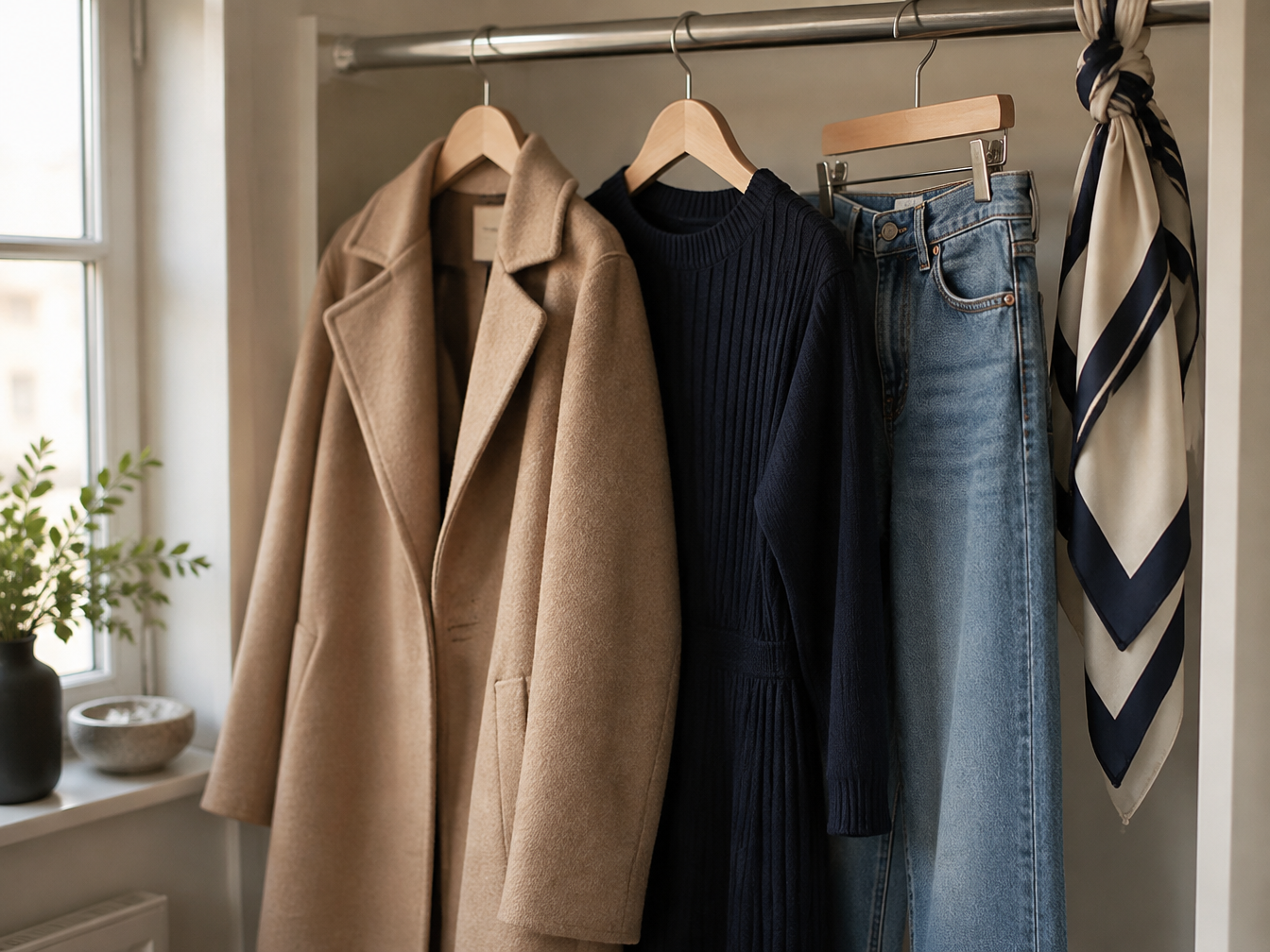
After the great sorting, I kept about sixty items and donated or resold the rest. I cried over exactly one of them, a sequined skirt I’d worn once to a wedding in 2021. I let it go anyway.
What stayed was surprisingly specific. A pair of straight, mid-wash jeans that fit like they were cut for me. Two soft white tees. A camel coat I’d been scared of spending money on. A navy knit dress. A silk scarf my mom gave me. If you’re sorting your own, the way different washed jeans styles fall on your body is a great place to start, because denim tells you the truth faster than anything else.
Faux has a line I love. She says she can still go out in clothes that are ten years old and still look perfect [2]. That sentence made me realize I’d been shopping for novelty when what I wanted was relief. Nobody feels relief from a thirty-ninth black top. But the right fit on the right day feels like exhaling.
The sorting also taught me something about my taste. Almost everything I kept was a texture before it was a trend: soft cotton, heavy denim, wool that smells a little like a cedar closet. I don’t think I would have noticed that pattern if I hadn’t laid it all out on one bed and looked at it the way a stranger would. Your closet is a portrait you’ve been painting without checking the mirror.
I also let myself keep a few oddballs. A mustard cardigan with huge buttons. A pair of embroidered flats. They didn’t match the system, and they sounded exactly like me.
What a Trend Looks Like When It Is Actually You
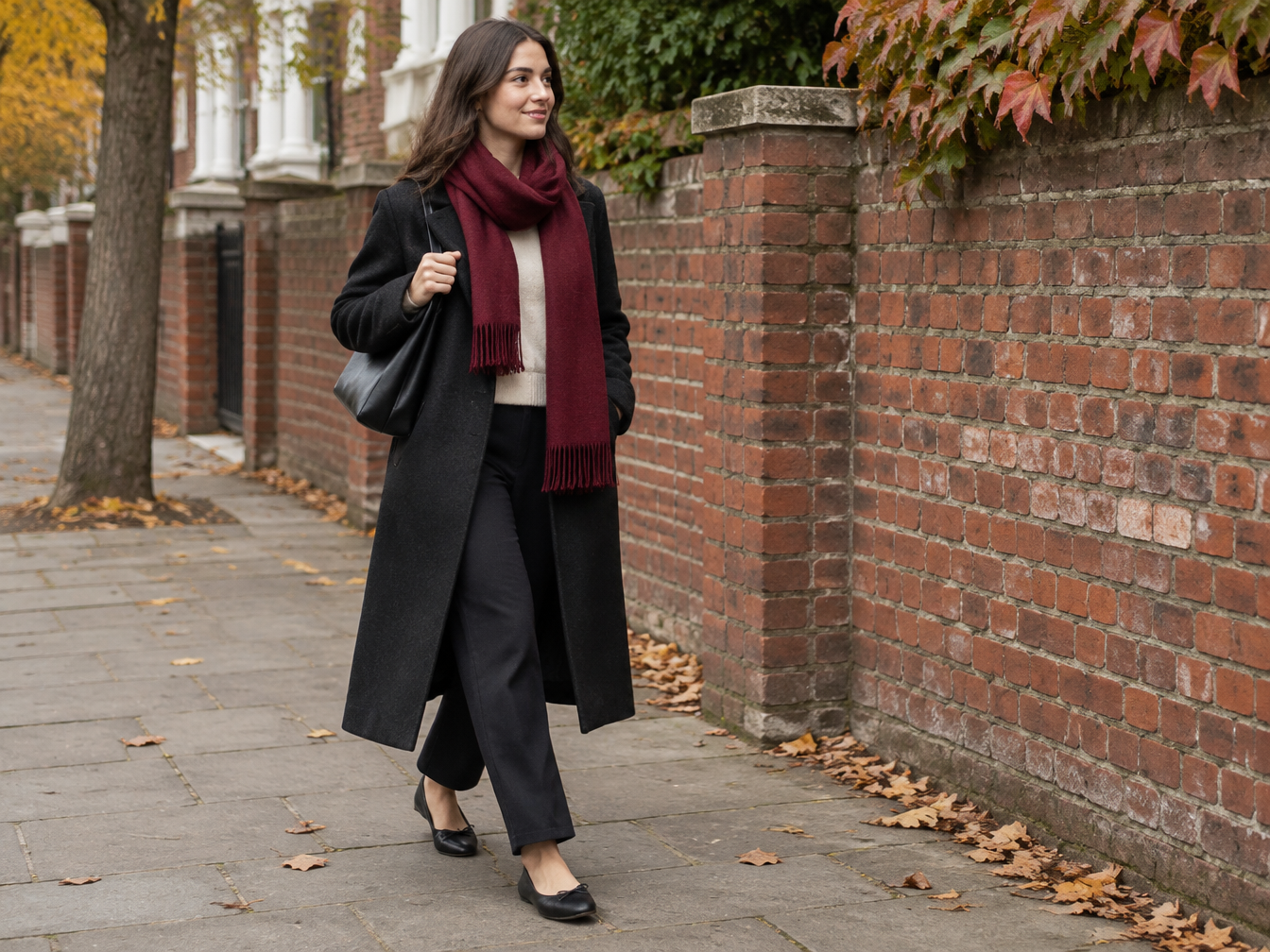
Here’s the plot twist I didn’t expect. I didn’t stop liking trends. I stopped adopting them wholesale.
Now when something starts circulating, I ask whether it already lives in my closet in some form. Ballet flats came back, and I had a pair of old black ones in a box. Burgundy was everywhere this fall, so I wore the burgundy scarf I’d owned for years. It felt like the trend had finally caught up with me instead of the other way around.
The same logic applies to beauty. I’ve written before about what your hair color change is actually about, and the answer is usually that you’re trying to say something. Trends are fine when they help you say it. They’re a problem when they start speaking for you.
A trend that’s actually you feels familiar the moment you try it on. A trend that isn’t you feels like a costume, even when everyone around you is wearing it.
Building Slowly Without Getting Boring
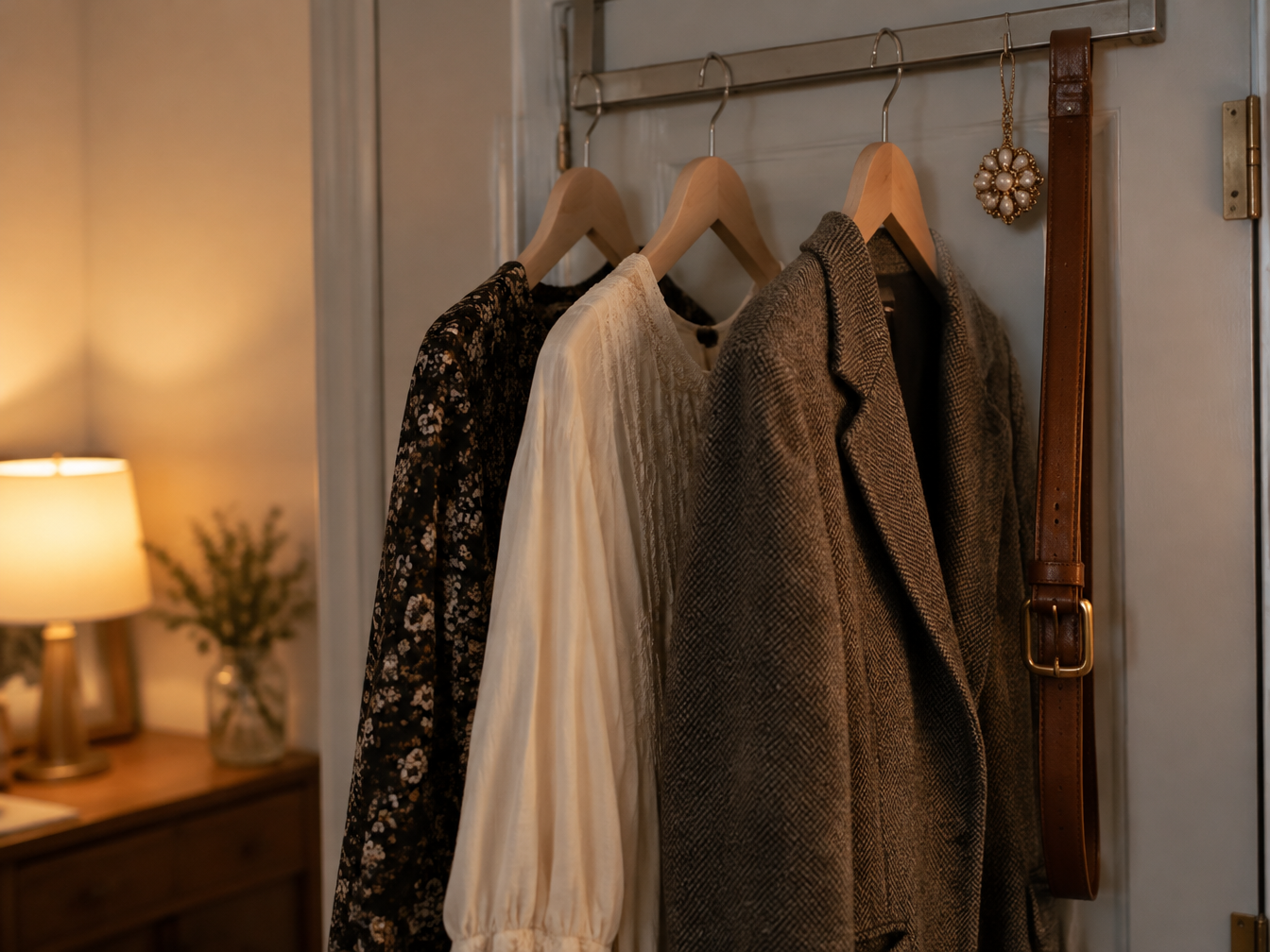
I worried that a smaller wardrobe would mean a duller version of me. It did the opposite. With fewer pieces, I started to notice small decisions. Which scarf, which earrings, which way to roll a sleeve. Personality moved out of the shopping bag and into the styling.
I now treat accessories as the place to play. A bold lip, a vintage brooch, a belt with a story. I also keep a running list of gaps instead of wants, so when I do buy something, it fills a real hole. If you want a low-risk way to experiment, try the approach in these coquette fashion items you can wear with clothes you already own. A bow here, a ribbon there, and the old outfit suddenly says something new.
One practical habit helped more than anything. Every Sunday I pick out three outfits for the week and hang them together. It takes ten minutes, and it kills the 7:40 panic. I get dressed the night before I need to, when I’m calm and curious, instead of in the morning, when I’m tired and comparing myself to a version of me who doesn’t exist.
I still buy things. Last month I spent real money on a trench coat, wore it eleven times in three weeks, and felt zero guilt. The difference is that I know what I’m buying for.
That chartreuse cardigan, by the way, went to a girl at a clothing swap who looked amazing in it. Somewhere out there, it finally sounds like someone.
Sources
- Introducing “enclothed cognition” – how what we wear affects how we think, British Psychological Society Research Digest.
- How to Build a Capsule Wardrobe, According To The Woman Who Invented It, Green Matters.
- Ken the Barbie versus Fast Fashion, World Economic Forum.
- How Micro-Trends Are Ruining Our Consumption Habits, University of Melbourne Student Union.
Leave a Reply