On day nine, I stood in my bathroom at 6:40 in the morning holding a tiny glass bottle of something called a “glow oil” and realized I was crying over a glow oil.
Not crying, exactly. Leaking. The kind of tired where your body does it before your brain agrees. I had been up since 5:55 because the routine took forty minutes and I was already late for work, and the whole point of the routine was to look like I had not tried at all.
That was the joke I was in on and not laughing at. I had signed up to become the clean girl. Slicked-back bun, gold hoops, dewy skin, a glossy lip, a white tee that somehow never wrinkled. Effortless, minimal, quietly expensive. I had watched it for months and decided it looked like peace. I had written before about the outfit I wear when I need to feel like myself again, and this was the opposite experiment: dressing as someone else on purpose.
So I spent six weeks living it, and I kept a running tally on the notes app on my phone. Not just money. Time, mood, mornings, and the strange feeling of being photographed by no one.
Here is what it cost.
What the Clean Girl Actually Looks Like Up Close
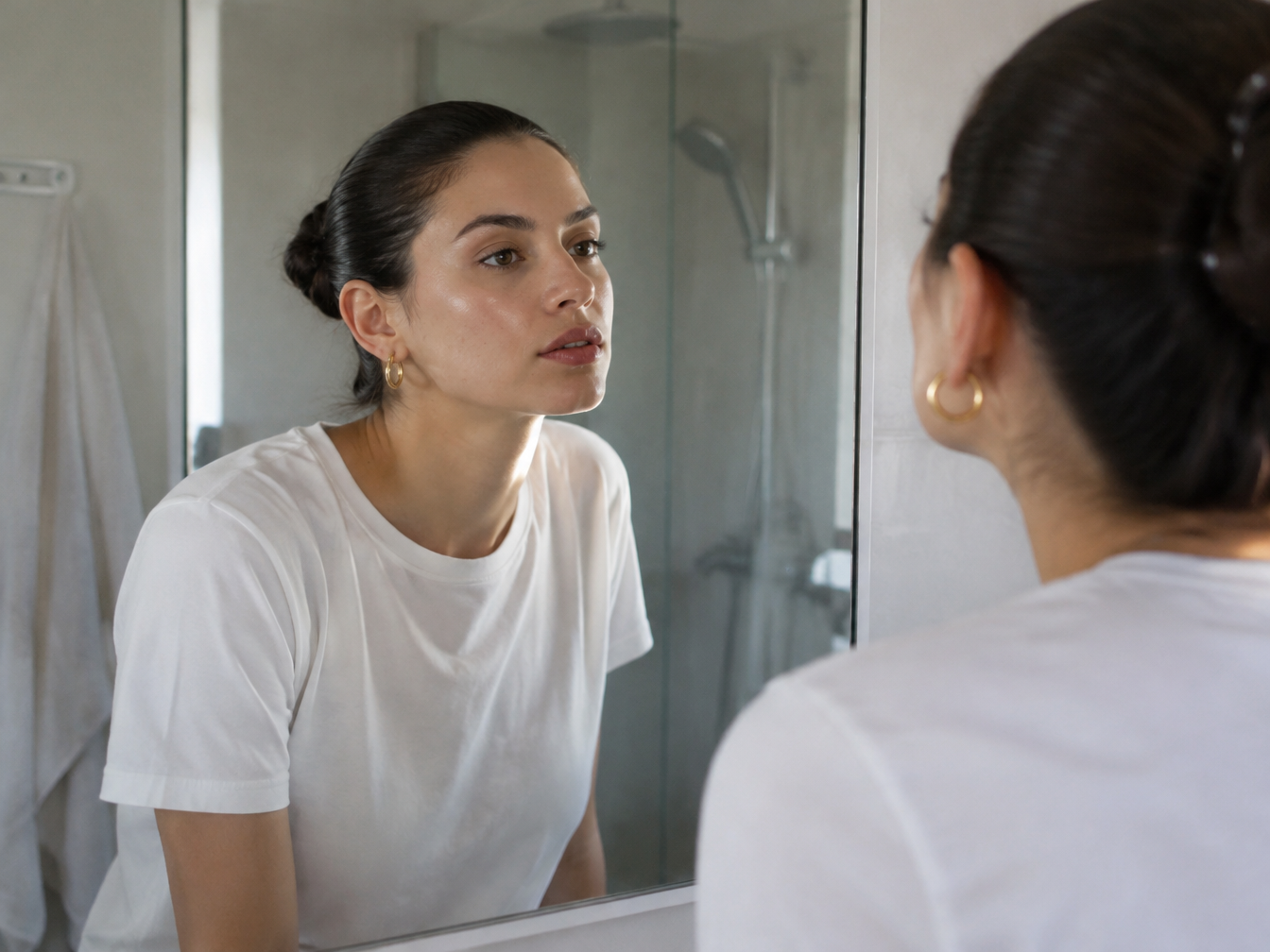
You already know her. Gold hoops, slicked-back hair, dewy skin, and a morning routine that is supposedly low-effort [1]. The aesthetic took off on TikTok and Instagram, with beauty-world names like Hailey Bieber and Sofia Richie posting soft, minimal makeup looks, and by 2022 the #cleangirl tag had reportedly gathered over 650 million views on TikTok [2]. The look was built to read as natural: skin that glows, brows brushed up, lips that look like lips but better.
The funny thing is how simple it seems. You think, I can do that. I own a hair tie.
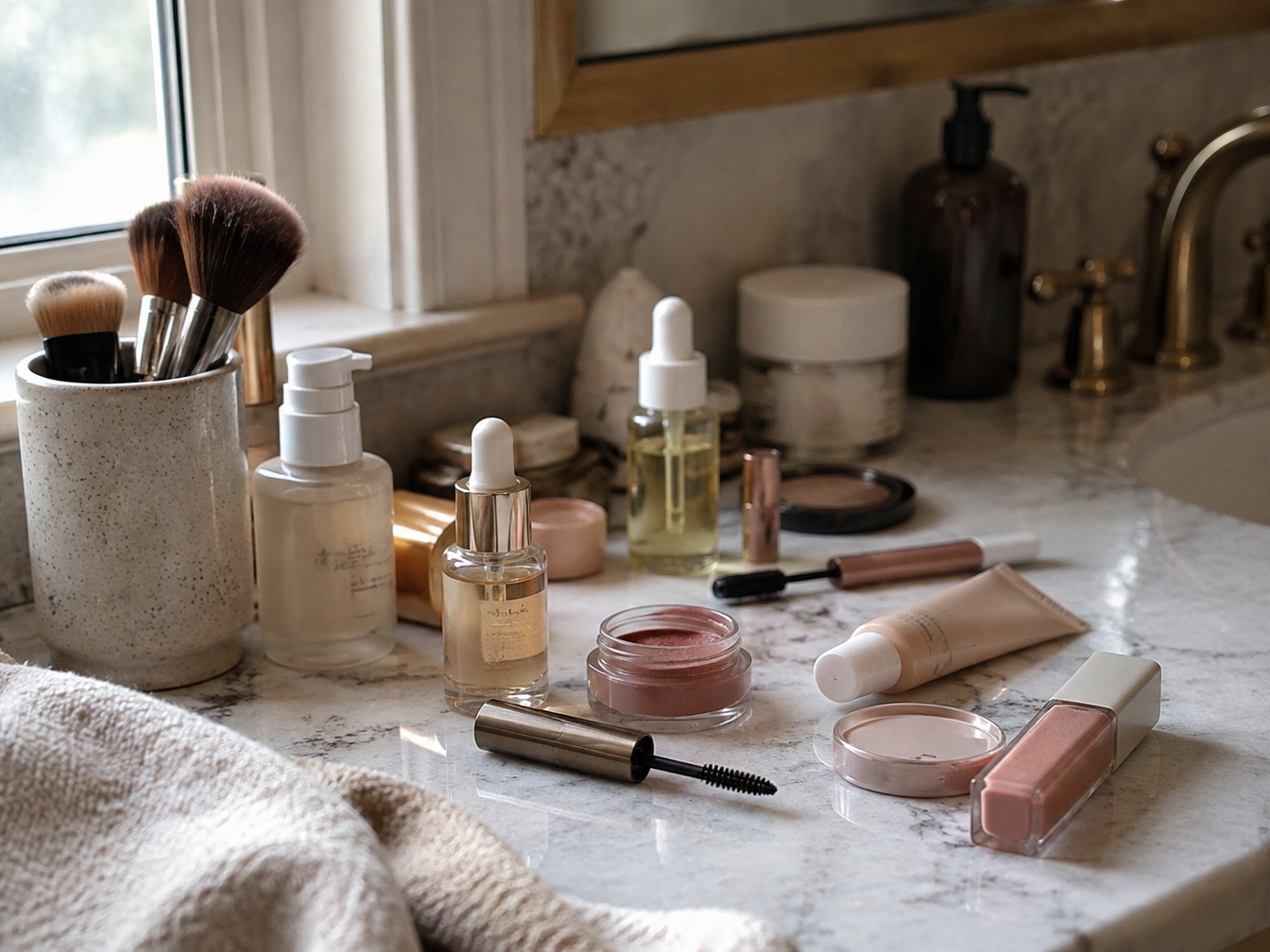
Then you start to build the look, and you find out how many things are quietly holding it together. A tinted moisturizer instead of foundation. A cream blush that looks like it came from your own cheeks. A brow gel. A lip oil, not a lipstick. A slick for the baby hairs. A claw clip, a scrunchie, something to make a bun look like it happened by accident.
One piece from Elle India described it perfectly, noting that the clean girl claims to be a minimalist but her vanity tells a different story, with sheer tinted serums, brow gels, lip oils, de-puffing tools and high-end hair products all part of the picture [1]. I laughed at that, and then I looked at my bathroom counter.
It looked like a small pharmacy. A very photogenic one.
The Receipts Nobody Posts
I will not give you a dollar figure for my own routine, partly because I got scared to add it up, and partly because the number is not the interesting part. The interesting part is how normal each purchase felt.
One serum was thirty dollars. That is not much. A balm was twenty. Also fine. A brow gel, a cream blush, a tinted moisturizer that looks just like your skin, only better. Nobody buys these in one trip. You buy them one at a time, each one justified, each one small, until your routine is a whole ecosystem. Even the hair part is its own little project. I came to believe what I wrote in what your hair color change is actually about: how we do our hair is almost never only about hair.
A student writer at Duke put it bluntly, saying the aesthetic does not tell you to stop buying, it tells you to buy better, and that it takes the vocabulary of sustainability, words like reusable, organic and clean, and uses it to sell a lifestyle that most people cannot afford [3]. She imagined a routine built around a thirty dollar face wash, a fifty dollar serum, and a forty dollar moisturizer [3]. Those numbers are her illustration, not a survey, but they match the shape of what I found.
The Established offered a more dramatic example. A well-known actor made a “no-foundation” makeup tutorial that used about fifteen products and, by their estimate, came to somewhere between ₹30,000 and ₹40,000, which is several hundred dollars [2]. The result was a radiant, barely-there look. Was there a palpable before and after? Not really, the piece noted. But that was the point [2].
Read that again. The point was that you could not tell.

And it does not stop at products. That same article describes the rise of semi-permanent services like lash lifts, lip blushing and microblading, which can run from ₹35,000 to ₹80,000 per session, with follow-ups needed within a year [2]. A dermatologist quoted there put it simply: the emphasis on removing the work from the look speaks of privilege, comfort, discipline and access [2].
Minimal beauty, in other words, translates into maximal everything else.
There is a planet cost, too. Elle India notes that many of these products come in single-use plastics, shipped in layers of tissue and restocked constantly to keep up with trends, and that the word “clean” is often a marketing buzzword rather than a measure of eco-friendliness [1]. From skin cycling to the glazed donut skin craze, there is always a new essential product to buy, even when your skin does not need it [1]. My recycling bin by week four looked like a confession.
The Cost That Doesn’t Show Up on a Receipt
The money was one thing. The time was another.
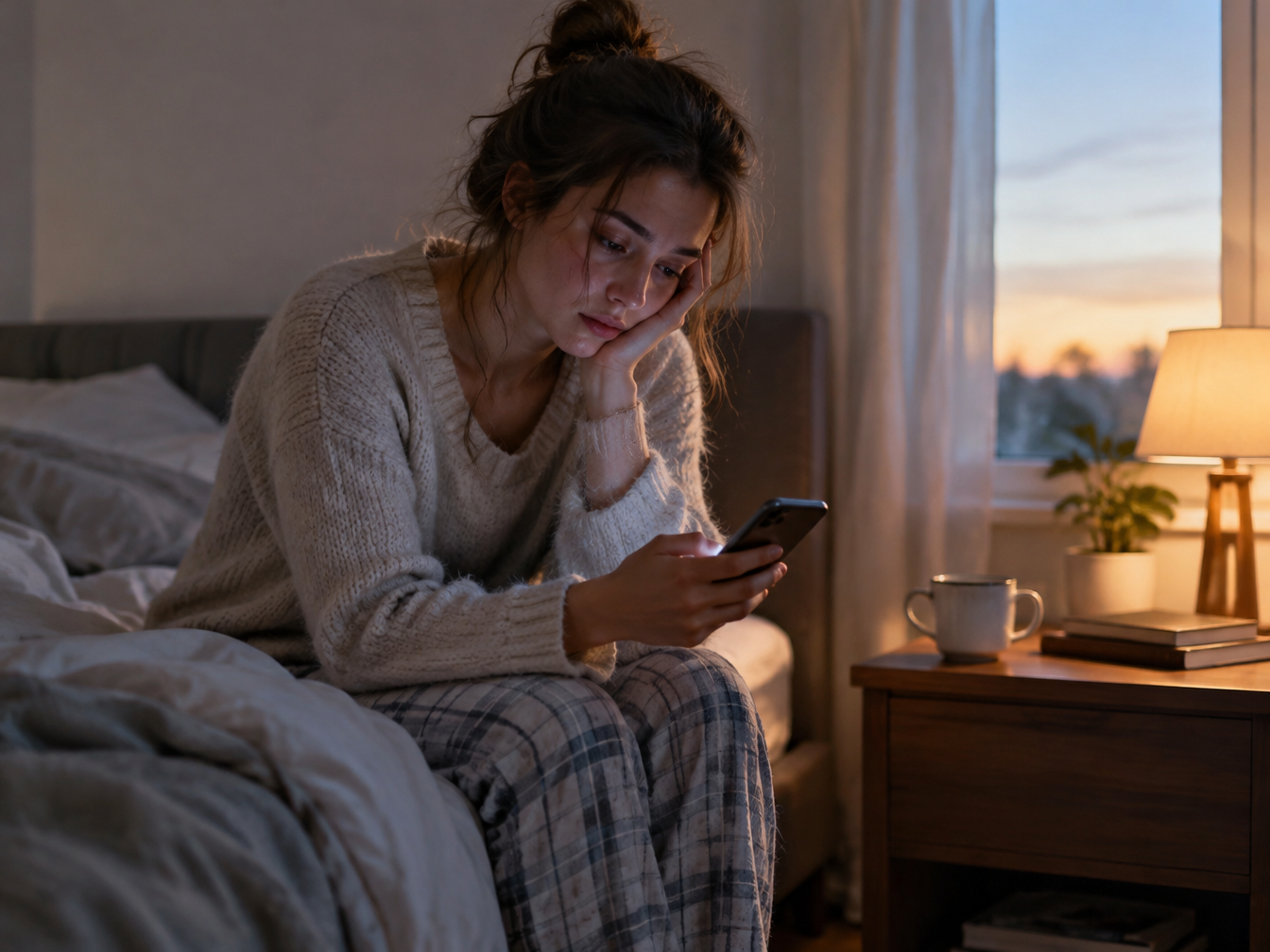
My forty-minute morning routine meant I gave up forty minutes of sleep, or forty minutes of slow coffee, or forty minutes of reading before the world got loud. The same Duke writer points out that a glowing, effortless look can require a thirty-minute minimum skincare routine, plus the hours it takes to prepare the meals and lifestyle that go with it, and that this is time many people simply do not have, like single parents or students juggling school and two jobs [3].
She also makes a point I keep thinking about. The aesthetic is built on the word “clean,” and cleanliness has always been tied to class. Pale clothes and dewy, flawless skin suggest a life with no commute, no manual labor, no exhaustion [3]. It is not just a look. It is a look that says, nothing hard is happening to me.
Which is exactly the problem when something hard is happening to you.
On day twelve, I woke up after a bad night and my skin was dull and my eyes were swollen. I stood in front of the mirror and, for the first time, felt like I was failing a test I never agreed to take. A look that is supposed to be effortless had become the hardest part of my day.
I wrote about a similar feeling in what I found out when I stopped wearing makeup for thirty days. That experiment taught me that a bare face and a “no-makeup” face are very different things. One is rest. The other is still a performance, just with better lighting.
Who Gets to Be the Clean Girl
There is another cost, and it is one I was not paying but should have been paying attention to.
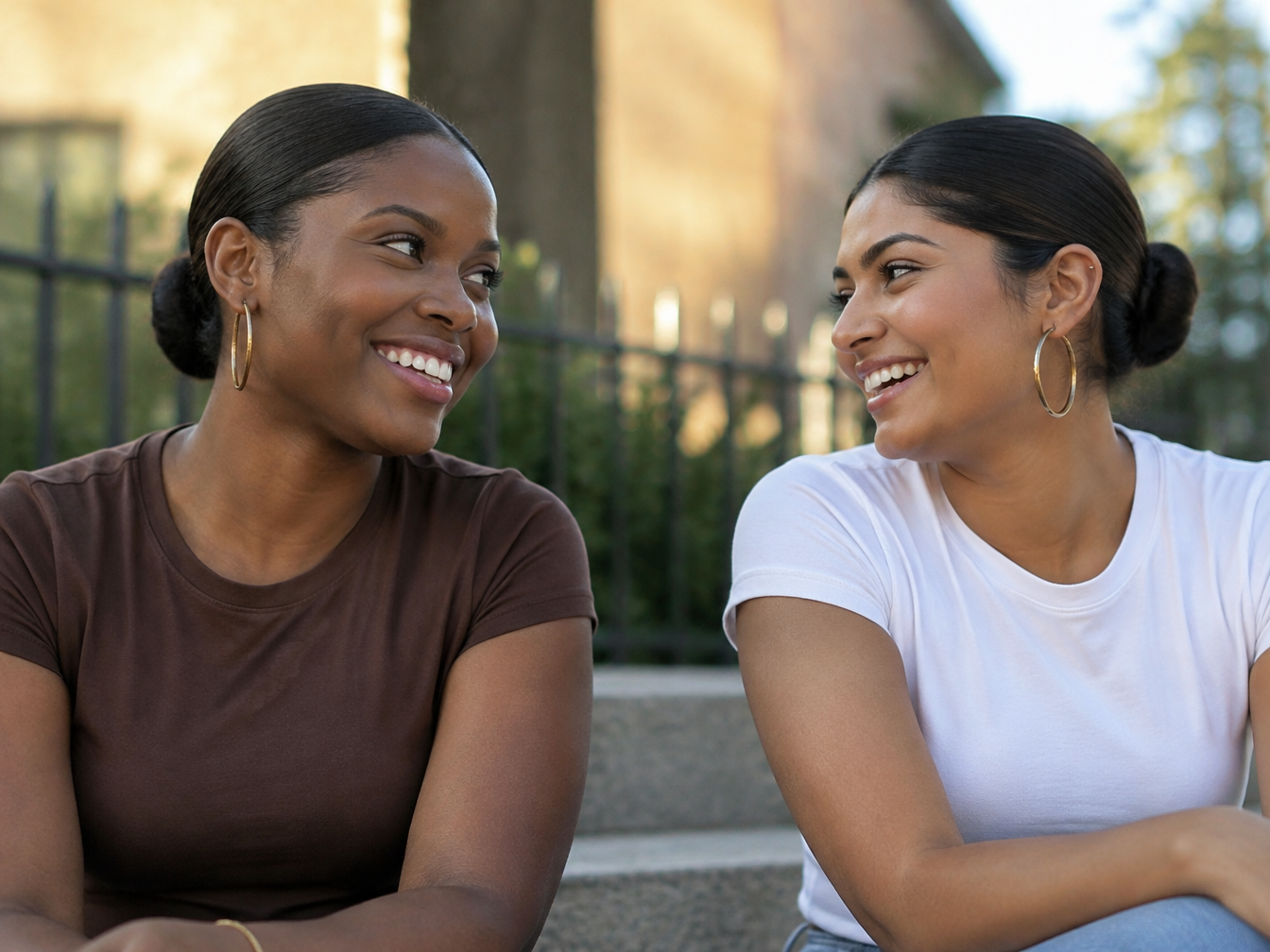
Elle India points out that slicked-back hair and gold hoops have long been staples for Black and brown women, long before they became aspirational on a feed [1]. The article says growing up with oil in your hair and braids was, in effect, a clean girl before it became a trend, and that the look only became desirable once it was filtered through whiteness and wealth [1].
That landed hard. I had been treating this style like a blank canvas, when for many women it is a heritage that was once treated as something to apologize for.
And the pressure behind it is old. A beauty editor quoted by The Established notes that Victorian manuals recommended “natural” ways to enhance women’s features, while visibly wearing makeup was left to the “painted ladies,” and that the clean beauty look returns whenever there is a backlash against overdone looks [2]. It ties into a very old notion of how women are supposed to look: beautiful, but without trying [2].
That idea, beautiful but never trying, is where I think this all gets its sting. The Duke writer calls it a beauty paradox, where any visible effort suggests vanity, and a complete lack of effort suggests laziness, so women are asked to do huge amounts of invisible work [3]. I have felt that squeeze my entire adult life, long before TikTok gave it a name.
What I Kept, What I Gave Back
By week six, I made a rule: I would keep what made my mornings better, and return what made them heavier.
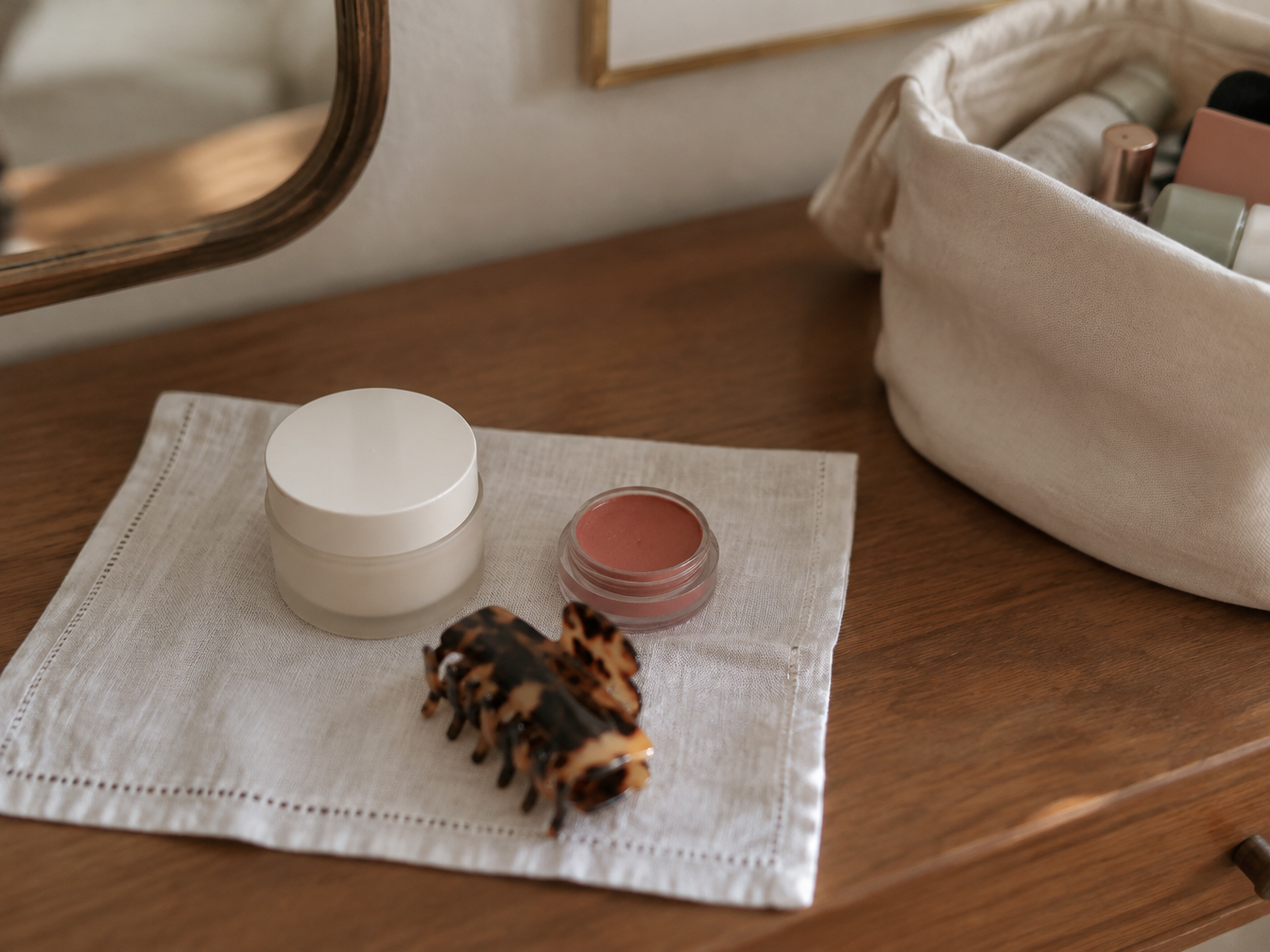
I kept three things. A good moisturizer with sunscreen. A cream blush, because it makes me look alive when I did not sleep well. And the claw clip, because it lets me leave the house in two minutes with my hair up.
I gave away the rest. The seventeen steps went back into a drawer, and then into a donation bag. The glow oil went to a friend who actually loves it, which is a better use of a glow oil than crying over it.
I also noticed something interesting when I stopped. People did not stop complimenting me. The things they noticed were not my dewiness. They noticed when I laughed, when I wore a color, when I looked rested. It echoed what I wrote in why I stopped buying trends and started building a wardrobe that sounds like me: a trend is a loan, and the return policy matters.
If you want to try the aesthetic, I am not going to tell you not to. There is nothing wrong with liking a slicked-back bun or a dewy cheek. One creator in The Established piece said it well: natural beauty is not about doing less, it is about doing what feels right, regardless of trends [2]. And a beauty creator quoted there said she feels most confident with a washed and blow-dried head of hair, a long hot shower, a tinted moisturizer, and a little lip balm and blush, and that this is her version of feeling beautiful, not a trendy routine from social media [2].
That is the line I try to hold onto. Your version. Not the version.
Elle India closes with a thought I have taped to my mirror in my head: clean could mean conscious instead of curated, with fewer products, fewer pressures and less pretending [1]. I would add one more. It could mean a morning that does not feel like homework.
Getting Ready Should Feel Like Getting Ready, Not Auditioning
Here is what the experiment gave me that I did not expect.
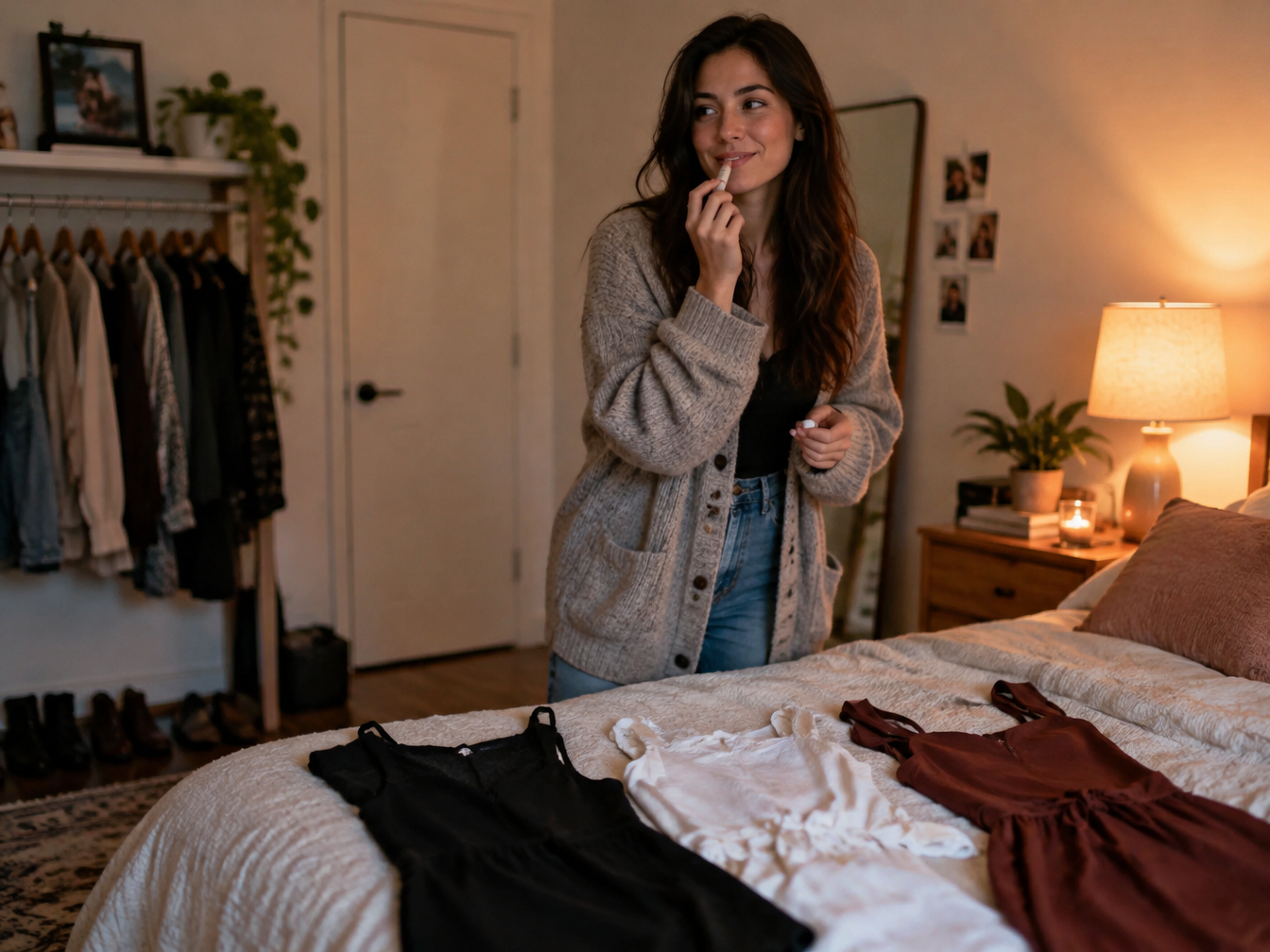
It made me miss the way I used to enjoy getting dressed. Music on, mess everywhere, three outfits on the bed, a lipstick that was unapologetically a lipstick. That is a feeling I wrote about in why getting ready for a party is my favorite part of the night. The ritual was never about looking like I had not tried. It was about looking forward to something.
The clean girl routine had flipped that. It had turned getting ready into a quiet audition for an audience of nobody.
So here is my suggestion, if you are standing in your own bathroom with a bottle in your hand. Ask what each step is for. If a step makes you feel good, keep it. If a step is there so that you can look like you did not do any steps, put it down.
Effortless is a lovely feeling. It is a terrible assignment.
On day forty-two, I woke up, washed my face, put on one swipe of cream blush, and clipped my hair up without a mirror. I left the house in six minutes. A coworker said I looked well.
I did not tell her I had finally stopped trying to look like I wasn’t trying.
Sources
- Sanya Dahiya, “The Problem with the ‘Clean’ Girl Aesthetic? It’s Not That Clean,” Elle India, June 2025. The Problem with the Clean Girl Aesthetic
- Ria Bhatia, “If it takes 10 steps and ₹30,000, is it still ‘effortless’ beauty?,” The Established, March 2025. If it takes 10 steps and 30,000, is it still effortless beauty?
- Violet Nguyen, “Performative Femininity: the Dirt Behind the Clean Girl Aesthetic,” The Lilypad, Duke Kunshan University, November 2025. Performative Femininity
Leave a Reply