There is a pink velour tracksuit in the back of my mother’s closet that I have not worn since I was fifteen, and last month I asked her if I could have it back.
She laughed. Then she went quiet, then she climbed on a chair and dug it out of a garment bag like she was retrieving evidence. It still had the faint smell of the house we lived in then. The zipper pull was shaped like a little crown. I held it against my chest in the hallway and felt, for about four seconds, exactly fifteen years old.
I did not expect that to hurt. It did, a little. Not in a bad way. In the way that old photographs hurt, when you realize the girl in them was doing her best with what she had.
Everyone is dressing like the early 2000s again, and I keep catching myself in the middle of it. Standing in front of a mirror with a butterfly clip in my hand, trying to decide if I am being playful or if I am just trying to go back. So this is me sorting through it: what I wore then, what I wear now, and the quiet things that changed in between.
The Velour Tracksuit and Everything It Promised
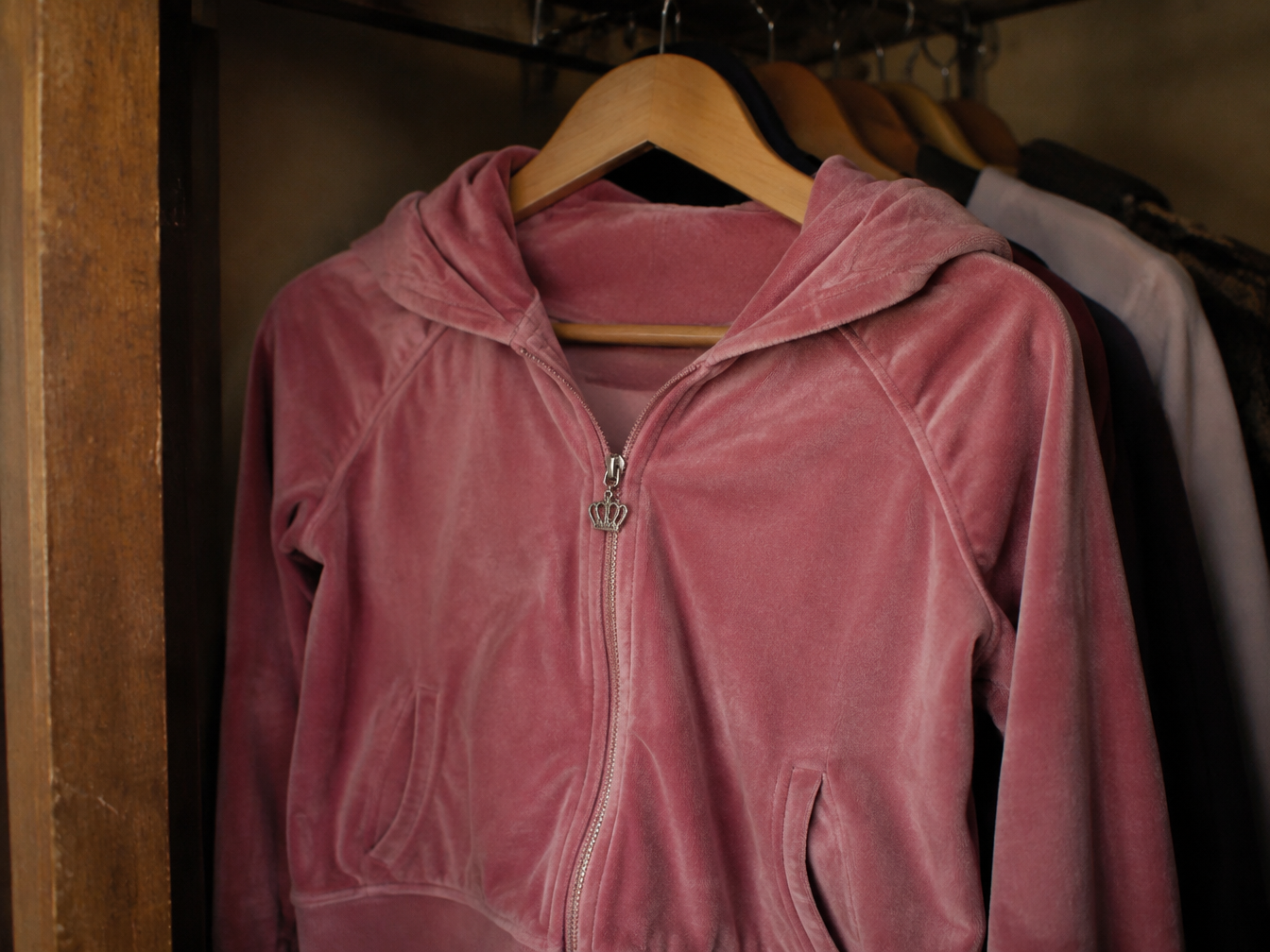
If you were around for the first round, you remember the rules. Low-rise jeans. A cropped top. A wide belt slung over the hips like it was holding something up. The Juicy tracksuit in pink or baby blue, ideally with UGG boots, ideally while carrying a small glossy bag [1]. It was a hybrid of over-the-top glam and athleisure, in the words of one vintage store cofounder quoted by The Zoe Report [2].
We learned it from Paris Hilton, Britney Spears, Christina Aguilera and Destiny’s Child, plus Lindsay Lohan and a pair of plaid-skirted girls in *Clueless* [1][3]. Movies like *Mean Girls* became a kind of fashion blueprint. Nobody told us we were participating in a style era. We were just trying to look like the girls who seemed to be having more fun than us.
And that was the promise baked into every one of those outfits. Wear this, and you will be the girl people look at. You will be easy and glossy and a little bit untouchable.
I wore all of it. The belt. The tiny shoulder bag. A pair of flared jeans so low-slung that I spent most of 2004 pulling up my shirt and pulling down my shirt, depending on who was in the room.
I loved some of it. I will say that clearly and without apology, because the story we tell about early 2000s fashion is usually laughing and embarrassed, and that is not the whole truth. I loved the colors. I loved the rhinestones. I loved how loud it was. For a girl who was trying to figure out what she was allowed to like, loud felt like permission. Looking back, it was the same instinct I wrote about in dressing for a life you haven’t started yet: I was putting on the girl I hoped to become.
What I Was Actually Hiding in Those Outfits
Here is the part I did not understand until I was an adult.
I do not think I dressed that way because I felt confident. I think I dressed that way because I wanted to look like I did.
At fourteen, I could not tell the difference. The clothes were so sure of themselves that I borrowed their certainty, the way you borrow a louder person’s voice at a party. The belt said I was fine. The sparkle said I was fine. Underneath, I spent a lot of time measuring myself against girls on magazine covers, because the whole era was built on one very narrow picture of what a body should be.
I am not the only one who feels this way. In The Zoe Report, a vintage boutique founder described the period as being dictated from above, saying it was inaccessible to most people and that the mix of tabloids, paparazzi, and media editing made it difficult for young women at their most vulnerable [2]. She compared the revival to therapy, because now she can wear those pieces on her own terms [2].
That phrase stayed with me. On her own terms.
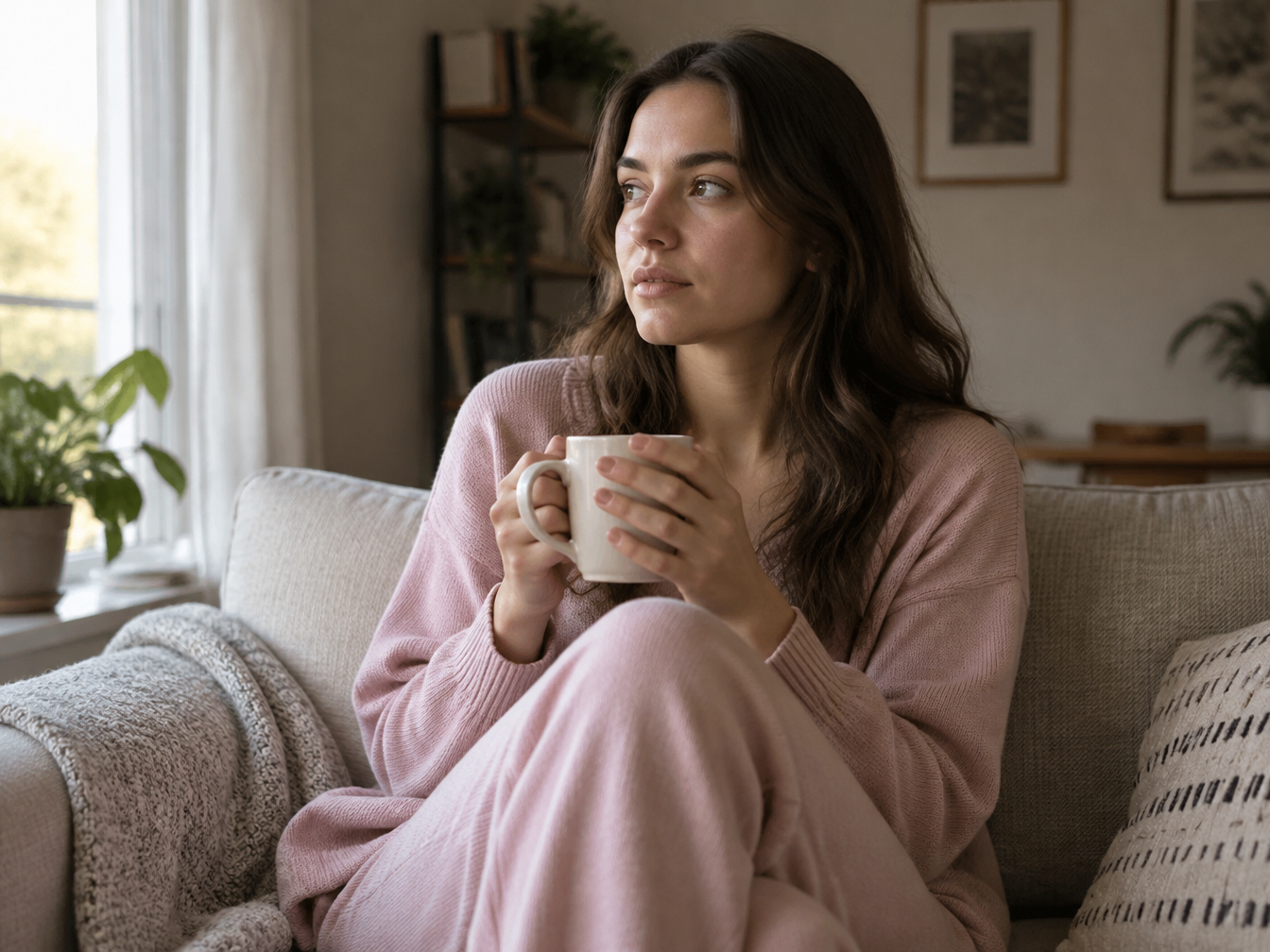
Because the strangest thing about wearing the same clothes twenty years later is that the clothes are not the same at all. The tracksuit has not changed. I have. When I put it on now, nobody is dictating what it should say about me. I am not performing for anybody. I am just a woman in a soft pink set on a Sunday, drinking coffee.

I think about the compliment I never forgot about my style whenever I go down this road. Someone once told me an outfit looked like me, and it changed how I understood getting dressed. It was never about the pieces. It was about whether the person wearing them was actually in the room.
Why Everything From Back Then Came Back
Trends move in loops, and nobody is surprised that the early 2000s returned. Fashion people had been watching it orbit for years. First came chainmail tops, then stonewash denim, and then, almost without warning, it was butterfly clips and baby tees everywhere [3].
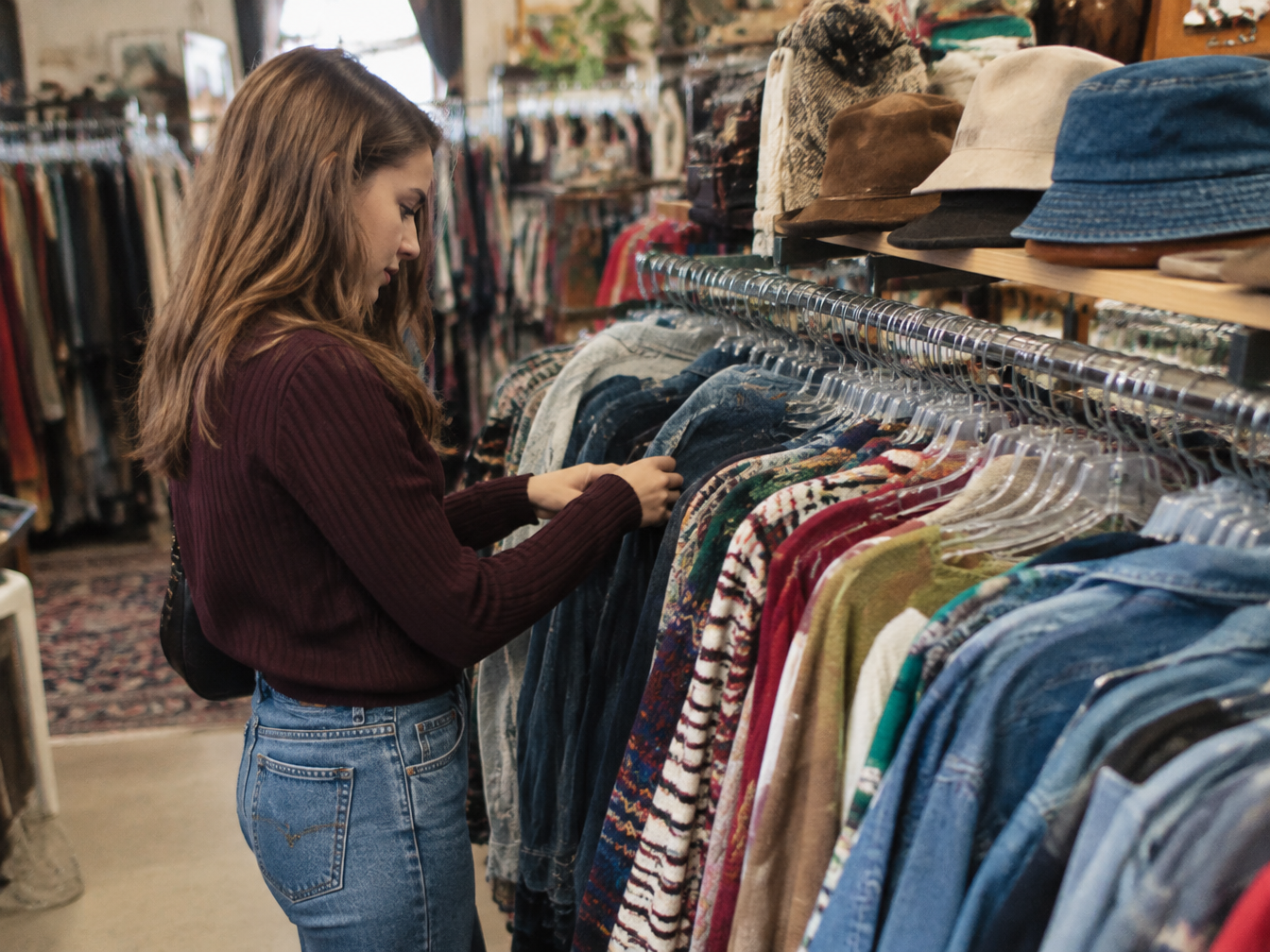
TikTok did a lot of the heavy lifting. Gen Z, who were too young to remember the first round, started wearing it with a name for the feeling: nowstalgia, a longing for a time they never lived through [4]. The same reporting noted a thrifting explosion on resale sites like Depop and Poshmark, as young people hunted for bucket hats, low-rise jeans, and babydoll tees [4].
Another theory I like from The Zoe Report is that after years of nineties-style minimalism ruling fashion, the pendulum swung toward excess [2]. People wanted color again. They wanted noise. They wanted to remember a simpler time before social media took over, especially after a stretch when so many of us were stuck at home and craving something joyful to put on [2].
I believe all of that. But I think there is a quieter reason too, and it is the one I felt in my mother’s hallway. Trends do not only return because the industry runs out of ideas. They return because the people who wore them the first time are now old enough to look back, forgive themselves, and try again.
Fashion has always recycled itself, and nobody owns a decade for good. If you want to see how any decade gets rebuilt for the modern day, look at how 1950s fashion looks today keeps getting reworked. Every era comes back wearing a slightly different face.
The Y2K Pieces I Still Wear Without Any Embarrassment
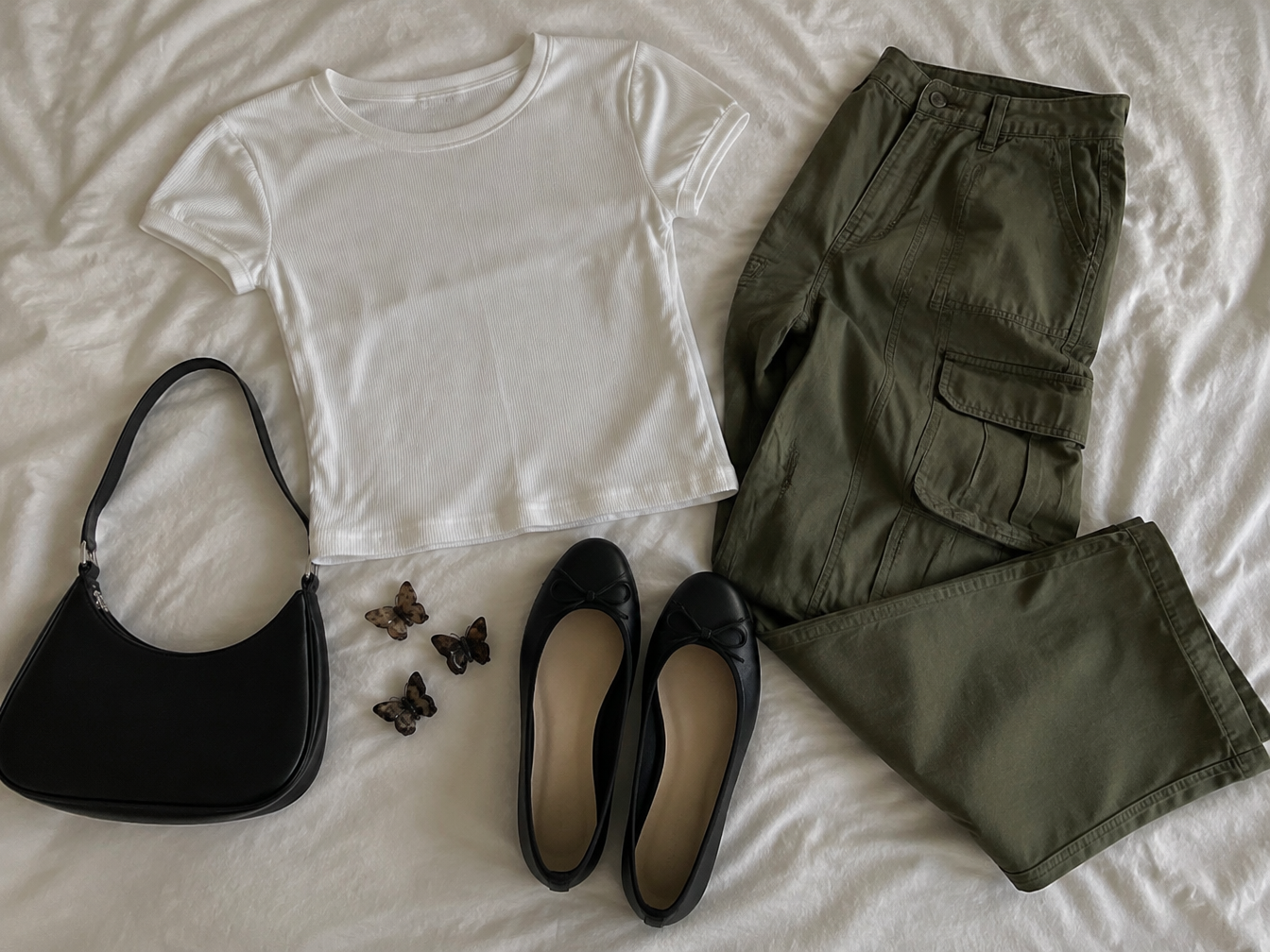
I have narrowed this down, over a lot of trial and error, to a short list of things that survived the move into my adult wardrobe.
The baby tee is first. Grazia counts the ribbed or graphic cropped tee among the biggest returns, and notes that the girls did not wait for summer to wear it [3]. Under a coat with long jeans, it works in November too. Worn with high-rise denim, it stops feeling like a costume and starts feeling like a good basic.
Butterfly clips, as long as there are only a few and not forty. Grazia lists them alongside colorful bandanas and sporty sunglasses as the accessories making a comeback [3], and they are the easiest way to wink at the era without rebuilding your whole closet.
Cargo pants in a neutral shade like olive or beige, worn relaxed [1]. Ballet flats, which are also, conveniently, a balletcore moment right now [3]. A small shoulder bag that sits under the arm, the kind Grazia calls a baguette bag that never goes out of style [3].
And denim on denim, but only with contrast. A dark pair of jeans with a lighter jacket looks intentional instead of matchy [1].
What these pieces have in common is that they are comfortable and they still look like something. I wear them with a nod to the original, not a copy. A baby tee with trousers and a blazer. Cargo pants with a good knit. A shoulder bag with a plain white shirt.
That balance is a lot like what I explored in coquette fashion items you can wear with clothes you already own. You do not have to reinvent yourself to borrow a mood. You just add a single piece and let it speak.
The Ones I Quietly Retired
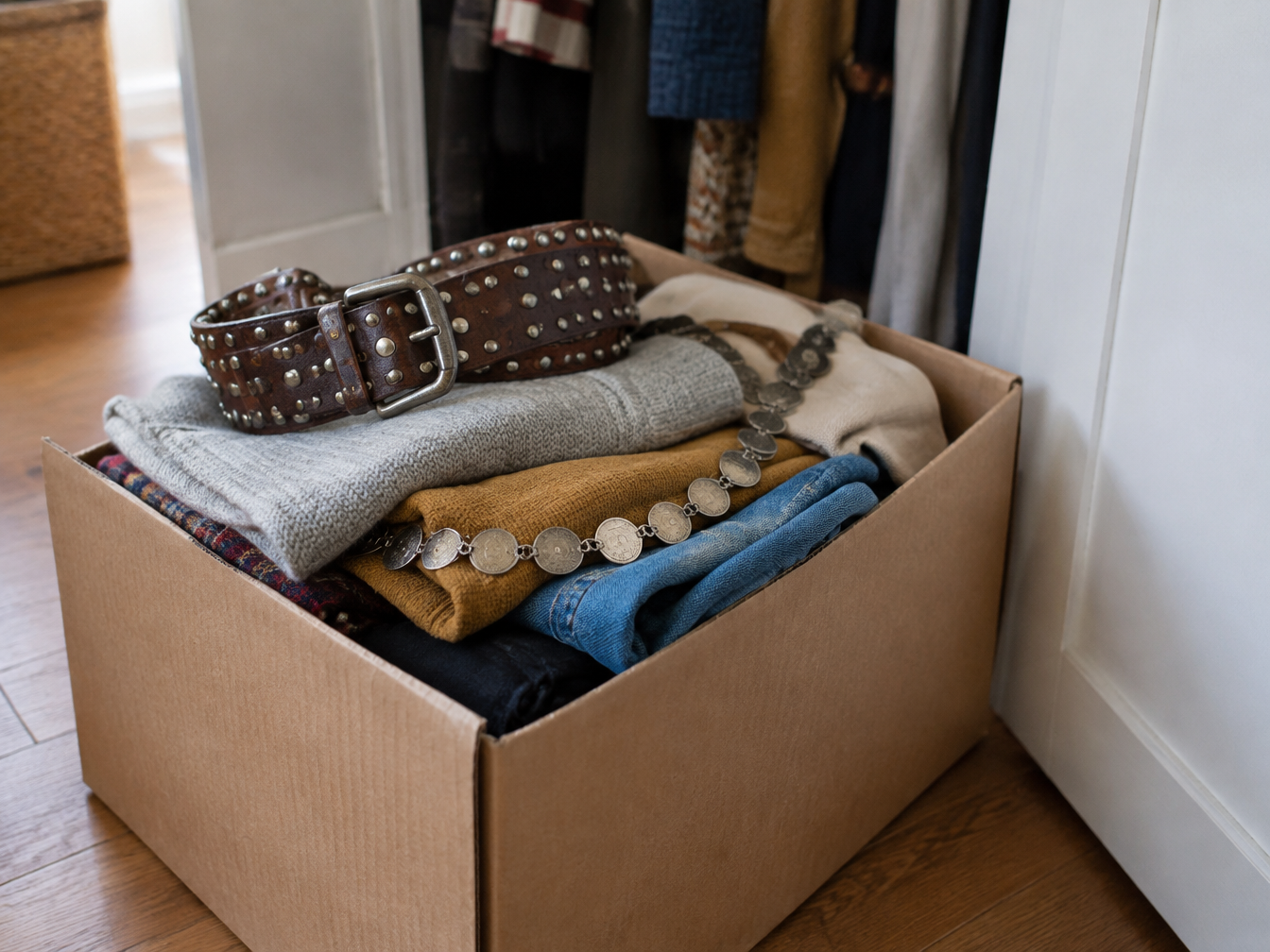
Not everything makes the trip.
Grazia put it best when they said the goal is outfits that do not fill those of us who wore them the first time around with secondhand embarrassment, and they declared the days of coin belts and flared low-rise pants officially over [3]. I agree. My relationship with ultra low-rise jeans ended the day I realized I was spending an entire dinner worried about sitting down.
I also retired the full head-to-toe version. When every single piece is from 2003, it stops being an outfit and starts being a Halloween costume. The sweet spot, according to that same Grazia piece, is what they call spotlight dressing: keep the focus on one hero piece and finish with clean basics, like a perfect white tee [3].
And I let go of the idea that I have to be shiny to be seen. That was the old era’s promise, and it was not a fair one. I can wear a glittery clip without needing the whole outfit to apologize for me.
If you want to think about this more broadly, it ties to something I wrote about in why I stopped buying trends and started building a wardrobe that sounds like me. A trend is a loan. Some pieces you keep. Some you give back.
How to Wear Y2K Now Without Looking Like You’re in a Costume
If you are thinking about trying it, here is the approach that has worked for me.
Pick one piece, not the whole decade. Let one thing be loud, like a rhinestone top, a butterfly clip, or the baguette bag, and keep everything else quiet. Treat it like punctuation.
Thrift when you can. The early 2000s are everywhere in secondhand shops right now, from low-rise jeans and oversized belts to Von Dutch hats, and buying preloved is a way to enjoy the era without more waste [1]. You might even find something that was made well.
Add a modern element. Pair a velour jacket with tailored trousers. Pair a mini skirt with chunky boots and a big sweater. Pair a souvenir tee with something sharp, a pencil skirt or a suit, since Grazia points out that the high-low mix is what keeps it wearable [3]. Old and new, so the outfit looks like a conversation instead of a time machine.
And ask yourself the most important question, which is the one I wish someone had asked me at fourteen: do I feel like myself in this, or like I am pretending? The answer matters more than any trend. I explored that same feeling in the outfit I wear when I need to feel like myself again, and it has not stopped being true.
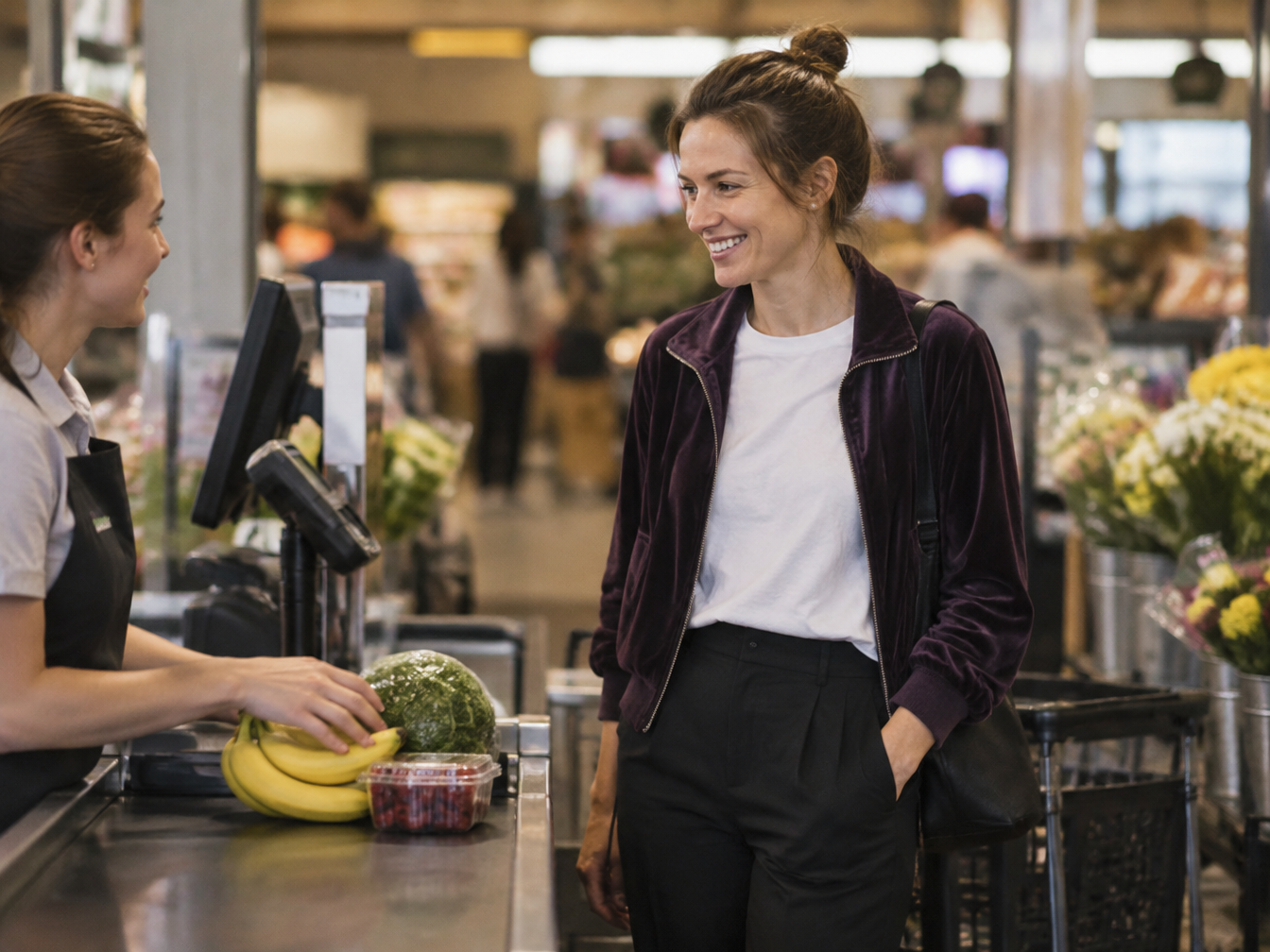
I got the tracksuit back from my mother. It is hanging by my front door now. I wore it to pick up groceries last Sunday, with my hair in a messy bun, and a stranger in the checkout line smiled and said, “I had that exact one.”
I told her, “Me too.”
She looked at me like we had both survived something. And in a way, we had.
Sources
- “2000s Fashion: 12 Classic Styles Making a Comeback,” ThredUp, 2024. 2000s Fashion: 12 Classic Styles Making a Comeback
- Andrea Cheng, “The Return Of The Hot Aughts: Why We Can’t Get Enough Of Y2K Fashion,” The Zoe Report, February 2022. The Return Of The Hot Aughts
- Renee Washington, “The Anatomy Of A Trend: How To Wear Y2K Fashion Now,” Grazia, updated April 2024. The Anatomy Of A Trend
- “Gen Z’s ‘Nowstalgia’ for Y2K Fashion Is Leading to a Thrifting Explosion,” NBC Washington, July 2021. Gen Z’s Nowstalgia for Y2K Fashion
Leave a Reply