My grandmother’s bathroom smelled like powder and something green, and I did not know I still remembered it until a stranger walked past me in a pharmacy aisle and I had to put a hand on a shelf.
Nothing happened, technically. A woman in a camel coat reached for a box of cough drops. But the air she left behind took me straight back to being seven, sitting on a closed toilet lid while my grandmother dabbed her wrists and told me never to rub them together. I stood there holding a basket, eyes stinging, in a pharmacy, over a smell.
I have thought about that moment more than I would like to admit. Not because it was dramatic, but because it made me realize that somewhere out there, people carry a version of me made of nothing but scent. A sweater I wore. A hallway I walked through. A hug that lasted three seconds too long. And I have no idea what any of it smells like.
That is the strange power of perfume. You choose it for yourself, in a store, in a mood, under fluorescent lights. But you wear it for everyone else’s memory.
Why Smell Gets to Your Memory Before Anything Else Does

Marcel Proust made smell famous in literature when a bite of madeleine dipped in tea sent his narrator tumbling back into childhood. Scientists now call that experience the Proust Phenomenon: a strong emotional memory set off by a smell [1]. You have had it. Everybody has. A whiff of sunscreen and it is a pool in 2009. A whiff of cut grass and it is somebody’s backyard.
Here is the part I find quietly wild. A BrainFacts overview explains that the amygdala, the almond-shaped structure that handles emotional memories, is wired to the hippocampus, which helps form new memories, and that the amygdala is also connected to the olfactory bulb, where smell gets processed [1]. Your nose has a shortcut to the part of your brain that cares how things felt.
That may be why smell is such a good cue for the moments that made you who you are. In one study described in the same overview, people recalled personal events and then got a second chance to add details. The memories cued by a matching smell were rated as more positive and contained more detail than memories cued in other ways [1]. In another, a nostalgic odor left people more relaxed and in a better mood than a neutral one [1].
So when someone says your perfume reminds them of a summer, a person, a version of themselves, they are not being poetic. They are describing wiring.
And it works both ways. The smell of a hospital corridor can drag you back to a terrible season. The cologne of someone who hurt you can turn a grocery store into a crime scene. Scent does not edit. It just plays the whole tape.
The Person You Become in Someone Else’s Head

This next part is my own theory, not a study, so take it for what it is.
I think perfume is the only accessory that gets stored without your permission. Clothes get remembered too, as with the outfit I wear when I need to feel like myself again, but they get remembered as a look. A person can forget what you wore to dinner. They can forget what you said, the exact color of your hair that year, even the name of the restaurant. But if you wore the same scent for a whole season, it quietly attaches itself to everything that happened while you wore it.
Think about the people in your own memory. I bet at least one of them has a smell. Your first love. The friend who held your hair back. A teacher who made you feel clever for the first time. You did not decide to file them that way. Your brain just did it, the way it files a song with the summer you first heard it.
Which means your scent is a long, slow autograph. Every hug, every shared couch, every lean-in over loud music left a tiny signature in someone’s head.
That thought used to make me anxious. What if I was leaving the wrong signature? But the more I sat with it, the more it felt like an invitation. You cannot control how you are remembered. You can only choose what you are wearing while it happens. The things you pick on purpose, on an ordinary morning, end up carrying more weight than you ever planned.
Why You Stop Smelling Yourself (and Everyone Else Doesn’t)
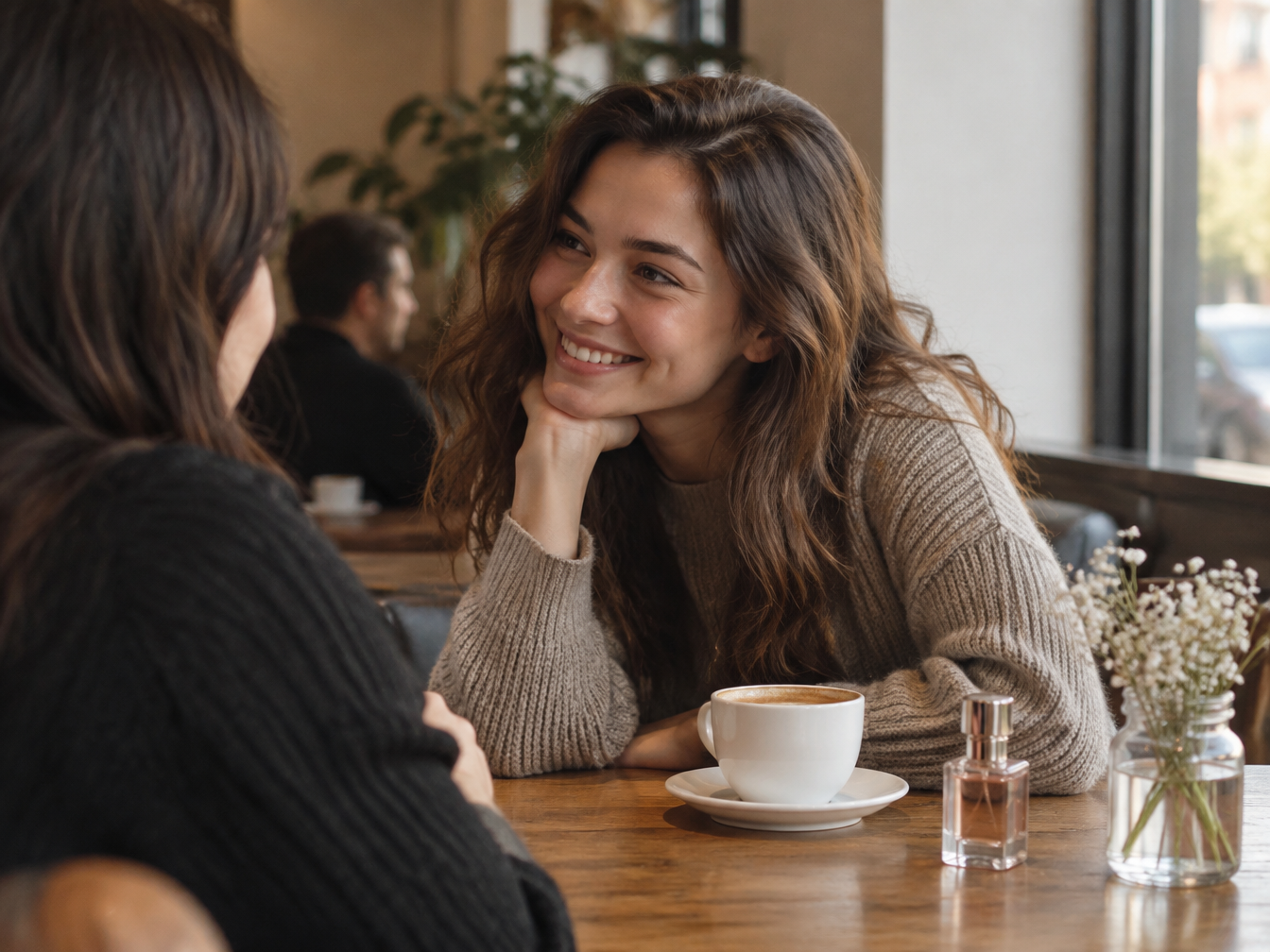
Here is the cruel joke at the center of all this. The one person who cannot properly smell your perfume is you.

It is called olfactory adaptation. Your brain tunes out familiar, constant scents so it can stay alert to new ones [2]. You spray in the morning, you love it for ten minutes, and by lunch it feels like it has vanished. It has not. Ask the person sitting next to you, and they will often still notice it [2].
This is where most of us go wrong. We assume the scent is gone, so we pile on extra sprays, and suddenly we are the person whose perfume enters the elevator thirty seconds before we do. A beauty retailer’s fragrance guide calls this out as one of the most common mistakes: you have adjusted, but the scent has not gone anywhere [2].
I learned this the embarrassing way. A coworker once told me, very gently, that she could tell what day it was by whether I had worn the vanilla one. I thought she was complaining. She was actually saying she liked it, and that it had become part of how she knew my mornings.
That one sentence rearranged how I thought about everything. She had been building a memory of me for months, and I had no idea.
I think about the compliment I never forgot about my style in the same way. The things people notice about us are rarely the things we agonize over. They notice the small, steady, repeated things. The laugh. The coat. The smell of your hair when you walked by.
How to Wear Perfume So It Lasts Long Enough to Be Remembered
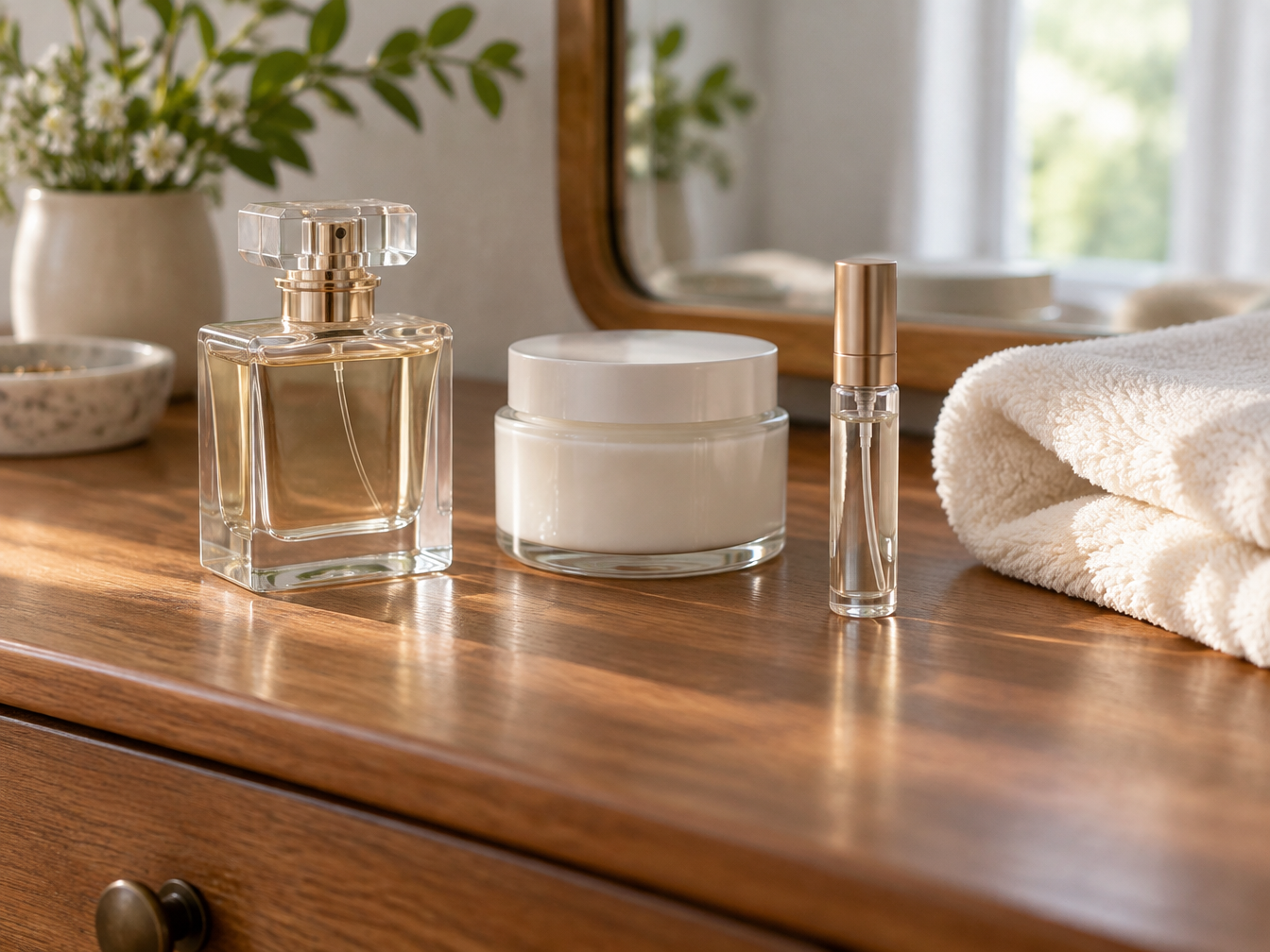
If your scent is going to be your signature, it helps if it actually stays on the page. This is the unglamorous part, but it makes a real difference, and most of it comes from the Ulta Beauty fragrance guide I read while trying to fix my own habits [2].
Start with moisturized skin. Fragrance clings better to hydrated skin than to dry skin, so a layer of unscented lotion before you spray gives the perfume something to hold onto [2]. Then spray warm spots: wrists, sides of the neck, inner elbows, collarbone, even behind the knees if you are wearing a skirt, where the scent drifts upward as you move [2].
Hold the bottle a few inches away. Pick two or three spots instead of covering yourself. And please, for the love of your grandmother, stop rubbing your wrists together. Rubbing can break the scent down before it settles [2]. She was right all along.
Concentration matters too. As a general guide, eau de parfum has around 15 to 20 percent fragrance oil and wears richer and longer, eau de toilette sits around 8 to 12 percent and feels lighter and easier to reapply, and body mist is around 1 to 3 percent, soft and airy [2]. Neither is better. A soft skin-close scent for a Tuesday at work. Something fuller for a night out.
For everyday wear, two to four sprays is a reasonable starting point [2]. If it fades in the afternoon, one quick touch on a single pulse point is usually enough, so a tiny travel spray in your bag earns its space.
A few last habits. Store your bottles somewhere cool and dark, like a drawer, instead of the bathroom, because heat, light and humidity degrade fragrance over time [2]. Use a dedicated hair mist if you want scent in your hair, since most perfumes are alcohol-based and can be drying [2]. And make it a ritual. I mean that literally. The twenty seconds where you moisturize, spray, and stand still for a moment is one of the nicest parts of leaving the house. It reminds me of everything I love about getting ready for a party: the getting ready is part of the night, not a chore before it.
The Scent I Stopped Wearing and the One I Kept
For about three years I wore a very specific perfume. Sharp, a little sweet, the kind of thing that announces itself. I bought it after a breakup because I wanted to smell like someone who was fine.
I was not fine. And the funny thing is that scent absorbed all of it. Every difficult dinner, every night I cried in a rideshare, every performance of being okay. When I finally threw out the bottle, I was not throwing out a perfume. I was throwing out a season.
A friend told me later that she could not smell that fragrance on strangers without thinking of me from that year. She said it made her feel protective, because she remembered how hard I was trying.
I do not have a neat lesson for that. Some scents are not meant to be worn forever. They are meant to be worn through something, and then retired with a little gratitude.
The one I kept is quieter. Skin-close, slightly woody, nothing that fills a room. I wear it on days when I want to feel steady. It has absorbed better things: a long walk after a hard conversation, a wedding where I laughed until my face hurt, a night I slept the whole way through for once.
Hair does this too, by the way. We change it, cut it, color it, when something in us has already shifted. I explored that in the things women do to their hair before a big life moment, and I think scent is the invisible cousin of that ritual. We change it when we are changing, even if we do not say so.
How to Pick a Scent That Sounds Like You
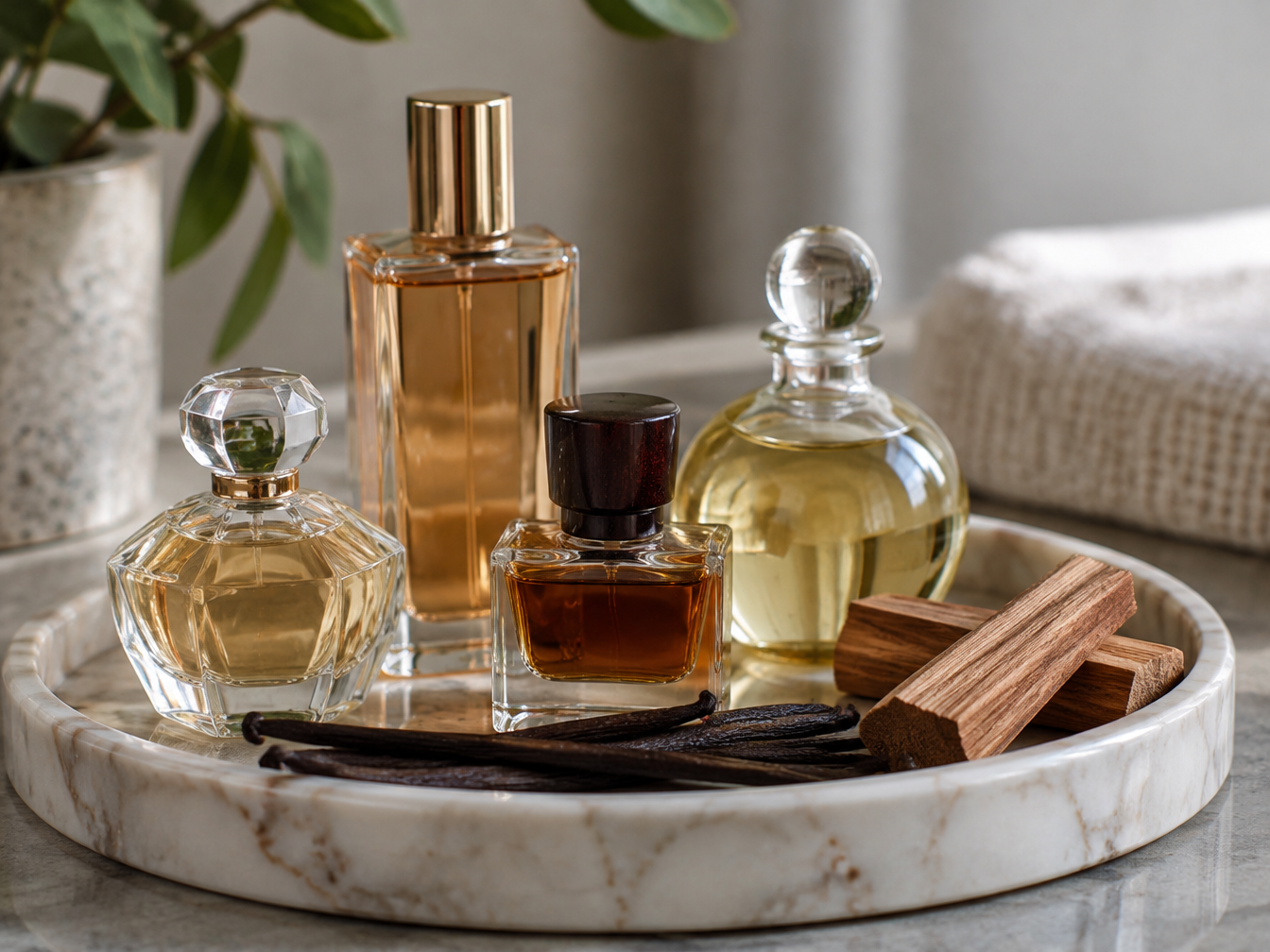
First, ignore the marketing. Skip the bottle that is supposed to make you feel like a movie star and ask a simpler question: when you smell it, do you feel more like yourself or like a costume? Costume scents are fun, but you will not want to be remembered in one.
Second, test on skin, not on paper strips. Fragrance wears differently on everyone, and your skin type, body temperature, the notes in the scent and the concentration all play a role [2]. Spray one spot, walk around, and give it a few minutes. The bright opening fades first, then the heart and base notes come forward [2]. A perfume that you love in thirty seconds and hate in three hours was never really yours.
Third, think about the memory you want to be. Do you want to be warm? Fresh? A little mysterious? I have a friend who always smells like clean laundry and cedar, and people describe her as calm before they have even talked to her. Another friend wears something heavy with amber, and everyone lights up when she enters because it feels like a hug with a spine.
Last, treat it the way you would a wardrobe that sounds like you instead of a collection built from trends. One or two scents you truly love will do more for your signature than a shelf of bottles you wear because they were on sale. Rotate if you want. But keep one steady, so there is something for people to hold onto.
And if you ever catch a whiff of your own old perfume on a stranger and your chest tightens, let it. That is not weakness. That is proof that you were somewhere, and that you meant something to somebody.
One day, someone is going to stop in an aisle and put a hand on a shelf, and it is going to be because of you.
Sources
- Leanne Boucher, “Of Biscotti and Memories,” BrainFacts / Society for Neuroscience, 2013. Of Biscotti and Memories
- “How to Make Fragrance Last Longer,” Ulta Beauty. How to make fragrance last longer?
Leave a Reply