The Moment My Feet Gave Up Before the Music Did

It was 9:40 p.m. and my favorite song had just come on. I know the exact time because I was standing in the corner of a crowded living room, staring at my phone like I had somewhere important to be, when really I was doing the math on how many more minutes I could stay upright in four-inch heels.
Everyone else was dancing. Someone’s cousin was doing a spin that should have come with a warning label. My best friend was singing every word with her eyes closed. And I was leaning against a bookshelf with the posture of a woman waiting for a bus, smiling the tight smile of someone whose toes had stopped sending messages and started sending threats.
I told myself it was worth it. The dress looked incredible. The heels made my legs look the way I had always imagined my legs would look if I were a different person. I had paid for the shoes, planned the outfit for two weeks, and walked in feeling like a main character.
Then the music got good, and I realized I was the only person in the room who couldn’t join in.
That night I didn’t dance. I ordered a ride home forty minutes early, took the shoes off in the back seat, and held them in my lap like evidence. I remember thinking, with the clarity that only comes from being tired and slightly annoyed, that I had dressed for the photos and not for the party.
So the next year, I tried something different. I wore flats. And I danced until the lights came up.
What I Used to Believe About Heels and Being Seen
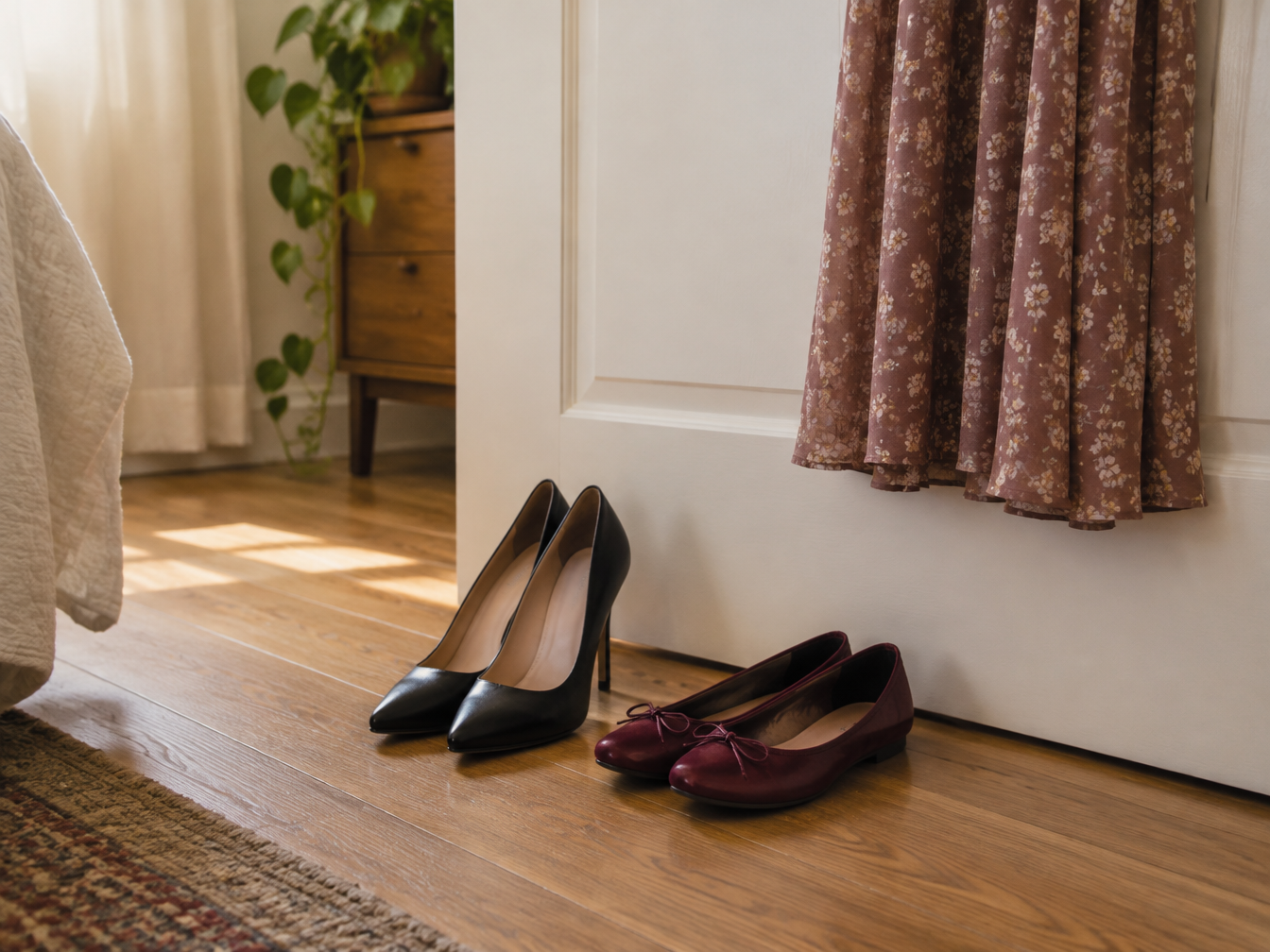
Here is the embarrassing truth. For years I believed that heels were the price of admission to a nice night out. Not because anyone told me so directly, but because every glossy picture of a holiday party I had ever seen had a woman in a gown and a pair of impossibly thin sandals standing somewhere near a champagne tower.
Flats, in my head, were what you wore to the airport. Flats were practical. Flats were what you put on after the real outfit was over.
I had even built a little ritual around it. I would get ready for a party the way you get ready for a performance, and I loved that part more than I expected. I wrote about that feeling in why getting ready for a party is my favorite part of the night, the slow build, the music in the bathroom, the moment the whole look clicks. But I had been treating my shoes as the one part of the ritual that was allowed to hurt.
What I hadn’t noticed was how much that belief was shaping my behavior at the actual party. I stayed near the chairs. I volunteered to hold coats. I said “I’m good, I’ll watch” more times than I want to admit.
The shoes weren’t decoration. They were a rulebook. They decided where I could stand, how long I could stay, and whether I was a guest or a spectator.
Once I saw that, I couldn’t unsee it. A pair of shoes that quietly sets the terms of your whole evening is not a neutral accessory. It is a decision you are making on behalf of the person who will be standing in them at 11 p.m.
What Podiatrists Actually Say About Flats
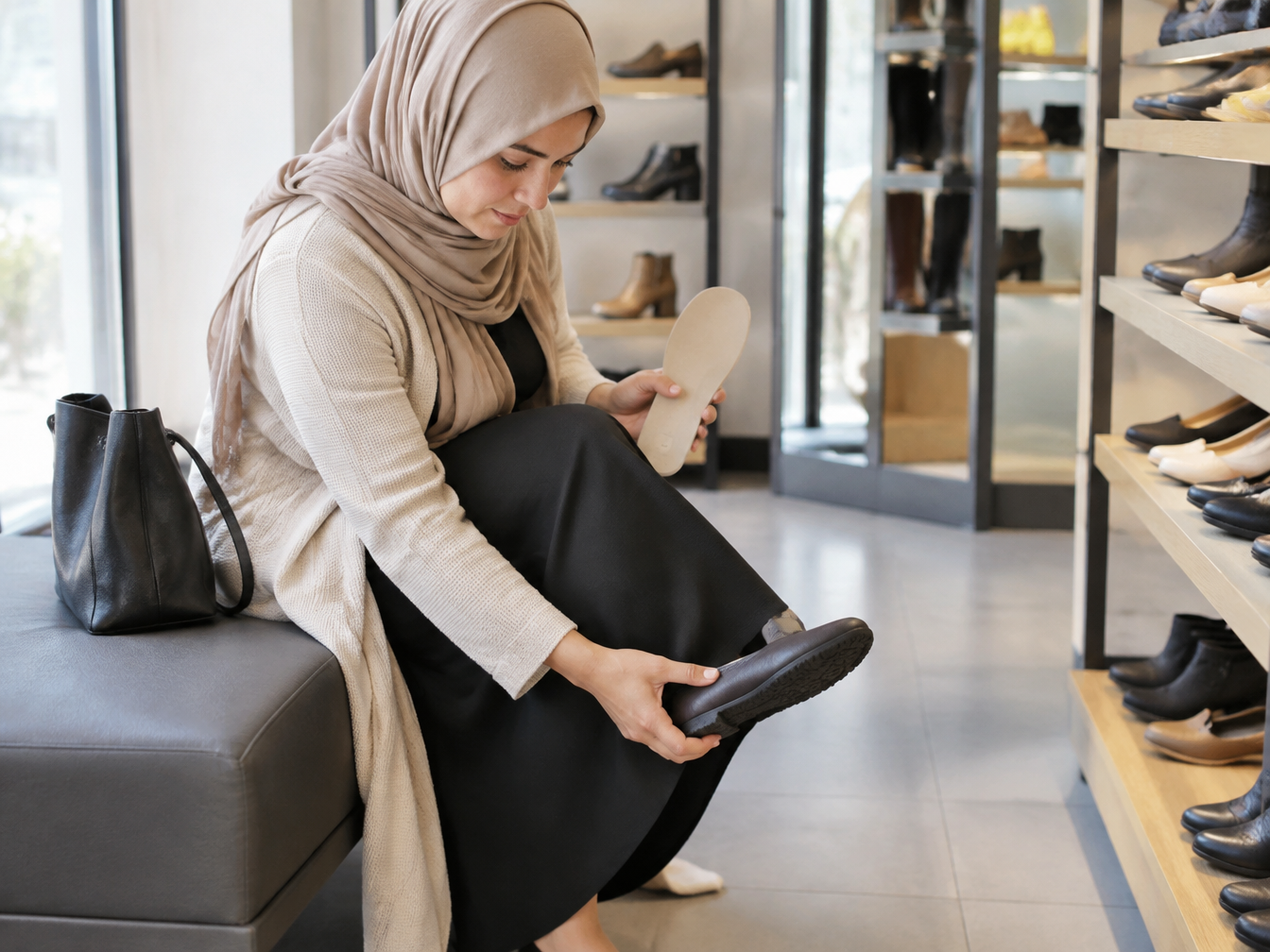
Before I swapped my entire party wardrobe, I did what any slightly dramatic person does and went looking for permission. I wanted someone with a medical degree to tell me flats were fine.
They did not say that. The reality is more interesting.
A podiatrist writing for Virtua Health explains that flat-soled shoes, including ballet flats, flip-flops and slippers, often lack arch support and cushioning, and that wearing them for long stretches can lead to arch pain and fatigue, plantar fasciitis, heel pain and tendonitis [1]. The same piece points out that flats put more stress on the heel and forefoot, while high heels load the toes and forefoot, and that higher heels make that problem worse [1].

So no, flats are not a free pass. A paper-thin ballet flat is not the hero of this story. Another podiatrist, interviewed by Who What Wear, says ballet flats can leave the bottom of the foot open to friction, pain and blisters, and that without arch support, wearing them for more than an hour a day may contribute to plantar fasciitis and heel pain [2].
That stopped me for a second. I had assumed the opposite of heels was automatically kind. It isn’t. The opposite of a bad shoe is not just a flat shoe. It is a shoe that actually supports your foot.
What both sources point toward is a short checklist. The Virtua podiatrist suggests looking for roomy construction with arch support and a thick, cushioned outer sole, shoes that feel comfortable right away rather than after a break-in period, and dress orthotic insoles designed to fit sleeker shoes [1]. In the Who What Wear piece, two New York City Ballet soloists, who know a thing or two about feet, say they reach for supportive sneakers and add Dr. Scholl’s arch supports, which fit most shoes, and one mentions heeled Dansko boots for a dressier look [2].
I am not a doctor, and nothing in this essay is medical advice. If your feet hurt a lot, a real podiatrist can look at your real feet. But the research changed my question. I stopped asking whether I was allowed to wear flats to a party. I started asking which flats could keep up with me, and I went hunting through mary jane and ballet flat outfits for days you refuse to choose between comfort and style for ideas on how to wear them.
How I Picked the Flats I Wore That Night
I did not walk into a store and grab the first cute pair. I treated it like casting a role.
My rules were simple. The shoe had to feel good in the store, not “it will soften up.” It needed a sole with some actual thickness, so the floor didn’t feel like it was talking to me through the bottom of my foot. It needed enough room that my toes weren’t negotiating. And it had to be dressy enough that I wouldn’t feel like I had shown up in my errand shoes.
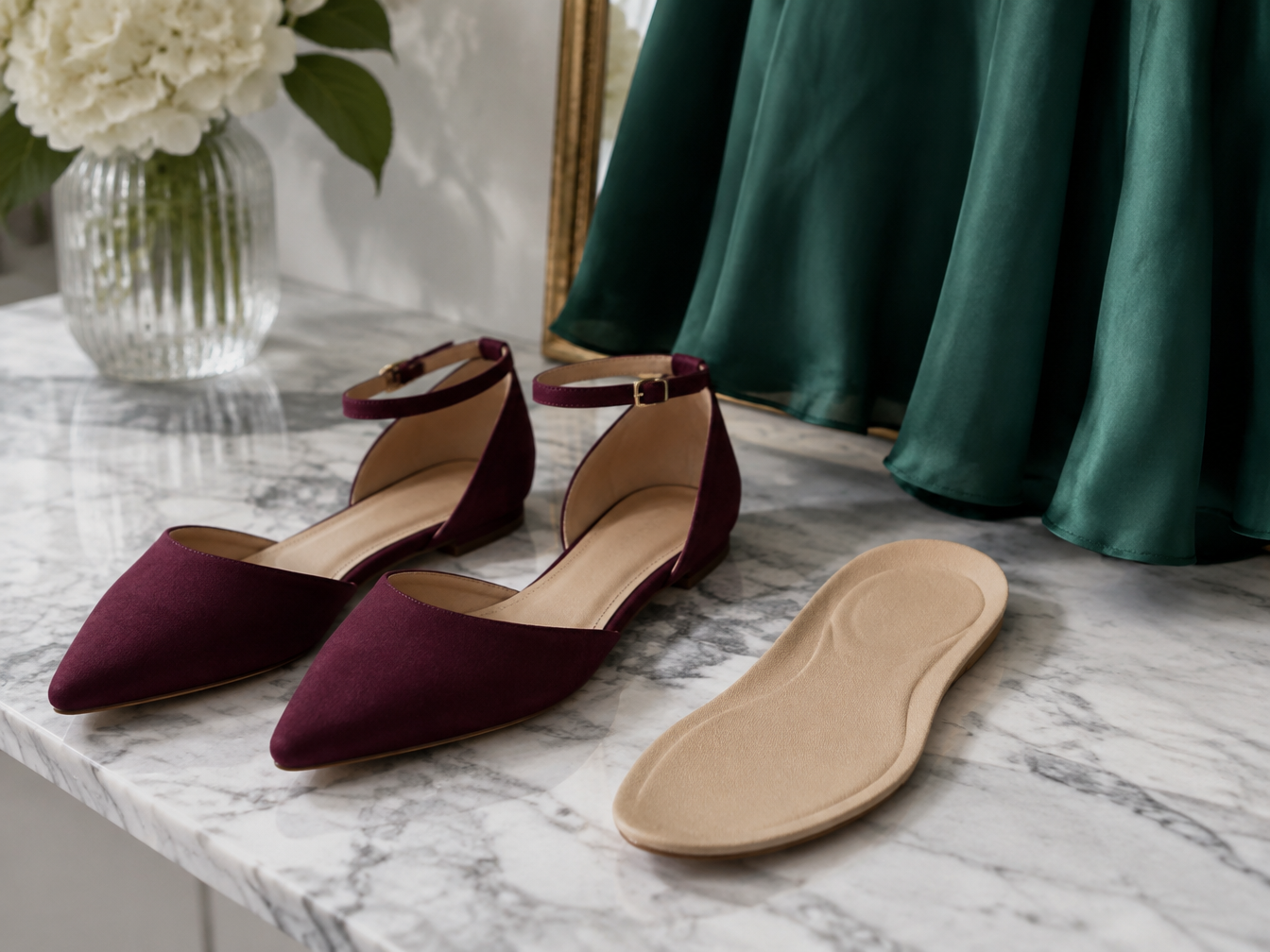
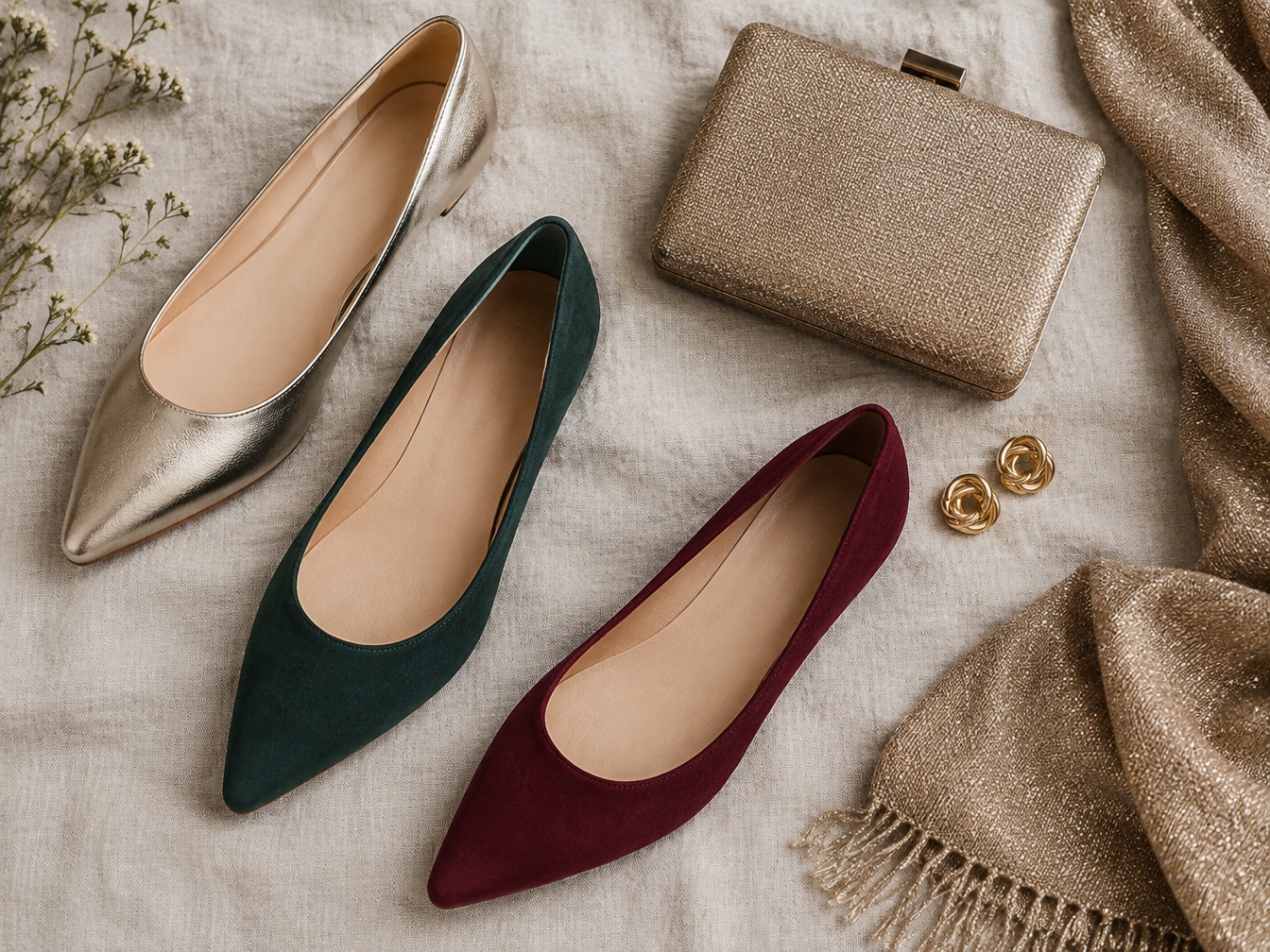
I ended up with a pointed-toe pair in a deep wine color with a slim strap across the ankle, the kind that stays on when you move. I added a cushioned insole, one of the sleek ones made for dress shoes, which turned out to be the single best ten dollars of the whole project.
Then I did something I had never done before. I picked the outfit around the shoes instead of the other way around.
That changed everything. A flat shoe asks the dress to do a little more of the talking, so I chose a dress with movement, a swingy skirt that would actually flare when I spun, and a rich color that made the wine shoes look planned. It was nothing like the holiday party dress I bought to impress someone who wasn’t even invited, which I had picked for an imaginary audience and worn for about an hour.
When I checked the full look in the mirror, I noticed something I hadn’t expected. I looked like I was about to have a good time. Not like I was about to pose for one.
The Night I Finally Danced
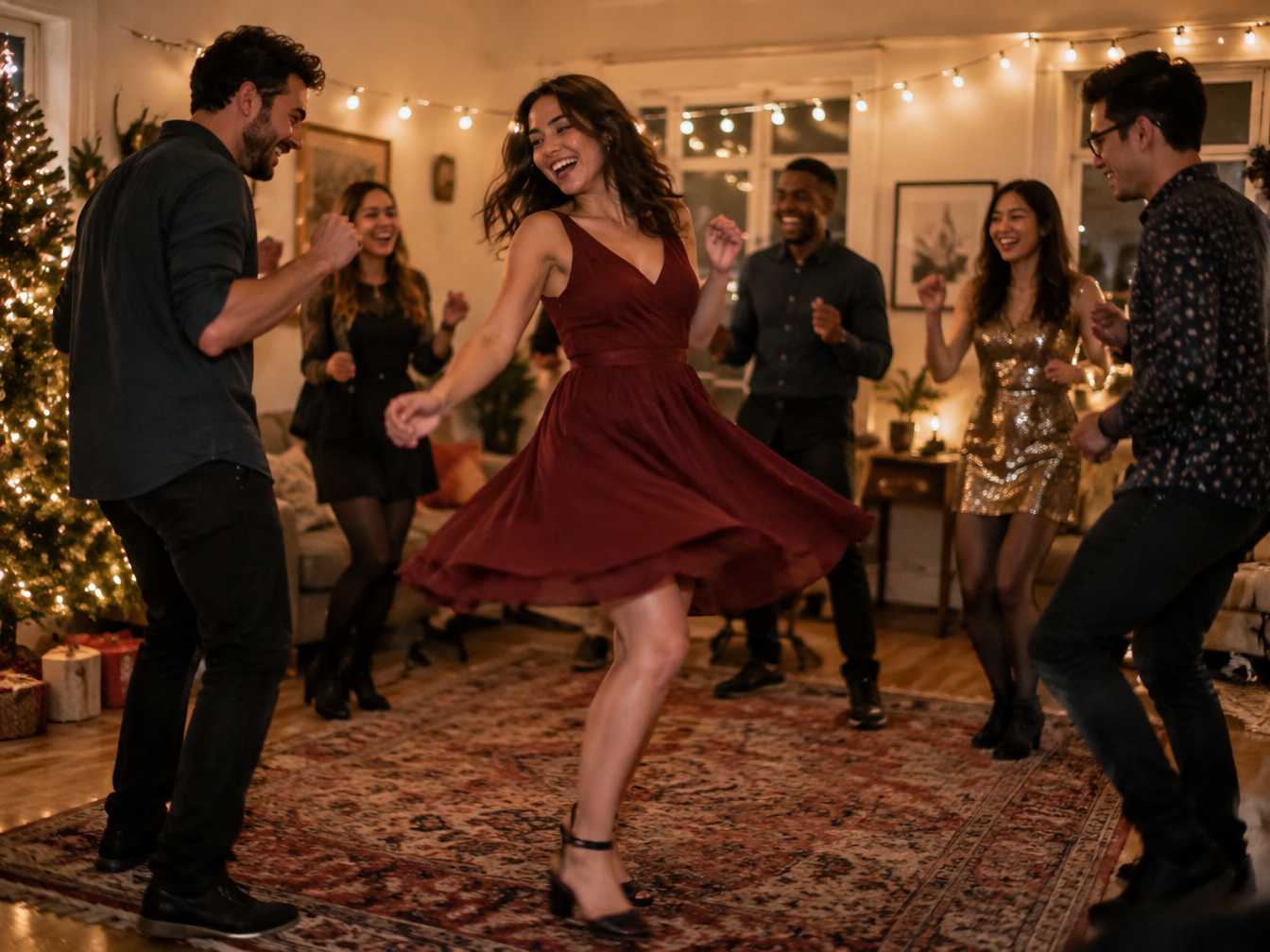
The party was on a Saturday in December. A friend of a friend, a rented room with string lights and a playlist that clearly belonged to someone who loved the early two thousands.
I walked in and did not scan the room for chairs.
For the first hour I did the normal thing, which is hold a drink and talk to people. But somewhere around the third song, a track I knew every word to came on, and my body did what it had wanted to do the previous year. It moved.
Nobody gasped. I just stepped into the middle of the group and kept going, and my feet, for once, were not part of the conversation. They were just there, doing their job quietly, like good employees.
I danced for almost three hours. I know because my friend checked the time and said, “Wait, you’re still going?” in the tone of someone seeing a ghost. I laughed, kept dancing, and at one point took a turn in the middle of the circle that I would have sworn I wasn’t brave enough to take.
My makeup, I should say, did not survive the night perfectly. But because I had gone for the kind of soft, skin-first look I describe in soft glam makeup for holiday parties, a little shine and a little smudge only made it look like I had been somewhere worth being.
What I remember most is walking out at the end with my shoes still on. I was tired in the good way, the way you are after you have actually used the evening.
What Changed in the Way I Showed Up

The biggest change was presence. When you are not managing pain, you have extra attention to spend, and I spent mine on people. I listened longer. I laughed with my whole face. I introduced myself to the cousin with the legendary spin and ended up learning half the move.
I also noticed something about how I felt in photos. I had always assumed heels made me look better in pictures, and maybe they do, in a narrow technical sense. But in the pictures from that night, I look like I am in the middle of a sentence. I look like someone who is enjoying herself, and honestly that reads as more attractive than any pose I have ever practiced.
For years, I had accepted a deal where my body did the work and my outfit took the credit. Wearing flats felt like renegotiating that deal. I wasn’t dressing for an imaginary observer anymore. I was dressing for the actual person who had to get through the night.
That doesn’t mean I never wear heels. I do, sometimes, for dinners where I will mostly be sitting, or for the one night a year when I feel like being a little dramatic. The point was never to ban them. The point was to stop treating pain as proof of effort.
And I stopped apologizing for the choice. When someone asked, “No heels tonight?” I said, “I’m planning to dance,” and watched their face change.
How to Dress Up Flats Without Apologizing for Them
If you want to try this, here is what worked for me, in the order I wish someone had told me.
Start With the Shoe, Not the Dress
Pick the pair first, and make sure it passes the podiatrist test in the store. Feel for arch support, a sole with some thickness, and room for your toes [1]. If a flat feels thin, a sleek dress insole can help, and those are made for exactly this [1].
Let the Shoe Carry a Detail
A flat can be a statement. A metallic finish, a jewel-toned suede, a pointed toe, an ankle strap, a small bow. Detail does the work height used to do.
Choose Movement Over Length
A skirt that swings, a dress with a bit of flare, wide-leg trousers with a clean hem. Flats look best when the outfit has somewhere to go. This is the same trick I use for the quieter looks in new year’s eve outfits and sparkly makeup for every kind of midnight, where the glitter does the shouting so the shoes can stay sensible.
Pack Nothing “Just in Case”
I used to carry a tiny backup pair of shoes in my bag, which is a very expensive way of admitting I did not trust the outfit. If you pick a shoe you believe in, the backup pair stays home.
Remember Who the Night Is For
You are not auditioning. You are attending. The best party outfit is the one that lets you say yes when the song you love comes on.
The following December, I wore the wine-colored flats again. A friend asked if I had bought new shoes. I said no, these are the shoes that taught me how to dance.
She laughed. I didn’t, because I meant it.

Sources
- Gigee Bhular, DPM. “Those Flats Weren’t Made for Walking.” Virtua Health (updated October 11, 2021). https://www.virtua.org/articles/those-flats-werent-made-for-walking
- Lauren Eggertsen. “A Podiatrist and a Ballerina Agree, These Shoes Are So Bad for Your Feet.” Who What Wear (May 8, 2019). https://www.whowhatwear.com/effects-of-wearing-ballet-flats
Leave a Reply