The Receipt I Found in My Coat Pocket

It was a crumpled receipt for a dress I had worn exactly once, to a friend’s engagement party in September. I found it in the pocket of my winter coat while hunting for a lip balm, and I stood there in the hallway doing the kind of math nobody enjoys.
The dress cost more than my phone bill. I had worn it for about four hours. In the photos, I looked great. In real life, the zipper had pinched me under the arm the entire night, and I had spent the evening holding my elbow slightly away from my body like a woman carrying an invisible handbag.
And the dress was still in my closet, tags removed, hanging in the section I privately call “Already Photographed.”
I know that section well. It holds a black halter from a wedding, a green satin skirt from a birthday dinner, and a sparkly top I bought for a holiday party three years ago and wore to exactly that party. Every piece in there has a story, and almost none of the stories include a second chapter.
That receipt made me ask a question I had been avoiding. Why did I need a new outfit for every event? Not want, need. Because it had started to feel like a rule, as firm as wearing shoes to a restaurant.
I decided to find out where the rule came from, and whether I was brave enough to break it.
The Rule Nobody Wrote Down but Everyone Follows

There is no official handbook that says you must wear something new to every wedding, birthday and holiday party. Nobody hands you a card at the door. And yet most of us behave as if the rule exists.
I traced mine back to a specific feeling. Every time an invitation arrived, a tiny alarm went off in my head that said, “What are you going to wear?” and the answer was never “That thing I wore last month.” The answer was always a shopping tab.
I think the rule lives in the space between being seen and being remembered. If someone saw you in the green dress at one party, then wearing it again somehow felt like turning up with a repeat of yourself. As if the room kept a log.
I had always assumed I was the only one who felt this. I was wrong, and the data, which I will get to in a second, was almost comforting.
The strange part is how quietly the rule operates. It never announces itself as pressure. It shows up as “a little treat,” as “I deserve something special,” as “it’s on sale, so it basically pays for itself.” That last one is my personal favorite. A sale price is not a justification. It is a discount on a decision you had not finished making, which is exactly how I ended up with the Black Friday haul I returned and what I actually wanted.
When I started noticing the rule, I started noticing how often it was steering me. Not just at weddings, but at casual dinners, team lunches and Sunday brunches. I wasn’t dressing for the event. I was dressing for the picture someone might take at it.
What the Numbers Say About Outfit Repeating
I am not a researcher, so I went looking for people who are, or at least people who ask good questions.
A Refinery29 piece on outfit repeating cites a July survey of 517 Stitch Fix customers in which three in five people said they tend to buy new clothes when they grow tired of a piece, and for 44 percent of those surveyed, that fatigue set in after just six wears [1]. Six wears. I own sweaters I have worn more than that in a single winter.
The same article quotes stylist Isabelle Landicho, who says the stigma against rewearing clothes is tied to Western culture and reinforced by media portrayals of wealthy women [1]. It also quotes fashion psychologist Shakaila Forbes-Bell, who sorts our clothes into continuing, transitional and discontinued identity, and says people tire of their wardrobes when they can no longer reconcile their current or aspirational identity with those clothes [1].

That second idea stuck with me. Maybe I wasn’t bored with the green satin skirt. Maybe I was bored with the version of me who had worn it.
Other numbers point in the same direction. A Teen Vogue piece from 2019 reported on a Censuswide survey for the British charity Barnardo’s, as cited by The Fashion Law, which found that single-use festival outfits account for roughly $307 million worth of items per year, about 7.5 million outfits worn only once [2]. The same article cites a finding from The Independent that one in four people surveyed would feel embarrassed wearing an outfit to a special occasion more than once [2].
And a 2020 OnePoll survey of more than 2,500 Americans, reported by SWNS, found that 48 percent prefer not to be photographed in the same outfit twice, and 60 percent think social media makes fast fashion worse [3].
These are older numbers, from different countries and different surveys, so I do not want to stretch them into a claim they cannot hold. But taken together, they describe something I recognized in my own closet. A lot of us are carrying a quiet, shared embarrassment about being seen twice.
Why Wearing It Twice Felt Like Admitting Something
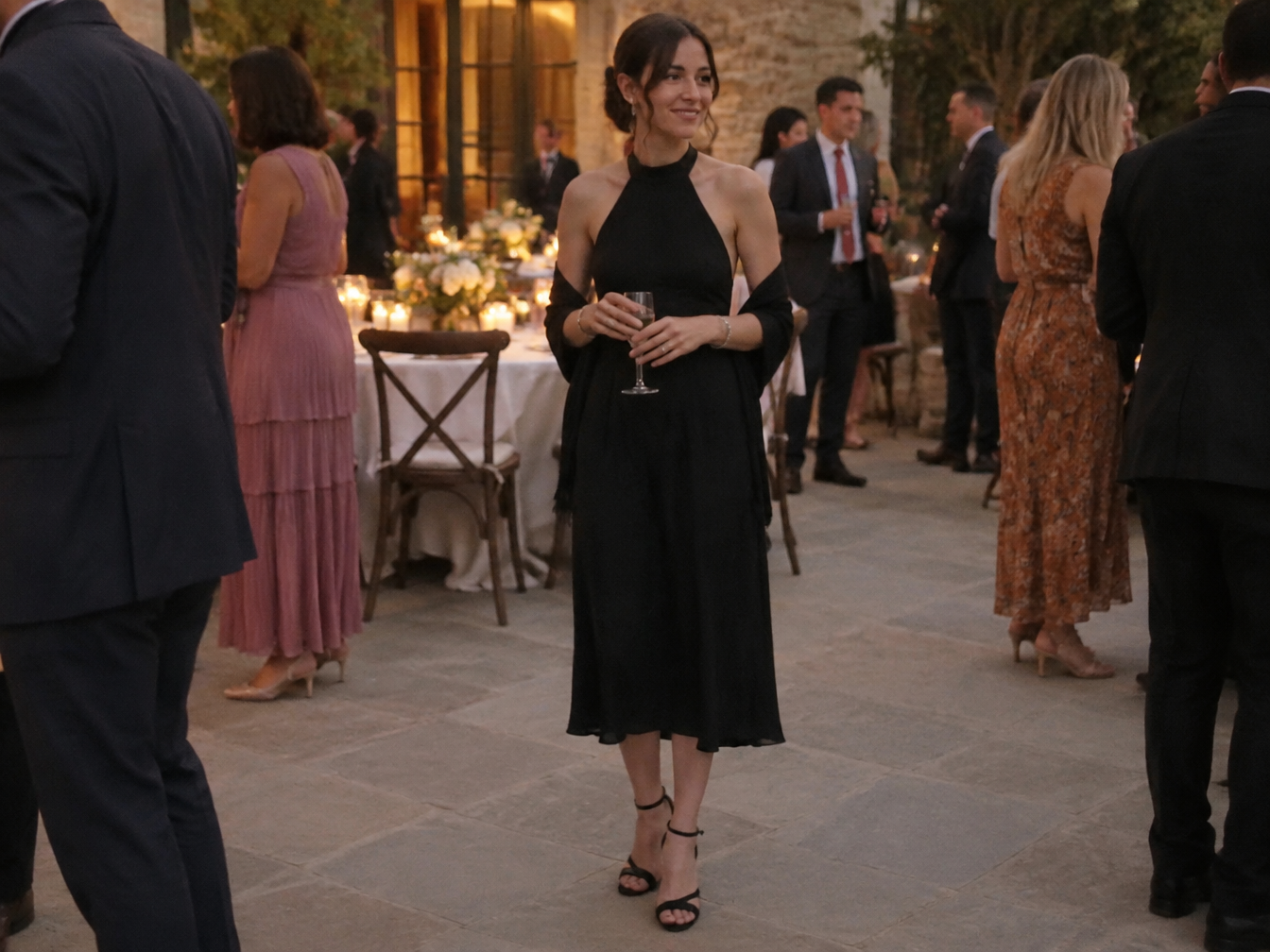
Here is the part I did not expect to write about. The shame was never really about the clothes.
When I pictured wearing the black halter to a second wedding, I did not imagine guests whispering about my fabric. I imagined someone thinking, “She’s out of ideas.” Or worse, “She can’t afford anything new.” The dress was fine. What I was afraid of was the story people might tell about me while I was wearing it.
I think many of us treat our outfits as small public statements, and I had spent a whole season measuring mine against everyone’s feed. A new dress says things are moving. A repeat says things are standing still. It is a ridiculous equation, and I believed it for years.
What helped was remembering how little I notice about other people. I have been to dozens of events. I could not tell you what anyone wore to most of them. I remember who made me laugh, who cried during the toast and who stayed to help clean up. I remember almost nothing about their hemlines.
If I’m honest, I am usually too busy worrying about my own outfit to analyze anyone else’s. And if everyone else is doing the same thing, then the audience I was dressing for was mostly a room full of people thinking about themselves.
And once I let myself believe that most people were not keeping a log, I was ready to test it.
The Experiment That Changed My Mind
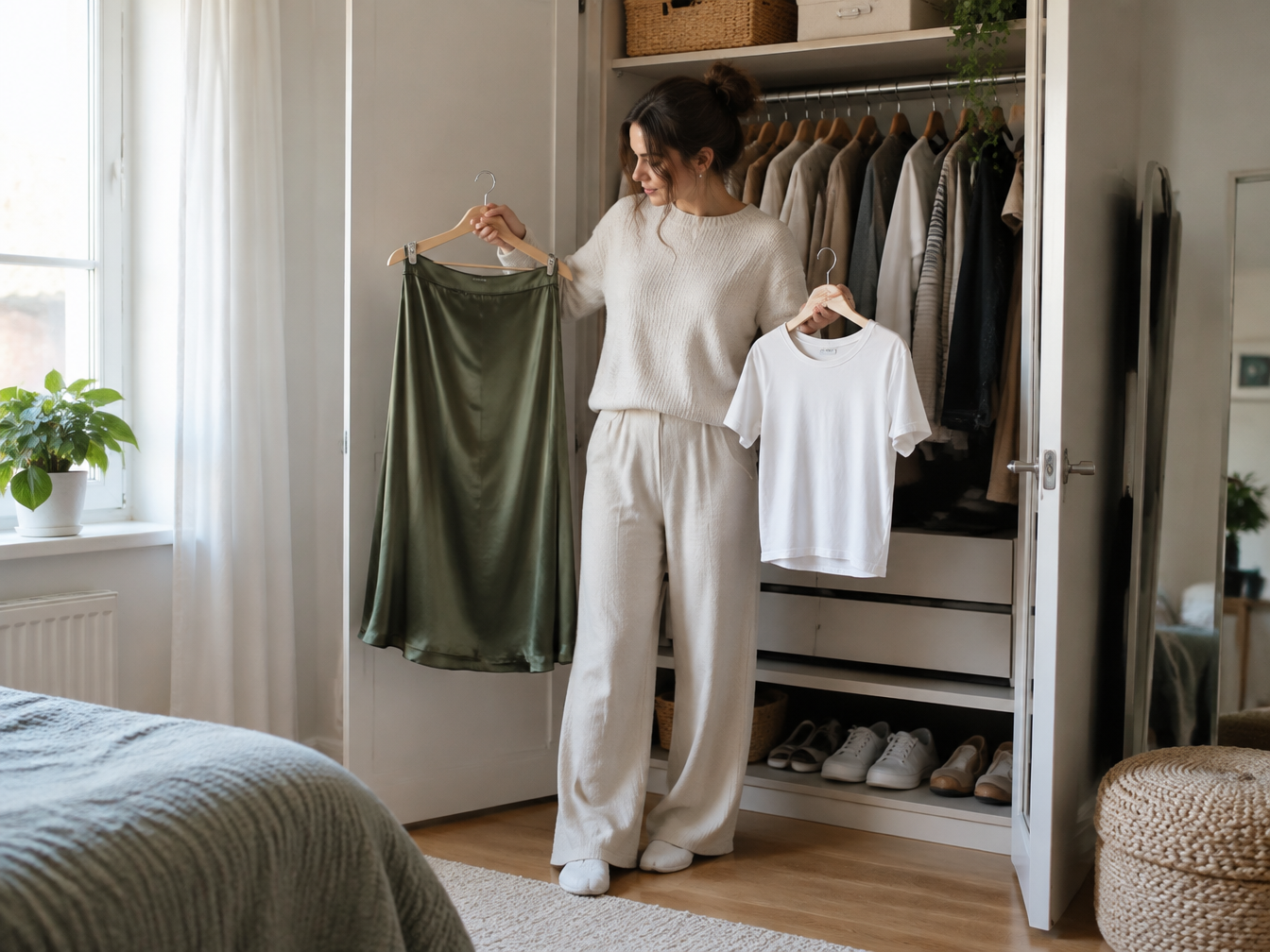
I picked a low-stakes test. For one month, I would not buy a single new outfit for any event. If I had an engagement party, a work dinner and a birthday, I would build the looks from what I already owned.
The first week was uncomfortable. I kept opening shopping tabs out of habit, the way you reach for your phone in an elevator. I’d see a dress, imagine the event and feel the little spike of “this is the one.” Then I would close the tab and go stand in front of my closet like someone visiting a museum of her own life.
The second week, something shifted. I wore the black halter again, this time with a cropped cardigan and a chunky gold necklace, to a friend’s birthday dinner. Nobody said a word about it. A woman I had just met told me it was “a great dress.” I said thank you in the voice of a person who has just gotten away with something.
I had already tested a version of this idea in I wore the same outfit for a week and learned what people actually notice, and the lesson held. People notice energy long before they notice repetition. They notice whether you look comfortable, whether you are present and whether you are enjoying yourself.
By the third week, I was having fun. Styling the same piece three different ways felt less like a limitation and more like a puzzle. The green satin skirt with a white tee and trainers became a casual Friday look. The same skirt with a fitted black bodysuit and heels became a date-night outfit. I was getting more use out of what I owned, and honestly, I was being more creative than I had been in years.
At the end of the month I counted what I had not spent. I will keep the exact figure to myself, but it was more than I expected, and it made me a little dizzy.
How I Dress for Events Now
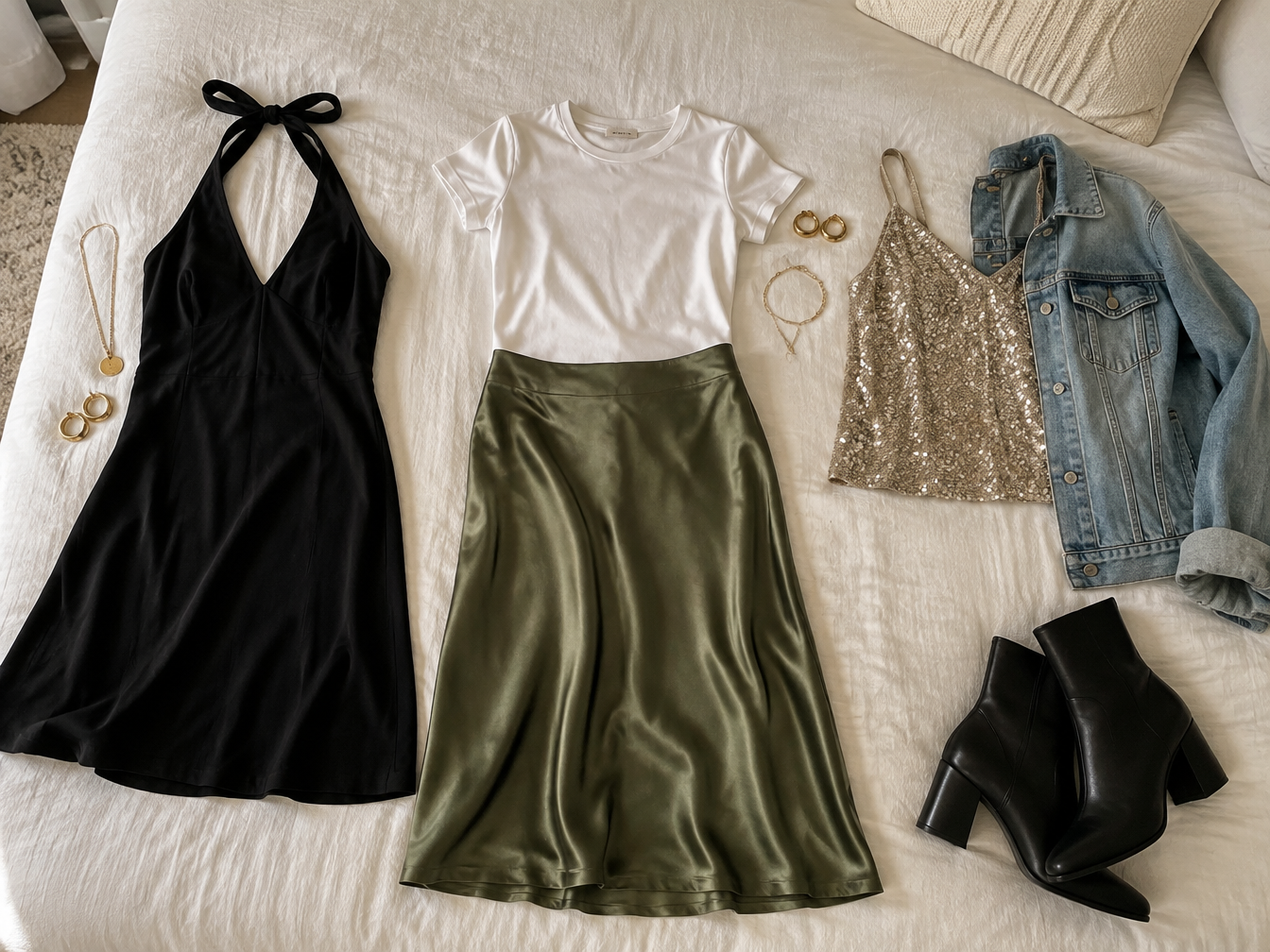
I do not live by a strict ban. A rule that rigid would just turn into another thing I could fail at. Instead, I follow a short set of habits that keep me out of the “Already Photographed” trap.
Shop the Closet First
Before I open any store, I pull out three things that could work. Not the perfect outfit, just three starting points. About half the time, one of them wins.
Plan for a Second Wear Before the First
If I do buy something, I ask whether I would wear it at least three more times, to something other than the event it is for. A party dress that can also go to dinner is a smarter purchase than one that only works under a disco ball. It is the same thinking I leaned on when I stopped chasing trends.
Change the Frame, Not the Dress
A different jacket, shoes, bag or jewelry can make a familiar piece feel brand new. The sparkly top from three years ago looks completely different with a denim jacket and boots.
Build a Few Reliable Anchors
I keep a small group of pieces that make me feel good no matter the setting. When I built a capsule wardrobe, I discovered that having fewer options made getting dressed feel calmer, not duller.
Give Yourself a Cooling-Off Window
When a dress is calling my name, I wait forty-eight hours. If I still love it after two days, I will consider it. Most of the time, the urge fades the way a craving does once you get distracted.
What I Did With the Money and the Time
The most surprising benefit was not financial. It was time.
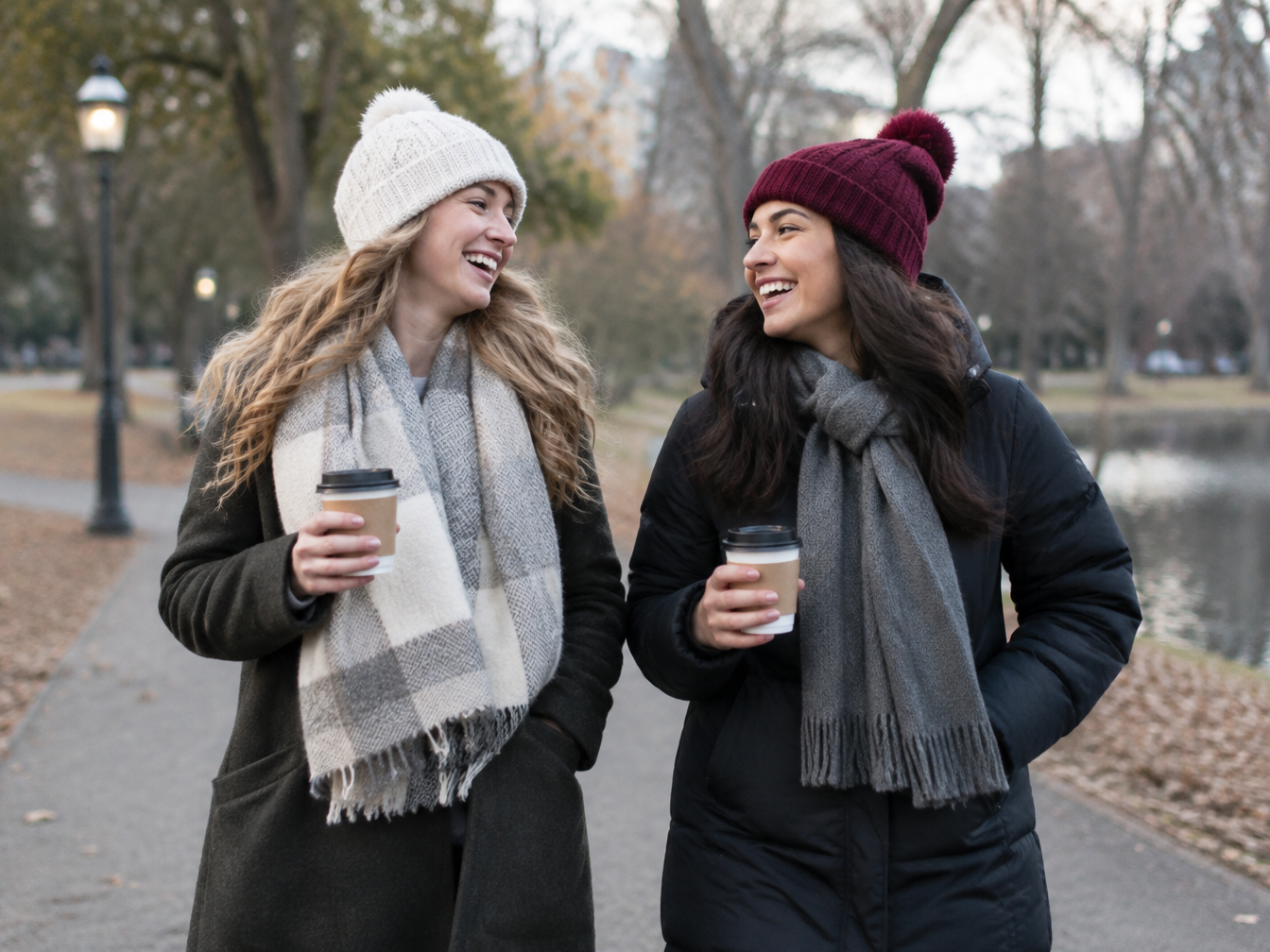
I used to spend an unbelievable number of hours hunting for the right outfit. Scrolling, comparing, ordering, returning. When I stopped, I got those evenings back. I read more. I called my sister. I went for walks without a purpose.
I had also started to notice how much of my getting-ready process had been shaped by what I assumed other people expected. Finding my own personal style after years of copying everyone else was a slow project, and the more I practiced it, the less I cared about being the best-dressed person in the room.
The money, for what it is worth, went to things I could not have predicted. A good winter coat I had been postponing. A weekend trip with a friend. A ridiculous amount of really good olive oil.
The other thing that changed was how I felt in my own clothes. When I wear something I already know, I do not have to wonder whether it will pinch or itch or ride up. I know how it moves. I know which jacket it likes. We have history, the dress and I.
That history turned out to be the part I had been missing. A new outfit gives you a thrill. A worn one gives you a relationship.
Refinery29’s piece points out that the exhaustion with our clothes often comes from not recognizing ourselves in them [1]. For me, the opposite happened. The more I wore the same pieces, the more I recognized myself.
The black halter came to another wedding last month. A cousin said, “I love that dress on you.” I said, “Thank you, it’s been to a few weddings.” She laughed, and I realized I had not been embarrassed for a second.

The receipt is still in my coat pocket. I keep it there on purpose now, as a reminder of what that dress actually cost.
Sources
- “Obviously, It’s OK to Outfit Repeat, Here’s Why.” Refinery29 (UK edition, c. 2022). https://www.refinery29.com/en-gb/outfit-repeating-sustainability
- Tatum Dooley. Teen Vogue, via Yahoo Life (July 23, 2019). https://www.yahoo.com/lifestyle/recent-report-found-single-outfits-211728163.html
- “Even though Americans are opposed to fast fashion, it may be here to stay.” SWNS, via Yahoo News UK (December 4, 2020). https://uk.news.yahoo.com/even-though-americans-opposed-fast-145500056.html
Leave a Reply