I stood in front of my closet on a Tuesday morning, late for work, holding a sequined top in one hand and a gray cardigan in the other, and I realized I had no idea who was getting dressed.
Not which outfit. Which woman. The one who laughs too loud at dinner, or the one who hopes nobody remembers her name in the meeting? I owned clothes for both of them, and for about eleven other women I couldn’t name.
So I did what everyone on the internet seems to do when life feels crowded. I built a capsule wardrobe. I expected a cleaner closet. I did not expect a roll call.
The Closet Full of Strangers

The first step was the dumbest and the hardest: I took everything out. Every hanger, every drawer, every sweater folded into a shape I’d copied from a video. It covered my entire bed and most of the floor, and for a minute I just sat in the middle of it like someone who had survived a flood.
I counted two hundred and eleven pieces. I’d call that a problem, but it didn’t feel like one while I was buying them. Each piece had felt like a small, reasonable yes.
The idea I was borrowing is older than most of us. The term “capsule wardrobe” shows up in American publications as far back as the 1940s, and a London boutique owner named Susie Faux brought it back in the 1970s for clothes that don’t date and can be worn season after season [1]. Donna Karan made it famous in 1985 with a collection called Seven Easy Pieces, where models walked out in bodysuits and tights and then got dressed in the same handful of interchangeable things [1].
Seven pieces. I was holding two hundred and eleven. I have written before about wanting a wardrobe that sounds like me, but sitting in that pile I understood that mine didn’t sound like one person. It sounded like a group chat.
Thirty-Three Pieces and a Very Honest Rulebook
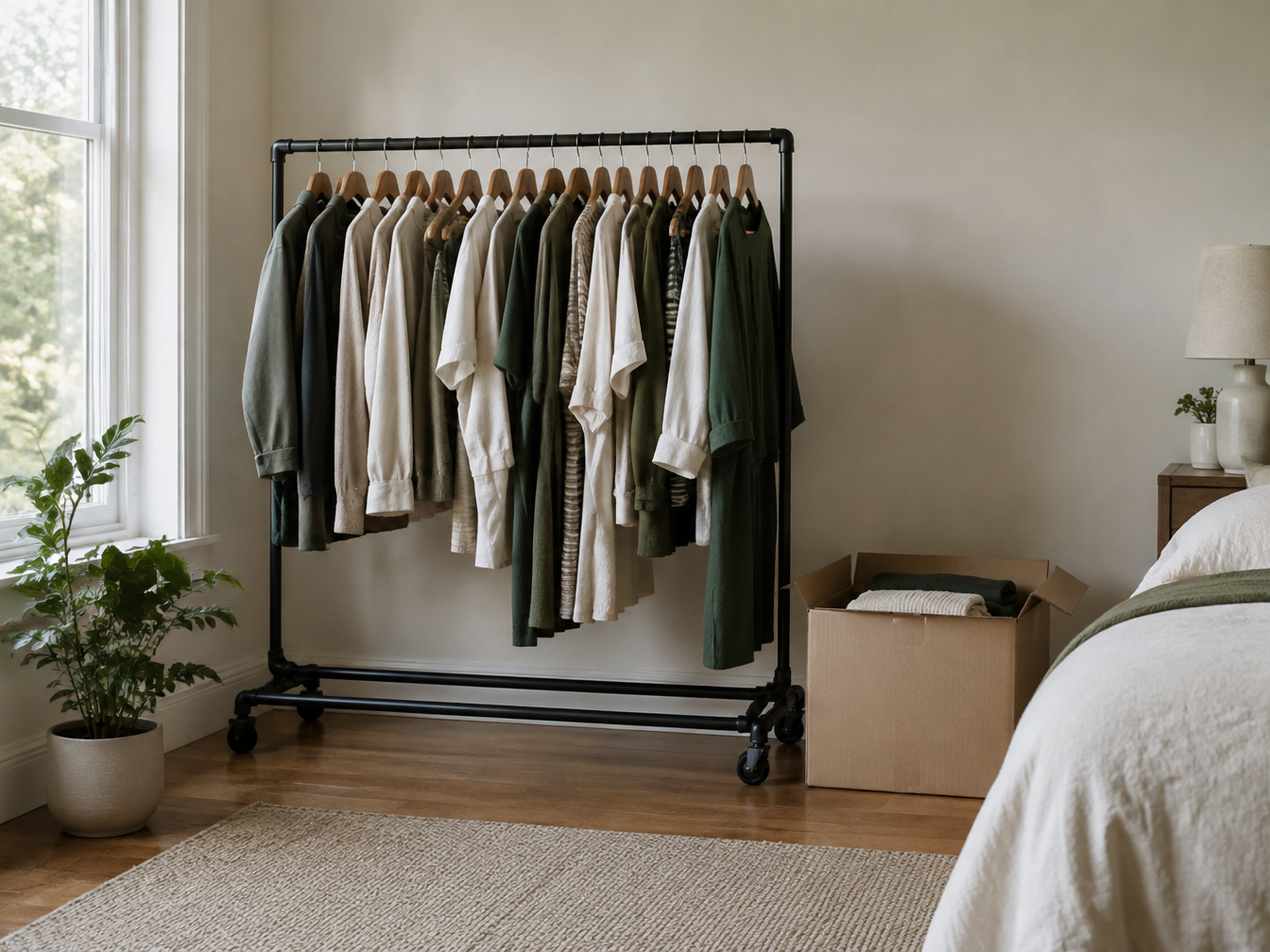
I needed a rule, because I know myself, and left alone I’d keep seventy “favorites” and call it minimalism. I borrowed one from Project 333, the challenge created by Courtney Carver: wear thirty-three articles of clothing or fewer for three months [2]. Clothing, accessories, jewelry, outerwear and shoes all count toward the thirty-three. Underwear, sleepwear, lounge clothes and workout clothes don’t, and neither does a wedding ring or a sentimental piece you never take off [2].
Everything that doesn’t make the cut gets boxed up or given away [2]. I chose the box, because I’m brave but not that brave.
Here’s what nobody warns you about. Picking thirty-three things is not a shopping decision. It’s a series of tiny arguments with yourself. Do I keep the green dress because I love it, or because I paid a lot for it? Do I keep the jeans that fit, or the jeans I’m “going back to”? Every item had to answer one question out loud: when exactly will I wear you?
By midnight I had thirty-three pieces on a rolling rack and a very quiet room. The rack looked small. It also looked, for the first time in years, like a person.
The Woman Who Dresses for Her Boss
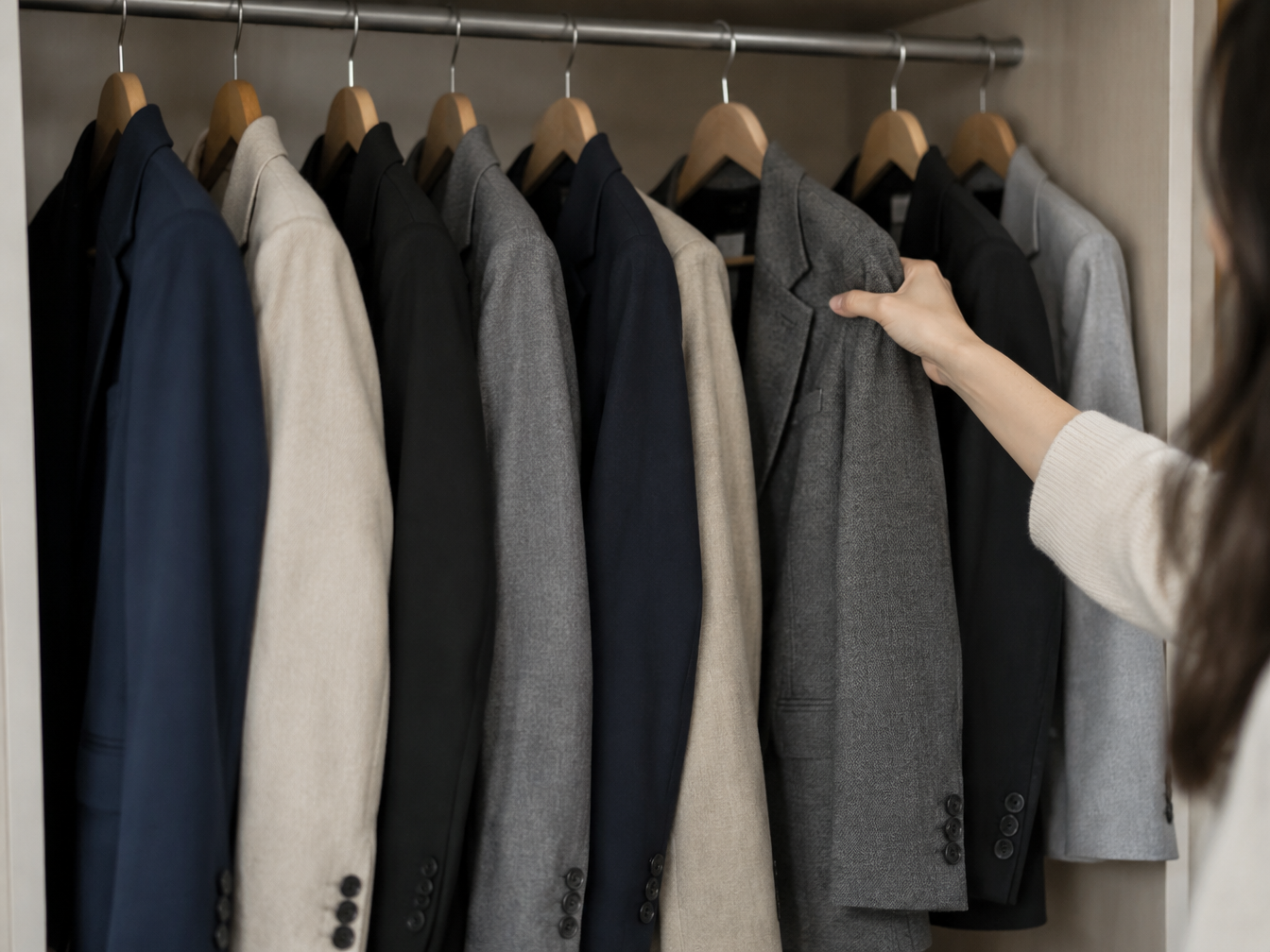
The first group I had to cut was the one I expected. It was the Professional Me, the woman who wears blazers like a bulletproof vest.
I owned nine blazers. Nine. When I laid them out I noticed they weren’t different styles, they were different levels of fear. The stiff navy one was for days I expected to be questioned. The soft oatmeal one was for days I wanted to seem approachable but not too approachable. I had built a whole wardrobe around managing other people’s opinions of me before they’d even formed one.
I kept one blazer. It fits like it likes me. The other eight went into the box, and I felt a strange little grief, like I was letting go of eight coworkers I had never actually enjoyed.
I’d felt something like it before, when I stopped wearing makeup for thirty days and discovered how much of my morning routine was armor in disguise.

What surprised me was Wednesday. I wore the one blazer to a meeting where I had to disagree with someone, and I didn’t reach for armor. I reached for the jacket I’d chosen, and it was enough. Some of that confidence, I think, came from nobody being able to tell which version of me had shown up. There was only one.
I think about that more than I expected. For years I’d believed that dressing differently for different rooms was just good manners, a kind of social flexibility. Maybe it is, a little. But there’s a difference between adjusting your tone and changing your whole personality at the door, and my closet had been voting for the second one every morning.
The Woman Who Dresses to Be Looked At
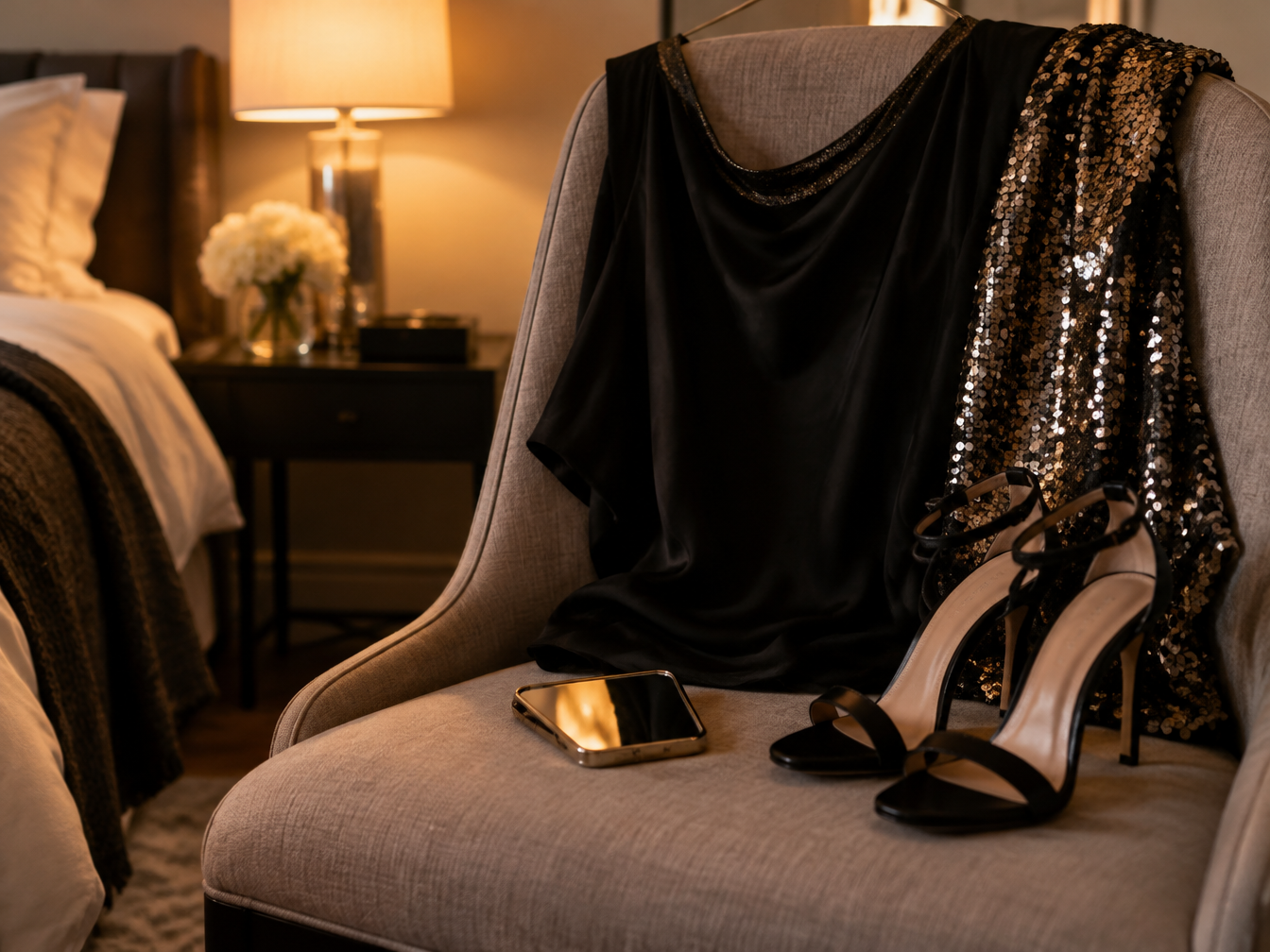
The second group was harder to be honest about. These were the clothes that exist for a photograph, a party, a specific Saturday night when somebody might finally notice me.
The sequined top lived here, along with a backless dress I’d worn exactly once and a pair of heels that could only be worn while sitting. These clothes weren’t bad. They were just about an audience, and the audience wasn’t in my apartment.
I’m not telling you to give up sparkle. I kept one sparkly thing, a plain black top with a little shine at the neckline, because I decided joy is allowed in a capsule. But I noticed how much of my closet was built for being seen, and how little of it was built for being comfortable while no one was looking.
The wardrobe of someone who dresses only for the look of the thing is a wardrobe that never gets to relax. I’d been dressing for a crowd that wasn’t there, every single day, and then wondering why I felt so tired.
The funny part is that I love getting ready for a night out. I’ve written about why getting ready for a party is my favorite part of the night, and it still is. The ritual was never the problem. The problem was owning forty garments for an event that happens twice a month, and treating the other twenty-eight days as a waiting room.
The Woman I Was Saving Clothes For
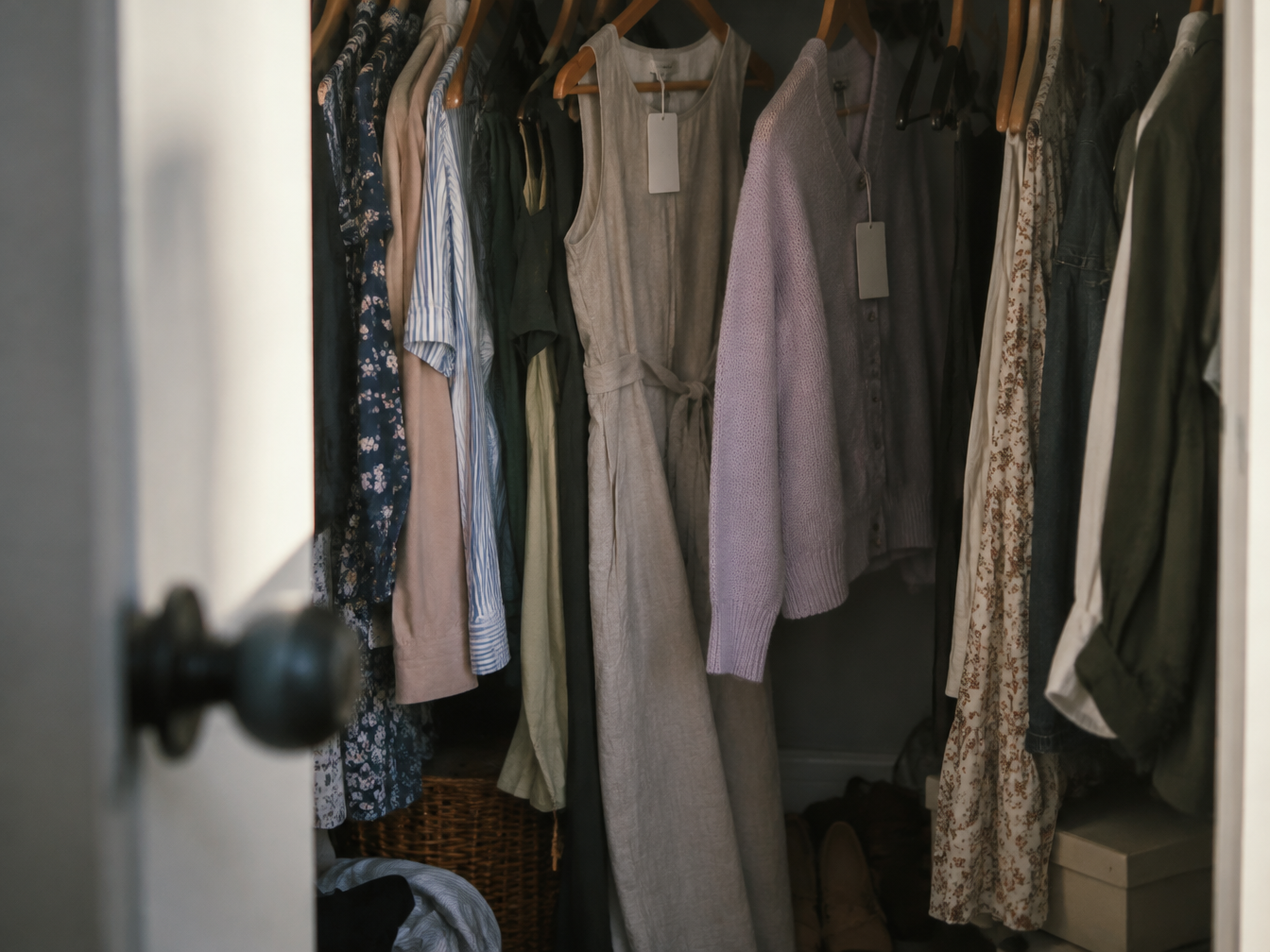
This was the group that actually made me cry, and I did not expect it to be about cardigans.
Behind the rest of my clothes hung the pieces for a woman who doesn’t exist yet. She is a little thinner. She goes to the gym at six in the morning. She hosts dinner parties in a linen jumpsuit. She has a gallery opening to attend. She has her life together, and she has a lot of tags still attached.
I had been saving clothes for her for years, and in doing so I’d been quietly telling the real me that she wasn’t ready for nice things. I’ve written about dressing for a life you haven’t started yet, but I didn’t know how much of it was sitting in my own wardrobe until I was forced to choose.
I kept one of her outfits. Just one. I wore it to a Tuesday lunch with a friend, with no gallery and no occasion, and I told myself that was her opening night. She did fine.
The Woman Who Copied Everyone
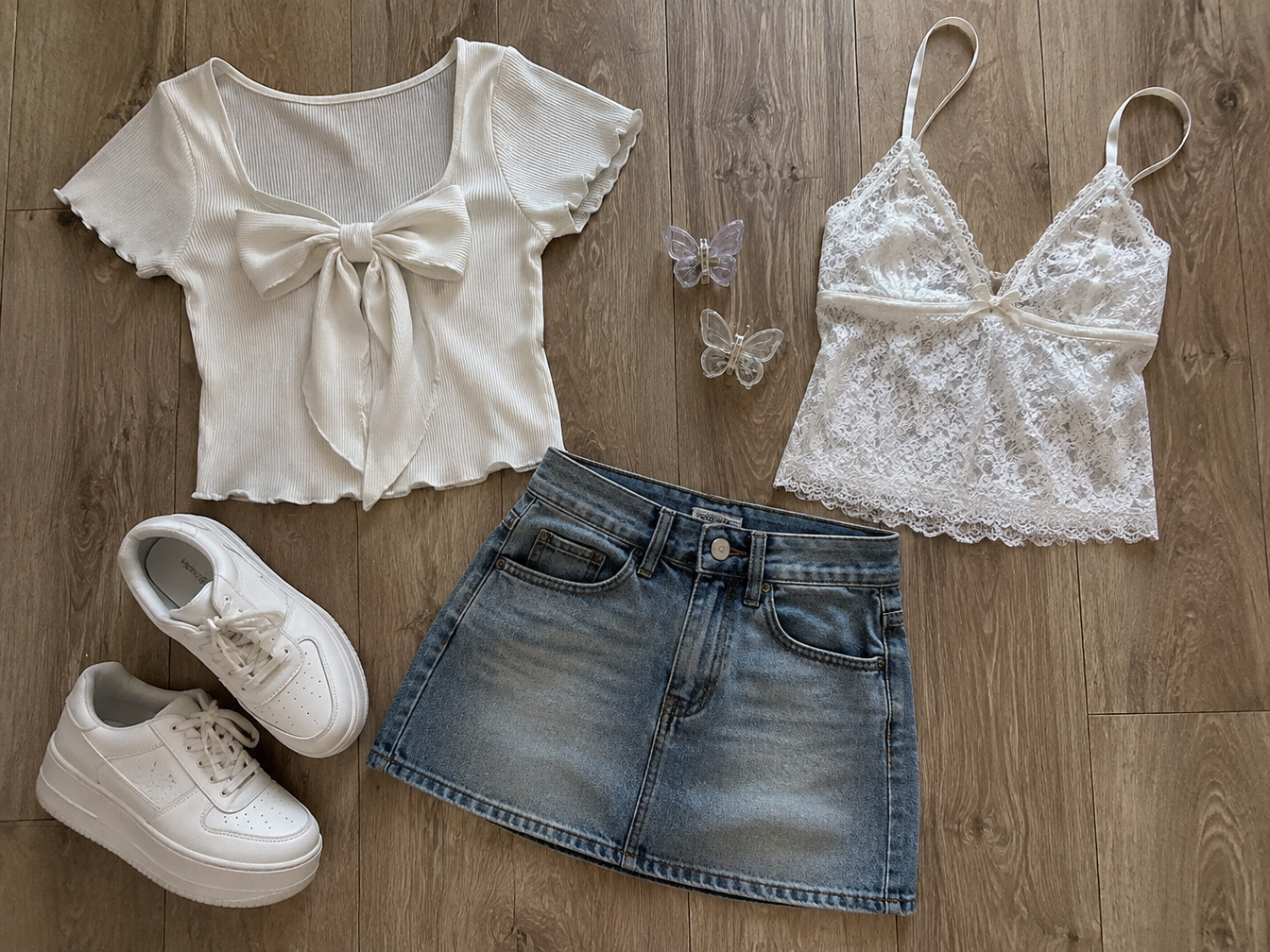
The fourth group was the trend pile, and it was the largest. Every season I had bought a tiny slice of a different identity, because someone I follow had made it look easy. A bit of coquette. A bit of Y2K. A bit of whatever was winning that month.
None of it was wrong. But when I tried each piece on in front of the mirror and asked whether it was mine, a surprising amount of it came back with a polite no. I’d gone through the same thing when I looked at how my Y2K outfits changed over the years, and the lesson was the same here: a trend I loved at twenty is a different thing from a trend I’m borrowing at thirty.
I also saw how often I’d been shopping to fix a mood. A bad week meant a new top. A breakup meant new boots. The clothes weren’t a wardrobe. They were a diary I’d bought in installments.
Looking at the final thirty-three, the pattern was almost funny. They were not trendy and they were not boring. They just all belonged to the same person, who turned out to like soft fabrics, deep greens, and pockets.
I also noticed that the pieces I kept were the ones I’d already worn the most, which is a boring discovery with a big consequence. My closet had been telling me what I liked for years. I just hadn’t been listening, because I was too busy shopping for the woman I thought I should be.
What a Capsule Wardrobe Cost Me and What It Gave Back
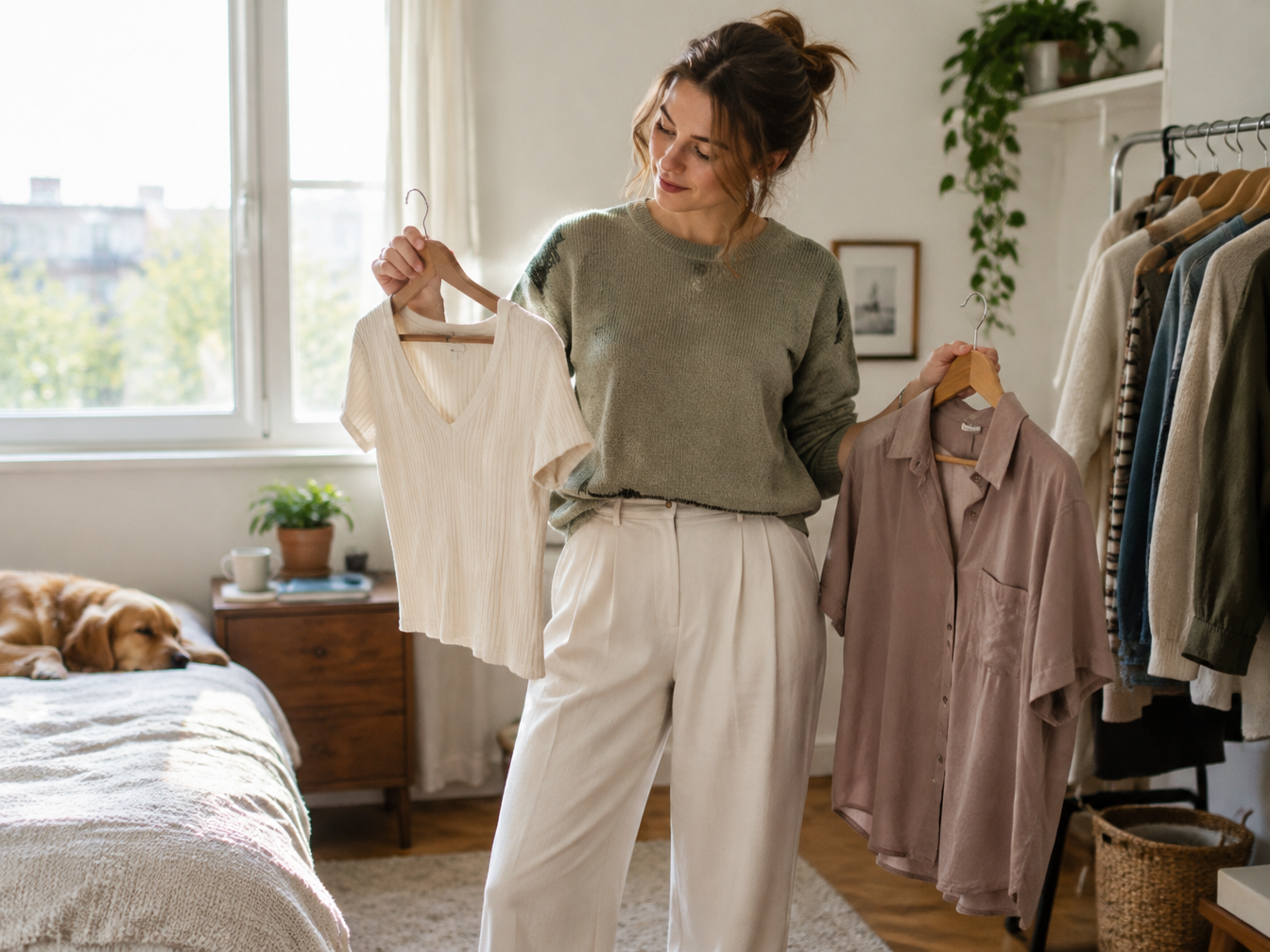
I won’t pretend it was all peace and light. By week three I was bored of the same sweater, and on a bad Thursday I wanted to rip the lid off the box and wear a dress with a bow on it just to feel something. That boredom is real. It’s also useful, because it tells you what you actually miss. I missed two things, and I reached into the box for exactly those two.
The swap felt like a tiny act of honesty. I took a pair of wide trousers out and put a skirt I’d forgotten about in, and the rack felt right again. A capsule isn’t a prison. It’s a draft you keep editing until it reads like you.
The mornings changed first. Getting dressed went from a twenty-minute negotiation to a two-minute decision. I wore the same few pieces in new combinations, and I noticed, as I did when I wore the same outfit for a week, that almost nobody noticed. The only person keeping score of my repeats was me.
The box also made me look at the bigger picture. In 2018, according to the EPA, Americans generated about seventeen million tons of textile waste, and roughly eleven million tons of it ended up in landfills, while the recycling rate for clothing and footwear was only thirteen percent [3]. I’m not saying my small box fixes that. I’m saying I stopped adding to a pile I’d been feeding without thinking, and I gave away what I could instead of tossing it.
The Version of Me Who Stayed

On day ninety I opened the box. I thought I’d feel relief, or a rush of reunion. Mostly I felt like I was visiting a museum of a woman I’d been.
I took out eleven pieces and put them back on the rack. The rest went to friends and a donation bag. I didn’t feel a loss. I felt like I’d finally done the thing everyone says about decluttering, that you keep what matches who you are right now, and I understood it as something other than a slogan.
There’s a particular outfit I reach for when I need to feel like myself again, and after ninety days I understood why it works. It was never magic. It was the only thing in my closet that had no audience in mind.
If you try this, you don’t have to hit thirty-three. Pick a number that scares you slightly and go. What you’re really counting isn’t clothes. It’s how many women you’ve been dressing for, and the right number turns out to be one.
Sources
- Capsule wardrobe. Wikipedia. https://en.wikipedia.org/wiki/Capsule_wardrobe
- What Is Project 333? Life Edited. https://lifeedited.com/what-is-project-333/
- Textiles: Material-Specific Data. U.S. Environmental Protection Agency. https://www.epa.gov/facts-and-figures-about-materials-waste-and-recycling/textiles-material-specific-data
Leave a Reply