A man in a meeting once called my idea “cute.” Not wrong, not weak, not risky. Cute. He said it the way you’d say it about a puppy that had just learned to sit.
I was wearing a pale pink cardigan, a little blush on my cheeks, and a hair clip shaped like a bow. I’d spent forty minutes on that idea. I watched the word land in the room and I watched everyone, including me, quietly agree that it fit.
That afternoon I went home and stared at my closet full of pastels and thought: is this the problem? Then I got angry, because the real question was why softness had to be one.
Where the Soft Girl Came From
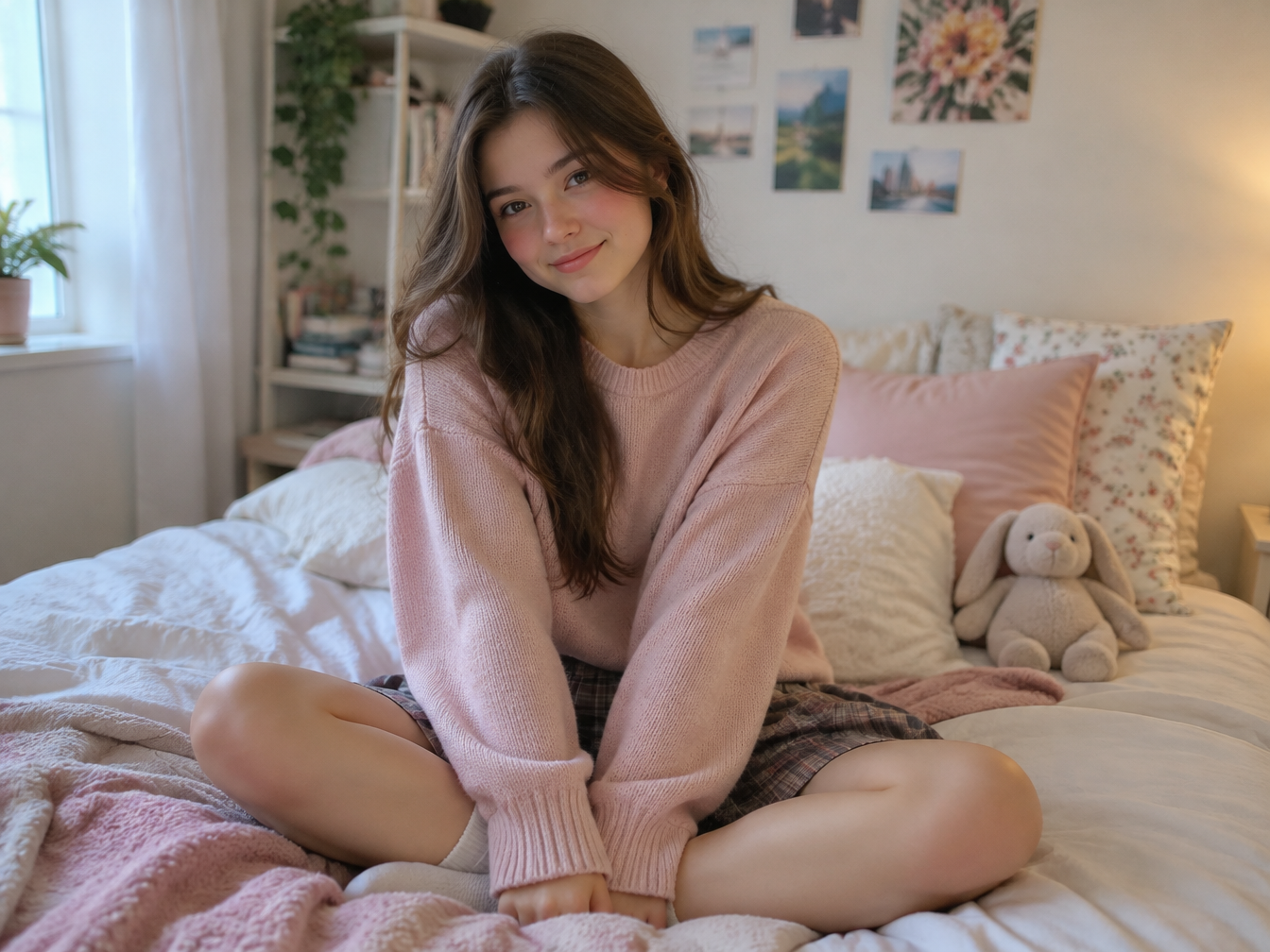
Before I defend anything, I want to understand it. The soft girl look is usually described as a deliberately cutesy, feminine style, popular among young women on social media, with pink and yellow tones, floral and heart patterns, oversized sweaters, plaid skirts and a generous swipe of blush [1]. The term was floating around online in 2018, took off in 2019, and picked up its first Urban Dictionary entry in April of that year [1].
By most accounts it grew up on TikTok, part of a wave of “girl” types that included e-girls and VSCO girls [1][2]. It borrowed from Y2K, anime, K-pop and the nineties, and it leaned on soft pastel colors, stuffed animals and fluffy pillows [2]. It also looks like a quieter cousin of kawaii, which is the louder Japanese cute culture it resembles [2].
Here’s the detail I keep returning to. Dictionary.com notes that “soft girl” hasn’t really been used as an insult the way “VSCO girl” was [1]. People laughed at the VSCO girl. They mostly just filed the soft girl away as harmless.
Harmless is a strange compliment. It’s what you say about things you don’t plan to take seriously.
I think that’s the quiet trap inside the whole aesthetic. If nobody mocks a look, it feels safe, and if it feels safe, it can slide into a place where nobody argues with it or learns from it. The soft girl doesn’t get roasted. She gets patted on the head. And a pat on the head is just an insult wearing a cardigan.
The Day Someone Called My Ideas Cute

Back to the meeting. The reason the word hurt wasn’t the word. It was that I’d half expected it. I had dressed for the room I was about to walk into, and the room’s verdict was already built into the way I’d built my outfit.
I’m still learning how to find my personal style after years of copying everyone else, and one thing I’ve noticed is how often we confuse a look with a personality. I wore pink because it made me feel like myself. Somebody else read it as a promise that I’d be agreeable.
Those are two different messages, and the second one is not mine to carry. A soft color doesn’t contain an opinion about my intelligence. A bow doesn’t know anything about my negotiation skills. The meaning gets attached by whoever is looking, and it’s usually attached from habit.
I asked three friends about it later, all of them women who work in rooms full of people who talk over them. Every one had a story about being read as junior because of a color. One had stopped wearing yellow to client meetings. Another kept a gray blazer in her desk drawer, like an emergency exit. None of us had ever said it out loud, and we’d all been doing it for years.
I did something unexpected after that meeting. I didn’t change my clothes. I changed my reply. Next time, when someone called the idea cute, I said, “It’s also profitable.” The room laughed. The idea got funded.
What We Are Really Calling Weak
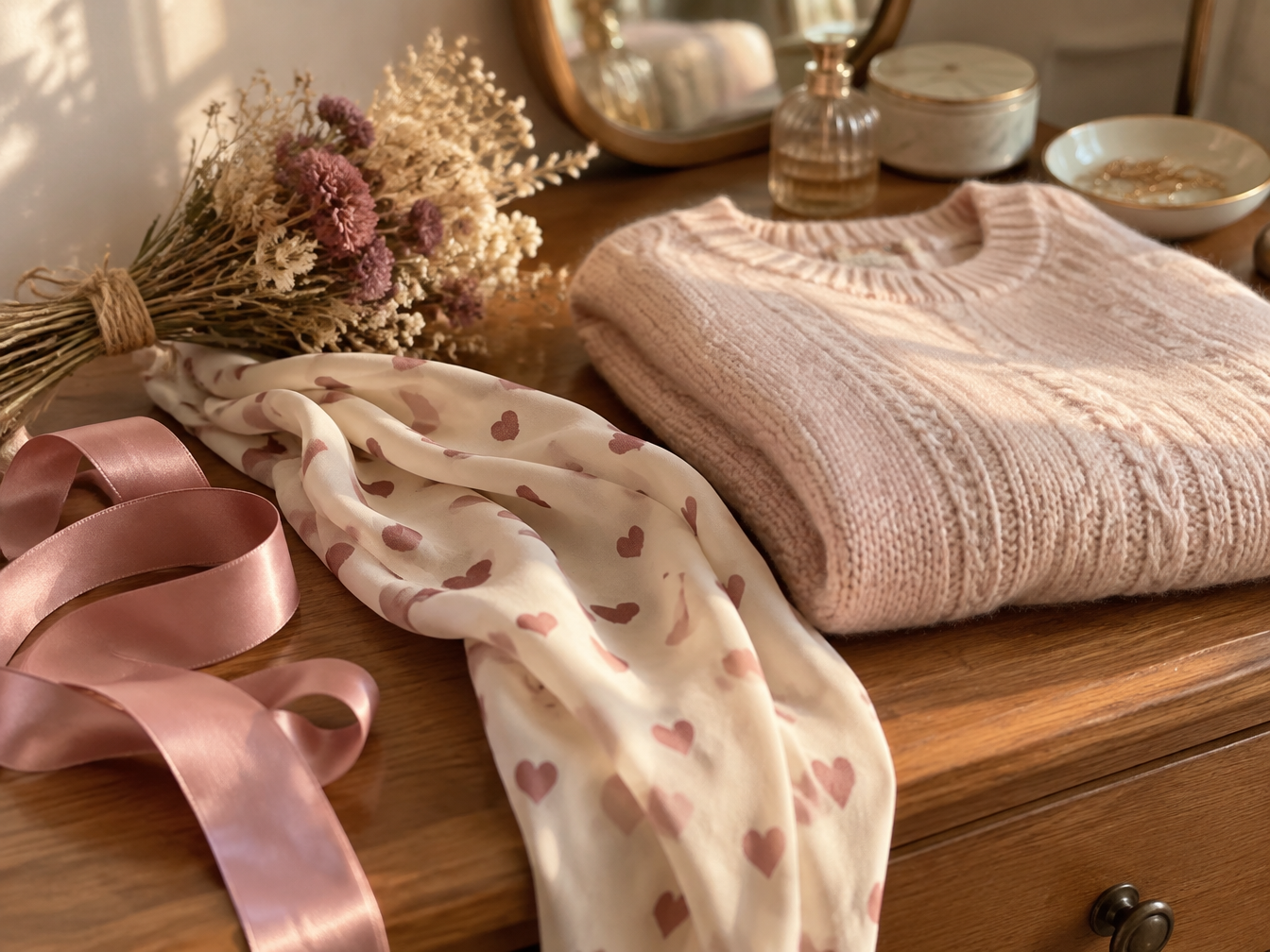
Think about which qualities get called weak. Gentleness. Patience. Noticing how people feel. Saying thank you out loud. Liking things earnestly. Crying at a commercial and not apologizing.
Then look at the clothes that signal those qualities. Pastels. Soft knits. Hair ribbons. Flowers. Heart prints. The clothes aren’t weak. They’re a costume for tenderness, and tenderness is the thing we keep getting told is a liability.

Dictionary.com points out that a 2019 piece in The Guardian argued the soft girl look might be a critique of power dynamics, and even a form of self-empowerment [1]. I find that idea more interesting than any trend report, because it flips the reading. Maybe wearing the thing you’ve been told not to wear is the loud move, and the muted blazer is the quiet one.
I can only speak for myself. When I’m in a soft sweater and blush, I’m more patient in a negotiation. I listen longer. I don’t rush to fill the silence with something sharp. If that’s weakness, I’d like to see a stronger tool for building trust.
It’s also worth saying that gentleness has a track record. The people I’d follow into a hard conversation are almost never the loudest ones. They’re the ones who make it safe for the rest of us to say the true thing. Softness, in practice, tends to be what leadership looks like before anyone gives it a title.
Armor Is Also a Costume

I used to think the opposite. For about five years I wore black almost exclusively, and I called it professionalism. If I’m honest, it was armor. A dark, boxy, unreadable outfit meant nobody could call me cute.
Here’s the part that’s hard to admit. It worked, in the way that being unreachable works. People didn’t call me cute. They also didn’t tell me their real ideas, ask me for help, or sit next to me at lunch.
I remember a quiet Friday when a new hire stopped at my desk, looked at my all-black outfit, and said, “I was too scared to ask you this.” Too scared. Of me. The woman who had spent a decade trying to be unmistakably approachable in her own head had built a wall so convincing that a kind, curious twenty-three-year-old couldn’t find the door. I laughed, then I felt a little sick, then I bought a cream sweater that weekend.
I’d done a version of this with my face too. When I tried the clean girl aesthetic and found out what it really costs, I learned that every look has a price, and the price of the sleek, polished, nothing-can-touch-me look was how little of me anyone could find in it.
Neither extreme is the answer. Black isn’t cold and pink isn’t fragile. The problem was never the palette. The problem was believing I had to choose a suit of armor to be taken seriously, and that tenderness had to be hidden to be safe.
A friend of mine, a nurse who works night shifts, put it better than I could. She told me that in her unit the toughest woman on the floor wears a pink scrub cap with cartoon flowers on it. Nobody has ever called her anything but terrifying, in the best way. The cap was never the point. Her spine was.
The Quiet Power of a Soft Look

Something I didn’t expect when I went back to my pastels was how much easier mornings became. I wasn’t performing toughness. I wasn’t managing a character. I was just getting dressed.
There’s a version of soft that is a performance, and I want to be fair about that. Not everyone who wears pink is secretly at peace, and not every soft girl is practicing radical gentleness. Some people wear it for the camera, and that’s fine. The look can be shallow or it can be sincere, the same as any other look.
I try to check which one I’m doing by asking one question before I leave the house. If nobody saw me today, would I still want to wear this? If the answer is yes, it’s sincere. If the answer is no, I’m dressing for someone else’s camera, and I should probably pick something else.
What I noticed in myself was a difference between softness as decoration and softness as a decision. When it’s decoration, I’m waiting for someone to approve it. When it’s a decision, I’ve already approved it and the opinions arrive late.
I thought of this when I read my own writing on cottagecore and wanting quiet. Those trends start from the same human place. We reach for the gentle things when the world feels loud, and calling that a flaw says more about the world than it does about us.
Softness Takes More Than It Gives Back
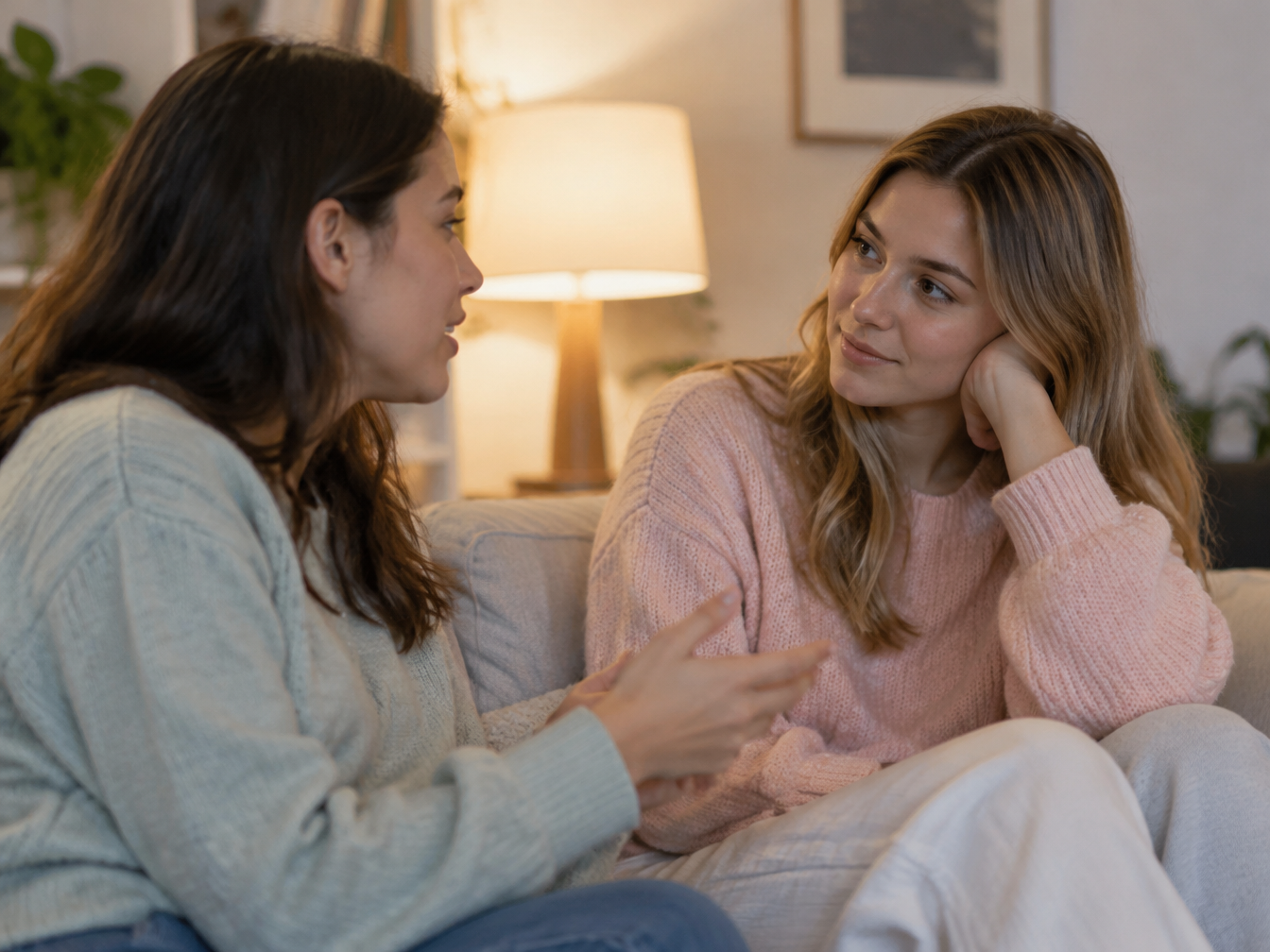
Let me not turn this into propaganda for pastels. Being soft is exhausting in ways that people who admire it from the outside rarely see.
You absorb things. A tense room lands on you. You notice the colleague who went quiet, the friend whose laugh sounded a little off, the email that read cold even though the words were polite. That sensitivity is useful, and it also costs energy that nobody budgets for.
It means you sometimes have to decide how much to give away. I’ve had to practice saying no without a paragraph of apology attached. I’ve had to learn that being kind and being available are different things, and that I can wear the bow and still close the door.
The people who love you most will not mind a clear no. The people who only like you when you’re agreeable might, and that is useful information. Every boundary I’ve set while wearing something pink has been respected faster than the ones I set in black, which I’ll be thinking about for a long time.
This is the real difference between soft and weak. Weak is when you can’t set a limit. Soft is when you set one gently and it still holds. I used to think the gentleness was the weakness. It turned out the missing boundary was.
How I Stopped Apologizing
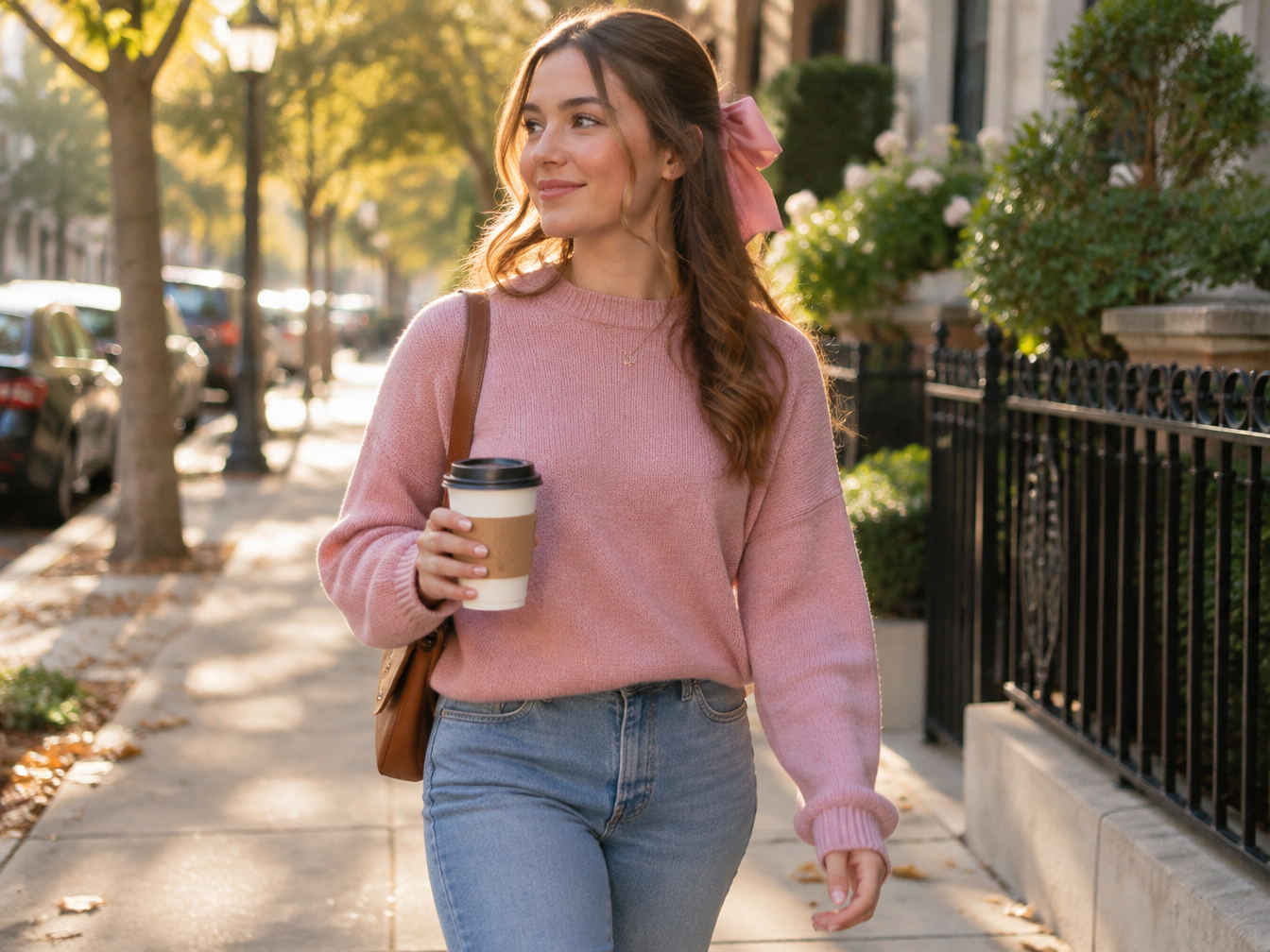
The apology habit was the last thing to go. I used to explain my clothes before anyone asked. “I know it’s a lot of pink.” “I swear I’m not as sweet as I look.” I was handing out disclaimers like a tiny walking terms-and-conditions page.
The change started with the smallest swap. I trimmed my nails short and natural, after I gave up long acrylics for short natural nails, and noticed that I stopped fidgeting with them in meetings. Soft, I realized, doesn’t have to be fussy. It can be calm.
Then I stopped narrating. I wore the pink cardigan and said nothing about it. A coworker told me she’d been admiring it for weeks and was nervous to say anything. Another told me my softness was the reason she’d asked me for help with a project that scared her.
I don’t think the soft girl aesthetic will save the world, and I’d be embarrassed if you thought I did. But I know what it did for me. It gave me a way to be gentle in public without asking permission.
If you’re standing in front of your own closet right now, holding the soft thing and wondering whether it will cost you something, I’d say wear it and find out. You might lose an argument you never needed to win. You’ll probably keep the person you were about to hide.
So here is where I’ve landed, in a blush-pink sweater with a bow in my hair: call my idea cute if you want. Then watch me fund it.
Sources
- Soft girl. Dictionary.com, Culture and Slang. https://www.dictionary.com/culture/slang/soft-girl
- Soft girl. Wikipedia. https://en.wikipedia.org/wiki/Soft_girl
Leave a Reply