There is a particular kind of girl who walks into a coffee shop in October wearing a camel coat that is slightly too big, carrying a library book she hasn’t opened yet, and looks like she has a secret. I know her well. For two autumns, she was me.
I never announced it. I just started buying wool. Plaid skirts, a tweed blazer from a thrift store that smelled like someone else’s attic, a pair of lace-up shoes that gave me blisters on the first day and a sense of purpose on the second. Nobody asked what it meant. But clothes always mean something, and I wanted to know what mine were saying about me.
The Girl Behind the Blazer
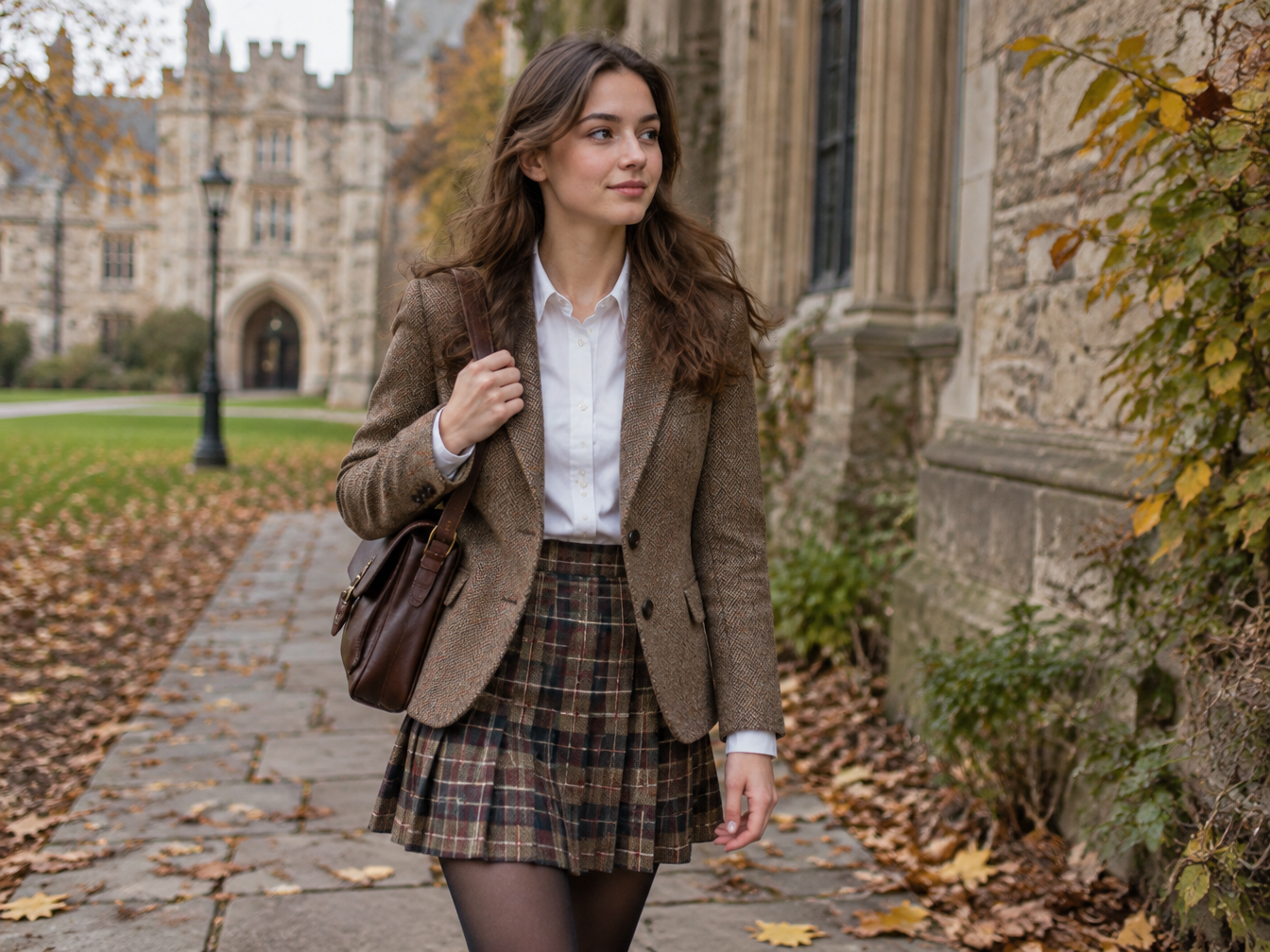
First, the history, because it’s more interesting than the hashtags. Dark academia is described as a literary internet aesthetic and subculture concerned with higher education, the arts and literature, or an idealized version of them [1]. It emerged on Tumblr in the mid-2010s, with an early fandom centered on Donna Tartt’s novel The Secret History, and it grew louder in the late 2010s and early 2020s, especially during the COVID-19 pandemic, when it moved over to TikTok [1][2].
The wardrobe is easy to picture: cardigans, blazers, dress shirts, plaid skirts and Oxford shoes, in tweed or houndstooth, in a palette of black, white, beige, brown and dark green [1]. The Daily Dot adds slouchy knit turtlenecks and pleated skirts, in gray, dark brown and black, with burgundy allowed if you’re feeling bold [2].
That’s the costume. The question I care about is the person inside it.
Most trend pieces stop at the costume. They list the cardigans and the loafers and the right shade of oxblood, and never ask why a twenty-six-year-old with a day job and a phone full of unread emails wants to look like she’s about to be late for a lecture on Byron. That’s the part I couldn’t leave alone.
Because here’s what struck me when I put on that first tweed blazer. I wasn’t dressing like a student. I was dressing like someone who wanted to have been one in a better version of the past, and the difference matters.
Nostalgia for a Life She Never Had

The Daily Dot describes the appeal as nostalgia for classic collegiate and prep school culture, plus the idea of cultivating your intellect, with reading and writing treated as mysterious and alluring [2]. I read that and thought, yes, that is exactly the feeling, and the nostalgia part is strange, because most of us are missing something we never had.
I never lived in a candlelit dormitory. I went to a large state school with fluorescent lighting and a vending machine that ate my dollar bills. My real college years were group projects and part-time shifts, not Latin poetry and moonlit lawns. But in my brown wool skirt, I felt like I’d gotten a second chance at a more romantic version.
I’ve seen the same longing in cottagecore, which was never really about the dress. Both trends are a way of borrowing a world that feels calmer and more beautiful than the one we’re living in. We can’t move into a stone cottage or enroll in a fictional college. So we put on the sweater and let it carry some of the feeling.
I don’t think that’s silly. I think it’s one of the most human things about fashion. We dress for the life we ache for, and the ache tells you something true.
What She Is Really Hiding

Here’s the more uncomfortable reading. Dark academia is a lot of layers. Blazer over cardigan over collared shirt, scarf on top, heavy coat over the lot. It’s a wardrobe made of coverings, and I started to wonder what a girl in that much fabric is protecting.
For me, the answer was embarrassingly simple. I wore the heavy, serious outfits on days when I felt unserious inside. The tweed said I had read the book, even when I hadn’t. The leather satchel said I belonged in the room, even when my stomach said otherwise.
I’d done a version of this before, when I stopped wearing makeup for thirty days and found out how much of my face was a kind of speech. Clothes work the same way. They say things on your behalf, and you’re not always the one who wrote the script.
A friend who wears the look even more faithfully than I did told me something that stuck. “When I dress like this, nobody expects me to be bubbly,” she said. “I get to be quiet and nobody thinks it’s a problem.” She wasn’t hiding anything sad. She was borrowing a costume that made her introversion look like a personality rather than a flaw.

That’s the dark academia girl’s quiet superpower. The outfit does the talking, so she doesn’t have to. For someone who finds small talk exhausting, that’s not vanity. That’s a very efficient kind of kindness toward yourself.
There’s a second layer to it, too. Dark academia is slow. It’s wool and leather and paper, things that wear in rather than wear out. In a year when everything on my phone expired by the end of the day, I wanted to own something that got better with time. A good coat doesn’t trend. It just gets softer at the elbows and starts to look like it has a history.
The Uncomfortable Parts of the Aesthetic
I’d be lying if I said the whole thing was cozy. Dark academia has real critics, and they have a point. Wikipedia notes complaints about Eurocentrism and a lack of diversity, the glamorization of unhealthy habits, and an “old money” elitism baked into the look, with a literary canon often described as overwhelmingly white [1].
That’s hard to wave away. The fantasy of the ancient university is a fantasy built in rooms where many people weren’t allowed. When I dress like that, I’m wearing a world that wasn’t built for everyone, and I try to remember it.
Some of the unhealthy habits are real too. The romance of staying up all night with cold coffee and a dying lamp looks beautiful on a screen and feels awful on a Thursday. I’ve pulled the all-nighter. I looked fantastic in the photo and terrible in the exam.
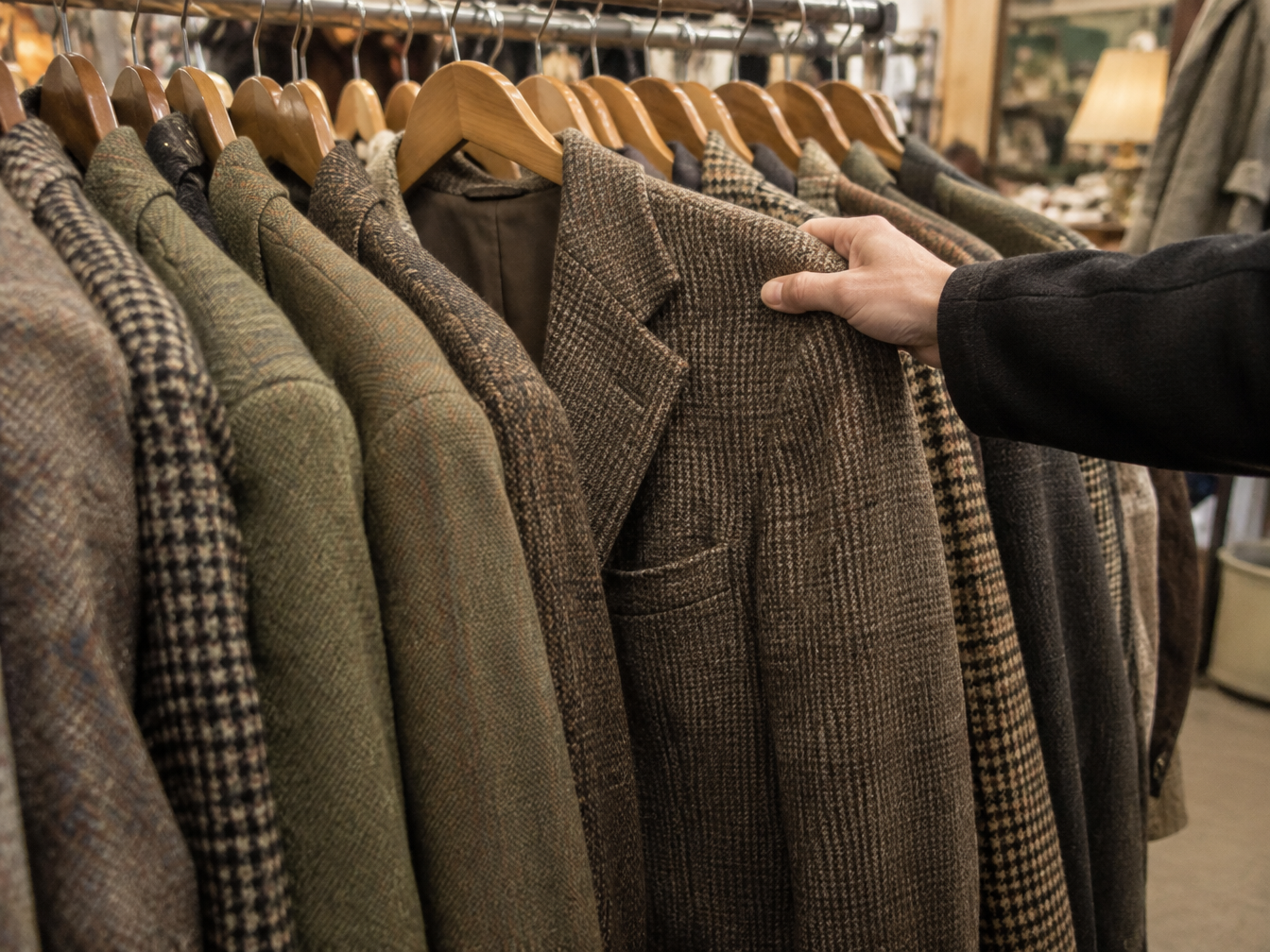
There is a counterpoint, and it’s a good one. The fashion itself is easily and cheaply sourced from thrift stores [1]. My blazer cost nine dollars. You do not need a trust fund to look like you have a library. You need a good thrift store and patience.
I’ll add one more honest note about that. The cheapest version of this look is also the most sustainable, because you’re wearing clothes that already exist and have already survived forty years of other people’s winters. Buying a brand-new “vintage-inspired” blazer to look like someone who shops secondhand misses the point by a pretty wide margin.
The Secret Joy of Dressing Like a Character
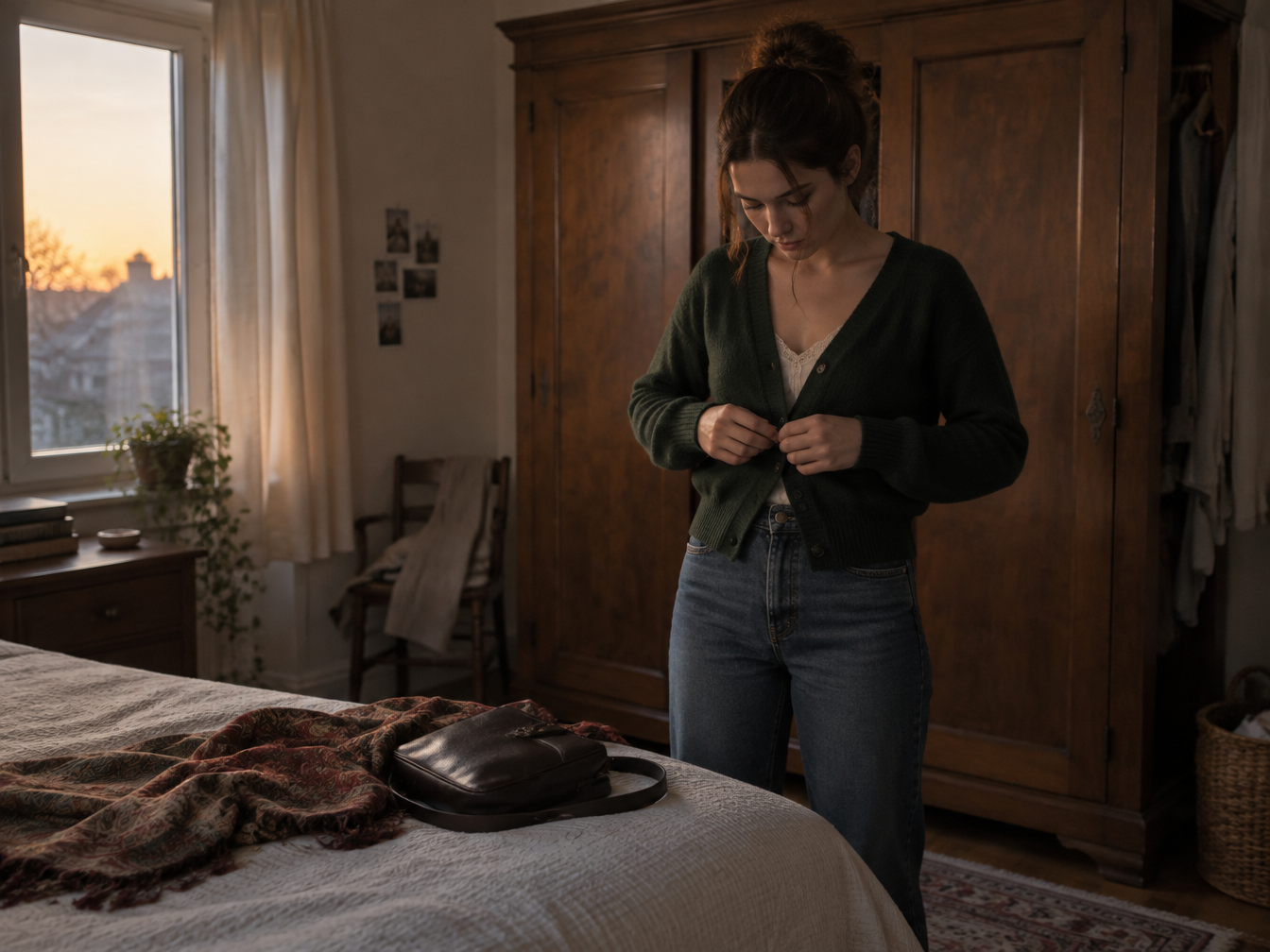
What I didn’t expect to love was the ritual. Getting dressed in the dark academia style felt like stepping into a scene. I’d button the cardigan, check the scarf, tuck a pen into my bag, and walk out the door as someone with a plot.
I think that’s the part that gets dismissed as cosplay, and I want to push back on it. Dressing like a character is one of the oldest forms of self-expression there is. People have done it with uniforms, with costumes, with Sunday best. The only new thing is that now we do it on purpose and give it a name.
It also made me braver. I’d walk into an interview or a hard conversation as the girl in the tweed blazer, and she walked in with her shoulders back. She didn’t feel afraid. I did, of course. But I’d lent her my body, and she knew where to stand.
Not long ago I wrote about the compliment I never forgot about my style, and a big part of why I remember it is that it came on a day when I felt like a character. It turns out the right costume can make a person feel believable, even to herself.
I still think about the walks. Wearing the coat, I’d cross campus-like streets on gray afternoons and feel, for ten minutes, as though a camera were somewhere behind me and the music had swelled. It’s a ridiculous feeling and a lovely one. A day that has a soundtrack is a day you’re less likely to waste.
When the Costume Starts to Pinch
By my second autumn, something shifted. The shoes still blistered. The blazer was heavy. And I noticed that I’d begun to reach for the look not because it made me feel like a character, but because I didn’t know what else to wear.
That’s the quiet danger of any aesthetic. It starts as a game and slowly becomes a uniform, and a uniform is a way of avoiding the question. If I only dress as the dark academia girl, I never have to find out who I am on a day when nobody’s watching.
I’m still building a wardrobe that sounds like me, and the lesson of that project applies here. An aesthetic is a doorway. It isn’t a destination. The best thing it did for me was show me which parts of the world I’d been longing for, and then let me carry those parts into everything else.
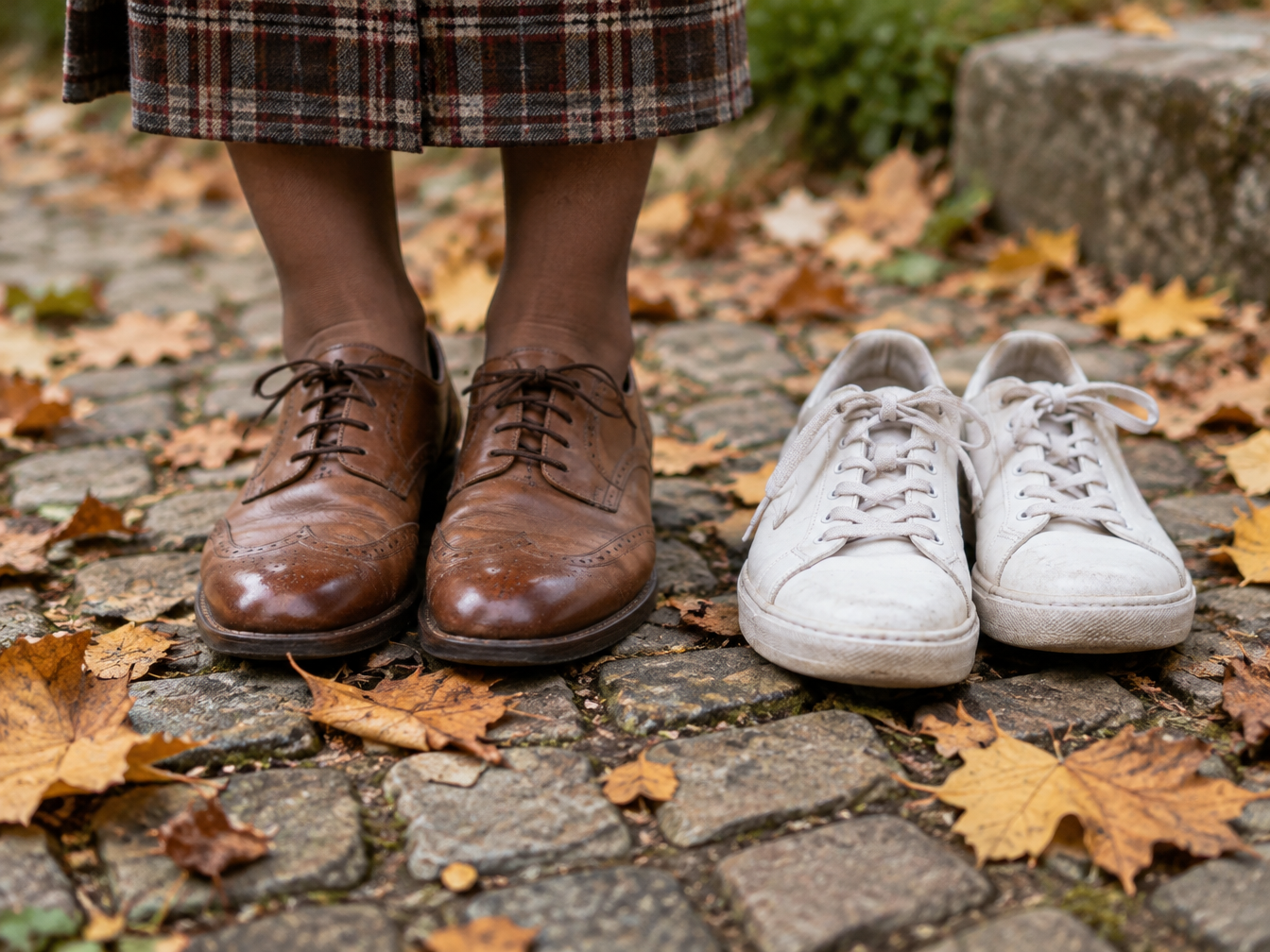
So I broke the rules a little. I wore the plaid skirt with sneakers. I wore the blazer over a plain white T-shirt, with my hair down and no scarf. It looked less like a film still and more like me, and I liked her better.
What She Says About You

So what does a dark academia outfit say about the girl who wears it? I’ve changed my mind a few times, but here’s where I’ve landed.
It says she loves stories and wants to live inside a good one. It says she’s drawn to depth, to old paper and low light, to the idea that being thoughtful is attractive. It says she may be a little lonely, or a little tired of the noise, or both. It says she’s looking for a place that feels like it has room for her.
It doesn’t say she’s pretentious, though some will assume that. In my experience the girl in the wool coat is usually the one who stays to help you stack chairs after the event and remembers the title of the book you mentioned once in passing. She’s not performing intelligence. She’s practicing curiosity in public.
And if you’re the girl in the wool coat, here’s what I’d tell you. You don’t owe anyone a reading list to earn the outfit. Wear it because the texture comforts you and the colors feel like home. Nobody gets to check your bookshelf at the door, and the ones who try are usually the ones who haven’t opened theirs in years.
I once wrote about how my Y2K outfits changed over the years, and I think every aesthetic we try is a snapshot of what we needed at that moment. Back then I needed fun. Now I need quiet. Tomorrow I’ll probably need something else.
The tweed blazer is still in my closet. I wear it on rainy days, usually with a book I actually finish. She’s still in there somewhere, the girl with the secret. I’ve stopped asking what she’s hiding, and I’ve started asking what she knows.
Sources
- Dark academia. Wikipedia. https://en.wikipedia.org/wiki/Dark_academia
- What Is Dark Academia? Stacey Nguyen, The Daily Dot. https://www.dailydot.com/what-is-dark-academia
Leave a Reply