The Day I Couldn’t Open a Can of Soda
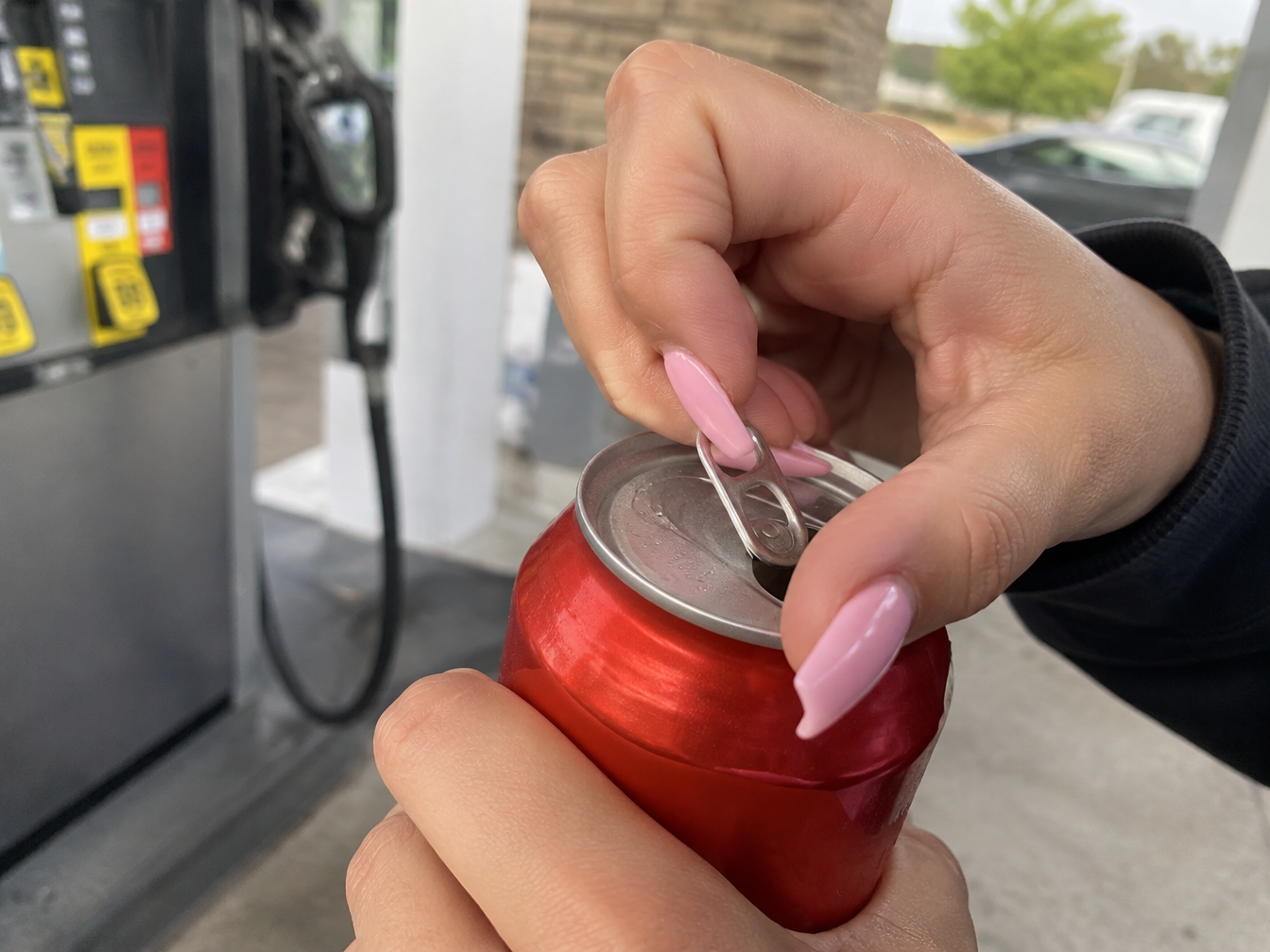
I was standing in a gas station parking lot with a can of ginger ale and absolutely no way to open it. Coffin-shaped acrylics, almond-pink, an inch past my fingertips. I tried the pull tab with the pad of my finger. I tried the side of my thumb. I tried a pen from the cup holder. Eventually I handed the can to a man pumping gas and said, “Sorry, could you?”
He opened it without looking up. I said thank you the way you thank someone for catching you when you trip. Then I sat in my car and felt a kind of embarrassment I could not explain.
I had worn long acrylics for six years. They were not just a manicure to me. They were the first thing I noticed in a mirror and the last thing I checked before leaving the house. When people complimented them I felt tall. When one popped off I felt like a woman with a missing tooth.
And yet here I was, a grown adult who could not open a can.
That night I booked the appointment I had been avoiding. I did not book a fill. I booked the removal, and I told the nail tech to leave me with whatever was underneath, even if it was awful.
It was awful. It was also the beginning of the best beauty decision I have ever made, and I want to tell you why, without pretending it was easy.
What Long Acrylics Were Really Doing to My Nails
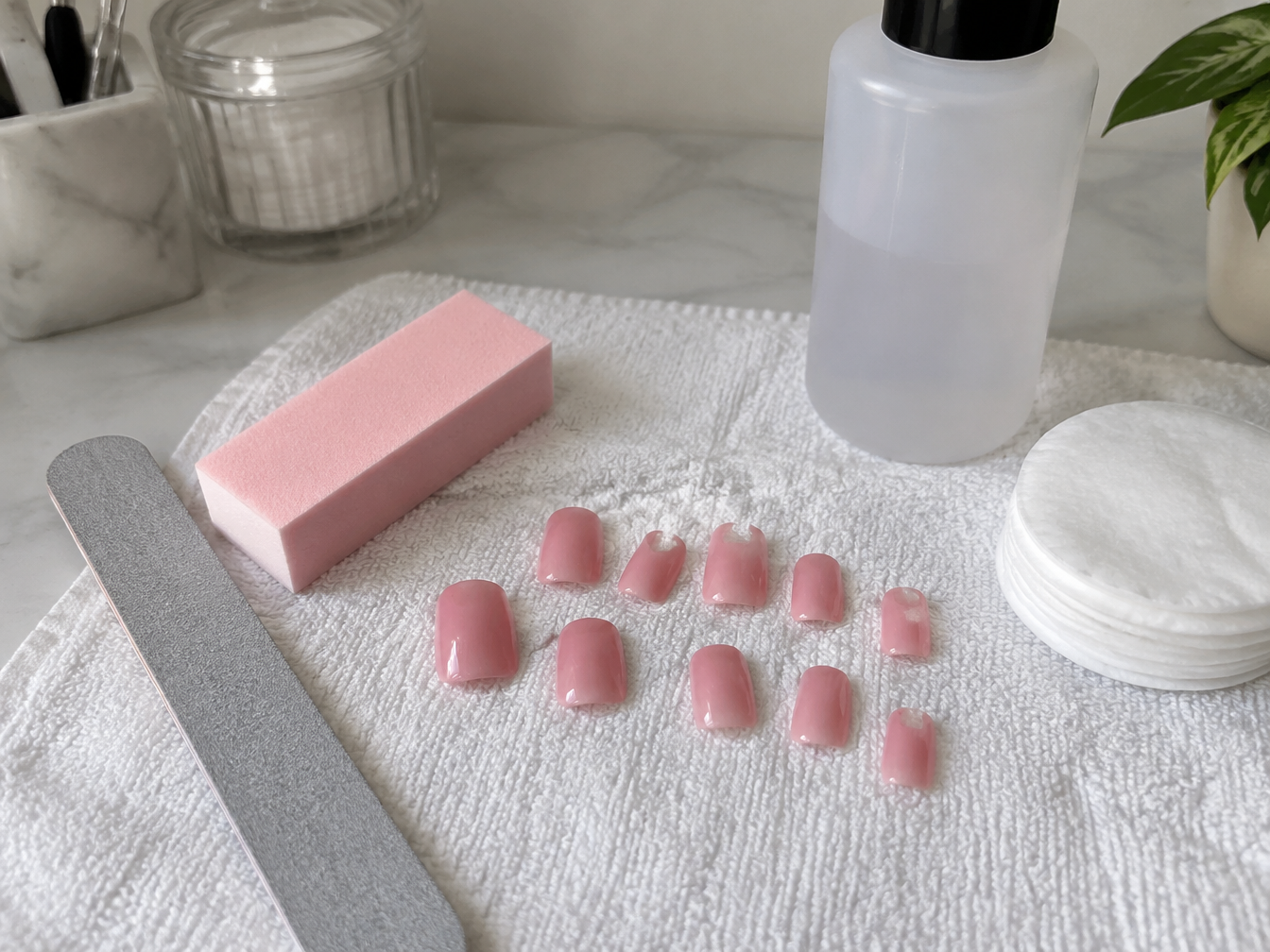
I will say upfront that I am not here to shame anyone who loves a full set. I loved mine. But once I started reading, I wanted to understand what had been happening under there for six years.
Dermatologist Amy Kassouf of the Cleveland Clinic explains that to get acrylic to stick, the top plate of your natural nail has to be roughed up, and once the coating hardens, it makes your nails very stiff and strong [1]. The American Academy of Dermatology says something similar: to make acrylics stick, the surface of your natural nails must be filed until they feel rough, and that thins your natural nails and makes them weaker [2].
The removal part is where the damage often happens. Cleveland Clinic notes that the process of applying and removing acrylics can be as harmful as the acrylics themselves, with soaking in acetone for the recommended fifteen minutes leaving nails dry and brittle [1]. The AAD adds that frequent touch-ups every two to three weeks can seriously damage the natural nails, leaving them thin, brittle and parched [2].
There is also the stiffness problem. Natural nails flex and acrylics do not, so everyday things like typing and cooking put stress on the area where the nail attaches to the nail bed. That stress can cause onycholysis, where the nail plate separates from the nail bed, and the gap can invite infection [1]. Fungal infections are the most common type linked to acrylics, though bacteria can show up too [1].
For some people there is also an allergy angle. Acrylates, the ingredient that helps acrylic nails harden, are commonly linked to allergic contact dermatitis, and Kassouf notes your eyelids might show the first signs, since that skin is so thin [1].
Not everyone who wears acrylics has problems, and Cleveland Clinic says so plainly [1]. I just realized I had never once asked my own nails how they were doing. It reminded me of the moment I saw my skincare routine for what it was, a project I was managing instead of a way of caring for myself.
The Six Months Nobody Warns You About
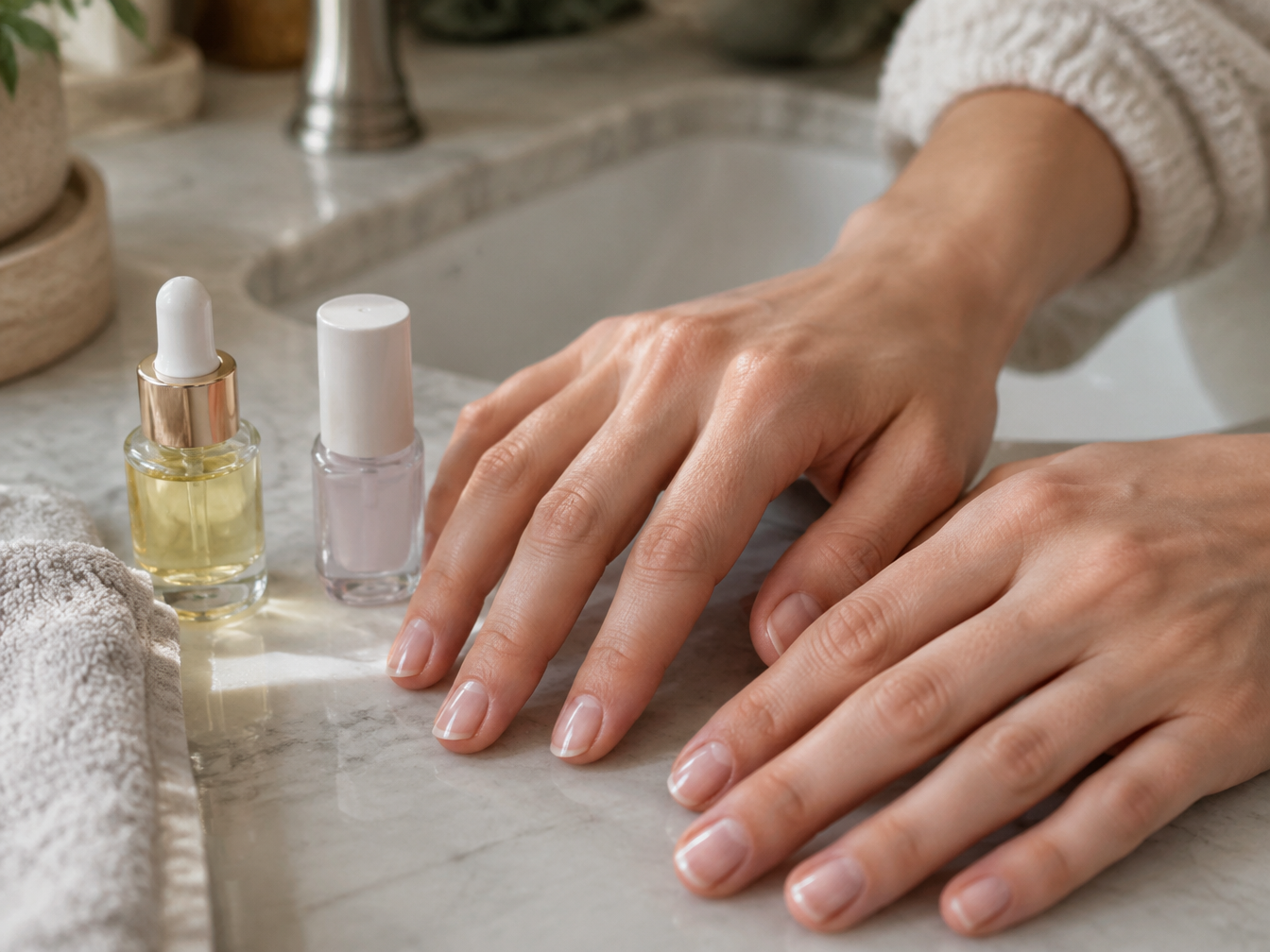
Here is the part that the pretty before-and-after photos skip.
When the acrylics came off, my natural nails looked like wet paper. Thin, bendy, ridged, with a slight yellow tinge at the tips. They snagged on sweaters. They peeled in layers. I remember looking at my hands in the bathroom light and thinking, did I do this to myself, and for what?
Kassouf’s timeline, from Cleveland Clinic, was oddly comforting. Taking acrylics off can damage or even remove the top plate of the nail, and you can end up with very weak or brittle nails for about six months before the healthy nail grows enough to replace it [1]. Six months. It has a start date and an end date, like a bad haircut.

The AAD also makes a point I wish I had read years ago: covering up brittle, soft or damaged nails can worsen existing nail problems [2]. That is exactly what I had been doing. Every time my nails looked rough, I booked a new set to hide it. The cover-up was the cycle.
So I kept them short and plain. I used a strengthening polish, moisturized my cuticles with an embarrassing amount of oil, and did not trim them, which both sources recommend avoiding because cuticles protect your nails and the skin around them from infection [1][2]. I wore gloves for dishes. I stopped using my nails as tools. I grieved the long ones a little, which sounds dramatic until you remember how much of a woman’s confidence can be sitting on her fingertips. It was the same wobbly, exposed feeling as going thirty days without makeup.
If you are in that wet-paper stage right now, hold on. It does not stay like that.
For the record, if you want to remove a set, both sources point the same way: have a professional do it rather than picking or peeling at home [1].
How My Mornings Changed Without a Full Set
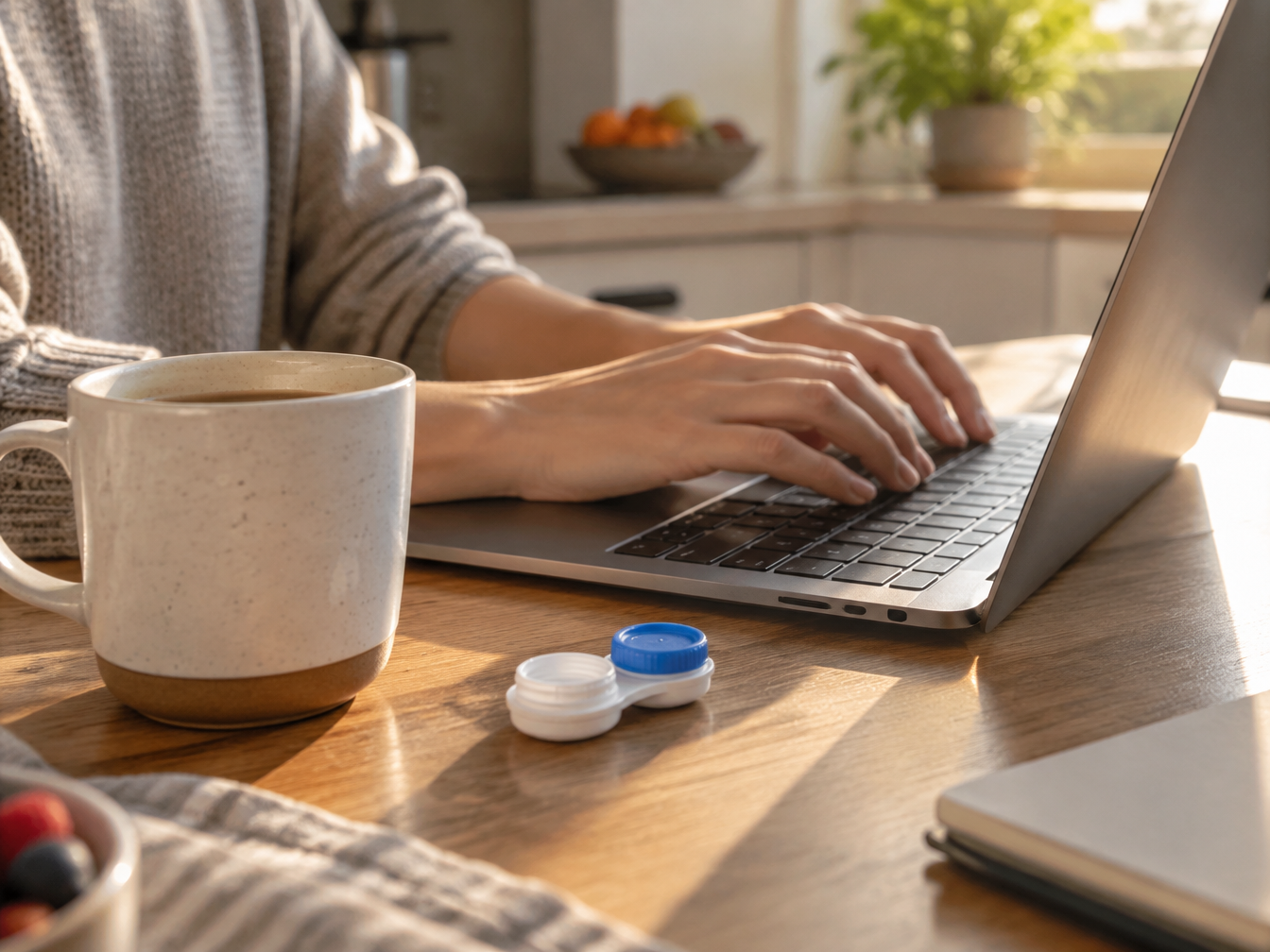
Nobody tells you how much time long nails quietly take.
I used to wake up and do a mental inventory. Are all ten still on? Did one lift in the night? I’d plan my day around what I could and couldn’t do. Putting in contacts was a nervous ritual. Texting was a typo festival. Zipping a dress, opening a bag of chips, finding a fingernail clip in a pocket, picking up a coin, all of it came with a tiny tax.
With short nails I just began my day. I typed faster. I opened my own cans. I washed my hair and actually reached my scalp. I noticed how much I had been holding my hands slightly away from my body, like a surgeon, afraid of damaging the work.
I also noticed money. A set every three weeks with a fill adds up quickly, and I do not mean that in a lecture-y way. I just mean I realized I had been pouring a small monthly rent into a look I could not touch without worrying about it.
And there was something emotional underneath it. When your nails are long, a lot of your attention goes to them. When they are short, that attention comes back to you. I thought about how it felt to dress for myself instead of for the nails. It is the same question behind why nail colors don’t fix your life and yet everyone keeps doing them anyway. The answer, I think, is that a manicure is a tiny ritual of care. The trick is making sure the ritual is for you.
The Short Nail Shapes and Finishes That Look Expensive
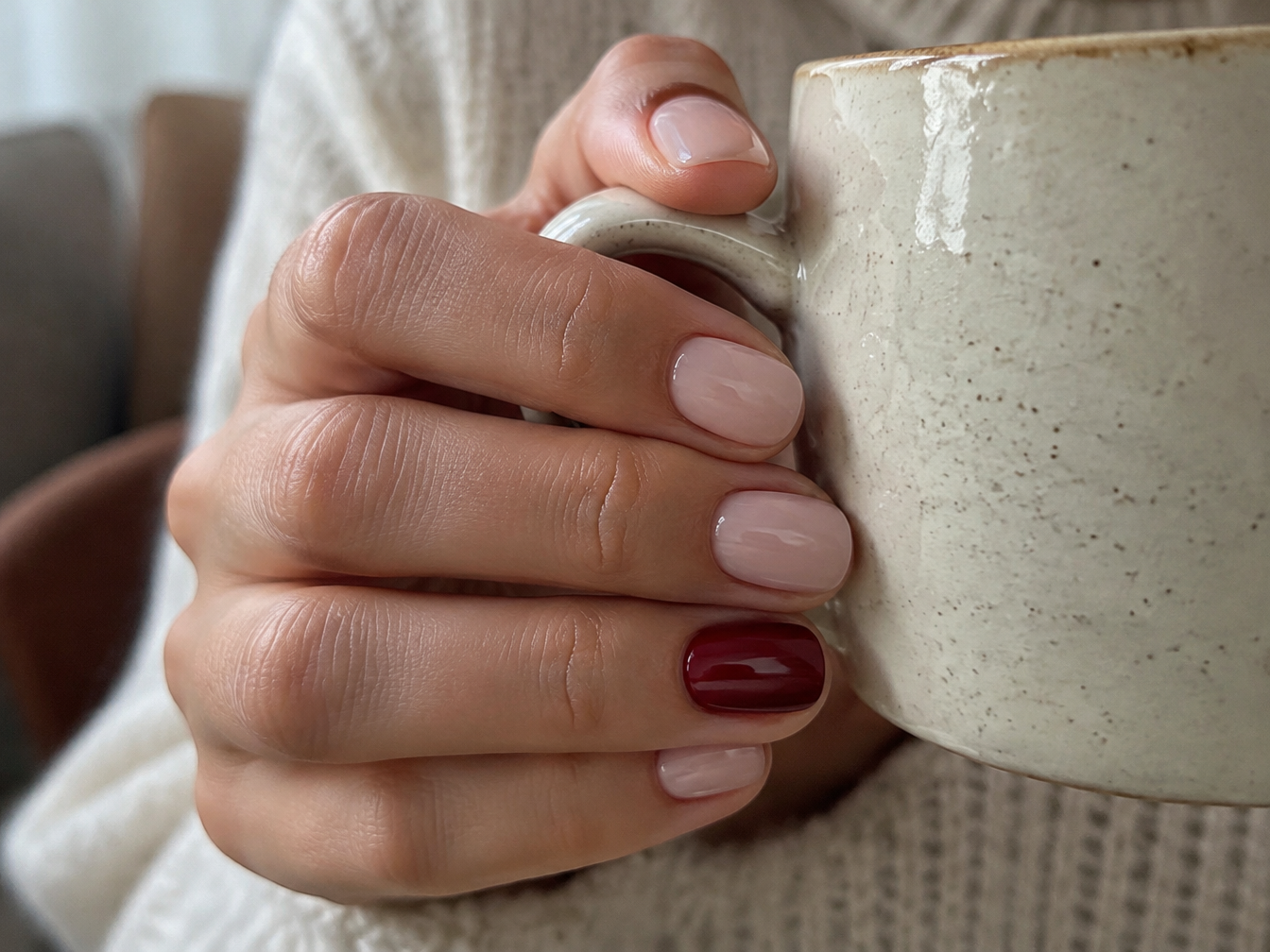
I worried short nails would look unfinished. They do not. They look like the hands of a person who has her life handled.
A few things made all the difference for me.
Squoval and Soft Square
These shapes are forgiving on short lengths. The soft edges keep the nail from snagging, and the shape lengthens the finger visually without any extension at all. If your nails are still recovering, a gently rounded edge also helps prevent splitting.
Sheer Neutrals and Milky Pinks
A sheer pink or milky white makes nails look clean and lit from within, which is a very flattering effect on short beds. Wearing a sheer shade also hides the little grow-out imperfections, so you do not need to cover them with heavy color.
Dark Reds and Berry Shades
A short nail in a deep cherry or wine reads as confident and a little old Hollywood. It is a surprisingly dramatic look on a very small canvas.
Tiny Details
You do not need a whole set of art. One nail with a thin line, a dot of glitter, or a delicate pattern is plenty. If you like the soft, romantic feel, the ideas in these lace nail designs translate beautifully to a shorter length, and the glimmer in these winter sparkly nail ideas is perfect if you want a little holiday shine without committing to a claw.
Dermatologists do note that nontoxic polish is the safest option, according to Kassouf at Cleveland Clinic [1]. So the plain, polished, healthy look is not the consolation prize. It is the recommended route.
How to Make the Switch Without Losing Your Mind
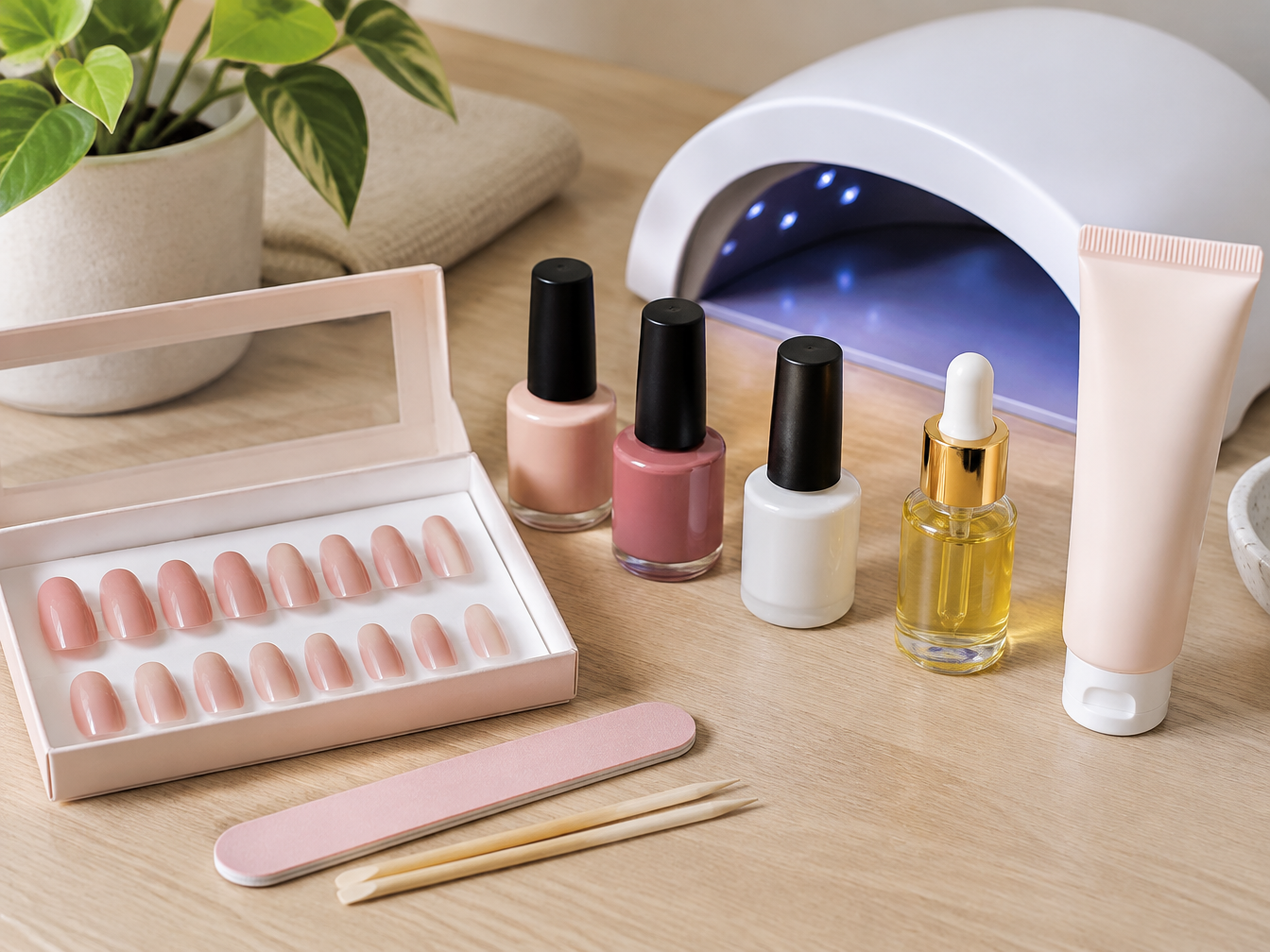
If you are standing at the edge of this decision, here is what I would tell my past self.
Pick a transition plan you can live with. You do not have to go from an inch of acrylic to bare nails overnight. The AAD suggests that if you love the look, reserving artificial nails for special occasions gives your natural nails time to repair [2]. That is a perfectly reasonable middle path, and these winter sparkly nail ideas are made for exactly that kind of occasion.
Know your alternatives. Cleveland Clinic lists press-on nails, which add length without the risk of separation, soak-off gel, which is less abrasive than acrylic though it still contains acrylate, and dip powder, which is more flexible than acrylic [1]. The AAD recommends soak-off gels over ones that must be filed off, and says LED lights emit lower UV radiation than UV curing lights and cure faster [2].
Let a professional remove your acrylics. Kassouf specifically advises against doing it yourself [1].
Be gentle in the grow-out. Keep your nails relatively short, use a strengthening polish, and moisturize a lot. Kassouf’s advice is to do anything that keeps the skin and nail area flexible and healthy [1].
See a doctor if something looks off. If you notice a gap under the nail with green, brown or yellowish crumbly discoloration, that can be a sign of fungus, and bacterial infections tend to look inflamed and sore [1]. That deserves a real appointment, not another layer of polish.
And give yourself grace. My first month felt like losing a limb. My third month felt like relief. By month six I forgot I’d ever been afraid.
What the Nails Taught Me About Being Looked At
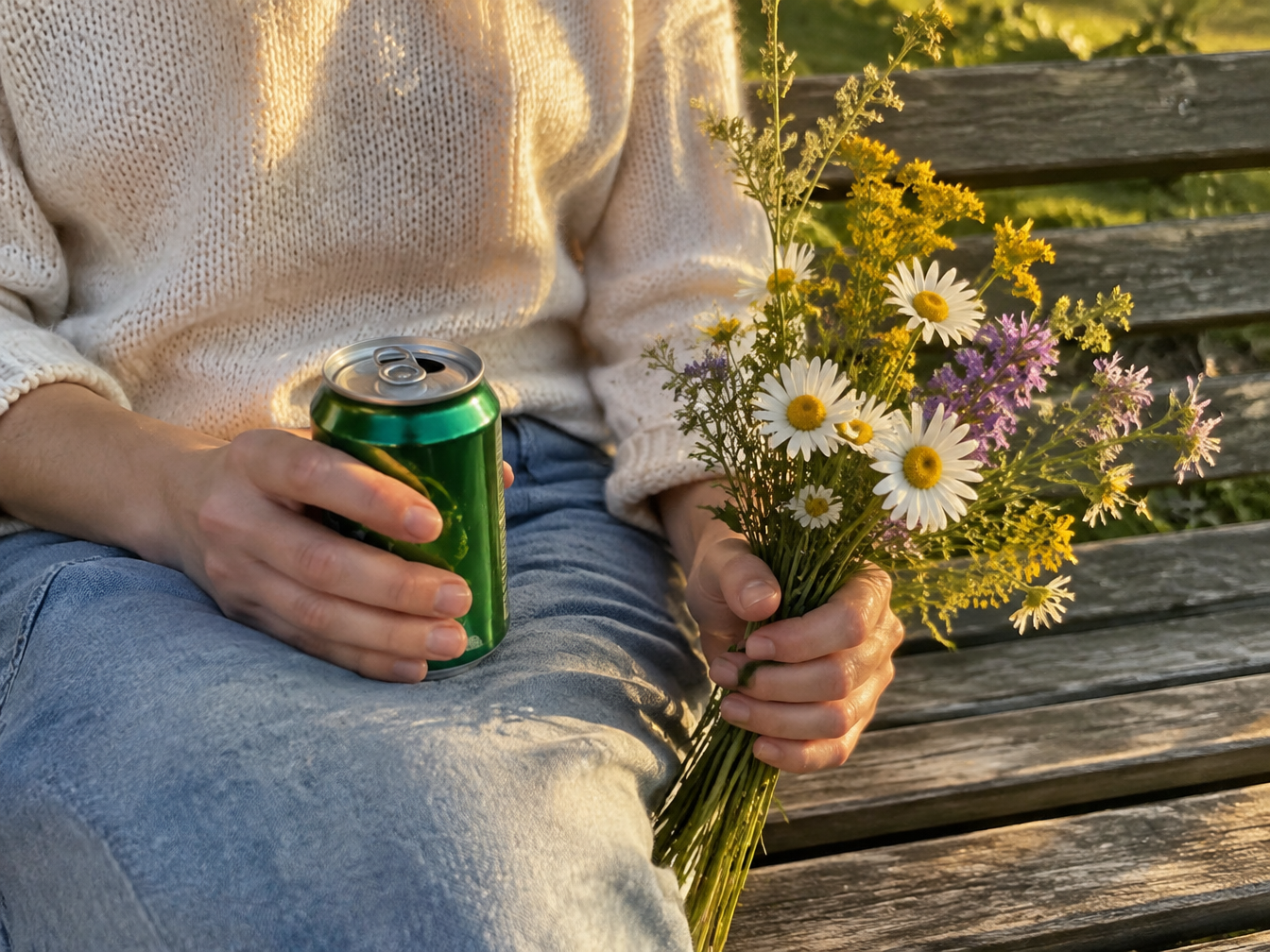
I think that gas station moment stayed with me because it exposed something I did not want to look at.
I had built a version of myself that was all surface. Long, glossy, camera-ready, and impossible to use. I wanted my hands to be noticed before they could be useful. It took a can of ginger ale to make me ask who I was performing for.
Short nails did not make me less glamorous. They made me more present in my own body. I could feel the keys when I typed. I could pick a flower and hold a hand and open the stupid can. I started noticing that people still complimented my nails, and now the compliments did not feel like a performance review.
If you love your long set, keep it, and take care of it. There is nothing shallow about wanting to feel beautiful. My point is smaller and stranger than that.
Pay attention to the moment your beauty routine starts costing you something you did not agree to pay.
For me, it cost me the ability to open my own soda. For you, it might be something else. Either way, you are allowed to put your hands back to work.
Sources
- Are Acrylic Nails Bad for Your Nails and Skin?, Cleveland Clinic, April 24, 2024.
- Artificial nails: Dermatologists’ tips for reducing nail damage, American Academy of Dermatology.
Leave a Reply