At 11:40 on a Wednesday night I stood in front of my bathroom mirror holding a serum I could not pronounce, reading the instructions out loud like a woman defusing a bomb. Step seven of eleven. My face was already stinging. I told myself that was the product working.
Then I caught my own eyes in the mirror and had a thought so clear it startled me. I do not talk to my friends the way I talk to my face. I do not hold them up to the light and list what is wrong. I do not schedule their improvement in a spreadsheet.
I had been treating myself like a project. And a project, by definition, is something that is never finished.
The Night I Counted My Bottles
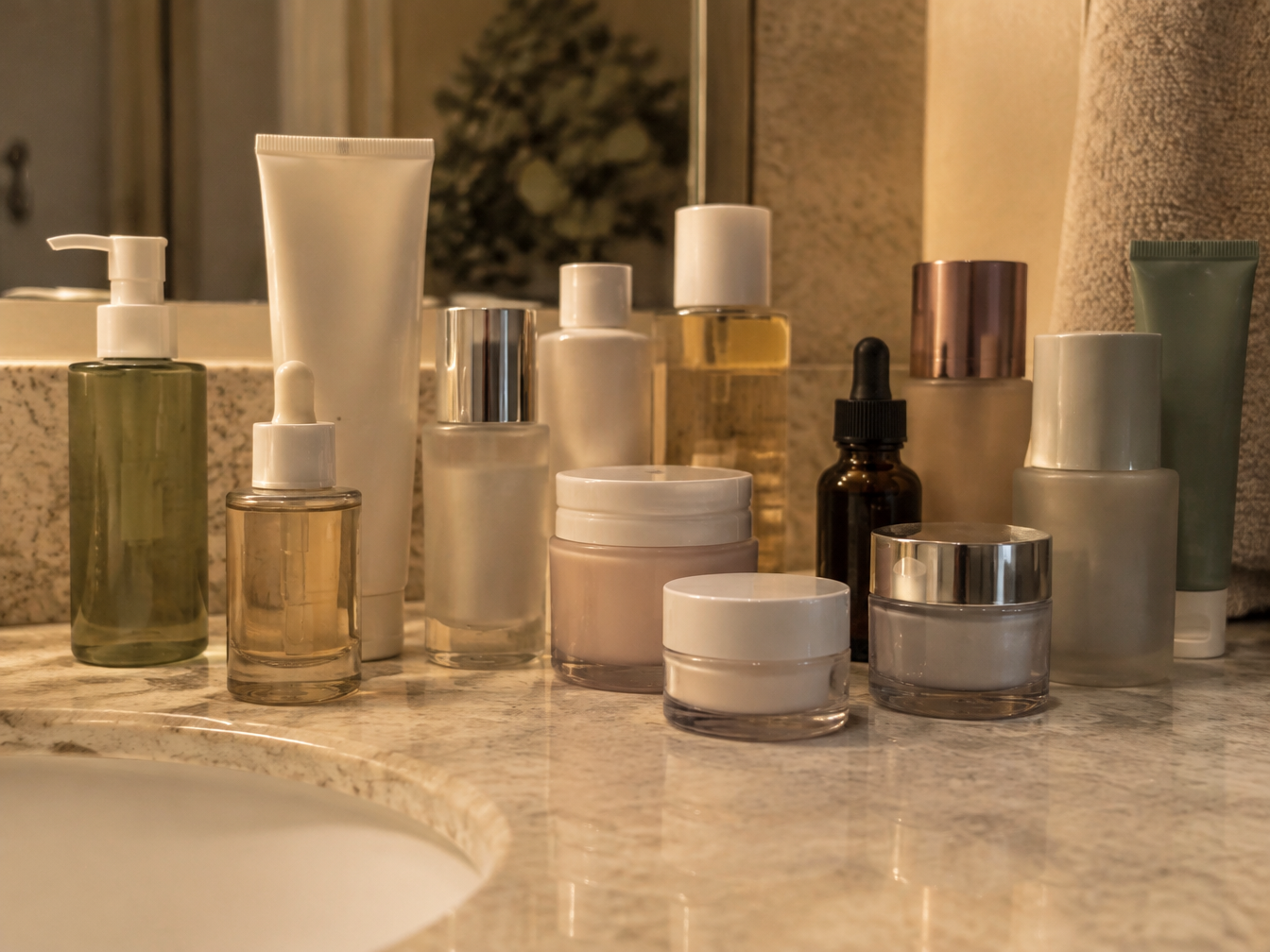
It started as a joke. I lined up everything on the edge of the sink to take a photo for a friend, and I counted. Cleanser, second cleanser, toner, essence, two serums, a vitamin C, an acid, a retinol, an eye cream, a moisturizer, an oil, a sleeping mask. Thirteen things. Before I even got to sunscreen.
Each one had arrived with a small promise. Brighter. Firmer. Calmer. Clearer. I had bought them one at a time, always in a weak moment, always after reading something that made me feel like a before photo. Together they were not a routine. They were a running argument I was having with myself, and my skin was the battlefield.
What got me was how tired I was. Not in my body. In my attention. I had a full second job and the only employee was my face.
The routine had crept up on me the way clutter does. One bottle in March because a coworker swore by it. Two more in June after a bad photo from a wedding. A whole new category in September when a stranger online said my pores were “a choice.” Nobody sat me down and designed eleven steps. I just never removed anything, and I never asked what any of it was for.
I have a theory that the urge to overhaul ourselves arrives in waves, the same way a sudden hair color change usually announces something much bigger than hair. My shelf was not about my skin. It was about a restless year, and the bottles were just where the restlessness landed.
What Experts Say About Doing Too Much
I went looking for reassurance and found the opposite, in a good way. A dermatologist in New Zealand named Louise Reiche told a pharmacy trade publication that some of her patients were using up to eight products morning and night, and that their skin “just never gets a break” and develops an intolerance [1]. Her fix was to wean people off, switch to gentle, fragrance-free basics, and, in some cases, add a topical anti-inflammatory cream.
She was also blunt about the pricey active ingredients. For normal skin, she said, they are probably not going to do much harm but also will not do a lot of good, and the best value for money is a broad-spectrum sunscreen of SPF 50 or higher [1]. I want to be fair here. That is one dermatologist’s view in one article, and plenty of other dermatologists would defend a well-chosen retinoid. But hearing a working doctor say that sunscreen is the real hero felt like someone turning a light on in a cluttered room.
Another dermatologist, Fatima Fahs, describes the skin barrier in a way I now think about constantly. It is made of skin cells and the glue holding them together, ceramides and fatty acids [2]. When you scrub and strip and layer acids on top of acids, you are essentially picking at the glue. The signs of a damaged barrier, she says, are redness, stinging, and burning. I had been calling mine “tingling.”
There is a particular kind of lie you tell yourself at that hour of the night. The sting means it is working. The redness means it is purging. The flaking means it is renewing. Every symptom has a flattering story attached, and the story is always that you should do more. I was a very good student of those stories. I could have taught a class.
The Skin Cycling Trap and the Skin Cycling Lesson
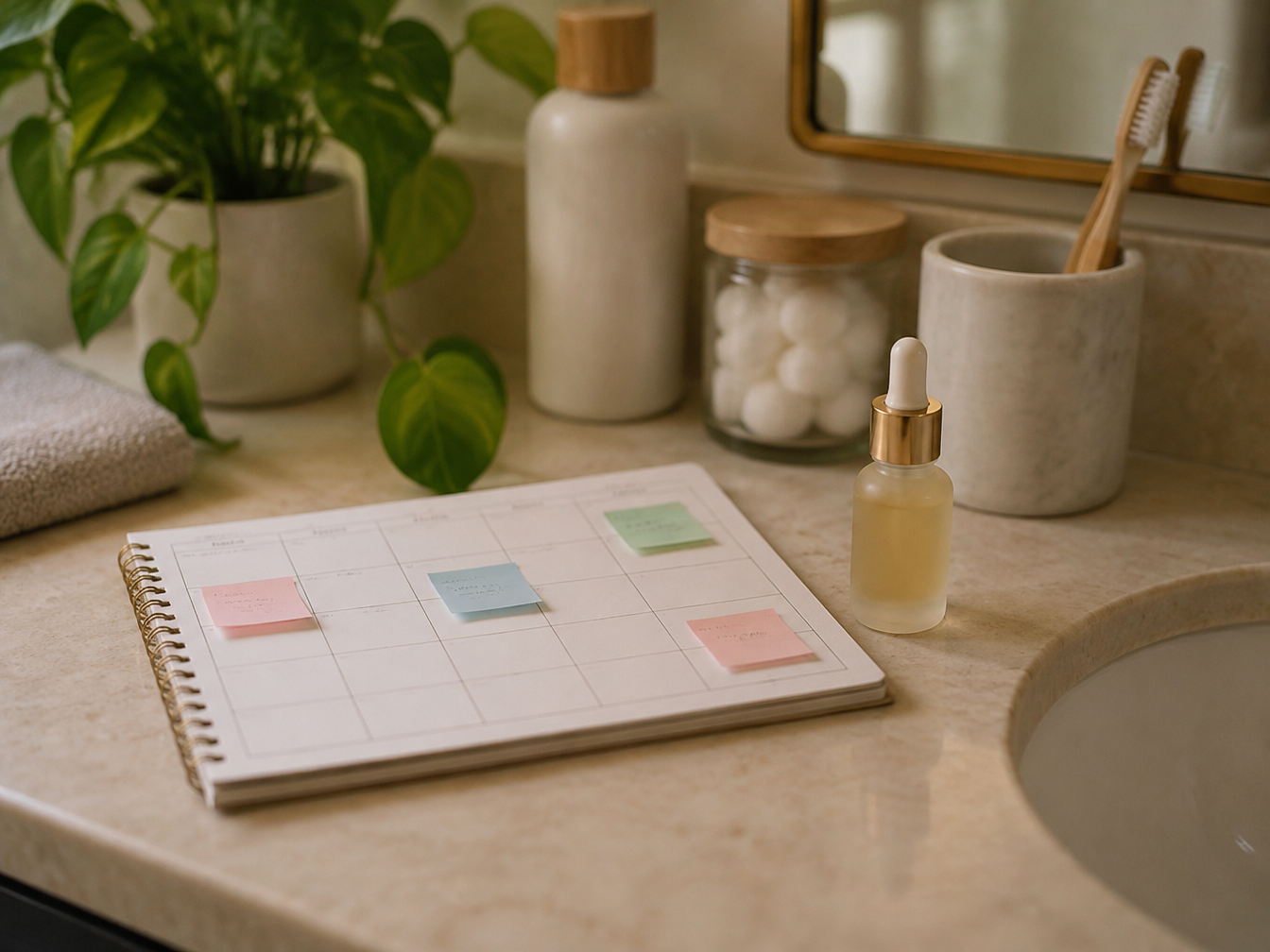
Somewhere in the middle of all this I tried skin cycling, which went viral because it sounded like relief. The idea is that instead of using every active every night, you rotate. A dermatologist at Ohio State, Susan Massick, outlines the basic pattern as a cycle of three to five nights. One night of exfoliation, one night of a retinoid, then a couple of nights of simply hydrating and moisturizing. She calls it safe and adds a line I wrote on a sticky note: “More is not better” [3].
I loved the logic. The recovery nights were the whole point. And I still managed to turn it into homework, with a calendar, color-coded reminders, and a small flush of guilt when I skipped a night.
That is the part nobody warns you about. You can take a gentle method and use it harshly. The same article that praises skin cycling also tells people with eczema, rosacea or inflammatory acne that they may need more than a TikTok-style routine and should see a board-certified dermatologist [3]. And Dr. Fahs goes further, saying that when your barrier is already damaged you should pause even skin cycling for a few days and strip the routine back to a gentle cleanser and a rich moisturizer [2].

So the lesson was not about which routine to choose. It was about the voice I used to run it.
Think about the tone of a good coach versus a bad one. Both say do the work. One says it with a hand on your shoulder, and the other says it while shaking their head at your form. My routine had the second kind of coach, and she lived in my head, and she sounded exactly like me. It is the same trap as chasing every trend in a closet, which I untangled in why I stopped buying trends.
How Self-Improvement Quietly Turns Into Self-Punishment

Here is where I get uncomfortable, because I do not think this is really about skin.
I had a habit of looking at anything in my life and seeing the version that needed work. My job. My apartment. My friendships. My body. My face was just the easiest one to fix, because there are products for faces and nobody sells a serum for a stuck life.
When you treat yourself like a project, there is always a next phase. You do not get to arrive. The finish line moves every time you approach it, because the whole business model depends on you believing you are not done.
I wrote about a similar spiral in a post about what I was hiding when I stopped wearing makeup for 30 days. The surprise there was that the products were never the main event. The main event was what I believed I would see without them.
There is a difference between taking care of something and fixing it. You take care of a plant. You fix a leak. For years I had been trying to fix a face that had never been broken.
I think a lot of women are quietly exhausted by this. We are handed a hundred small tasks that are sold as pampering, and then we feel behind on the pampering. A face mask is supposed to be a treat. Somewhere along the way it became an item on a list I felt bad about skipping. When a gentle thing becomes an obligation, it stops being gentle, no matter what the label says.
The Week I Took Everything Away
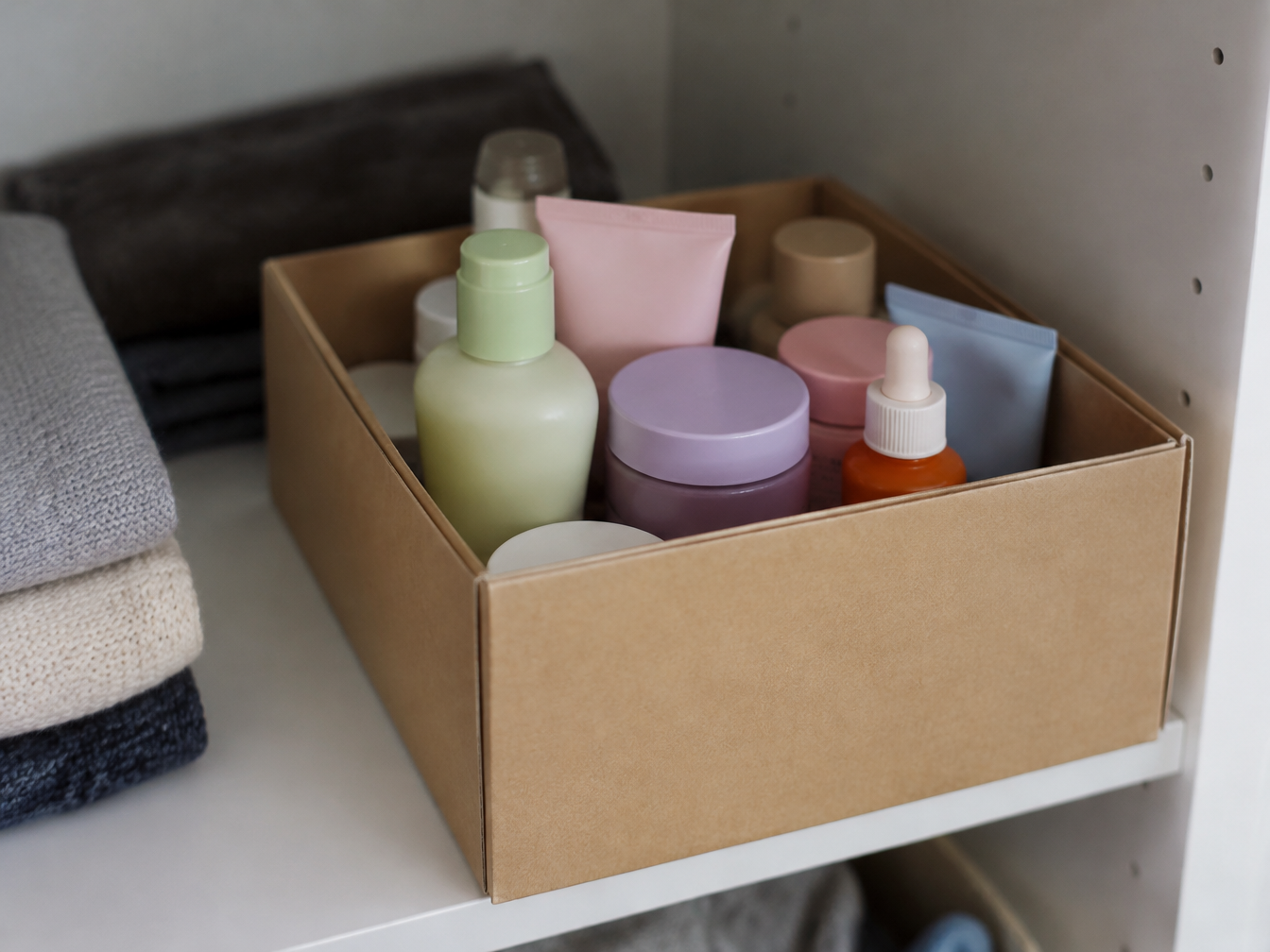
So I did the unglamorous thing. I took out everything except a gentle cleanser, a plain moisturizer, and a sunscreen. The rest went into a shoebox, not the trash, because I am not that brave.
The first three days were strange. I kept reaching for the missing steps like a phantom limb. By day five my skin looked a little dull and a little red, and I felt a rush of panic that I had ruined it. By day ten the stinging was gone. By day fourteen I looked like myself, only rested. Not glowing. I will not lie to you about glowing. Just calm, which turned out to be the thing I had actually been shopping for.
I texted the friend who got the original bottle photo. She wrote back, “wait, what happened to your face,” and then, a minute later, “oh, you look relaxed.” I stared at that word for a long time. Relaxed. Not younger, not brighter, not poreless. Relaxed. It was the first compliment my skin had ever received that I did not have to earn with a product.
Fahs recommends adding new products slowly, with a few weeks between each one, and never stacking too many actives together or pairing exfoliants with retinol [2]. That advice is almost embarrassingly sensible. It is also the opposite of how I was behaving, which was to start everything at once so that I could “see results faster.”
I need to say that a stripped-back routine is not a cure-all. If you have a skin condition or a real concern, a dermatologist, not a stranger’s essay, is your best friend. I am only telling you what worked for a woman whose skin was fine and whose habits were not.
The Ritual That Replaced the Project

Here is what I did not expect. Once I stopped treating my face like a task, I started to enjoy the thirty seconds of washing it.
I stood there, warm water, cheap cleanser, and nobody giving me a performance review. It reminded me of the way I feel getting ready for a night out, which I wrote about in why getting ready for a party is my favorite part of the night. It is not about the result. It is about the minutes where you are allowed to be a person who is looking after herself, with no one watching and nothing to prove.
I also noticed that my bathroom shelf became a map of my attitude. When the shelf was crowded, my mind was crowded. When I cleared it, I found I could finally hear what I wanted in other areas too. I stopped buying clothes to fix a mood, a habit I unpacked in why I stopped buying trends. Same impulse, different aisle.
The same is true of how I dress when I want to feel steady. The outfit that helps me most is rarely the new one. It is the one I described in the outfit I wear when I need to feel like myself again, which is old, soft, and does not ask me for anything. My skincare shelf now works the same way. It holds only the things that do not ask me for anything.
What I Say to My Face Now

I still use a few things I love. A vitamin C in the morning on some days. A retinol on others, when my skin feels strong. Sunscreen always, because even the skeptics agree on that one.
But the rules have changed. If something stings, I stop. If I am using a product because I am scared of what happens without it, I stop. If I catch myself in the mirror cataloguing flaws like a landlord, I walk away and wash my hands, which is the world’s smallest and most effective interruption.
And I try to speak to my face the way I would speak to a friend who showed up exhausted at my door. Come in. You are fine. Sit down for a minute.
Eleven steps is a lot of work for someone who was never broken. One kind sentence does more.
Sources
- Crowley, P. “Overloaded skincare routines may cause premature ageing.” Pharmacy Today (New Zealand), featuring dermatologist Louise Reiche. https://pharmacytoday.co.nz/node/6689
- “How to repair your skin barrier,” featuring dermatologist Fatima Fahs, MD. The Every Girl. https://theeverygirl.com/how-to-repair-skin-barrier/
- Massick, S. “A step-by-step guide on how to skin cycle.” Ohio State Health and Discovery, Ohio State Wexner Medical Center, January 19, 2023. https://health.osu.edu/health/skin-and-body/skin-cycling
Leave a Reply