The Closet Full of Other People’s Outfits
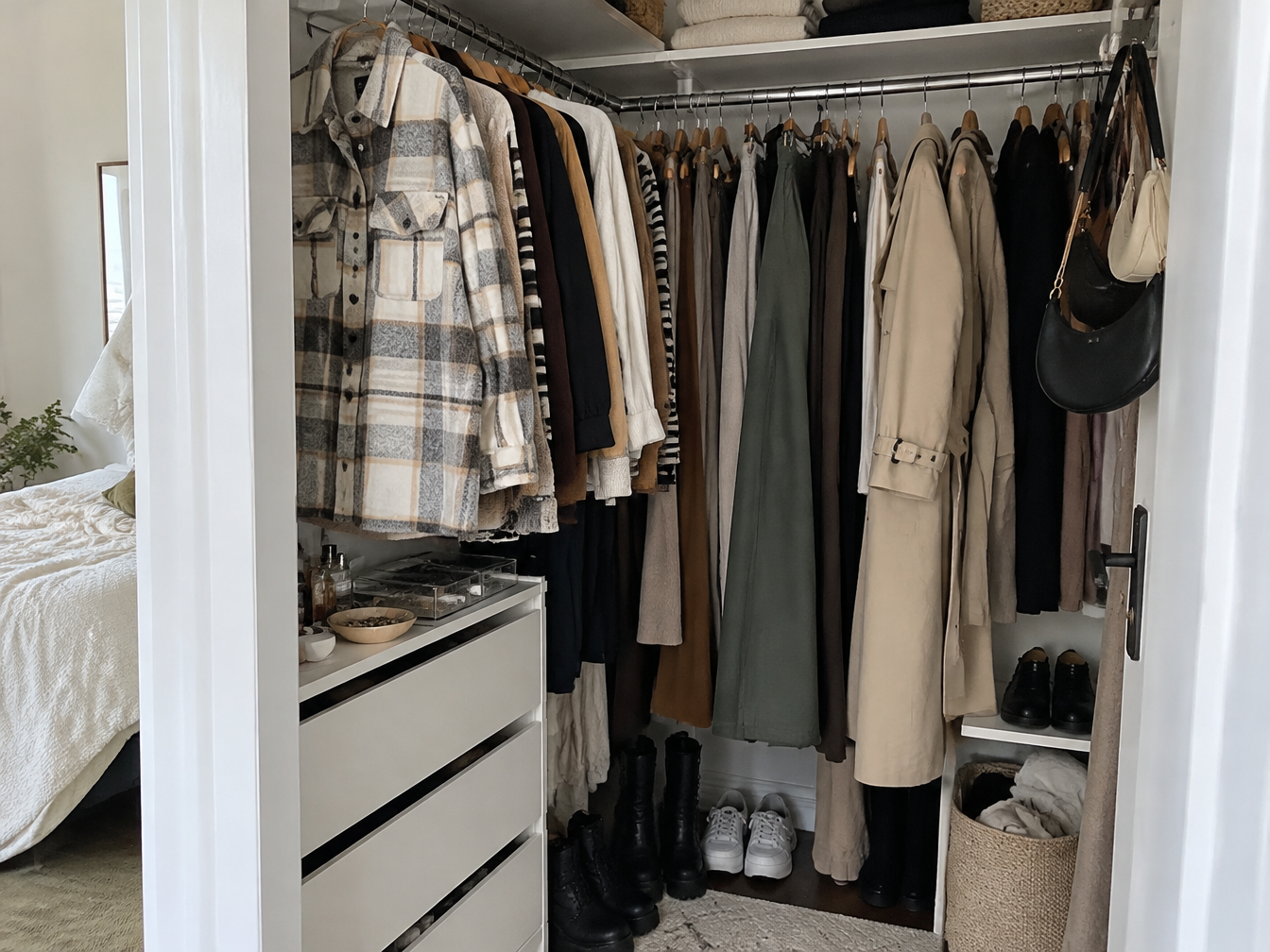
I once stood in front of my closet and could not name a single thing in it that was mine.
There was the shacket I bought because three girls on my feed wore it the same week. The tiny shoulder bag from a haul video. The wide-leg trousers I never once felt good in, but they were everywhere, so I kept them, as if wearing them enough times would eventually make them fit. A beige trench coat. A baby tee with a phrase I did not relate to. Everything in that closet was a perfectly nice item. Almost none of it was a decision.
I was twenty-eight and I had no idea what I liked.
That sounds dramatic, but it is a quiet kind of panic. Getting dressed every morning felt like taking a test whose answers were hidden on someone else’s phone. I would try on an outfit, open an app to check whether it was acceptable, and then change into something safer. My friends said I always looked put together. Inside, I felt like a mannequin in a store window, dressed by committee.
If that is you right now, I want to tell you two things. First, you are not shallow and you are not broken. Second, you are very, very normal. A whole generation grew up learning what to wear from a scroll.
The good news is that taste is not a gift you are born with or without. It is a muscle, and mine had just never been used.
Why Copying Felt Safer Than Choosing
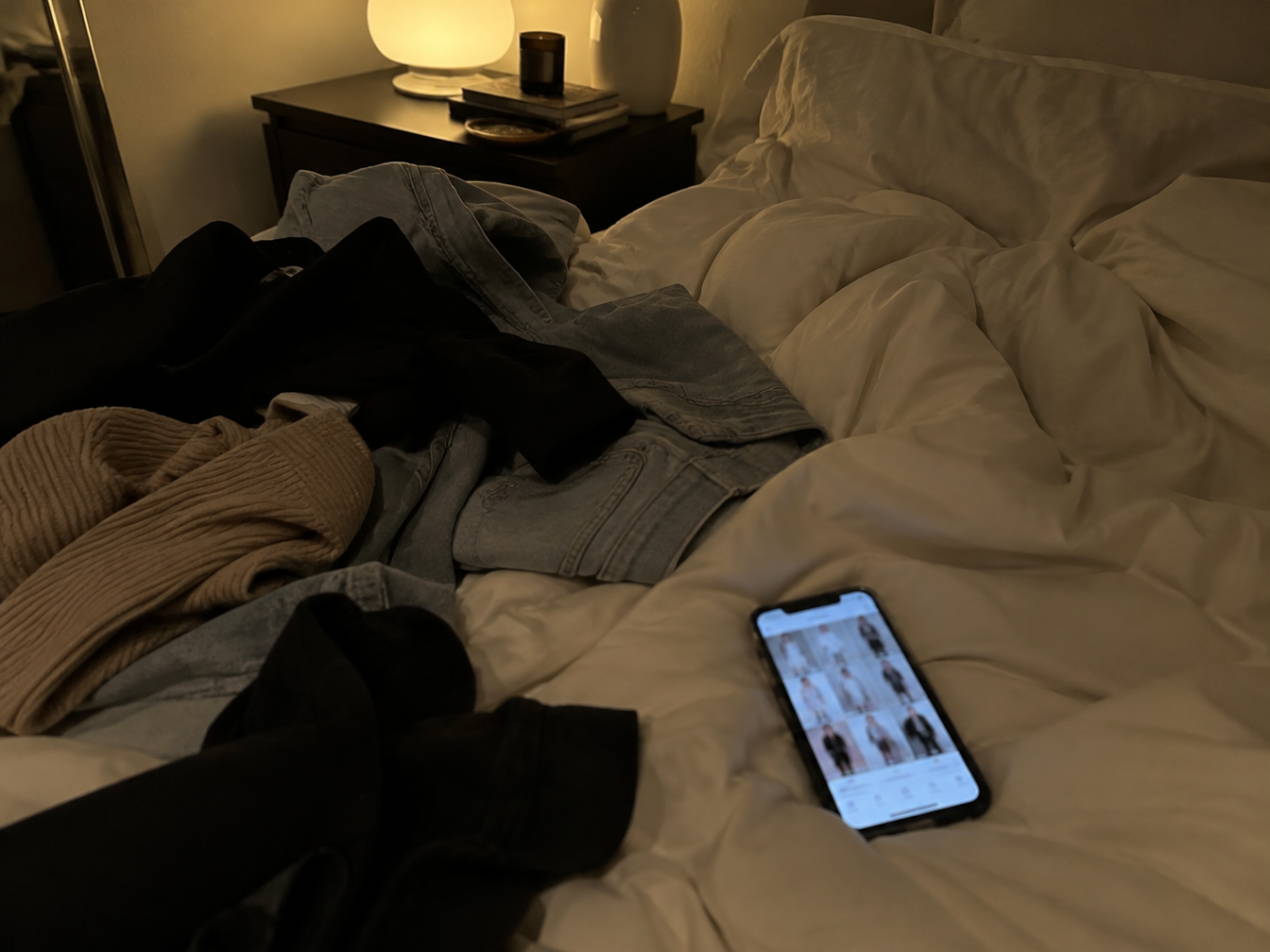
Let me be fair to the version of me who copied.
Copying is efficient. When you see an outfit that has already been approved by a thousand strangers, you get to skip the scary part where you risk looking wrong. It is a social shortcut, and humans have always done it. The difference is how loud it has become.
The blog My Green Closet describes microtrends as looks that are popular for only a few weeks to a few months, and argues they harm personal style by convincing us we must constantly buy something new to be fashionable [1]. It points to the sheer volume of content as part of the problem, noting there are over 1.2 billion videos under the haul hashtag on TikTok alone [1]. The same piece cites a claim that one fast fashion brand adds around 6,000 new items to its site every day [1]. I can’t verify that number independently, but you do not need a statistic to know the feeling of a feed that never stops.
What struck me most in that article is the line about hypervisibility. When you see the same item everywhere, the trend turns from exciting to exhausting almost overnight, and you end up sick of something you just bought [1].
That was exactly my life. I would buy a thing in the week it peaked, wear it twice, and quietly retire it by the time it showed up on every mannequin. I wasn’t building a wardrobe. I was renting a mood.
Copying felt safer than choosing because choosing means you could be wrong in a way that is entirely yours. That is the fear underneath nearly all style insecurity. And it is also the only way through.
I got a better look at this fear in the compliment I never forgot about my style, where one sentence from a stranger shaped how I dressed for years. Words like that stick to our taste more than we admit.
The Palate Cleanse Before Anything Else

The first useful advice I found came from stylist and consultant Marian Kwei, who was interviewed by the Whering team. Her first step is a palate cleanse: intentionally spend time away from media, whether it is magazines or social media, and give yourself a break from anything bombarding you with style opinions [2].
I rolled my eyes at that. Then I tried it for two weeks.

I muted every fashion account. I unfollowed the hauls. I deleted the shopping app from my phone, which was humbling in a way I won’t describe. I didn’t have a plan beyond “stop being told what to want,” a feeling I knew well from the time I tried the clean girl aesthetic and found out what it costs.
The first few days I felt weirdly untethered, like a person who’d put down a phone call she’d been on for years. Then slowly, something came into focus. I started to notice what I actually reached for in the morning. I noticed that I kept putting on the same oversized denim jacket. I noticed I felt like myself in dark green. I noticed I hated, truly hated, anything that pinched at the waist.
You can’t hear your own taste through the noise. It’s like trying to taste a soup while someone yells ingredients at you.
My Green Closet suggests a similar move: filter who you follow online, follow only people who inspire you rather than people who dictate what you should and should not wear, and look for outfit inspiration in other places like what people wear on the street and what your friends wear [1]. That is not anti-fashion. It’s pro-you.
The Audit That Shows You What You Already Love
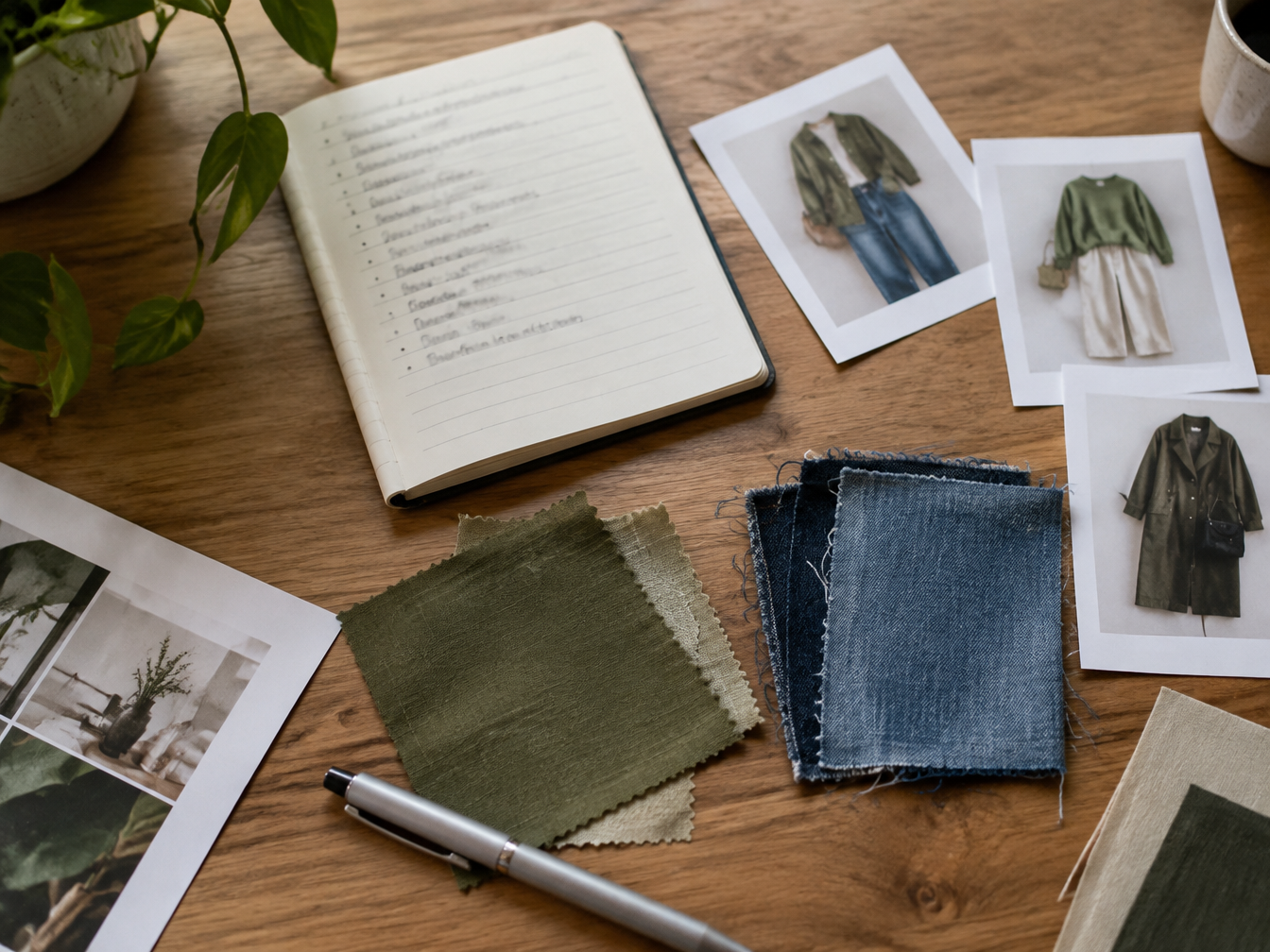
Here’s the exercise that changed everything. It’s a combination of ideas I read from the stylists on Whering, and I have done it three times since.
Get a piece of paper. Marian Kwei recommends writing down the best celebrity style you’ve ever liked, the best outfit you’ve ever enjoyed wearing, and the best item you’ve ever bought, then making a list of ten of these things. Her point is that most of what you like on that list is already your personal style [2].
Then flip the page and write what you don’t like. Kwei suggests this doesn’t have to be only about clothes. It can be dating disasters, interior design, or a coffee trending on Instagram you can’t stand. Analyzing your likes and dislikes this way helps cultivate your sense of style [2].
Next, ask someone who loves you. Kwei suggests stepping away from social media and asking your best friend what they think of your style, because the people who really know you can see patterns you can’t [2].
Finally, build a file. Stylist Gelmira Fortunato Manico suggests starting a personal style file of anything that catches your eye, from your favorite celebrity’s looks to posts you save, and then looking for the pattern. It might show that you like prints or textures, or simple silhouettes or elaborate ones [2].
When I looked at my list, the pattern shocked me. Nearly every look I saved had soft, slouchy layers, earthy colors, and something a little vintage. I had been buying sharp, minimal, clean-lined everything because that’s what the algorithm kept serving. My real taste had been sitting in a screenshot folder the entire time.
If this pattern feels familiar, you might also like what I found in why I stopped buying trends and started building a wardrobe that sounds like me, which goes deeper into how to turn that list into actual purchases.
Silhouettes, Not Aesthetics
Here’s a mistake I made for years: I tried to pick an aesthetic.
Dark academia. Clean girl. Coquette. Downtown. I’d try one on like a costume and then feel like a fraud by Thursday. My Green Closet warns about exactly this, pointing out that social media teaches us we have to fit into a box like grunge or dark academia, when real fashion sense comes from being able to switch up your look and experiment [1].
The better question is not “which aesthetic am I?” but “what shapes do I feel good in?”
Creative director Olivia Wright advises looking back at what you’ve worn and what you felt good in, the things you always want to reach for again. It’s not about whether a piece is cool, she says, it’s whether you feel good, and she tells people to try to understand which silhouettes they enjoy wearing [2]. That’s the easiest way to remember what you feel good in.
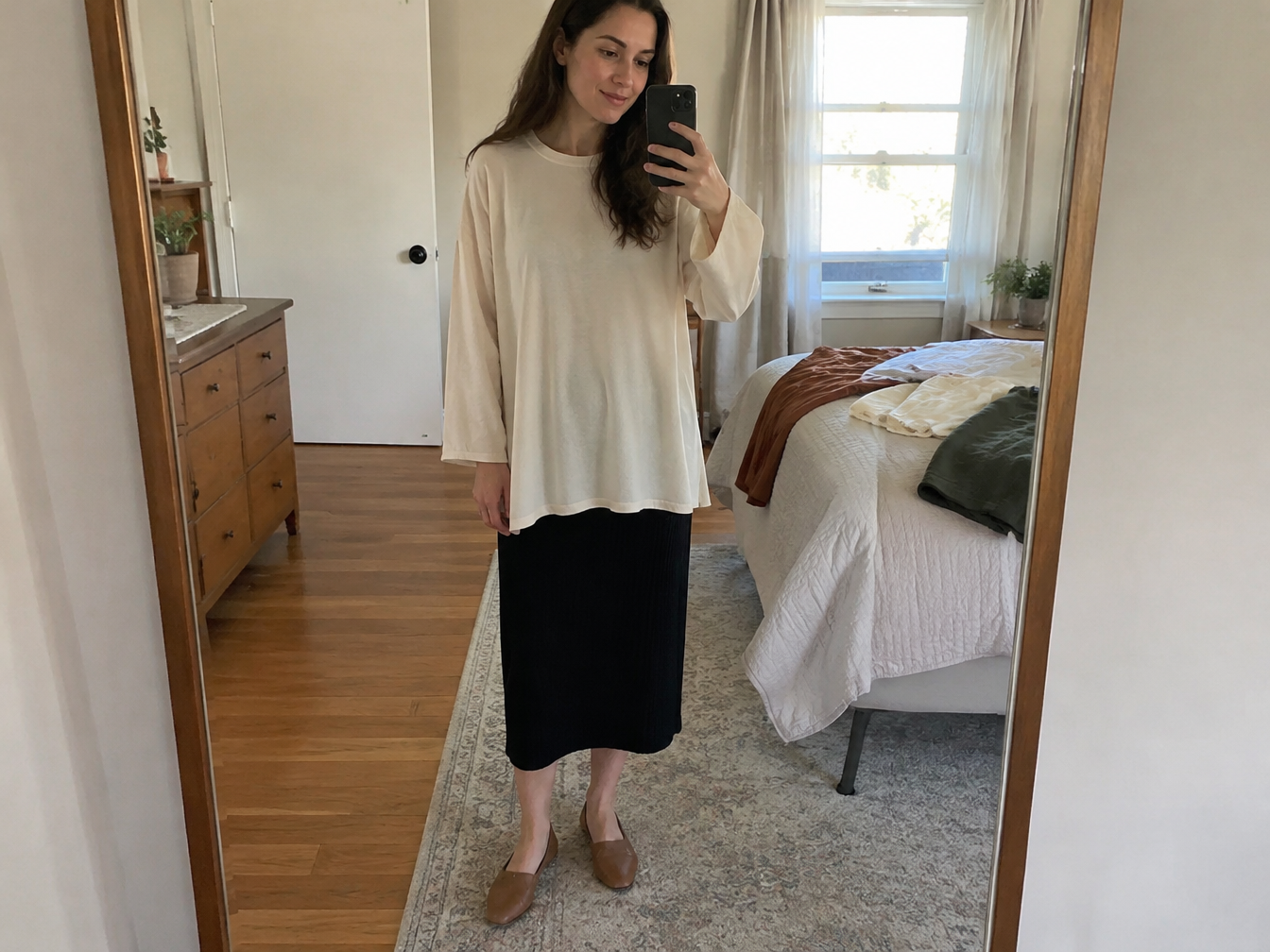
So I went through my closet and tried each piece on in front of a mirror, ignoring the label. I wrote down the silhouettes I returned to: a long, loose top over a narrower bottom, a high waist, a hem that hit mid-calf, sleeves with a little volume. Once I knew my shapes, shopping became absurdly easier. I could look at a rack and skip eighty percent of it in seconds.
That was the moment I realized that style is mostly a collection of boring, personal facts. Not a vibe. A set of preferences you can learn about yourself, like how you take your coffee. And if your closet is still dressing a version of you who doesn’t exist yet, this piece on dressing for a life you haven’t started might help you sort what’s real from what’s wishful.
How to Borrow a Trend Without Becoming It
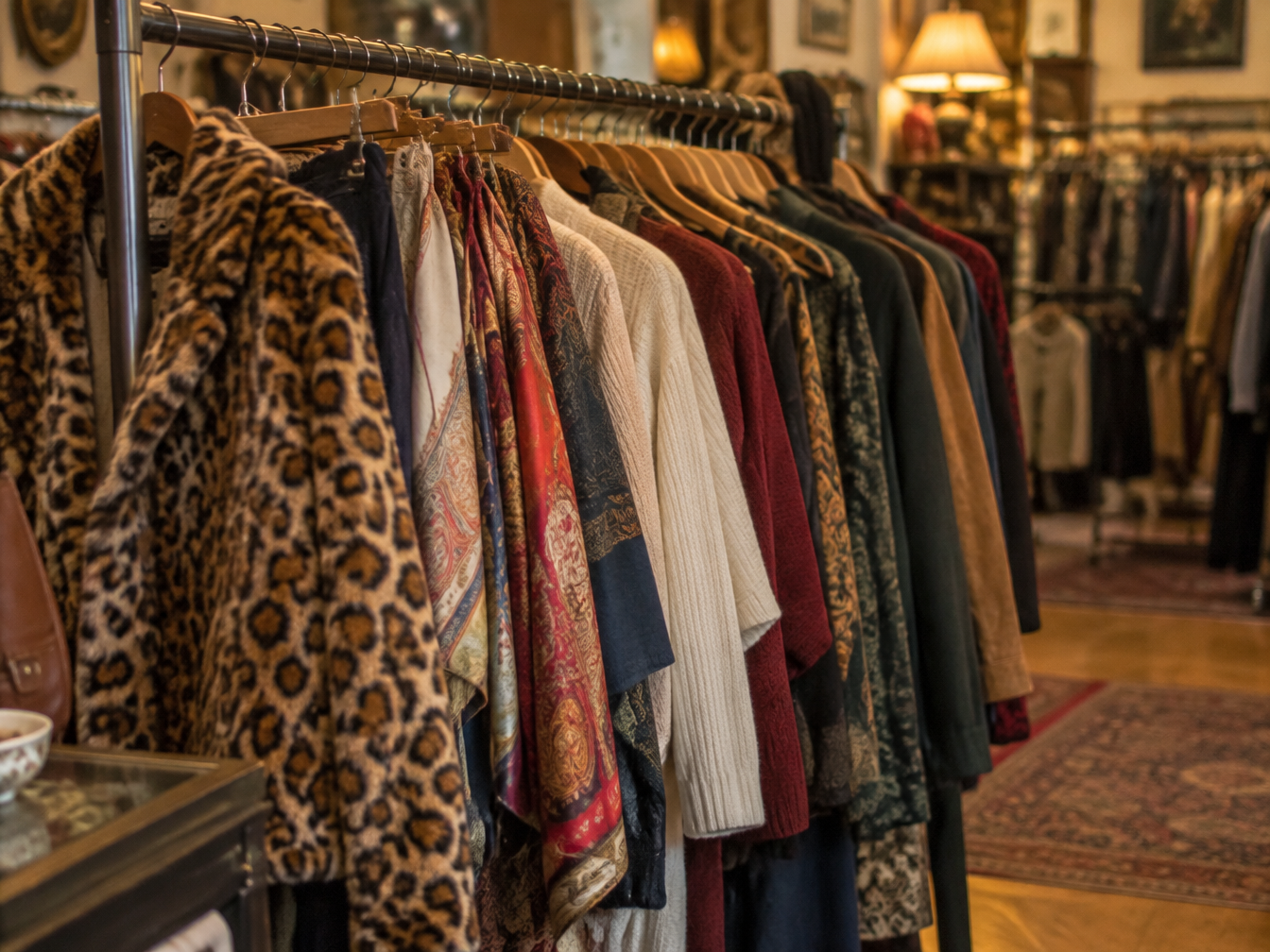
You don’t have to swear off trends forever. I still enjoy them. But I use a different filter now.
My Green Closet suggests asking yourself a few questions before you buy: Do I like this outfit? What do I like about it? Will I like it in six months, or a year? Would I wear it if it weren’t trendy? [1] If I can’t answer yes to at least two of those, I leave it on the shelf.
The same article also recommends pulling out the elements of a trend you actually like instead of copying a whole look. Its example is that wrap sweaters from balletcore outfits might fit your taste perfectly, while ballet flats don’t [1]. I find this liberating. You are allowed to take the sleeve and leave the rest.
Olivia Wright has another smart rule: if you’re going to join a trend, try to buy it second hand. It’s cheaper, more creative, usually looks better, and is better for the planet [2]. She notes that if you copy one specific person’s style exactly, it never feels quite right [2]. Pick elements from lots of places instead and piece them together.
Stylist Feya Lanice adds two more ideas I love. Research where a trend came from and which designers do the style well, and look at your family, since some people can learn from their roots [2]. My grandmother wore a lot of silk scarves, and now I do too.
And my own rule: let some of your past stay in the picture. I wrote about this in the Y2K outfits I wore then and the ones I wear now, because it turns out the pieces you loved at sixteen often hold clues to the woman you are now.
The Day Someone Asked Where I Got It and the Answer Was Me
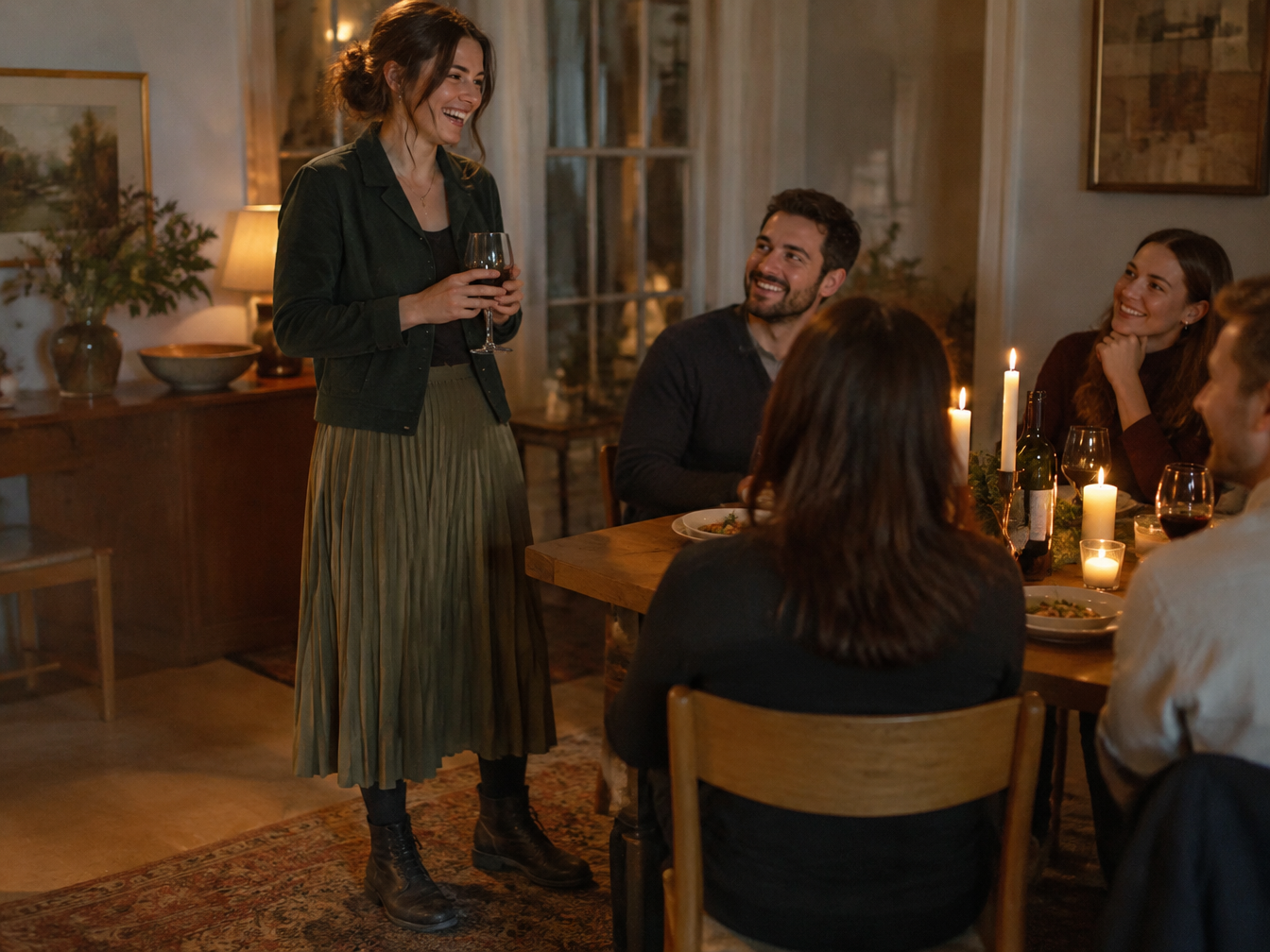
A few months into all this, I wore my green jacket with a long pleated skirt and a pair of beat-up boots to a friend’s birthday dinner. A woman I’d just met leaned over and asked, “Where did you get that whole look?”
I opened my mouth to say a brand name. Then I realized there wasn’t one.
“I kind of put it together myself,” I said, and it was the first time those words had ever felt true.
It wasn’t the most expensive outfit in the room. It wasn’t the most on trend. But it was unmistakably mine, and it felt like standing in my own skin for the first time in years.
If you’re still in the copy-and-doubt phase, here’s what I’d tell you. Start tiny. Pick one thing you love, and wear it until you stop wondering who approved it. Feya Lanice puts it simply: have fun with it, because style is meant to be an exploration of yourself [2].
The woman you’re looking for isn’t hiding behind the next trend. She’s been showing up in your screenshots, your favorite jacket, and the dress you keep reaching for when no one’s watching.
Go ask her what she wants to wear tomorrow.

Sources
- Steffi Haenicke, How to Find your Personal Style in a World of Fast Fashion, My Green Closet, January 22, 2023.
- Nona Dimitrova and Florenne Earle Ledger, Beyond trends: 4 creatives share how to find your personal style, Whering, January 25, 2024.
Leave a Reply