The box was still taped shut when I carried it up the stairs, and I remember thinking that was a good sign. Maybe I hadn’t ruined anything yet. Maybe this was the time the haul would actually fit the life I was living.
It did not. Inside were a faux leather skirt I would never wear to my actual job, two bodysuits in a color called “mocha” that was not a color on me, a sequin top for a party nobody had invited me to, and a pair of boots a size too small because the sale had run out of my size and I told myself they would stretch. I sat on the floor with the tissue paper around me like a very sad picnic.
I returned all of it. This is the story of why I bought it first, and what I finally understood in the line at the post office.
The Cart Was Full by Midnight

Black Friday used to feel like a holiday I was invited to. The emails started days early. The countdown clocks ticked in my inbox like a bomb in a movie. By the time the actual day arrived, I had a mental list of everything I “needed,” and none of it was written down, which is exactly how the list stayed so flexible.
I told myself I was being smart. Everything was forty percent off, sometimes sixty. If you do the math the way the banner wants you to do it, you are not spending money, you are earning it. I once actually said out loud, to nobody, “I basically made two hundred dollars today.”
There is a particular feeling that comes right before you hit the buy button on a sale. It is not joy exactly. It is closer to relief, like you have finally been handed permission. For years I thought that feeling meant I had found something I loved. It took a pile of returns to realize it was just the discount talking.
What I Thought I Was Buying
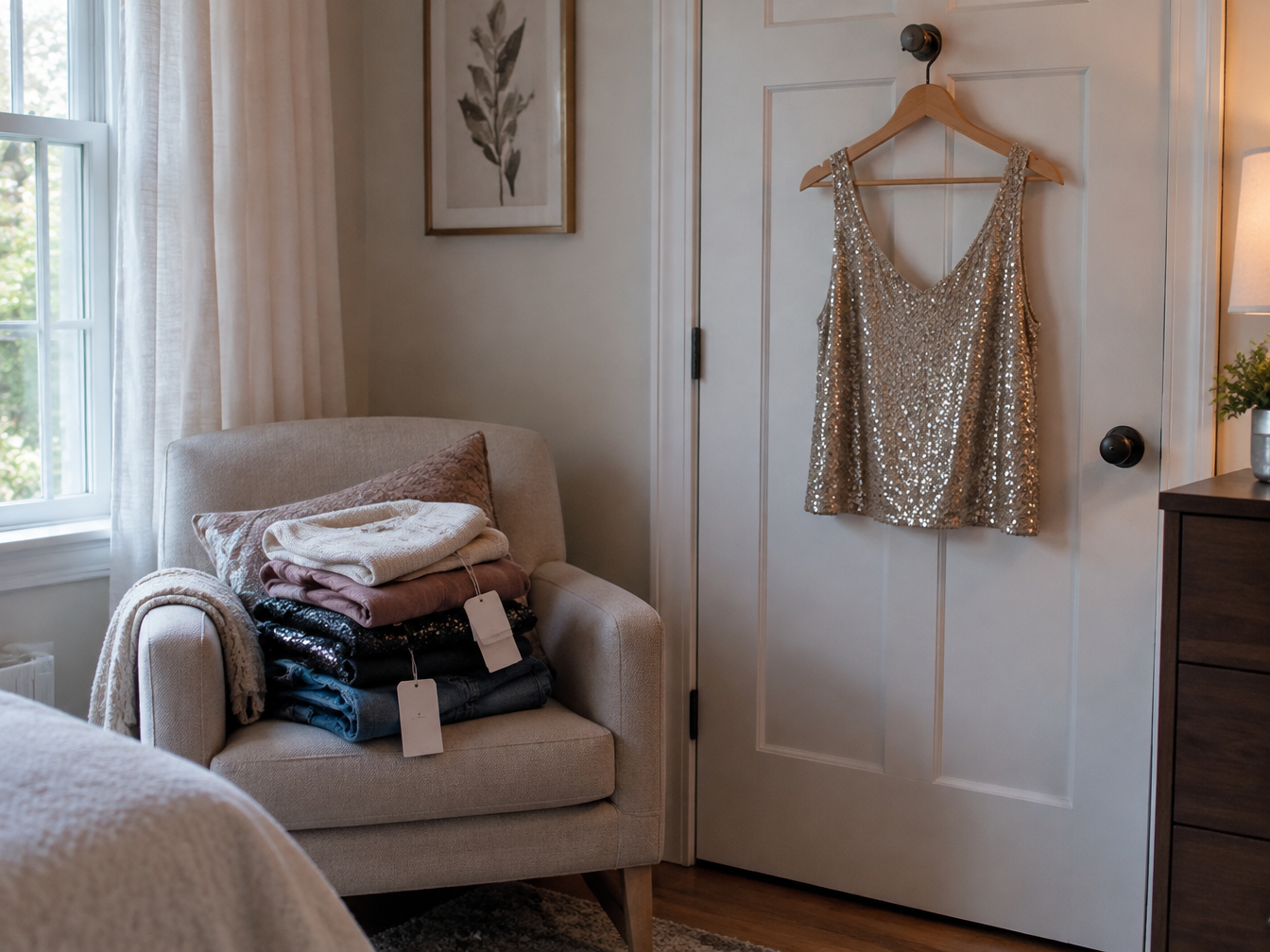
Here is the part nobody puts in the haul video. I was not shopping for clothes. I was shopping for a version of myself who already had her life together.
The faux leather skirt belonged to a woman who went to dinners with interesting people and never worried about what to say. The sequin top belonged to a woman with a standing Saturday night plan. The too-small boots belonged to a woman with slightly smaller feet and a much better attitude about discomfort. I wasn’t buying items. I was buying a cast of characters and hoping one of them would show up and take over.
I had done this before, in quieter ways. It’s the same instinct I wrote about when I stopped buying trends and started building a wardrobe that sounds like me, only louder, because a sale makes every fantasy affordable. The discount doesn’t just lower the price. It lowers the bar for what counts as a reasonable purchase.
And the timing doesn’t help. Late November is when many of us are already tired, already comparing ourselves to everyone’s holiday photos, already feeling like the year got away from us. A cart full of new clothes is a very cheap way to feel like you are starting over.
Fifteen Percent of Everything Comes Back
I was not the only one standing in that line. The National Retail Federation and Happy Returns estimated that retailers would see 15.8 percent of their annual sales returned in 2025, which came to about $849.9 billion. For online sales, the number was higher, around 19.3 percent. Retailers also expected about 17 percent of holiday sales to come back [1].
Read that again slowly. Almost one in five dollars spent online ends up in a box going the other way.
The same report found that shoppers between 18 and 30 made an average of 7.7 online returns in the previous twelve months, more than any other generation [1]. That is my generation of shoppers, and it is not a coincidence. We grew up buying clothes the way we send texts, quickly and without much fuss, because free shipping made every decision feel reversible.
It also found that close to two-thirds of consumers admitted to at least one costly returns habit, like wardrobing (wearing something once and sending it back) or bracketing (ordering three sizes and keeping one) [1]. I have done both. I am not proud of it, and I am not special either. The week I wore the same outfit every day and nobody noticed should have told me how little most of this matters.
Free returns are what make all of this possible. In that same survey, 82 percent of shoppers said free returns were a major consideration when they bought something [1]. They are the safety net under the whole circus. But a safety net also teaches you that jumping costs nothing, and I think that is where it got me. If I can always send it back, why not buy all of it?

The answer, which I learned slowly, is that returns cost something that doesn’t show up on a receipt. They cost time, a Saturday morning, and a small amount of self-respect every time you hand the clerk a bag and say “it just didn’t work out.”
The Return Line Taught Me More Than the Sale Did

The line at the post office was long and quiet, the way lines are when everyone is carrying a little embarrassment. The woman in front of me held a bag of what looked like three identical sweaters. The guy behind me had a flat box and a face like he had lost an argument with himself.
When I got to the counter, the clerk asked, “Anything wrong with the items?” and I said, “No, I just didn’t need them.” She nodded in a way that made me feel less alone and more caught at the same time.
That sentence kept echoing on the walk home. I just didn’t need them. I had not even disliked them. I had spent hours choosing, a chunk of money, and a good amount of hope, and the honest summary was that none of it connected to anything I did on a Tuesday.
That is when I finally did what I’d been avoiding for years. I opened my closet and looked at what I actually reached for. It was embarrassingly small. Four pairs of pants, a handful of tops, one coat, two pairs of shoes. The rest was a museum of other people’s lives I had tried to buy into.
What I Actually Wanted Was a Plan
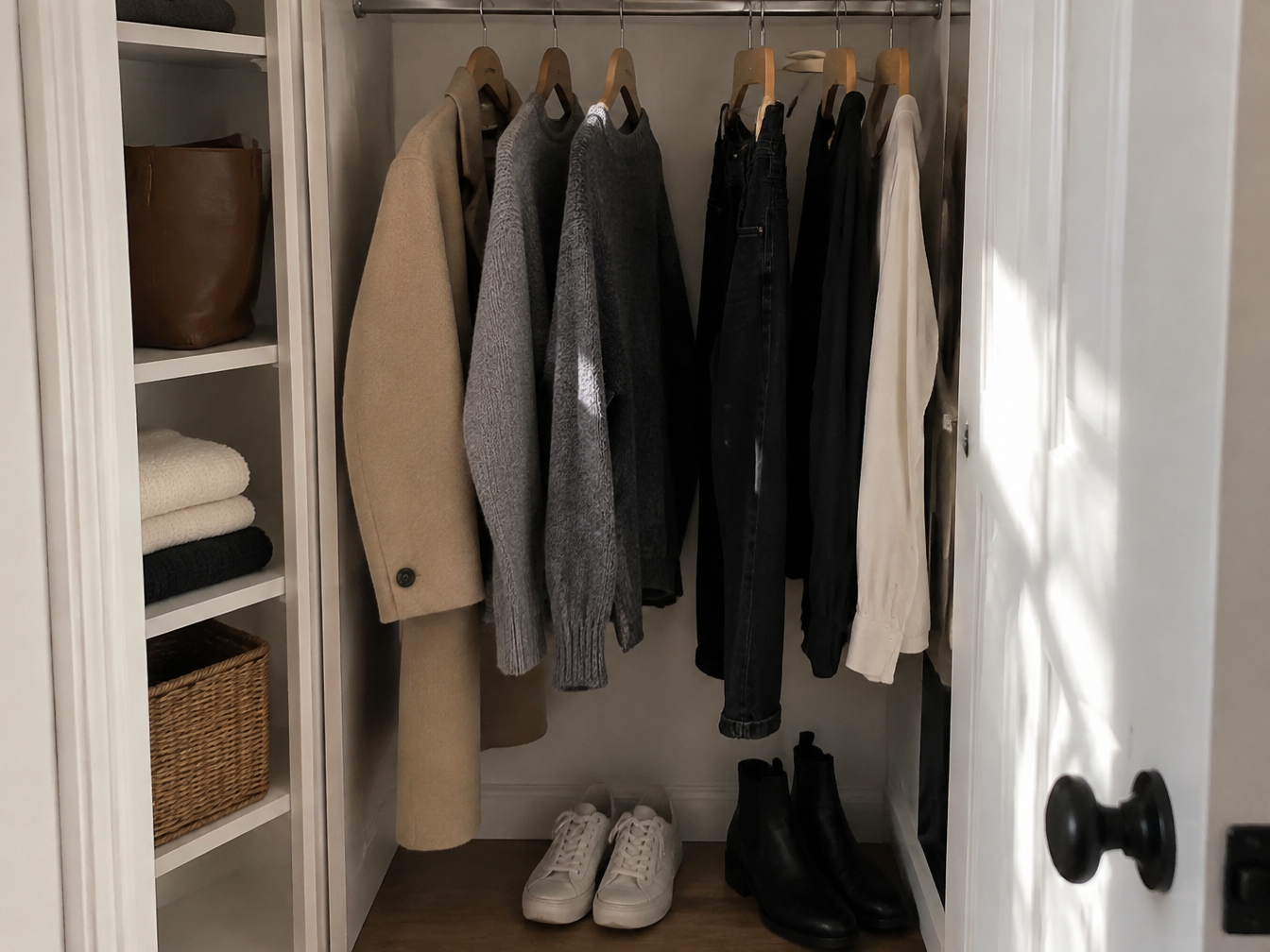
Here is the uncomfortable truth I found under the shopping bags. I didn’t want more clothes. I wanted to feel certain.
Certain that I looked fine at work. Certain that I’d know what to wear when the invitation came. Certain that I was a person with taste instead of a person with a very large return window. A haul gives you the sensation of certainty for about twenty-four hours, and then the boxes arrive and reality sits down on the bed next to you.
What helped was the opposite of a haul. I wrote down the moments of my week, the actual ones. Commuting. Meetings. Weekend coffee. One dinner out, sometimes. A few evenings on the couch. Then I counted what I owned for each. Where I had gaps, I made a short list. Where I had piles, I stopped.
If you want a gentler way into this, my post about how I built a capsule wardrobe and learned how many versions of me I was dressing for walks through the same exercise with less post office shame.
The list matters more than any budget app. A list turns a sale from a performance into a simple question. Is this on the list? If not, it doesn’t matter what percent off it is. It is still a stranger.
Is the Deal Even Real
Part of what hooked me was the idea that Black Friday was the only time to buy anything. If I waited, I’d miss it. The scarcity was the whole pitch.
The reporting suggests the pressure is overblown. Consumer group Which? in the UK analyzed nearly 200 Black Friday deals and found that most products were cheaper or the same price at other times of the year. In a wider look, it found that all the products it checked were the same price or cheaper in the six months either side of the sale day [2]. That is British data and not American, so the numbers won’t map perfectly onto every store, but the pattern is a useful one to know about.
I want to be fair here. In the same Which? survey of 1,260 members, 87 percent said they did not regret their purchases, and only 3 percent said they did [2]. Plenty of people shop the sales happily, and a planned buy during a real markdown is a perfectly good way to spend money. The regrets that did show up clustered around impulse buys that were never used, products that were poor quality, and discounts that turned out to be less impressive than advertised [2].
In other words, the sale is not the problem. Shopping without a reason is.
The advice from the Which? Money editor was the best one-line rule I’ve read on the topic. She waits a couple of weeks after seeing something, and if she still wants it, she buys it [2]. Black Friday deals rarely last that long, which is the point. If a thing can’t survive two weeks of your attention, it was never going to survive your closet. Knowing what you like is the real defense, and finding your personal style after years of copying everyone else is where I’d start.
How I Shop the Sales Now
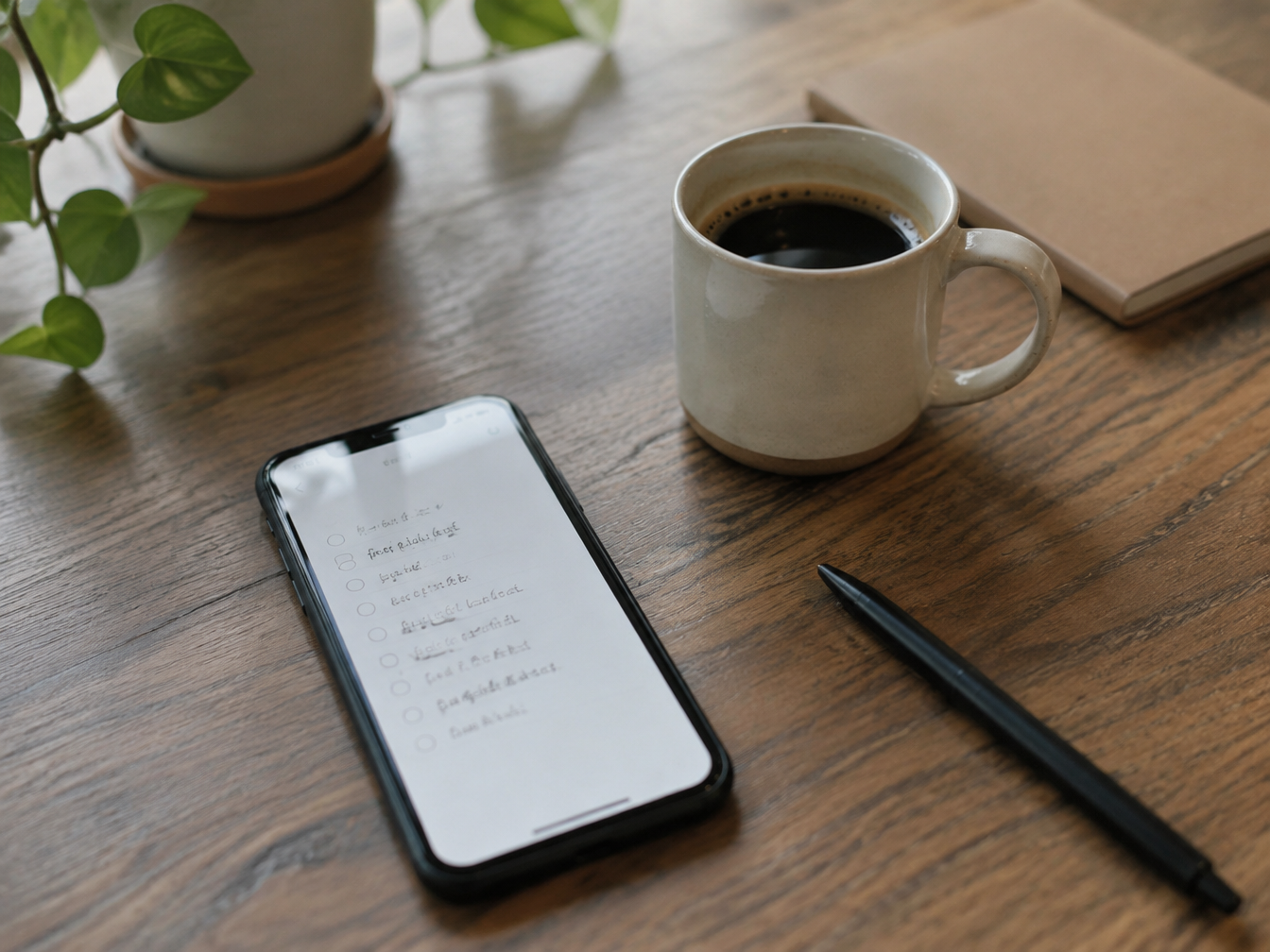
I still shop in November. I just do it differently, and the difference is mostly boring, which is how I know it works.
I start a note on my phone in October titled “Actually Need.” It has maybe five things on it. A winter coat that doesn’t fray at the cuffs. Black socks that aren’t sad. A pair of boots that fit in the toe box. When a sale lands, I check the note first and ignore everything else, including the emails that begin with my name and a little exclamation point.
I wait twenty-four hours before checking out, even if the timer says I can’t. If it sells out, I let it go. I’ve realized a “limited stock” warning is just a stranger asking me to hurry on his behalf.
I look at what I already own before I buy anything new. I try to remember the last time I had that same itch, which usually leads me to a sweater I already have in a slightly different shade. A past version of me was just as sure that one mattered.
I check the fit like I mean it. If I’m already negotiating with the size (“it’ll stretch,” “I’ll lose a few pounds,” “it’s supposed to be oversized”), I know I’m shopping for the fantasy again.
And when something does arrive and doesn’t fit the plan, I send it back within the week, without any speech to myself about what it says about me. Returns are fine. Returning everything, every time, is the pattern worth noticing.
If a bigger holiday outfit is on your list, the same rule works. When I bought a dress for a party I thought mattered, I wrote about the holiday party dress I bought to impress someone who wasn’t even invited, and about how clearly the tag still hung there, unworn, as proof that I’d been dressing for someone else’s approval.
What the Empty Box Is For
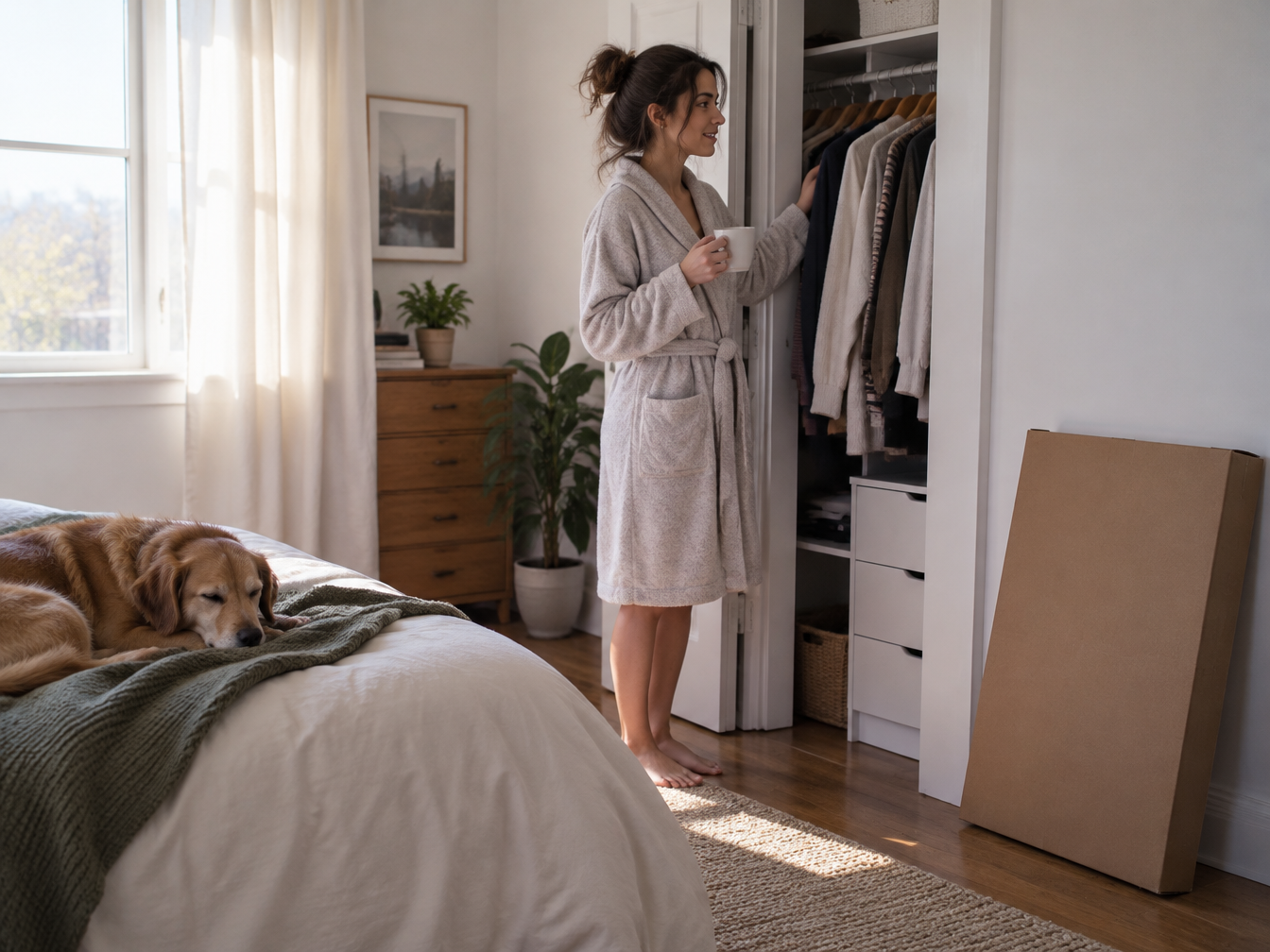
I keep one of those boxes now. It lives under my bed, flat, and it has a post-it on the lid. The post-it says: “What do you want to feel?”
Because that’s the question under every cart. Not “what’s the price,” not “what’s the deal.” What do I want to feel when I open this, wear this, walk into the room in this?
Most days the answer is something simple. Comfortable. Like myself. A little bit put together without trying to prove it. None of that needs a sequin top.
The best thing I bought that November was nothing. I stood in my doorway on the Friday morning, closet open, and I did not add a single item to a cart. I had an almost embarrassing amount of free time. I made coffee. I wore the same black jeans I always wear.
It felt like winning a game I hadn’t known I was playing.
Sources
- Consumers Expected to Return Nearly $850 Billion in Merchandise in 2025, National Retail Federation and Happy Returns, October 15, 2025.
- Black Friday Regrets, Which? Members Reveal Their Worst Buys, Which?, November 26, 2025.
Leave a Reply