For about nine years, I was the girl holding the camera. At birthdays, on trips, at my own cousin’s wedding, I was the one who said “okay, everybody squish in” and then stepped out of the frame before the shutter clicked. People thought I was being generous. I was hiding.
If a picture of me got through, I would scan it the way you scan a bill you already know is too high. The chin. The weird thing my smile does on the left. The nose that looked like it belonged to a cousin I’d never met. I’d text my friend, “please don’t post that,” and she’d text back, “what are you talking about, you look great,” and I would not believe her, because she had a face-to-face relationship with me and I had a face-to-mirror one.
That turned out to be the whole problem, and the science behind it surprised me.
The Girl Who Was Always Holding the Camera
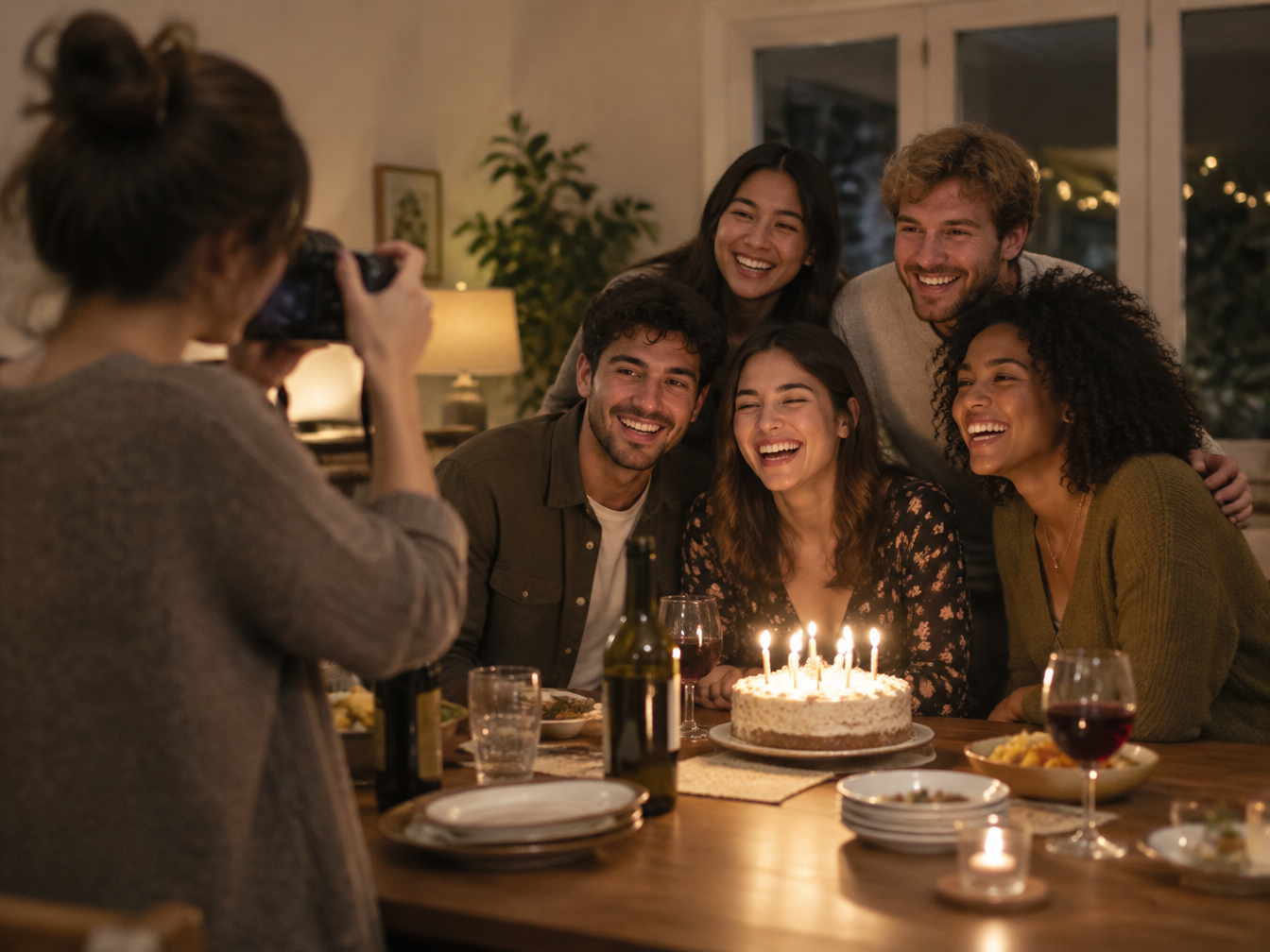
Hiding from cameras is a quiet kind of hiding. Nobody notices it. You don’t cancel plans, you just become the photographer, the one who stands slightly to the left, the one who “hates group shots.” It looks like a personality.
What it was, underneath, was a deal I’d made with myself. If I never appeared in the picture, I never had to judge the picture. No evidence, no verdict.
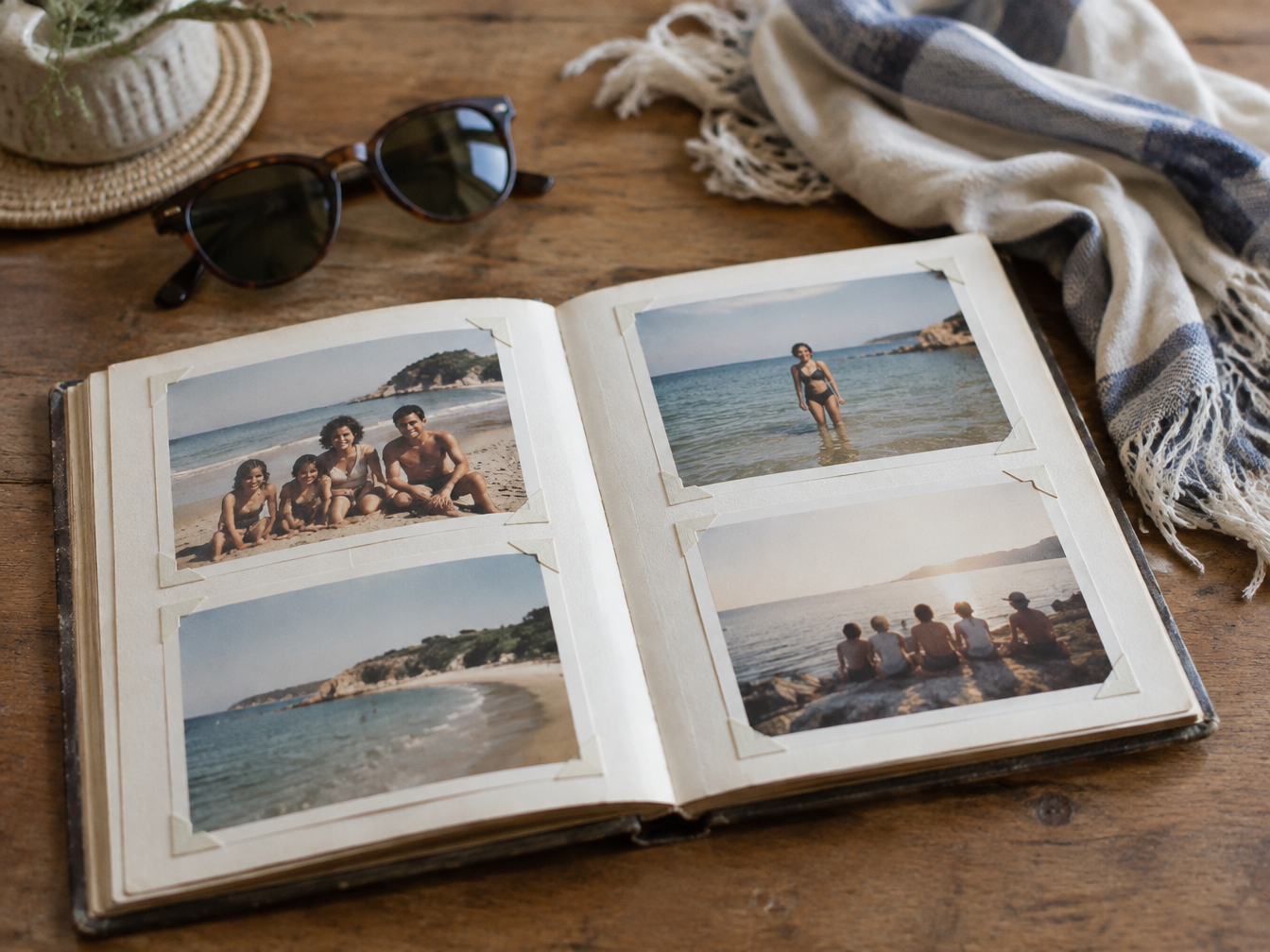
The cost of that deal arrived slowly. I realized I had almost no photos of myself from my twenties. There were hundreds of pictures of everyone I loved and a handful of me, mostly blurry, mostly from behind, a woman-shaped shadow at the edge of a beach. When my grandmother passed and my family went looking for pictures to put on a poster, someone said, “Do we have any of you two together?” We had one. I was wearing sunglasses and a scarf pulled up to my chin.
That was the moment I decided I was done with the deal. It wasn’t the first time my face had sent me looking for answers, either. A few months earlier I’d taken a month off foundation and written about what I was hiding when I stopped wearing makeup, and the answer had less to do with skin than with fear.
Why the Photo Never Looks Like the Mirror
The first thing I learned was that I wasn’t imagining it. The photo really does look different from the mirror, and the reason is not complicated.
Psychologist Tara Well, a professor at Barnard College, explains that the face you see in the mirror is reversed compared with the face other people see when they look at you. Your friends know your non-reversed face. You know the flipped one. When a photo shows you the version everyone else sees, it can feel slightly off, even though it’s technically the more accurate one [1].
There’s research on this. In a 1977 study, people preferred photos of their own mirror image, while their friends preferred the true, non-reversed photos of the same faces. Well ties this to the mere exposure effect, the long-standing finding that we tend to like what we see often [1].
Read that last part again. It isn’t that your face is wrong. It’s that you’re unfamiliar with how everyone else sees it.
A second study she mentions used a non-reversing mirror, and the findings were striking. In that study, 83 percent of participants reported seeing a qualitative difference in their appearance, and 30 percent said looking in the non-reversing mirror changed their facial aesthetic goals [1]. A mirror image can quietly steer what we think needs fixing.
I’ll admit this was the first time I felt something loosen in my chest. For years, the version of my face I was fighting wasn’t the version anyone else was looking at.
The Selfie Is a Funhouse Mirror

My second discovery was less poetic and more annoying. A lot of the photos I hated were selfies.
Dr. Boris Paskhover, a facial plastic surgeon at Rutgers New Jersey Medical School, worked with Stanford computer scientists on a mathematical model of what happens when a camera is held close. Their paper in JAMA Facial Plastic Surgery found that a selfie taken about 12 inches from the face makes the base of the nose appear roughly 30 percent wider, and the tip about 7 percent wider, than a photo taken from five feet away [2].

He told reporters that taking a selfie is essentially “looking into a portable funhouse mirror.” He also said patients had been showing him selfies as proof of why they wanted procedures to change their noses [2].
I want to be careful here. I’m not telling you not to change anything about yourself, ever. That’s your decision and your body. I’m saying that if the evidence you’ve been collecting against your face came from an arm’s-length phone camera, you should know the camera was stacking the deck.
The practical fix was almost silly. I started taking photos from farther away and zooming in, or asking someone to take them from a few feet back. The same face came out looking like the person my friends kept describing.
Hair played a part, too. When I got curtain bangs that suit my face shape, the very first photo made me want to crawl into a closet, because the frame around my face had changed and my brain hadn’t caught up. Two weeks later I couldn’t remember my face any other way. New shapes need a little time to become familiar, and a camera catches you in the unfamiliar part.
There’s a small trick I now use before any group photo. I look at the lens, not at the screen, and I think of one specific person who makes me laugh. Faces tend to relax when they’re pointed at something real, and the camera has no idea the difference.
What Hiding Actually Cost Me
There’s a part of this I don’t talk about much. Hiding from cameras didn’t just cost me photos. It cost me presence.
At parties, I was always half-watching for the phone that might come out. At weddings, I’d leave the dance floor when the photographer approached. On a trip with my best friend, I turned down a picture on a bridge I’ll never see again because I hadn’t done my hair the way I wanted.
You can feel it in your body, that low hum of self-surveillance. It follows you into rooms. It makes your laugh smaller. It teaches you to treat your face like a witness against you. I’ve written before about how a bad hair day is never really about your hair, and the same logic applies here: the morning you can’t stand your reflection is usually about something heavier than your reflection.
When I stopped wearing makeup for a month, I discovered how much of that hum was tied to having something to hide. The two things were more connected than I thought. Covering my face and avoiding photos of my face came from the same fear.
Small Experiments That Changed Everything
I didn’t fix any of this with a single brave afternoon. It was a pile of small, slightly boring experiments, and I’d recommend them to anyone who feels like I did.
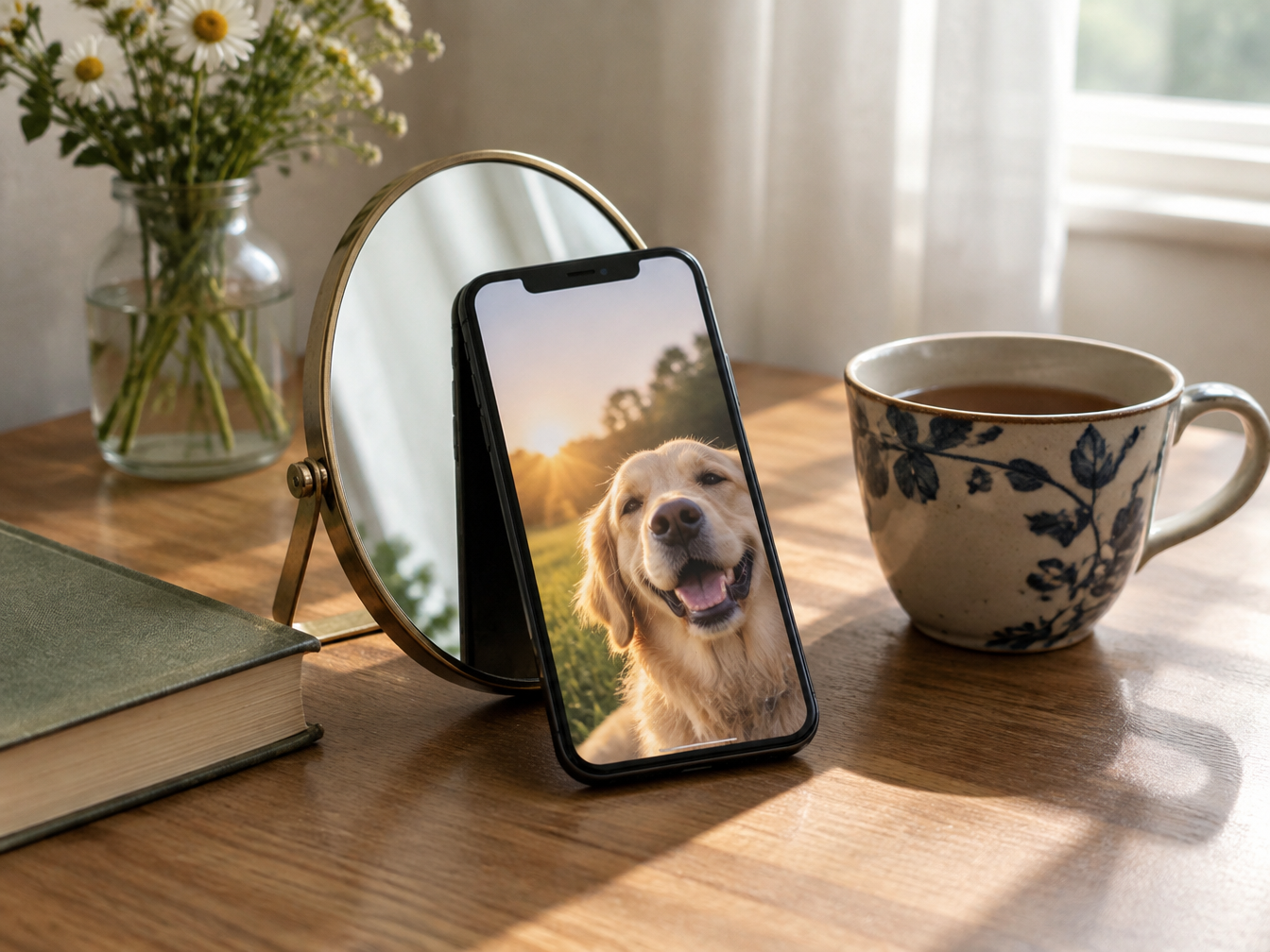
The first was repeated, short exposure. Well mentions that research on mere exposure suggests shorter, repeated glimpses increase liking more than long stares do, and she suggests using a photo of yourself as a phone background or flicking quickly through your own pictures [1]. So I picked a photo from a day I felt happy, even though I didn’t love my face in it, and made it my lock screen. For the first week it felt like being followed by a stranger. By week three, I stopped noticing it. By week five, I liked it.
The second was flipping the picture. I used the app on my phone that mirrors an image, and compared both versions. Sometimes I preferred the flipped one, and that taught me my preference was about familiarity and not beauty.
The third was taking pictures when I was in the middle of something. Not posing, not checking. Cooking. Walking. Laughing at something my friend said. Candid photos don’t give you time to rehearse, and they show your face doing what it actually does, which is move.
The fourth experiment was a rule I made for myself on the days I dreaded photos the most. I wasn’t allowed to apologize in advance. No “ugh, I look terrible,” no “delete that one.” It felt rude to my own face to apologize for it before anyone had said a word, and once I stopped narrating, other people stopped agreeing with me.
The fifth was wearing something that made me feel like myself. I wrote about the outfit I wear when I need to feel like myself again, and it works on camera, too. Some research on clothing suggests that what we wear affects how we feel and function, depending on what the clothes mean to us and the experience of wearing them [3]. Whether or not your sweater changes your brain, it can change your posture, and posture shows up in photos.
And the sixth was small acts of beauty I chose, not performed. I finally bought a bold lipstick I’d been too nervous to wear. I wore it in a photo before I felt ready. It was the best photo of the year.
The Day My Friend Sent Me the Picture
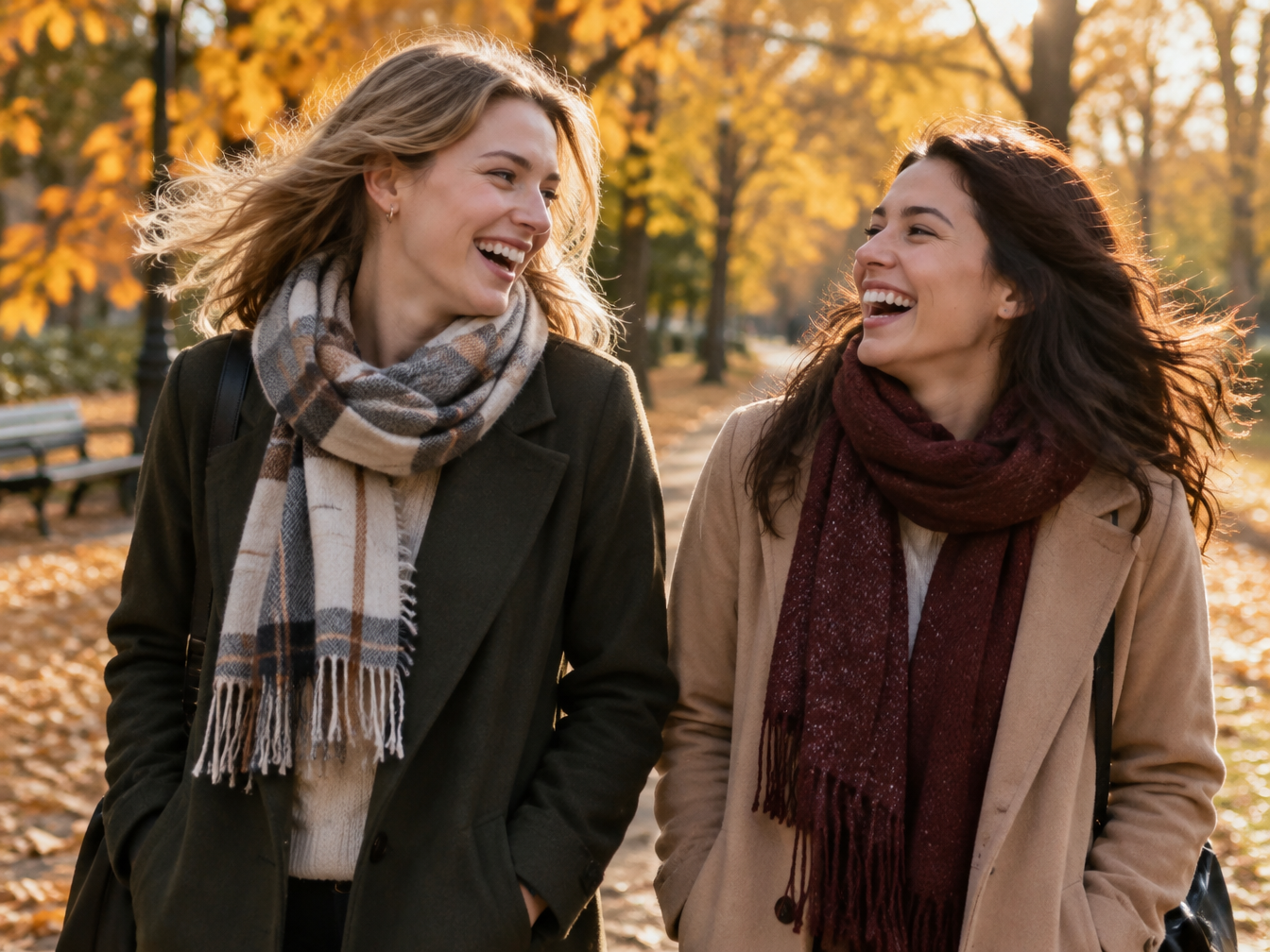
A few months into all this, my friend sent me a photo from a Sunday walk. I was mid-laugh, eyes squeezed shut, hair doing something chaotic in the wind. It was not a flattering angle by any magazine standard. My cheeks were round and my chin was double and I had a scarf bunched up around my ears.
I looked at it for a long time. And I felt, for the first time, something I’d forgotten was possible. Recognition. Not “I look pretty,” not “I look good.” I looked like someone who was having a very nice time.
The red lipstick I’d finally gotten brave enough to wear, after years of being too scared to wear it, had worn off hours earlier, and I still looked like myself.
I sent it back with a single word. “Keep.”
That’s the shift, I think, more than any compliment or filter or lucky angle. I stopped asking whether the photo flattered me and started asking whether it was true. Did I look like me, on a day I was glad to be alive? Yes. Then it counts.
I even started liking some of the things I’d hated. The asymmetry in my smile reads as mischief now. My nose has a bump that I can see in my grandmother’s old pictures. Once I started treating my face as an inheritance and not a defect, it got a lot easier to look at.
How I Treat My Face in Photos Now
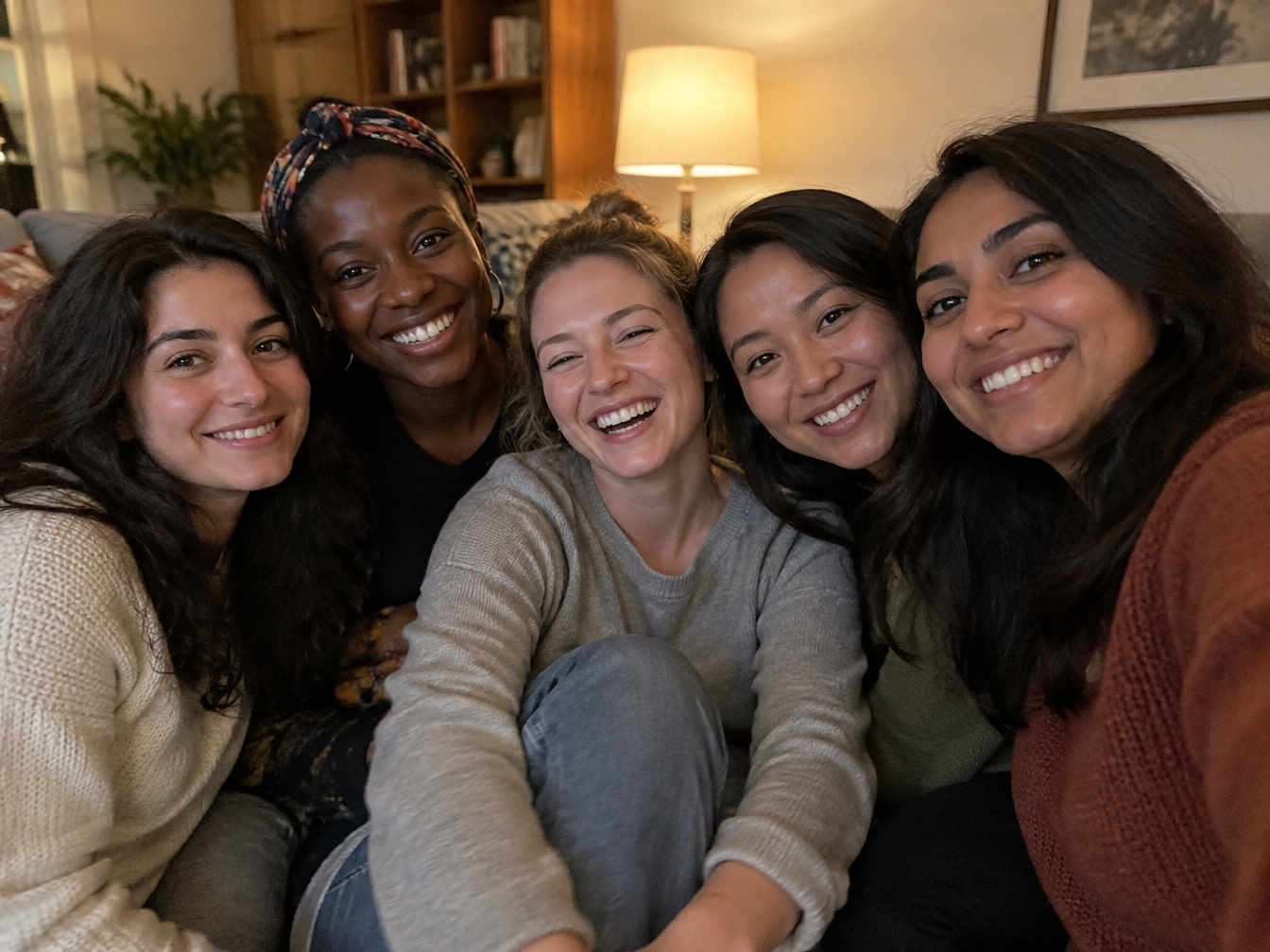
I’m not cured. Some days I still flinch. I still have days when a photo makes me flinch. But I know the flinch now. It’s a reflex, not a verdict.
Here is my short list, the one I’d hand to a friend.
Take photos from a few feet back, not at arm’s length, and zoom in afterward if you want a tighter shot. Look at your face in more than one way, flipped and unflipped. Put a happy picture of yourself where you’ll see it daily. Ask friends to send you the candid ones, not the posed ones. And when you have a rough morning, remind yourself that a bad hair day is never really about your hair, and a bad photo day is rarely about your face.
Most of all, get in the picture. Stand in the middle of it. Let people have you.
The next time somebody says “okay, everybody squish in,” squish in. Your future family is going to look for you in these photos, and they’ll be so glad you’re there.
Sources
- Why Your Photos Don’t Look Like You, Tara Well, Ph.D., Psychology Today, September 30, 2022.
- Selfies distort faces like a “funhouse mirror,” study finds, CBS News, reporting on research published in JAMA Facial Plastic Surgery.
- Enclothed cognition, Hajo Adam and Adam D. Galinsky, Journal of Experimental Social Psychology, 2012.
Leave a Reply