Every year, somewhere around the first week of November, I drag a shoebox out of the back of my closet and sit on the floor with it like I’m about to open a time capsule. Inside are my boots. Brown leather, scuffed at the toe, a small permanent crease where my ankle bends. They smell like old rain and shoe polish.
I put them on, lace them up, and stand in front of the hallway mirror. Something in my spine rearranges itself. My steps get longer. I walk like a woman who knows where she’s going, even if I’m only going to the grocery store for oat milk.
I’ve owned these boots for six winters. I’ve bought a lot of other things over the years that I’ve forgotten about by February. These I come back to, and I’ve been trying to figure out why.
The Boots Are Back in the Hallway
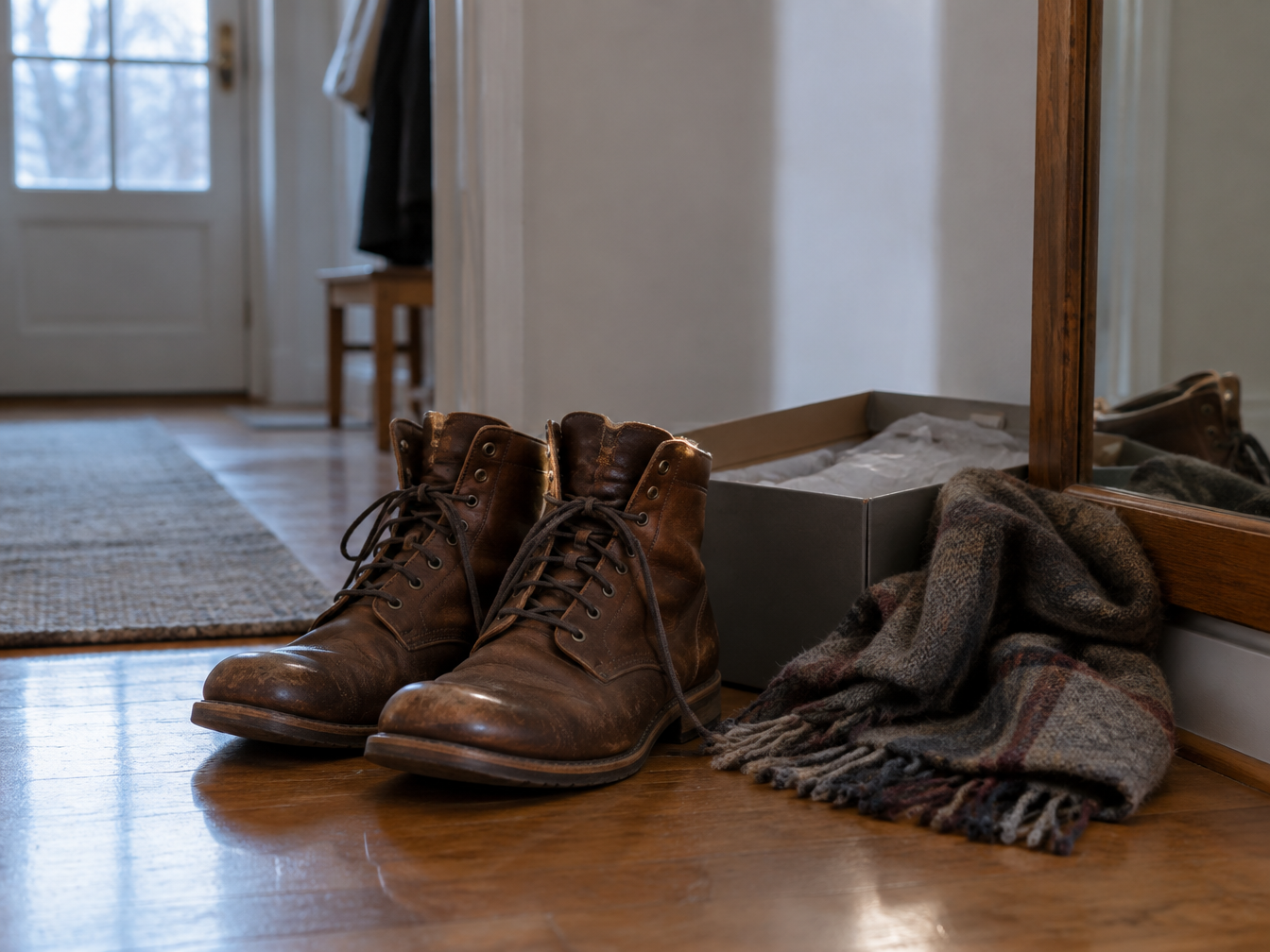
There’s a particular joy in the first cold day you finally get to wear them. The air smells like chimney smoke and wet leaves. Your scarf comes out of storage. You’re allowed to walk a little slower because the weather has given you an excuse.
Boots are the only item in my wardrobe that feels like a seasonal ritual. Sandals show up in summer like an old friend you never really lost touch with. Sweaters come and go depending on the thermostat. But boots arrive like a returning character in a story, and the whole season shifts when they do.
I think that’s part of why they matter so much. They mark time. When the boots come out, I know the year is closing. I know I have a few months to be cozy, to be a little more inward, to wear heavy things on my feet and feel anchored by them.
They also make me feel safe, in a way I couldn’t have explained a few years ago. Winter can be a long, gray, lonely stretch. A pair of boots that has held up through all of it is like a friend who shows up on time.
How I Found Them
I did not find my boots in a moment of confidence. I found them after a bad winter.
Three years earlier, I’d bought a trendy pair that looked beautiful in the box and fell apart by January. The sole cracked. The zipper stuck. The “leather” peeled at the ankle like a sunburn. I wore them to a work event in slush and left with wet socks and a ruined mood.
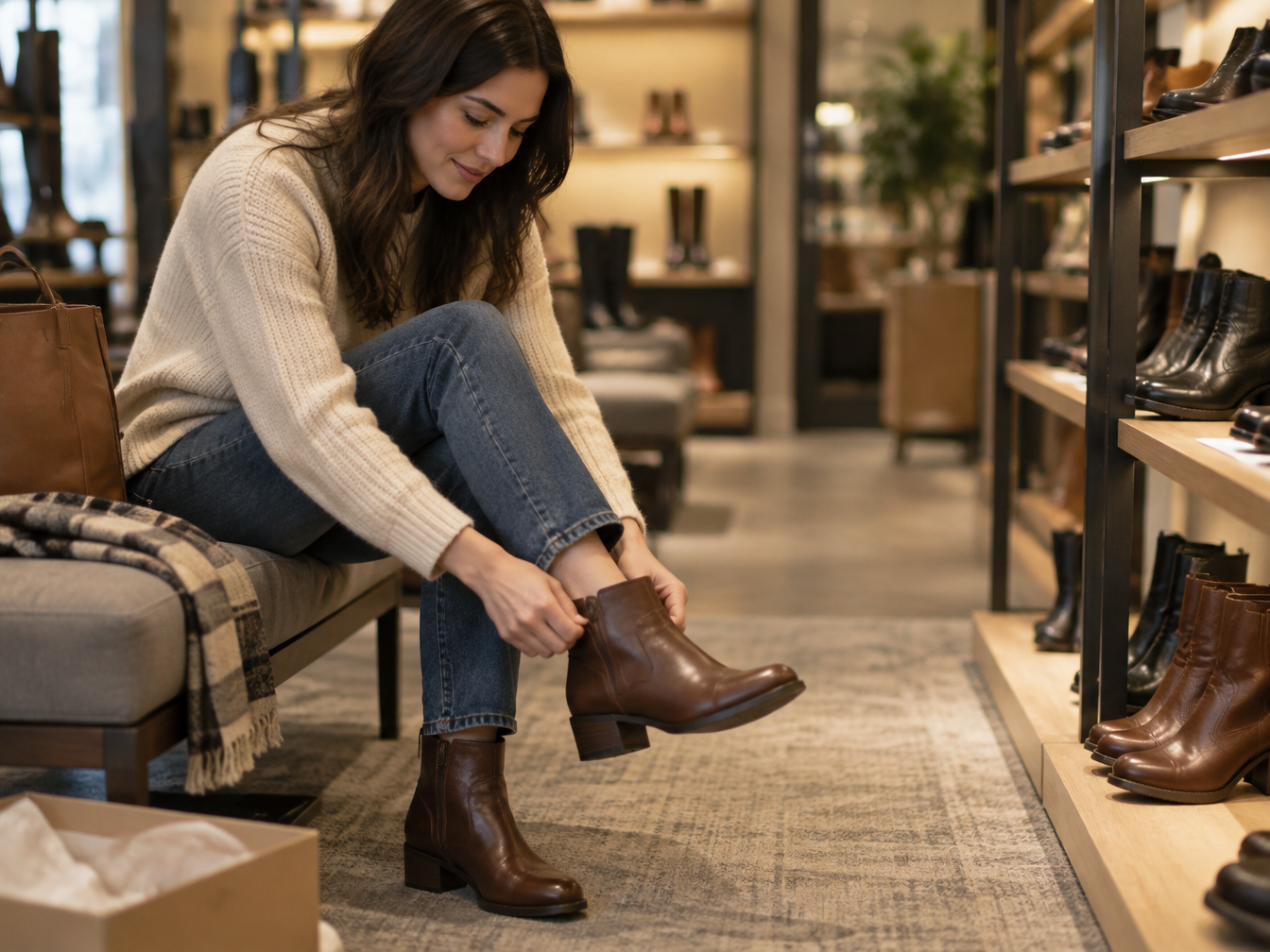
So the next fall I did something I’d never done before. I walked into a shop and tried on boots for two hours. I walked up and down the little carpeted aisle. I stood on one foot. I asked the salesperson to let me squat, which I think confused him. I paid more than I’d ever paid for shoes, and I walked out feeling vaguely guilty.
I had finally stopped chasing every new thing, a shift I wrote about when I stopped buying trends and built a wardrobe that sounds like me. The guilt faded by the second winter. By the third, it was gone. I wear these boots two or three times a week from November until the first warm Saturday of spring. If you do the math, they cost me less per wear than the cheap pair I’d bought and thrown away.
That math is the whole secret, and I’ll come back to it. First I want to talk about the part that surprised me.
The Woman They Turn Me Into

I’ve always suspected that clothes change how I behave, and it turns out researchers have a name for this. In 2012, psychologists Hajo Adam and Adam Galinsky coined the term “enclothed cognition” to describe the systematic influence that clothes have on the wearer’s psychological processes [1].
Their experiments used a white lab coat. In one, participants who wore a coat described as a doctor’s coat showed better sustained attention than participants who wore the same coat described as a painter’s coat, and better than people who merely saw a lab coat or wrote about identifying with one [1]. In one of the early tests, students in lab coats made half as many errors on a tricky attention task [2].
The point of the studies is that the effect needed two things at once: the symbolic meaning of the clothes and the physical experience of wearing them [1]. The researchers noted that although the saying goes that clothes do not make the man, their results suggest clothes “hold a strange power over their wearers” [2].

I’d be careful about stretching a lab coat study all the way to a pair of boots. Nobody has measured what my brown leather ones do to my confidence, and I’d rather be honest about that. But the idea fits my experience so well that I can’t ignore it. My boots mean something to me, the same way the outfit I wear when I need to feel like myself again does. They mean winter, and competence, and the kind of woman who has errands and a plan. And then I physically wear them. The weight, the sound they make on the sidewalk, the way they hold my ankle in place. Both ingredients are there.
Maybe that’s why I stand taller in them. Or maybe it’s that heavier shoes slow me down just enough to stop rushing. Either way, I notice it. I walk into rooms differently. I take up the space I’m standing in.
The Cost Per Wear Math That Changed My Mind
Let me be practical for a second, because I know a good boot is a big purchase and a sentimental essay won’t pay for it.
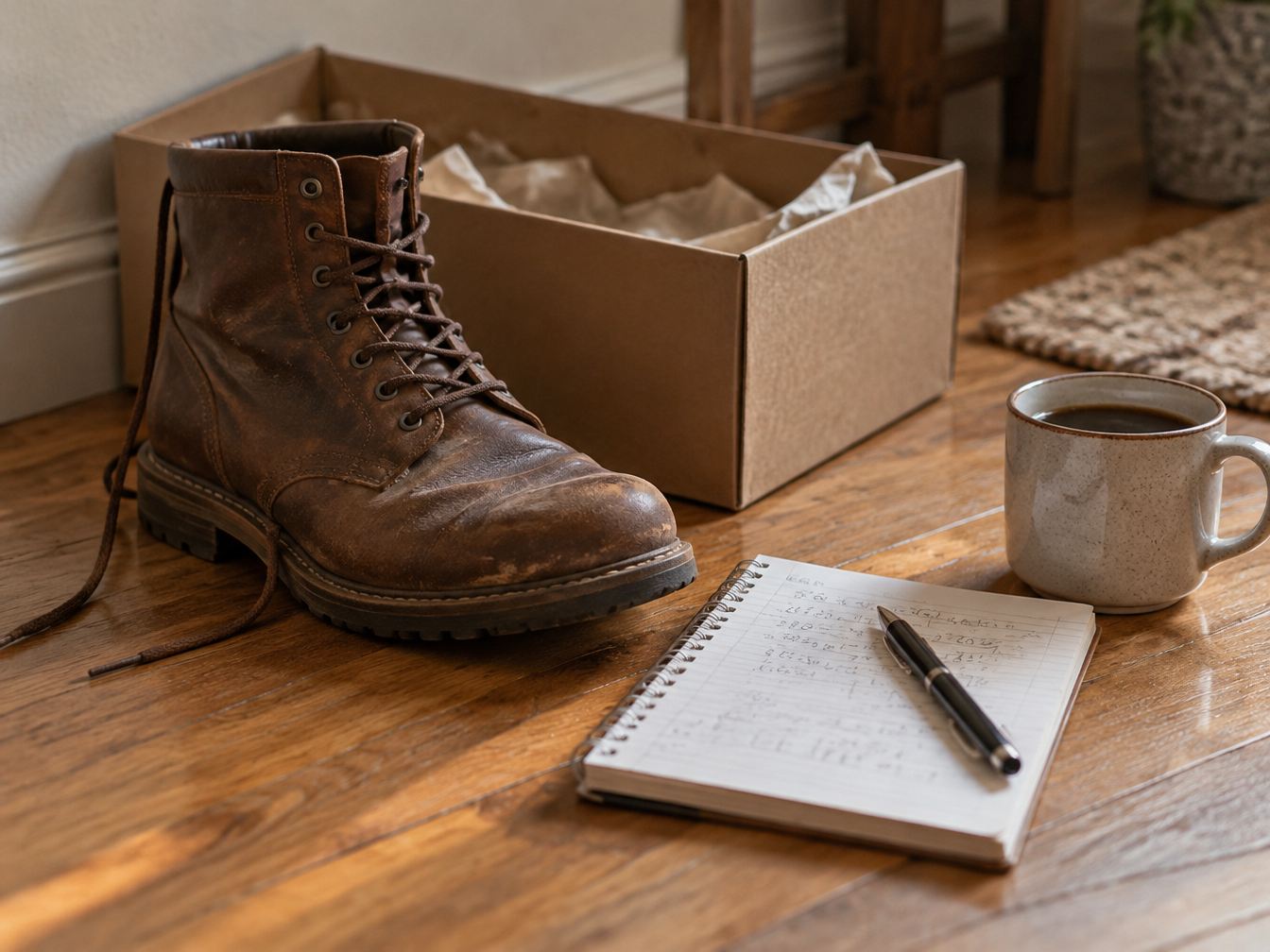
Cost per wear is simply the price of an item divided by the number of times you wear it. It’s not a scientific measure. It’s a way to think, and it’s the same logic behind building a capsule wardrobe around fewer, better pieces. A cheap pair that you wear twelve times before it falls apart can end up costing more per wear than an expensive pair that gets worn a hundred times.
My boots cost what felt like an absurd amount. I wear them roughly three times a week for about five months. Even if I’m generous and call it forty wears a winter, that’s well over two hundred wears across six winters, and they aren’t done yet. The cheap pair I bought before them lasted maybe fifteen.
You can run the numbers for your own life. Be honest about how often you’d actually wear them. A gorgeous pair you wear four times a year is expensive, no matter the price tag. A so-so pair you wear all winter is cheap.
I’ll add a note I wish someone had given me. Fit matters more than almost anything else. A boot that pinches will sit in the shoebox no matter how nice it looks, and it will quietly ruin your cost-per-wear. I learned that the hard way with a pair a size too small that I talked myself into during a sale. Try boots on late in the day when your feet are a little swollen. Wear the socks you’ll actually wear. Walk. Squat. Be a little weird in the shop.
What Salt and Slush Do to a Good Pair
If you take one practical thing from this essay, make it this. The thing that kills boots isn’t age, it’s neglect.
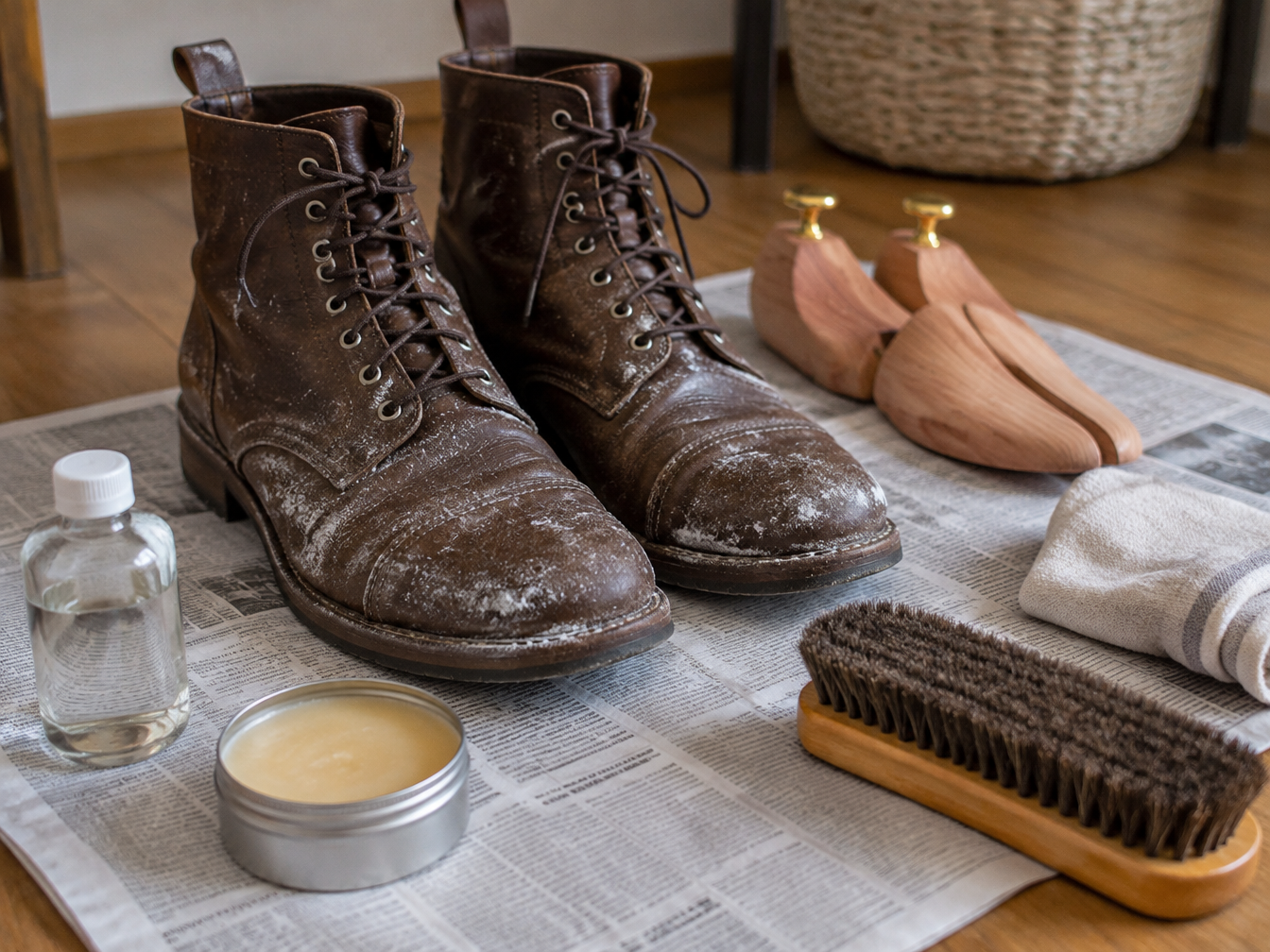
Winter streets are brutal. Gear Patrol points out that the salt cities use to melt ice leaves stains on footwear, and that taking the right steps will help boots last through the winter and well beyond [3]. The fix is simple enough to do on a Sunday night with a podcast.
First, stuff the boots when they’re wet. Soaked leather becomes pliable and can warp, so Gear Patrol suggests cedar shoe trees, or newspaper if you don’t have them [3]. Then dab away the white salt lines with a towel and a mix of one part white vinegar to two parts water, which helps break the salt up and lift it to the surface [3]. After that, condition the leather, because it has just been stripped of oils and can dry out and crack if you skip this step [3]. And finally, apply a leather wax or protector, getting into the welts and stitching [3].
Mental Floss adds a few smart cautions. Don’t reach for waterproofing spray right away, because sealing the material completely can leave your feet sweaty. Look for water-resistant products instead. Clean the boots before you protect them, or you’ll seal the dirt in. And brush grime off after wearing, ideally every time, since removing salt before it builds up saves you scrubbing later [4].
None of this is glamorous. But the afternoon I spent learning it was worth more than any new pair of shoes. A well-kept boot looks better with age, the way a good leather bag does. A neglected one just looks tired.
What I Wear With Them

Boots have a reputation for being fussy to style, and I think that’s mostly nerves. Mine go with nearly everything I own, which is the other secret to the cost-per-wear math.
With a skirt and tights, they turn into something a little romantic. If that’s your mood, knee-high boot outfits for every skirt length has more ideas than I could fit in one essay. With a plaid skirt, they feel cozy and a bit academic.
With straight jeans, a thick sweater, and a long coat, they’re my default uniform. I don’t think about it. I just walk out the door feeling dressed. When I’m tired and uninspired, that default is a gift.
Wide-leg pants take a little more thought, because the hem and the boot shaft have to agree. Try the combination in front of a mirror before you commit.
And if you build your closet around a handful of things you love, a good pair of boots is the kind of anchor piece a capsule wardrobe needs. When I counted the versions of me I was dressing for, the boots were the one item I never questioned.
Letting a Pair Go
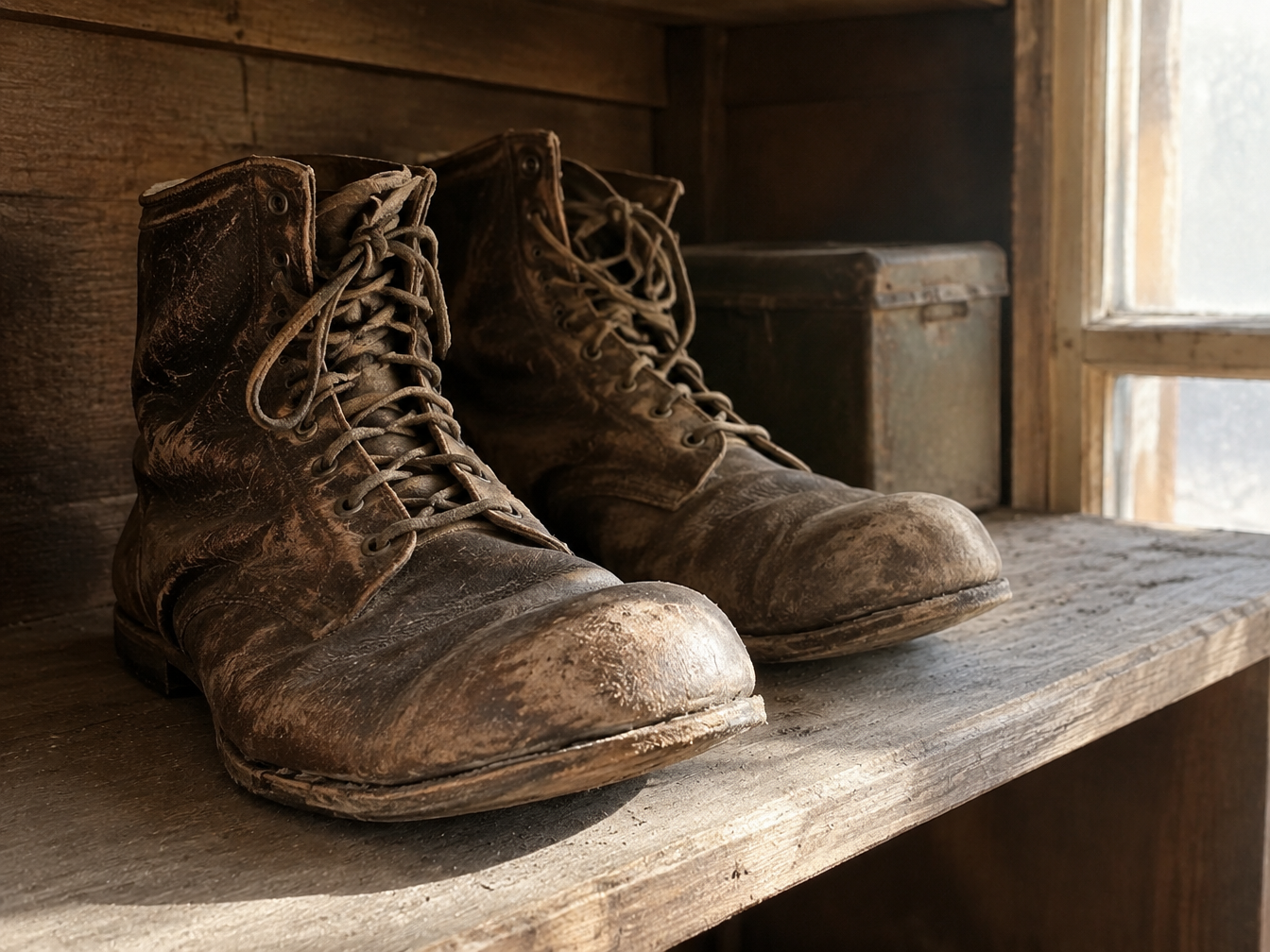
Not every pair lasts forever, and it took me a while to accept that. Even well-cared-for boots wear out. The heel wears down on one side. The sole thins until you feel every pebble. The leather finally cracks along a crease that no conditioner can save.
I had a pair like that once, before these. I kept wearing them past their expiration because I was attached. They’d been to a wedding, a funeral, a long walk home after a breakup. I told myself they had character. Mostly they had holes.
Giving them up felt silly, and then it felt like a small ceremony. I cleaned them one last time, set them on the shelf for a week, and then took them to be recycled. I let myself be sentimental about it. On the days when boots feel like too much, I reach for mary jane and ballet flat outfits instead.
What I learned from that goodbye is that the best things in my closet aren’t the ones I bought on impulse. They’re the ones I chose carefully, wore hard, took care of, and finally let go of with some gratitude.
My current pair has maybe another winter or two in it, and I’m already thinking about what comes next. When the time comes, I’ll go back to that shop, walk the little carpet, and squat in front of a salesperson who still won’t understand why.
For now, it’s the first week of November. The shoebox is open on the floor. The hallway mirror is waiting.
I lace them up, and I’m somebody again.
Sources
- Enclothed cognition, Hajo Adam and Adam D. Galinsky, Journal of Experimental Social Psychology, 2012.
- Introducing “enclothed cognition” – how what we wear affects how we think, Christian Jarrett, British Psychological Society, March 1, 2012.
- How to Get Salt Stains Off Your Boots, Gear Patrol, February 2023.
- 7 Tips To Help You Weatherproof Your Boots and Shoes, Mental Floss.
Leave a Reply