For six years, I thought I hated my own hands. Not the way they looked. The way they felt when they had nothing to do.
Every other Saturday I lowered them into someone else’s care, set my phone on the little tray, and scrolled until my polish was dry. I called it self-care. It was closer to hiding with a view. Forty-five minutes of being looked after, and I couldn’t have told you what any of my fingers had felt like during it.
Then one March the salon raised its prices again, my schedule collapsed, and I stood in my kitchen with a bottle of clear base coat I’d bought in a panic and a thought I didn’t love: what if I just did this myself?
I gave myself a month. Four weeks, my own two hands, no appointments. I assumed I would learn how to paint a straighter line. I did not expect to learn how to sit still.
The Salon Chair Was Where I Scrolled
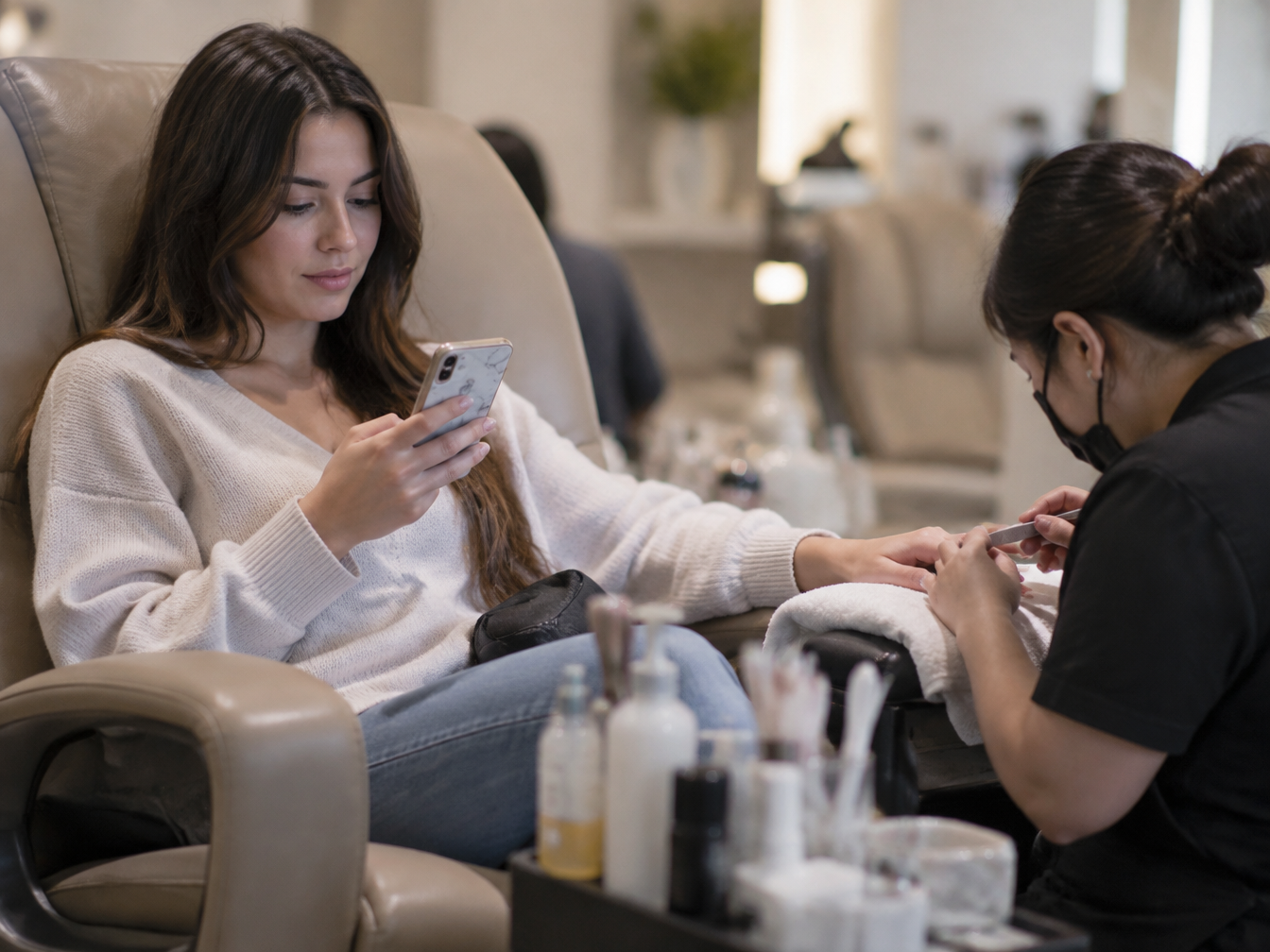
I want to be fair to the salon. The women who work there are skilled, kind and faster than I will ever be. I didn’t leave because anything was wrong.
I left because I noticed something about who I was in that chair. I was absent. I’d sit down with a mind full of tabs, and the manicure would happen to me, like weather. When it was over, I’d admire the color, pay, tip and walk out into the same noisy head I’d walked in with.
Somewhere in my second year of that routine, I realized I was outsourcing the only quiet I got all week. And I wasn’t even using it.
So I made a rule for my month. No phone on the table. Nothing in my ears. Just me, a towel, a lamp and ten fingers. It sounded easy. It was the hardest part.
Day One at the Kitchen Table
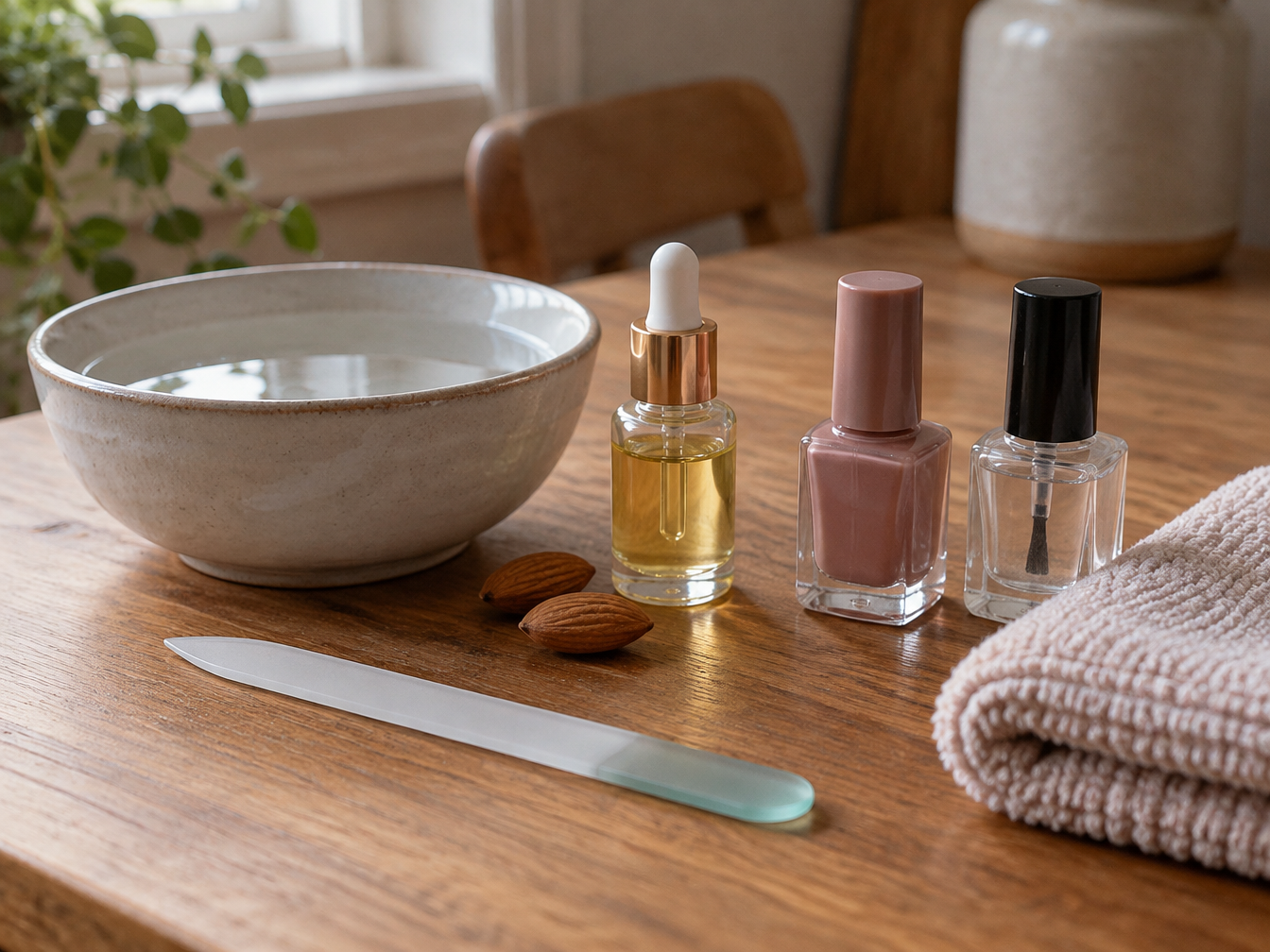
I laid everything out like a surgeon. A bowl of warm water. A glass file I’d bought at the drugstore. A bottle of cuticle oil that smelled like almonds. Clear base coat, a dusty rose polish, and a top coat that promised to dry in sixty seconds, which I would soon learn was a theory.
The first hand went fine. I painted four nails and felt like a genius. Then I tried my dominant hand with my non-dominant one, and the polish ended up on my knuckle, the table, and one regrettable cuff of my sweater.
It took an hour and ten minutes. My nails looked like a toddler had framed them. I was annoyed, then oddly delighted, then annoyed again. And for that whole hour I did not think about my inbox once.
I took a photo of the finished hands, wobbly edges and all, and sent it to a friend with the caption “a work in progress.” She replied, “They look like yours.” I stared at that message longer than I stared at the manicure. I had spent years believing that nail colors can’t fix your life, and here was a crooked rose-pink proof that I could still enjoy them.
What My Nails Needed Before Any Color
Here is what I learned in week one, mostly from reading instead of guessing: the polish is the least important part.
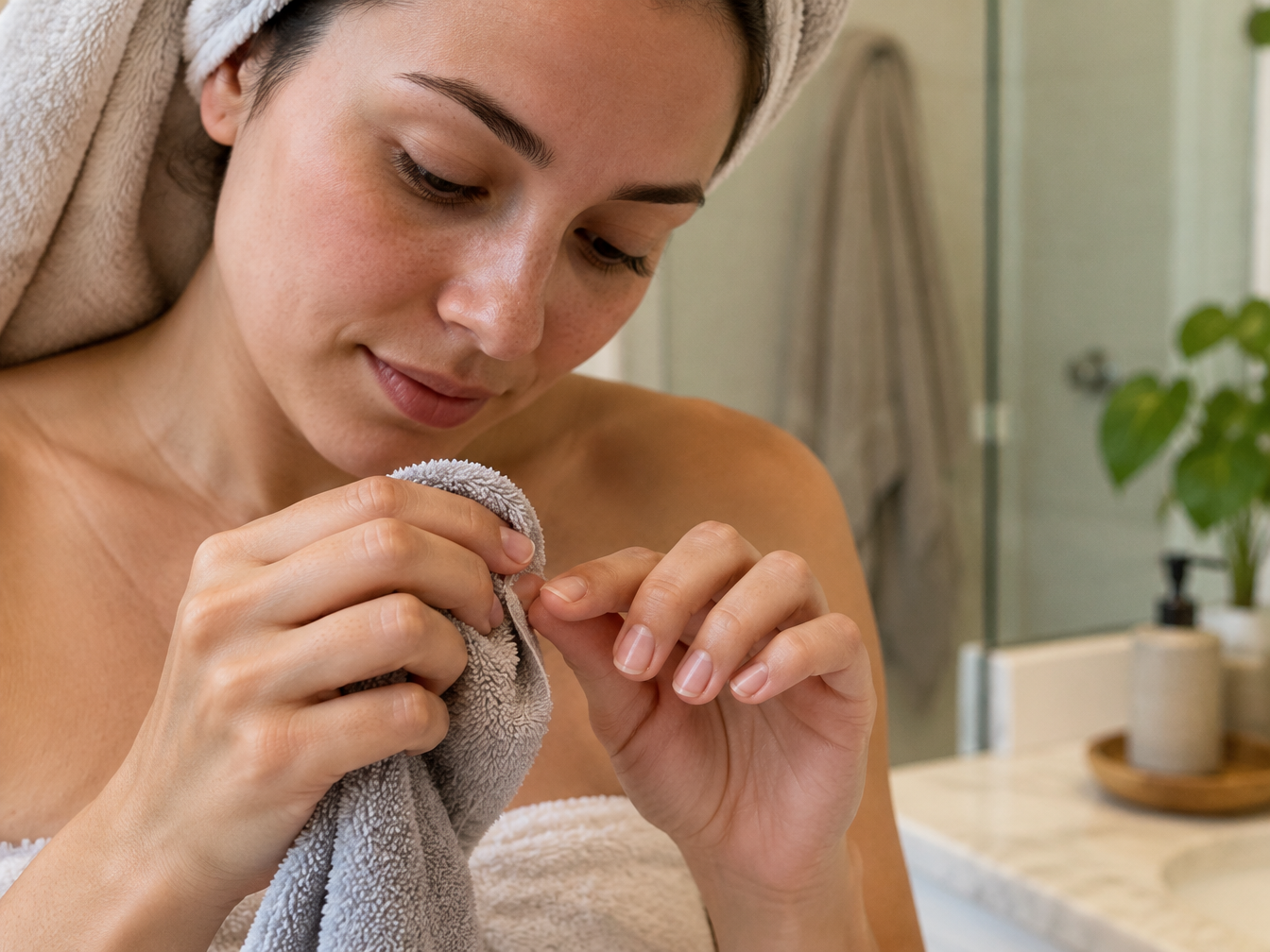
Dermatologists and nail professionals interviewed by NPR were blunt about it. Don’t trim, push or pick at your cuticles. The cuticle is a protective barrier of thin, dead skin at the base of the nail, and removing it can leave the nail open to infection [1]. If you have to manage them, gently push them back with a washcloth after a shower, when the skin is soft [1].
They also recommend cutting nails straight across rather than in an oval, which lowers the odds of an ingrown nail, then smoothing edges with a glass or crystal file instead of a cardboard emery board, which can lead to splitting and peeling [1]. A light buff is fine, but too much thins the nail plate [1].

And moisture matters more than anyone admits. Cuticle oil keeps the skin around the nail from cracking, and any skin-safe oil, even olive oil, will do in a pinch [1]. I started oiling my nails before bed, which turned into the most reliable habit I’ve ever kept.
I’d quit long acrylics a while back and already knew how different short natural nails feel, which I wrote about in what happened when I gave up long acrylics. This was the next chapter: learning how to take care of what was actually there.
The Mistakes Nobody Puts in the Tutorial
By week two I had a list. If you are about to try this, steal it.
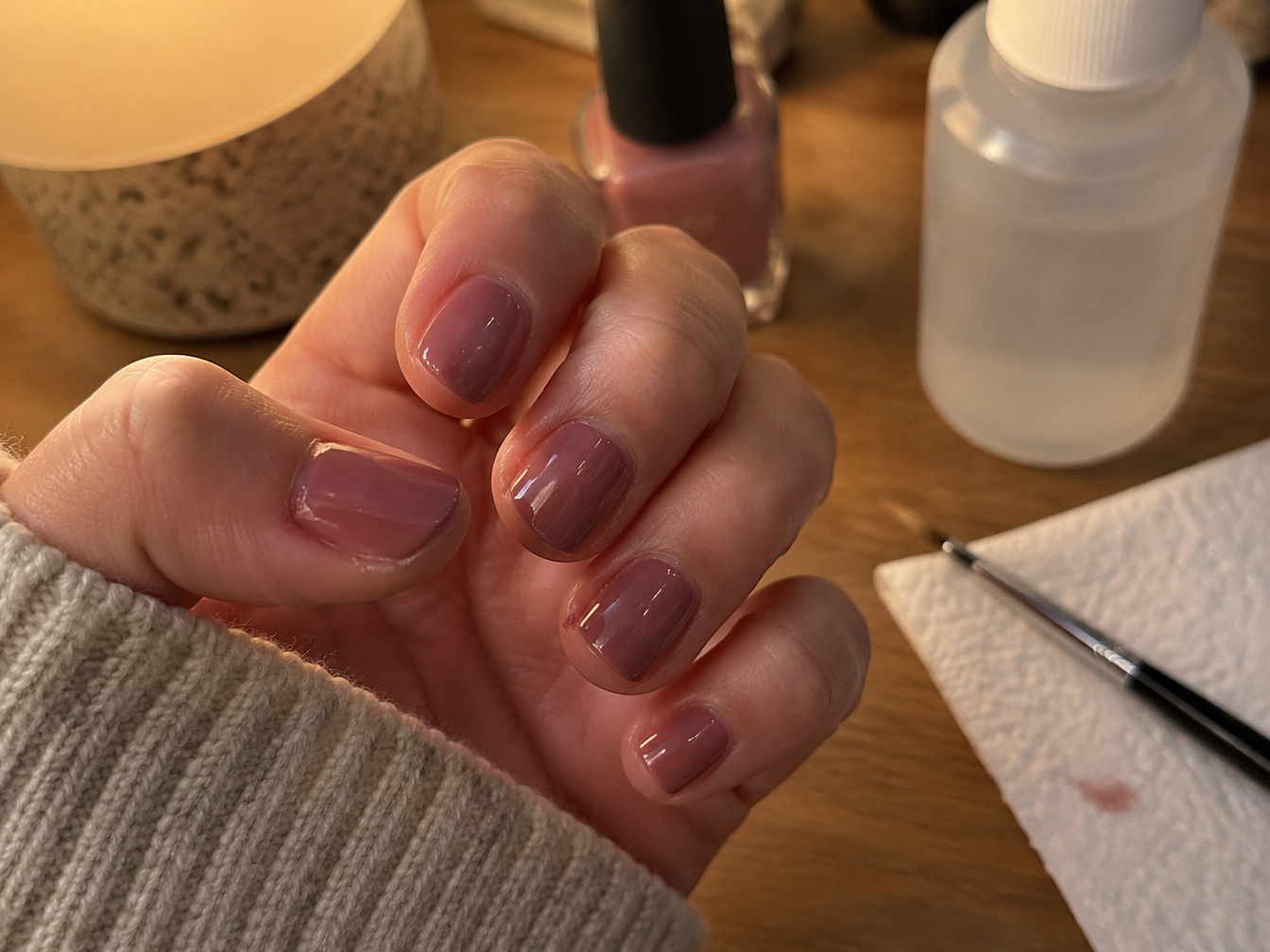
Thick coats are the enemy. Three thin layers beat one gloopy one every time. I learned this on a Wednesday night, when I sat down for what I thought would be a quick coat and ended up with a nail that stayed dented for two days because I’d touched my own hair.
Do the dominant hand last. It is cruel, but it works, because your clumsy hand gets the practice first and your good hand does the finishing.
Wipe the brush on the bottle’s neck, not the sides. Leave a tiny gap at the cuticle, so the polish doesn’t flood the skin. Cap the free edge, running the brush along the tip, and your manicure will outlast the week.
Clean up with a thin brush dipped in remover, not your finger, not a tissue, not your teeth. I do not know why I tried that last one. I was tired.
Designs are another story. I tried a lace pattern with a striping brush after seeing a video, and it looked like a spider had gotten drunk on my index finger. It reminded me that the elaborate looks in these lace nail designs and DIY tutorials take practice and patience, and that a plain, well-finished color can look just as polished.
Why Slow Hands Calm a Busy Head
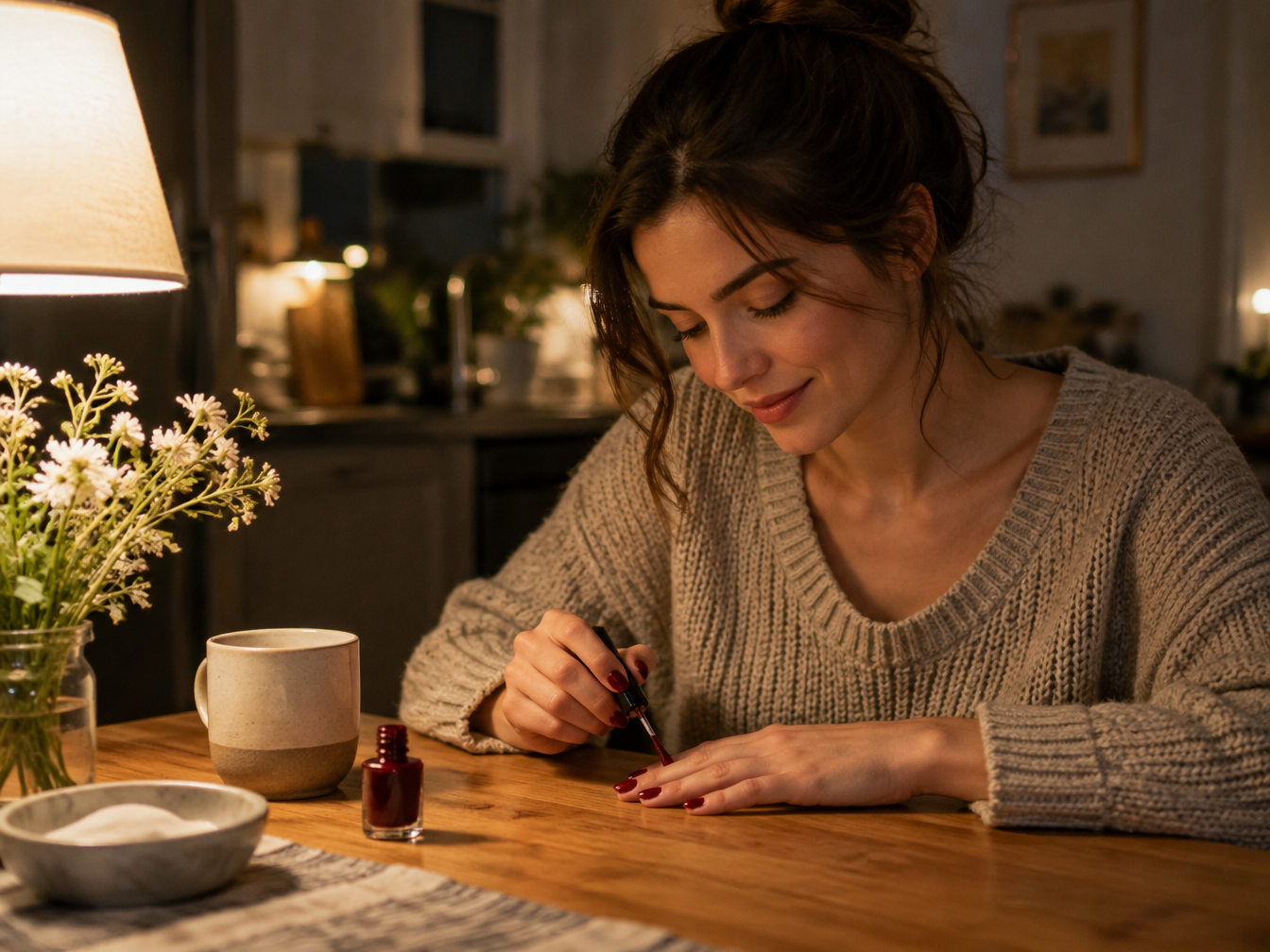
By the third week, something strange happened. I began to look forward to the hour.
It wasn’t the polish. It was the stillness. My hands moved slowly, my eyes stayed on one tiny task, and the part of my mind that normally races in six directions finally ran out of road.
I later found out this isn’t magic. A Cleveland Clinic psychologist explains that “grandma hobbies” like knitting, which involve slow repetitive movements, can reduce stress hormones and calm the nervous system, with results similar to mindfulness meditation [2]. The same psychologist notes that after a long day of decisions our brains are tired, and that scrolling a phone tends to rev the brain up rather than calm it down [2].
That was the thing about the salon. I was sitting still, but I wasn’t resting. My thumb was working harder on my screen than any manicurist worked on my nails.
Doing my own nails turned out to be a small, repetitive, mildly absorbing task that gave my brain somewhere to put itself. Painting a nail doesn’t ask you to be good. It asks you to be here.
There is a line I think about now when someone tells me they “can’t relax.” Maybe you can’t, because you’ve never given your hands anything to do except hold a phone.
The Week My Nails Needed a Break
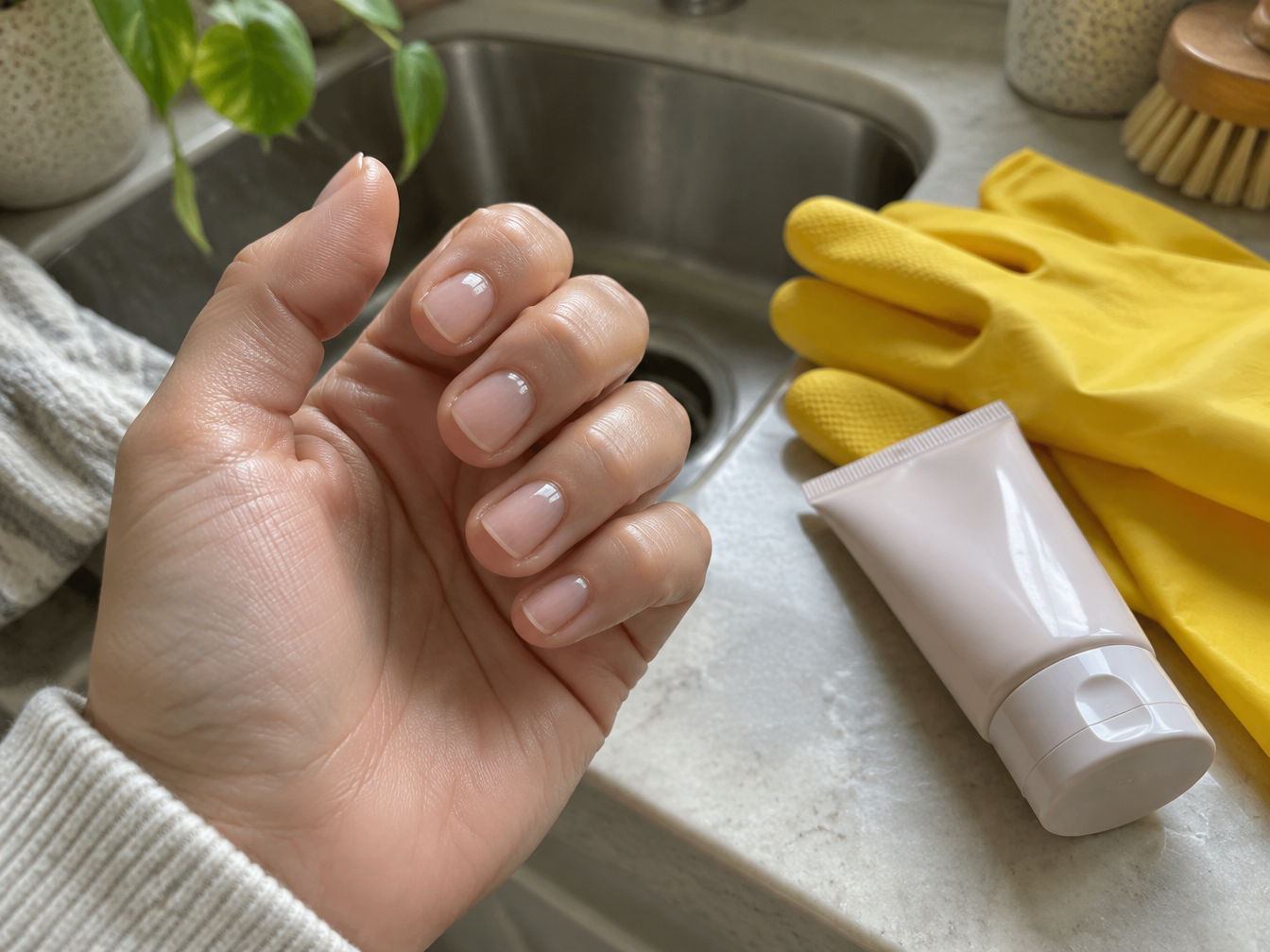
In week three, I did something I had avoided for years. I took the polish off and left it off for five days.
My nails looked bare and a little tired. Mine had faint ridges and one corner that had started to peel, probably from the days I scraped off my own polish with a fingernail instead of using remover. That was exactly the kind of damage I’d been advised to watch for.
The experts in that NPR piece say it plainly: acetone-based removers can cause brittleness with frequent use, and hard gels or heavy acrylics may weaken nails over time, so a break now and then lets your natural nails breathe [1]. They also suggest checking your bare nails between manicures for color changes, dark lines, cracks or divots, and talking to a dermatologist if something looks unusual [1].
I spent those five days oiling, filing gently, and wearing gloves to wash dishes, because nail cells can absorb water and repeated wetting leads to weakness and breakage [1]. By the weekend my nails looked stronger. Not prettier in a Pinterest way. Just healthier, like they’d had a long drink of water.
It was the first time in years I’d seen my own nails without a color telling me what to think about them. If you’d like to ease back in, the glossy shades in these winter nail colors and chrome glazed ideas look gorgeous on healthy nails, and they’re easy to do at home.
What Changed in My Evenings
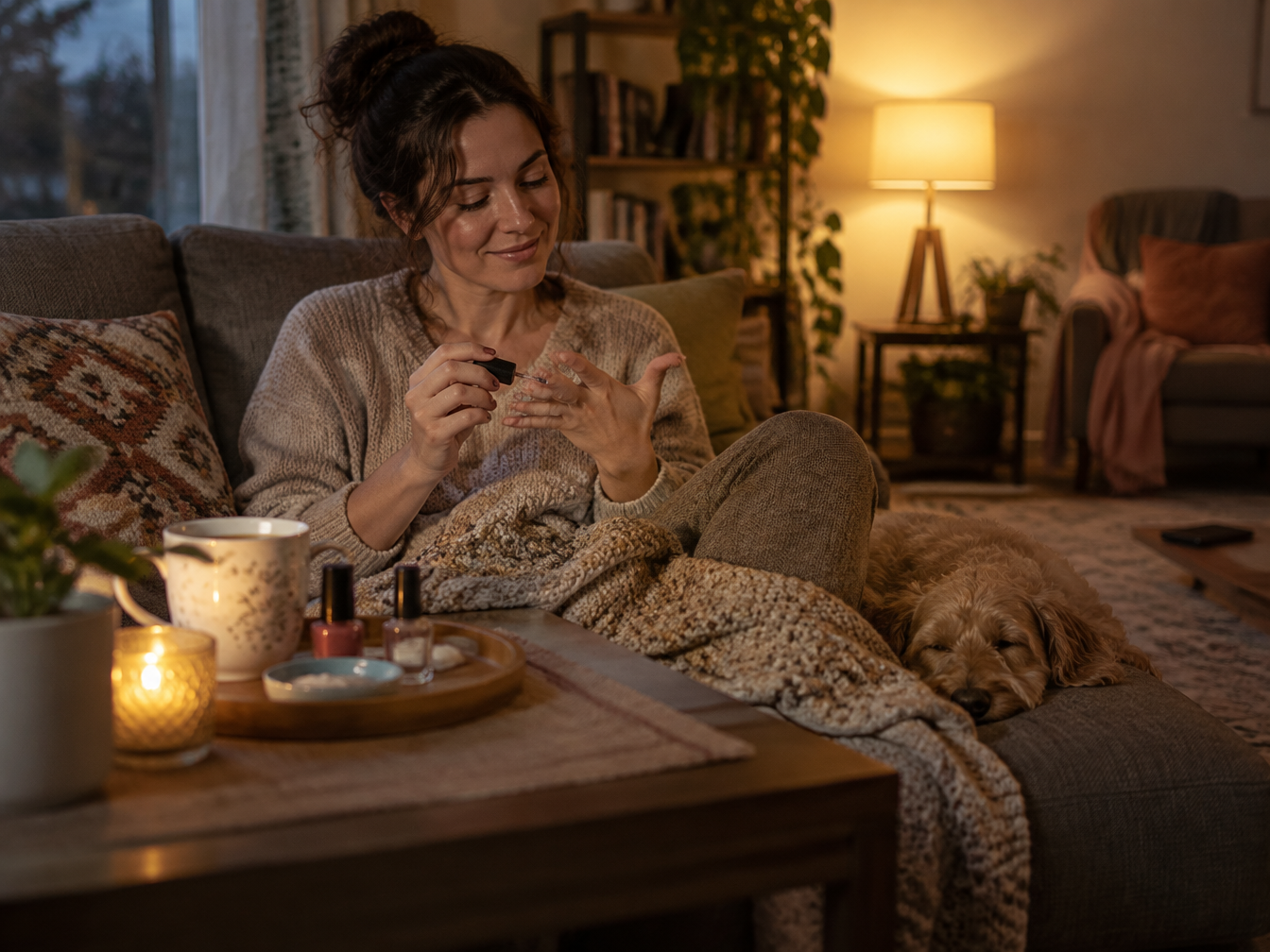
By the end of the month, the evenings looked different.
I had a standing Sunday appointment with myself. Lamp on, phone in the other room, a podcast I’d actually chosen, or no sound at all. The polish was almost beside the point. What I wanted was the hour.
My friends noticed before I did. I stopped saying “I’m so busy” as a greeting. I started going to bed earlier on Sundays, because the hour of stillness left me ready to be done with the day. My phone screen time dropped, not through willpower but because the habit of reaching for it had finally met a better habit. Small things stack. A ritual that costs a bottle of polish and an hour was changing how the whole week felt, and I hadn’t set out to change anything but my manicure.
My hands also got better care in general. I kept a tube of thick cream by the sink and used it after washing, because the experts say a cream is thicker and more oil-rich than lotion, so it protects longer [1]. Between the oil and the cream, my hands looked less ashy by February than they had in years. It echoed something I’d learned in the story of my winter skin finally getting help, which is that the boring basics are usually the ones that work.
And the strangest result was emotional. I felt more capable. It’s silly, a woman painting her own nails shouldn’t make anyone proud. But I had been paying for something I could do, and I had been hiding from time I could use. Reclaiming even one small thing made me feel less rushed about everything else.
I stopped apologizing when a nail was smudged. I started saying, “I did these myself,” and meaning it as a flex.
The Ritual I Kept
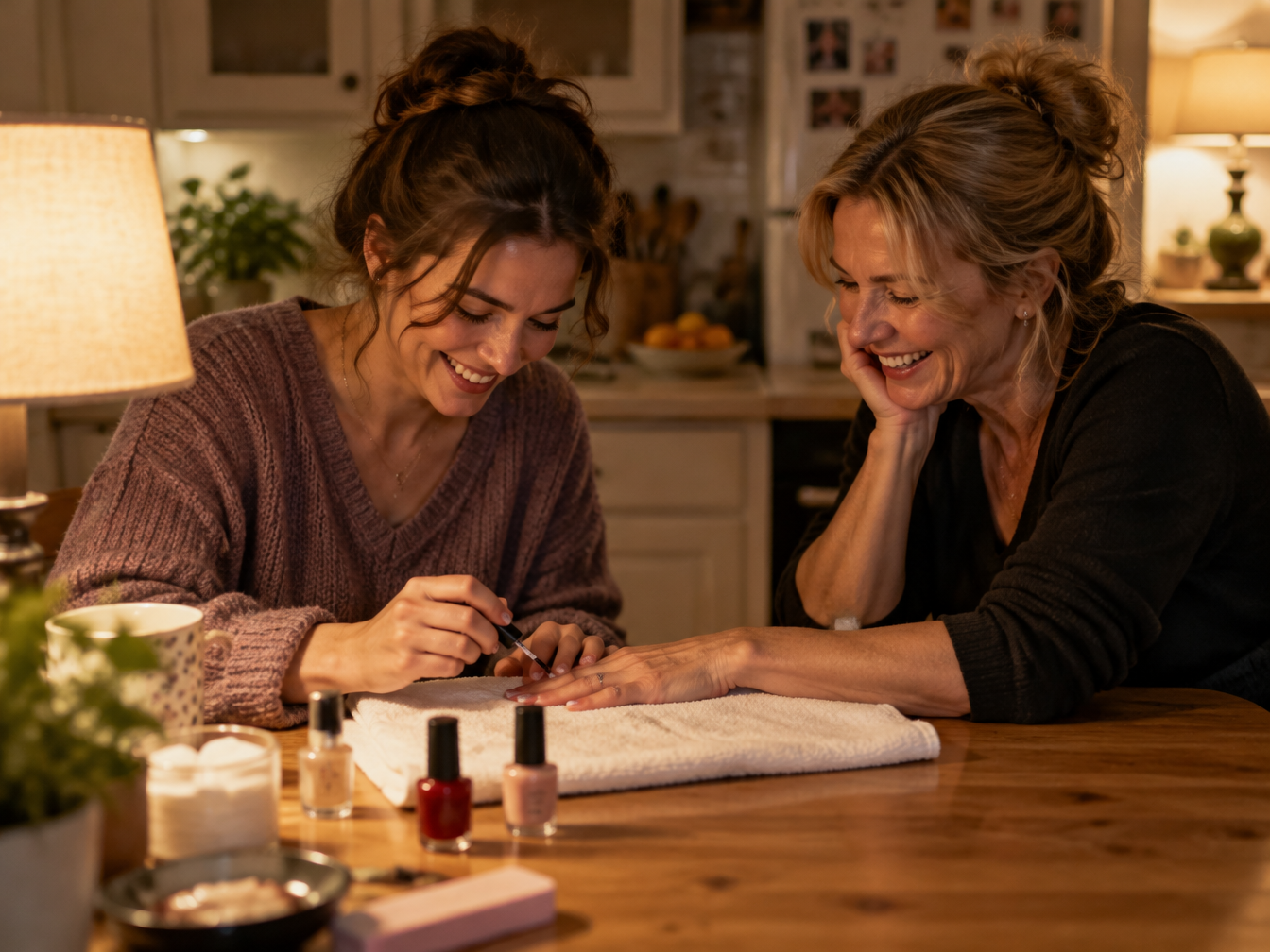
I still go to the salon sometimes. A friend’s birthday, a big event, a day I just want someone else to take over. I never think of it as the opposite of what I do now. They’re two different gifts.
But most Sundays, I’m at the kitchen table. The towel, the lamp, the glass file, the bottle of almond oil. The dusty rose is almost gone, and I’m already fond of whatever color comes next.
Nobody grades the edges. Nobody sees the wobble except me, and I’ve decided that’s the point. Last week a coworker asked who did my nails, and I felt a small, ridiculous surge of pride when I said, “Me, on Sunday.” She asked me to teach her. We’re meeting at my kitchen table next weekend, with two lamps and no phones, and I’ve already set out the extra towel.
You don’t have to love doing your own nails. You only have to love being somewhere for an hour with nothing to prove.
Slow is not a lack of progress. It’s what your hands do when they finally get to rest.

Sources
- Stop picking at your cuticles! 7 ways to keep your nails healthy and strong, NPR Life Kit
- How “Grandma Hobbies” Can Help You Relax, Cleveland Clinic
Leave a Reply