The coat smelled like her kitchen. That was the first thing, before the color, before the weight, before I even found my arms in the sleeves. Cold air, lemon soap and something faintly sweet that I have never been able to name and have never smelled anywhere else.
My grandmother had been gone four months when my mother handed it to me in a dry cleaner’s bag and said, “Try it on. She would want somebody to.” I wasn’t ready. I stood in my mother’s hallway with the plastic crinkling around my wrists and felt like I was trespassing in a person.
It was camel wool, a little too long, with shoulders cut for a woman who held herself differently than I do. The lining had a small tear near the left hem. One button didn’t match the others. I put it on anyway, buttoned it up to my throat, and looked in the hall mirror at a woman I almost recognized.
I have worn that coat every winter since. It has taught me more about style than any magazine I have ever read, and it is still teaching me, which is the strangest part.
The Coat That Smelled Like Her Kitchen
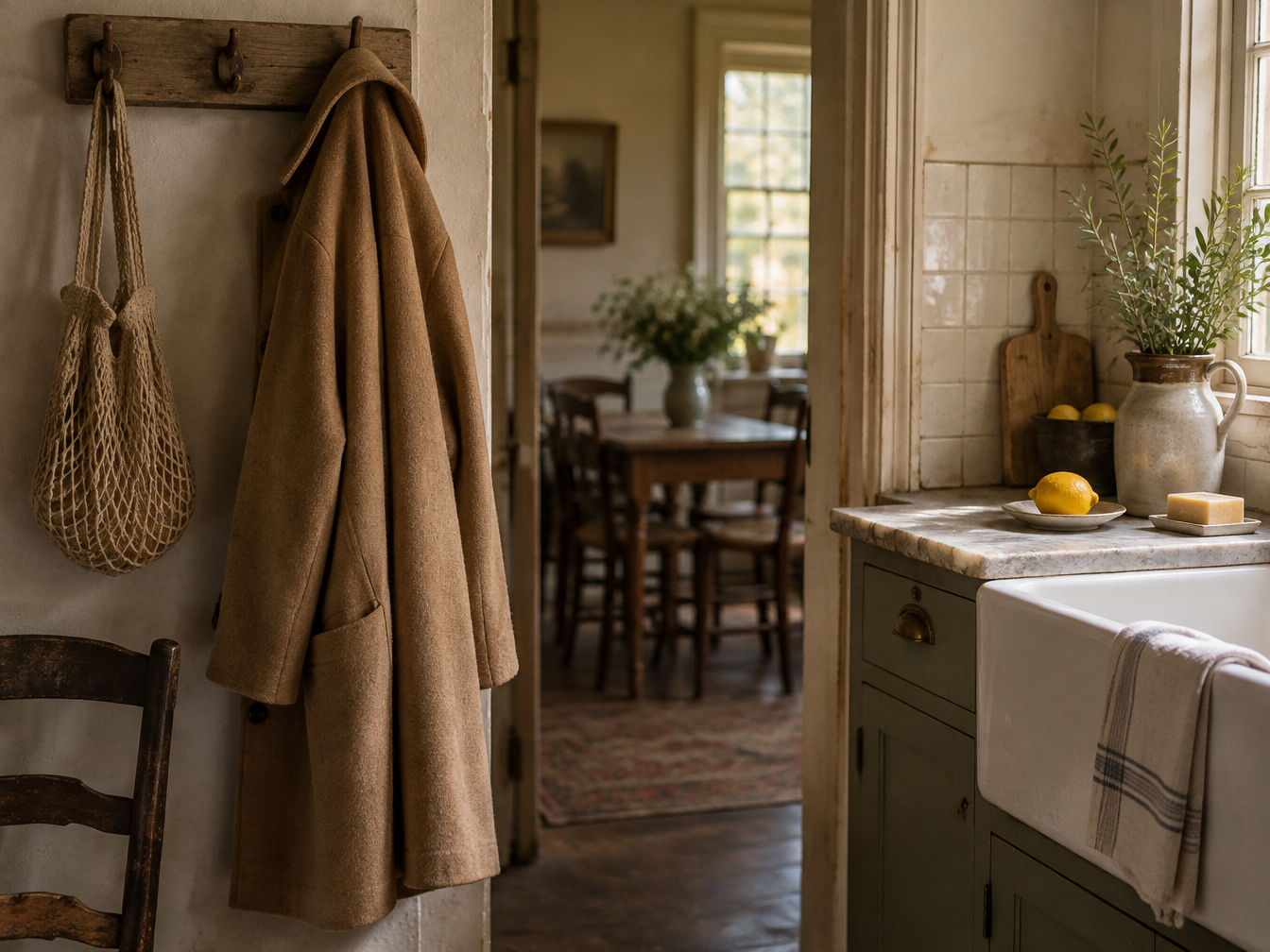
For the first few months I only wore it at home. I’d put it on to take out the trash, then stand on the porch longer than the trash required. Nobody warns you that grief can live inside a garment, in the seams and the pockets and the particular way the collar sits against your neck.
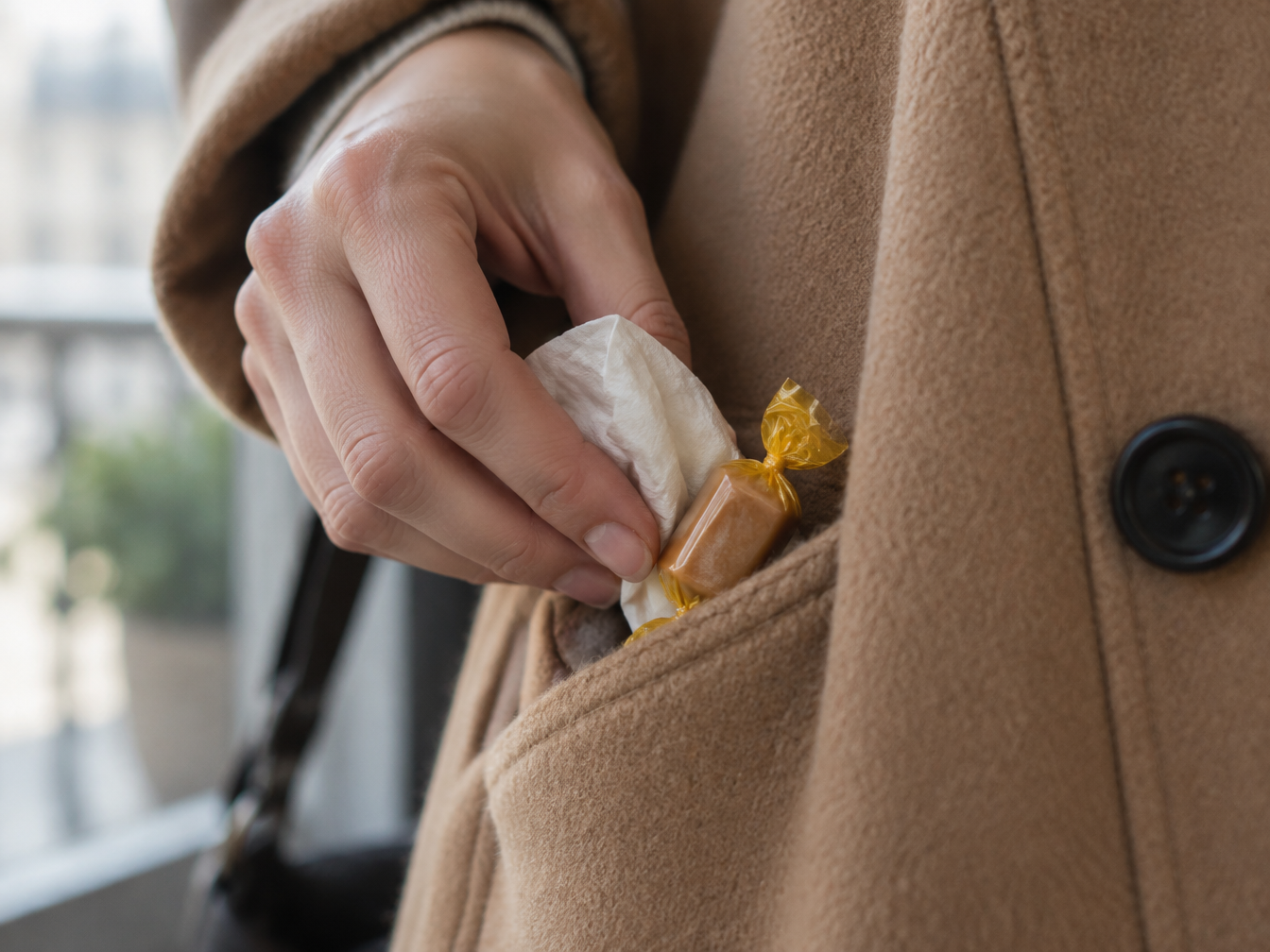
The pockets still held her things. A folded tissue, soft as cloth. A single butterscotch candy in a yellow wrapper. A grocery list in her handwriting, with “good bread” underlined twice. I kept all three. I still have the list in a book on my nightstand, and it makes me laugh and tear up in the same breath every time.
What I didn’t expect was how much the coat changed the way I walked. I stood straighter in it. I slowed down. I stopped scrolling on the train, because the coat seemed to ask for a different kind of attention, the kind you give when you are wearing something that has a history.
Clothes aren’t supposed to do that, I thought. They’re fabric. But the more I wore it, the more I realized I was not the first person to be changed by what was on her back.
What a Coat Can Hold That a Closet Cannot
There is real research on this, and I love that someone bothered. Psychologists Hajo Adam and Adam Galinsky coined the term enclothed cognition for the way clothes can change how we think and behave. In their experiments, students who wore a white lab coat made half as many errors on an attention test, and the effect depended on two things: the symbolic meaning of the garment and the act of actually wearing it [1].
Participants who only saw a lab coat on a desk didn’t get the boost. Neither did those told the same coat belonged to a painter [1]. Meaning plus wearing. That is the whole formula.
I thought about that formula every time I buttoned up my grandmother’s coat. The meaning was already inside it: patience, warmth, a woman who showed up everywhere on time with a casserole dish. All I had to do was wear it.
This is the part of dressing that trend cycles never account for. A garment can carry an identity you are trying to grow into. I wrote about the opposite problem, buying trends that never sounded like me, in the story of building a wardrobe that sounds like me, and the coat is the other half of that lesson. When something sounds like you, or like someone you love, you don’t have to work to wear it.
The Winter I Wore It to Be Braver

The first time I wore it outside was a job interview, though I told myself it was only because the weather was bad.
I was nervous in the specific way that makes your hands go cold. I put on the coat, and for the length of the walk from the parking garage to the building, I felt oddly accompanied. I imagined her looking me up and down at the door, tugging my collar straight, saying “you’ll be fine, now go.”
I know that is sentimental. I know a coat cannot give you courage. But the research suggests that what we wear can shift how sharply we pay attention and how we carry ourselves, and I can only report that I walked into that office like someone who had been told she belonged there [1].

I got the job. I won’t pretend the coat did it. But I will say I’ve worn it to every important day since, and the habit has become its own small ritual. Coat on, shoulders back, borrowed strength from a woman who never once thought of herself as brave.
Quality You Can Feel in the Weight
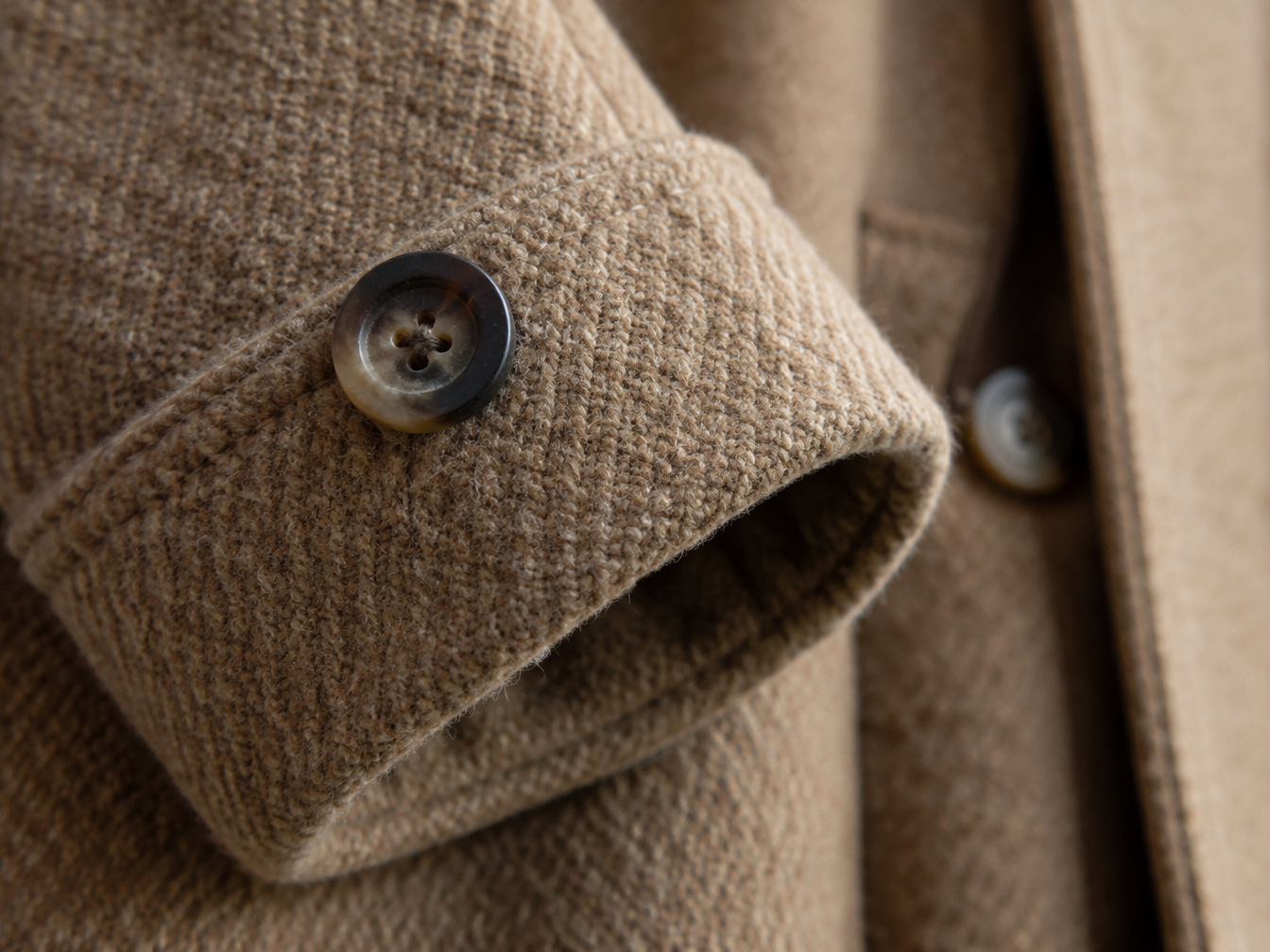
Here is a lesson I didn’t expect from a hand-me-down. The coat is heavy. Not uncomfortably, but in the way that tells you something was built to last.
It has outlived at least four versions of my own winter wardrobe. Puffers that lost their loft. Trendy faux wool pieces that pilled by January. A belted wrap coat I loved for exactly one season. Meanwhile this one, which is older than I am, still holds its shape, still keeps the wind out, and still looks like it knows what it’s doing.
The numbers show why that matters. According to an analysis of EPA data, the textile industry sent 11.3 million tons of waste to landfills in 2018, about 7.7 percent of all municipal solid waste there, and just 14.7 percent of textiles were recycled that year [2]. A Boston University School of Public Health report estimated that the roughly 34 billion pounds of textiles the U.S. discards each year works out to about 100 pounds per person [2].
One hundred pounds. I think about that every time I’m tempted by a cheap coat that will last one winter. Vintage and second-hand pieces have already proven they can survive years of wear, which is more than most new fast-fashion items can promise [2].
If you want an everyday example of the same idea, the trench coat outfits that look easy are a reminder that a well-made outer layer can carry a wardrobe through decades, not just seasons.
How to Care for a Coat That Has Outlived Trends
I learned the hard way that old wool needs a little respect. The first winter, I stuffed the coat on a thin plastic hanger and let the shoulders sag. By March, the left one had a dent I’m still working on.
The advice that saved me came from a storage guide, and it was simple. Clean the coat before putting it away, even if it looks fine, because body oils and odors can attract moths and make wool deteriorate in storage [3]. Check the care label first, because a coat with non-washable lining needs a dry cleaner instead of a machine [3].
If you wash by hand, use cold water and a detergent made for wool, never hot water, which can shrink the fibers [3]. Lay the coat flat to dry rather than hanging it, because wet wool is heavy and loses its shape [3].
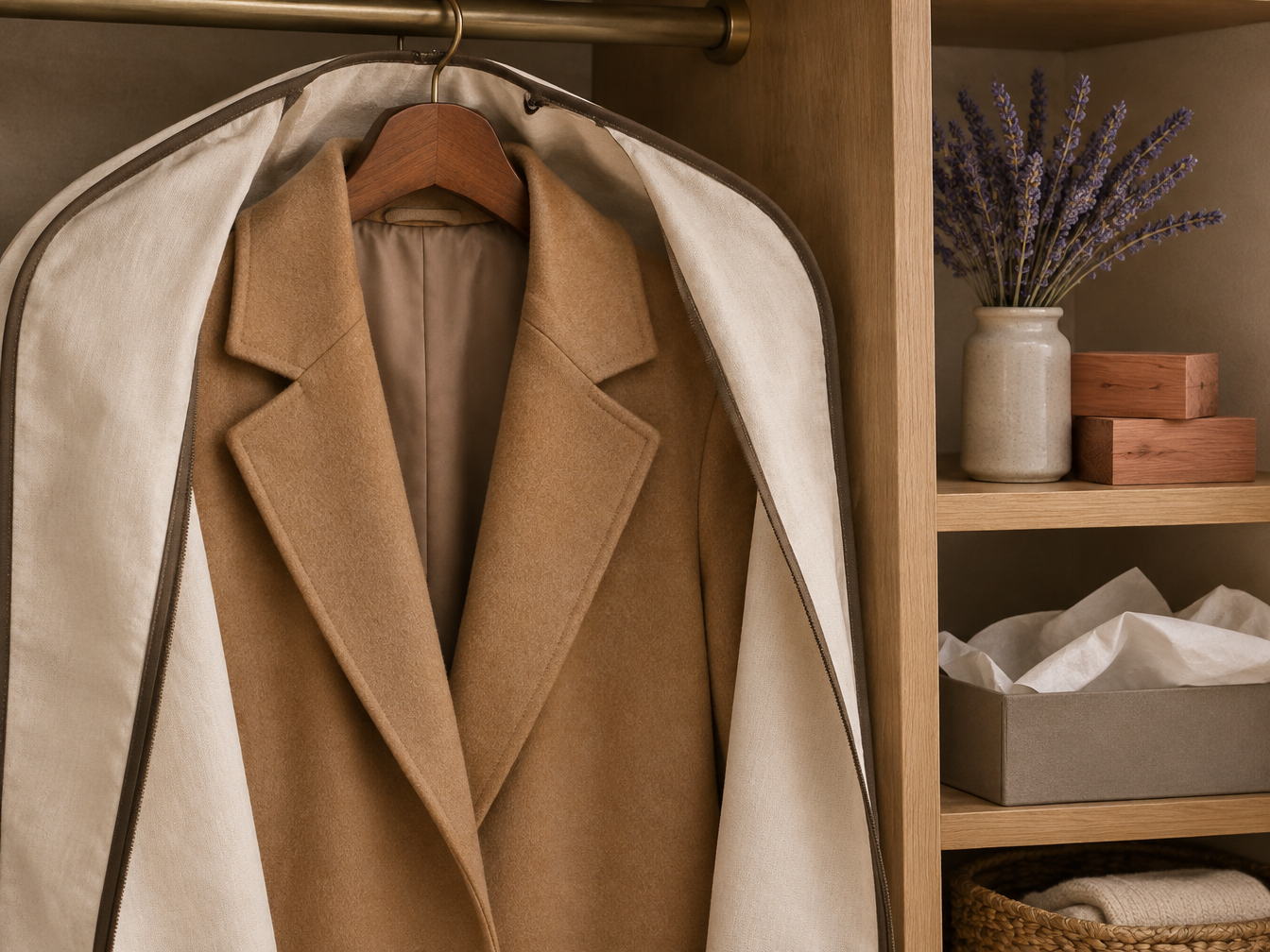
For storage, a chunky wooden hanger and a fabric garment bag keep the shoulders honest. Tuck lavender or cedar in the pockets for moths, and store it somewhere cool, dark and dry, not in a garage or attic [3]. Folded in acid-free tissue is another option if hanging isn’t possible, since regular tissue has acids that break down wool fibers over time [3].
I do all of this now, and it takes about an hour a year. That’s a very small price for a thing that has been loved for decades. Every fall, when I take it out of its bag and the cedar smell hits, it feels less like unpacking a coat and more like opening a door to the same warm room I’ve visited for years. Maintenance, it turns out, is just another word for staying in relationship with the things you want to keep.
It also made me think about how few pieces a wardrobe actually needs when each one earns its place. I explored that in what I learned from building a capsule wardrobe, and the coat is the proof I carry on my own shoulders.
The Fit That Was Never Mine and Why I Kept It
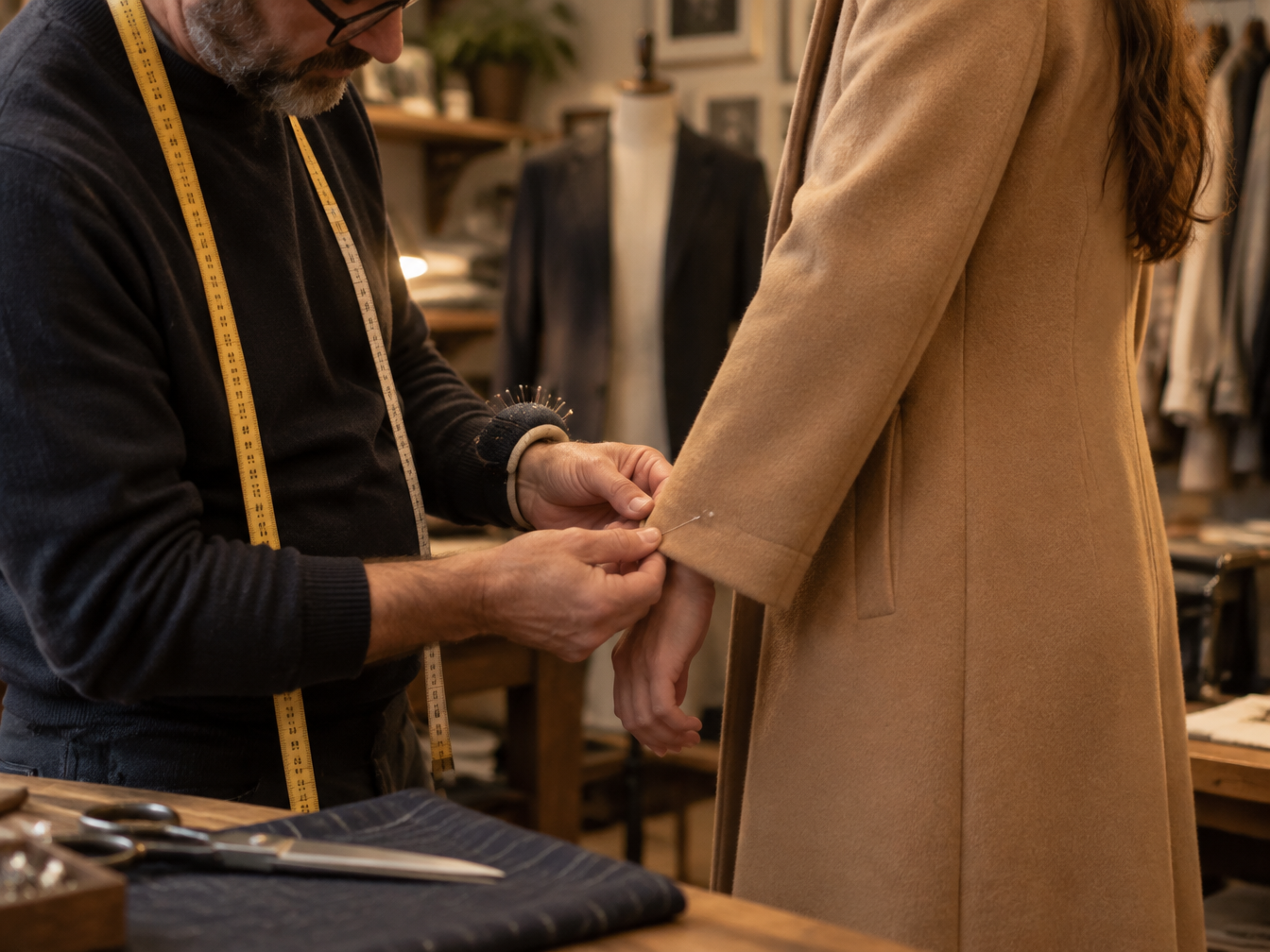
It does not fit me properly. I want to be honest about that.
The sleeves are half an inch too long. The shoulders sit a little wide. It was made for a woman built differently, with a different idea of how a coat should hang. For a while I thought about taking it to a tailor and having it rebuilt around my body.
For months I couldn’t decide, because every option felt like a small betrayal. Altering it meant admitting the coat was mine now, and that meant admitting she wasn’t coming back for it. Eventually I understood that the coat could be both. I did take it in, eventually. Just not all the way. The tailor shortened the sleeves and fixed the lining, and I asked her to leave the shoulders alone. They are the part of the coat that still feels like her.
That, I realized, is a style philosophy I’d been missing. You don’t have to erase the history in a garment to make it yours. You can adjust the parts that don’t serve you and keep the parts that tell the story. An imperfect fit with meaning beats a perfect fit with nothing behind it.
This is a version of something I wrote about in how to find your personal style after years of copying everyone else, the idea that real style is less about matching a trend and more about knowing which parts of an inheritance to keep.
The Lessons Hidden in the Pockets

If you ever wear a coat that belonged to someone you loved, check the pockets slowly.
Mine taught me three things, and none of them are about fashion. The tissue taught me to be prepared for other people’s tears. The butterscotch taught me that small kindnesses can live in a pocket for years. And the grocery list taught me that “good bread” is worth underlining, which I take to mean that ordinary pleasures deserve to be named out loud.
The coat has taught me plenty about clothes too. That a good garment gets better with use, the way a good friendship does. That quality is something you can feel. That meaning makes a garment easier to wear. That caring for one good thing beats collecting many forgettable ones.
But the pockets are where the real education happened. They reminded me that a wardrobe is not just a collection of outfits. It’s a record of who has loved you, and how they dressed for life.
On the days I need to feel like myself again, I reach for this coat before I reach for anything else. I wrote about that instinct in the outfit I wear when I need to feel like myself again, and the camel wool is now part of that answer.
What I Will Pass On
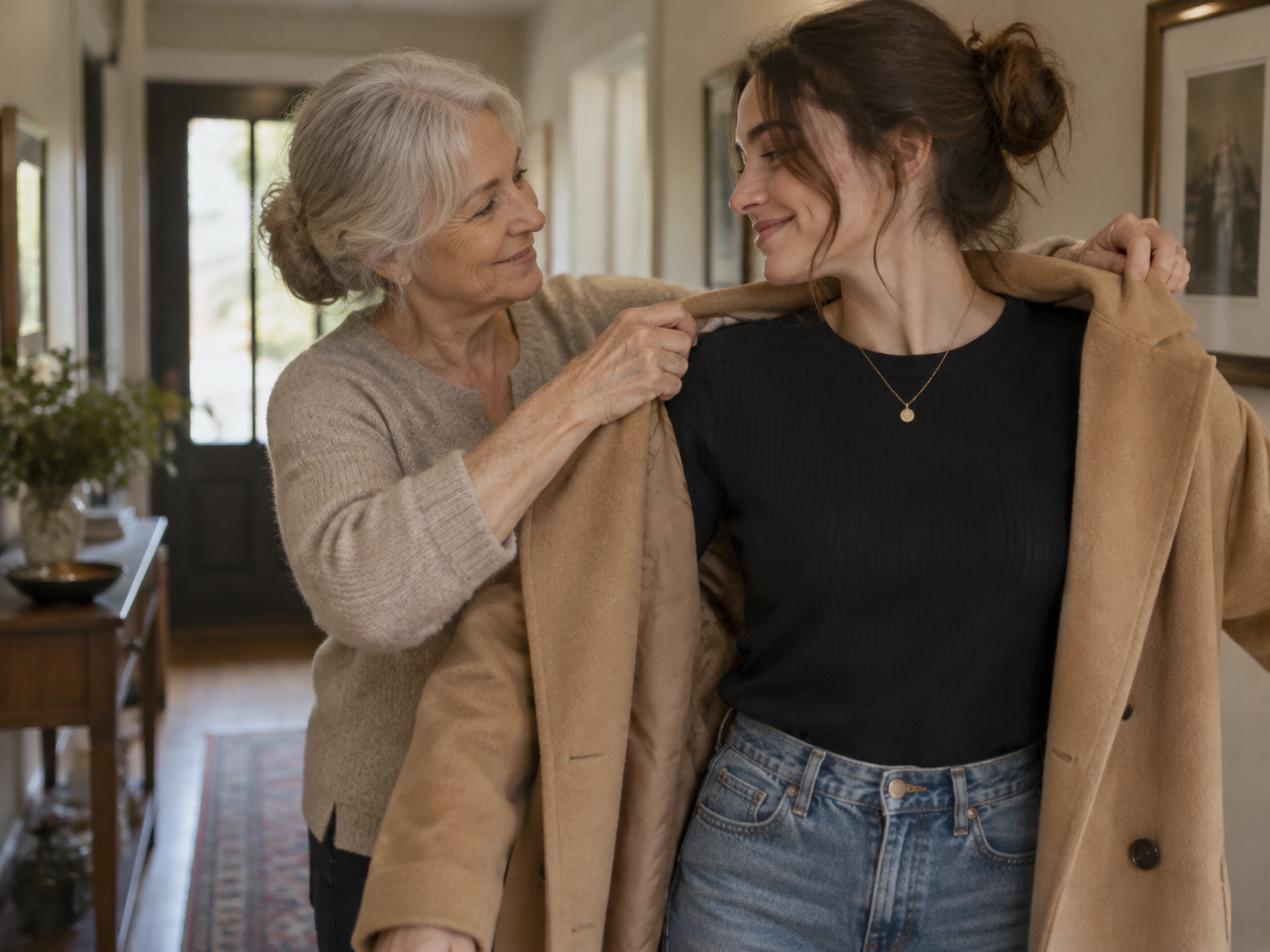
Someday this coat will go to someone else. I haven’t decided who. Maybe a niece, maybe a daughter, maybe a friend who needs it the way I did.
When that day comes, I’ll leave the pockets as I found them, with one addition. A folded note in my handwriting, and a butterscotch candy in a yellow wrapper.
I want whoever wears it next to stand in a hallway, with the plastic crinkling around her wrists, and feel exactly what I felt. That she is not trespassing. That she is being handed something warm.
Some clothes don’t wear out. They just wait for the next person who needs them.
Sources
- Introducing “enclothed cognition”, how what we wear affects how we think, British Psychological Society Research Digest
- Textile waste is a major environmental threat. Here’s what’s being done about it, Stacker and The RealReal
- How to Store a Wool Coat, wikiHow
Leave a Reply