The Night My Face Betrayed Me
It was the first properly cold week, the kind where the heat clicks on in the apartment and the air suddenly smells like warm dust. I was getting ready for a dinner I’d been looking forward to for weeks. I’d done my base the way I always do. And then I stepped back from the mirror and saw it: tiny dry flakes clinging to the sides of my nose, a rough patch on my cheek, and foundation sitting on my skin like frosting on a cracked cake.
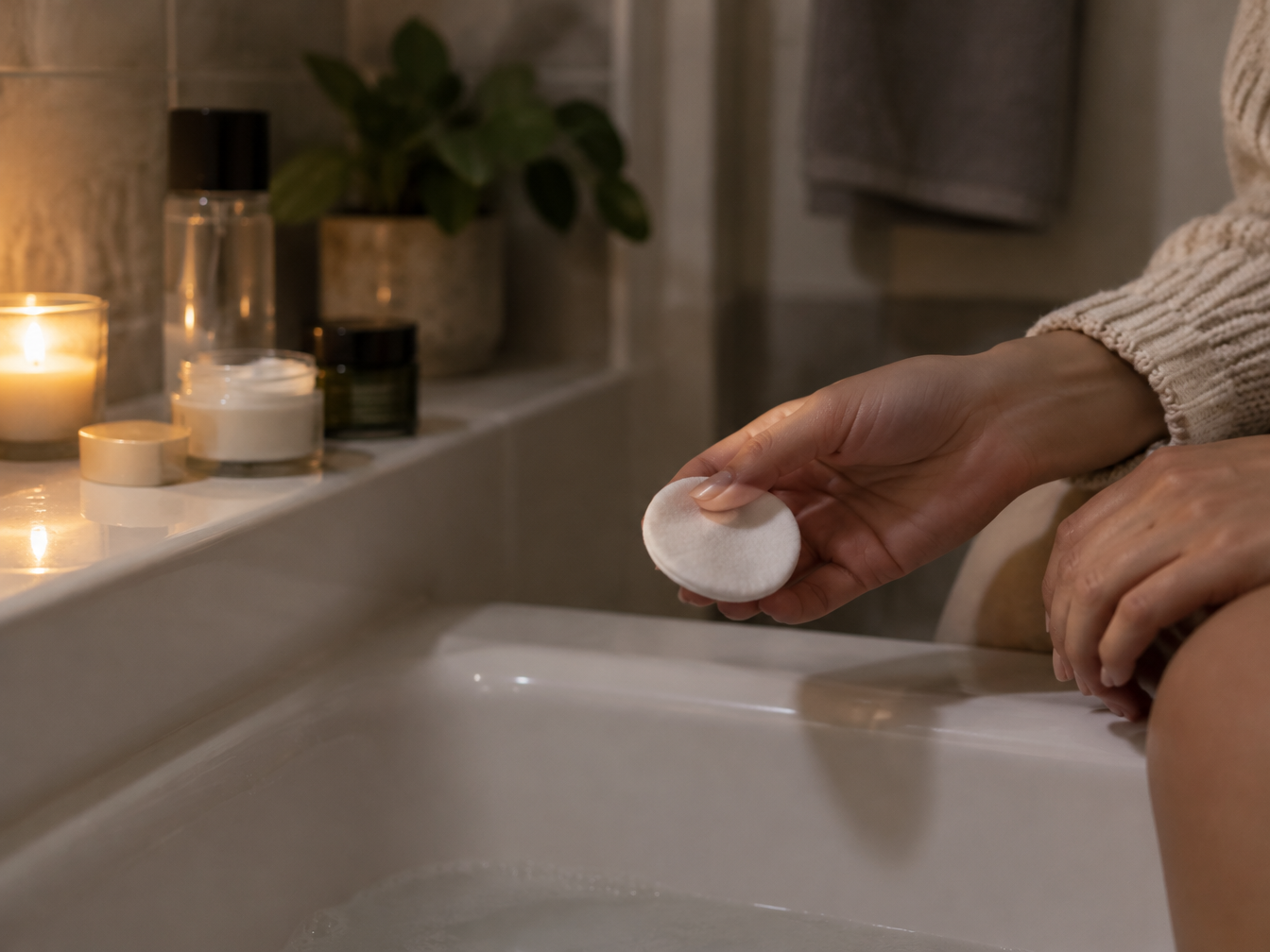
I wiped it all off. Started again. Same thing, worse. By the third try I was sitting on the edge of the tub with a cotton pad in my hand, crying the quiet, embarrassing kind of cry that is never really about the thing you’re crying about.
It wasn’t the flakes. Or it wasn’t only the flakes. It was the feeling that my body was going back on a deal we’d made in the summer, when my skin was easy and I got compliments without trying. Winter arrives and suddenly I’m high maintenance again, tight and itchy and tired of my own face.
If you’ve ever cried in a bathroom over a patch of dry skin, you don’t need me to explain how silly it sounds and how real it feels. I just want you to know it isn’t vanity. It’s what happens when the thing you look at in the mirror every morning stops cooperating, right when everything else in the season is asking more of you. (I learned a version of this when I stopped wearing makeup for 30 days and found out how much of my mood was riding on my skin.)
So here’s what I learned, mostly the hard way, about what winter does to skin and what actually helped. Some of it surprised me. A lot of it was boring. All of it was better than what I was doing before.
Why Winter Does This to Your Skin
The first thing that helped was understanding that this wasn’t a personal failure. It was physics.
Dermatologist Dr. Julia Carroll explained to CBC Life that in winter, humidity levels go down, and the air constantly tries to recover moisture from any source it can [1]. That is also why you get more static and why your plants suddenly need watering more often. The perfect target for those moisture-seeking molecules, she points out, is humans, who are about 70 percent water [1].
Read that again, because it changed my whole attitude. The air is drinking from my skin. My routine didn’t suddenly get worse in November. The environment turned on me.
Age plays into it too. Dr. Laurie Parsons, speaking in the same piece, notes that as we get older our skin gets thinner, particularly in sun-exposed areas, and we produce less oil [1]. So if your skin seemed fine through your early twenties and suddenly seems dramatic now, you’re not imagining things.
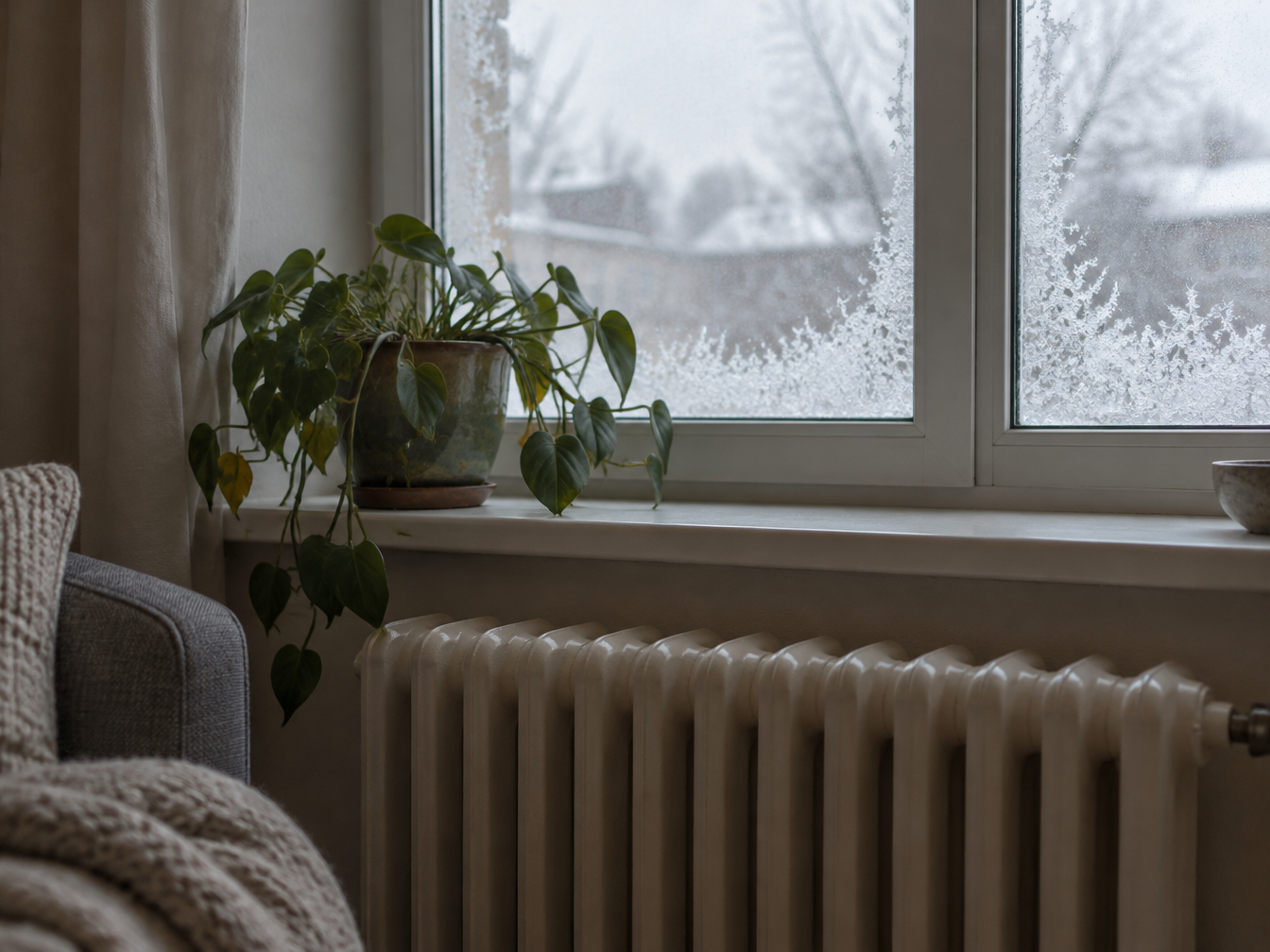
And then there’s the heat indoors. The radiator that makes the apartment cozy is also drying out the room. I used to think of winter dryness as something that happened to me when I went outside. A lot of it happens on my couch.
The Shower Mistake I Made for Years
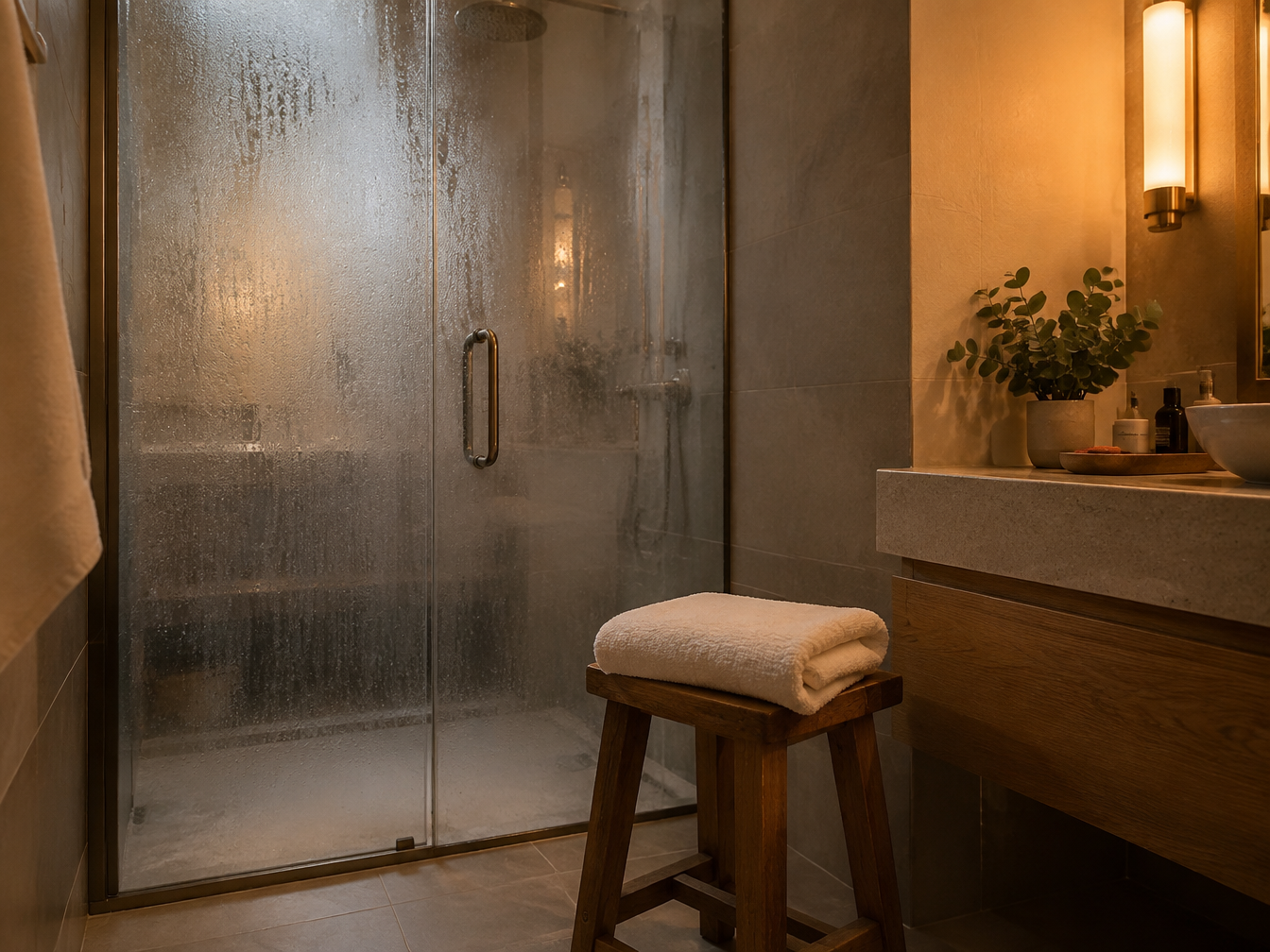
For most of my adult life my winter coping strategy was a scorching shower. Cold outside, hot inside, nothing complicated. I’d stand there until my skin turned pink and call it self-care.
It turns out that was part of the problem. The American Academy of Dermatology recommends limiting baths and showers to five to ten minutes in warm water, and gently patting your skin dry with a clean towel instead of rubbing, because rubbing can irritate extremely dry skin [2]. The CBC piece makes the same point about heat: intense hot water can disrupt the natural barrier that’s designed to lock moisture in, and Dr. Parsons offers a rule I now repeat to my friends. “If it’s too hot for a five-year-old, it’s too hot for you” [1].
Then there’s the cleanser. I used to lather up everything, every day, because clean felt like the goal. Dermatologists say you don’t need to. Dr. Parsons suggests sticking to the areas that need it, like the underarms, feet and face, and using water for most of the body [1]. The AAD agrees that you should use a gentle cleanser and avoid so much that you see a thick lather [2]. Soap exists to remove oil, which is exactly what dry skin is missing.
I’ll admit that giving up the hot, foamy, squeaky-clean shower felt like losing a small luxury, and it made me think about how I used to treat my whole routine like a project I was failing at. But within about two weeks the tight, pulling feeling after I got out was almost gone. That alone was worth it.
Moisturize Naked and Other Rules That Actually Helped

Here is the single most useful sentence I’ve ever read about skincare: moisturize while your skin is still damp.

The AAD says to apply moisturizer when your skin is still damp after a bath or shower, after washing your hands, and whenever it feels dry, and to take a moment to gently massage it in [2]. The CBC dermatologists go a step further. Dr. Carroll says not to get half-dressed first, because you won’t be as liberal with the product, and Dr. Parsons explains that when you step out of the shower your outer layer is hydrated, but without an oily layer on top to prevent water loss, your skin will actually get drier [1].
So now I do it right at the bathroom door. Towel off, moisturize everything, then get dressed. It adds ninety seconds to my night and removes about ninety percent of my winter itch.
A few other things made a real difference.
I switched to ointments and creams instead of thin lotions. The AAD notes that ointments and creams add more moisture than lotions and are more effective, and suggests looking for ingredients such as glycerin, hyaluronic acid, petrolatum, shea butter or dimethicone [2].
I went fragrance-free. This one hurt, because I love a moisturizer that smells like a vacation. But both the AAD and the CBC dermatologists recommend fragrance-free products for dry, irritated skin, and the AAD adds that “unscented” can mean masking chemicals have been added, so the word to look for is fragrance-free [1][2].
I added ceramides and hyaluronic acid. Dr. Carroll describes hyaluronic acid as a moisture magnet and ceramides as lipids that help skin lock moisture in and keep the barrier intact [1].
I also keep a lip balm in every coat pocket, because the AAD recommends lip balm or petroleum jelly for dry lips [2], and because a bold lip like the red lipstick I was too scared to wear for ten years looks a hundred times better on lips that aren’t peeling.
And I bought a humidifier. The AAD suggests placing a portable one in the bedroom and running it while you sleep, and cleaning it regularly to prevent mold [2]. Dr. Carroll recommends one in your bedroom or enclosed office even if your home has built-in humidification [1]. It was the least glamorous purchase of my year and it worked better than a lot of the glamorous ones.
The Water Myth and Other Things I Believed

Can I tell you the thing I felt most annoyed about? The water thing.
For years I assumed dry skin meant I wasn’t drinking enough water. I carried a giant bottle around like a toddler with a comfort object. And it turns out that’s one of the top myths both dermatologists in the CBC piece wanted to bust. Dr. Carroll says that when you drink water, it doesn’t suddenly show up in the outer layer of your skin, and she recommends focusing on the things that actually touch your skin: the humidity of the air and the products you use [1]. Dr. Parsons adds that once you’re hydrated to a normal level, there aren’t good studies showing that drinking more water helps [1].
I still drink water. It’s good for you in general, and the dermatologists say as much. I just stopped treating it as a skincare step and stopped feeling guilty on days I forgot.
Sunscreen was the other surprise. I used to quit SPF the moment the weather turned gray. Dr. Carroll explains that UVA levels don’t change from season to season in one location, and those are the rays that go deep and cause sun damage [1]. If you’re mostly indoors, a daily moisturizer with SPF 30 is enough, but you need more and need to reapply if you’re outside, since snow and ice reflect sun [1]. I now keep one by the door with my keys. It’s the same instinct as reaching for the outfit I wear when I need to feel like myself again: a small, reliable ritual that says I’m taking care of me before the day starts.
The last myth was that oily skin doesn’t get dry. If your skin is oily or acne-prone, Dr. Carroll says you can still have dry skin or a barrier that isn’t intact, and a lightweight, oil-free moisturizer is still important [1]. My T-zone had been lying to me for years.
The Skin You Wear Under the Scarf

Nobody mentions the clothes part. But if you live in layers all winter, what touches your skin matters.
The AAD advises wearing loose-fitting cotton clothes, because tight clothes such as leggings and body-hugging jeans can rub and make dry skin worse, and wool or polyester against the skin can be irritating. A cotton or silk layer underneath rougher fabrics can help [2]. They also recommend gloves in the cold, since hands are often the first place you notice dryness [2].
That rewired my wardrobe in a small way. The scratchy sweater I loved went on top of a soft cotton tee. The tight tights got a break on the worst days. And I became a person who actually owns gloves, which feels like a personal evolution.
If you want to dress for the cold without making your skin angrier, a soft scarf is your friend, and I put together a guide to styling colorful scarves like a fashion it girl that works with silky and cotton-blend fabrics too. Just keep the rough wool away from your neck and jaw if your skin is flaring.
When the Problem Is Bigger Than Dry

I want to be careful here, because I’m a person with a bathroom and opinions, not a doctor.
The AAD says that if you continue to have dry skin after trying their tips, it’s time to see a board-certified dermatologist, because overly dry skin can be caused by an underlying condition such as atopic dermatitis, psoriasis, or kidney disease [2]. They also say to tell your dermatologist if anything you apply, including moisturizer, burns, stings or irritates [2]. And Dr. Carroll points out that conditions like eczema and rosacea can worsen in winter, so starting a routine early is better than trying to fix a flare-up [1].
If you’ve done the right things and your skin is still cracking, bleeding, or itching so badly you can’t sleep, that is not a character flaw. It’s a reason to make an appointment.
What I Say to Myself Now
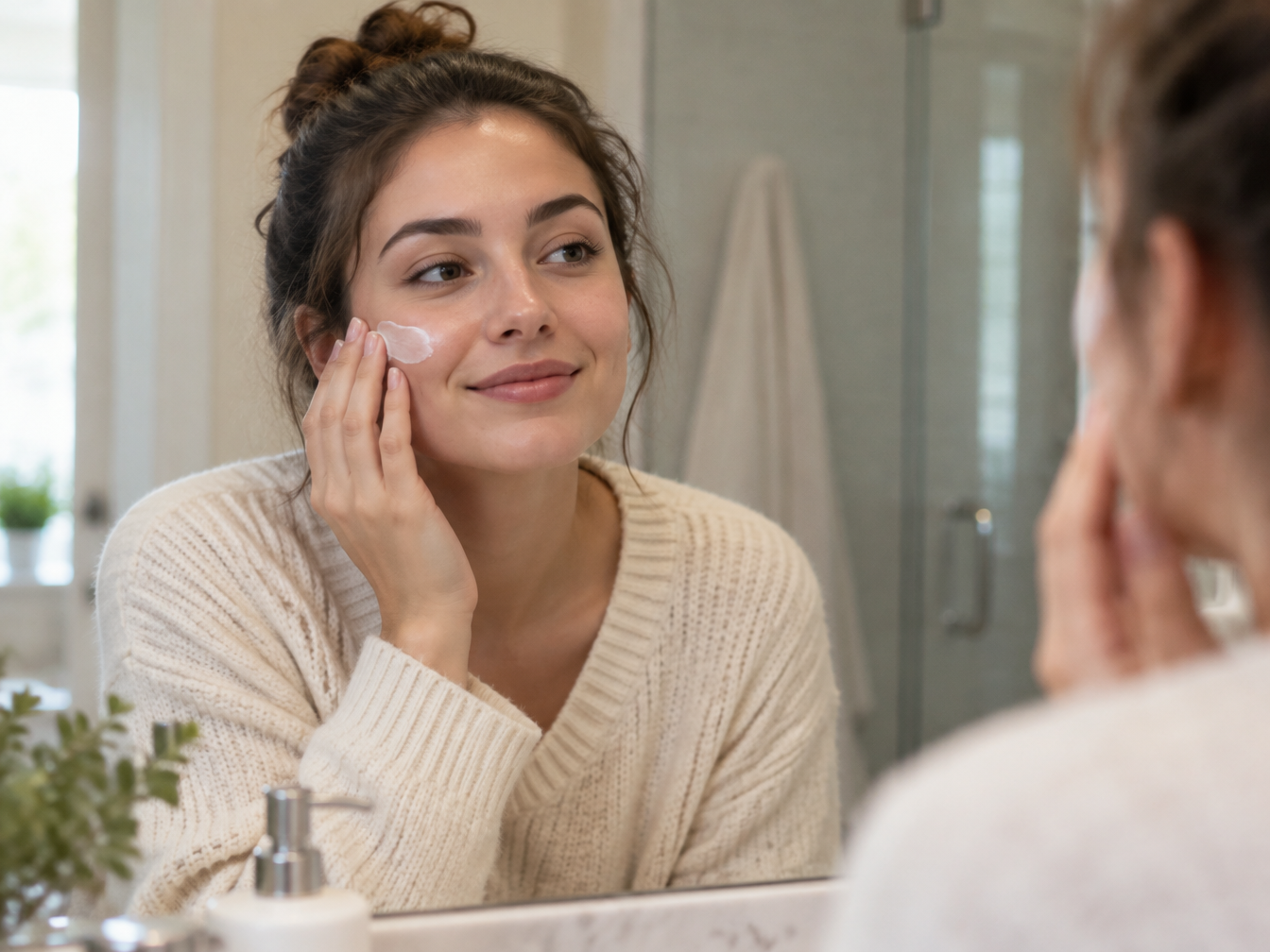
I still have bad skin days. Last week I woke up with a dry patch on my chin the size of a coin and felt that old familiar sinking feeling. But I know what to do now. I get a ten-minute warm shower. I moisturize while I’m still damp. I put on the humidifier. And then I remind myself that a face is allowed to have seasons. Sometimes I pair it with a hair change, since copper and chocolate hair colors are made for exactly this time of year.
I used to treat my skin like a performance review. Now I treat it more like weather. Some days are clear. Some days are rough. Neither one tells me anything about my worth.
The woman on the edge of the tub, crying over a cotton pad, wasn’t failing at beauty. She was just cold, and tired, and doing her best with the wrong information.
Be gentle with your face this winter. It’s been carrying a lot.
Sources
- Caitlin Kenny, CBC Life, “10 tips from dermatologists for hydrated skin this winter” (2019, updated 2020). https://www.cbc.ca/lite/story/1.5399606
- American Academy of Dermatology Association, “Dermatologists’ top tips for relieving dry skin.” https://www.aad.org/public/everyday-care/skin-care-basics/dry/dermatologists-tips-relieve-dry-skin
Leave a Reply