Getting dressed in a hijab is a little different. You are thinking about the fabric on your head, the neckline underneath it, the length of the top, and whether the whole outfit will still look right at four in the afternoon when the wind picks up.
That is not a limitation. It is a design brief, and plenty of women have turned it into some of the most thoughtful dressing around. These hijab outfit ideas cover everyday looks, work, prints, layers and occasions, so you can build a wardrobe that feels like you and still works on a rushed morning.
Start With the Hijab and Eight Easy Wraps
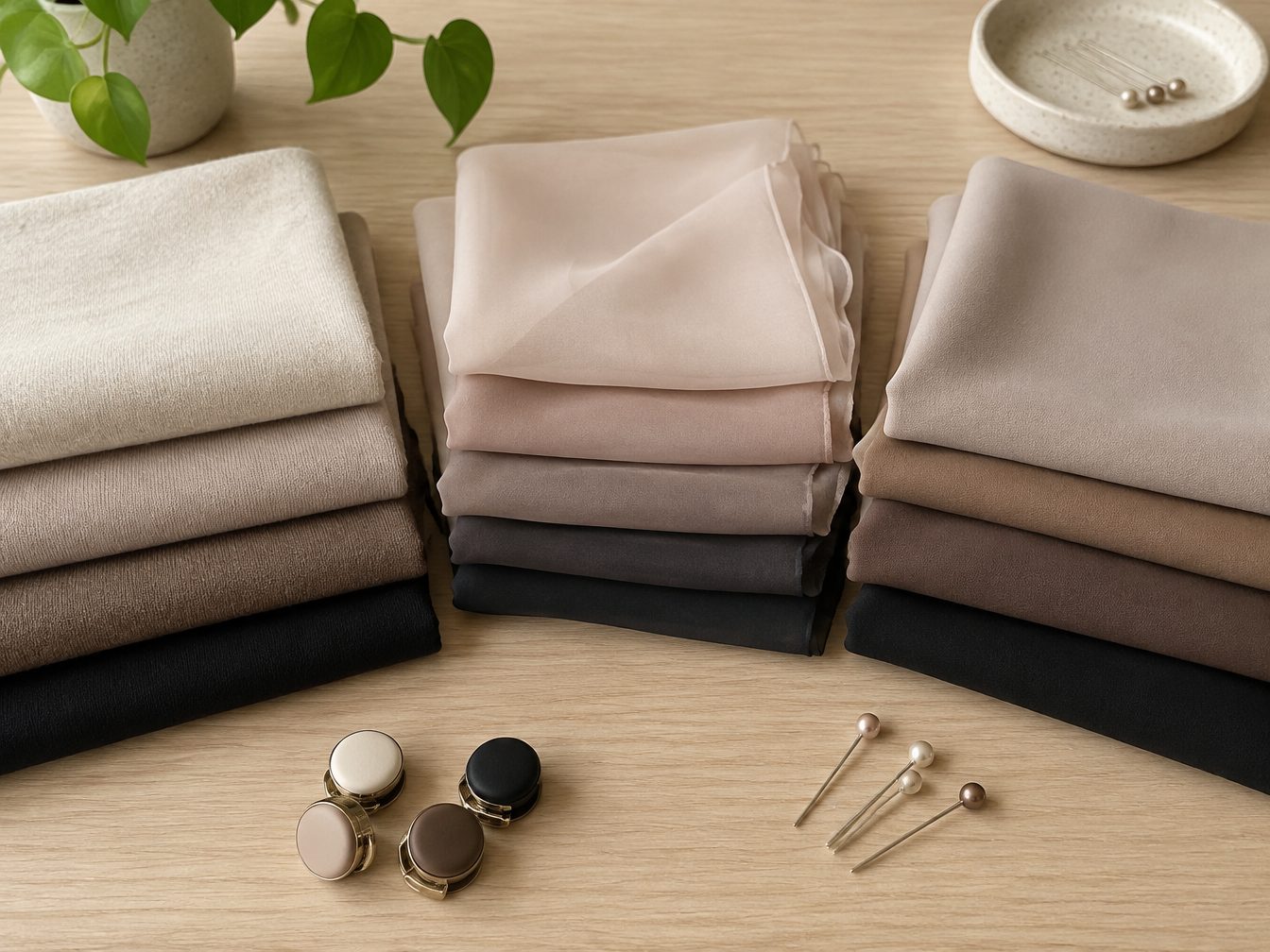
Plenty of people choose the outfit first and the scarf last. Try it the other way around. The hijab sits closest to your face, so it affects how everything else reads.
One styling guide for modest outfits suggests coordinating your hijab by picking a shade that echoes one element of the outfit, or a complementary tone [1]. Bokitta’s printed hijab advice goes one step further: consider which shades sit near the face, since they affect how flattering a print is [2].
The fabric changes the outfit too. AAB Collection lists best-fit fabrics for each of its eight everyday styles, such as premium jersey or modal for neck wraps, chiffon silk or jersey for a side knot, and crepe or jersey for a side drape [3]. Jersey and modal stay put and feel soft, while chiffon and silk give a looser, more flowing line.
That is why it helps to own a few basics before you buy anything else. A good neutral jersey, a chiffon in a lighter shade and one printed scarf cover most mornings.
Finally, think about your day. A hijab that needs constant adjusting is not worth wearing to a long meeting. Pick the style that fits the hours ahead.
You do not need a new look every day, and a handful of reliable wraps will take you through most weeks.
AAB Collection’s guide lists eight everyday styles. The classic wrap fastens under the chin with a magnet, tucks the short side away, and wraps the long side around the head. Over the shoulders drapes each side over the opposite shoulder. A neck wrap takes the long side once around the neck. The side knot wraps twice and ties at the side. Full coverage sits a bit higher so the cap shows and pulls extra fabric over the chest. The shirt tuck wrap tucks the end into your collar to reduce bulk. The side drape pins behind the ear. The loose wrap fastens the magnet loosely and drapes over one shoulder [3].
For pinning, most styles use a magnet under the chin as the main fastener, with straight pins optional for extra hold, and a pin at the top of the head helps the side drape on windy days [3]. Gathering the fabric at the top of the head adds volume [3].
Match the wrap to the outfit. The shirt tuck wrap works well under a jacket, since it reduces bulk, while the over-the-shoulders style looks lovely with a simple white dress. For a sporty day, a snug wrap that stays secure is more practical than anything flowing.
Try each style once in front of the mirror before a busy week, so you know which ones suit your face and your coat collar.
Casual and Everyday Outfits
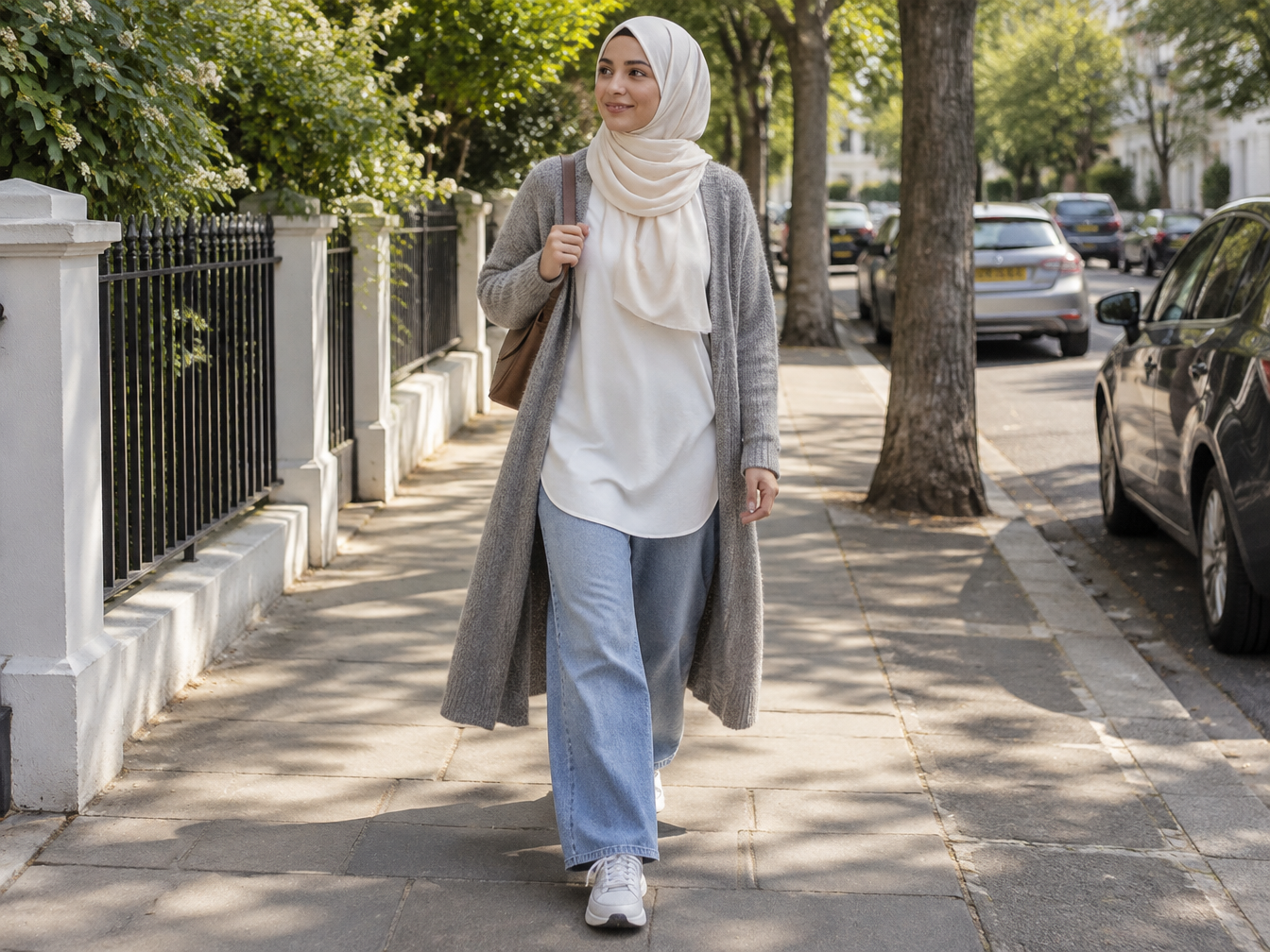
The best everyday outfit is the one that works without a second thought. Here are easy combinations drawn from modest dressing guides.
Outfit Trends’ casual list includes wide-leg denim dungarees over a cream long-sleeve top, an oversized grey cardigan over black basics, a beige sweatsuit set, a white sweatshirt with light blue straight-leg jeans, a brown hoodie with dark jeans, and a long white tunic over distressed jeans [1]. Yezwe’s version is an A-line midi skirt with a tucked-in blouse and ankle boots, or loose jeans with an oversized shirt and a long cardigan [4].
A long cardigan does a lot of quiet work here. It adds coverage, keeps the outfit warm and adds a vertical line, and the guide recommends cardigans that extend past the hips so you stay covered even when sitting [1]. Our guide to cardigan and jeans outfits shows how simple pairings like this come together.

Jeans work best straight or wide, in a mid or dark wash. If you are thinking about shoes, sneakers, loafers and ankle boots all fit these outfits.
Layer in a way that has purpose. Each layer should be visible, vary in length and do a job, whether that is coverage, warmth or color [1].
Work and Smart Casual
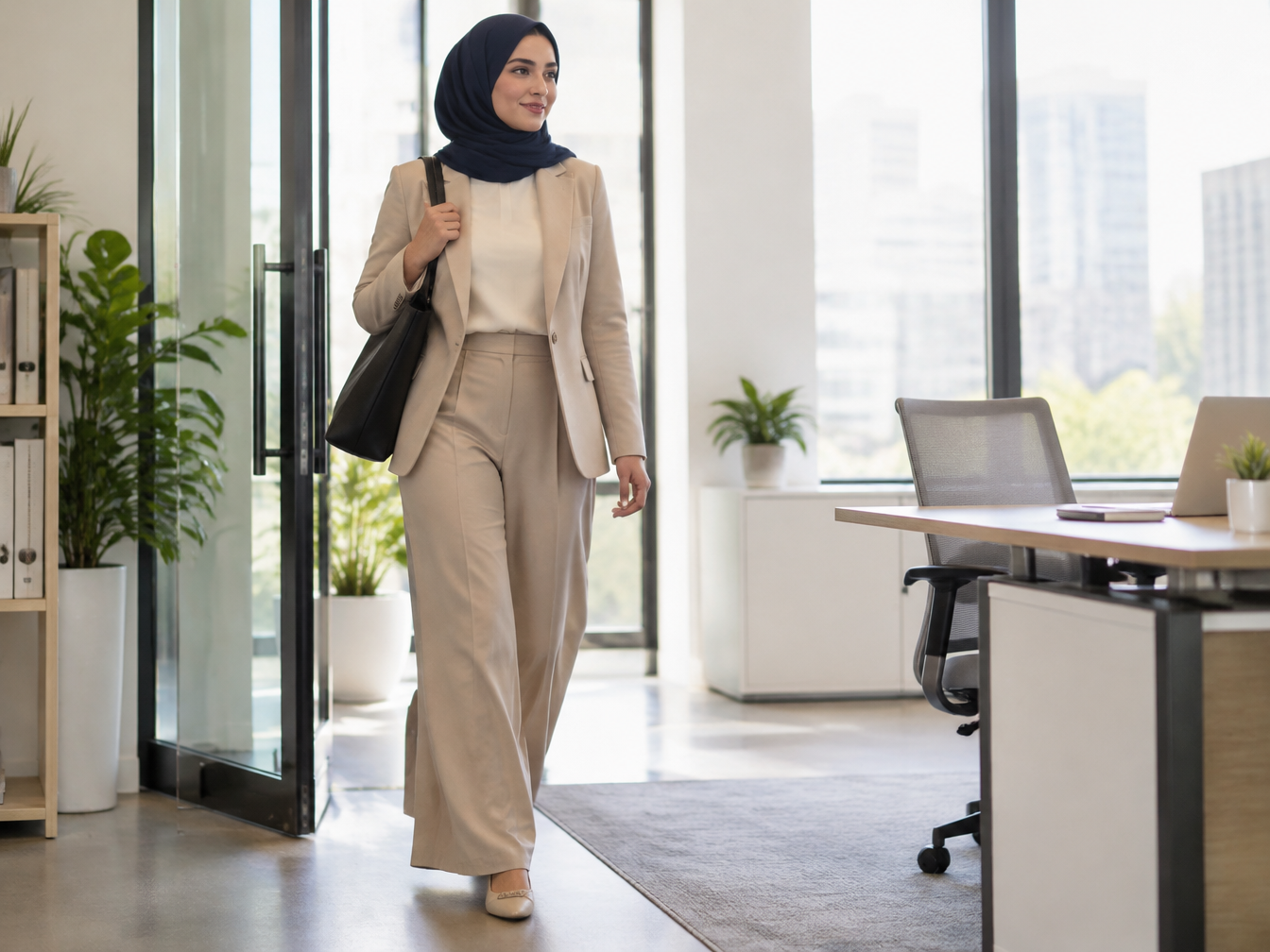
For work, the best hijab outfits are the ones that look calm and put together without trying hard. Think tailoring and drape.
Yezwe suggests a structured blazer over a high-neck blouse with wide-leg trousers, or a pleated midi dress with a slim belt and pointed flats [4]. Bokitta recommends a premium printed hijab with fluid tailoring, such as wide-leg trousers, a long vest or a column dress, with smaller prints suiting the office best [2].
It also notes that a printed hijab can make navy, beige, gray or black basics look more complete without buying new outfits [2]. That is a very practical way to stretch a work wardrobe: the clothes stay quiet, and the scarf changes the day.
Balance proportion with care. Cropped blazers need longer bottoms, according to the modest outfit guide, so the look stays modest [1]. A long blazer, a straight trouser and a plain blouse is an easy formula.
If you wear wide trousers, keep the top fitted or tucked in, and think about the right pair of shoes. Our guide to shoes for wide-leg pants can help keep the line long.
Printed Hijabs and How to Style Them
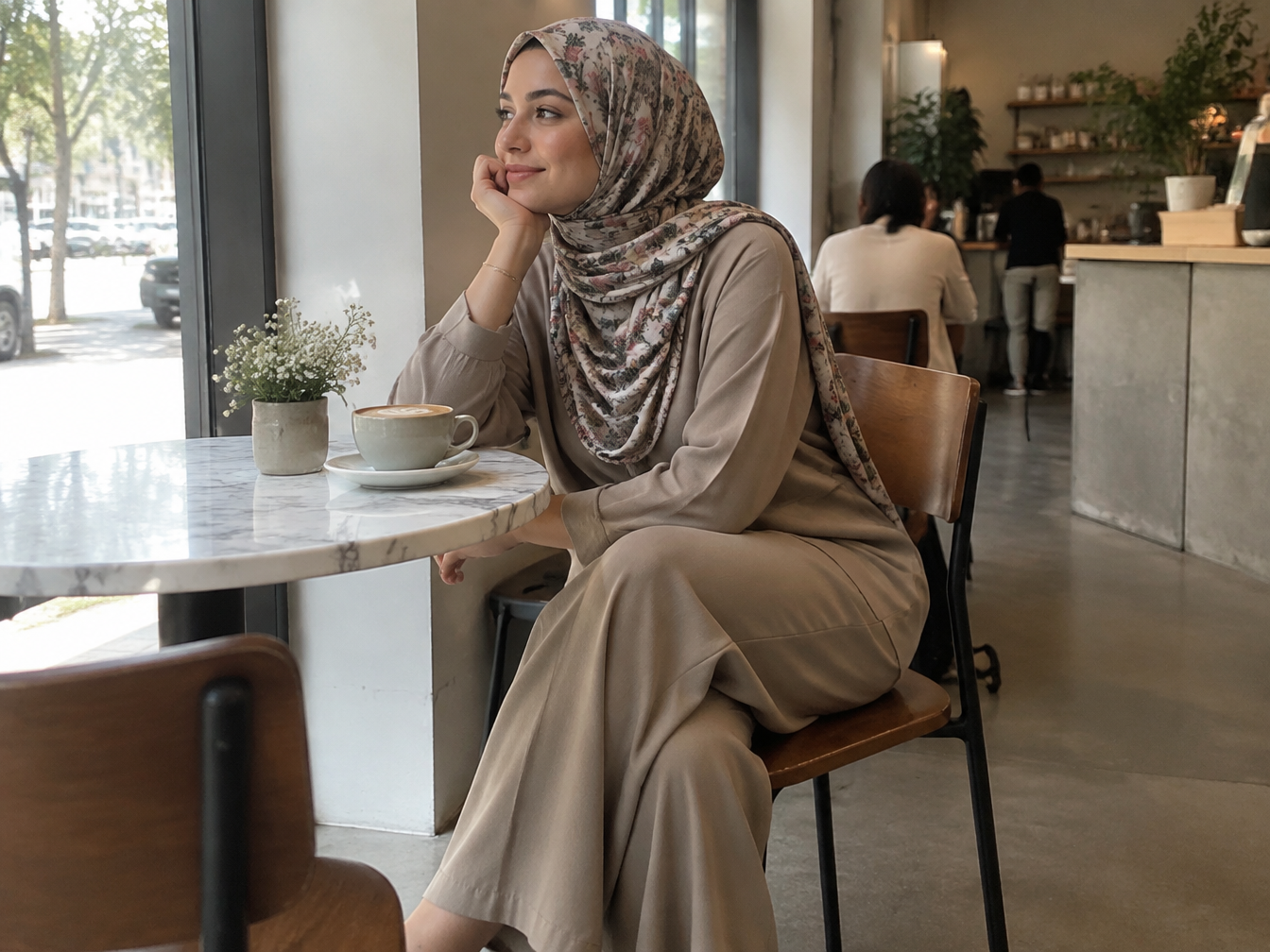
A printed hijab is the quickest way to change an outfit. The trick is not letting the print fight with everything else.
Bokitta’s core idea is to let one print lead and keep the rest of the outfit calmer. Bold prints work best with simple shapes and solid colors, while delicate or tonal prints leave room for texture or contrast [2]. A floral scarf with a monochrome set in a quiet neutral pulled from the scarf is one example. A geometric print with a crisp shirt, straight trousers and a blazer is another [2].
For denim, it suggests keeping the top simple if the jeans are distressed, and going bolder with the scarf if the denim is dark and clean [2]. It also recommends echoing a single shade from the print elsewhere in the outfit instead of matching the whole scarf [2].
Prints are also great for travel, since they tend to hide creases and neutral-based patterns mix across several outfits [2]. A small capsule of one floral, one geometric and one tonal or abstract print can cover most daily needs [2].
Keep in mind that Bokitta promotes its own hijab range, so its advice leans toward its products. The styling principles still hold up whatever brand you buy.
Dresses, Maxis and Long Layers
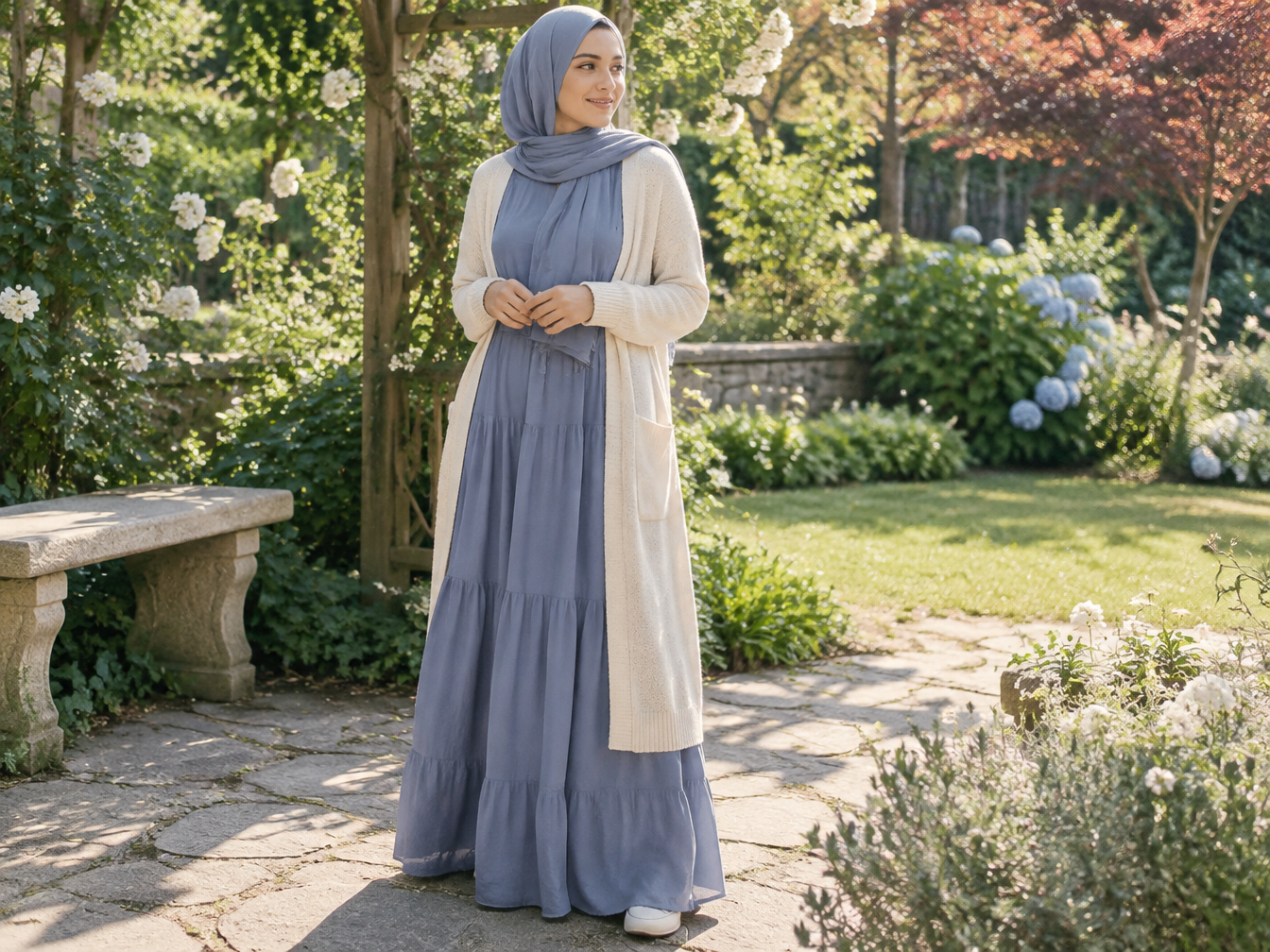
A long dress is one of the easiest outfits to wear with a hijab. It covers, it drapes and it needs very little else.
Yezwe lists core rules for modest dressing: choose longer hemlines, higher necklines and fuller sleeves, with midi and maxi dresses, wide-leg trousers and tunics as good starting points. It also recommends fabrics that drape, such as breathable cotton, flowing chiffon, crisp crepe and soft jersey, which hang well without clinging [4].
Outfit Trends’ semi-formal list includes a form-fitting beige ribbed knit maxi dress, open floor-length abayas in dusty blue and cream, a lilac maxi with gathered sleeves, and a powder blue gathered dress [1]. A long black cardigan over denim is another easy option [1].
For white or light dresses, our guide to white dress outfit ideas has styling ideas you can adapt, and layering a long cardigan or kimono over the top adds coverage and shape.
Balance is the rule to remember. Yezwe advises pairing a voluminous bottom with a fitted top, or the reverse, for a flattering silhouette [4]. A flowing maxi with a defined waist, whether from a slim belt or a fitted bodice, keeps the outfit from looking shapeless.
Take care with the neckline under your scarf too, since a high or bulky neckline can bunch up beneath the fabric. Try the outfit on with the hijab before you commit to it.
Layering for Cold Weather and Transitions
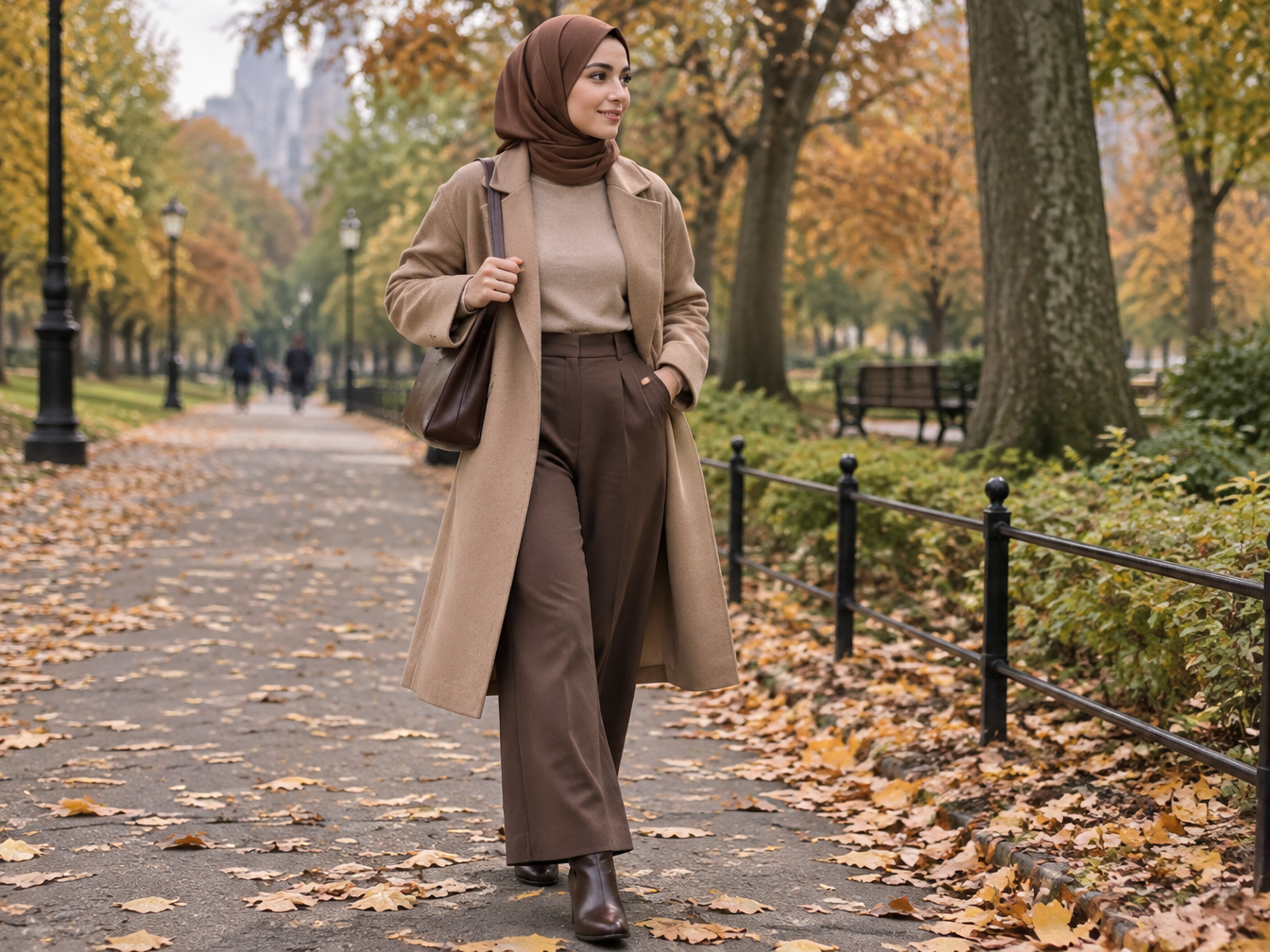
Cold-weather dressing is where hijab outfits really shine. Layers are already part of the plan.
Yezwe’s seasonal ideas include a lightweight maxi with a denim jacket and ankle boots, or a turtleneck under a sleeveless jumpsuit with a tailored coat [4]. Outfit Trends lists a black leather jacket over wide-leg jeans, a denim jacket over neutral wide-leg trousers, and a burnt orange cropped cardigan with high-waisted checked trousers [1].
Shackets and overshirts are useful for transitions. They add a layer without making you feel bundled up, and our guide to shacket outfits shows how to wear one over different bases.
There is one rule for layering that matters most. Yezwe warns against piling on bulky layers without defining the waist [4]. A slim belt over a coat, or a fitted layer underneath, gives the outfit a shape.
Colors can help in winter too. Warm browns, deep greens and creams look good against a neutral hijab,; neutrals and rich earthy shades both work.
Accessories, Bags and Finishing Touches
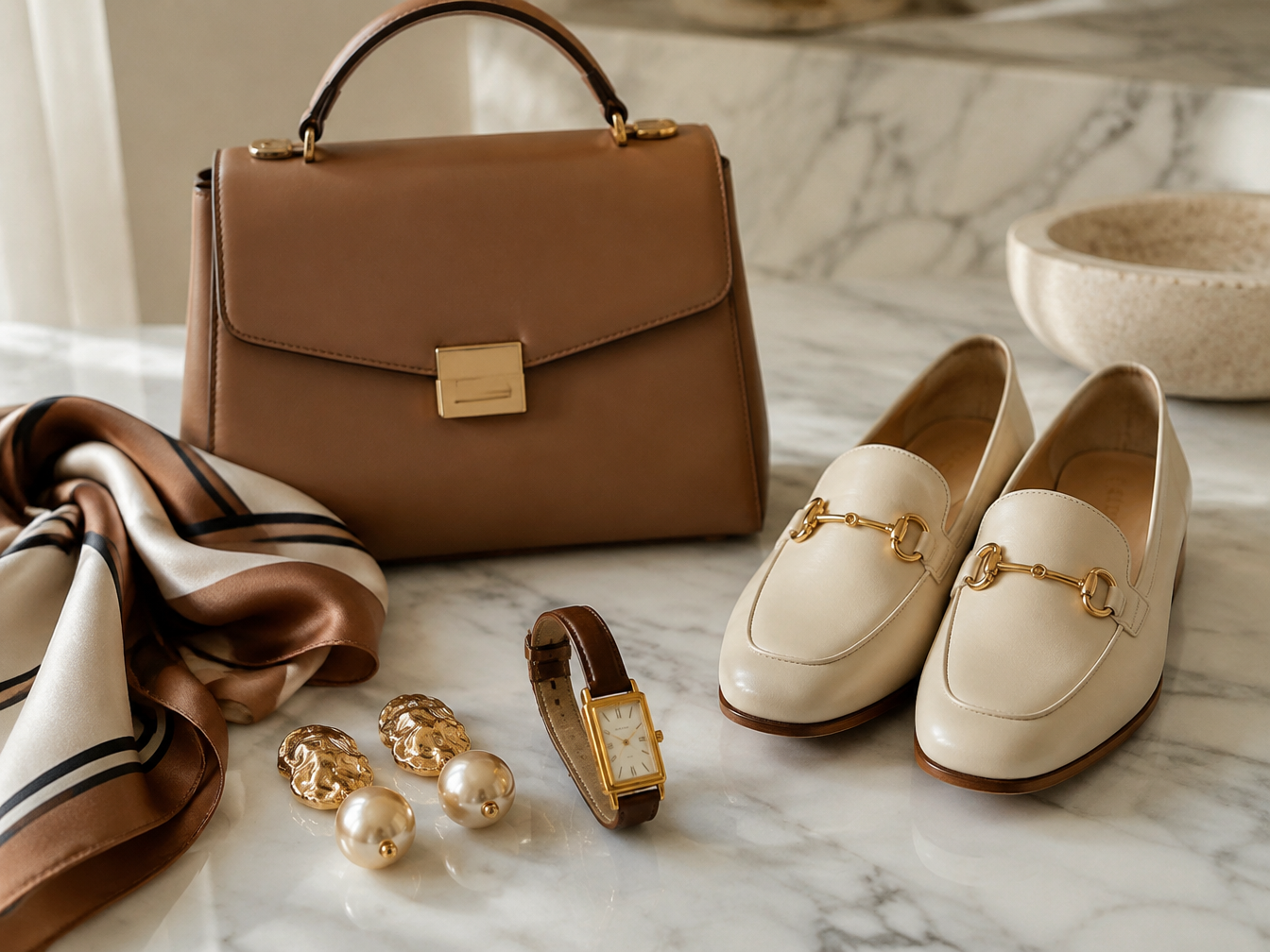
Accessories on a hijab outfit work best when they are few and chosen with care. Modest dressing usually looks best when it stays simple.
Yezwe lists over-accessorizing among the mistakes to avoid [4]. Outfit Trends suggests using scarves as accents, since a patterned scarf adds personality without competing with the rest of the outfit [1]. Bokitta also says accessories should support the outfit rather than compete with it [2].
Earrings and a bag are enough for most days. A pair of statement earrings, one structured bag and a watch finish a look, especially when the hijab is plain. If the scarf is printed, go smaller with the jewelry. Our guide to jewelry color choices can help you pick metals that suit your skin.
Shoes follow the same rule. Sneakers, loafers, ballet flats and ankle boots all work, depending on the day, and a comfortable pair matters more than a perfect one when you are on your feet.
Before you leave, stand back from the mirror and check the whole picture. If your eye goes straight to one thing, that is your focal point. If it jumps around, remove something.
Formal and Festive Looks
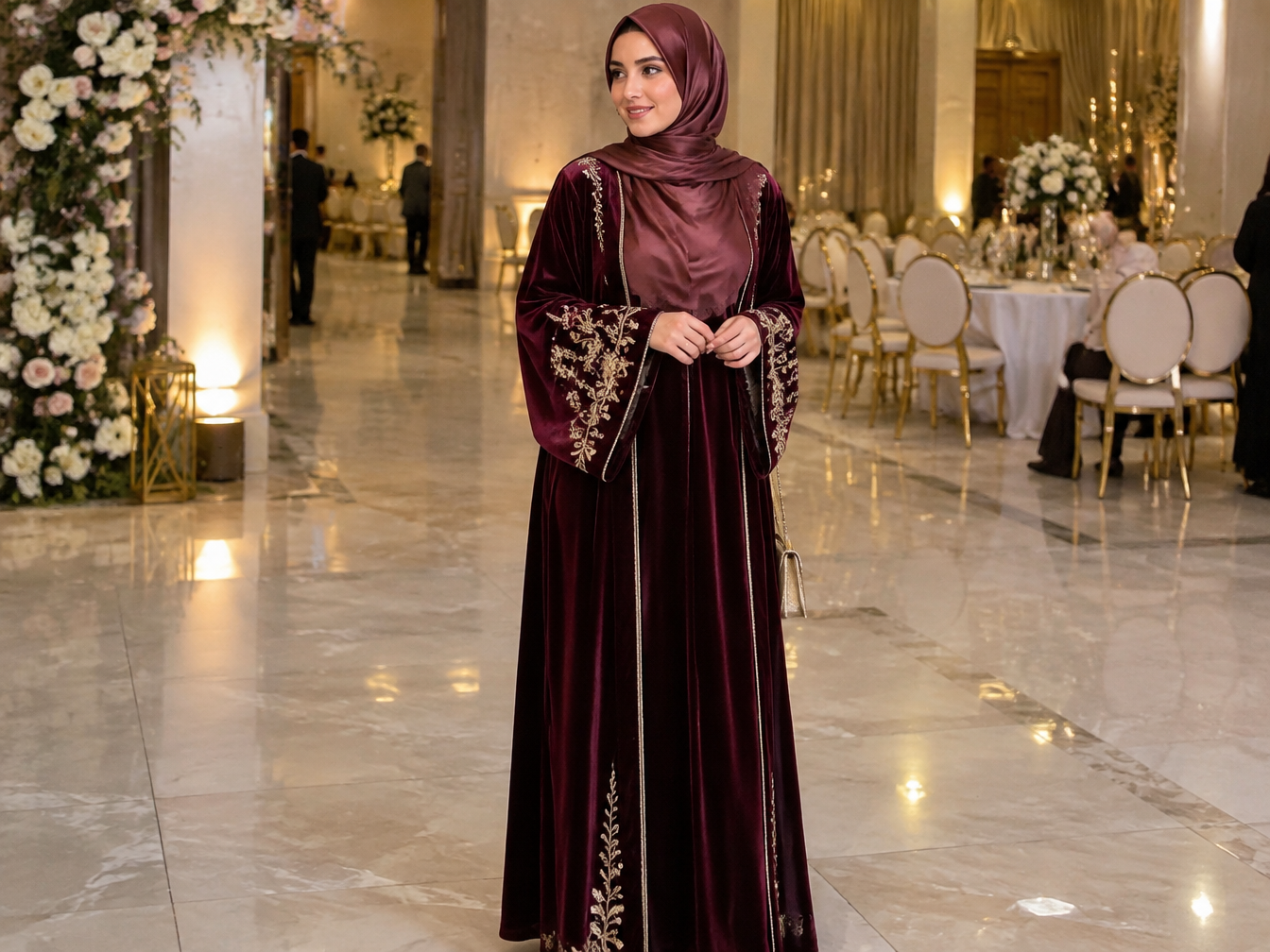
Special occasions call for a little more shine. The same principles apply, just with richer fabrics and more detail.
Outfit Trends’ formal list includes a flowing white dress with embroidered details, a burgundy velvet abaya with gold embellishment and an emerald green embroidered traditional outfit [1]. Yezwe suggests an embroidered floor-length maxi with statement earrings, or a co-ord set with flowy palazzo pants and a modest peplum top [4].

Bokitta recommends tonal prints for events, blends like champagne and beige or charcoal and silver that feel refined, with minimal jewelry [2]. It also suggests pairing a print with texture, such as crepe, satin, chiffon or knit, rather than another print, unless the second pattern is very subtle [2].
Let one thing be the highlight. If the dress is embroidered, choose a plain, soft hijab. If the dress is simple, a rich scarf in satin or silk can be the statement.
The best outfit for any occasion is the one in which you can sit, move and breathe comfortably. Dress for the whole evening, not just the first photo.
You do not need a different wardrobe, only a few good pieces and the confidence to wear them your way. Wear what makes you feel like yourself, and the rest will follow.
Sources
- 17 Cute & Modest Outfit Ideas For Muslim Girls, Outfit Trends
- 12 Printed Hijab Outfit Ideas to Wear Now, Bokitta
- Hijab Styling Guide, AAB Collection
- Modest Dressing: Main Rules & Outfit Ideas for Effortless Elegance, Yezwe
Leave a Reply