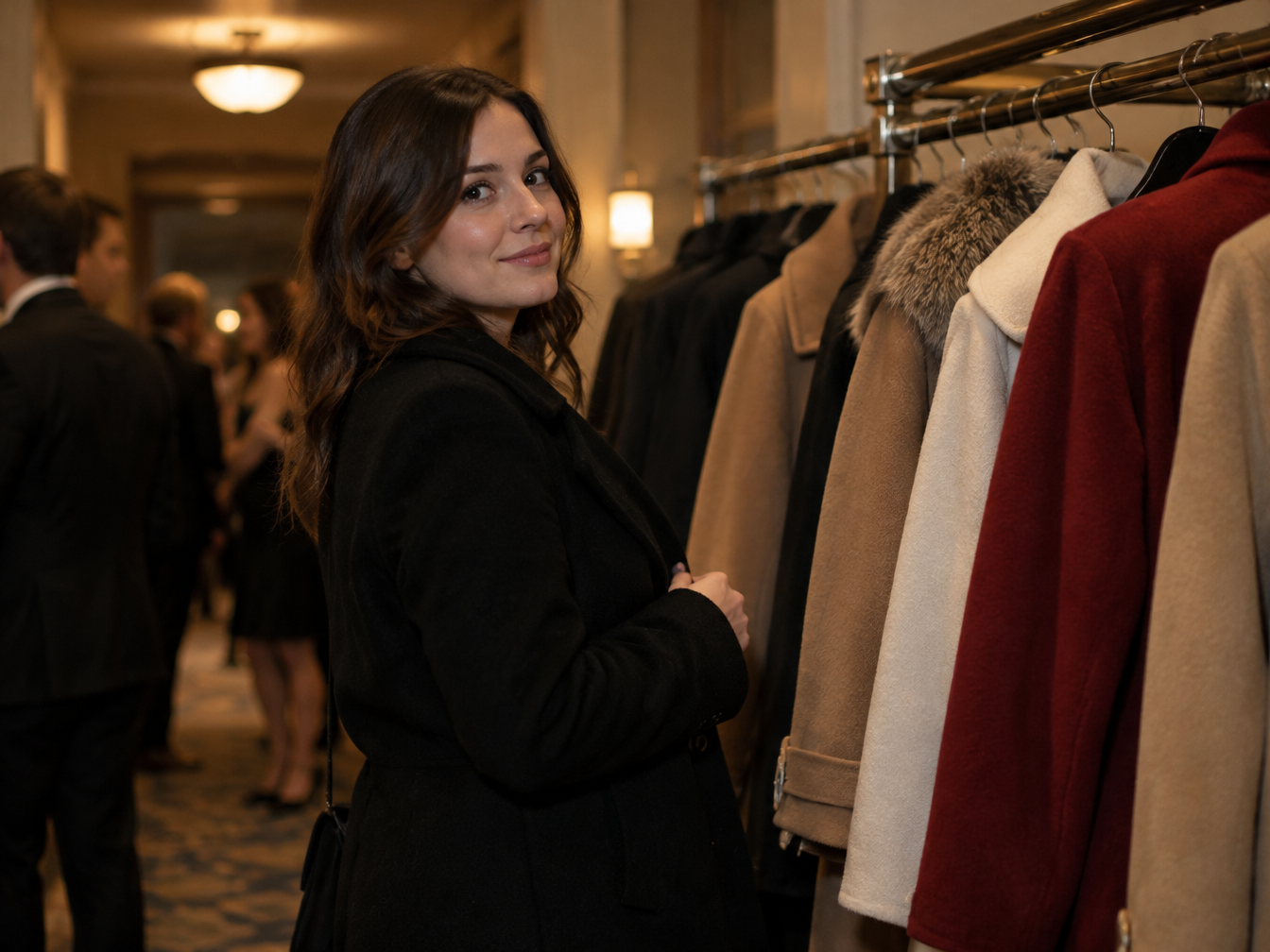
The woman at the coat check took my coat, looked at it, looked at my sweater, looked at my tights, and said the thing people say to you every November. “Wow. All black again. Are you okay?”
I laughed, because that is what you do. Then I stood in a hallway full of other people’s camel and cream and one very brave cranberry, and something small and defensive curled up in my chest. Okay? I was great. I had gotten dressed in four minutes and I looked exactly like myself.
But the question stayed with me, because it is the one every black-in-winter person eventually gets. Somebody decides your closet is a mood, and the mood is bleak. As if the week the leaves drop and the light disappears is the week you quietly stop trying.
I have been turning that over for a few winters now. I don’t think black is giving up. I think it is one of the more deliberate choices I make all year, and here is my case.
The Question Behind the Question
When someone asks if you are okay because you are wearing black, they are not really asking about your outfit. They are asking whether your life has gone gray. We treat color like a mood meter, where bright means healthy and dark means trouble, and winter dressing advice leans on it hard. Add a pop. Brighten up. Fight the gloom with a mustard scarf.
That advice assumes cold weather is a deficiency you fix with pigment. But when I look at my actual winters, the color was never missing. It was in the orange glow of a lamp at four in the afternoon, in the green of a pine tree somebody tied to a car roof, in the red of my own cheeks after walking twelve blocks in the wind. The world already does plenty of the talking. My job, I decided, is to give it something quiet to talk against.
That is not the same as hiding. Hiding is when you pick black because you want nobody to look. Choosing black is when you pick it because you want to decide where the looking happens. I will get to how you can tell which one you are doing, because I have done both.
What Black Actually Does in the Cold
Let me start with something practical, because black gets a bad reputation for being impractical in a season when practicality is the whole point.
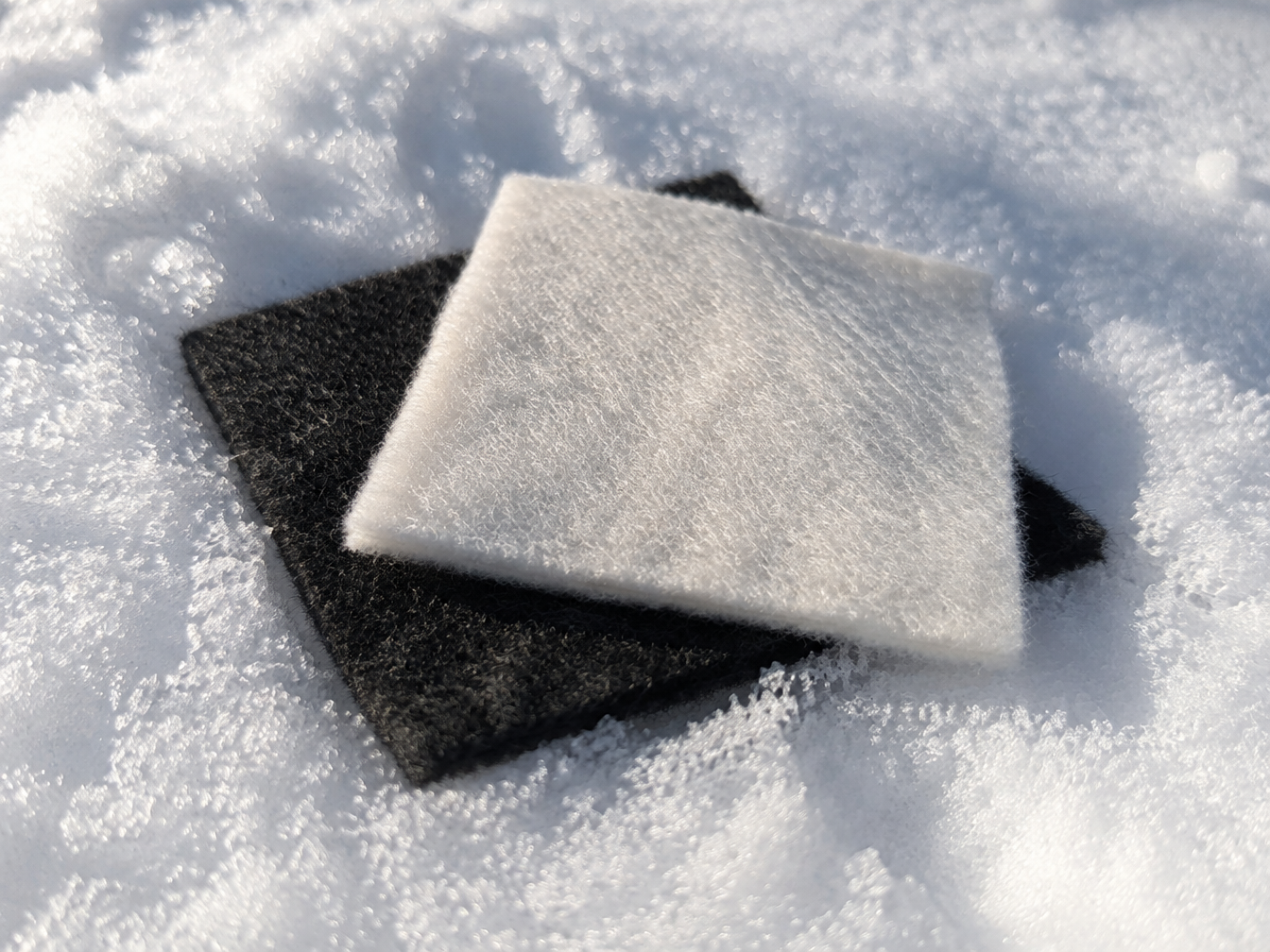
In 1761, Benjamin Franklin wrote about an experiment with small squares of cloth in different colors. On a bright winter day with fresh snow on the ground, he laid them out in the sun for a few hours. The black square sank deepest into the snow, the dark blue one sank a bit less, and the white one barely moved at all [1]. Dark cloth takes in more of the light that hits it and turns more of it into heat. White reflects most of it away.
Now, I want to be honest about what that means. It does not mean a black sweater will heat your body like a space heater. Most of winter happens indoors, in shade, or under gray skies, where the effect is tiny. But on one of those thin, bright January afternoons when the sun is low and sharp, a black coat is doing something small and real for you. Franklin noticed it with a pile of tailor’s samples and a lot of patience.
I like that the oldest argument for black in winter is not about style at all. Before it was a statement, it was simply a sensible thing to wear.
The Uniform Is Not the Absence of Taste

Here is where I used to get defensive. If you wear black every day, people assume you have stopped choosing. A uniform means you have given up on the creative part, the part that is supposed to prove you have taste.
I have come to think it is the reverse. A few winters ago I tried a capsule wardrobe and the surprise was not how much I owned but how many different women I had been dressing for. Black narrowed that crowd down. When everything goes together, you stop negotiating with your closet every morning and start paying attention to the details that matter, like the drape of a sleeve or how a wool coat sits on your shoulders.
There is also some science behind the idea that what we wear changes how we feel. In 2012, researchers Hajo Adam and Adam Galinsky coined the term enclothed cognition. In their first study, 58 students took an attention test, and the ones wearing a white lab coat made about half as many errors as the ones in their own clothes [2]. The catch is that the effect depended on what the coat meant to the wearer, since people told it was a painter’s coat did worse.
I should be fair here. Later attempts to repeat the lab coat result, including a large preregistered one in 2019, did not find the same effect, and the idea is still debated [3]. So I will not tell you black makes you focused or powerful. What I will say is smaller and, I think, more honest. If a uniform makes you feel like yourself, that feeling is worth something even if no experiment can bottle it.

Black Is a Backdrop, Not a Surrender

A black outfit is a blank stage, which is why the usual winter outfit colors read to me as a menu instead of a rulebook. Everything you put against black shows up more clearly, which is the opposite of disappearing.
When I wear a head-to-toe dark look, the things that stand out are the ones I picked on purpose. A cream scarf looks brighter. A pair of gold hoops catches the window light. A green coat, when I finally wear one, looks like a decision instead of a default. Color against black does not get diluted by a dozen other colors competing for attention.
Deep burgundy, forest green, navy and chocolate all sit beautifully beside black, because they carry the same low, rich light of the season. I do not need to throw out the black to bring them in. I just need to let one of them in the room.
Where My Color Actually Lives
Here is the part the coat check woman did not see. My color is not missing in winter, it just relocated.
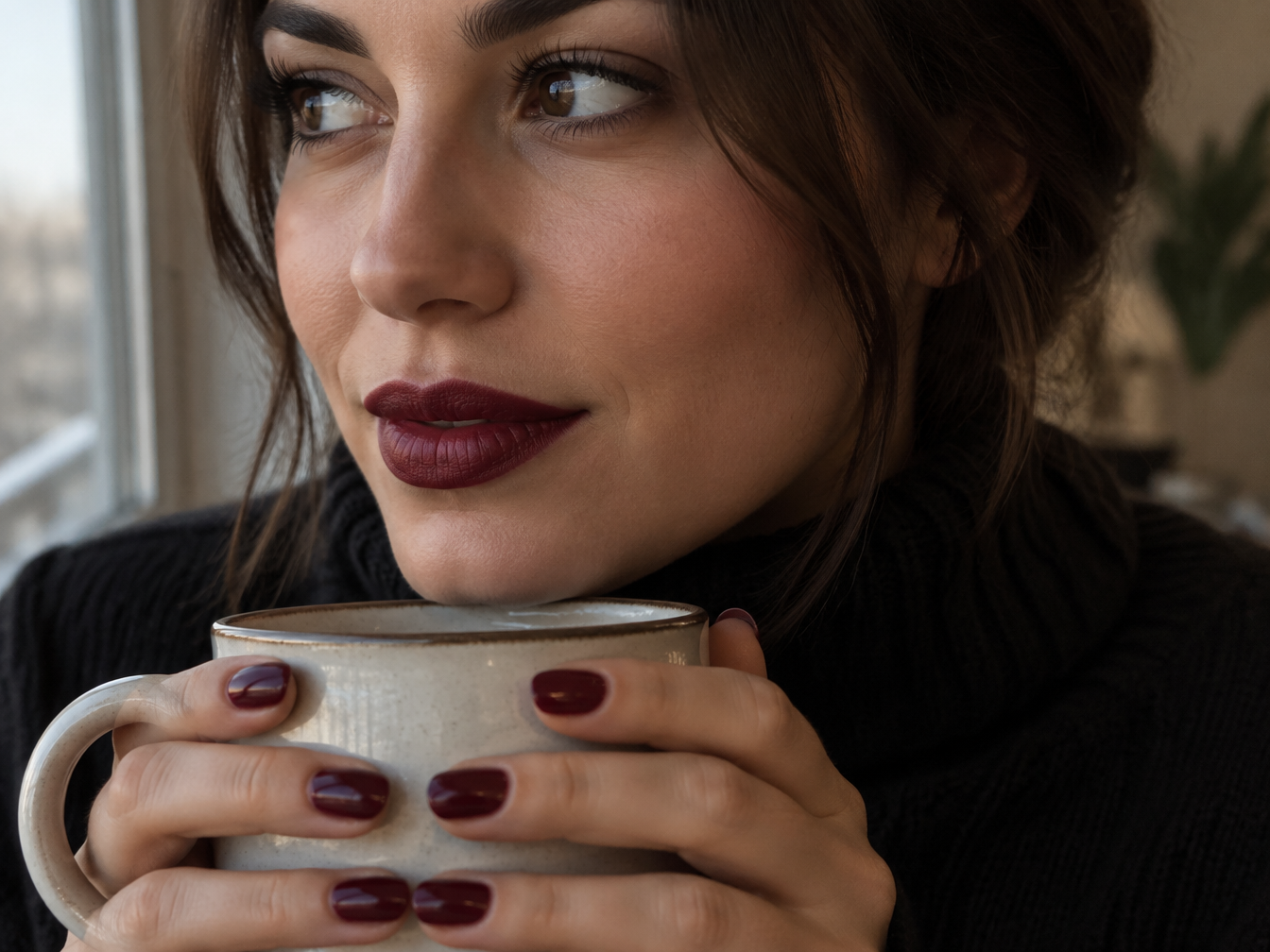
It lives on my mouth first. A dark berry or oxblood lip does more for a black outfit than any accessory I own, and I wrote a whole love letter to that idea when I started wearing dark lip colors for winter without apologizing. It lives on my nails, too, usually something glossy and deep like cherry or a green so dark it looks black until the light hits it. And it lives in small, oddly private places, like a bright lining inside a dark coat or a red sock nobody is supposed to see.
I think of it as moving the color closer to my skin. The loud color goes where only I, and the people who are close enough, will notice. It is not a performance for the hallway. It is a note I leave for myself, and giving up looks like not caring where the color goes. This is caring enough to put it exactly where it belongs.
The Texture Trick Nobody Mentions
If you only ever hear one piece of advice about wearing black in winter, let it be this one. Black is not one color when you change the fabric.
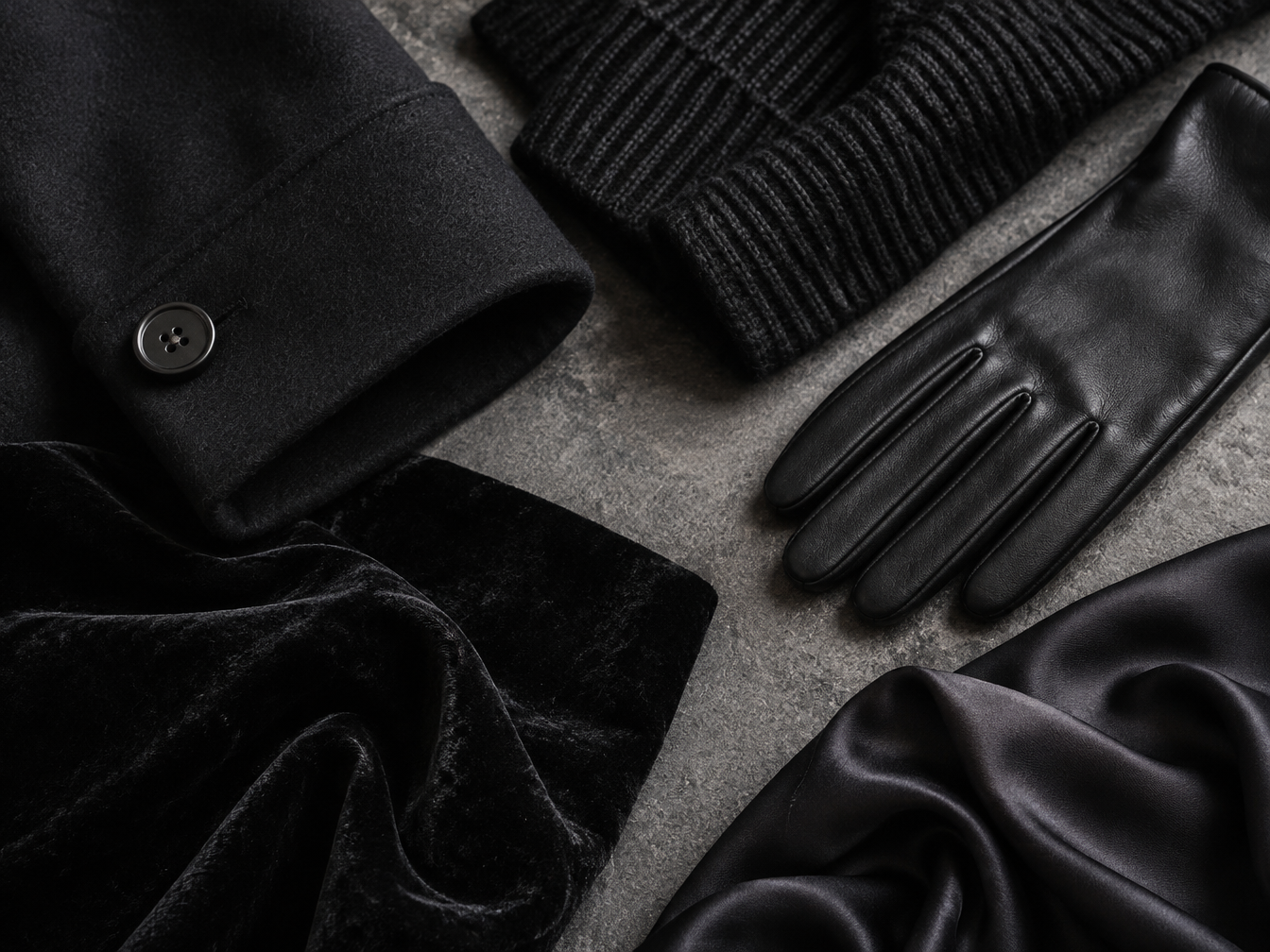
A black wool coat, a black ribbed knit, black leather boots, black velvet and black silk all catch the light differently. Wool drinks it. Leather throws it back. Velvet does both at once, which is why it looks so alive in a dim room. When you wear several of these together, your outfit stops being flat and starts having depth, the way a dark photograph does when you can still see every shadow in it.
This is the closest thing I have to a styling formula. Pick three different textures and keep them in the same shade. A chunky sweater, a slick pair of trousers, a soft scarf. When even that starts to feel too familiar, I swap one piece for a deep shade like the ones in these plum outfits, which sits next to black without arguing with it. Nobody will ask whether you are okay, because the outfit so clearly has something going on.
It also solves the flat black rectangle problem. You are not a rectangle. You are a careful arrangement of surfaces, and winter, with its layers, is the best time to show it.
When Black Really Is a Hiding Place

I promised I would be honest, so here it is. Sometimes the coat check woman is right.
There was a winter, years ago, when I wore black because I did not want to be seen. I was tired in a way sleep did not fix, and anything with color felt like a promise I could not keep. Black was not a canvas that year. It was a curtain. I knew because getting dressed felt like going into hiding instead of getting ready.
The tell, for me, is how I feel when someone compliments the outfit. When I am choosing black, a compliment lands and I feel pleased. When I am hiding in it, a compliment makes me flinch, like I have been caught. The same clothes can mean two different things depending on what is happening behind them.
So if you wear black all winter and some part of you is quietly drowning, take that seriously, and take it gently. The problem is not the color. It is whatever the color has started standing guard over. Wardrobes can be a symptom, but they can also be a door, and sometimes the smallest first step is putting one honest bright thing near your face and seeing how that feels.
How to Tell Which One You Are Doing

Here are the small checks I run on myself while I zip my coat. They are questions, not rules.
First, did I choose this or did I run out of options? If I picked black because I love how it looks with my gray scarf, that is a choice. If I picked it because nothing else felt safe, that is information.
Second, is there one thing in the outfit that is for me? A bright lining, a favorite ring, a perfume that smells like a better day. If the answer is yes, I am dressing. If it is no, I might be hiding.
Third, do I feel like going outside? Not excited, necessarily. Just willing. A black outfit that leaves me willing to walk into a crowded room is doing its job, and a good pair of boots, like the ones in the boots I wear every winter, helps a lot with that.
And last, do I know what I would wear if I felt braver? If I can picture it, even vaguely, then color is still within reach. I am just choosing not to reach for it today.
What the Dark Coat Keeps Safe

The next time somebody looks at your all-black outfit in the middle of winter and asks if you are okay, you get to decide what to say.
Maybe you will say you are great. Maybe you will say it is a good coat, or that the color is on your mouth today, or that you are saving the bright things for the people who stand close. And if the honest answer is that you are not okay, maybe that question was a small kindness you did not know you needed.
I still own the coat from that coat check, by the way. It is plain, heavy, and the color of a closed door. But I zip it up every winter and walk out into the white and the gray and the early dark, and I come home with my cheeks burning red and my pockets full of gloves. Nobody ever tells you that the black coat is the thing that gets to carry all that color home.
Sources
- Benjamin Franklin and the Swatches on the Snow, Steve Fentress, A Moment of Science, Indiana Public Media
- Introducing enclothed cognition: how what we wear affects how we think, Christian Jarrett, British Psychological Society Research Digest
- Enclothed cognition, Wikipedia, summary of replication attempts and criticism
Leave a Reply