I was brushing my teeth when I caught my reflection doing something I had never noticed. My jaw was clamped shut around the toothbrush, hard, the muscles near my ears standing out like two small walnuts. I had not been angry. I had not been thinking about anything in particular. My face was just holding on to something, and had been for a long time.
I opened my mouth, and the walnuts disappeared. A second later they crept back.
That was the night I decided to run a small, slightly silly experiment. For two weeks I would massage my face every night before bed, and I would pay attention to where it hurt, where it was tight and where it surprised me. I did not expect glowing skin or a new jawline. I just wanted to find out where my body had been keeping the stress I kept insisting I did not have.
The Rules I Gave Myself
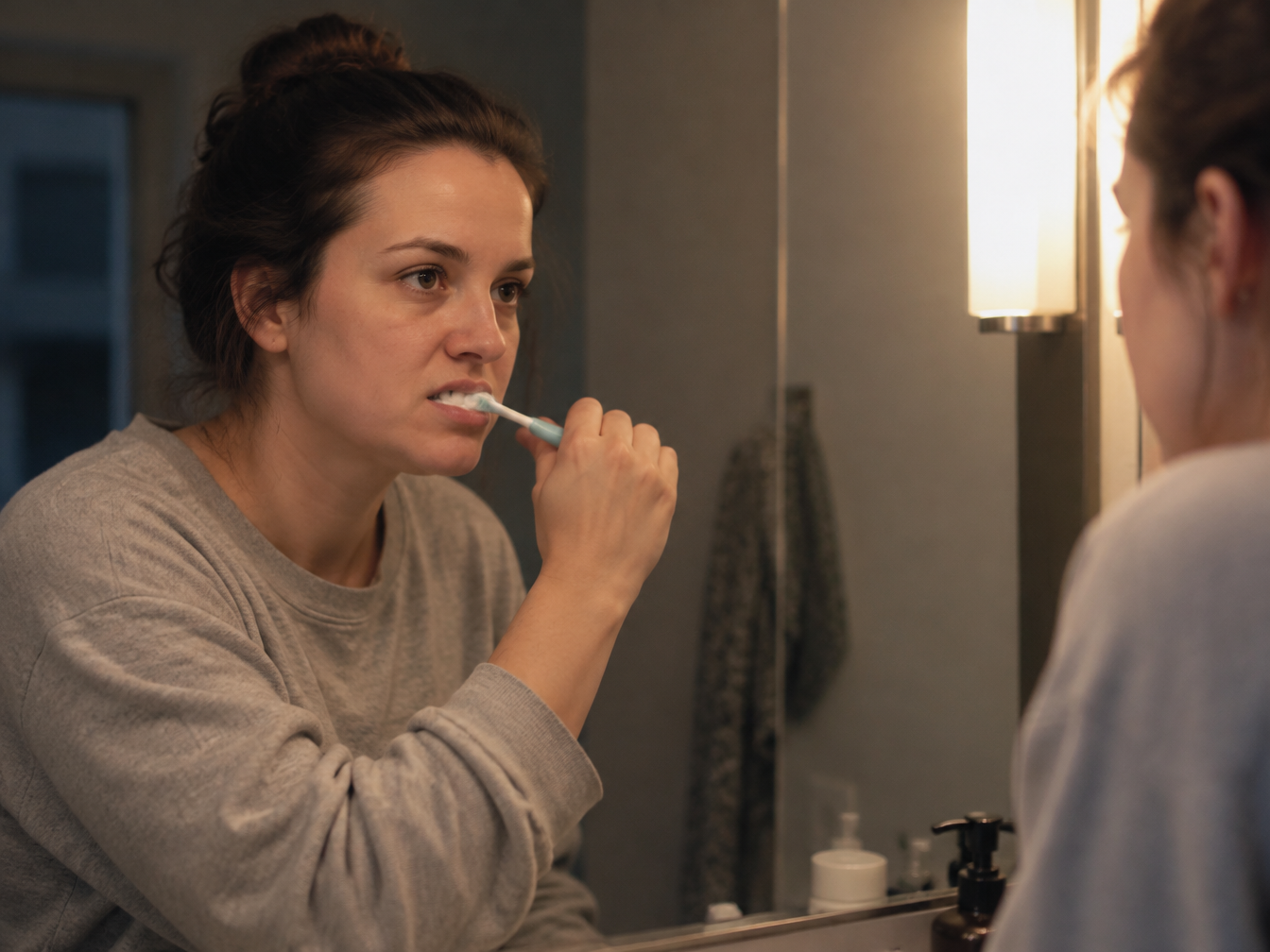
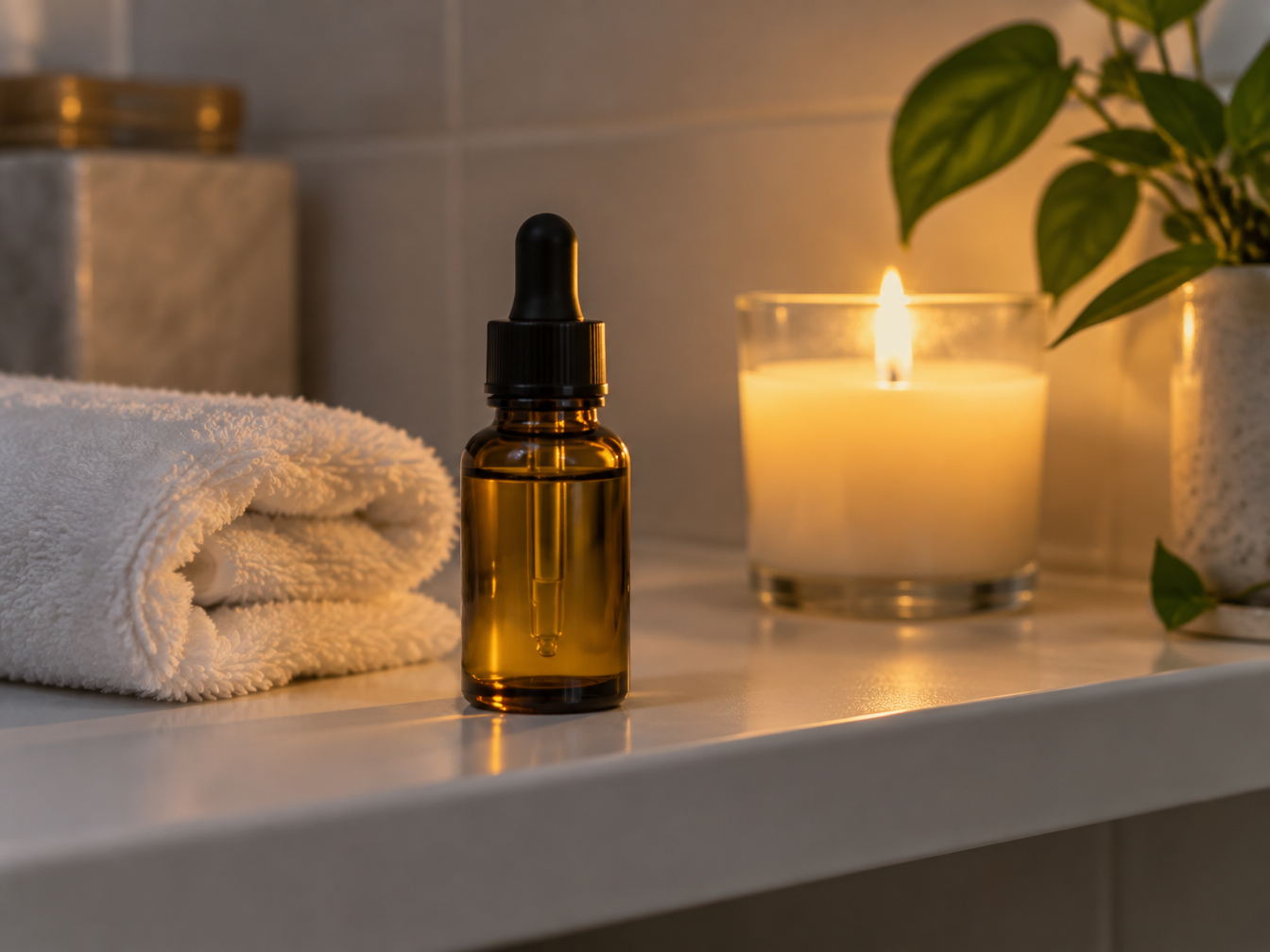
I like an experiment with rules, because rules keep me from quitting on day three. Mine were small enough to feel almost embarrassing. Five minutes, every night, right after I washed my face. A drop of plain facial oil so my fingers would glide instead of drag. Light to medium pressure, never anything that left a mark.
I started at the center of my forehead and swept outward to my temples. Then I pressed small circles along my brow bone, slid down the sides of my nose, and pulled my fingers along my cheekbones toward my ears. I finished with the part that felt strangest, which was the hinge of the jaw, right where the muscle bunches when you clench.
It slotted in next to the habits from my gentle night skincare routine, which helped, since I did not have to invent a new evening. I just stayed at the sink a little longer than I used to.
I did it with the lights low and my phone in the other room, because a ritual you do while scrolling is just scrolling with extra steps. The oil smelled faintly of almonds, and by the fourth night that smell alone made my shoulders drop, the way a certain song can make you cry before the chorus.
I also made one promise to myself. If anything hurt in a sharp way, I would stop and not push through it. A massage is supposed to be a conversation, not an argument.
The First Three Nights Were Mostly Awkward
Nobody tells you how self-conscious you will feel pressing on your own face in a bathroom mirror. The first night I felt ridiculous. I kept glancing at the door as if someone might walk in and ask what I was doing.
The second night I realized I was holding my breath. I had been massaging my face with the same braced, shallow breathing I use to carry groceries up three flights of stairs. When I finally exhaled, my shoulders dropped about an inch, and I had not even known they were up.
I did what I always do when I am uncomfortable, which is make it cozier. I pulled on a pair of thick wool socks, the kind I swear by in my case for cozy socks and slippers, and suddenly the whole thing felt less like a procedure and more like a quiet evening. Comfort, it turns out, is a very good permission slip.
By the third night I stopped watching myself and started feeling instead. That was the shift. My hands were no longer a product routine. They were a pair of tiny, honest detectives, and they had already found three suspects.
The Jaw Is the Loudest Roommate

The first suspect was obvious. The muscles in front of my ears, the ones that do the chewing, were tender enough that I winced the first time I pressed on them. By the end of the week I could find a knot on the left side with my eyes closed.
I did a little reading, because I am the kind of person who does. One dental education page lists jaw pain, tender chewing muscles and headaches among the signs of bruxism, which is the clenching and grinding people do, often without knowing. It says people who grind their teeth are about three times more likely to have headaches than people who do not [1]. The same page is careful to say the correlation is not entirely clear, and it does not tie the habit to emotional stress, so I will not either.
I also noticed that the knot was worst after my longest days, the ones where I answered every message politely and said nothing I meant. I started doing a small thing between strokes, which was to let my teeth part and my tongue rest on the floor of my mouth. It felt almost too simple to matter. It mattered anyway, and I caught myself doing it in the shower, in the car and once in the middle of a very boring phone call.

What I can say is this. I woke up most mornings with a dull ache near my temples, and I had always blamed my pillow. After a week of paying attention, I began to suspect the jaw. I will be honest that I cannot prove it, and if you have real pain, a dentist is a better detective than your own fingers.
What My Brow and Temples Told Me
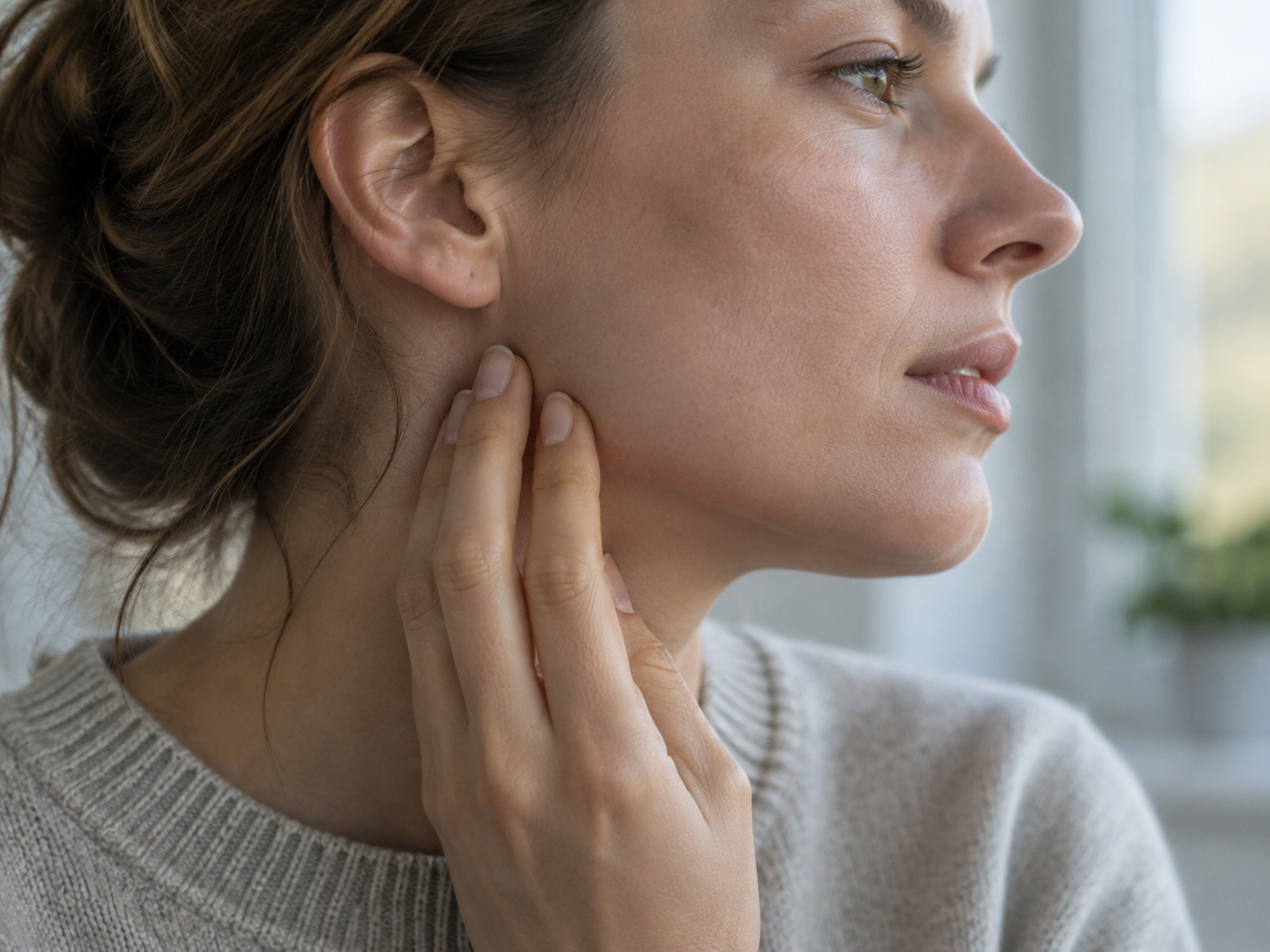
The second suspect surprised me more. Between my eyebrows, there was a spot that felt like a small, hard coin under the skin. When I pressed it, a wave of something almost like sadness moved through my chest. I know that sounds dramatic. It was just a muscle, and I do not want to claim it was a hidden grief.
But I noticed that spot got worse on the days I had a lot of screen time and worse still on the days I worried about money. My forehead was doing the furrowing I would not let my mouth do. I had been frowning for no one, all day, and I had not known.
That reminded me of the skincare phase where I was treating myself like a project, always optimizing and never listening. This time was different. I was not trying to fix a face. I was trying to hear one, and that is a gentler job than it sounds.
I started to hear the pattern. Jaw on the days I swallowed things I wanted to say. Brow on the days I stared at a spreadsheet. Temples on the days I did not eat enough. It was not scientific, and I would not put it in a journal. It was just attention, and attention turned out to be the most useful thing I had.
What the Science Actually Says

Because I was starting to feel a little too mystical, I went looking for what is known about all this, and I want to be fair about it.
Here is the part I expected to find and did not. A well-known review of massage research looked at whether massage lowers cortisol, the hormone people like to call the stress hormone. Its conclusion was that the effect on cortisol is generally very small and in most cases cannot be told apart from zero. The authors suggested that whatever helps people feel less anxious or sore after a massage must come from some other mechanism that has not been identified yet [2].
I had half expected the number to be dramatic, because the idea that massage drops your stress hormone is repeated everywhere, in spa menus and wellness blogs and the back of oil bottles. The research is less tidy than the marketing.
That does not mean massage does nothing. It means we do not fully know why it helps, which is a different thing. I found that oddly comforting.
What about the skin? A study run by a beauty company in Paris had 50 women between 40 and 60 do a three-minute facial massage every day for two weeks. They reported fewer fine lines and more radiance, and every participant said it improved her well-being [3]. I would hold that lightly, because a company with a product to sell ran it and it had no comparison group that I could see. A brief dermatology letter on gua sha, jade rollers and facial massage asks, in its own title, whether there are benefits at all [4]. It reads to me as a question that is still open.
The Skin Part Was Real but Small

So here is my own, unscientific report. After two weeks, my skin looked a little brighter in the mornings, mostly because I was sleeping better and drinking more water on the nights I had a ritual to protect. My cheeks looked less puffy when I woke up. There was no dramatic lift, no sudden jawline, nothing you could photograph and put in an advertisement.
What I noticed was quieter. My face felt like it belonged to me again. When I washed it in the morning I paid attention instead of rushing. That small shift reminded me of what I wrote when winter skin was making me cry in the bathroom, when the real change came from slowing down, not from buying anything new.
I will say that the mornings felt different. My jaw felt looser when I woke up, and the dull ache at my temples showed up on only a handful of days instead of most of them, though I would not swear the massage was the reason. I also slept with a bit more intention, which may have done most of the work.
I think that is the honest headline. The routine did not rewrite my face. It gave me five minutes where I stopped being someone with a to-do list and became someone with a head and a jaw and a pair of hands.
How I Would Do It If You Asked

I am not an expert, so take this as one person’s habits, not advice. Keep your hands clean and use a little oil or a rich cream so you are not tugging at your skin. Use light pressure, because your face is not dough. Breathe out on every stroke, which was the single most useful trick I found.
Go slowly around the eyes, where the skin is thin, and skip anything that feels sore in a sharp way. If you have jaw pain that does not go away, headaches that keep coming back, or a clicking joint, mention it to a dentist or doctor. A nightly massage can be part of a gentle evening, much like the Sunday ritual I keep even when it feels like a chore, but it is not a treatment.
If you are curious, try it for one week before you decide anything. Notice which spot on your face makes you wince first, and write that down somewhere. That one small piece of information, where you hold it, is worth more than any serum.
Make it small enough that you will do it on a tired night. Five minutes is plenty. Put on a song you like. Let the mirror be a place you check in, not a place you grade yourself.
What I Kept After Two Weeks
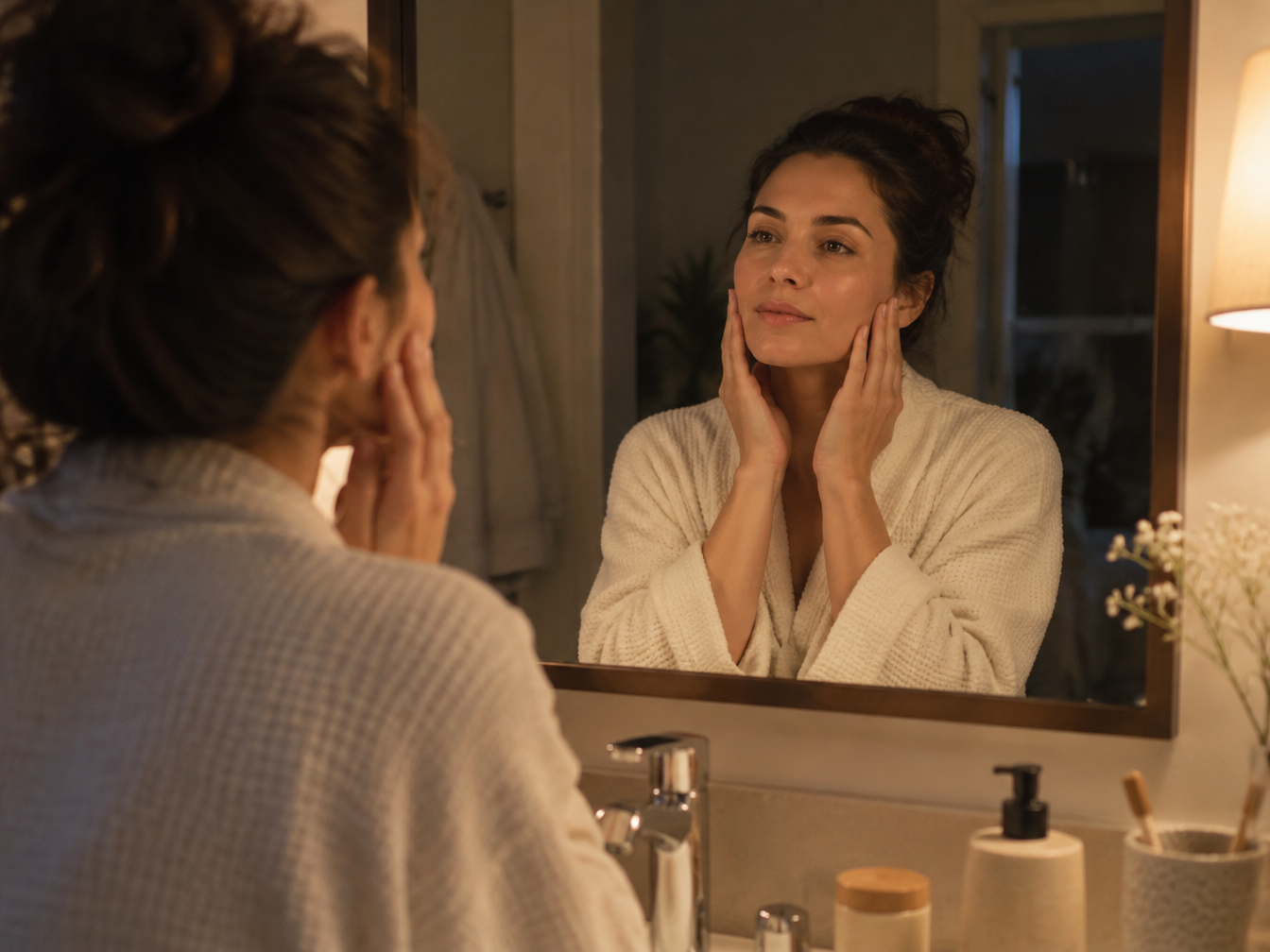
On the fifteenth night I almost skipped it. I was tired, and the bathroom light was too bright, and there was a stack of dishes I felt guilty about. Then I caught the walnut in my jaw, standing out again, and I laughed out loud.
I did it anyway. I stood at the sink, pressed my fingers into the knot below my ear, and exhaled slowly until I felt it soften. I felt a little proud of myself, in a quiet way, for showing up for something that nobody would ever see. It did not fix a single thing in my life. My bills were still my bills.
But for a minute I knew where my stress had been living, and that was new. Now, when I catch my face clenching in a meeting or a grocery line, I do not fight it. I just unclench, let my tongue drop from the roof of my mouth, and let my forehead go smooth.
Sources
- Bruxism symptoms, Dentalcare.com continuing education course
- Does massage therapy reduce cortisol? A comprehensive quantitative review, PubMed
- Impact of a daily self massage on visible signs of stress, L’Oréal Dermatological Beauty
- Gua-sha, Jade Roller, and Facial Massage: Are there benefits within dermatology?, PubMed
Leave a Reply