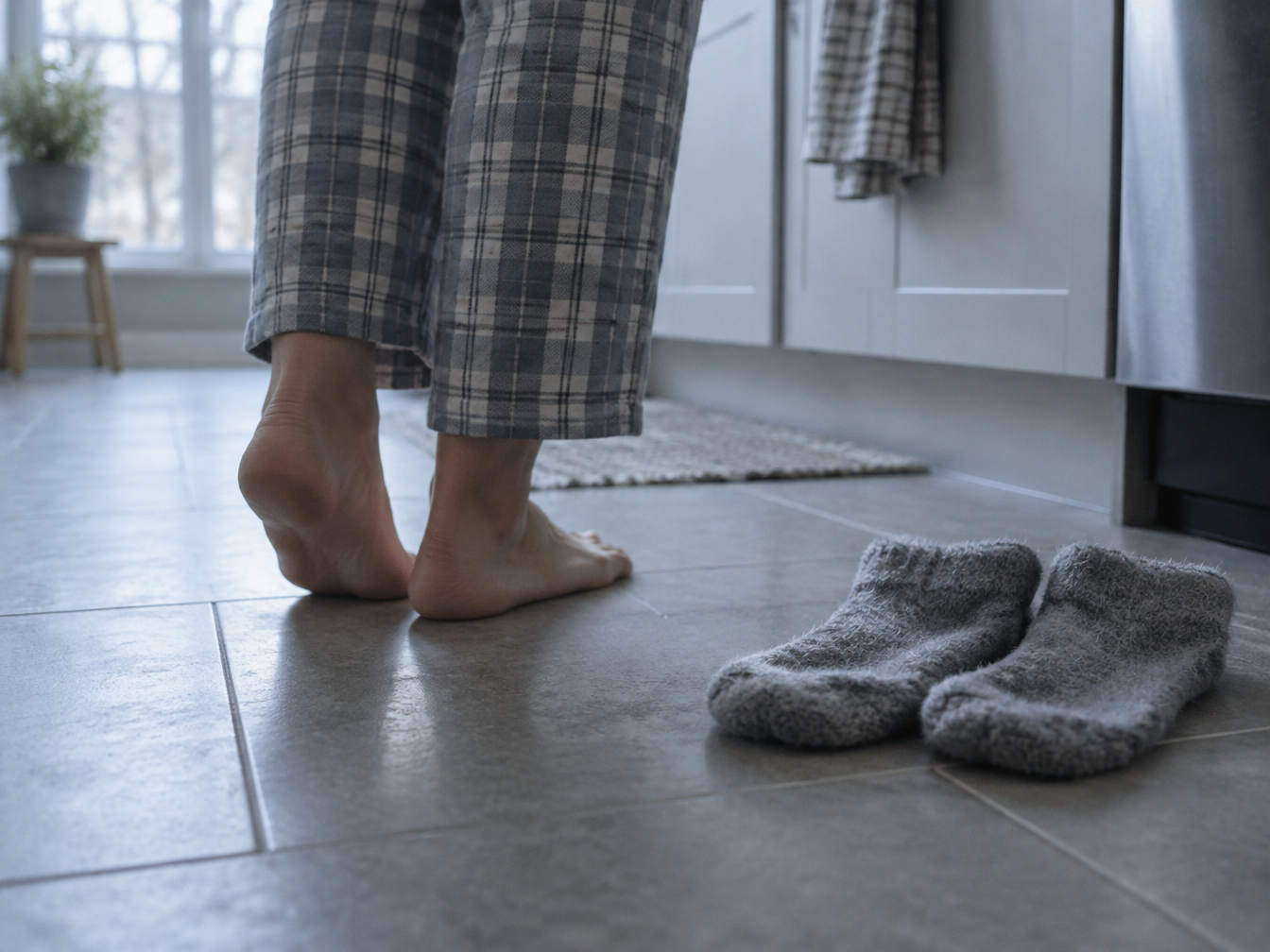
The tile was cold enough to make me gasp. It was six forty in the morning, I had slept badly, and the first thing I did with my day was step barefoot onto a floor that felt like a small betrayal.
I stood there for a second, shoulders up around my ears, already behind. Then I remembered the fuzzy grey socks in the drawer I never open because I am “not a sock person.” I put them on. Within about ten seconds, something in my body unclenched.
I know how ridiculous that sounds. I have spent years chasing self-care that came with a price tag, a schedule, and a candle that smells like a forest I will never visit. And the thing that actually moved my mood on a Tuesday morning was a pair of socks.
The Cold Floor Problem Nobody Talks About
We talk about self-care like it is a spa day. A weekend away. A fifteen-step routine you film for the internet.
Meanwhile, the real texture of an ordinary day is much smaller. It is the cold floor. The draft under the door. The moment you get home, kick off your shoes, and your feet are freezing and your brain is still at work. Those tiny discomforts add up, and nobody builds a morning routine around them.
I used to treat being a little cold as a personal virtue. If I was uncomfortable, I was tough. If I needed slippers, I was soft. That story was not about warmth at all. It was about believing I had to earn comfort first, and I had not earned it yet.
So I started noticing every small moment my body was quietly asking for something, and I started saying yes. Socks were the first yes. They turned out to be a very good one.
It helps to name what the discomfort is really doing. Cold feet make your shoulders climb. They make you rush, curl up, and think shorter thoughts. A body that is slightly cold is a body that is slightly on guard, and most of us are on guard enough already.
What Warm Feet Are Doing to Your Brain
Here is where it gets interesting, because the cozy thing turns out to have actual science behind it.
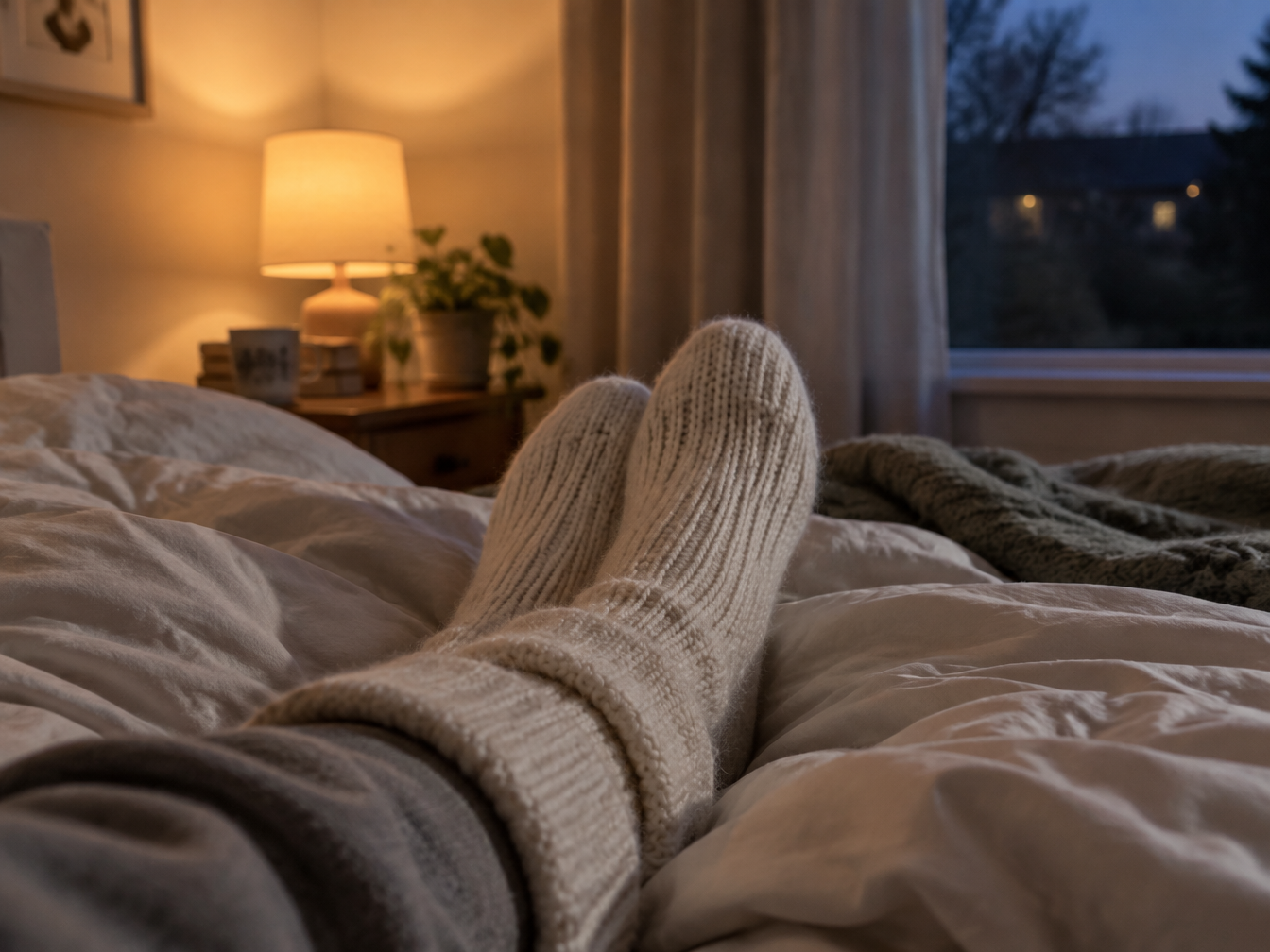
A 1999 paper in Nature found that dilation of the blood vessels in the skin of the hands and feet, which increases heat loss at the extremities, was the best physiological predictor of how quickly people fell asleep [1]. In plain language, your body cools its core by sending warmth out through your hands and feet, and that cooling is part of how it decides it is time to rest.
The Sleep Foundation explains that socks may help this process along, and that people who used socks or other foot warming in one study fell asleep faster, stayed asleep longer, and reported better sleep quality [2]. It also cites research where warming the feet for 20 minutes before bed reduced insomnia symptoms and fatigue [2].
To be fair, the same page is honest about the limits. Foot warming did not change symptoms in elderly patients with insomnia, so age may change how well it works, and most of the claims are modest [2]. Socks are not a cure. They are a gentle nudge.
I think about this every winter when my skin turns on me, which I wrote about in why winter skin makes me cry in the bathroom. The cold months ask a lot of the body. Warm feet are the cheapest answer I have found.
Clothes Do Things to You Even When Nobody Sees Them
Here is the argument I used to make against slippers. Nobody sees my feet at home. Why would it matter?
It matters because clothes work on the person wearing them, not only on the people looking. In a well known 2012 paper, Hajo Adam and Adam Galinsky found that physically wearing a lab coat improved selective attention compared with not wearing one, and that the effect depended on both what the clothing symbolised and the physical experience of wearing it [3]. They called it enclothed cognition.

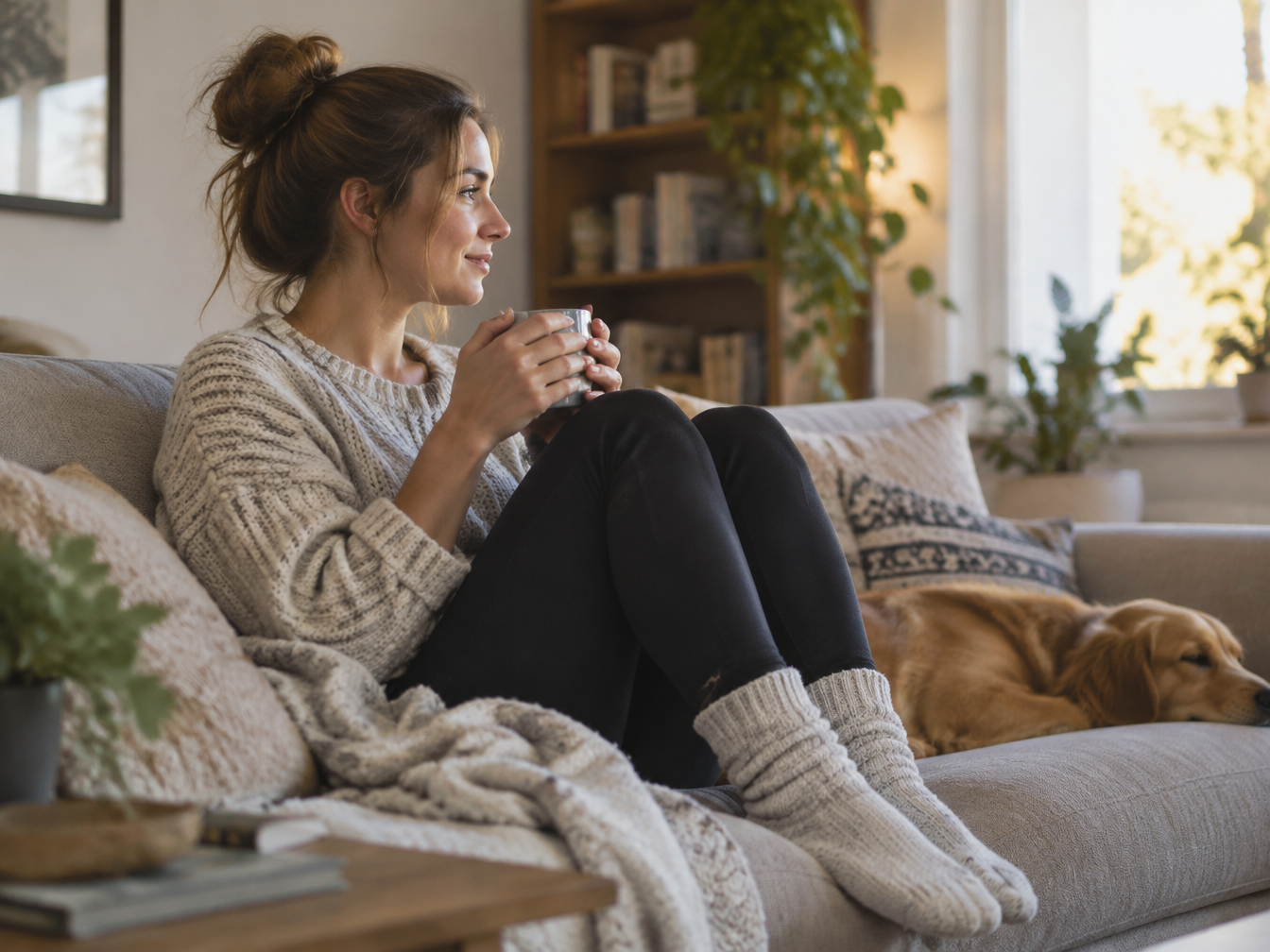
Take that idea home. If a white coat can sharpen your focus, then a soft pair of slippers can tell your body that the workday is over and it is allowed to land. The meaning and the sensation arrive together.
Fashion psychologist Dr Dawnn Karen puts the practical version simply when she suggests dressing for your mood [4]. Nobody said the mood had to be a boardroom one. Some days the mood is warm, slow, and a little bit sleepy, and your feet are allowed to dress for it.
Why It Counts as Self-Care
I need to push back on a quiet snobbery I carried for years, which is the idea that self-care has to be effortful to count.
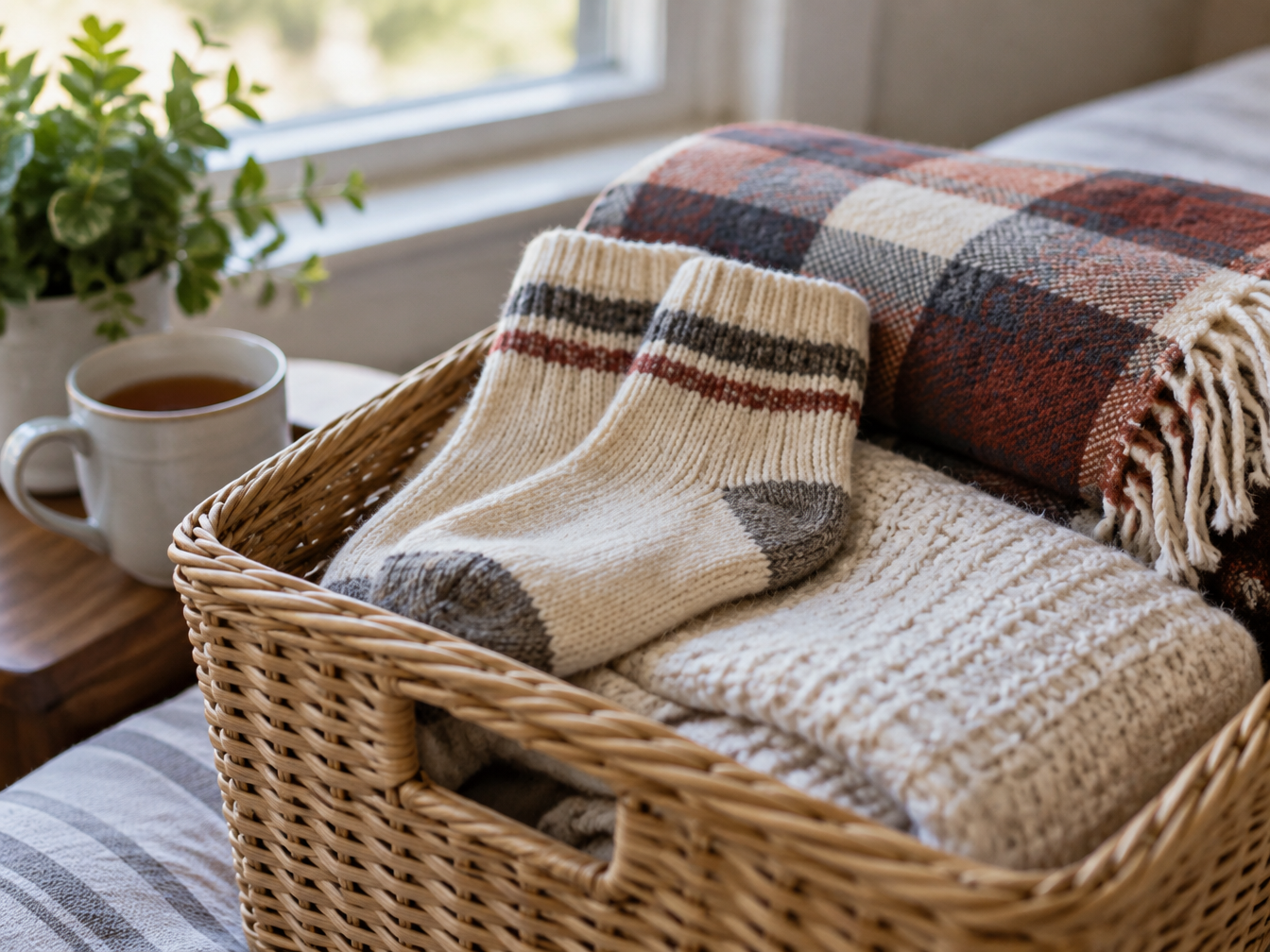
Real care is mostly small. It looks like someone handing you a blanket without asking. It looks like a warm cup, a clean towel, a pair of socks pulled out of the dryer and still warm. The best ones are the ones you do not have to plan.
That is the same thing I found when I started protecting a slow Sunday, even on the weeks it felt like another item on my list. I wrote about that in why I keep a self-care Sunday even when it feels like a chore. The surprise was how little the ritual needed. It was never the bath or the mask. It was the permission.
Socks and slippers are the smallest possible version of that permission. They cost almost nothing, take four seconds, and do not need you to feel better first. You just put them on, and your body gets the message that someone is looking after it.
That someone happens to be you, which is the whole point.
I have watched friends who are brilliant at looking after everyone else walk around their own homes in thin socks with holes in the heel. They would never hand a guest that pair. It is a strange thing, how generous we can be with the people we love and how stingy we are with the person who does the loving. A good pair of socks is a small correction to that math.
The Slippers I Resisted for Years
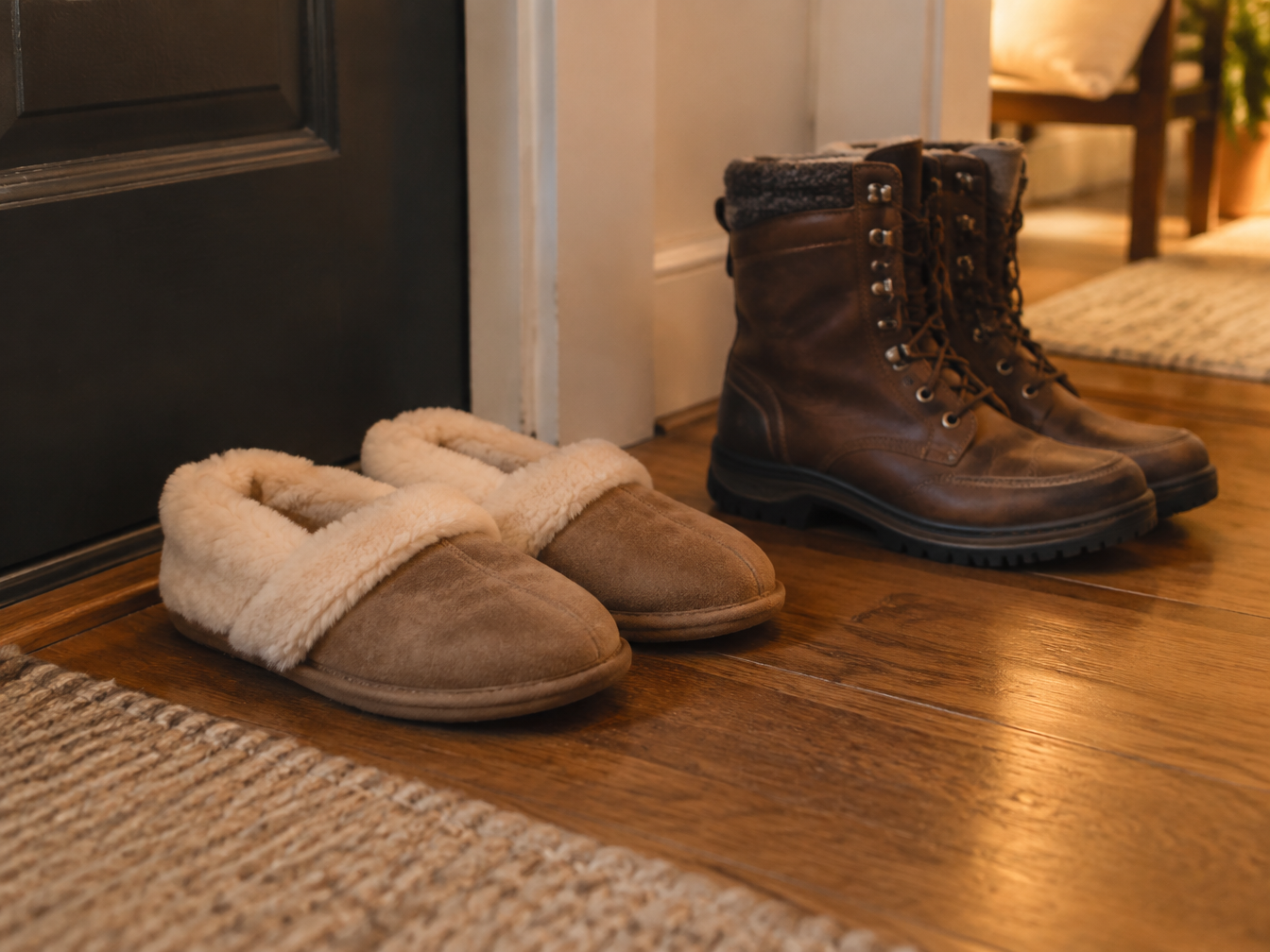
I should confess how stubborn I was.
For most of my twenties, I walked around my apartment in bare feet or in my outdoor shoes, depending on how defeated I felt. I told myself slippers were for grandmothers and for people who owned bathrobes. I wanted to be someone more glamorous than that.
Then one grey November, I bought a plain pair of shearling slippers on a whim and wore them straight out of the shop to the door. I felt oddly seen by my own feet. They were warm in a way that made my whole evening softer.
It reminded me of the boots I put on every winter, which I wrote about in the boots I wear every winter and the woman they turn me into. Boots are the version of me that goes out and handles things. Slippers are the version that comes home and gets to stop. I used to think I only deserved the first one.
Both of them are true. A life needs outfits for the world and outfits for the exhale.
How to Pick Socks and Slippers That Actually Work
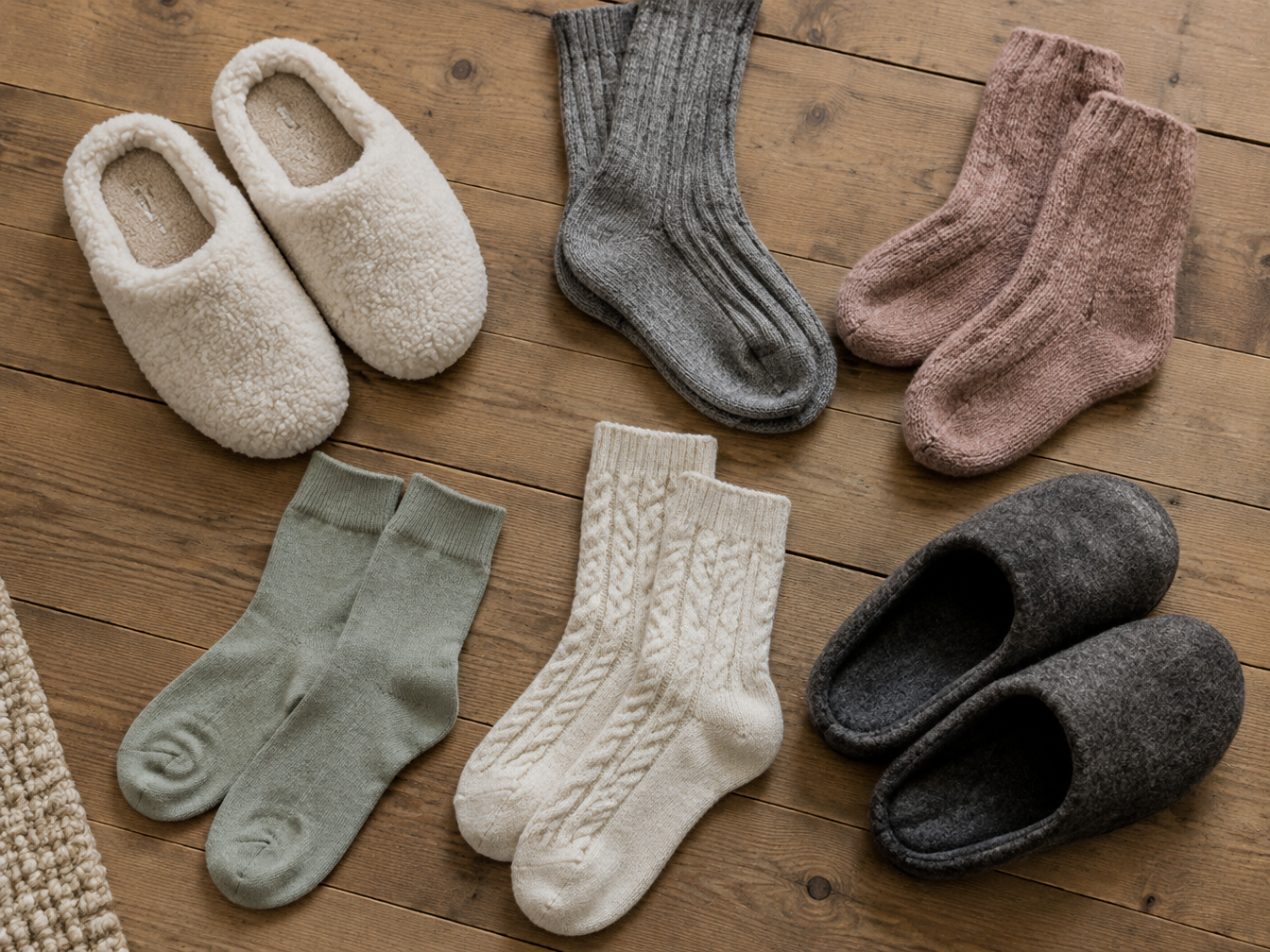
I have made some bad purchases in this category, so let me save you the trouble.
Choose Natural Fibers First
The Sleep Foundation recommends natural materials such as wool, cashmere, merino, and cotton over polyester [2]. In my own drawer, the wool blends are the ones that stay warm without making my feet sweaty, which matters more than it sounds, because damp feet get cold fast.
Keep Them Loose
If you plan to wear socks to bed, the Sleep Foundation suggests loose, breathable pairs and says to avoid compression socks unless a doctor recommends them. It also notes that people with circulatory problems or foot swelling should talk to a doctor first, since socks could restrict blood flow [2]. Comfort is the entire point, so nothing should leave a mark.
Pay Attention to the Sole
A slipper with no sole is a sock with ambition. If you have tile or hardwood floors, look for a sturdy, grippy base, because a slippery pair on a hard surface is a very silly way to get hurt.
Keep a Pair Where You Need Them
This is the trick that changed everything for me. Mine live by the bed, by the front door, and in the bottom of my work bag. The best cozy thing is the one within arm’s reach when you need it.
I picked up this habit while learning how to dress a home for guests, a topic I explored in the cozy outfit rules I follow when I host. Offering a guest a pair of clean socks at the door is one of the kindest things a host can do. It says, you are safe here, you can stay a while.
Change Them Often
Fresh socks make a difference, and the Sleep Foundation advises changing them nightly and washing your feet regularly to limit bacteria [2]. It is a small chore that keeps the whole ritual feeling clean.
Small Rituals That Make the Cozy Last
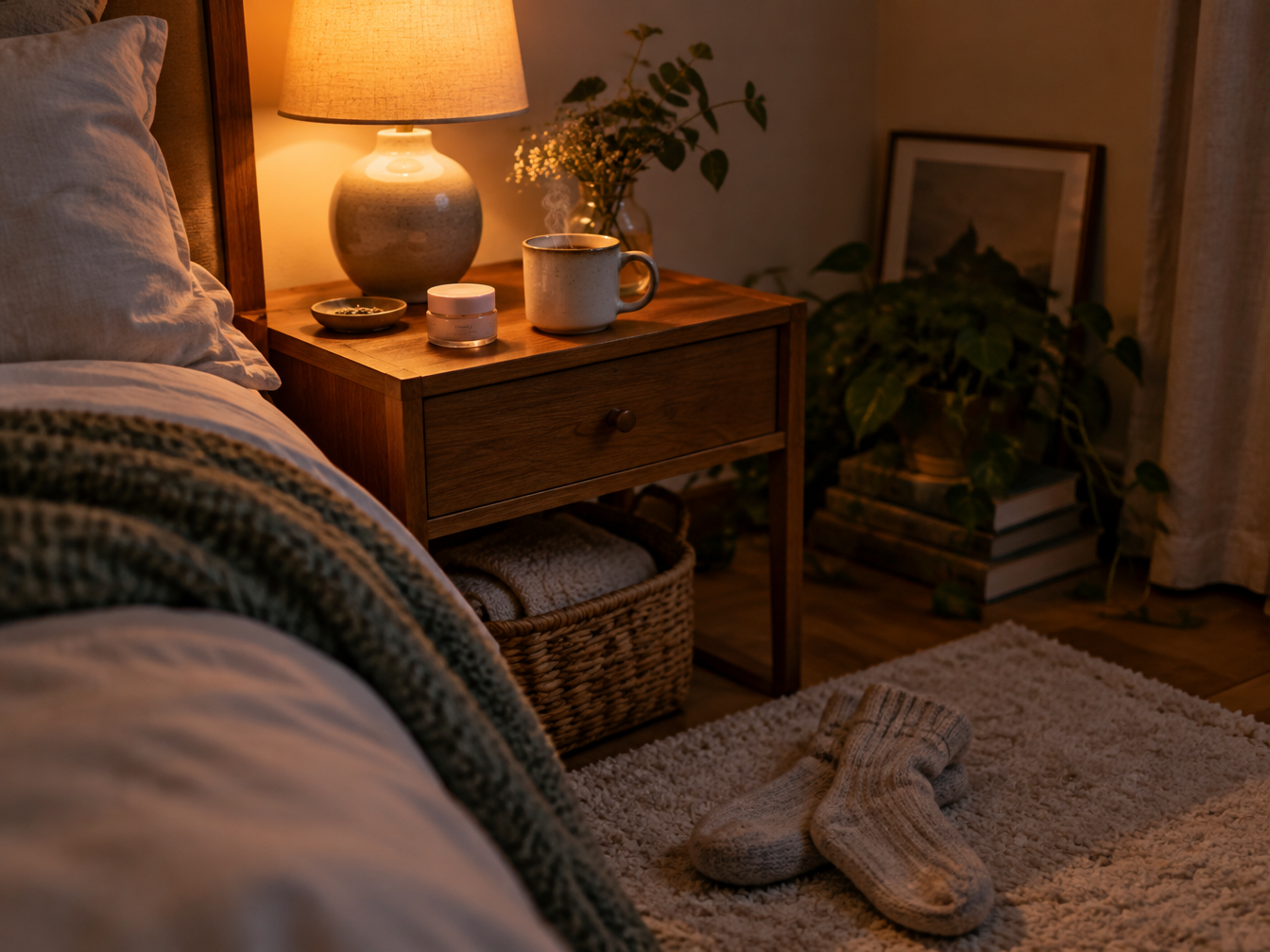
Once the socks were in, I started building a little ladder out of them. One small comfort made room for the next, the way a tidy corner makes you want to tidy the rest of the room.
The ladder has no rules, which is the best thing about it. Some nights it is a blanket and a podcast. Other nights it is nothing more than socks, a lamp, and ten quiet minutes. You are not performing a routine for anyone. You are just making the evening a little kinder to the person who has to live in it.
The room temperature matters, and the Sleep Foundation suggests keeping it between 65 and 70 degrees Fahrenheit for sleep [2]. So I turned the thermostat down a notch and let the socks do their work. I make a warm drink without checking my phone. I dim the lights an hour before bed.
Then I do my night routine, slowly. When I tried a gentle night skincare routine for three weeks, I was surprised by how much the warm, quiet atmosphere mattered, which I explored in the gentle night skincare routine that finally helped me sleep. Cozy feet turned out to be the first step of that same ritual. The routine was never about the products. It was about telling the body it was safe to power down.
None of this is expensive. All of it is repeatable. That is the part I trust most.
The Quietest Kind of Luxury
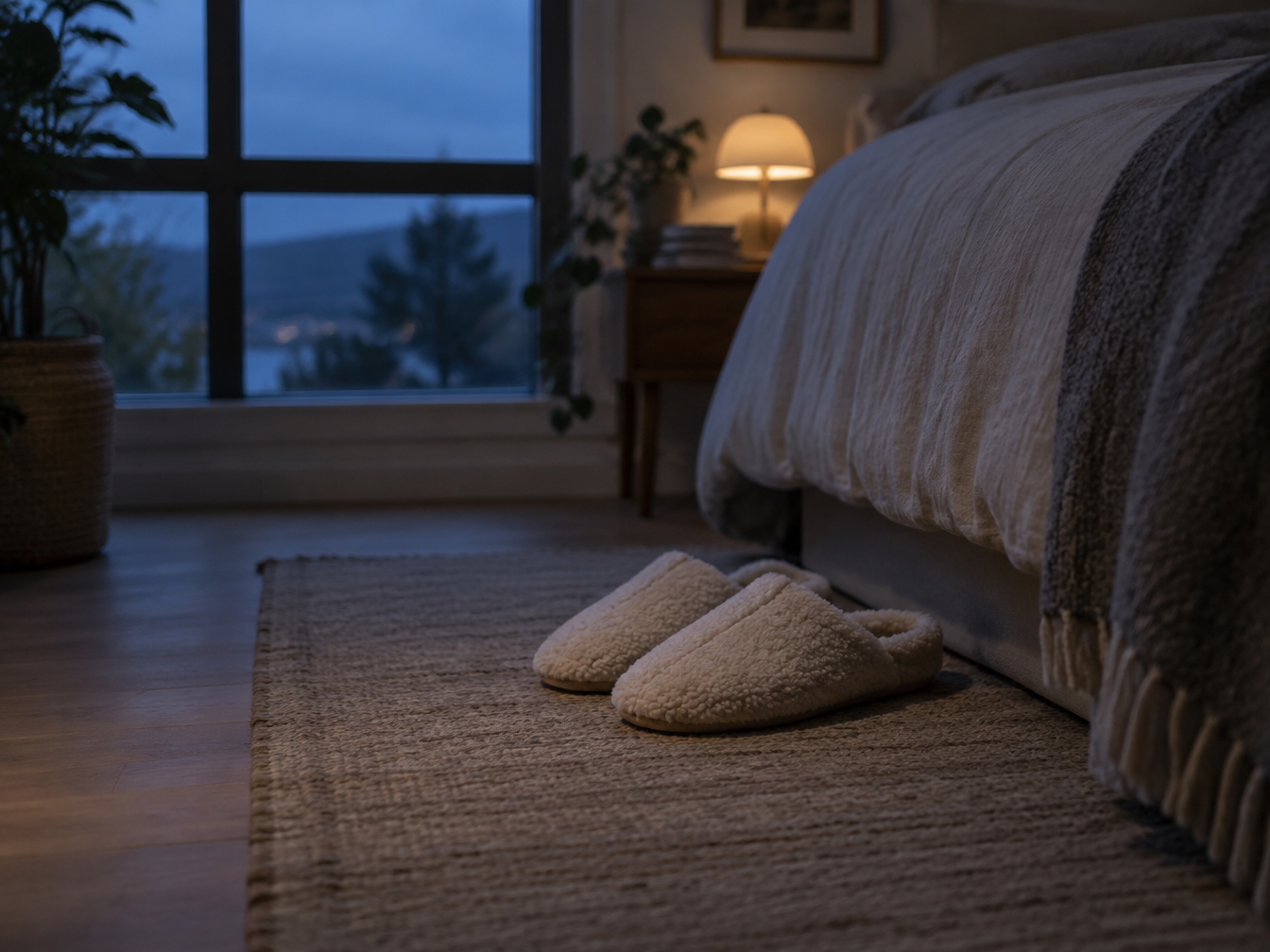
I used to think luxury was something rare. A thing you saved up for, wore twice, and kept in tissue paper.
Now I think the truest luxury is the thing that makes an ordinary Tuesday feel looked after. Warm feet on a cold floor. A soft pair of slippers waiting by the bed. Nothing about it will ever be photographed, and that is exactly why it works.
The next time you stand shivering in your kitchen, being tough about it, put on the socks. You do not have to earn the warmth. It was always allowed.
Sources
- Nature (1999). Physiology, Warm feet promote the rapid onset of sleep. Nature, 401, 36.
- Sleep Foundation. Sleeping With Socks On.
- Adam, H. and Galinsky, A. D. (2012). Enclothed cognition. Journal of Experimental Social Psychology, 48(4), 918 to 925.
- Mr Porter Journal (2022). Why we hate our clothes, full wardrobe and nothing to wear. Interview with Dr Dawnn Karen.
Leave a Reply