It was supposed to take an hour. I had a trash bag, a playlist, and the kind of year-end energy that makes you believe a clean closet will fix everything else too. Forty minutes in, I was sitting on the floor holding a green velvet top I had worn exactly once, crying so hard I scared the cat.
It wasn’t the top. It was the night I bought it, the person I thought I was about to become, and the quiet math of how much time had passed since.
Nobody warns you that cleaning out your closet is not a chore. It is a conversation with every version of yourself you ever hoped to be, and most of them are still hanging there, waiting for you to pick a side.
The Closet Is a Diary Nobody Asked You to Keep
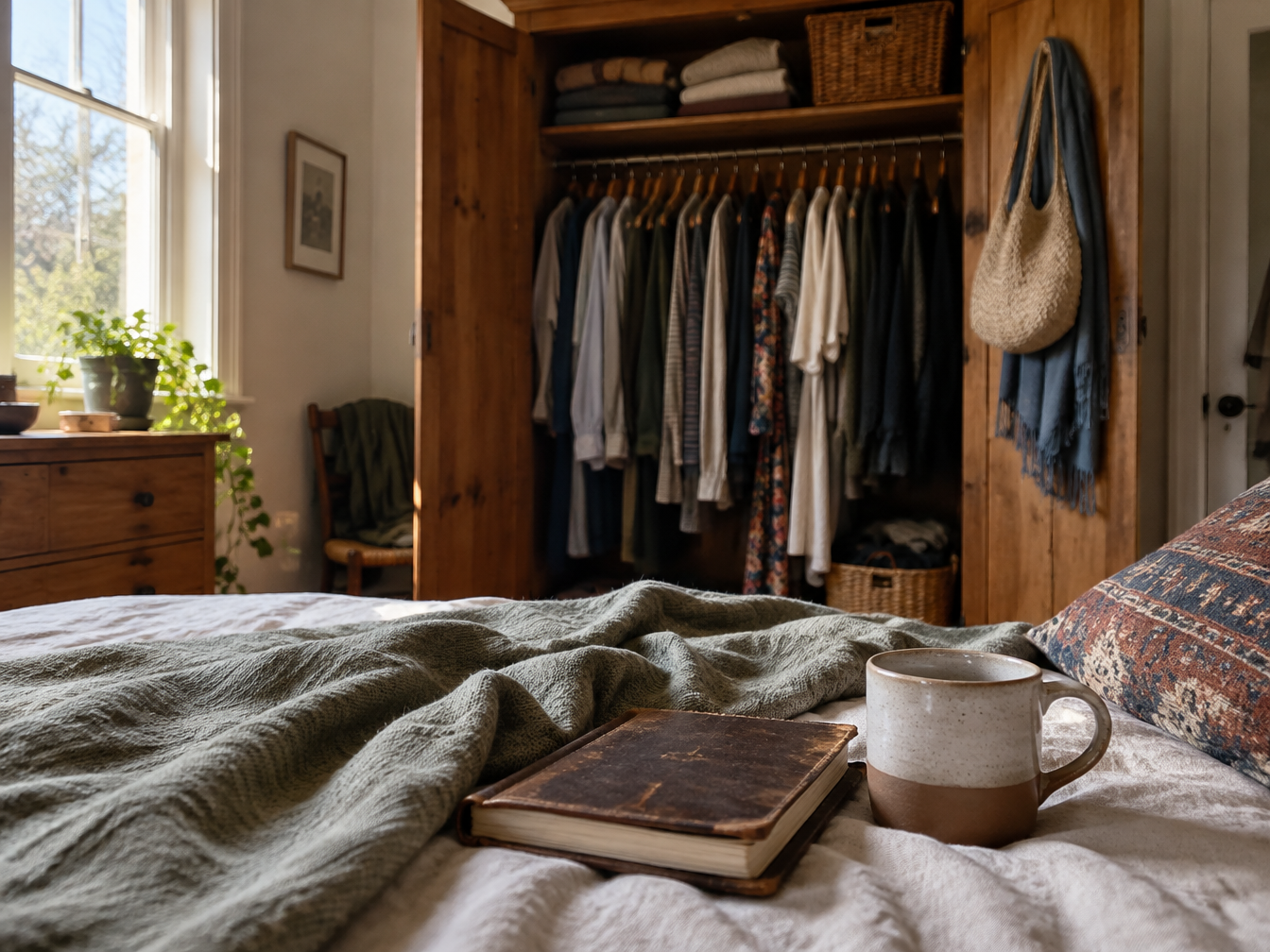
Here is what I found in the first twenty minutes. A blazer from a job interview I did not get. A dress from a wedding where I spent the whole night smiling at someone who had already stopped smiling at me. Three pairs of jeans in three different sizes, because apparently I do not believe in committing to a body.
Researchers who study wardrobes say this is not a quirk. In a 2021 paper on why people struggle to let go of clothes, Elias Mellander and Magdalena Petersson McIntyre describe the wardrobe as a kind of material biography of its owner, a record of memories and identity stored on hangers [1]. Some garments are kept like memorabilia. Others are kept as proof of who you used to be.
That is why the closet feels so loud at the end of the year. December is when we take inventory of everything, and our clothes are the only inventory that talks back.
Eighty Percent of It Is Just Sitting There
Let me be fair to the version of me who owned too much. She had company.
A 2018 study by the relocation firm Movinga surveyed about 18,000 heads of households across 20 countries and compared what people said they wore with what they actually did. Americans came in with 82 percent of their clothes unworn in the previous year, the second highest share in the study. They had guessed far lower, and the gap between what people believed and what was true was 39 points [2].
Read that again slowly. Most of what hangs in an average American closet is not being worn at all. It is just being kept.
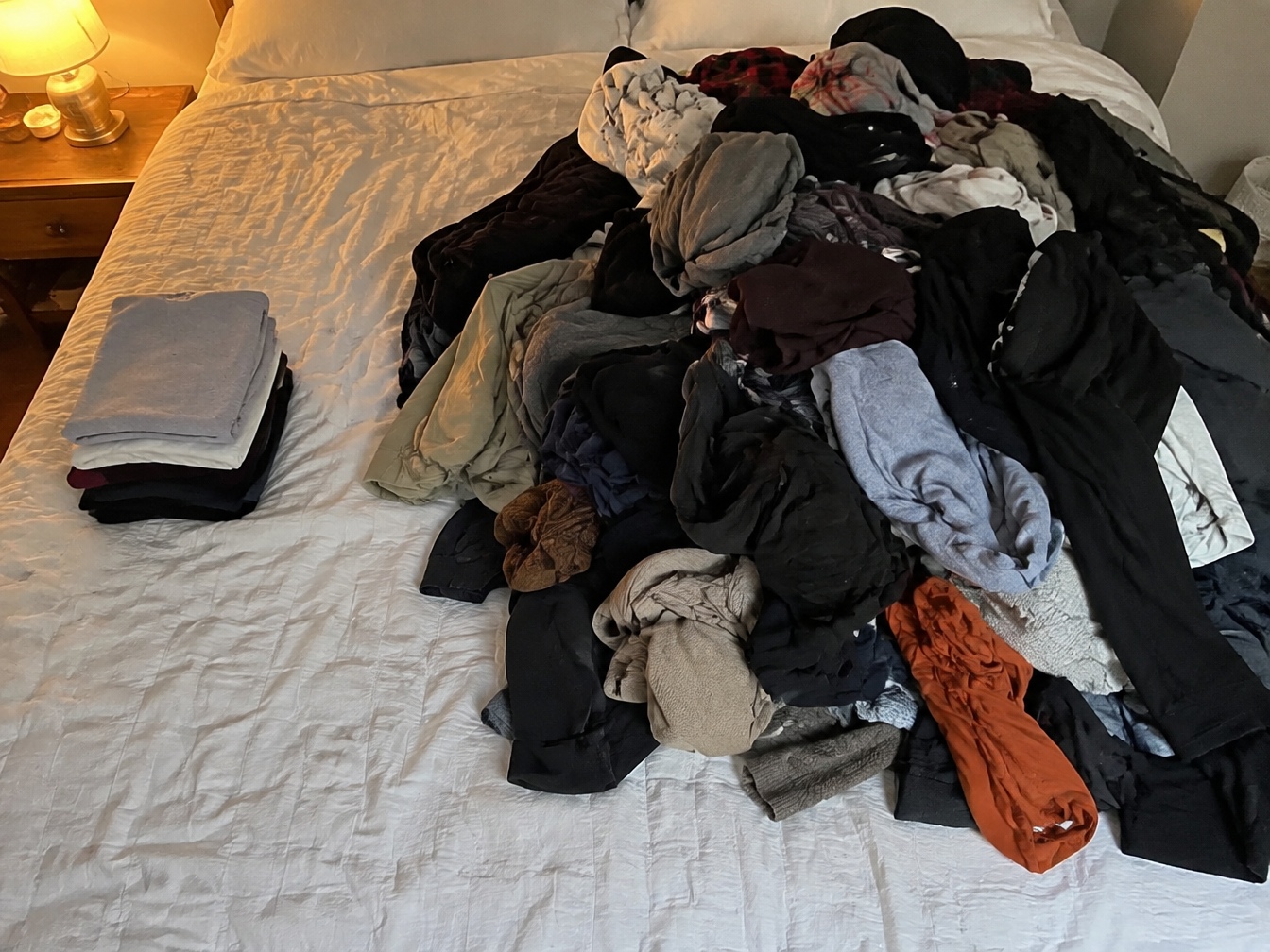
I did the honest version of that math on my own bed that night. I sorted everything into what I had worn in the last twelve months and everything I had not. The first pile was small enough to fit in my arms. The second one needed its own zip code.
I had tried to fix this once before by building a tiny capsule wardrobe, and what I learned then still stands. A smaller closet does not make you simpler. It just shows you, very clearly, how many different people you were dressing for, which I wrote about in what happened when I built a capsule wardrobe. Cutting the pile down is easy. Admitting who the pile was for is the hard part.
The Clothes I Kept for a Woman Who Never Showed Up
Every closet has a section I think of as the Waiting Room. These are the clothes you bought for a life you have not started yet.
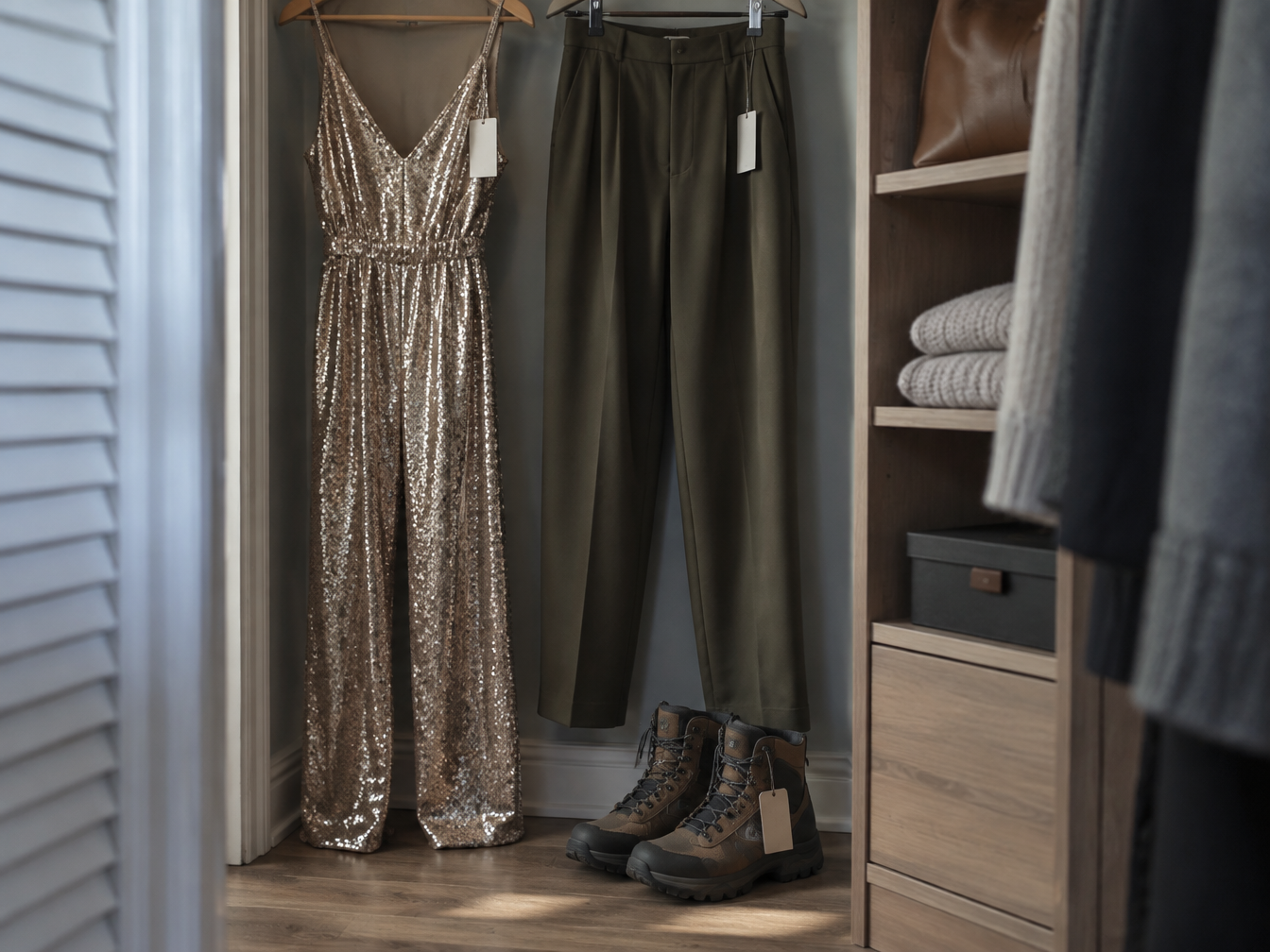
The sequined jumpsuit for the version of me who goes out every weekend. The tailored trousers for the version who has a corner office. The hiking boots for the version who wakes up at six and actually likes it. I kept all of them, because getting rid of them felt like admitting she was never coming.
Mellander and McIntyre put this better than I can. They found that people hold on to clothes as hopes for future selves, and that letting go can feel like giving up on those dreams. In their words, it was not only a question of discarding things, but of letting oneself go [1].
I felt that sentence in my chest. Because it is true. The jumpsuit was not fabric. It was a promise I had made to myself and never collected on.

The worst part is how polite the Waiting Room is. Nothing in there screams at you. The clothes just hang quietly, tags dangling, and every time you reach past them to grab the same black sweater you always wear, they remind you of the plan. I counted nineteen pieces in that section. Nineteen small promises, and I had been paying interest on all of them in guilt.
What finally helped was asking a simple question about each one. Would I be excited to wear this tomorrow, exactly as my life looks today? If the answer needed a speech about how things might change, it was not a yes.
I wrote about this feeling in more detail when I looked at dressing for a life you haven’t started yet, and the short version is this. You are allowed to keep one thing for the person you are becoming. You are not allowed to keep forty. A future self cannot breathe in a closet that crowded.
The Jeans That Were Never Really About Jeans
I need to tell you about the jeans, because I think you have a pair too.
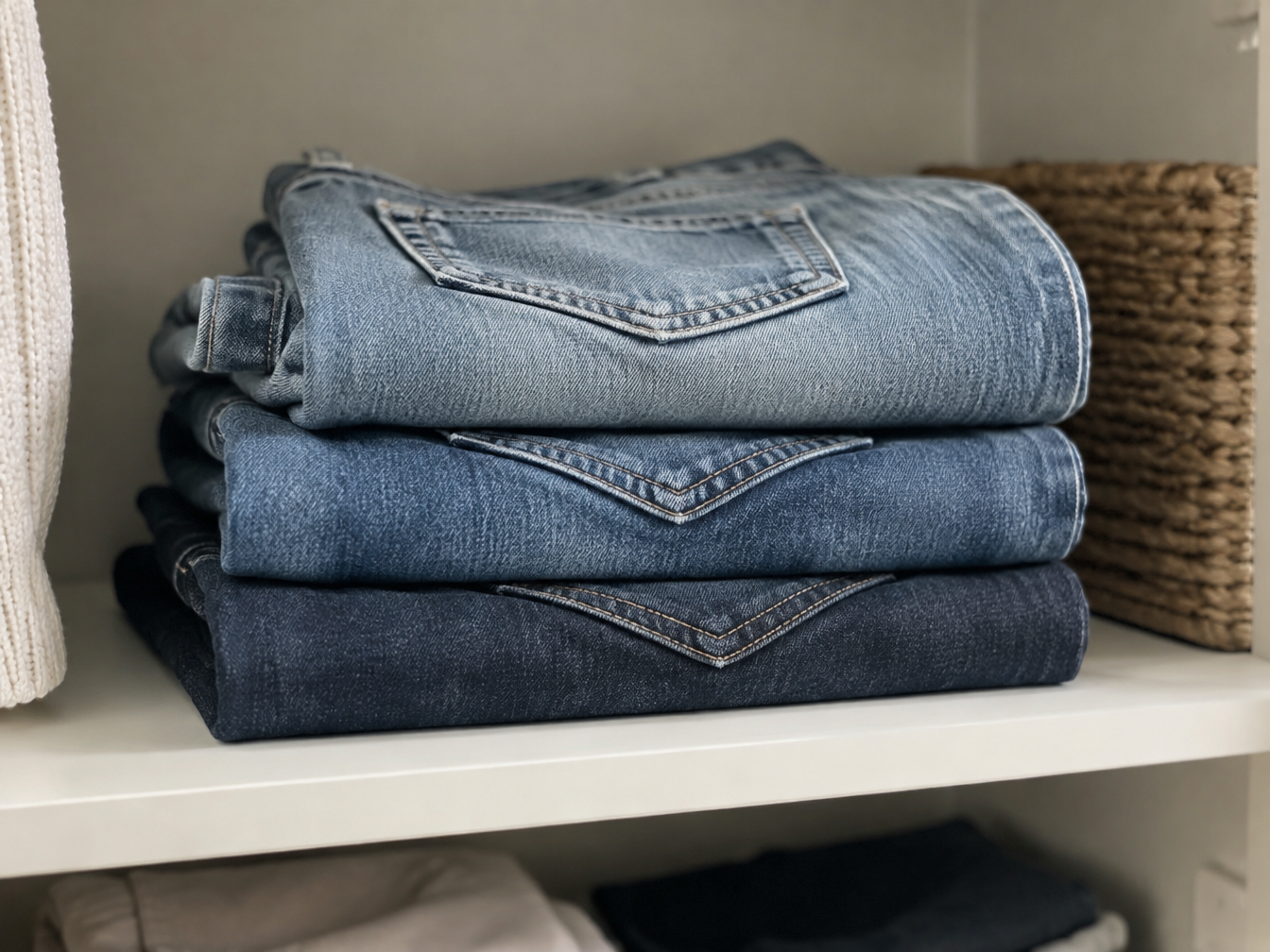
Mine were a size I wore for roughly one summer. I had kept them for six years. Every time I moved apartments, they moved with me, folded neatly, like a very patient accusation.
The research backs this up in a way that made me feel less ridiculous. Mellander and McIntyre found that clothes which no longer fit are often kept as a link to a desired or lost body, and that some people held on to garments they could not comfortably wear at all [1]. Detaching from them meant facing the expectations they stood for.
Behavioural psychologist Dr Carolyn Mair, author of The Psychology of Fashion, makes a similar point about shopping. She says some people buy clothes hoping to feel better about their bodies, sometimes picking things that do not fit in the hope that they will later [3].
So when I finally put those jeans in the donate pile, I did not feel like I was cleaning. I felt like I was forgiving someone. Mostly me.
Why a Full Closet Still Says Nothing to Wear

Here is the part that made me laugh out loud on the floor. After all that sorting, I stood in front of a closet that was suddenly half empty, and I could finally see what I owned. And it all worked together. It had been working the whole time.
The reason I had been staring at a rack of clothes every morning and feeling like I had nothing to put on is not mysterious. Fashion psychologist Dr Dawnn Karen links it to the paradox of choice, the idea that more options leave people less satisfied. She says it leaves us overwhelmed and paralysed, and that an overstuffed closet can trigger a fight or flight response when you open the door [3].
That explains every frantic Tuesday morning of my twenties. I was not short on clothes. I was short on room to think.
It also explains why I stopped buying trends and started building something quieter, a story I told in why I built a wardrobe that sounds like me. When the closet shrinks to things you actually love, getting dressed stops being a negotiation. It becomes a sentence you already know how to say.
The Sweaters I Kept on Purpose
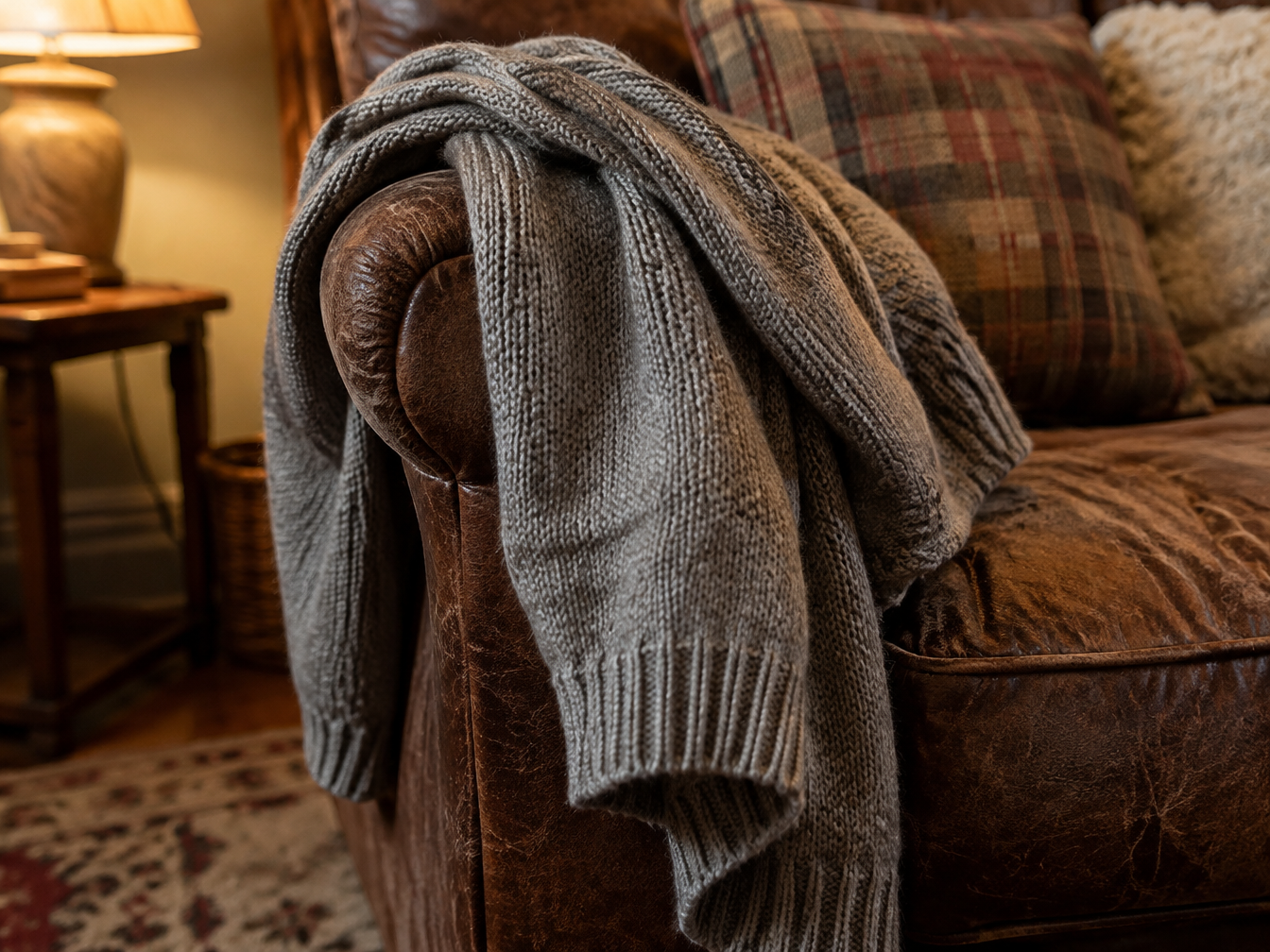
I do not want you to hear all this and throw out everything with a story attached. That would be its own kind of damage.
At the bottom of my pile, there was a chunky grey sweater that does not fit well, pills at the elbows, and has a small stain I have never managed to get out. I kept it. Without hesitation. It belonged to someone I love, and wearing it feels like being held.
I have worn it through two breakups, one cross-country move, and a flu that lasted nine days. It has never once been in the running for anything stylish. That is not the job it was hired to do. Some clothes are not outfits at all. They are small, soft proof that somebody cared about you, and no tidying method on earth should be allowed to take that away.
There is a real difference between holding on out of guilt and holding on out of love, and you can feel it in your body if you are honest. Guilt feels heavy and a little sour. Love feels warm and slightly inconvenient. I explored that line in the sweater I keep because of the person who gave it to me, and it is the only rule I trust now.
If a piece makes you feel something good the second you touch it, it stays. If it makes you feel behind, it goes.
I also found a pair of earrings from a friend I lost touch with, wrapped in tissue at the back of a drawer. I sat with them for a while. Then I put them on and wore them to the grocery store, because a keepsake that lives in a drawer is just another thing waiting. Anything worth keeping is worth using.
How to Clean Out Your Closet Without Falling Apart

I made a mess of my first attempt, so here is what I do differently now. It is not a system. It is just what keeps me kind to myself.
Start With the Easy Pile
Pull out anything with a tag still on it, anything stained beyond saving, and anything you honestly dislike. You will feel brave by the time you are done, and you will need that courage later.
Try Things On Before You Judge Them
Do not decide from the hanger. Put it on, stand in front of a mirror, and notice your first reaction. That reaction is the only vote that counts.
Make a Maybe Box and Give It a Date
For the pieces you cannot decide on, tape a box shut and write a date six months out. If you never open it, you have your answer. Mellander and McIntyre noted that wardrobe clear outs and no buy periods left people more satisfied with what they owned, though they do not automatically lead to buying less [1], so be gentle with yourself about the second part.
Send Things Somewhere They Will Be Worn
The EPA estimated that the United States generated about 17 million tons of textile waste in 2018, with roughly 11.3 million tons ending up in landfills [4]. Donate, swap with friends, or resell what is in good shape. It makes the goodbye feel like a handoff and not a funeral.
Keep One Thing for the Girl You Used to Be
I kept one piece from every era I loved, and my grandmother’s coat is the first on that list. I wrote about why in the style lessons that coat keeps teaching me. One piece is a memory. A whole rack is a museum, and nobody wants to live in a museum.
What the Empty Hangers Gave Back
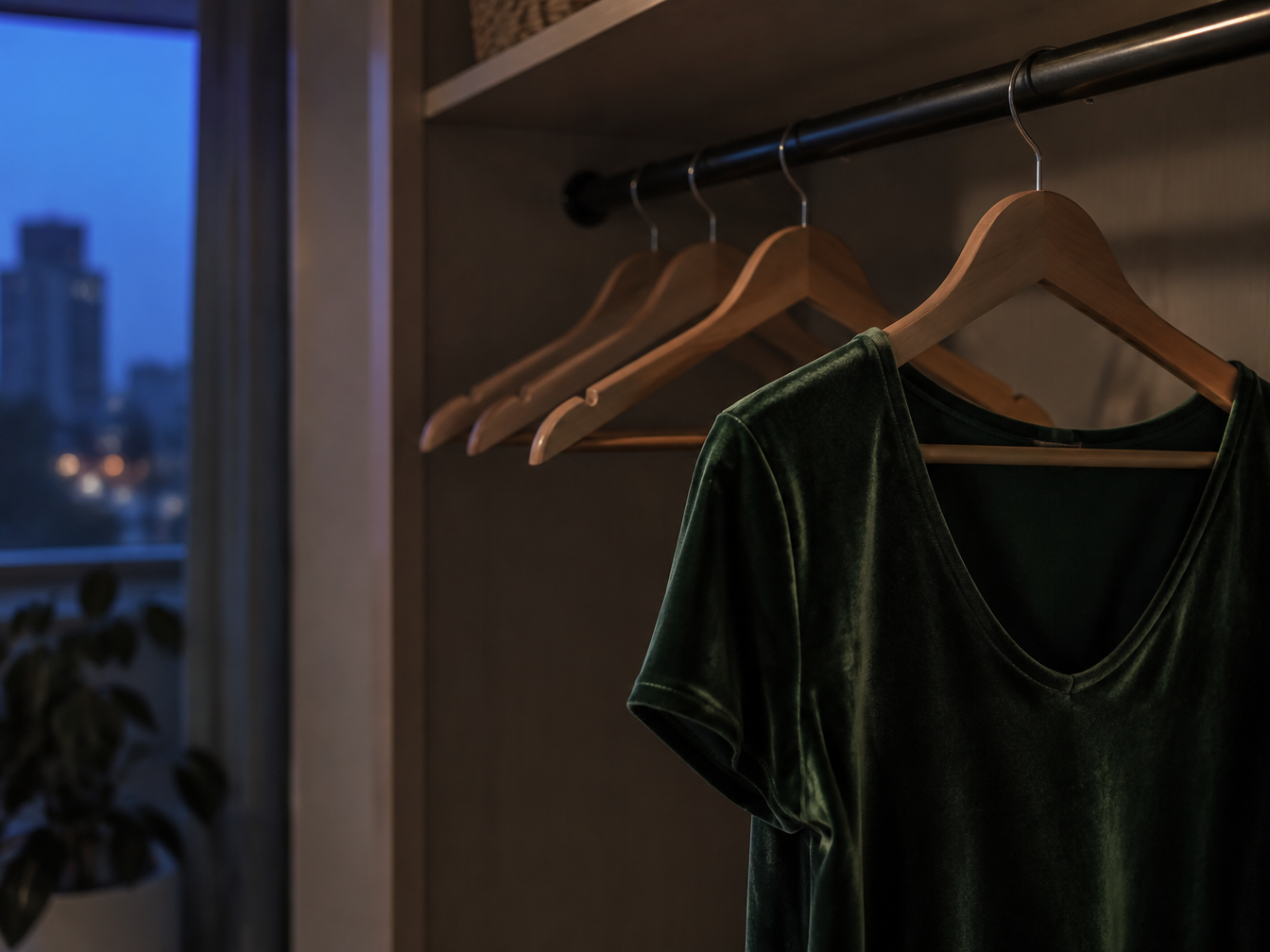
By the time I finished, it was dark outside, and I had eleven bags by the door. The closet looked unfamiliar. Not empty, just honest.
What surprised me was the feeling. I expected loss. What I got was a strange, wobbly relief, like opening a window in a room I had not realised was stuffy.
I wore the green velvet top one last time that night, standing in my kitchen with a glass of water, just to say thank you. Then I folded it into the donation bag and let it go.
It turns out you cannot make room for who you are becoming until you stop dragging every version of who you were. Your closet was never the problem. It was just the only place brave enough to keep the evidence.
Sources
- Mellander, E. and Petersson McIntyre, M. (2021). Fashionable Detachments: Wardrobes, Bodies and the Desire to Let Go. Consumption Markets & Culture, 24(4), 343 to 356. Lund University.
- FashionUnited (2018). People do not wear at least 50 percent of their wardrobes, according to study. Reporting on a Movinga survey.
- Mr Porter Journal (2022). Why we hate our clothes, full wardrobe and nothing to wear. Interviews with Dr Carolyn Mair and Dr Dawnn Karen.
- U.S. Environmental Protection Agency. Textiles, Material-Specific Data.
Leave a Reply