The Day My Foundation Turned Into a Map

It happened in a coffee shop, under the kind of unforgiving overhead light that only exists in coffee shops. I caught my reflection in the napkin dispenser and saw it: tiny dry flakes clinging to the sides of my nose, foundation sitting in little rivers around my mouth, and a patchy shine on my forehead that looked more like sweat than glow.
It was thirty-four degrees outside. I had applied my makeup in a steamy bathroom, put on a coat, walked into a gale, and sat down in a room heated to roughly the temperature of a baked potato. My face had been through three climates before nine in the morning, and it had decided to show me the receipts.
I did what I always did. I added more powder. Then more concealer. Then a little more of everything, until I looked like a woman wearing her own face as a costume.
That was the week I decided I was done fighting winter with layers. I wanted to look like skin again. Not perfect skin, just skin.
Why Winter Makes Makeup Behave So Badly

I like understanding a problem before I buy something to fix it, so I went digging into why cold weather wrecks a face.
The short version is that winter pulls water out of you. Cold, dry air and wind speed up the evaporation of water through the skin, a process called transepidermal water loss, and heated air at home and in the car pulls out even more [1]. A dermatologist quoted in Discover Magazine explained it plainly: the humidity around us is simply much lower in winter. The outer layer of skin works like a waterproof wall, with cells held together by lipids, and winter conditions weaken those lipids so the wall breaks down and water escapes faster [2].
Hot showers do their own damage, because they strip natural oils, and so does vigorous towel drying and harsh soap [1][2].
That explains the flaking, but it also explains the makeup. Foundation does not sit on top of dry skin. It grabs onto every rough patch and settles into every dry line, and the harder you press, the more it shows. I could have bought a different foundation every week and it would not have helped. The problem was never the product. It was the surface I was putting it on.
I had written a whole post about going without makeup for a month, about what I was actually hiding when I stopped wearing makeup, and I remember how much I learned by seeing my bare face honestly. Winter, it turns out, demands the same honesty in a smaller dose.
The Prep Matters More Than the Product
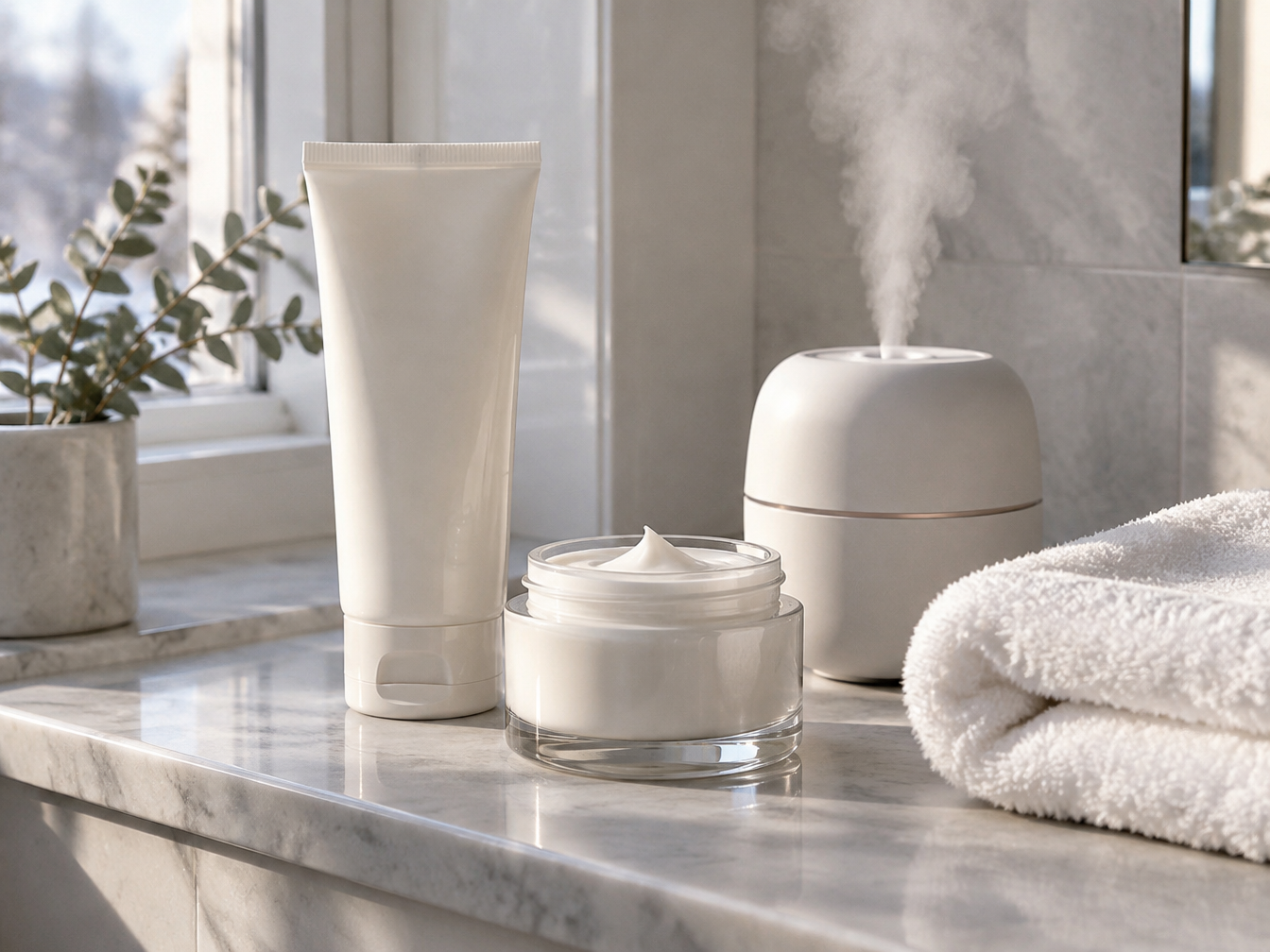
So I started from the bottom of the problem, which was the skin.
I switched to a creamy, sulfate free cleanser, because a wash that is too harsh can cause tightness, redness and irritation [3]. I stopped scrubbing. Dermatologists in the Discover piece suggest patting your skin dry instead of rubbing it, and keeping showers short and lukewarm [2]. I moisturized right after washing, while my skin was still slightly damp, which is a tip echoed by the more scientific sources I read [1][2].
Another thing that surprised me: thickness matters. The advice in the Discover article was to choose thicker products, like petroleum jelly or a richer ointment, for stronger moisture retention, and to reapply more often [2]. The other article I read suggested creams over lotions in cold months, and a humidifier indoors [1].
I will say this plainly. I was skeptical about the humidifier. I bought a small one for my bedroom anyway. One of the dermatologists in the Discover piece offers a rule of thumb that I found oddly funny and completely useful: if you keep getting static shocks when you touch things, the air is too dry [2]. I had been shocking myself on doorknobs for weeks.
If you want the long, slow version of how I repaired my face this winter, I wrote about it in why winter skin made me cry in the bathroom and what finally helped. It is less about products and more about being kind to the face you actually have.
Cream Everything and Stop Apologizing for It
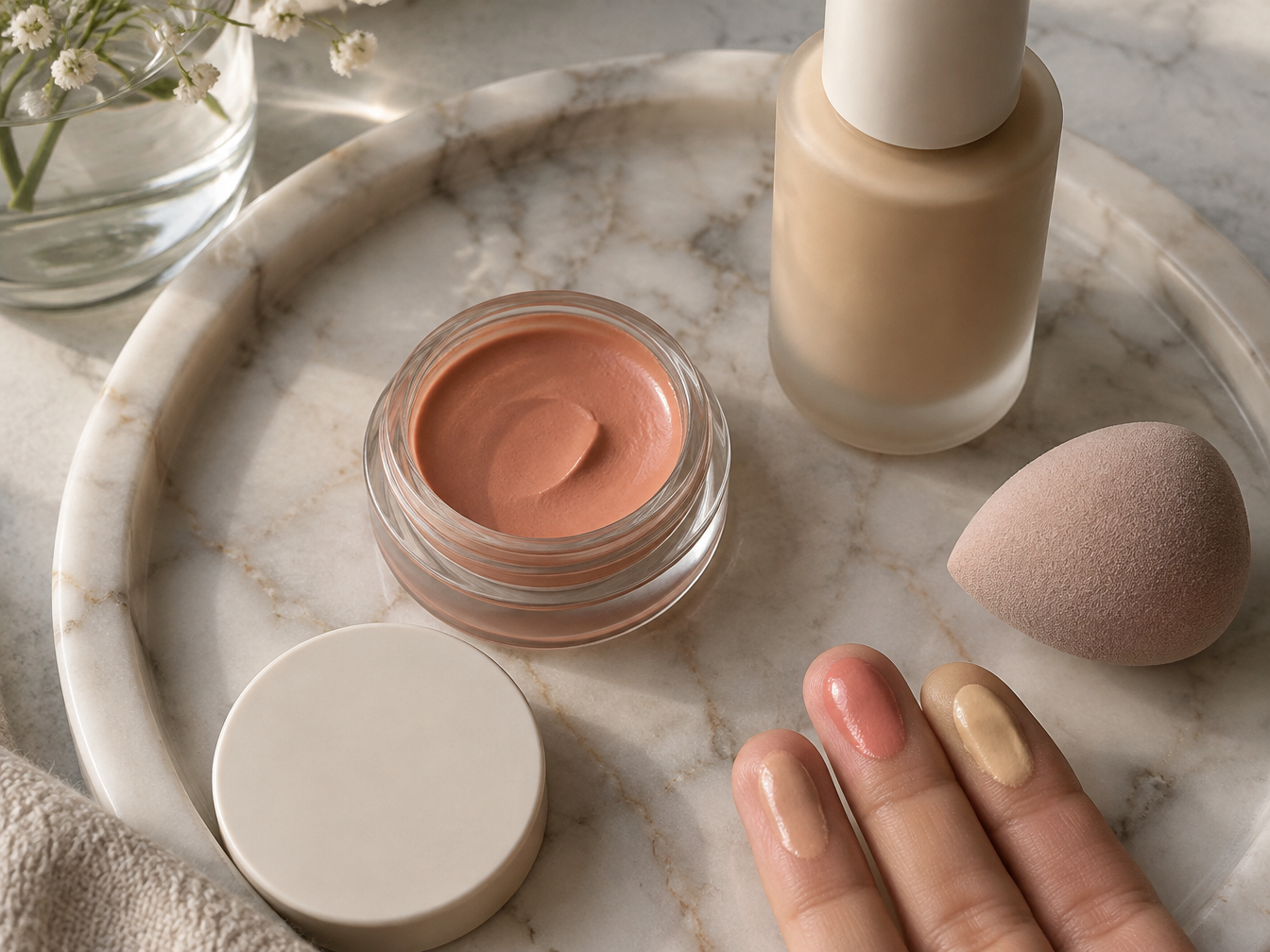
Once my skin stopped feeling like paper, the makeup got easier, and the biggest change was swapping powders for creams.

Foundation Gets Lighter and Thinner
A guide I read from HealthyWomen recommends choosing a hydrating foundation with moisturizing ingredients such as glycerin, and picking a shade at least one lighter than usual in winter [3]. I do not think the shade rule applies to everyone, because plenty of us do not actually fade much in winter. Please test it on your jaw in daylight. But the formula advice made immediate sense. I swapped my matte foundation for a skin tint and applied it with my fingers, and it was the first time in months my face looked like a face.
Cream Blush Does the Heavy Lifting
Blush can, in the words of that same guide, “instantly wake up” a washed out complexion [3]. I use a cream blush in a soft peach and press it into the apples of my cheeks with my ring finger, then blend toward the cheekbones. It melts into skin instead of sitting on it. If you have a warmer or deeper complexion, a terra cotta shade does the same job, and the guide suggests the same idea [3].
Skip the Heavy Powder
A little translucent pressed powder across the center of the face is enough, and the guide suggests a setting spray to hold everything in place [3]. I keep powder to the nose and chin, and nowhere else. The cheeks, the part of the face that looks most like skin, get nothing.
Winter Lips and Eyes Need Their Own Plan
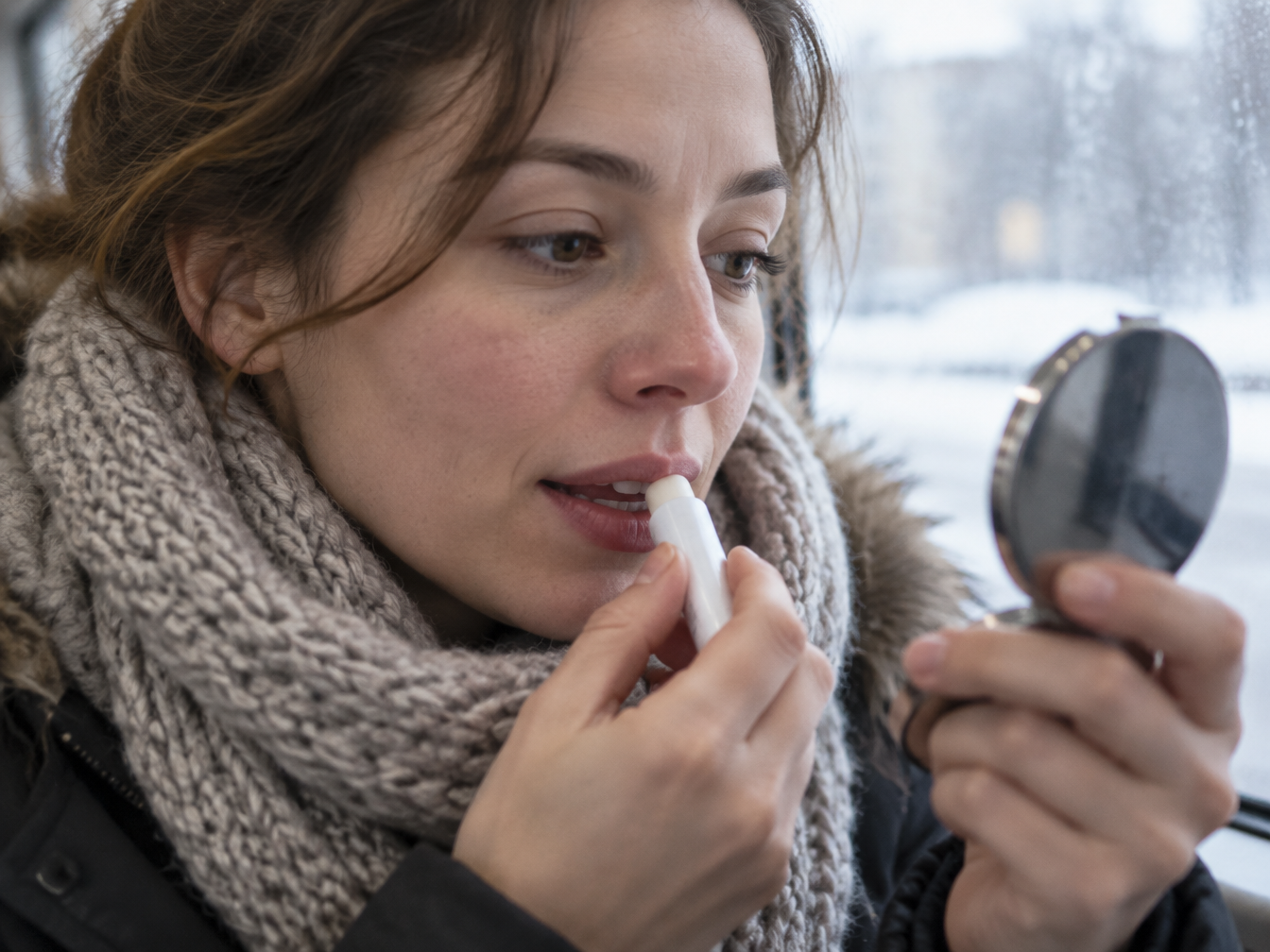
Lips are a special kind of tragedy in winter because they have no oil glands of their own, so they dry and flake when the weather turns [3]. A matte liquid lipstick on chapped lips looks like dry earth after a storm. I learned that the hard way at a dinner I will not be describing. I have a long history with bold lips, including a stretch when I was too scared to wear red lipstick for ten whole years, and winter lips taught me that the fear and the flaking are both solved by the same unglamorous thing, which is preparation.
My fix is simple. I gently buff my lips with a damp washcloth, apply a thick balm and leave it on while I do the rest of my makeup, then blot and finish with a cream lipstick or a tinted balm. The HealthyWomen guide agrees that cream lipsticks are more hydrating than matte or long wear formulas [3].
There is a quiet pleasure in this kind of routine, a sense that you are tending a garden instead of painting a wall. Eyes are a different story. Wind, sleet and cold air make your eyes water, and that means smudged mascara and sliding shadow [3]. Waterproof mascara is a real friend in cold weather. I also stopped lining my lower lids, which saved me from raccoon eyes by lunch. The guide suggests applying eyeshadow and liner only to the upper lids on bad weather days, and I have found that it works [3].
The Night Routine That Makes the Morning Easy
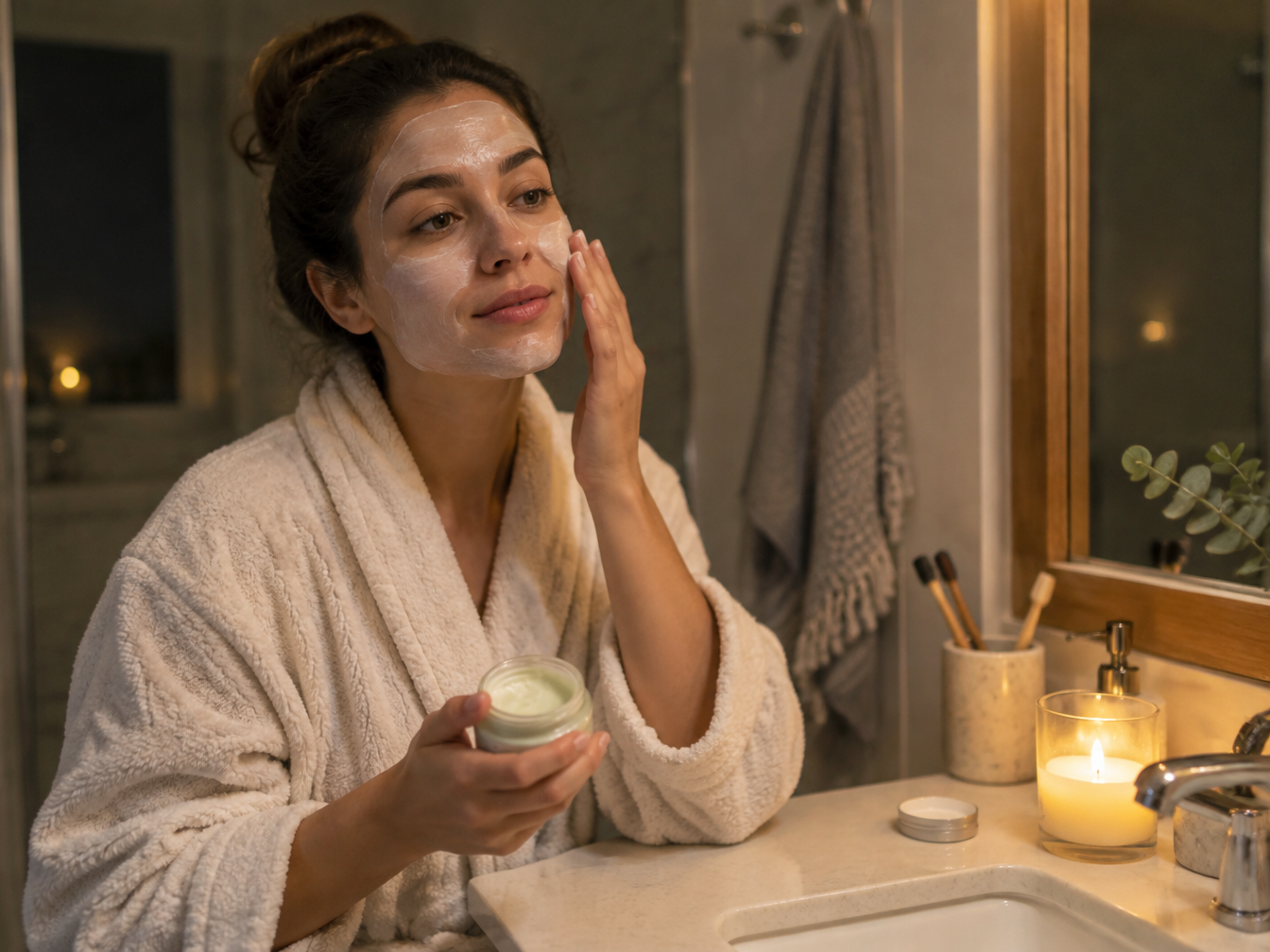
The unglamorous truth is that cold weather makeup is mostly decided the night before.
I use a gentle cleanser, a hydrating serum, and a thick cream. Once a week I put on a creamy mask for ten minutes while I read something I do not need to be good at. The HealthyWomen guide suggests a creamy hydrating mask once a week at night, for five to fifteen minutes, because foundation applies more easily to well moisturized skin [3]. That one tip paid for itself immediately.
I wrote about a similar experiment in a gentle night routine I tried for three weeks, and what I noticed then is still true now: the nights where I do less, and do it softly, make for mornings where I need to do less too. A face that has been treated kindly asks for less cover.
I also stopped using anything with a drying alcohol near the end of the day, and I drink more water than I used to. I cannot promise water changes your skin on its own. The dermatologists in the sources I read mention it as a small helper, not a cure [2].
Why I Stopped Chasing a Flawless Face

Something happens when you work with your skin instead of against it. You stop expecting it to be flat, matte and perfect, and you start noticing how it moves in light.
I think a lot of us picked up the idea that makeup is a filter, something that removes the real face and replaces it with a smoother one. Winter makes that fantasy impossible, which is oddly a gift. When your skin is dry and tired and slightly pink from the wind, no amount of powder can pretend otherwise. The only thing that works is to let the skin show through.
I started getting compliments I never used to get. A friend said I looked “rested,” which is the most polite lie a tired person can hear and also, in this case, partly true. Another asked what foundation I used, and I told her I was mostly wearing moisturizer and cream blush.
I had spent so long hiding from cameras that I wrote an entire piece on how I learned to love my face in photos, and I think this winter finished the job. A face that looks like skin photographs like skin. There is nothing to catch the flash.
A Cold Weather Makeup Routine You Can Do in Ten Minutes
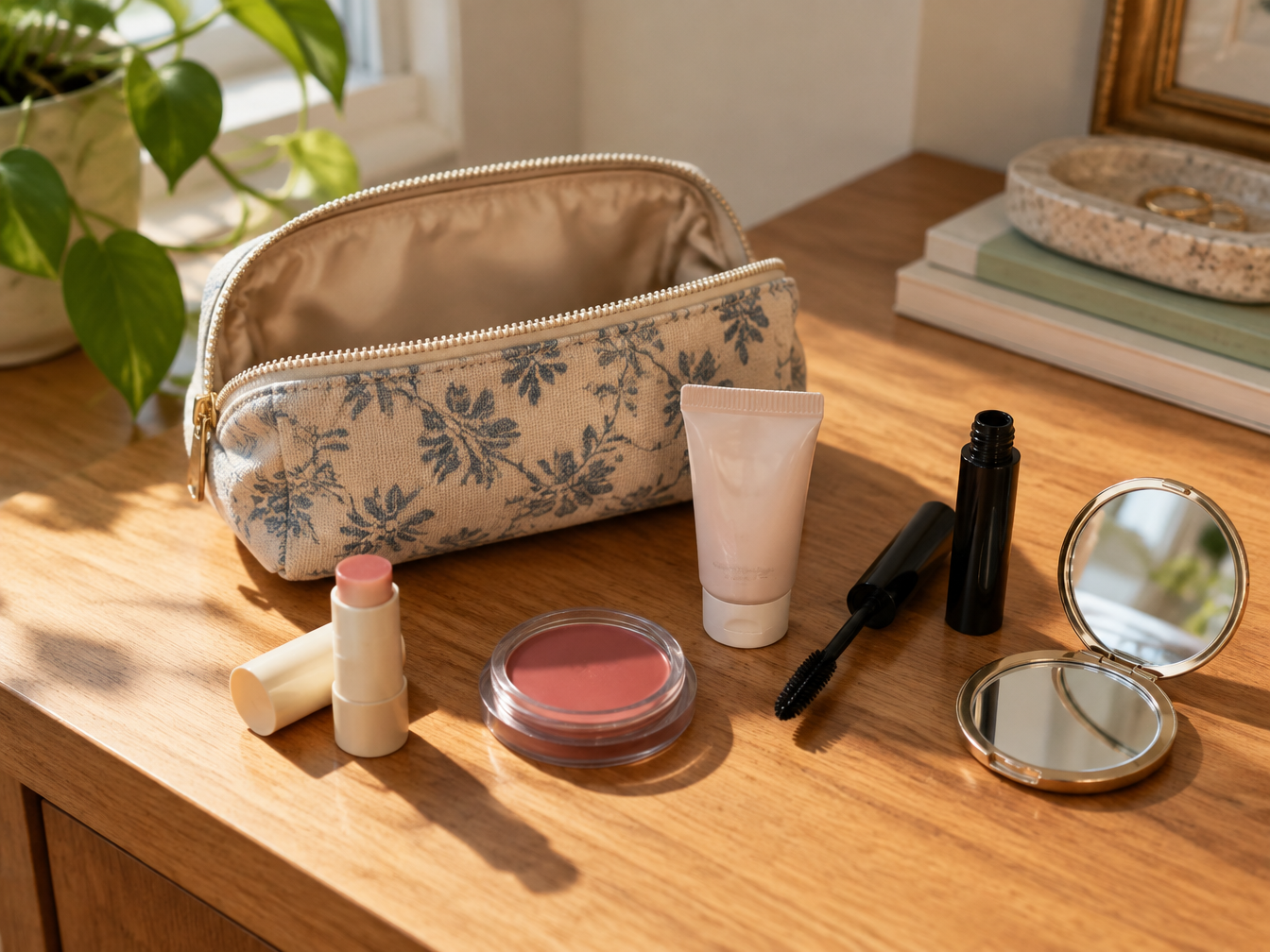
Here is the whole routine in plain order, so you can steal it.
Start with a creamy cleanser and a quick pat dry. Apply moisturizer while your skin is still a little damp, and let it sink in for a few minutes before you touch any color. Dab a skin tint or hydrating foundation with your fingers, only where you need it, and use a concealer sparingly under the eyes. Press cream blush into the apples of your cheeks. Add a touch of powder to the center of your face. Line only the upper lid and use waterproof mascara. Finish with a balm and a cream lipstick.
That is it. If a holiday party asks for a little more shimmer, you can add it without losing the skin underneath, and I have a whole guide on New Year’s Eve outfits and sparkly makeup for exactly that moment, because glitter looks better on skin that looks alive.
The woman in the coffee shop napkin dispenser would not recognize me now. She was working so hard to cover a face that only needed a drink of water and a little less pressure.
I also keep a tiny kit in my bag now: a balm, a cream blush, a small mirror and a travel size moisturizer. It takes up less room than a phone charger, and it has rescued more afternoons than I can count. Cold air does not care about your schedule, so the kit lives where I live.
Let your skin be the first thing people see. The makeup is only there to say hello.
Sources
- Health Check, Why Do We Get Dry Skin in Winter, The Conversation. https://theconversation.com/health-check-why-do-we-get-dry-skin-in-winter-60849
- Your Skin Can Become Dry, Cracked, and Damaged in the Winter, Here's Why, Discover Magazine, February 2, 2024. https://www.discovermagazine.com/health/your-skin-can-become-dry-cracked-and-damaged-in-the-winter-heres-why
- Winter Makeup Tips to Keep Your Skin Looking Healthy, HealthyWomen, December 2022. https://www.healthywomen.org/content/article/winter-makeup-tips-keep-your-skin-looking-healthy
Leave a Reply