My friend Maya texted me a photo of a mustard yellow cardigan at eight in the morning with no caption. Just the cardigan, laid flat on her bed, like a dare.
I stared at it for a full minute. Then I typed back, “I don’t wear yellow,” and she replied in under ten seconds. “I know. That’s why it’s day one.”
That is how a week of letting someone else dress me began. I had no plan, no theory, and a fairly strong suspicion that I was about to look like a stranger in my own life. What I got instead was a week-long lesson in how little I actually knew about the way I see myself.
The Rules I Agreed to Without Reading
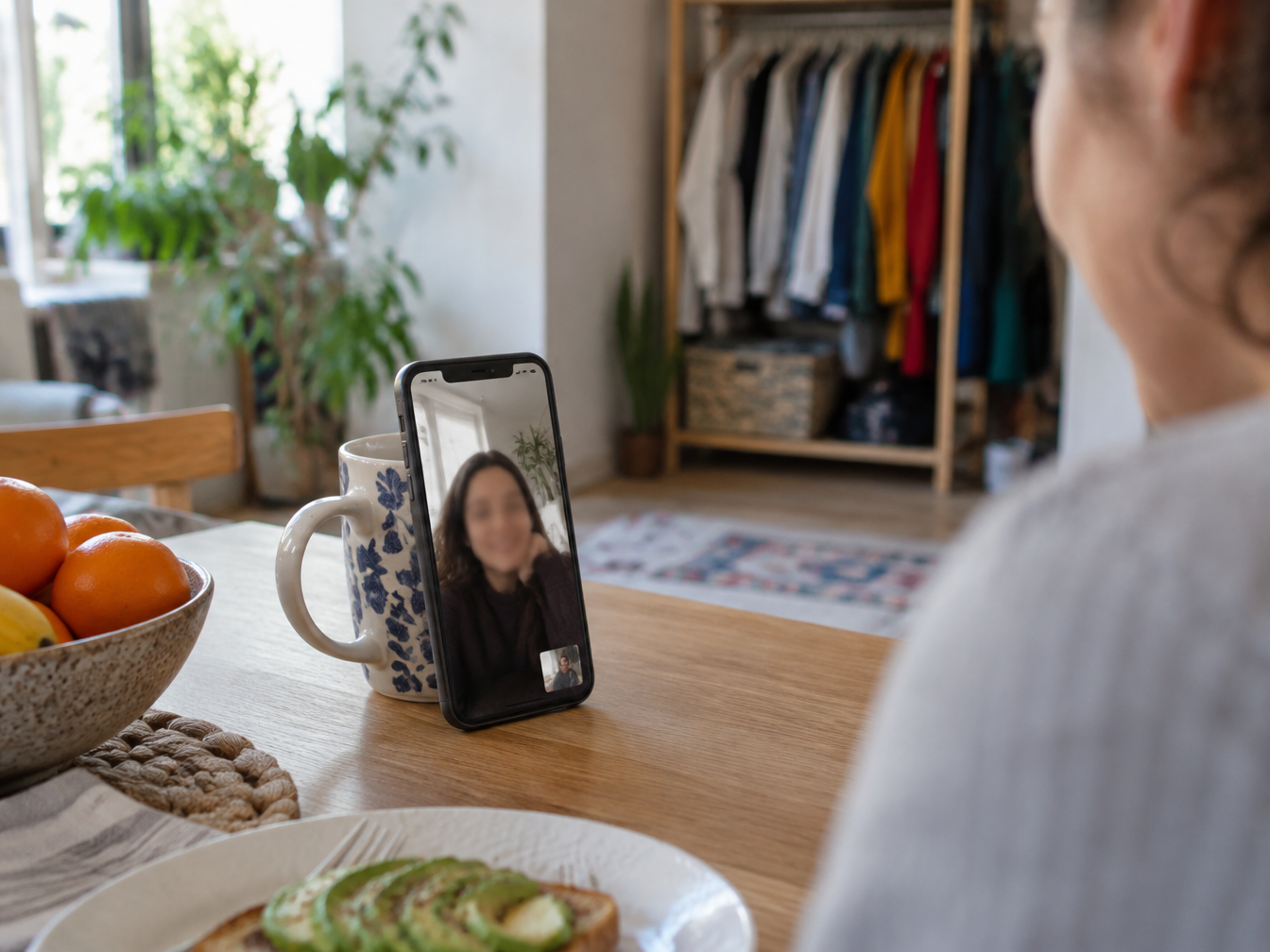
The deal was simple, and I made it over wine, which is always when the best terrible ideas are born. For seven days, Maya would choose my outfit every morning from clothes I already owned. She could see my closet through a video call, and I would wear exactly what she picked, from the top layer to the shoes.
I had two rules of my own. Nothing I truly could not stand, and no costumes. Everything else was fair game.
What I did not expect was how nervous I would be. I have been dressing myself for decades. I have opinions about hems. And yet, standing in front of the mirror waiting for her text, my stomach did the same small flip it does before a first date.
It turns out that handing over your outfit is handing over a tiny piece of control. You find out very quickly how much of your day you have been quietly steering.
Day One and the Color I Swore I Hated
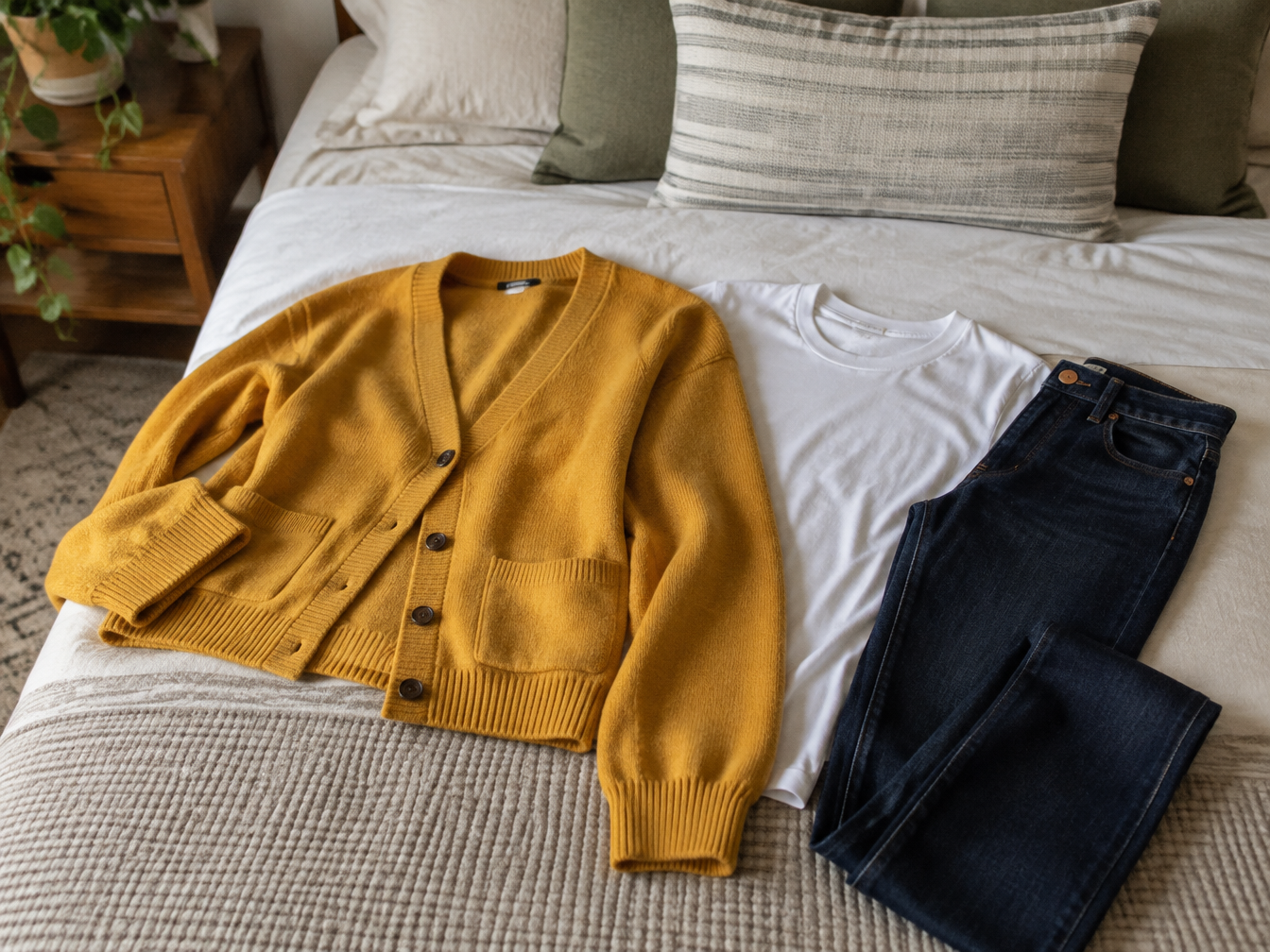
The mustard cardigan went over a plain white tee and my usual dark jeans. That was it. One item out of my comfort zone, and it still felt like walking into a room with a sign on my back.
I wore it to a coffee meeting, and I braced the entire way there. I rehearsed explanations. I was ready to say, “My friend made me do this.”
Nobody asked. A colleague said, “I love that color on you,” and kept talking about her week.
What surprised me was how good the first hour felt, not because of the compliment but because I had gotten dressed for no one in particular. It reminded me of what I once wrote in why getting dressed for your own company is the best holiday gift. The cardigan was not a statement. It was just a small, warm experiment I got to run on myself.
By lunch I had stopped bracing. By the afternoon I had forgotten the cardigan was even yellow, which is its own kind of proof. A thing you were afraid of becomes ordinary the second you stop guarding it.
I sat there stirring my coffee, completely thrown. For years I had assumed yellow was a color for other people, the confident ones, the ones with a certain skin tone and a certain kind of voice. I had never tested the rule. I had simply believed it.
Why Nobody Was Looking as Hard as I Was

Here is the thing I should have known already. People are not studying us nearly as closely as we think.
Psychologists have a name for it, the spotlight effect, and the classic demonstration is almost comic. In a study led by Thomas Gilovich in 2000, participants wore a shirt with a large face on it, such as Barry Manilow’s, which they found embarrassing, and walked briefly into a room of seated students. They drastically overestimated how many people would remember the shirt [1].

Think about that. Even a giant face on a chest barely registered the way the wearers feared. My mustard cardigan did not stand a chance of being the main event of anyone’s morning.
I had tested this idea myself once, when I wrote about what happened when I wore the same outfit for a week. The lesson was the same then. The audience in your head is much louder than the audience in the room.
I kept testing it all week. I tracked who noticed what, and I will save you the suspense. A grand total of three people said anything, and all three said something kind. The rest were busy worrying about their own cardigans, their own deadlines, their own reflections in the same shop windows.
That realization took half the weight off the rest of the week. If nobody is watching that closely, then the stakes of trying something new are very, very low.
The Outfit I Would Never Have Chosen
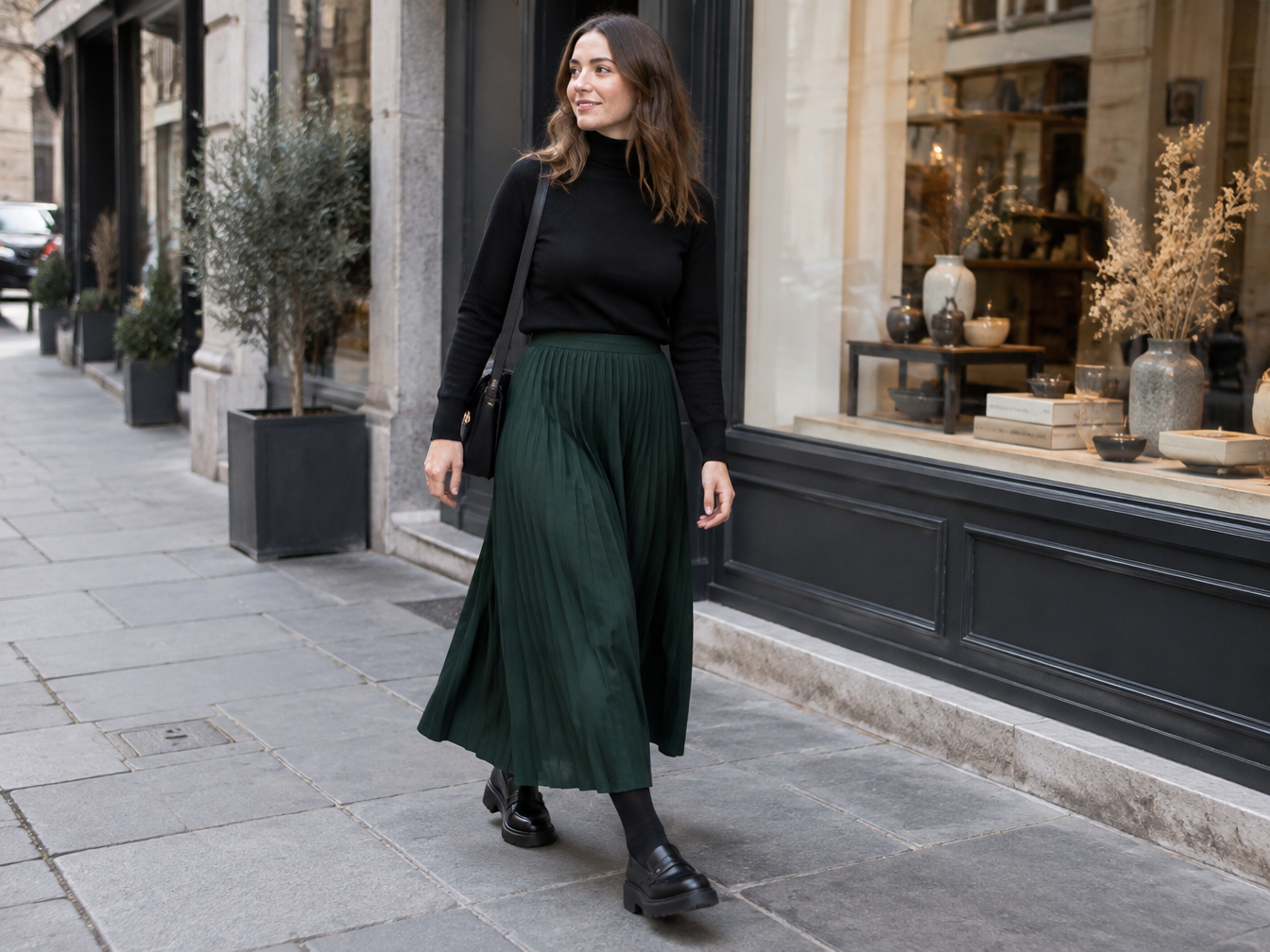
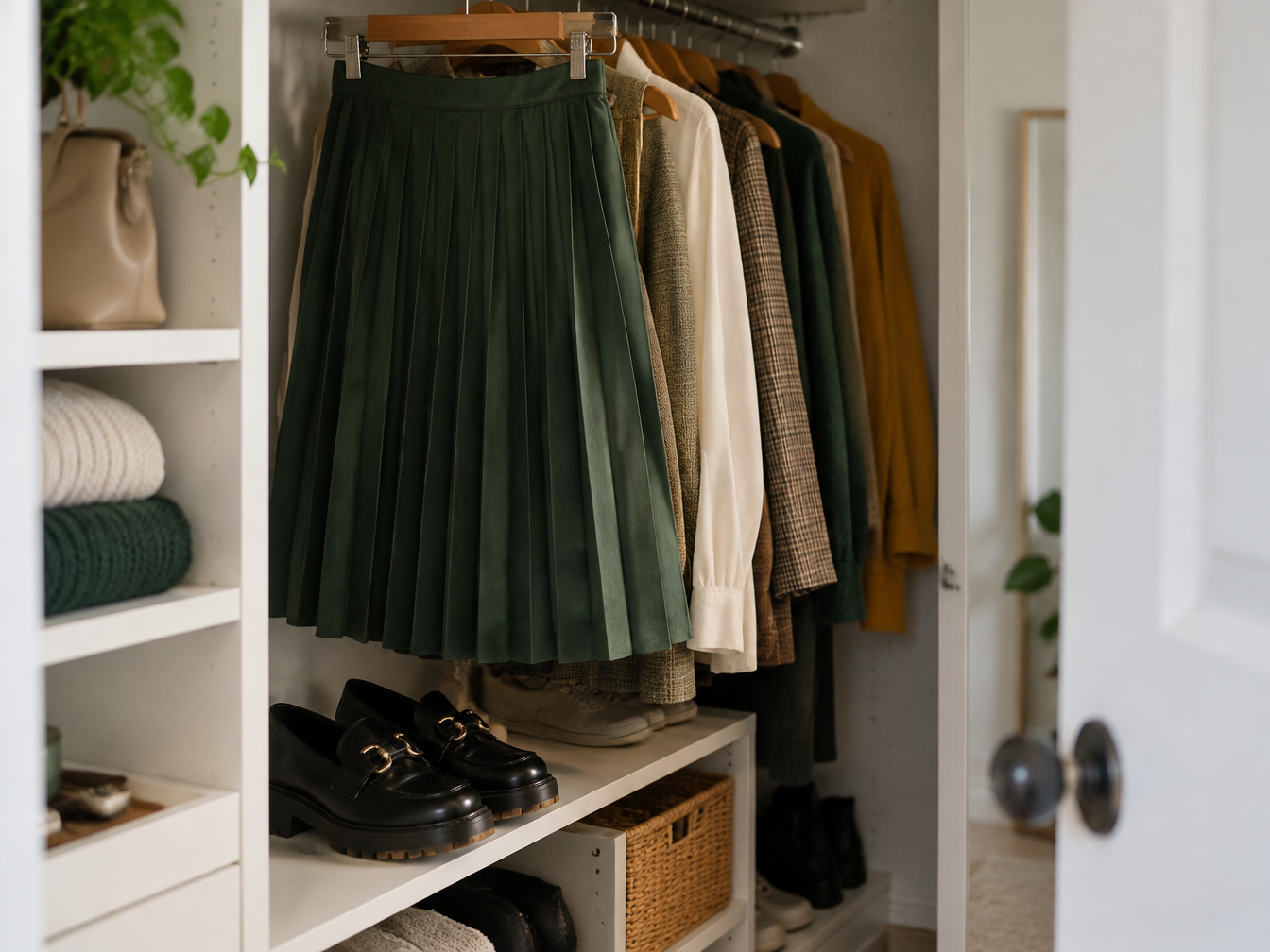
On day three, Maya sent a photo that made me laugh out loud in my kitchen. A long pleated skirt in a deep green, a fitted black turtleneck, and the chunky loafers I bought once and never wore because I decided they were “too much.”
I hated it for the first ten minutes. Then I walked past a shop window and caught my own reflection by accident, before I had time to arrange my face. And I looked like someone who knew where she was going.
It stopped me on the pavement. That woman in the glass was not a stranger. She was a version of me I had been quietly keeping in a drawer.
The skirt, the turtleneck, and the loafers were all mine. I had picked each one, paid for each one, and then never let them meet. It took someone else to introduce them.
What My Friend Could See That I Couldn’t

I asked Maya later how she chose. I expected a clever answer about colors and silhouettes. She shrugged and said, “I just picked what you look like when you’re not trying to look like anyone.”
That sentence has lived in my head ever since.
There is research that explains why a friend might see us more clearly than we see ourselves. Psychologist Simine Vazire and her colleague Erika Carlson reviewed how different people perceive a person’s personality, and found that close friends and family tend to know us well, and that we have blind spots of our own. Traits like anxiety are obvious to us but not always to others, while others tend to rate our strengths higher than we do [2].
Vazire’s own summary is that to get a complete picture, you need both perspectives [2]. The same paper is honest about the limits, noting that close others can have reasons to bend their views, so a friend’s eye is not a final verdict.
Notice what that finding does not say. It does not say your friends are always right, and it does not say you should hand your taste over to a committee. It says there is more than one way to know a person, and one of them lives outside your own head.
I took that as permission rather than instruction. Maya was not the authority on my taste. She was just a second pair of eyes, and I had been relying on one pair for far too long. I wrote more about that long habit of copying and second guessing in how to find your personal style after years of copying everyone else, and this week felt like a living footnote to it.
The Week My Brain Finally Took a Break

I did not see this one coming. By midweek, my mornings had changed.
I woke up, opened the text, and got dressed. No negotiating. No trying on four options and returning to the black sweater. No standing at the closet with my coffee going cold.
Refinery29 reports that over half of Stitch Fix clients said they felt stressed or overwhelmed when choosing what to wear in 2023, and it describes the habit of constant outfit decisions as decision fatigue, a phrase credited to social psychologist Roy Baumeister [3]. I had always thought my morning dread was a personal flaw. It turns out it is a very common tired brain.
For five mornings in a row, I spent that mental energy on other things. I wrote. I made breakfast. I actually looked out the window.
By Thursday I noticed something odd. I was in a better mood before ten, and I had not changed my coffee, my sleep, or my workload. I had only removed one small decision from the stack.
That alone was worth the experiment. If your mornings feel heavy, it might not be your closet that is the problem. It might simply be the number of small decisions you are carrying before nine.
What Clothes Do to the Person Wearing Them
There is a deeper layer under all of this, and it took me until Friday to feel it.
In a well known paper, Hajo Adam and Adam Galinsky found that clothes affect the person wearing them through both what they symbolise and the physical experience of wearing them [4]. A white coat changed how people paid attention, but only because of what it meant to them and how it felt on their body.
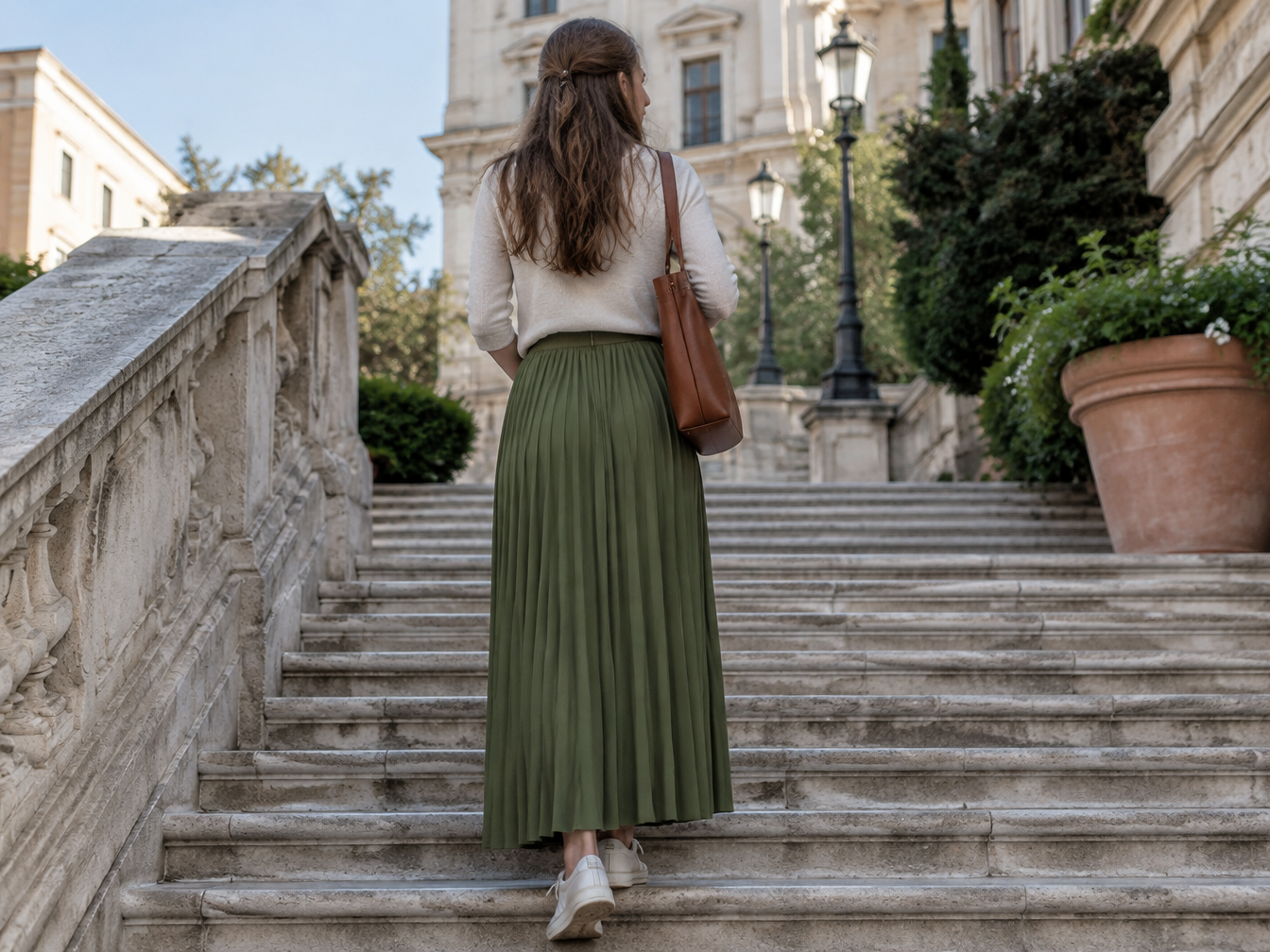
That fit my week perfectly. The green skirt meant “someone who has a plan,” and it also swished when I walked. Together, those two things changed how I stood. I noticed my shoulders dropped. I took the stairs two at a time.
This is the same feeling I chase when I reach for the outfit I wear when I need to feel like myself again. The difference was that I did not have to chase it this time. Someone handed it to me, and I only had to say yes.
What I Kept and What I Gave Back
By Sunday, I had worn seven outfits I would never have built alone, and I liked about five of them. That is not a perfect score, and I want to be honest about it. The mustard cardigan went back to the closet and has not been touched since. Some of the experiment was just a bad fit, and that is fine.
But the green skirt now lives near the front of the closet, and the loafers have walked more miles in a month than in the previous three years. I am less afraid of colors. I ask for a second opinion more often, and I ignore it more gracefully when it is not right.
I also notice that I get dressed slower now, in a good way. I look at a piece and ask what it might be saying instead of what it should hide. That small shift made my mornings feel less like damage control and more like a choice.
I also think more about the kind of courage a single piece of clothing can take, a feeling I explored in the red lipstick I was too scared to wear for ten years. The fear never lives in the object. It lives in the story we have told about who gets to wear it.
At the end of the week, Maya asked what I had learned. I told her the truth. I had thought my style was a fixed thing I was either good at or bad at. It turned out to be a conversation, and I had been talking to myself for years.
Next time you open your closet and feel nothing but doubt, hand your phone to someone who loves you. You might not like what they pick. But you will learn something about the woman they see, and she is usually braver than you think.

Sources
- Psychology Today. Have You Fallen Prey to the Spotlight Effect? Discussion of Gilovich and colleagues (2000).
- Association for Psychological Science (2011). Who knows you best? Not you, say psychologists. Reporting on Vazire and Carlson, Current Directions in Psychological Science.
- Refinery29. I Have Nothing To Wear! Yes, You Do, You Just Have Decision Fatigue.
- Adam, H. and Galinsky, A. D. (2012). Enclothed cognition. Journal of Experimental Social Psychology, 48(4), 918 to 925.
Leave a Reply