Last December I spent an entire evening in sweatpants because nobody was coming over. No party, no dinner, no video call with relatives, just me, a leftover pasta bowl, and a couch. Around nine o’clock I caught my reflection in the dark window and thought, quite clearly, “Wow. You look like you gave up.”
I had not given up. I was tired, and the invitation list for that night was empty, so I had quietly decided that nothing I wore mattered. It is a very specific kind of loneliness, the kind that convinces you to dress down for the only audience you cannot escape.
This year I am trying something different. I am getting dressed for my own company, on purpose, with no guest list at all. It started as a dare and turned into the best gift I have given myself in years.
The Night I Realized I Was Dressing for Everyone Except Me
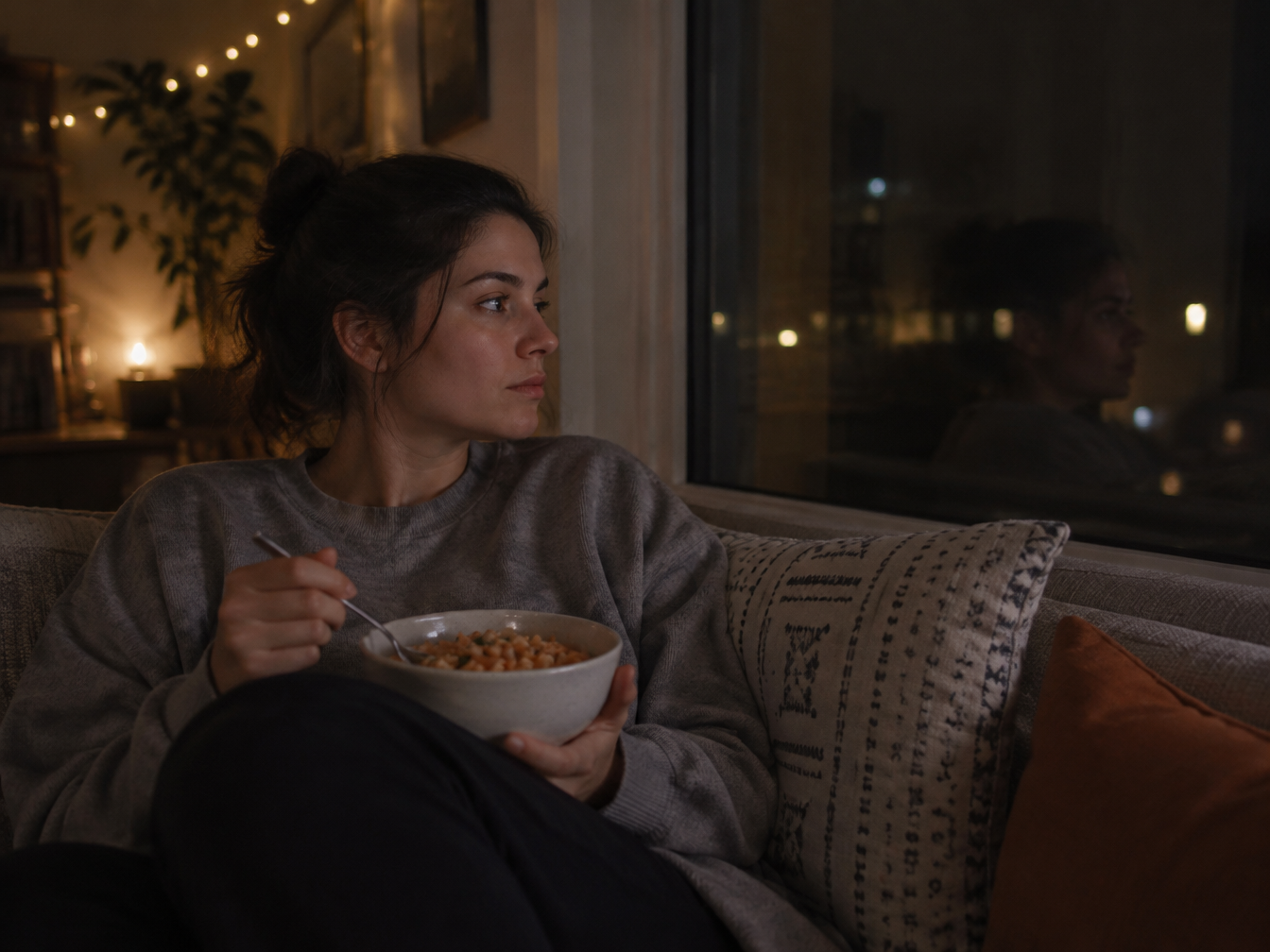
Think about how we get ready on a normal day. We pick clothes for the commute, the meeting, the date, the family photo. Our outfits answer to someone. Take the audience away and a lot of us stop making choices. We reach for whatever is soft, shapeless, and nearest.
There is nothing wrong with soft clothes. I live in them half the time. But I started noticing a pattern: on the days when I dressed for no one, I also felt like no one. The slump in my shoulders matched the slump in the fabric. I had spent years copying other people’s outfits and calling it taste, which is part of why I eventually wrote about how to find your personal style after years of copying everyone else, and the habit shows up most clearly on days when nobody is watching.
A psychologist at the University of Hertfordshire found that this is not just a personal quirk. In a study of one hundred women, more than half said they wore jeans when they felt depressed, while only a third said they would wear jeans when happy. Fifty-seven percent chose a baggy top in a low mood, compared with two percent in a good one [1]. We reach for the least intentional thing when we feel the least intentional.
What the Research Says About Putting on Your Favorite Dress
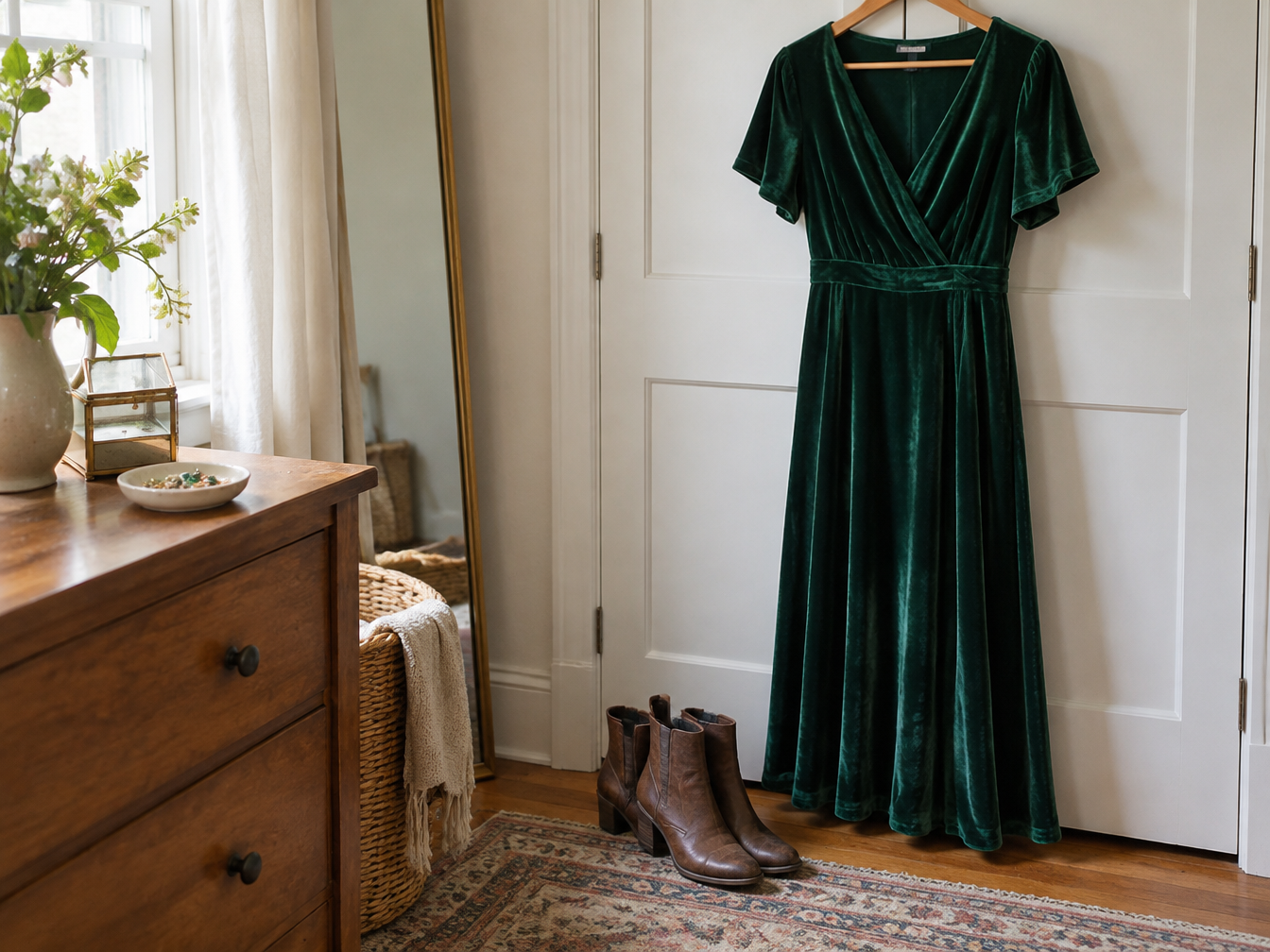
The same study found that women were ten times more likely to put on a favorite dress when happy (62%) than when depressed (6%). Five times as many wore their favorite shoes when happy than when low [1]. In other words, we save our best clothes for our best moods, and we leave them on the hanger exactly when we might need them most.
Professor Karen Pine, who led the work, pointed out the flip side: clothing does not only influence other people, it reflects and influences the wearer’s own mood. Many women in the study felt they could change how they felt by changing what they wore, and the “happy” clothes they described were well-cut, flattering, and made from bright, beautiful fabrics [1].
A separate line of research makes a related point. Psychologists Hajo Adam and Adam Galinsky coined the term “enclothed cognition” after finding that people who wore a white lab coat performed better on attention tasks, but only when they actually wore it and believed in what it meant [2]. The meaning and the wearing have to work together. A favorite dress hanging in the closet does nothing. A favorite dress on your body, on a quiet Tuesday, might.
Why Dressing for Yourself Feels So Strange at First

The first time I tried getting dressed with nobody to see, I felt ridiculous. I put on a silk blouse and a good pair of trousers to eat cereal in my own kitchen. My brain immediately supplied the heckling: who are you trying to impress?
That question is the whole problem. We have been trained to treat effort as a performance, so effort without an audience feels like pretending. The truth is that most people are too busy worrying about their own reflection to judge yours, a lesson I learned the hard way when I tested what people actually notice when you repeat an outfit. But I wondered what would happen if I treated it differently. What if the audience was me? What if getting dressed was not a show but a small act of respect, the same way you might light a candle or set a nice table for one?
It took about four days for the heckling voice to fade. By day five, I noticed I was standing straighter in the kitchen. By day seven, I caught myself humming. I would love to say there was a dramatic breakthrough, but there was not. It was a quiet shift, like a room warming up.
My Rules for a Holiday Outfit With No Audience
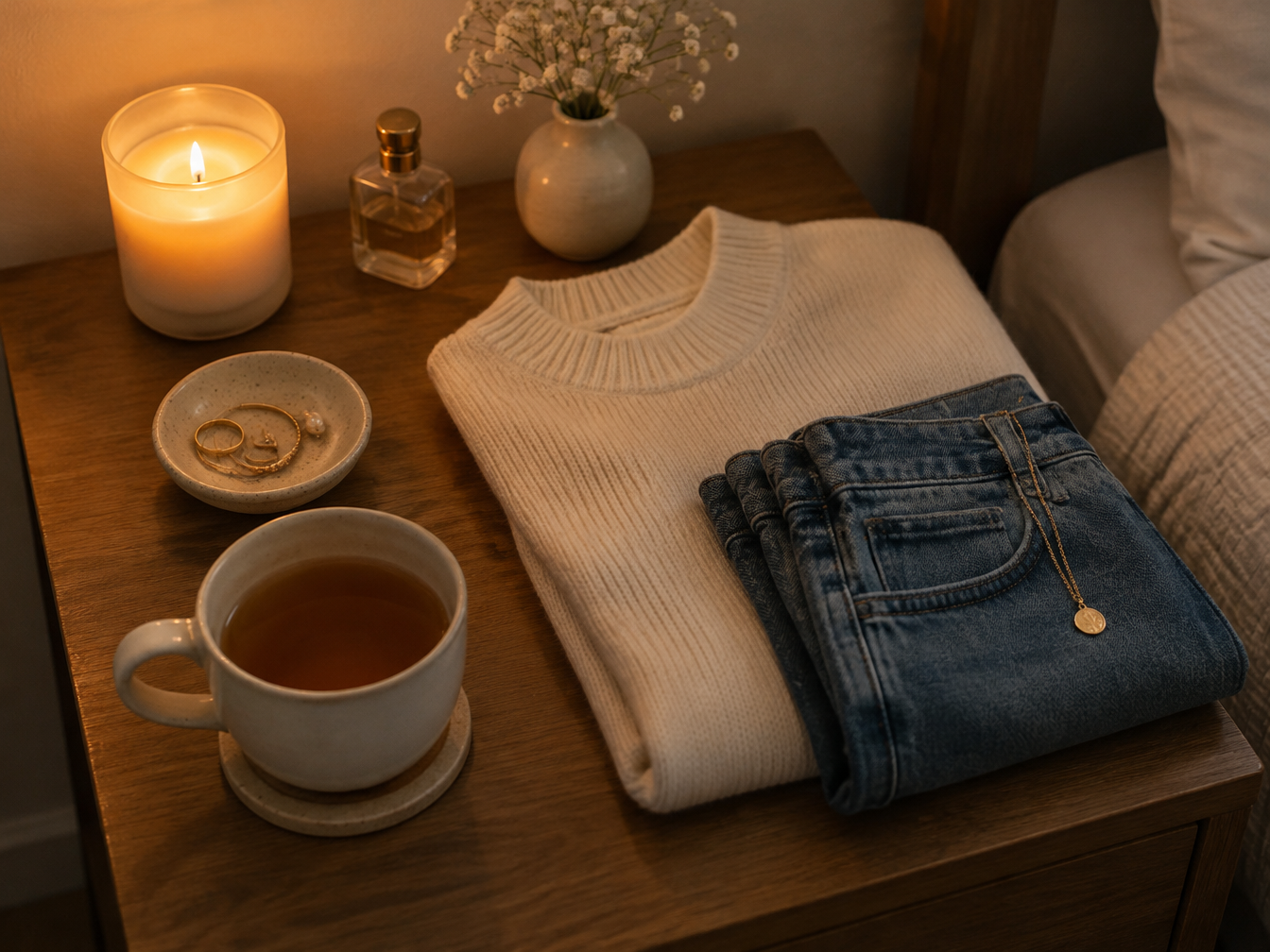
I made a few small rules, because rules help me when I am shy about something. They are very easy to bend, so please take what you like.
First, the outfit has to be something I would be happy to be photographed in, even if no photo happens. Second, it has to feel good against my skin, because nobody else is judging the seams. Third, I add one thing that is just for me, whether that is perfume, a ring I love, or a lipstick shade that feels like a secret.
I borrowed the idea for the third rule from a ritual I practice on Sundays. I have written about why I keep a self-care Sunday even when it feels like another chore, and one thing I learned there is that ritual makes small acts feel meaningful. A candle, a bath, a set of clothes laid out the night before. None of it is revolutionary. All of it says, quietly, that I count. On the busiest weeks I shrink the ritual instead of skipping it: one song, one good layer, one minute of looking at myself with something kinder than a critique.

The Makeup Question Nobody Asks Out Loud
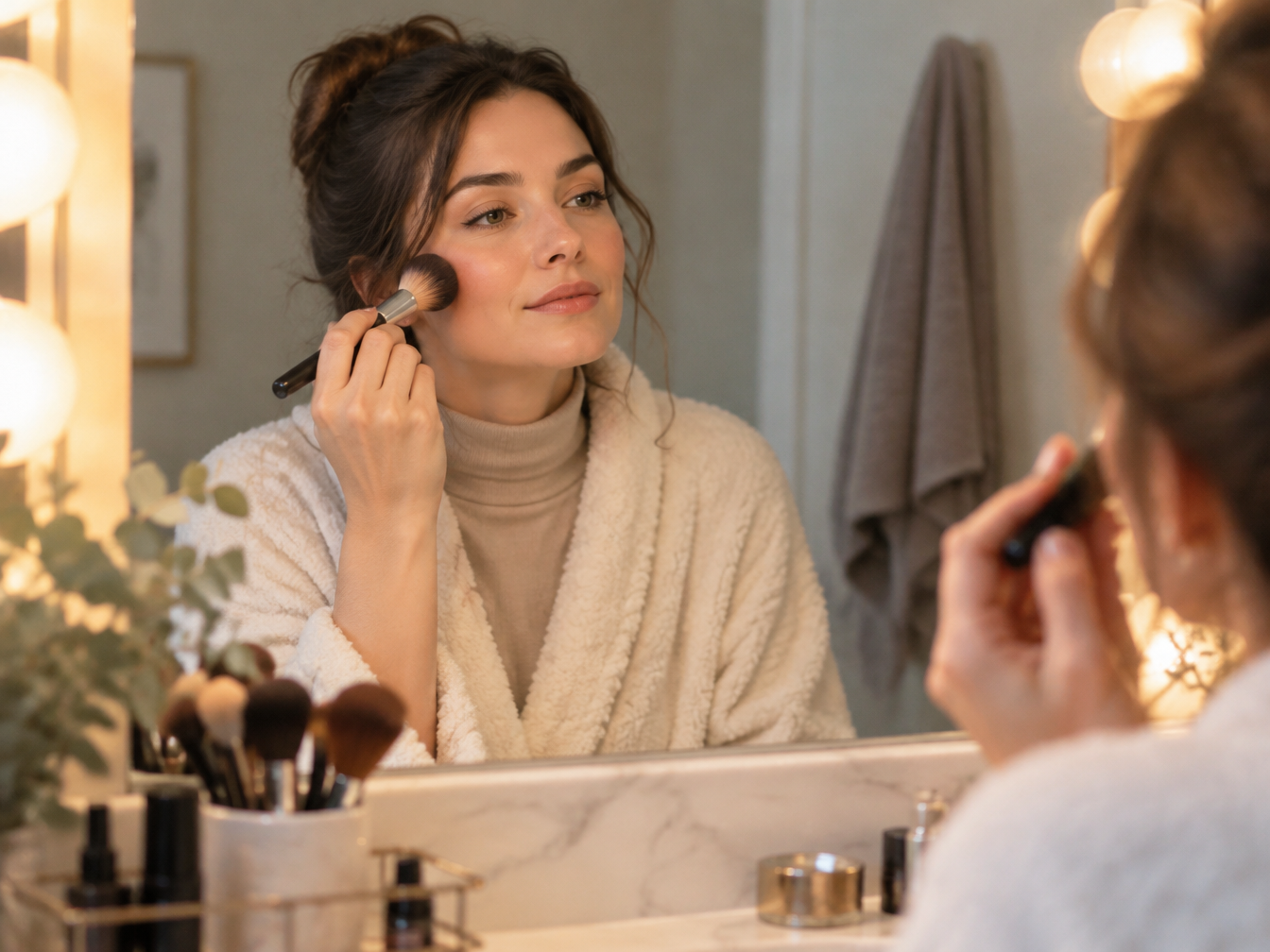
Makeup is the part where many of us flinch. If nobody is coming, why bother? I had a version of that thought myself. After thirty days without any makeup, I wrote about what I found out I was actually hiding. The lesson was not that makeup is bad or good. It was that I needed to know why I was reaching for it.
So for my own-company evenings, I use makeup differently. I skip the full routine meant to impress strangers. Instead I choose the one thing that makes me feel most awake: a swipe of cheek color, a brushed-up brow, a bit of tinted gloss. Think of it as a nod to yourself in the mirror, gentle and easy to do in five minutes, with a mood closer to a candle than a spotlight.
The goal is not to look different. The goal is to arrive at yourself, as if you were the guest.
I also pay attention to how it feels when I take it off at night. On the evenings I put in a little effort, washing my face feels like the end of a good day rather than the removal of evidence. That small difference, being finished instead of erased, has made my whole routine feel kinder than it used to be. If makeup is not your thing at all, swap it for the part of your routine that feels most like care: a hand cream you love, a hair oil, a few minutes with a good brush.
What Happens When You Treat a Quiet Night Like an Occasion
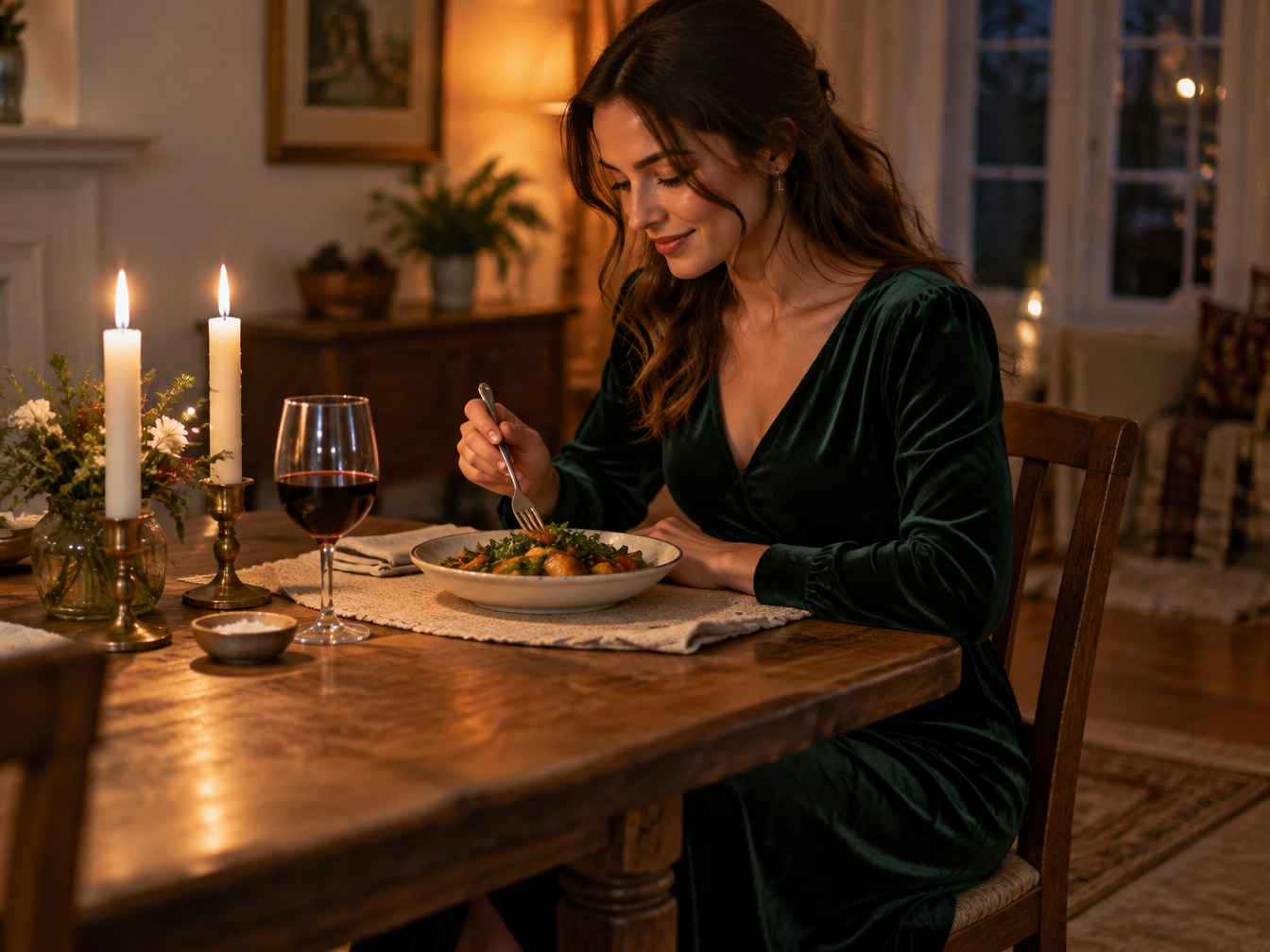
I tried this on a Wednesday. Nothing was happening, and I will admit I almost talked myself out of it twice. I put on a deep green velvet dress I had bought for a holiday party and never worn, because, true to form, the party had been canceled. I made a simple dinner, lit two candles, and ate at the real table instead of the couch.
It was one of the nicest evenings I had had in months. When I finally sat down, I noticed that I was eating more slowly, tasting the food, and not scrolling through my phone. The outfit had changed the pace of the whole night, the way a good song changes the speed of a drive. The dinner was not special. The dress was not special. What was special was the feeling of being a person worth setting the table for. I even put on music and danced between the stove and the sink, which I will deny if you ask me in public.
That dress, by the way, was the one I once described in a piece about the holiday party dress I bought to impress someone who wasn’t even invited. It turns out the person I was supposed to impress with it was the one who eventually wore it.
How to Start Without Feeling Silly
If this sounds appealing but also faintly embarrassing, I get it. Here is how I would begin if I were starting again.
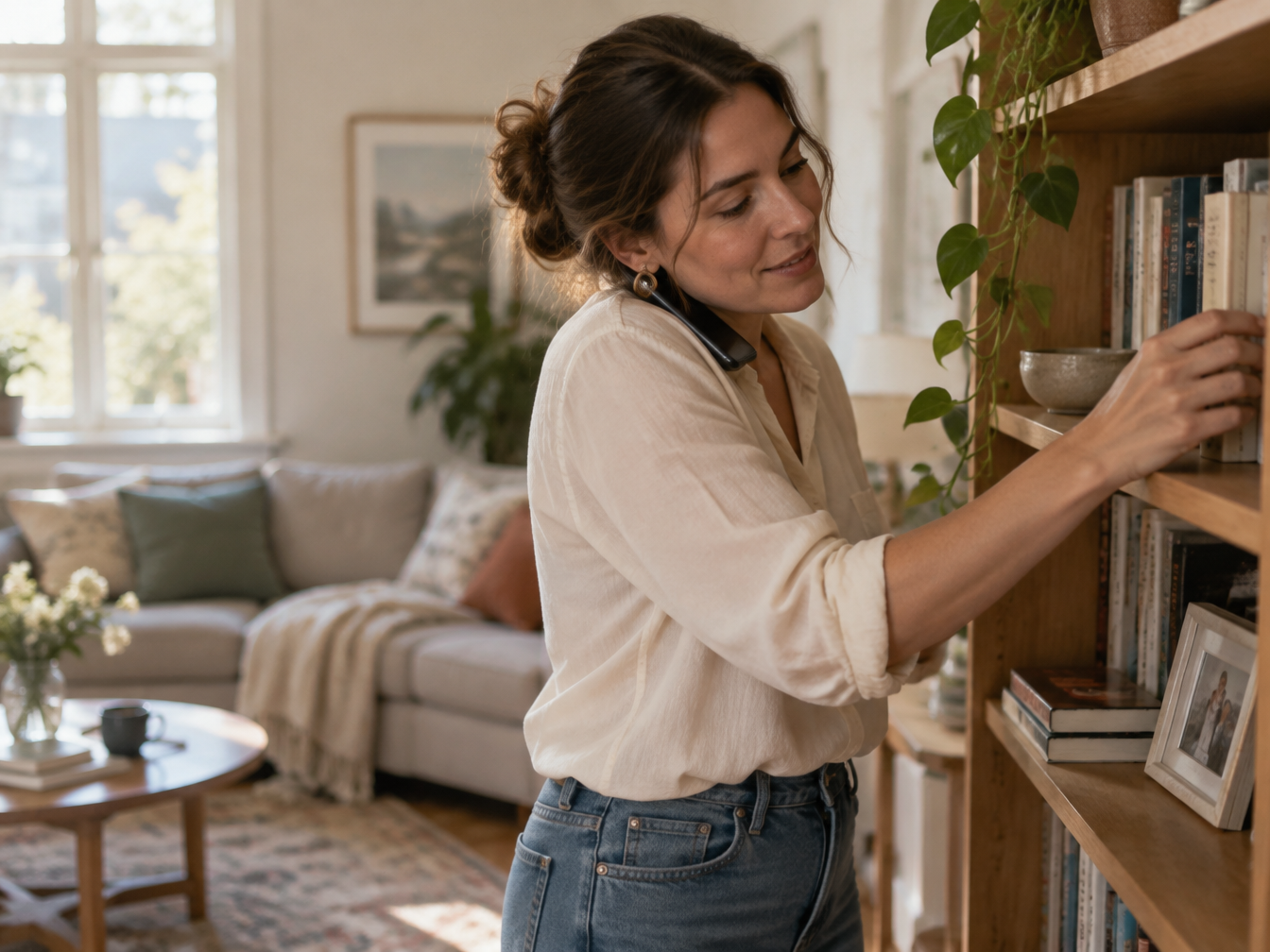
Pick one night this week, maybe the quietest one on your calendar. Choose the outfit the day before so you are not making decisions while tired. Wear one piece you normally save, whether it is the blouse, the boots, or the good earrings. Then do one ordinary thing in it: cook, read, call a friend, tidy a shelf. Do not do anything fancy. The point is for the clothes to meet an ordinary life.
If you struggle to know what you would even want to wear, start with the piece you reach for when you feel most like yourself and build the outfit around it. A soft, glowing face to match, nothing more than a little color and a good moisturizer, finishes the picture without much effort. Give yourself ten minutes and a song you love.
Notice what happens in your body. Notice whether your shoulders drop, your breath slows, your posture changes. You do not have to love every minute. You only have to be curious.
The Gift That Does Not Need Wrapping
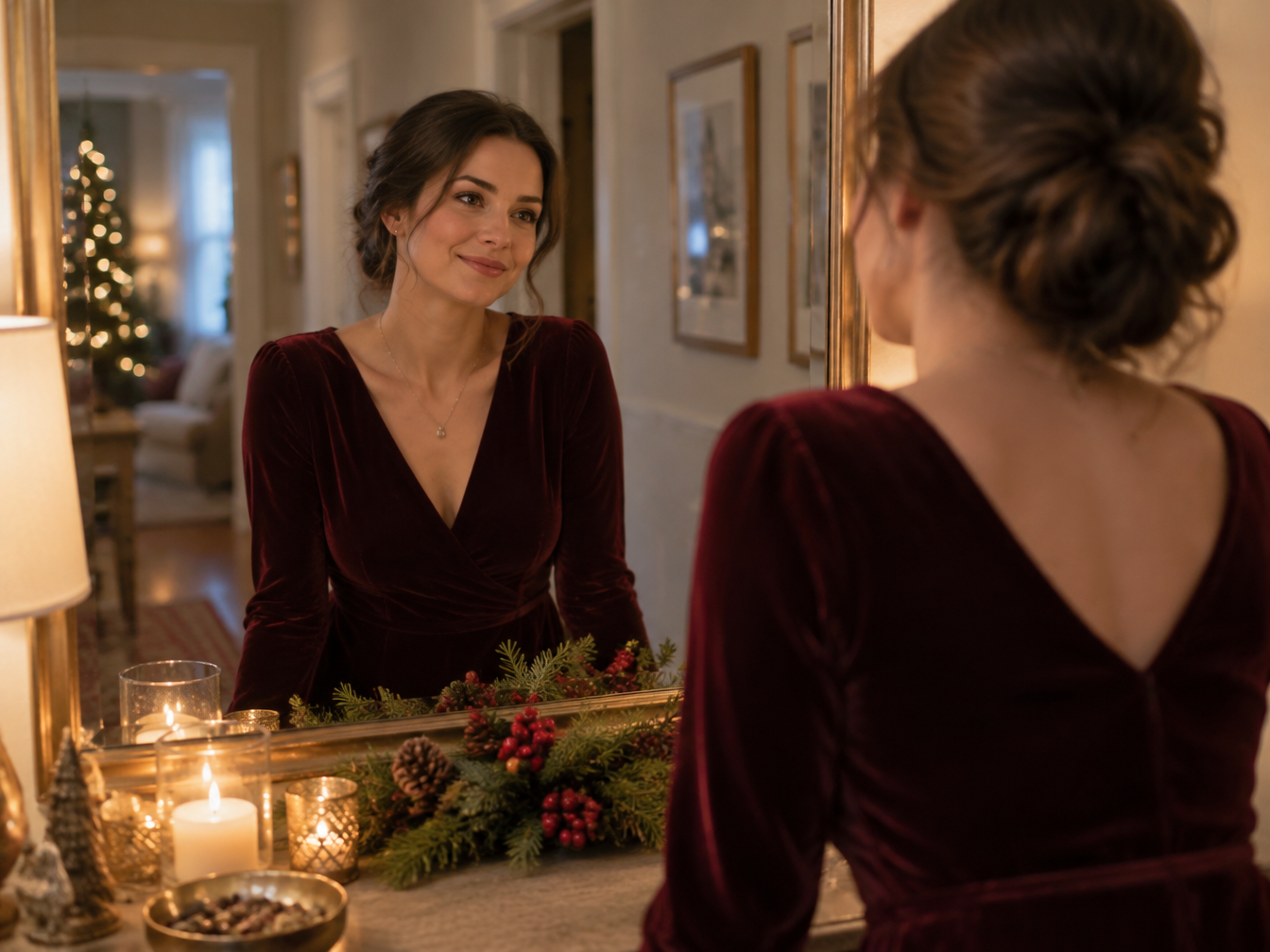
The holidays are loud. They come with expectations about gifts, guests, and gatherings, and they can make a quiet night feel like a failure. But I have started to think of getting dressed as a present that costs nothing and can be given any evening you choose.
I used to believe that presentation was for other people. Now I think it is also for the person who has to live in my skin every single day. She deserves a good outfit. She deserves a nice dinner. She deserves to be looked at kindly, starting with my own eyes in the mirror.
I even found, to my surprise, that this practice changed how I felt about being seen. I wrote about how I learned to love my face in photos, and I think this is the same muscle. Once you learn to meet yourself with kindness in private, the camera loses some of its power.
So if your calendar is empty this December, do not wait for an invitation. Put on the dress. Light the candles. Be the guest you were hoping would arrive.
Sources
- Happiness: it’s not in the jeans, ScienceDaily (University of Hertfordshire), https://www.sciencedaily.com/releases/2012/03/120308062537.htm
- Introducing “enclothed cognition” – how what we wear affects how we think, The British Psychological Society, https://www.bps.org.uk/2012/03/01/introducing-enclothed-cognition-how-what-we-wear-affects-how-we-think
Leave a Reply