There is a particular joy in walking through a gate and agreeing, with a few thousand strangers, to pretend it is another century. Nobody checks your résumé. Nobody cares about your phone. You are simply a bard, a baker or a baroness for the day, and the only requirement is that you commit.
If you are heading to your first Renaissance fair, the wardrobe question can feel bigger than the event. These Renaissance fair outfit ideas break it down into simple personas, practical pieces and comfort fixes, so you can dress for the fantasy without suffering through the heat.
Start With a Character
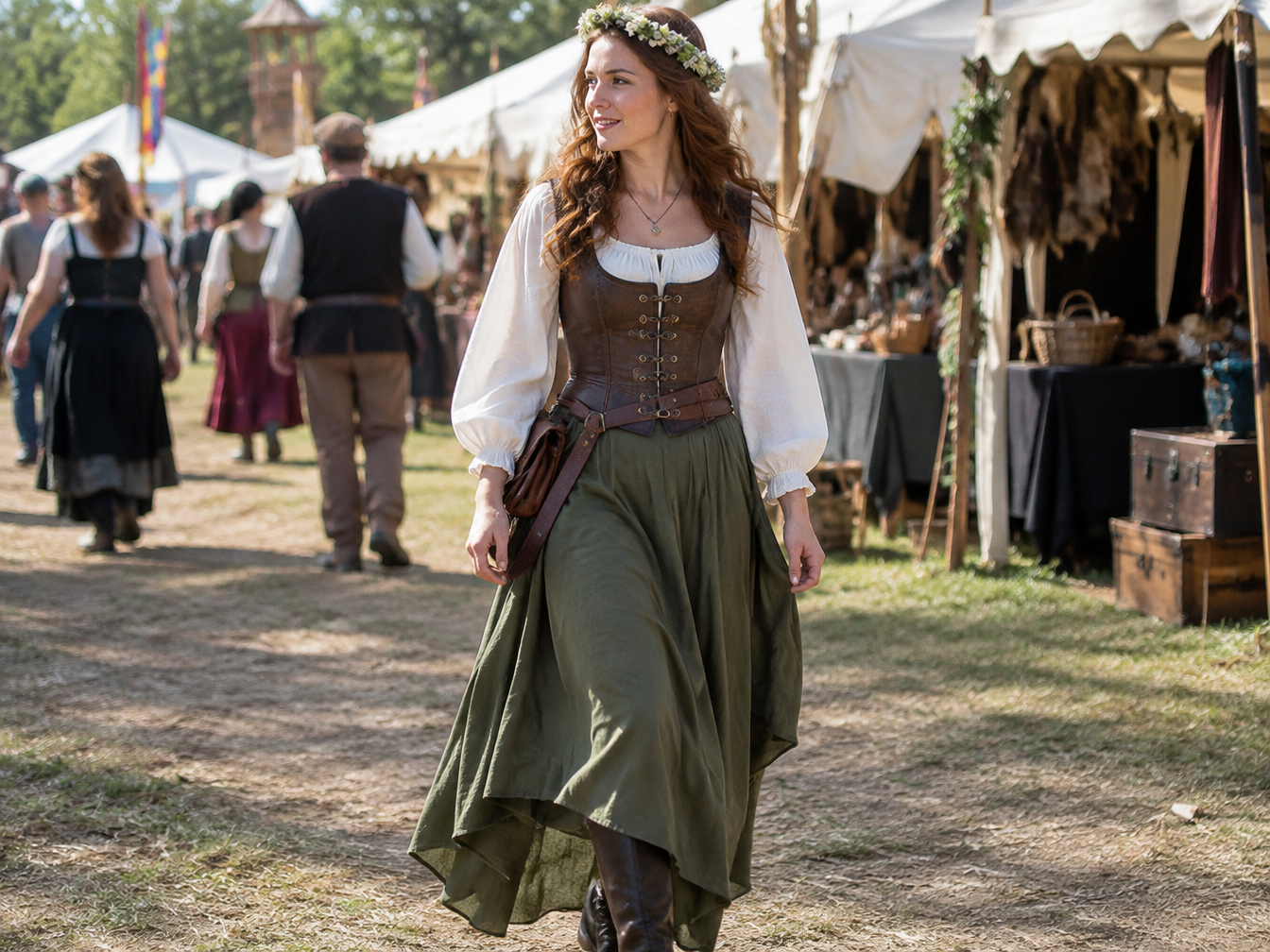
The easiest way to plan is to pick a persona. French Meadows suggests starting with a character such as a woodland maiden, tavern wench, elven princess or royal, and building the outfit around it [1]. Fizzy explains that Ren faires mix history, fantasy and theater, so almost any medieval, magical or playful look works, and that you should choose something that suits your comfort level and energy for the day [2].
That freedom is the best part. You do not have to be historically accurate, and you do not have to choose just one era. A fairy can stand beside a pirate, and nobody will blink.
Think about how much attention you want. A peasant is easy to wear and easy to eat in. A noble is more dramatic and takes more effort. A fantasy character, like an elf or a witch, sits somewhere in the middle and gives you the most room to play.
Also consider your company. A group costume, such as a band of travelers or a royal court, is more fun than a solo outfit, and it gives everyone a reason to take photos together. If you are going alone, a character with props, such as a bard with an instrument or a merchant with a pouch, gives you something to hold and talk about.
Whatever you choose, write down three words that describe it, such as earthy, regal or mischievous. Those words will guide every shopping decision.
The Classic Base Layer
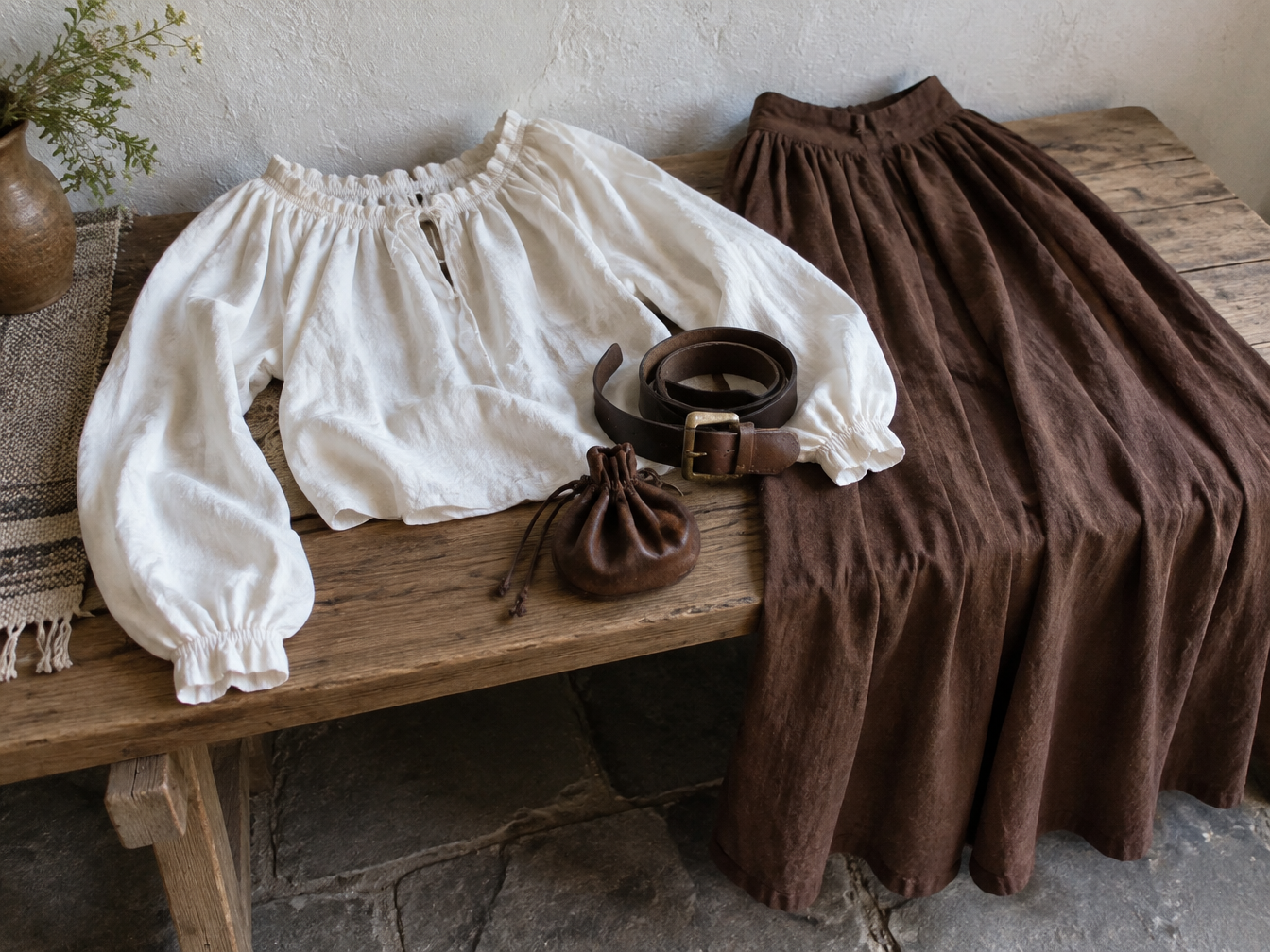
Most outfits begin with the same foundation. French Meadows calls a corset, chemise and skirt the traditional Ren faire base, and notes that a corset over a linen chemise also works [1]. Fizzy’s basics are a loose, natural-fabric top, a long skirt or wide trousers, a belt and a small bag, in earthy or jewel tones, avoiding bright modern prints [2].
The chemise is the hero. The Cold Wire describes it as a basic dress with some stretch for comfort, ideally in white or off-white [3]. It is cheap, breathable and works under almost anything. It also layers well, so you can add a vest, a bodice or a cloak on top.
A corset adds shape, but it should not make eating a chore. Fizzy recommends a comfortable, flexible corset with adjustable laces so you can still eat and drink easily [2]. The Cold Wire warns that an all-in-one corset dress is easy to put on, but the corset is fixed, so sizing matters [3].
For a quick start, a long skirt, a white blouse and a wide belt will do the job. Add a pouch or a scarf, and you look ready for the lanes. This is also a good budget route, because you probably own half of it already.
If you like the soft, romantic side of this style, our guide to boho and hippie fashion has flowing skirts and layered textures that translate well to a faire.
Peasant, Tavern and Bohemian Looks
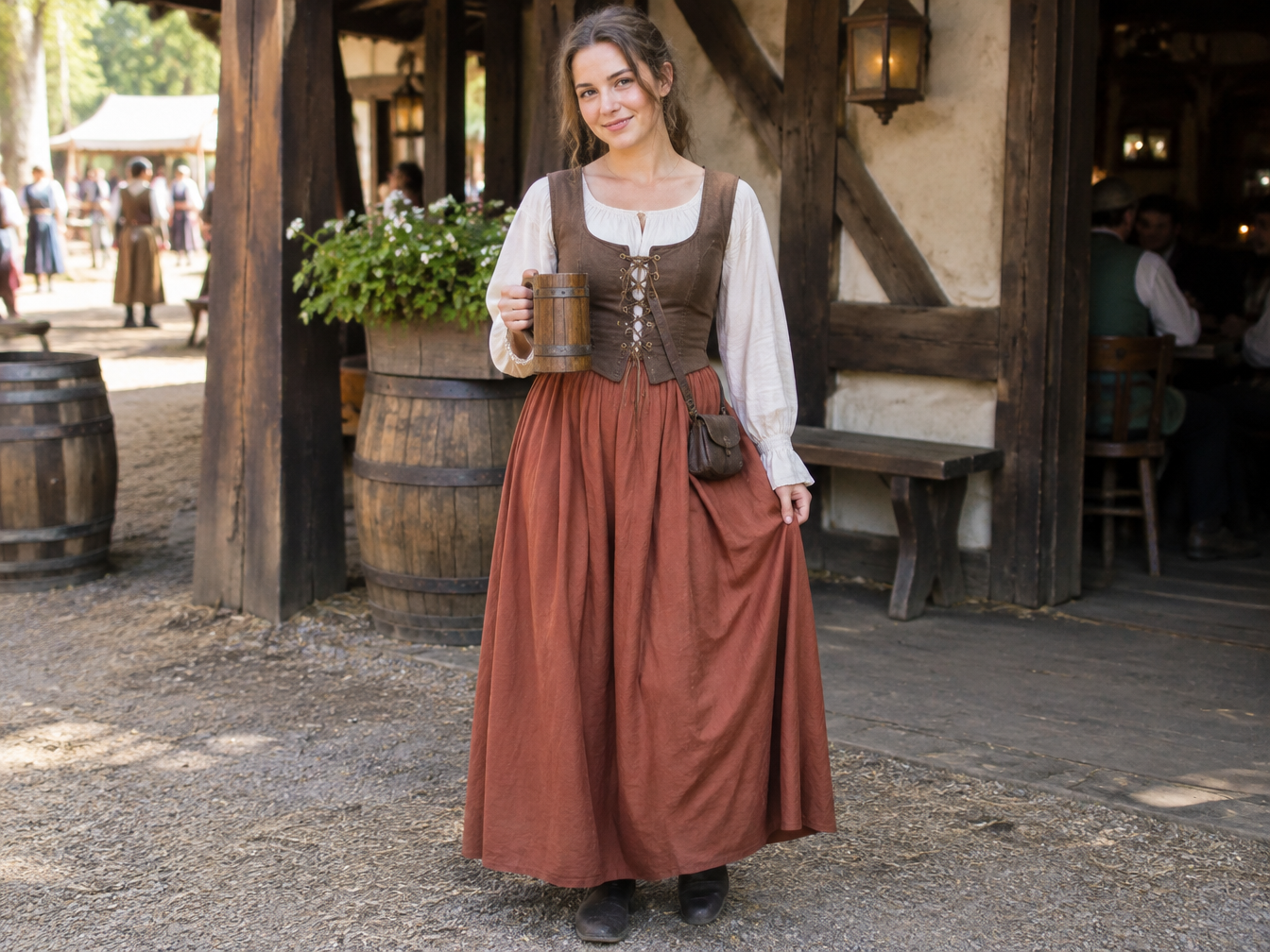
The simplest costumes are also the most comfortable. Classpop describes the peasant girl look as a plain blouse, bodice and full skirt in muted colors, accessorized with a leather belt, a basket of faux produce, a linen apron or a headscarf [4]. French Meadows says linen skirts and simple chemises suit peasants and merchants, and cotton skirts suit farmhands and traveling bards [1].
For a bohemian wanderer, French Meadows suggests a cotton chemise with a flowy skirt and boots, which suits a performer or traveler [1]. The Cold Wire likes an off-white peasant dress with flared sleeves for a breezy, versatile option that suits a peasant or tavern worker, and an upscale peasant look with a trumpet-sleeve top, pleated skirt and an optional flower crown [3].
These looks work well for beginners. They are forgiving in fit, forgiving in heat and forgiving in budget. A resale shop is a great place to find a long skirt, a linen blouse and a leather belt.

If you want to add a little edge, add a vest or a shawl in a dark color. It breaks up the plain base and gives you somewhere to attach a pouch or brooch.
For a fully modest, family-friendly outfit, choose a high-neck blouse, a long skirt and a headscarf. It is authentic, and it keeps the sun off your skin all day.
Our guide to victorian fashion inspiration is also worth a look if you like high collars and layered textures.
Noble, Royal and Regal Looks
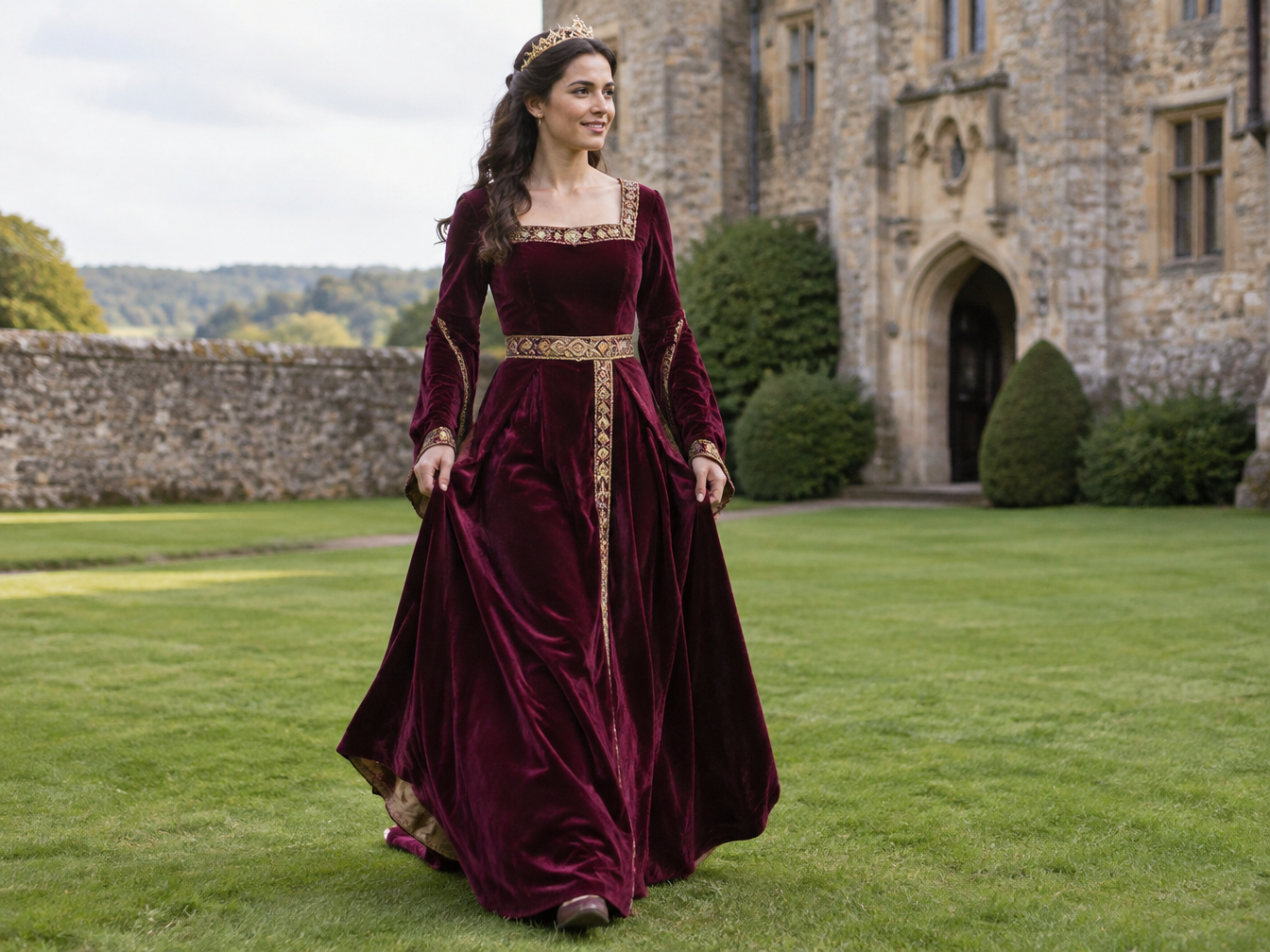
If you want to stand out, go noble. Classpop describes the noblewoman as a richly structured gown in luxe fabrics like velvet, often in bold red, finished with a jeweled circlet or pearl headpiece [4]. The Cold Wire explains that a richly colored gown, such as blue lined with red, suits a noblewoman because wealthier people could afford bolder dyes [3].
French Meadows suggests choosing an era for a more polished look: Tudor and Elizabethan stays for a regal feel, Rococo styles for an opulent eighteenth-century look, and Regency stays with a silk chemise for something lighter [1]. It also lists brocade, jacquard or velvet bodices and chiffon chemises for formal or royal looks [1].
A noble outfit works best when the details are consistent. A velvet bodice, a satin skirt and pearl jewelry belong together, while a cotton sundress with a plastic crown does not. If you cannot afford a full gown, a single rich piece, such as a velvet cloak over simple clothes, hints at nobility.
Our guide to rococo outfit ideas that look expensive on any budget explains how to get that opulent feel with thrifted pieces and a few smart accessories.
For hair, Classpop suggests braids in several styles, with fishtail or snake braids pairing well with noblewoman gowns, and braided buns or updos accented with a jeweled comb or tiara [4]. Many faires also offer braiding stations, so you can have it done on the day [4].
Fantasy, Fairy and Pirate Looks
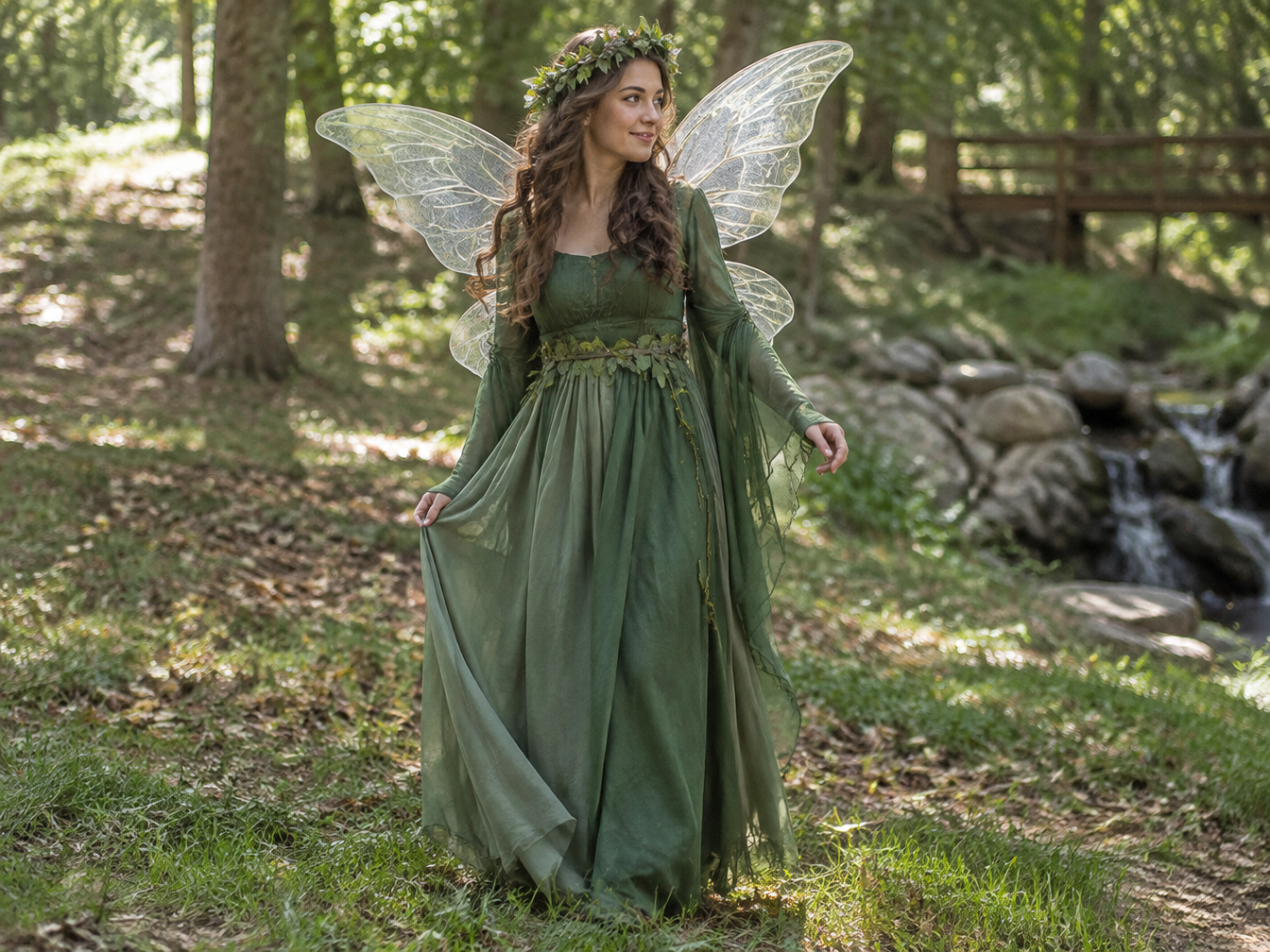
Not every costume needs to be historical. Classpop’s forest fairy look pairs a loose, earthy-toned dress with a corset, wings, a flower crown, sparkly makeup, and pointed ears or a shimmery cloak [4]. The Cold Wire suggests an elvish dress in green, which is fine at most fairs unless they stage strict historical reenactments, and can pass as a noblewoman’s dress [3].
For something darker, the Cold Wire lists a gothic blouse with full sleeves and a black gothic dress with flared sleeves and a belt [3]. French Meadows offers a range of aesthetics, from cottagecore and pirate to faerie, elf, halfling, princess and witch [1].
A pirate look is the easiest group costume. The Cold Wire notes it is less conservative than medieval dress and comes with fun props, though you should consider the weather [3]. A scabbard works for pirates and a potion bottle for witches or faeries, says French Meadows [1].
Fantasy costumes are also kind to budgets. Wings, ears and a crown can sit on top of an ordinary dress, so you can build the look in layers. A flower crown and a green skirt make a decent woodland fairy in under an hour.
Always keep it modest and practical. Long skirts, covered shoulders and closed-toe shoes protect you from sun and mud. If a corset is part of your look, our guide to black corset costume ideas shows how to wear one over a blouse so it stays comfortable and covered.
Men’s and Group Costumes
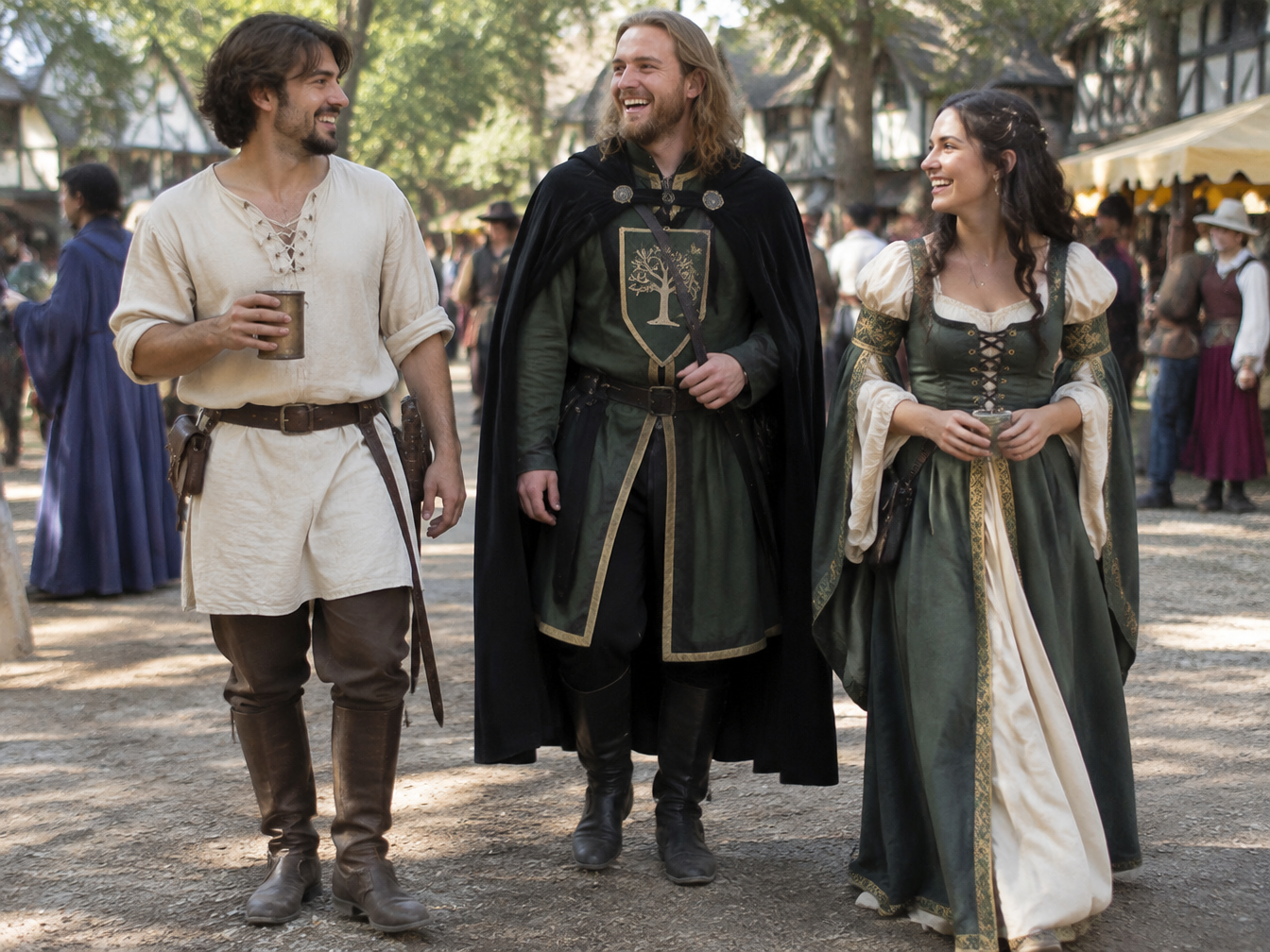
Everyone can join in. Classpop lists a knight as a tunic, fitted doublet, loose breeches, wide belt and a helmet or headpiece, with armor optional, a wizard as a long flowing robe with a wide-brimmed hat and staff, and a jester as a patchwork coat in clashing colors with solid breeches [4]. The Cold Wire’s ideas include brown ankle-cuff pants with drawstring waists, a cotton lace-up shirt that works for nobles or Vikings, and a brown lace-up vest for a peasant, huntsman or trapper [3].
For a kilt, it suggests a lace-up Jacobite-style shirt, and for a rogue, a hood, armor pieces and belts [3]. A simple tavern look is a one-piece vest with attached sleeves and separate pants, which suits a merchant or tavern-goer [3].
Group outfits are easy to coordinate. A tavern keeper, a bard, a knight and a wizard make a great party, and everyone gets a distinct role. Choose a shared color palette so photos look cohesive.
Children can join in, too. A tunic, a belt and a cloak make a small knight, and a flower crown and a dress make a fairy. Keep costumes comfortable, and let them wear their own shoes.
If you wear a hat, make it wide-brimmed to keep the sun off your neck. A bandana or a hood also works in a pinch.
Hair and Makeup for the Fair
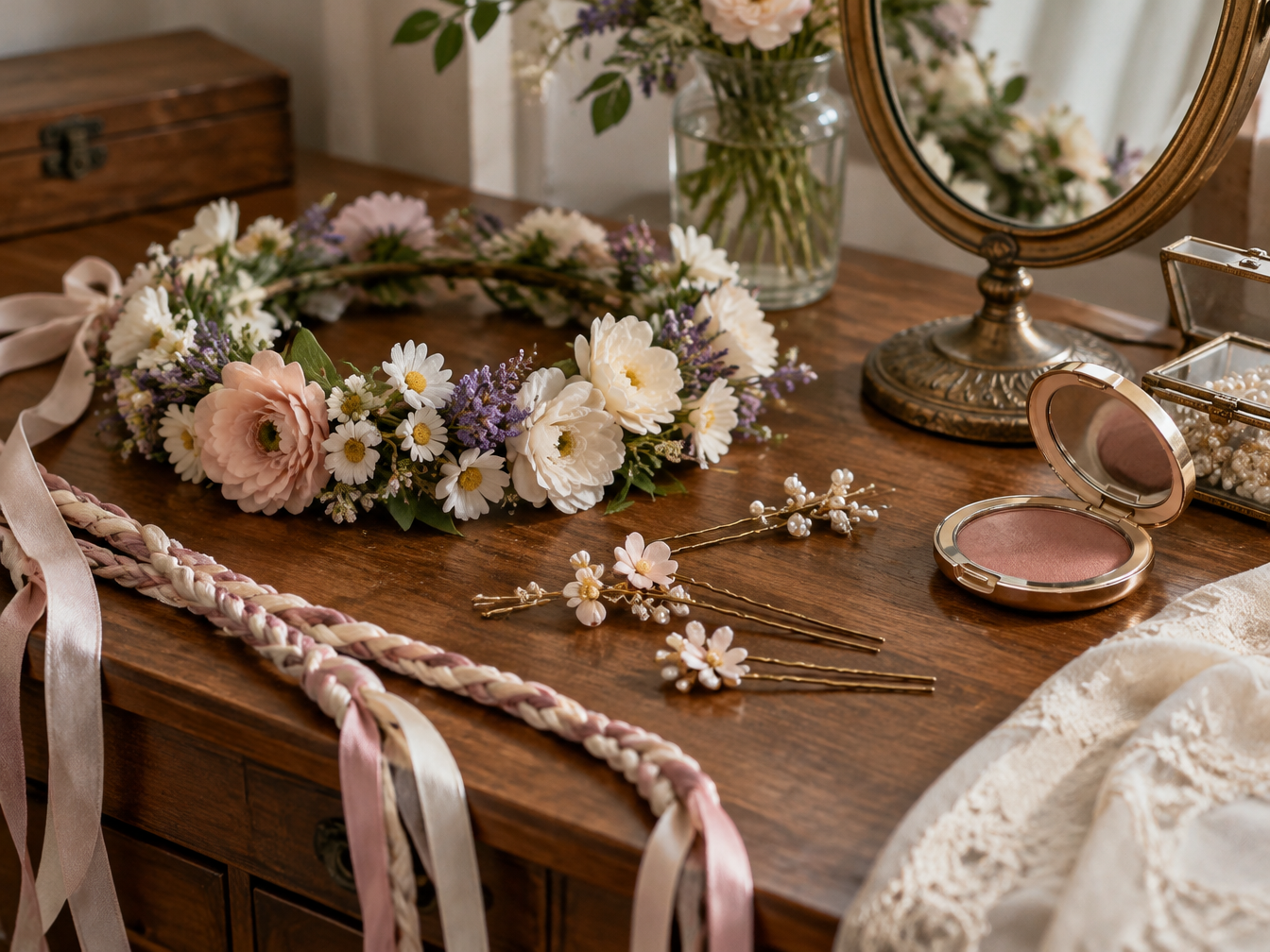
Hair is the cheapest way to complete a costume. Classpop suggests loose, flowing waves decorated with jeweled clips or fresh flowers, with a heat-free method of braiding damp hair overnight to create the texture [4]. For an updo, it recommends braided buns or box-braid updos secured with extra pins and setting spray, accented with a jeweled comb or tiara [4]. Waterfall braids suit fairy looks [4].
Fairs are windy, dusty and warm, so choose styles that hold. A simple low bun or a pair of braids will outlast loose curls. Our guide to easy bun hairstyles has quick options that stay put, and a ribbon or flower tucked into the knot makes it feel period-appropriate.
Makeup can be light. A little shimmer on the cheekbones and a rosy lip suit most characters, and glitter works for fairies and elves. Use waterproof formulas if you plan to be outside all day, and bring a small mirror and lip balm in your pouch.
Do not forget sun protection. A wide-brimmed hat, a scarf or a flower crown with sunscreen underneath keeps you from burning, and a fan tucked into your belt gives you some relief on the hottest afternoons.
Comfort, Shoes and Accessories
The best outfit is the one you can wear for eight hours. The Cold Wire’s comfort tips are to choose stretchy or breathable fabrics, pick short or open sleeves or rollable sleeves for hot weather, use drawstring waistbands for room after big meals, check corset sizing carefully, and layer pieces you can remove as the day warms up [3].
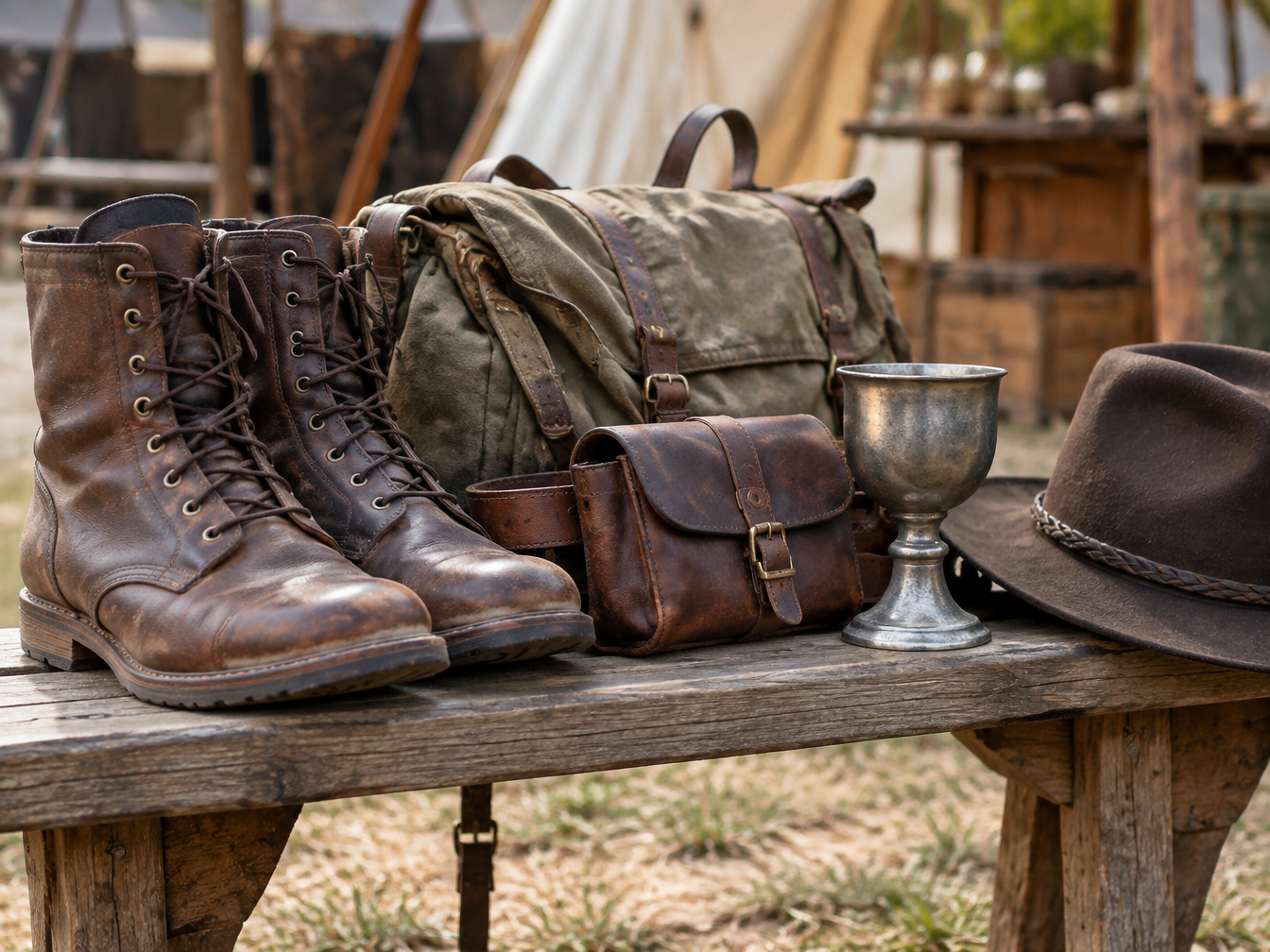
Shoes matter. Fizzy says festival grounds are often grass, dirt or gravel, so choose sturdy closed-toe footwear like ankle or combat boots, and avoid delicate shoes and white sneakers [2]. Break in your boots before the day.
French Meadows lists a handful of practical accessories: a black or brown belt as the base for most accessories, a drawstring pouch that works as a pocket substitute, skirt hikes that lift your hem out of dust and mud, a mug holder and a fan holder for hot weather [1].
Fizzy has a nice piece of advice for beginners: ease in by starting with accessories or a subtle outfit, and wear your costume at home a few times so it feels natural [2]. Going with friends helps, too [2].
Pack sunscreen, a water bottle, a small first aid kit and some cash. Check the fair’s rules on props and weapons, since many ban real blades.
The best Renaissance outfit is not the most accurate one. It is the one that lets you laugh in a crowd, eat a turkey leg and feel like you belong.
Sources
- What to Wear to a Renaissance Fair, French Meadows
- What to Wear to Your First Renaissance Festival, Fizzy
- What to Wear to a Renaissance Fair, The Cold Wire
- 9 Classic Renaissance Faire Costume Ideas, Classpop
Leave a Reply