Somewhere around the third snooze, you make a deal with yourself. You will not wash your hair. You will not fight with a brush for ten minutes. You will pull everything up, twist it, and walk out the door looking like someone who has her life together. The bun is the hairstyle that keeps that promise.
It is also one of the few styles that works on every length, every texture and every kind of day. Here are the easiest bun styles worth learning, plus the small tricks that keep them from collapsing by lunch.
Why the Bun Is the Hairstyle You Can Always Count On
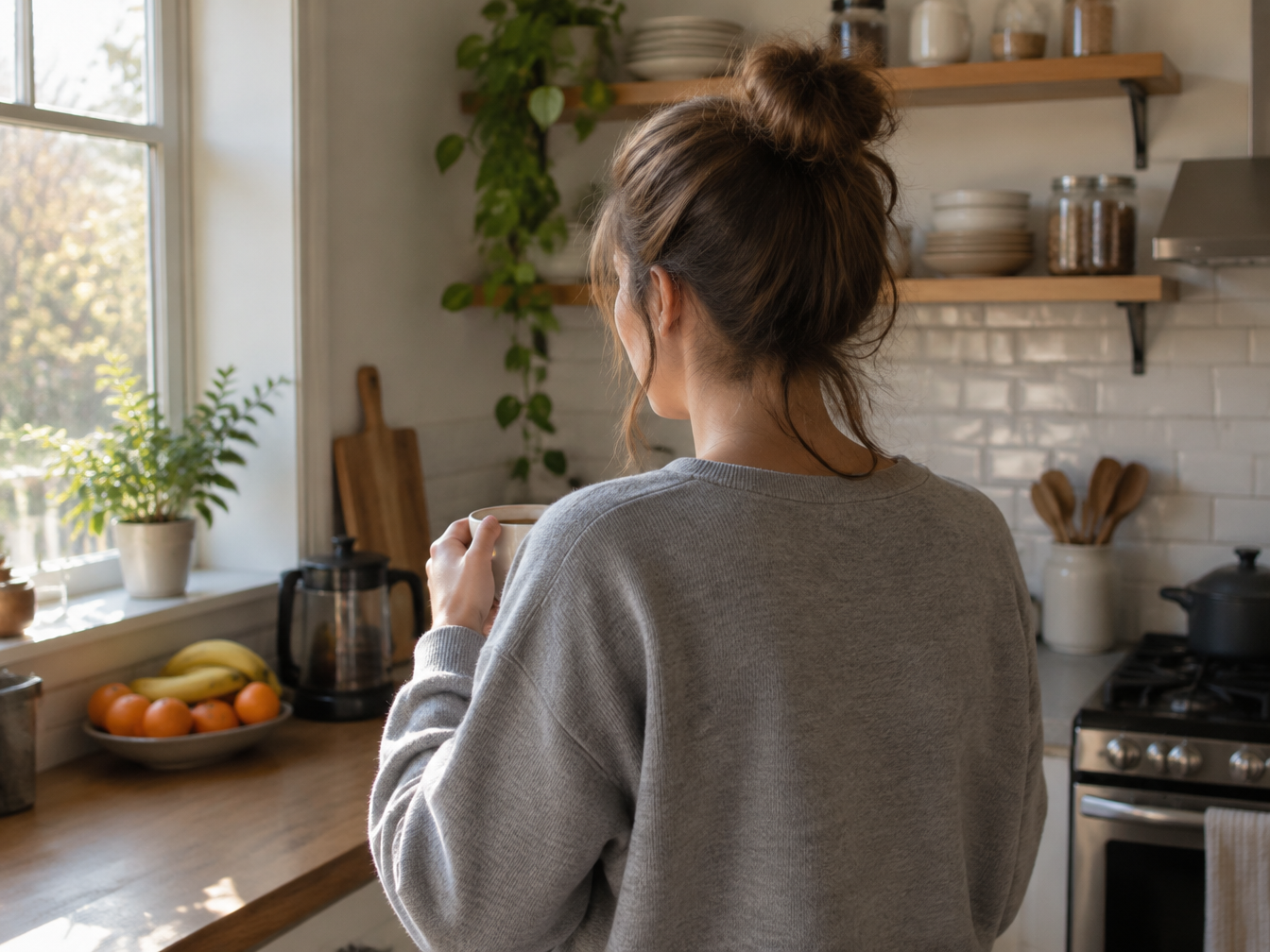
A bun solves several problems at once. It hides hair that needs washing, it keeps your neck cool, it keeps hair out of your face, and it looks deliberate when done well. It also asks for very little equipment, which is why it works in a gym locker, a car or a train seat.
There is a health benefit too. Messy buns require little to no heat, so they suit anyone who is trying to keep their hair healthy [2]. If your usual routine involves a hot tool, a bun can give your strands a break.
The big idea behind an easy bun is that imperfect is the goal. A bun that is slightly loose, slightly off-center and has a few strands falling around the face looks relaxed and current. A bun that is too tight and neat looks like a school uniform. Once you accept that, the whole thing becomes a ninety-second job.
Think of the bun as a base layer rather than a final look. On its own it works, but it also takes accessories, braids, bangs and scarves without fuss. Learn two versions, one messy and one sleek, and you will be covered for nearly every occasion on the calendar. If you want a little polish, a silk scarf or a bandana tied around the base turns an ordinary bun into something that looks planned, and 15 bandana hairstyles for every hair type has plenty of ways to do it.
The Classic Messy Bun in Four Steps
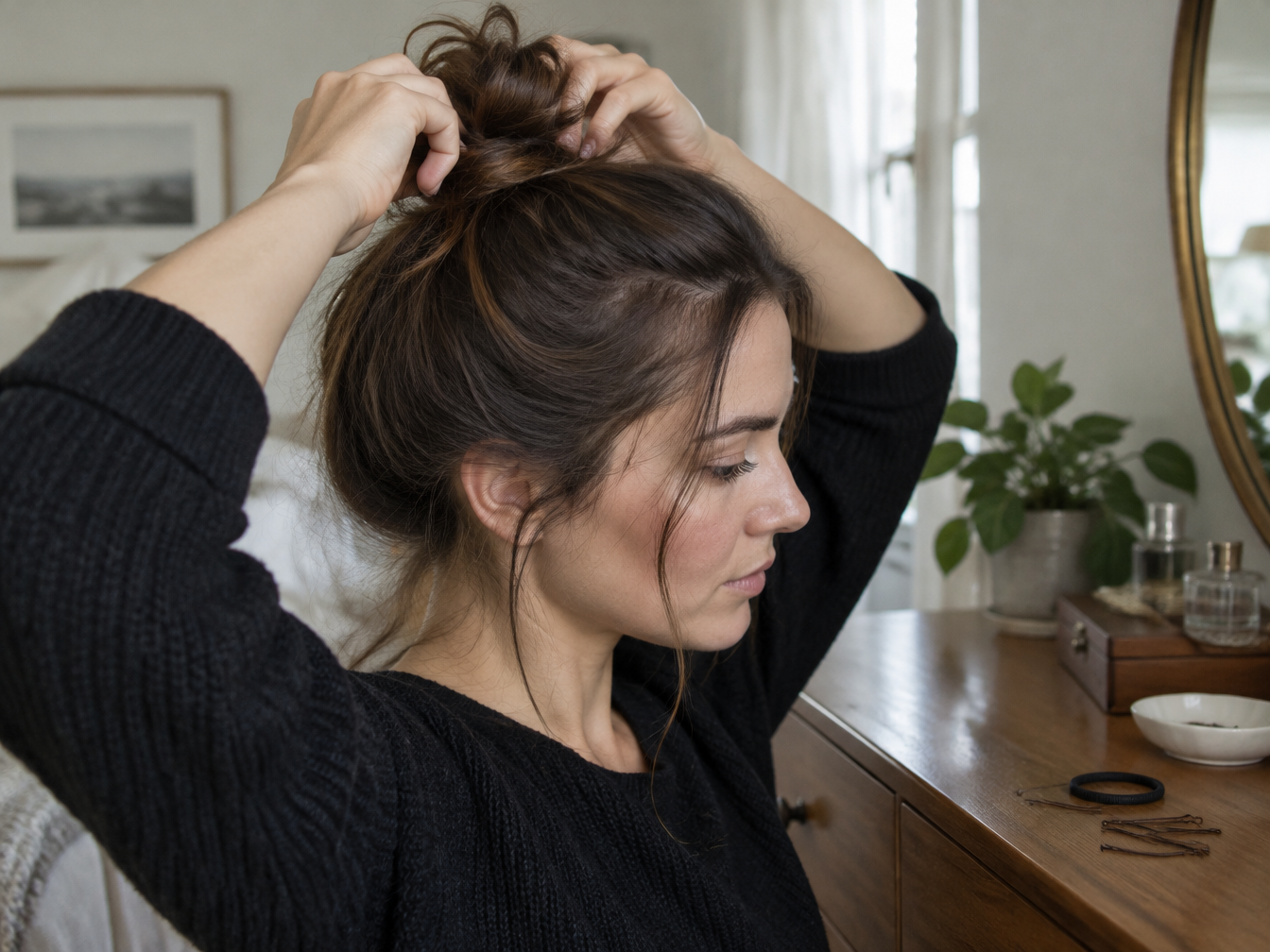
Start with slightly unwashed hair, since a little natural grip helps the bun stay put. Lightly spray volumizing dry shampoo at the roots, then brush it through fully so it does not leave a white cast [1].
Next, gather your hair loosely at the back of your head with a thin hair tie, or at the crown for a high bun [1]. Twist the ponytail into a coil, wind it around its base to form a bun, and secure it [1]. Finally, pull the bun apart gently with your fingers and tug out some face-framing strands until it looks relaxed [1].
That is the whole recipe. The only way to get it wrong is to over-fix it. If the bun looks lopsided, leave it, because lopsided is the style. If it feels loose, add a bobby pin or two where the bun meets the head rather than tightening the elastic.
One more tip: gather your hair a little higher than you think you need to. A bun that sits too low can drop by midday as the hair stretches, while a slightly higher one stays put.
A few small habits improve the result. Use a thin elastic rather than a thick one, since it disappears into the hair. Pull the bun apart from the top and sides rather than the back so the shape looks fuller from the front. And leave out two small pieces at the temples to soften your face. If you want more height, flip your head upside down before gathering, which pushes the hair into a higher, bouncier position at the crown.
The Low Bun for Quiet Polish

If the messy bun is the weekend version, the low bun is the one for meetings, weddings and a day when you want to look pulled together. The basic technique is to part your hair, brush it back with a boar bristle brush, and gather it into a low ponytail at the nape of your neck [2].
Wrap the ponytail around its elastic to form the bun, then secure it with bobby pins or a second elastic [2]. Gently pull apart sections of the bun for fullness, pull a few face-framing strands loose, and set everything with hairspray [2].
A low bun suits almost every outfit, from a blazer to a slip dress. If you want to make it feel romantic, leave out a few soft pieces at the temples and add a small hair accessory. If you want it sleek, brush it smooth and add a bit of pomade for a matte finish, which is how many sleek chignons are made [2].
For more soft and pretty ways to wear your hair up, dreamy romantic hairstyles for date night and beyond has plenty of ideas.

Placement matters more than you might think. A low bun at the nape feels classic and professional, while one slightly to the side feels softer and more relaxed. If your hair is slippery, spray a little texture spray along the length before you wrap it, which gives the strands something to hold on to. And if you have a long neck, a low bun looks especially elegant with an open collar or a simple pair of earrings.
Messy Buns for Thick Hair
Thick hair makes a gorgeous bun, but it can also break an elastic. If your hair ties snap or sag, try a looped bun by twisting the ends around the tie and pinning them, which is easier than coiling heavy hair [1]. A coiled plastic hair tie holds better than standard elastic, and a stronger hairspray keeps everything in place [1].
For very thick or curly hair, a stretchy elastic worn on the wrist can gather the hair easily before you wrap it [2]. Split a large amount of hair into two sections, make two ponytails and twist them together. Smaller sections are easier to control, and the finished bun looks fuller.
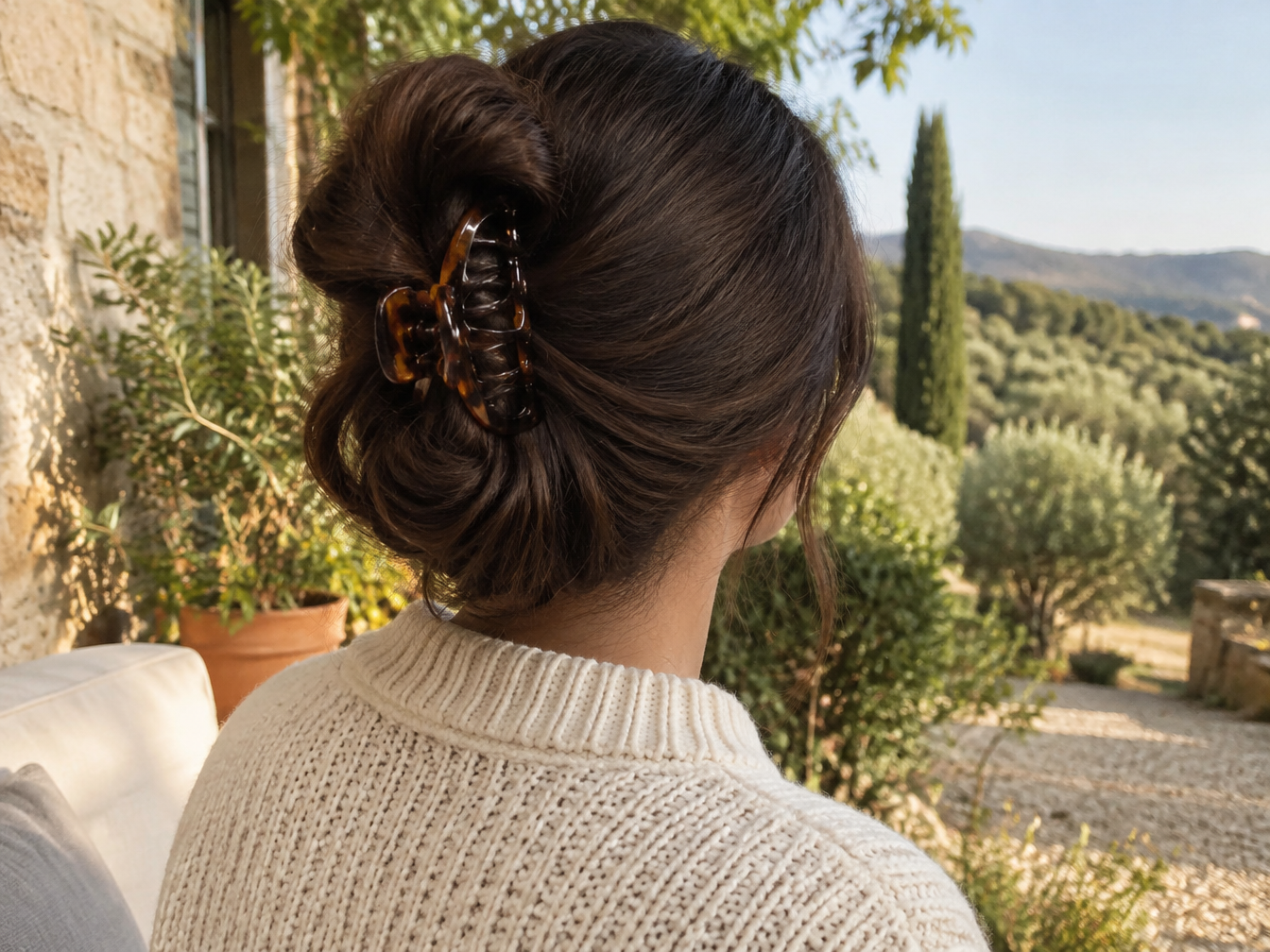
If your hair is also thick enough to give you a headache by the afternoon, try placing the bun a little lower and looser. Heavy hair pulls on the scalp, and a lower position puts less strain on the roots. A claw clip is another good option for dense hair, and claw clip hairstyles that look intentional instead of accidental shows how to make them look chic rather than casual.
Pin placement helps heavy hair stay put. Instead of pushing pins in at random, slide each one in across the base of the bun, then angle it back toward the head so it anchors into the hair beneath. Use four or five pins instead of one or two. A strong, snug base matters more than a tight bun, and it lets the top stay soft and loose.
Messy Buns for Fine and Curly Hair
Fine, straight hair has the opposite problem. It slips out of the elastic and looks flat. Work a texturizing paste into the roots before gathering to add grip and volume [1]. Tease the ponytail for fullness, then finish with strong-hold hairspray and a little edge gel on baby hairs [1].
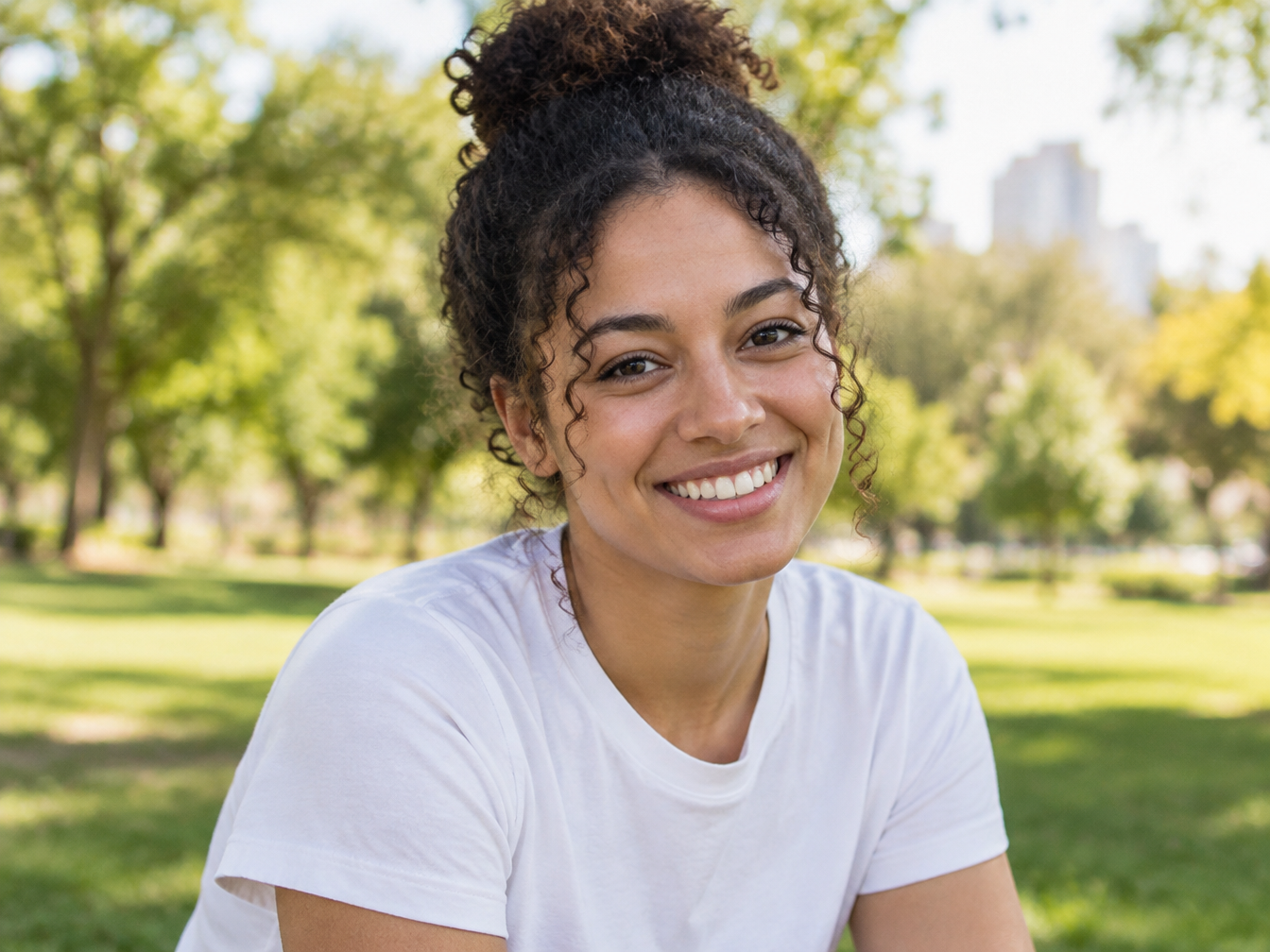
Curly hair has its own needs. Apply a hydrating leave-in before styling [1]. Smooth any frizz at the edges with a strong-hold gel and an edge brush, and reshape a few curls to frame the face [1]. Curls actually make buns easier because the texture holds itself together, so you may need fewer pins than anyone else.
If frizz is your main concern, humid or windy days are worth planning for. A smoother bun, a silk scrunchie and a dab of gel will help. The story in what static, frizz and hat hair taught me about letting things be messy is a good reminder that a little mess is fine, and it can even be the charm of the style.
Both hair types benefit from a little prep the night before. Fine hair holds best when it is a day or two past washing, and curly hair holds best when it is fully dry and stretched. If you sleep in a loose braid or a pineapple on top of your head, your morning bun will have extra shape and need very little effort. A silk scrunchie keeps frizz down and does not leave a dent.
Short Hair and Half-Up Buns
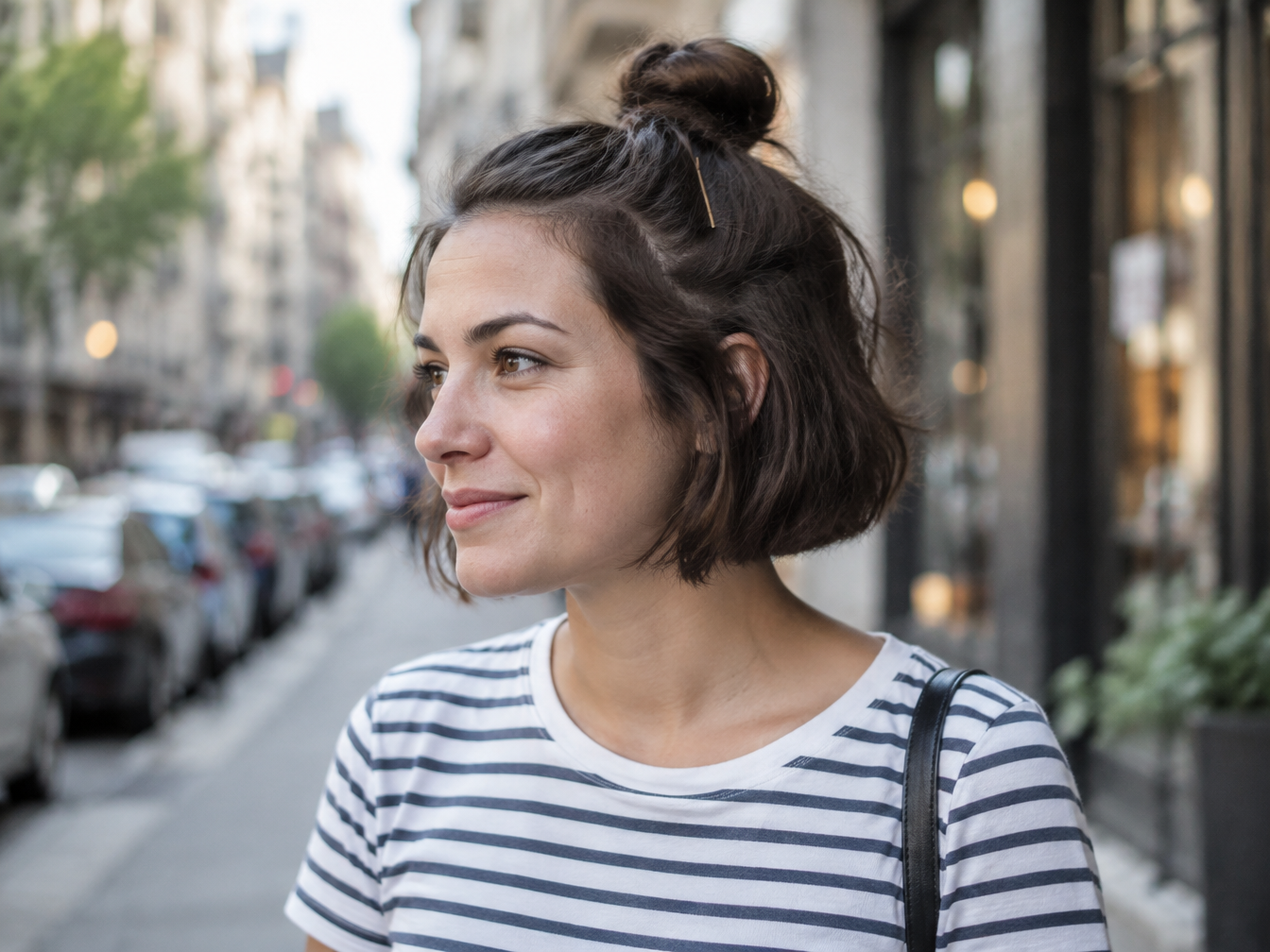
Short hair can wear a bun too. The trick is to make a half-up version by twisting only the top section into a bun [1]. Use bobby pins in a shade close to your hair color, and hold it with hairspray [1].
Collarbone-length hair can wear four mini buns spread from ear to ear, a playful style that suits shorter lengths [2]. A half-up style, where a ponytail is partly pulled through its elastic and the rest flows down the back, is another easy option for in-between lengths [2].
Half-up buns are also a good way to grow out a cut. They hide uneven layers, keep bangs out of your eyes and give shorter pieces somewhere to go. For extra volume, tease the hair at the crown before you tie it, which gives the bun a lift and keeps it from sitting flat against your head [2].
If your hair is too short to gather at all, consider a tiny top knot or a pair of small twists pinned back at the crown. Use a headband or a wide scarf to hold stray pieces around the face. Short bangs can be pinned flat with a bobby pin or swept sideways with a little balm, and the whole look comes together in about a minute, which is the entire point.
Braided and Twisted Bun Variations
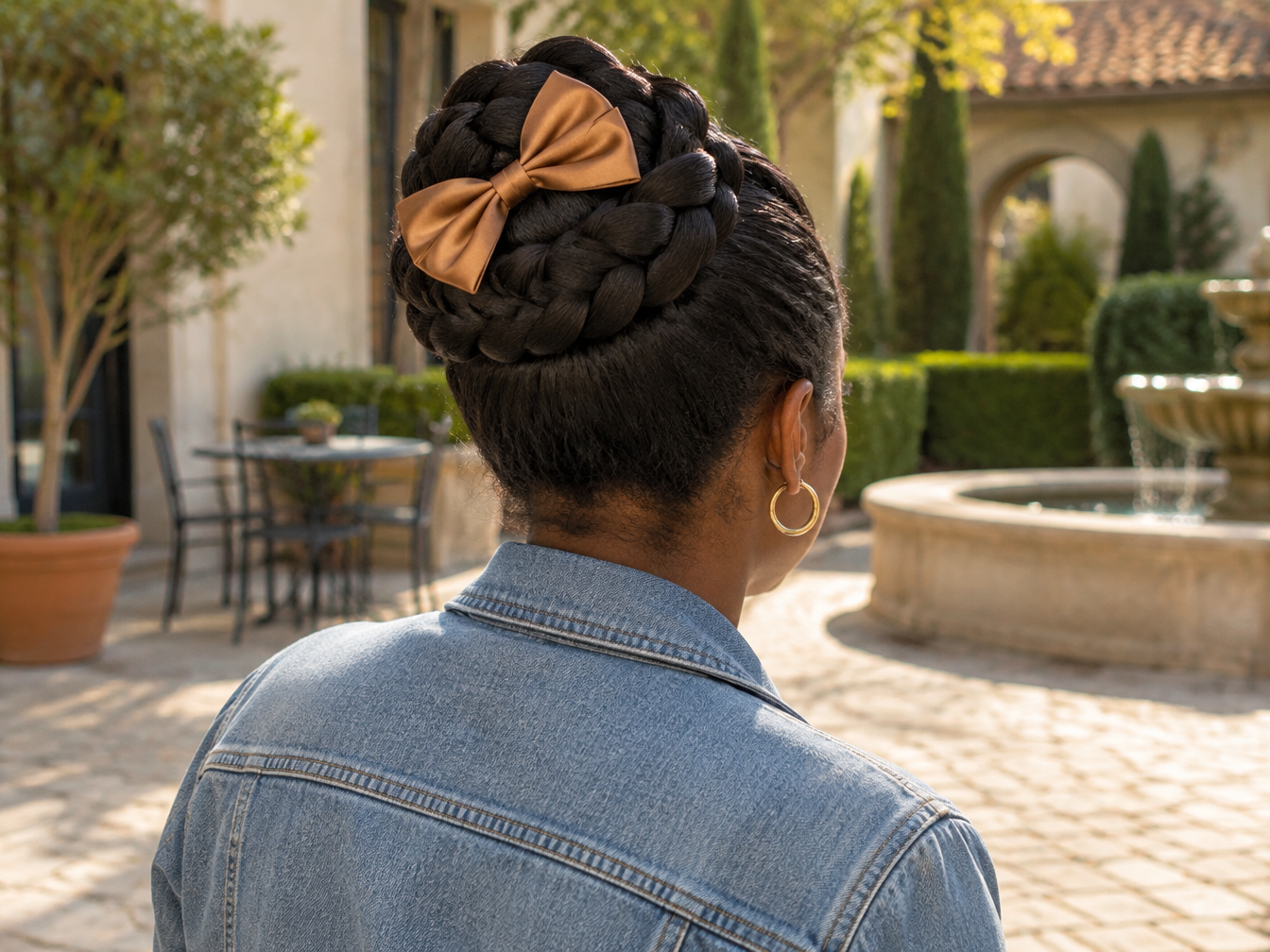
Once you can make a basic bun, a braid is the easiest way to make it feel new. Try a pair of Dutch-braided pigtails wrapped into a bun, a French lace braid swept into the bun, or a jumbo braid formed into a bun and topped with a bow [2]. Bubble braids, which use braided sections tucked into elastics to form several small buns, add a playful twist [2].
If you do not like elastic bands, the no-elastic method works well on long hair. Fold and twist the hair at the nape and tuck the ends in [2]. It holds surprisingly well and avoids the dent a tight elastic can leave.
A side bun is the right choice for an event. This is a large bun placed low on the side of the neck for a relaxed look [2]. A sleek chignon can be loosened for a softer finish, which makes it a good choice for dinner. For a bandana twist, try wrapping a folded bandana around the base of the bun.
If you want your braided buns to last, braid slightly tighter at the scalp and looser toward the ends, since loose ends are what give the bun its soft, feathered look. Keep tension gentle at the roots, and avoid wearing a very tight style every day, since constant pulling can lead to breakage. For more advice on keeping strands strong between styles, the hair growth guide is full of simple habits worth borrowing.
Accessories and Keeping Your Hair Healthy
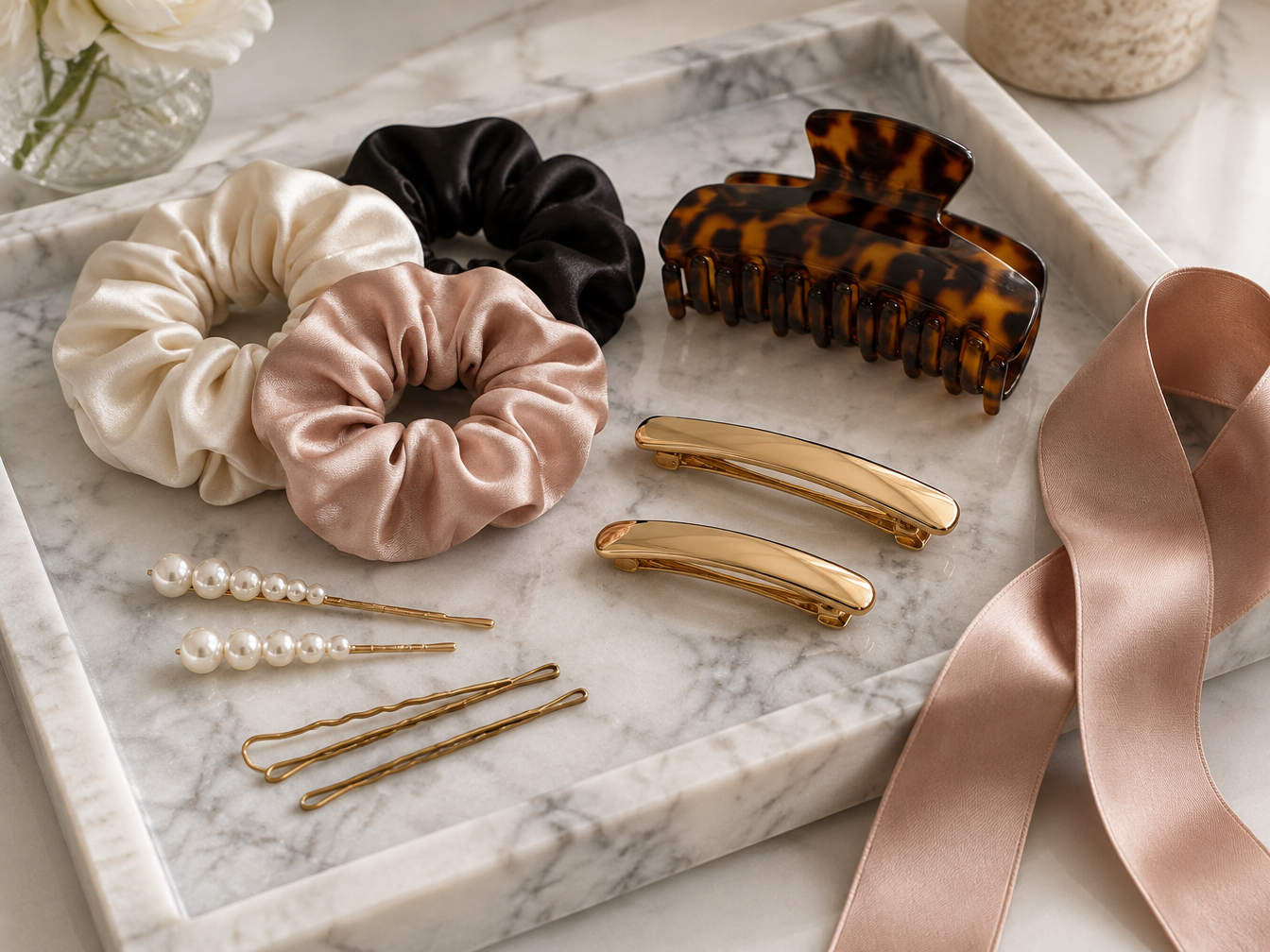
Accessories turn a basic bun into an outfit. Stars, stone headbands, claw clips, gold barrettes, pearls and florals all work [2]. A satin ribbon helps with grip and looks pretty, since unwashed hair holds a ribbon better [2]. A scrunchie can wrap a half-pulled ponytail for a textured bun, and a patterned scarf tied between two space buns mimics a hair bow [2].
Take care of your hair while you wear it up. Avoid sleeping in a tight bun, switch the position of your bun from day to day so the same strands are not pulled, and choose soft elastics or scrunchies rather than thin ones that dig in. If you notice breakage around the hairline, give your hair a break.
The best bun is the one you can make in the dark with half a hairbrush and still walk out looking like you meant it.
Finally, treat your bun as a quick daily practice, not a performance. Try one new variation a week, such as a braided bun on Monday and a low chignon on Friday, and notice which ones feel easiest. Within a month, you will have a short list of favorites that you can do without a mirror. That short list is your real hair wardrobe, and it will carry you through every season.
Sources
- How To Do a Messy Bun on Every Hair Type and Texture, L’Oreal Paris
- 30 Messy Low Buns to Recreate for Any Occasion, Hair.com
Leave a Reply