Everyone has a photo of themselves in a flower crown. Mine is from a festival, taken by someone who kept saying “one more,” and I look like a person who lost an argument with a craft store. That photo is why I spent years believing boho was a look you either pulled off at twenty or never touched again.
I was wrong, and so was the photo. Boho is a way of putting things together, and the version that works now is quieter, sharper, and a lot more forgiving than the fringe-and-feathers version we all remember.
Where Boho and Hippie Style Actually Come From
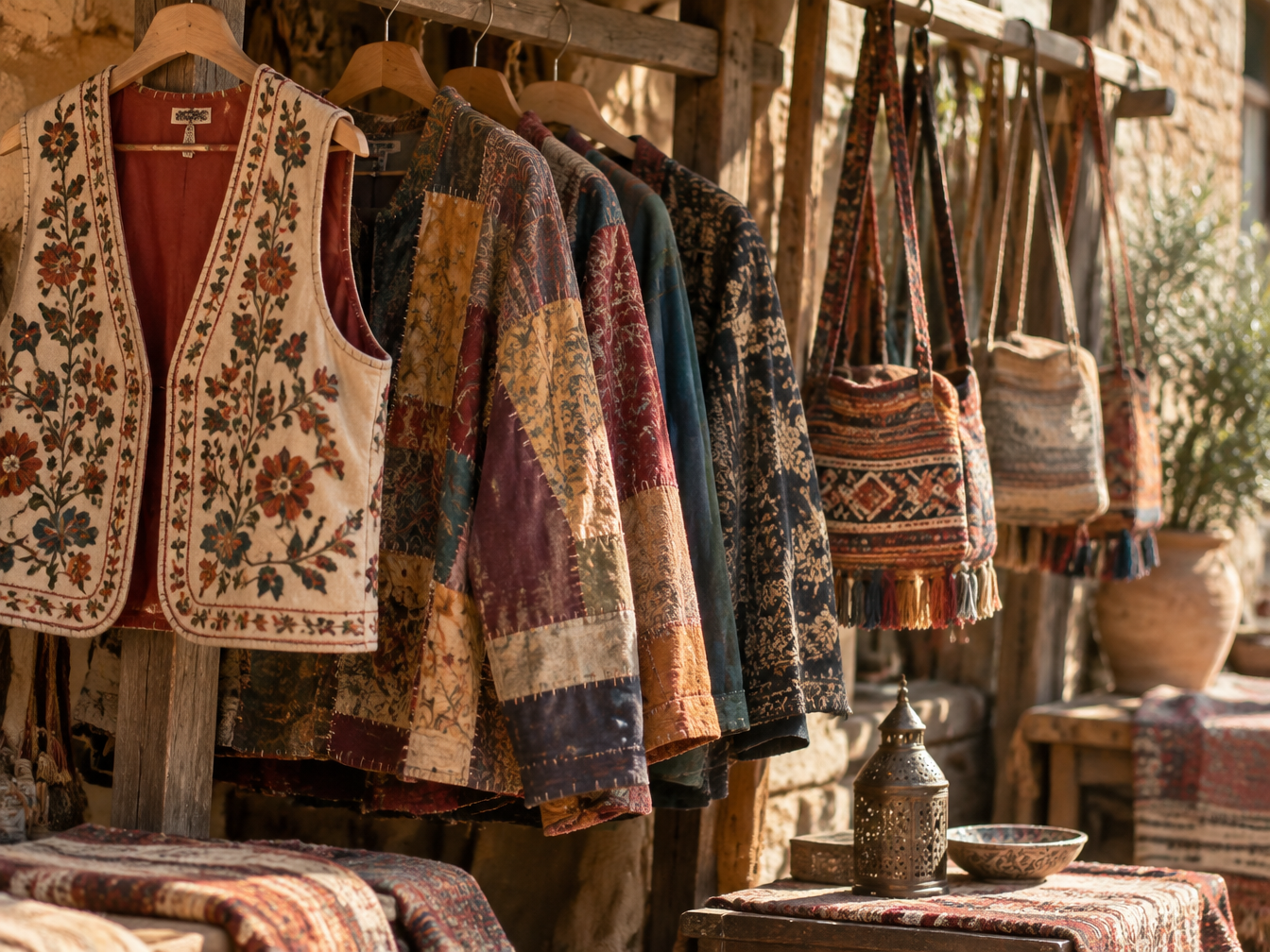
The word comes from “bohemian,” which 19th-century French artists used to describe an unconventional, creative way of living, even though it had very little to do with the actual Bohemian region of central Europe [1]. The hippie era of the 1960s and 70s added its own ingredients: global travel, nature, thrifted treasures and a refusal to dress like everybody else.
The shortened “boho” arrived in the early 2000s, when celebrities mixed thrifted pieces with designer ones and the look went global [1]. Today it overlaps with cottagecore, festival dressing and the earth-toned minimalism that fills so many closets.
Here is the useful part. Because boho was always about personal expression and never about a rulebook, you can borrow only the pieces you love and ignore the rest. Nobody is checking your fringe count.
The nice thing about a style with messy roots is that it never expected you to be tidy. Early bohemians wore what was cheap, handmade or inherited, and the hippies took that further with embroidered vests, patchwork, bell bottoms and anything that felt good to move in. That is the real inheritance. It is not a uniform. It is a habit of choosing comfort, craft and a little rebellion over looking perfectly matched, which is why it still feels fresh sixty years later.
The Modern Rules That Replaced the Old Ones
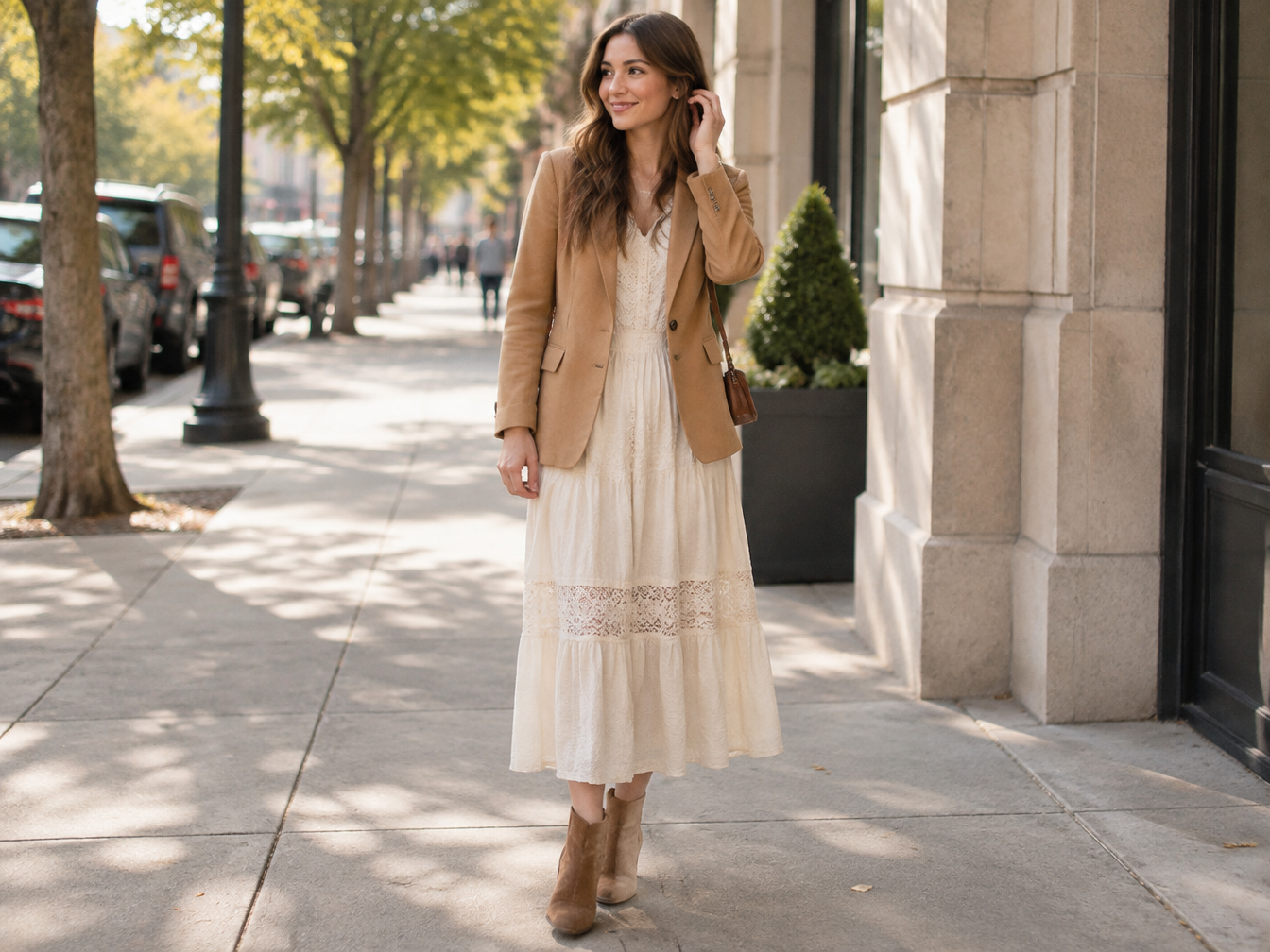
Fashion editors describe the 2026 boho look as more polished than the old fringed-boots-and-suede formula. It draws on 1960s beatnik style and “ladies who lunch” glamour, built from vintage-feeling shapes such as floaty tiered dresses, clogs and leather capes [2].
The one rule worth memorizing is contrast. Mix soft, romantic pieces like lace, ruffles and florals with sharp tailoring or structured accessories, and layer lace with satin so the outfit has some weight to it [2]. A ruffled blouse with a crisp blazer reads as intentional. A ruffled blouse with a ruffled skirt, ruffled scarf and ruffled mood reads as a theme party.
If you are unsure, count the statement pieces. One or two is boho. Seven is Halloween.
A second habit helps just as much: edit before you leave. Stand in front of the mirror and remove the one piece that is trying hardest. Often it is the third necklace or the extra belt. What remains is usually the best version of the outfit, and it still feels free-spirited because you chose each item on purpose. Think of the 2026 take as boho with a good editor, where romance comes from the fabric and the silhouette instead of from piling on props.
Flowy Dresses and Skirts as Your Foundation
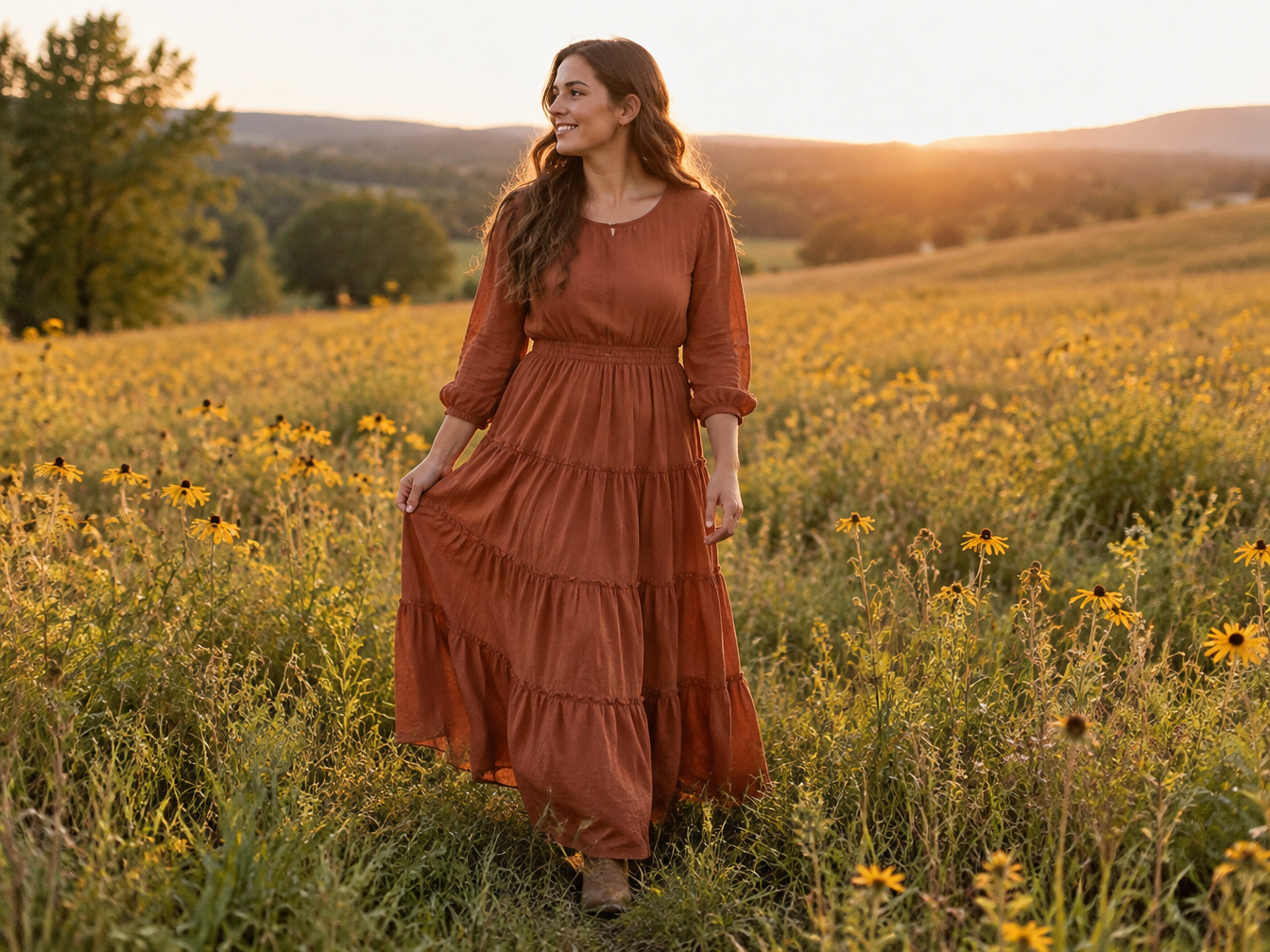
The most reliable boho building block is a long, loose silhouette. Maxi skirts, peasant tops and maxi dresses sit at the center of the style, along with layered textures like lace, crochet and fringe [1]. If you want a place to start, a single dress carries the whole look with no styling math required.
White deserves its own mention, because a white or cream dress is the quickest route to that sun-washed, wildflower-field feeling. Our guide to white summer dresses in minis, midis and maxis walks through which length suits which occasion, and the same logic applies when you are choosing a boho base.
For cooler months, keep the dress and change what touches it. Tights, a long cardigan and a jacket with some structure turn a summer maxi into an October outfit without losing the mood.
Fabric does the heavy lifting here. Lightweight, flowing materials like cotton, gauze and soft crepe move when you do, and that movement is half of what makes a boho dress feel alive. Look for details such as lace trim, cutwork or a tiered skirt, because current dress trends lean on artisan touches like these [2]. Before buying, hold the dress up and check the hem. A tiered or high-low hem is easier to walk in and looks best with boots, flat sandals or clogs.
A Palette Borrowed From the Earth
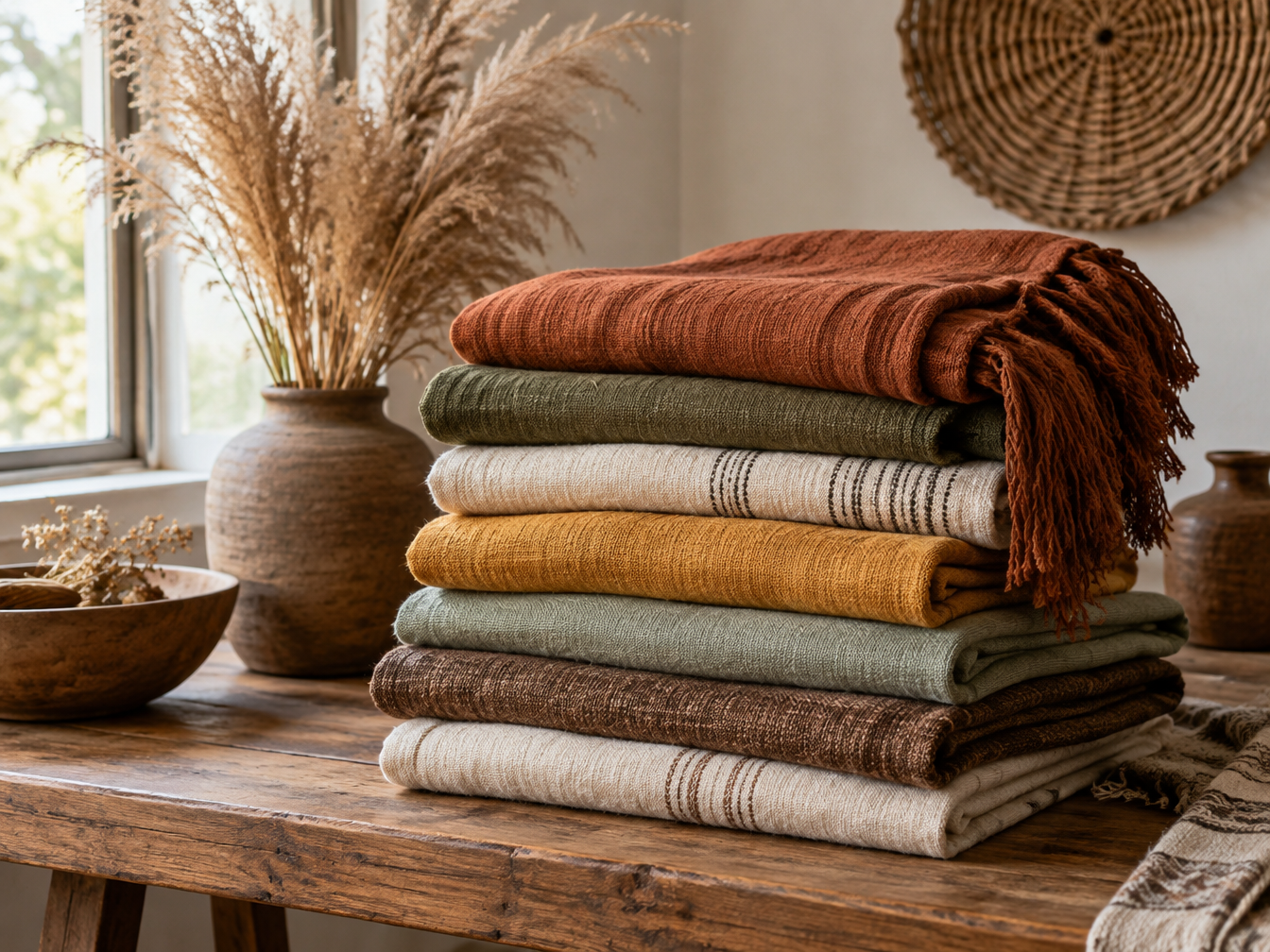
Boho color is warm and muted: rust, olive, sage, mustard, cream and brown, with jewel tones such as turquoise or burgundy showing up in embroidered or patterned pieces [1]. Trend forecasts for 2026 add butter yellow, peach, berry red, camel, dusty pink and classic black to that list [2].
That is a wider palette than it sounds, and almost all of it plays well together because the shades share a warm, dusty undertone. Pick two or three and repeat them. A rust skirt, a cream knit and a brown leather bag already look like they belong to each other.
Prints follow the same spirit. Tie-dye, paisley, florals and abstract designs are the classics, and boho wearers often mix them together on purpose [1]. If mixing prints makes you nervous, let one print lead and keep the other small and in a shared color.
White and cream fit this palette too, and they act as the calm base that lets earthy shades stand out. Black is the other quiet helper. A black dress with an embroidered jacket or a rust scarf keeps the mood moody and a little bit rock and roll, which is very much a hippie-era combination.
Seasons shift the mix. In spring, lean on cream, sage and dusty pink. In autumn, let rust, mustard and chocolate brown take over. In winter, deepen everything with burgundy, plum and black, then warm it up with a camel coat. The same silhouettes carry through the year, so you are really just swapping the color story while keeping the shapes you already trust.
Denim, Leather and the Seventies Edge
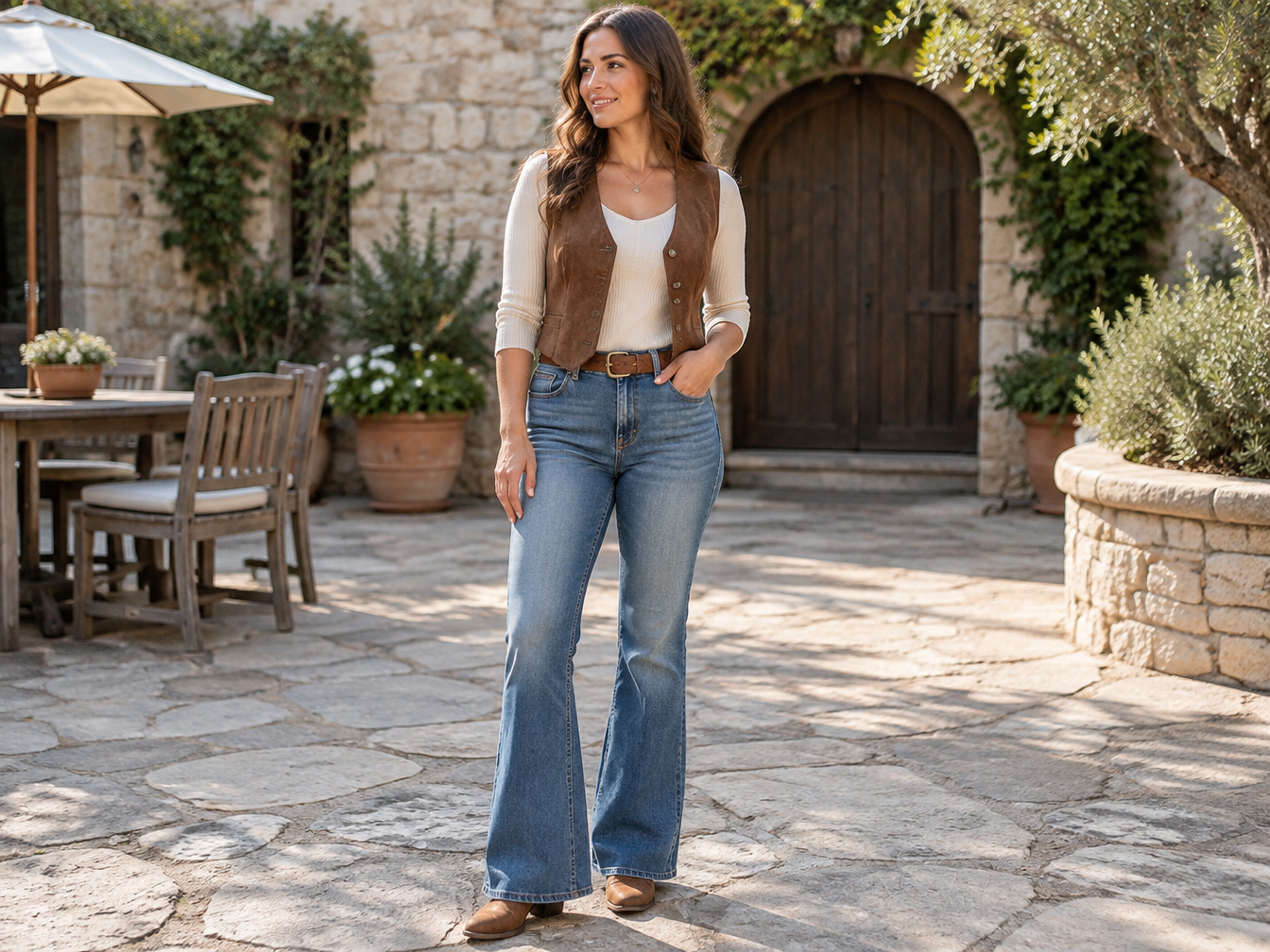
Hippie style always had a harder side, and it lives in denim and leather. Flared or wide-leg jeans in a washed, lived-in blue are about as seventies as it gets. Our breakdown of light, medium and dark washed jeans helps you choose the shade that suits the rest of your wardrobe.
Suede and shearling trim also belong here. Recent boho trend reports highlight embroidered, fur-trimmed jackets as a tailored take on the retro coat, along with suede and shearling as signature textures [2]. A camel suede jacket over a floral dress gives you the contrast rule in one move.
The point is balance. If the top half is romantic, let the bottom half or the outer layer bring some grit.
Think of a good vest as the secret handshake of this section. A suede or denim vest over a long-sleeve top adds structure without weight, and it works in both warm and cold seasons. Flared jeans pair well with a fitted top and a chunky belt, while a patchwork or embroidered jacket lets the pants stay simple. If your jeans are bold, keep the top plain. If your jacket is bold, keep the jeans clean. One loud element is enough.
Accessories That Do the Storytelling
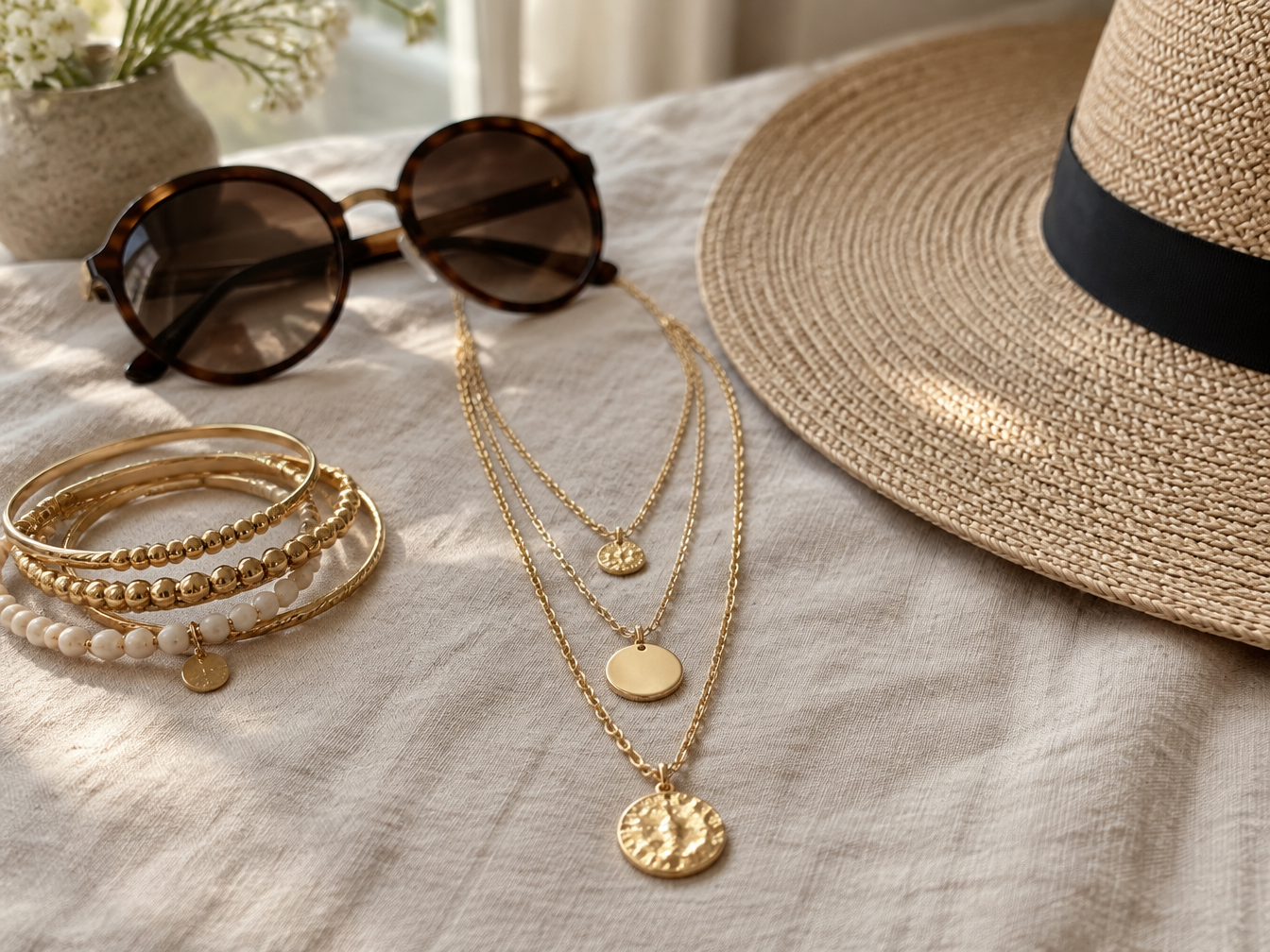
Boho accessories are where personality shows up, and the modern approach is to choose a few meaningful ones instead of wearing everything at once [1]. Layered jewelry, oversized sunglasses, wide-brim hats and a well-worn leather bag are the usual cast.
Pendant necklaces with talisman-style shapes and tassel details are part of the current wave, as are bold oversized sunglasses [2]. Tassels and fringe appear on belts, scarves and jackets, but in single doses [2].
For help with the metal question, our guide to choosing gold or silver jewelry to match your outfit is worth a read, since mixing metals is very much part of the boho spirit. A silk scarf tied on a bag or in your hair adds the same effect,.
A few practical notes help the accessories feel natural instead of staged. Keep metals warm and slightly aged, like brass or worn gold, and let stones, beads or shells add color. Stack bracelets on one wrist only, and let necklaces vary in length so they do not tangle into a single clump. Bags look best when they have some character, such as soft leather, woven straw or a vintage find with a scuffed corner. The scuff is the feature.
Shoes and Layers for Cooler Weather
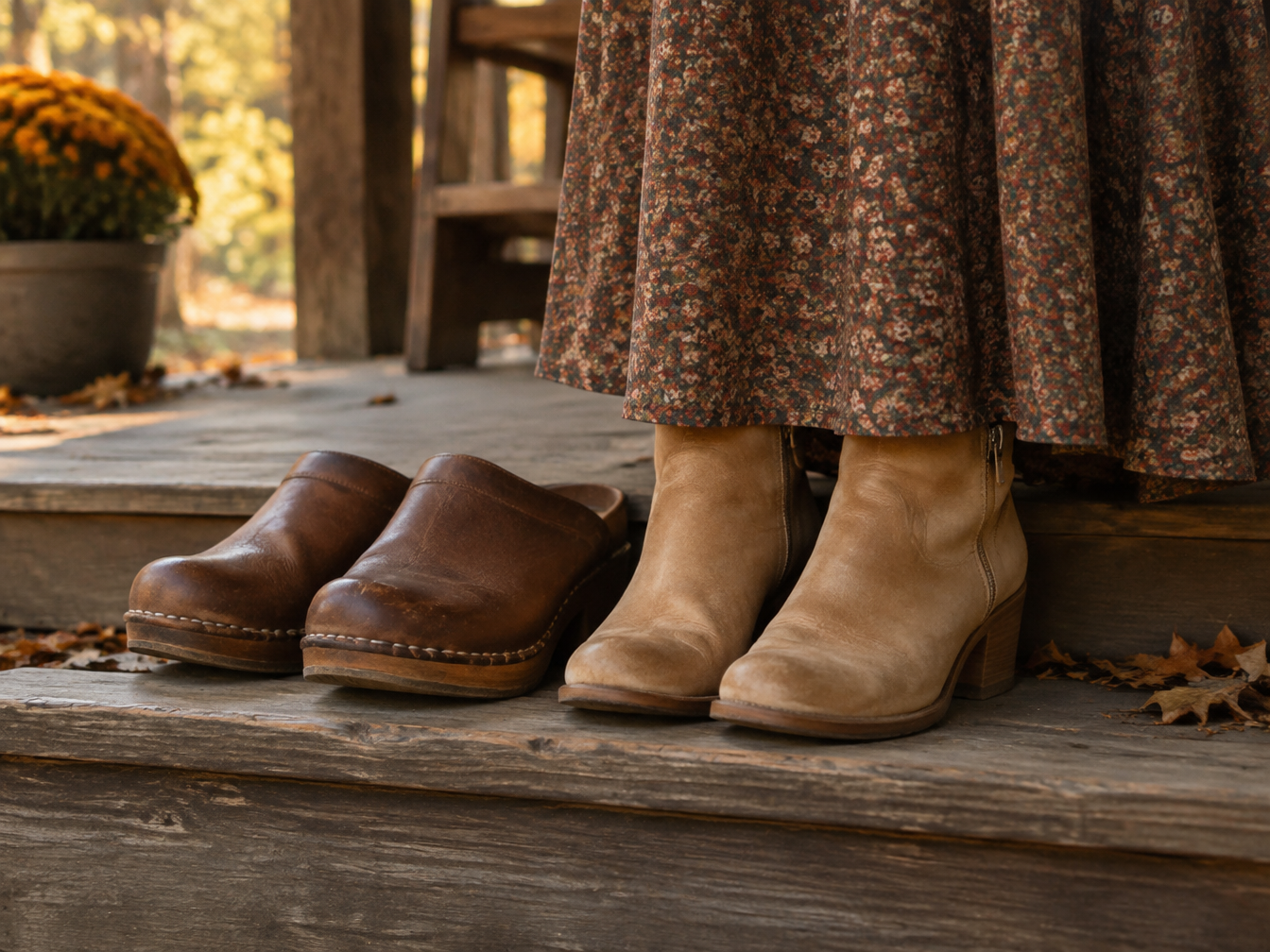
Sandals suit warm days, and lace-up and slide styles are boho staples [1]. When the temperature drops, clogs and boots take over, and clogs are one of the vintage-feeling shapes behind the current look [2].
Boots deserve a real strategy. An ankle boot with a heel keeps a long skirt from dragging, and a tall slouchy boot works with a mini or a midi. If you want a case for building a whole winter around good boots, read the boots I wear every winter.
Layer in thin pieces rather than thick ones. A silk slip under a lace dress, a long cardigan over that, then a coat gives you warmth with texture, which is the whole point.
A quick word on comfort, because boho is a style built on moving freely. Clogs and flat boots let you walk, dance and stand for hours without paying for it the next day. If you love heels, try a block heel that keeps the line of a flowing skirt intact. And think about socks. A thin ribbed sock peeking out of a boot or clog gives the outfit a relaxed, collected look, and it keeps your feet warm in shoulder season.
How to Wear It Without Looking Like You Are in a Costume
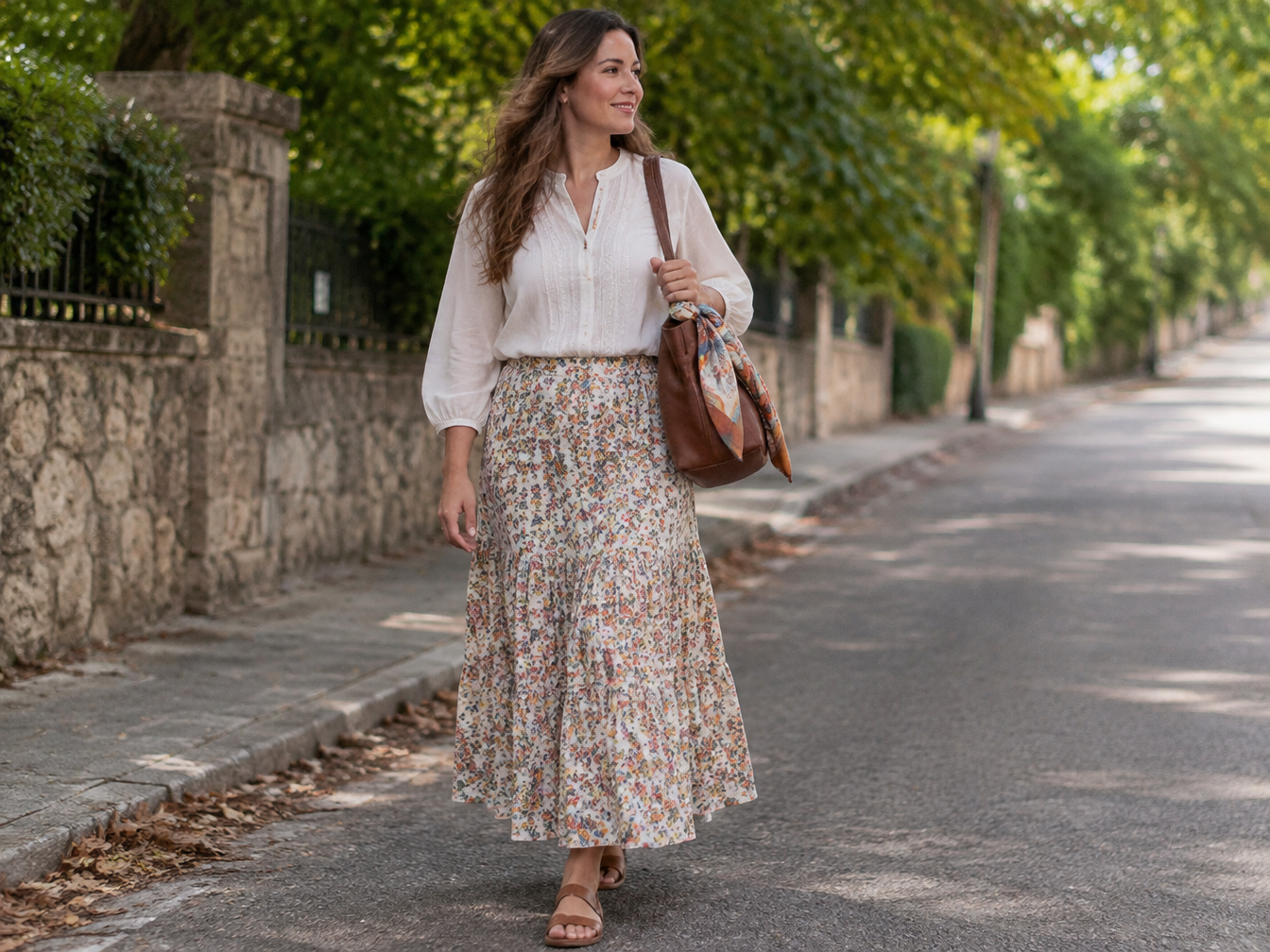
This is the question underneath every boho search, so here is the plain answer. An outfit looks like a costume when every piece announces the theme. It looks like a style when the pieces feel personal and slightly mismatched in age and origin.
A silk or cotton scarf is the easiest piece to test the waters with, and how to wear colorful scarves like a fashion insider shows several ways to knot, drape and tie one.
Mixing modern and vintage pieces, layering textures and keeping accessories to a few meaningful ones are the habits that keep the look grounded [1]. Add one thing that is clearly modern, like sharp tailoring or a structured bag, and the whole outfit steps out of the dress-up box [2].
One last test before you leave the house: ask whether you would wear this on a normal Tuesday. If the answer is yes, it is boho. If the answer is “only with a tambourine,” take one thing off.
The best boho outfit is not a look at all. It is what happens when you stop trying to look like anyone else.
If you are shopping from scratch, resist buying a head-to-toe look. Start with three things: one flowy piece, one structured piece and one accessory with a story. A thrifted belt, a vintage scarf or a ring from a market all count. Then wear them with the basics you already own. Over a month, you will see which items you reach for, and those become your true boho wardrobe. Everything else was just a costume waiting to be returned.
Sources
- What is Boho Style? A Guide to the Chic, Modern Return of Fashion’s Favorite Aesthetic, Lulus
- According to Sienna, These 7 Trends Define Boho Style in 2026, Who What Wear
Leave a Reply