Every December thirty-first, a little before the sun goes down, I take one outfit out of the back of my closet and lay it on the bed like a person who is about to be briefed. The outfit has no occasion. It has no dress code. Most years it has no audience either, and that’s exactly why I love it.
I call it the last outfit of the year. I buy it, borrow it, or rediscover it sometime in the autumn, and I do not wear it for anyone. It’s the one piece of my wardrobe that isn’t a performance, and the older I get, the more I think it’s the most important thing I own.
How a Rule I Never Planned Became a Ritual

It started by accident. Years ago I had plans on New Year’s Eve that fell through an hour before I was supposed to leave. I was already dressed in a deep plum satin top and my one good pair of trousers, hair done, lipstick on. I stood in the hallway feeling stupid, and then I did something I had never done before. I stayed dressed.
I made tea, put on a record, and sat on the floor of my apartment in an outfit that was meant for strangers. It was one of the best nights of that whole year. Nobody saw me, nobody photographed me, and I felt completely, quietly present in my own life. The next December I planned it on purpose.
I’ll admit the first few times, I felt a little silly. There’s a particular kind of embarrassment in dressing up for a living room, as if someone might knock on the door and catch you being sincere. Nobody ever has, and if they did, I’d like to think I would invite them in for tea. And somewhere around the third year, the silliness turned into something I’d defend with my whole chest.
Now the ritual has a few small rules. The outfit has to be something I chose without thinking about who would see it. It can’t be borrowed against anyone’s expectations. And I’m not allowed to change out of it just because the plans got smaller.
What Your Clothes Are Quietly Telling Your Brain

I used to think this was purely sentimental, a nice idea with a nice dress attached. Then I read about a set of experiments that made me take it more seriously.
Psychologists Hajo Adam and Adam Galinsky ran a study in which 58 students did a test of selective attention. Half wore a white lab coat, which people associate with careful, scientific thinking, and half wore their own clothes. The students in the lab coats made half as many errors on the critical trials [1]. In follow-up studies, the effect only showed up when people actually wore the coat, not when they simply saw it on a desk, and it depended on what the coat was said to mean. A coat described as a painter’s didn’t work the same way [1].
They called it enclothed cognition, and the researchers wrote that clothes “can have profound and systematic psychological and behavioural consequences for their wearers” [1]. I’m not claiming a plum satin top turns me into a genius. But it fits what I felt on that floor. What you wear isn’t just a message to other people. It’s a message to yourself, and you’re the only person who hears it every single day.
There’s a reason uniforms exist, and a reason people feel different in a wedding dress, a graduation gown or the jacket they wore to a first big interview. Clothes carry meaning, as my grandmother’s coat keeps teaching me, and when you choose the meaning on purpose, you get to steer. Most of us let the weather, the calendar and the dress code do the steering for us. The last outfit is a day when I grab the wheel back.
The Superstitions Are Not Silly
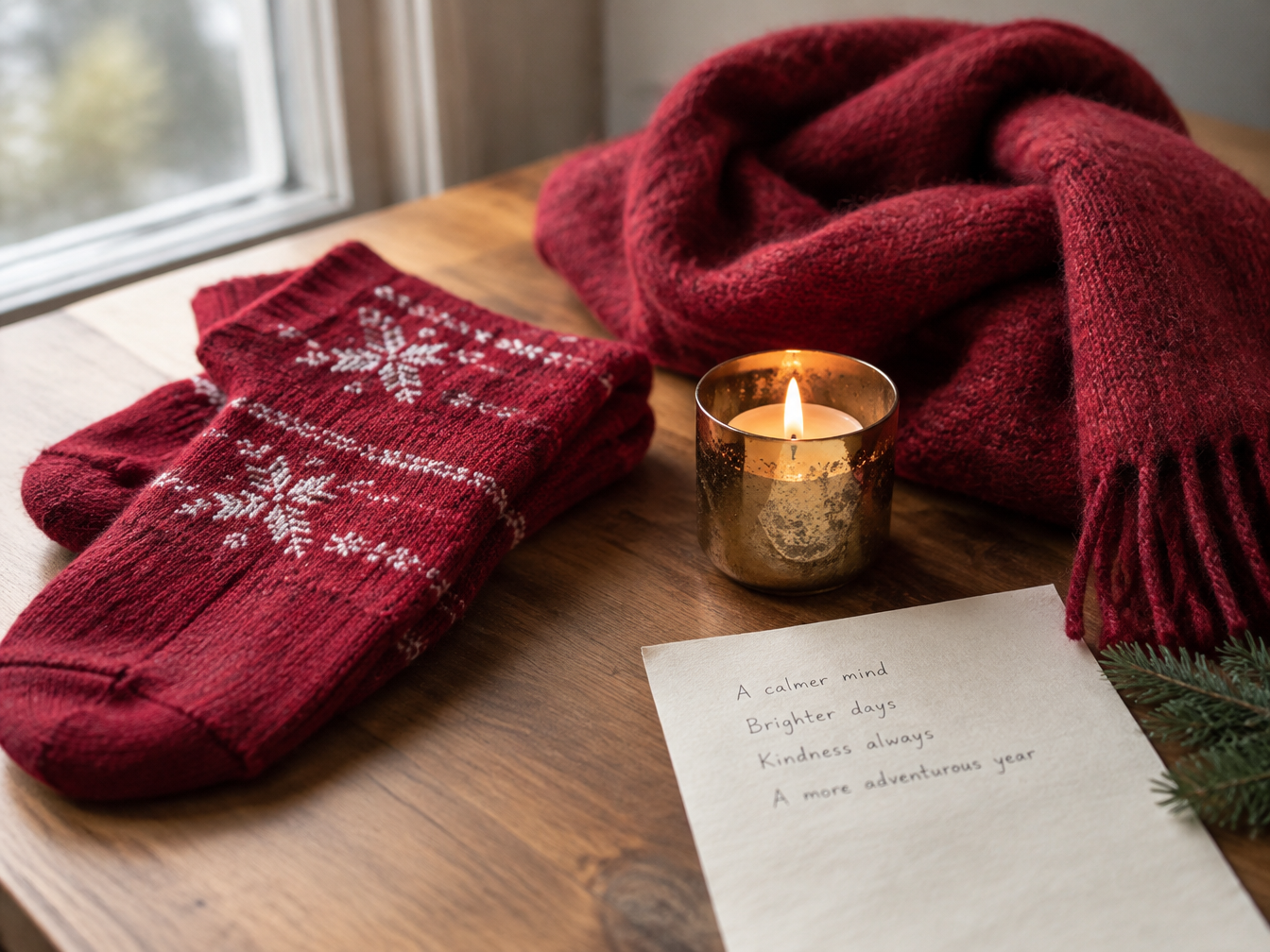
If you’ve ever pulled on a lucky pair of socks before a big day, you already understand the instinct. Around the world, people have built entire traditions around what to wear when the year turns over.
In Italy, red underwear is said to guarantee luck and success in the year ahead, and department stores fill with it after Christmas. In Brazil, people jump over seven waves at midnight and make a wish for each one, wearing underwear in colors that stand for different hopes, yellow for prosperity, red or pink for love, green for hope and white for peace. The underwear is supposed to be brand new [2].
I love how specific those rules are. Nobody is saying the color does magic. They’re saying that the act of choosing something on purpose, for a particular wish, makes the wish feel real. That’s all my last outfit is. It’s a small, deliberate act that tells me I’m paying attention to my own year.
A friend of mine buys one new pair of socks every year on the thirtieth and wears them at midnight. Another wears her mother’s earrings. Neither of them could tell you the science, and neither needs to. The point is the pause, a single moment where you stop moving and say, this one is mine.
Why It Has to Be for Me
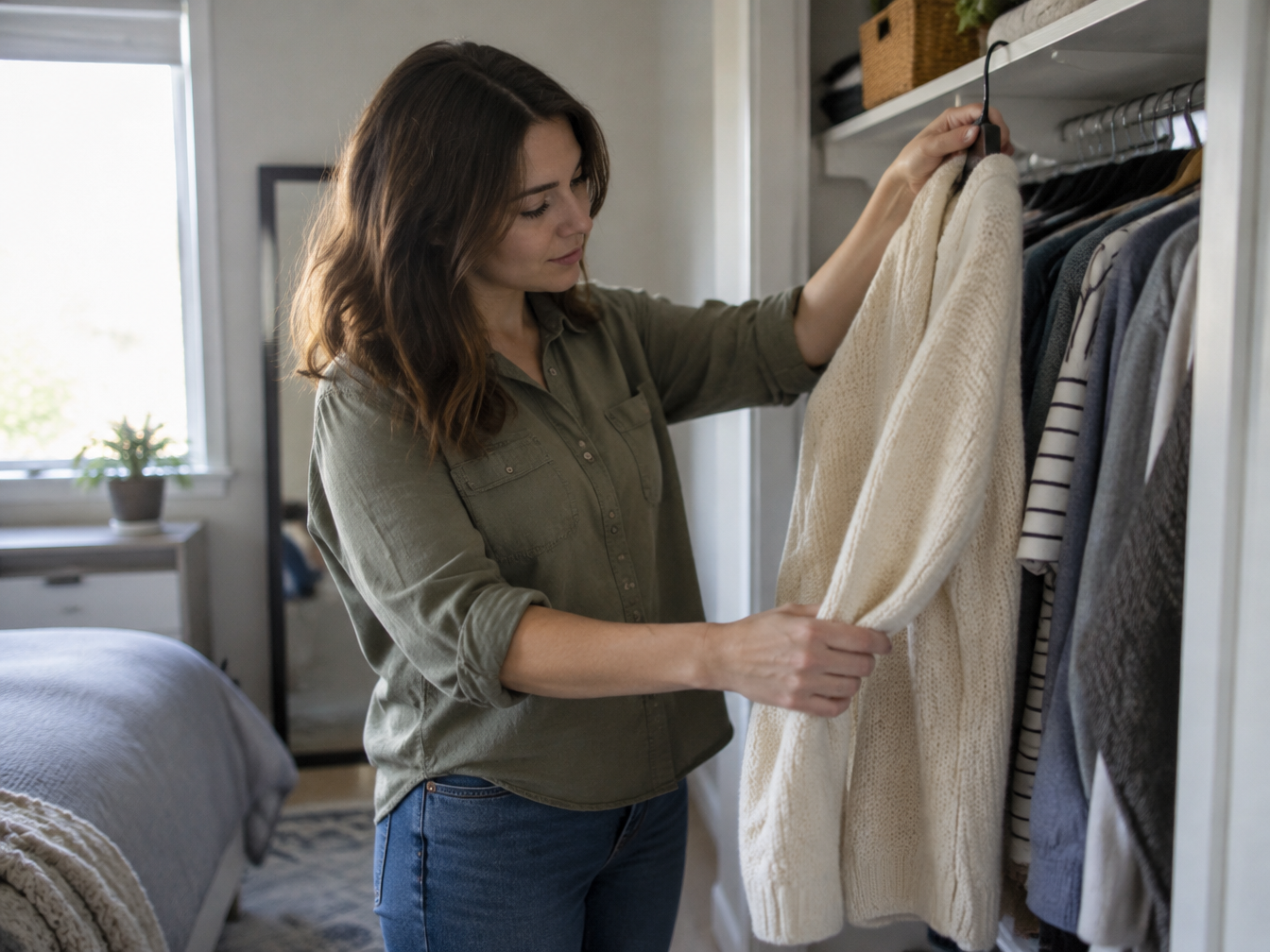
Here’s what I’ve noticed about the rest of my wardrobe. Almost everything I own has an audience built into it. The blazer is for meetings. The jeans are for being approachable. The dress is for the wedding where I’ll see my ex and want him to see me looking fine.

None of that is shameful. Getting dressed for other people is part of being a person among people. But when every single item has a reader, you can lose track of what you’d choose with nobody watching. I wrote about that in dressing for a life you haven’t started yet, where I realized half my closet was costumes for a future version of me who never showed up.
The last outfit is the antidote. It answers one question, and only one question. What do I want to feel like when this year ends? Some years the answer is soft, a cashmere cardigan and old jeans. Some years it’s loud, red trousers and gold earrings. Last year it was my grandmother’s brooch on a plain black sweater, which I’ll get to.
The Years the Outfit Told the Truth
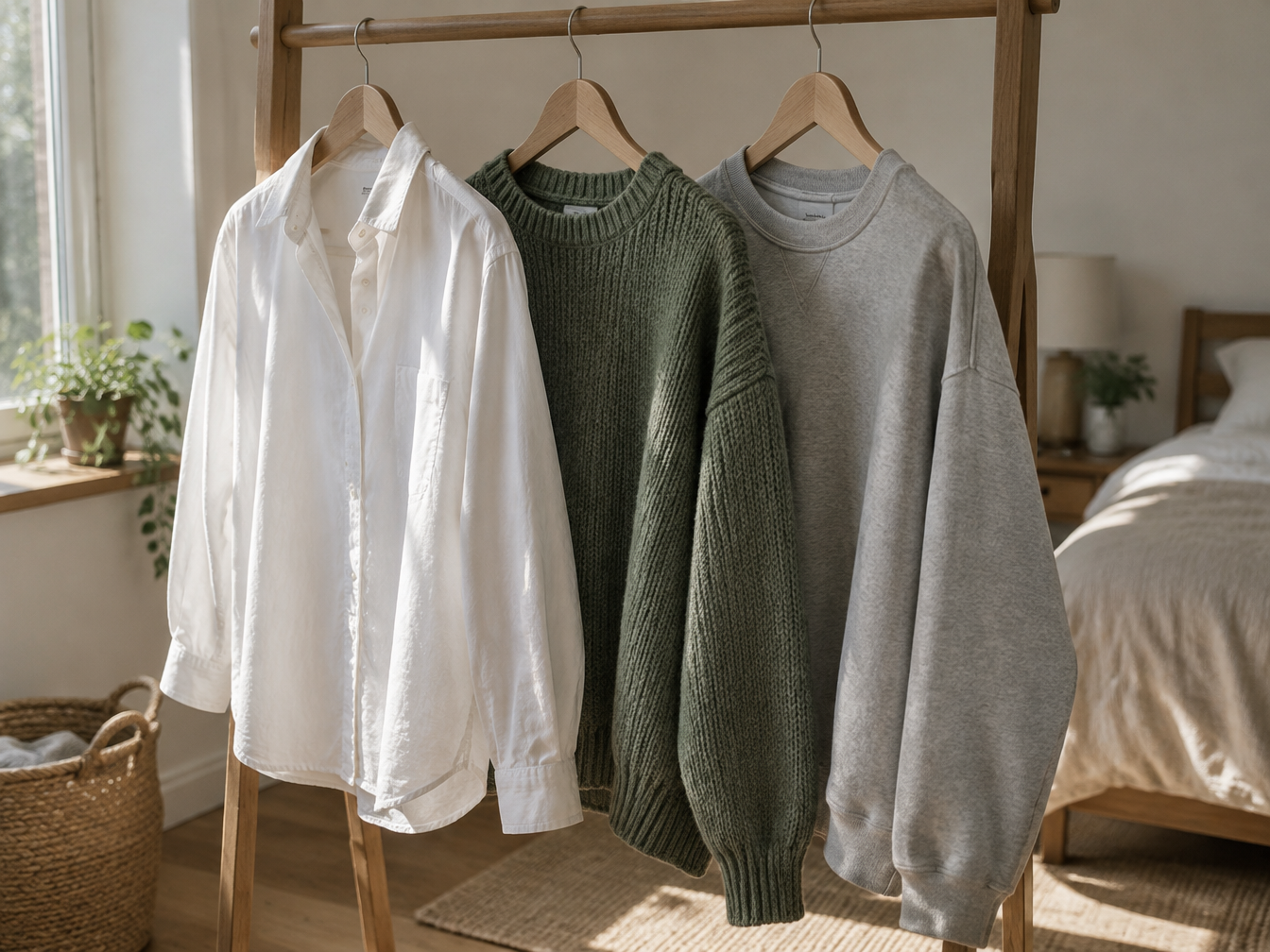
Looking back, I can read my own life in these outfits. The year I got laid off, I wore a stiff white button-down, a total armor shirt, and I cried halfway through the evening while folding laundry. The year after that, I wore a loose green knit that I’d bought on impulse, and I spent the night laughing at a terrible movie with my roommate.
One year the outfit was nothing at all, a faded university sweatshirt, and I remember being annoyed at myself for not trying. But the sweatshirt was exactly right. I had been trying all year, at everything, and the honest move was to stop. The outfit knew that before I did.
That’s the part I didn’t expect. When you let yourself choose without an audience, the choice can be braver than anything you’d choose for the room. It shows you what you’re tired of, what you’re craving, what you’ve been pretending you didn’t want.
Years from now I don’t think I’ll remember the parties I went to on December thirty-first. I’ll remember the plum satin on the floor of the apartment, the white button-down and the laundry, the green knit and the terrible movie. The outfits turned out to be small diary entries, written in fabric. I’ve written about that same feeling in the outfit I wear when I need to feel like myself again, and the last outfit is basically that idea with a calendar date attached.
Building the Night Around the Outfit

Once the outfit is on, the rest of the evening gets surprisingly easy, because I’m not trying to live up to it. It already did its job.
I do a few small things. I put on the lipstick I’d normally save for something important. If I’m feeling brave I think back on the red lipstick I was too scared to wear for ten years, and I wear it anyway, to the grocery store, to the couch, to nowhere. I light a candle. I cook the one dinner I always say I’m too busy to make. Then I sit down in my good outfit, with my good dinner, in my very ordinary living room, and I eat it slowly.
I turn my phone face down, which is its own kind of dressing up, and I let the dishes wait until morning. No stories, no scrolling through everyone else’s midnight outfits and midnight lighting. Whatever they’re wearing, they’re wearing it over there, and I’m wearing mine over here, and neither of us is losing.
People assume this is lonely. It’s the opposite. For a few hours the person who has to impress, perform and keep up quietly leaves the building, and the person who’s actually me gets to sit at the table. If you’d rather have company, invite one person who already likes you in sweatpants, and let the outfit be the thing you both don’t mention.
How to Pick Yours
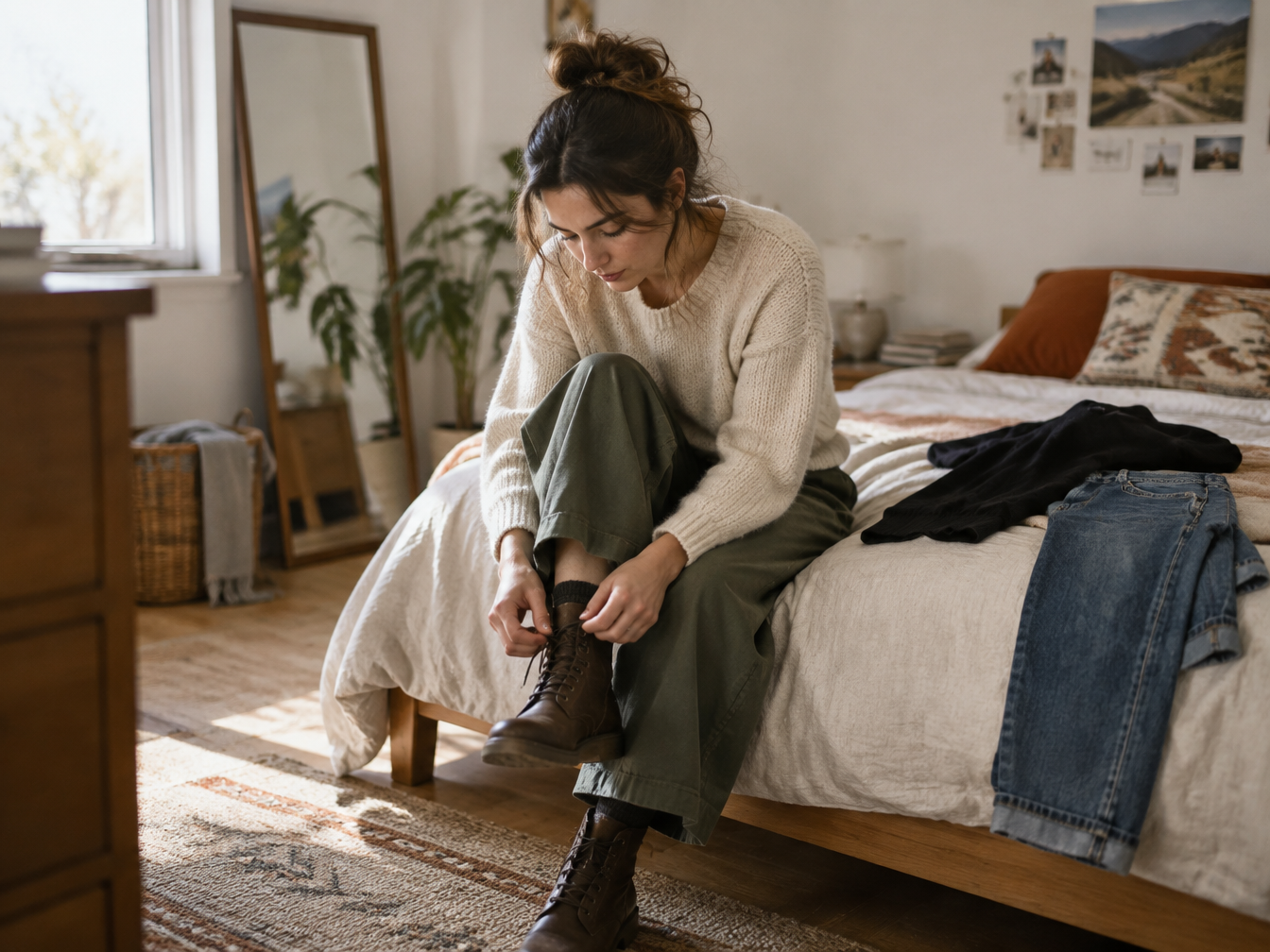
You don’t need a special budget or a fancy event. You need about ten quiet minutes and one honest question. If nobody in the world would ever see this, what would I put on?
Start with the closet you already have. Look for the piece you keep skipping because it feels too much, or too little, or too yourself. Try it on with the shoes you actually like. Sit down in it, because an outfit you can’t sit in for four hours isn’t a last outfit, it’s a photo shoot. If nothing in your closet answers the question, buy exactly one thing, and buy it for the October version of you who was tired and hopeful at the same time.
And if you want a calmer way to ease into the idea, try a smaller version first. A Sunday, a bath, and a self-care Sunday that survives even when it feels like a chore can teach you how it feels to get dressed or undressed purely for yourself.
The Brooch and the Black Sweater
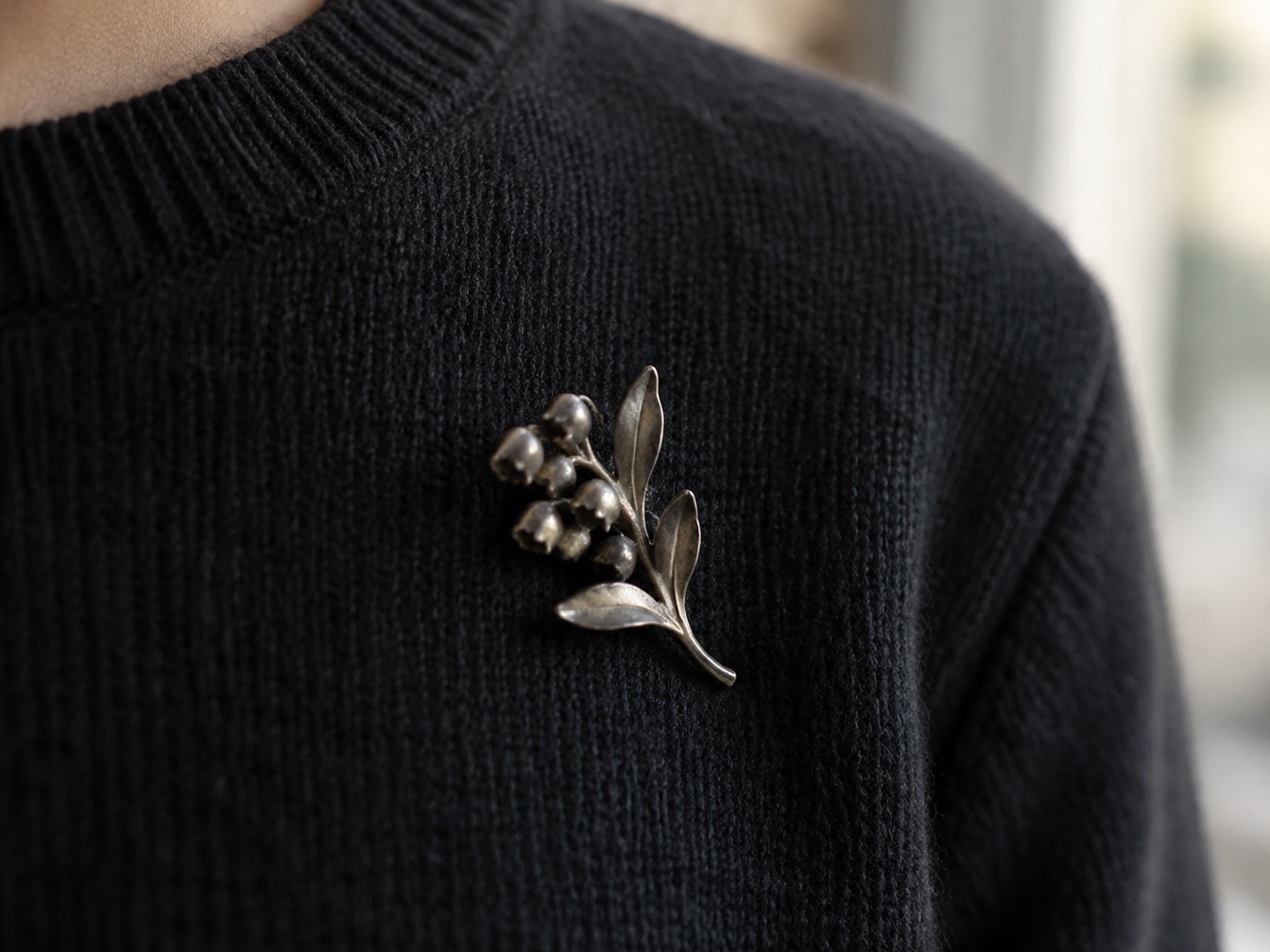
Last year, on the thirty-first, I pinned my grandmother’s brooch to a plain black sweater and stood in the mirror for a long time. The brooch is small and slightly tarnished, the kind of thing you’d never notice from across a room. She wore it to church, to weddings, and once, famously, to a hospital waiting room because she said it kept her steady.
I didn’t wear it to look like anything. I wore it because the year had been long and I was proud of myself for getting through it, and I wanted something on my chest that had also gotten through hard things. I sat on the floor with my tea and watched the clock move toward midnight. At 11:58, I realized I wasn’t waiting for the new year to fix anything.
The year was ending, I was dressed for it, and I was exactly where I wanted to be. Save one outfit for yourself. Midnight will find you either way, and it’s nicer to be wearing something you chose.
Sources
- Introducing “enclothed cognition” – how what we wear affects how we think, British Psychological Society (summarizing Adam and Galinsky, Journal of Experimental Social Psychology, 2012)
- Seven Waves And Red Underwear: 6 New Year’s Eve Traditions From Around The World, Babbel Magazine
Leave a Reply