The Morning I Realized I Was Afraid of My Own Hair
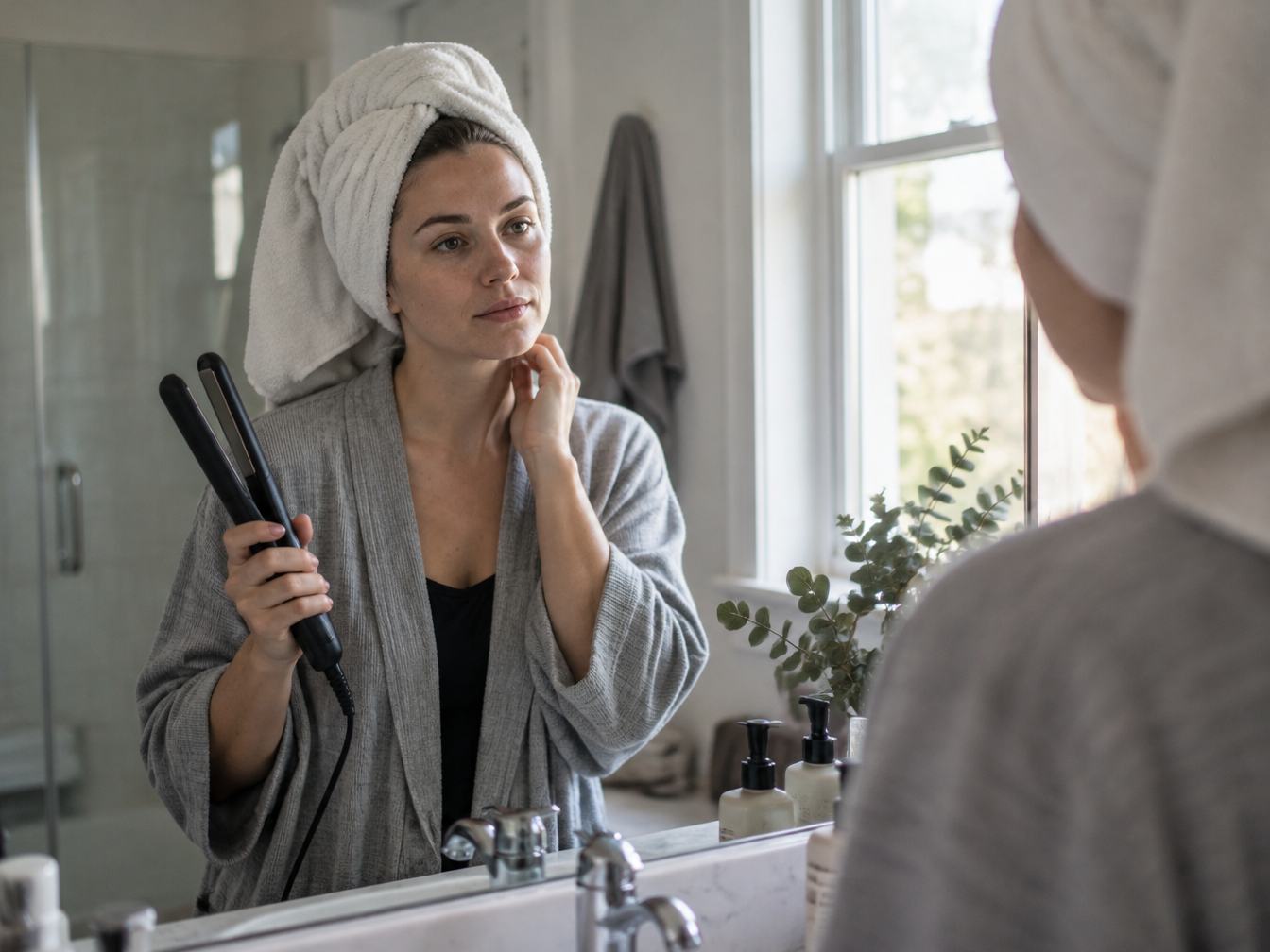
I was standing in front of the bathroom mirror with a flat iron in one hand and a towel around my head, and the power went out for four seconds. Just four. The little red light on the iron died, the fan stopped, and I felt something in my chest drop like I had missed a stair.
I did not have a plan for my hair without that tool in it. That was the whole realization. I had been straightening it almost every morning for nine years, and somewhere in there, the iron stopped being a tool and became a kind of permission slip. Permission to leave the house. Permission to be looked at.
So when the lights came back and the red dot blinked on again, I unplugged it. Not forever. I am not that dramatic. I gave myself one month. No flat iron, no curling wand, no hot brush, no blow dryer pointed at my head like a tiny desert wind.
I told exactly one friend, and she laughed and said, “You will last four days.” She was almost right.
What Heat Actually Does to a Strand
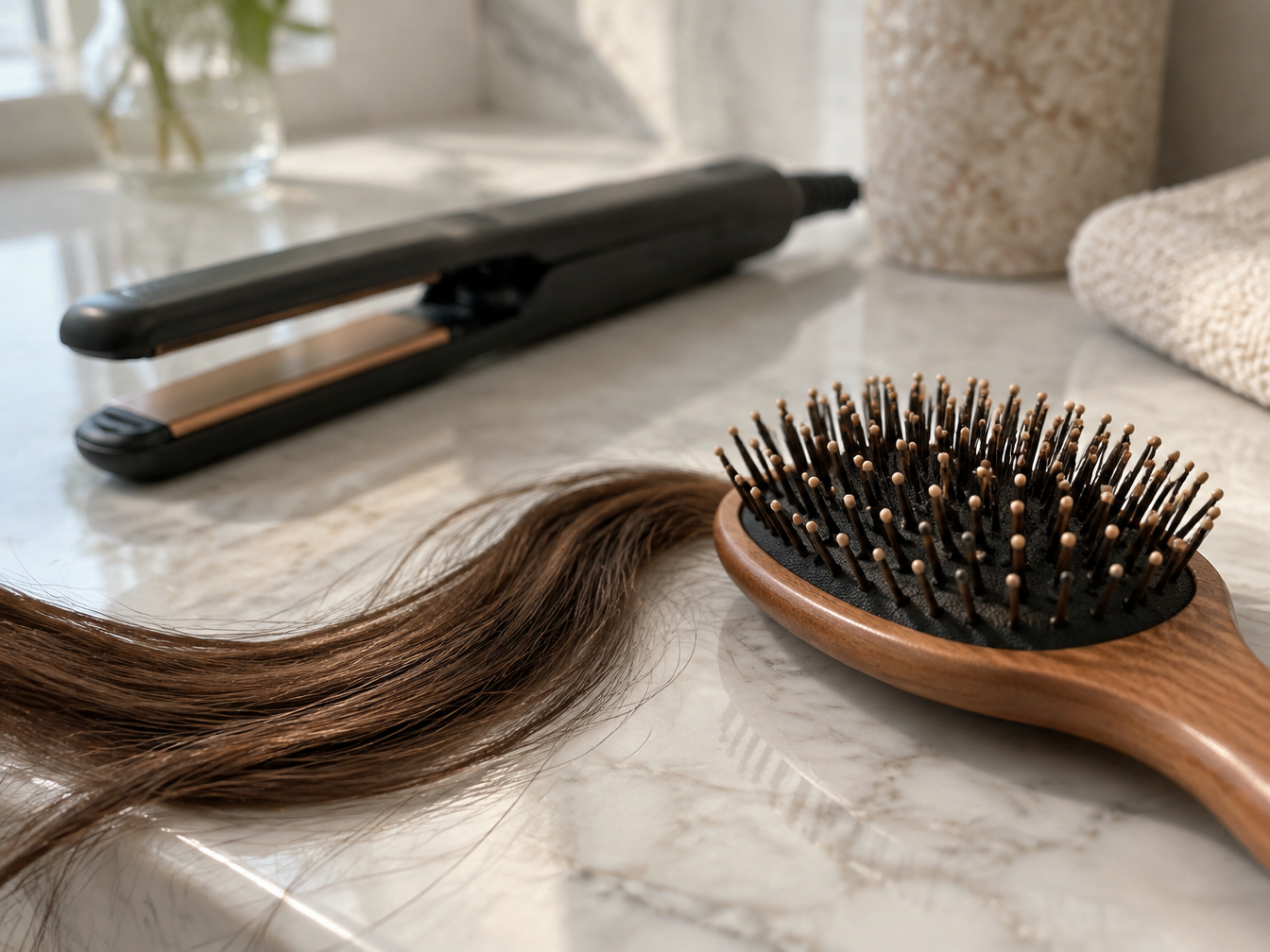
Before I get to the feelings, I want to do the boring part, because the boring part is what made me brave. I wanted to know what I was really protecting my hair from, or doing to it, depending on the day.
A 2025 study in the Journal of Cosmetic Dermatology built a lab model of heat damaged hair, and the numbers are quietly alarming. At 40°C the hair barely changed even after a full day. At 60°C for 24 hours, the damage matched roughly one month of daily hair dryer use. At 90°C, the fibers fragmented completely [1]. That is not an iron, mind you, that is an oven, but it tells you how the story goes. Heat does not need to be dramatic to leave a mark. It just needs to show up every day.
The mechanics are almost tender when you read them. Heat lifts, cracks and detaches the cuticle, which is the layer of overlapping scales that protects the inside of the strand. Once that layer is compromised, the cortex underneath is more exposed and the hair breaks more easily. The researchers also found that virgin hair repels water, while heat damaged hair starts to attract it, and that hair lost more protein the more heat it saw [1]. The authors are honest that this was a small study on one hair type in a lab, so I am not telling you it describes your exact head.
What stuck with me was the word “daily.” Nobody ruins their hair in one morning. We do it in a thousand quiet mornings, each one perfectly reasonable.
Week One Was a Mess and I Mean That Literally
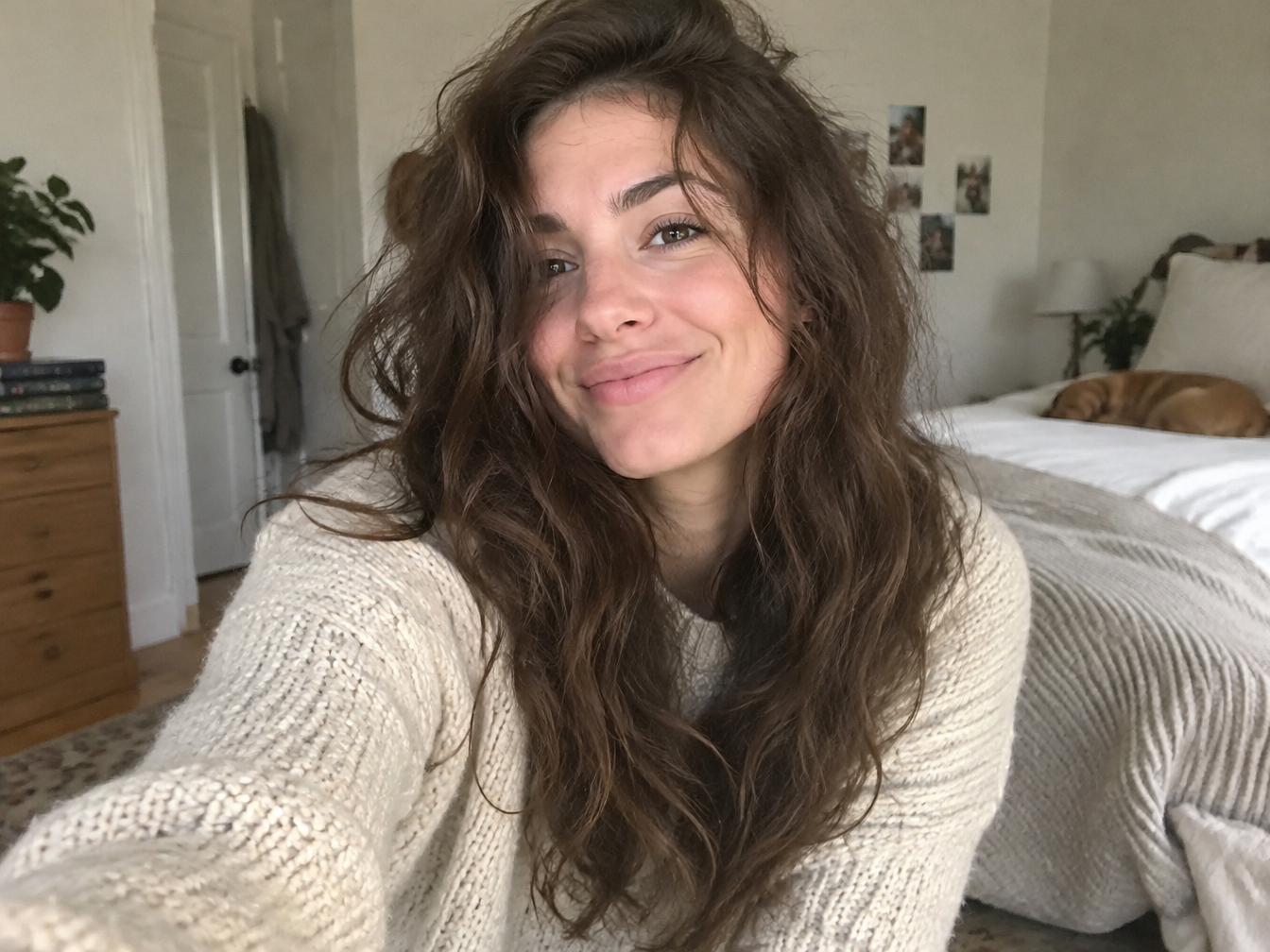
Day one, I washed my hair, towel dried it, and let it do what it wanted. What it wanted, apparently, was a personality I had never met. My roots had a wave I had not seen since middle school. The ends did something between a curl and a question mark. The back dried flat and the front dried in a sort of surprised swoop.
I took a photo and sent it to my friend with the caption “so this is the situation.” She sent back a single heart and the words “okay but I kind of like it.” I did not believe her.
Day three was the low point. I had a dinner with people I wanted to impress, and I stood in front of the mirror for forty minutes trying to talk myself out of canceling. I wore a claw clip. It was the only thing that made me feel like I had made a decision instead of just surrendering. If you are in that first-week panic, claw clip hairstyles that look intentional are a genuine lifeline, because they turn “I gave up” into “I chose this” with about six seconds of effort.
By the end of week one, I had cried once over a bad hair morning, bought three more clips than any person needs, and learned that my hair held a surprising amount of opinion about humidity.
The Heat Free Styles That Saved Me
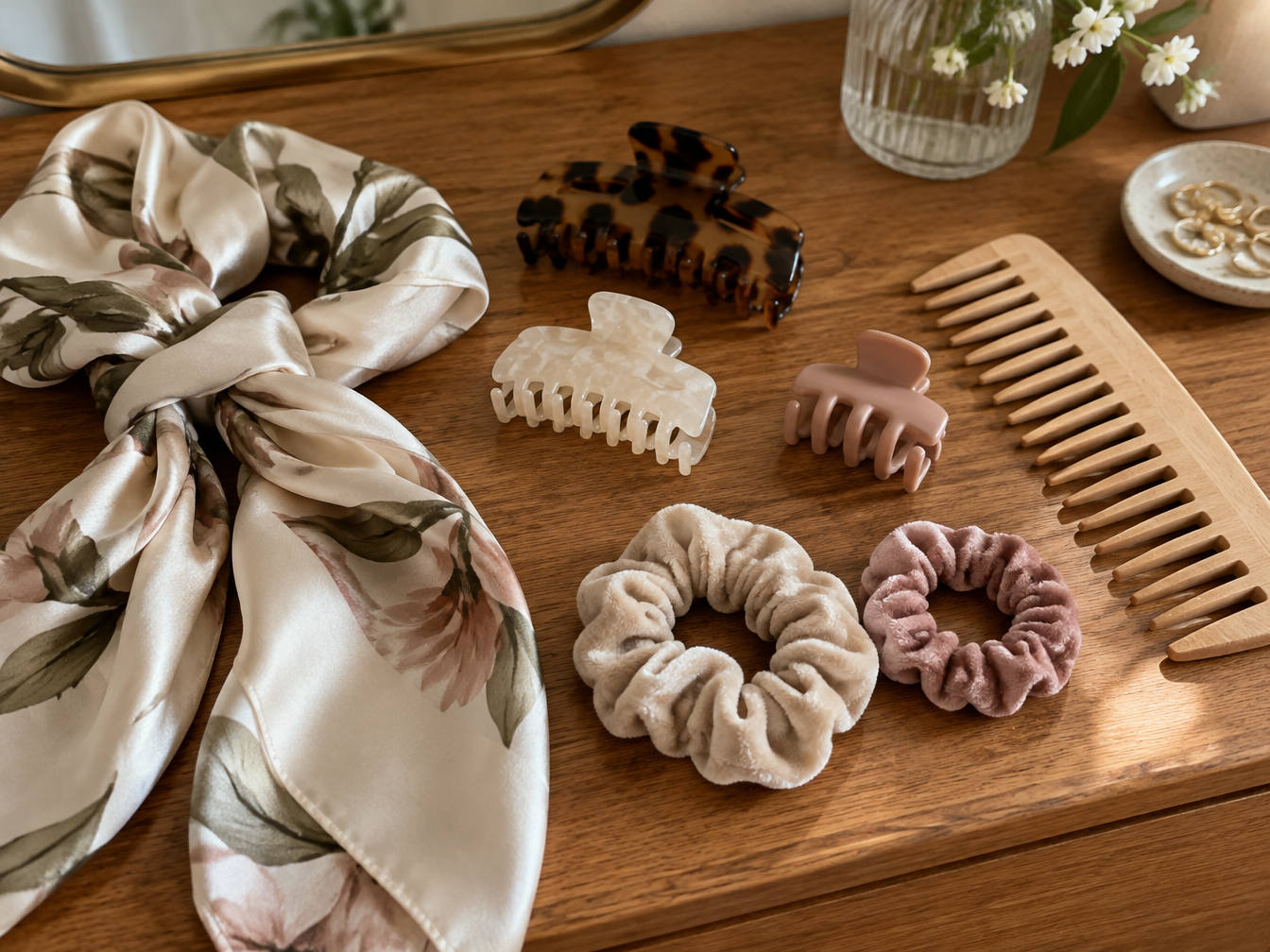
Here is what actually worked, in the order I discovered it, and I would like it noted that none of it was glamorous.
Braids Overnight
Two loose braids on damp hair, left in while I slept, gave me a soft wave by morning with no tools at all. It looked like I had a secret. It also looked slightly different every day, which I came to like.
The Low Bun That Looks Like a Decision
A low twisted bun with a few pieces pulled out near my face became my work uniform. On days I had no patience at all, I leaned on easy buns for the mornings I had zero time, and honestly felt like a woman with her life together, which is a strong effect for a hair tie.
Silk, Scarves and Headbands
A silk scarf folded into a band covered the exact part of my head I was most self conscious about, and it made me feel like a French woman in a film, a film where she is mildly annoyed but wins.
None of these looked like my old hair. That was the point. They looked like a new relationship with my hair, and new relationships are awkward before they are good.
Week Two and the Frizz Truce

Around day ten, something shifted. My hair stopped fighting me quite so loudly. The frizz was still there, but it had stopped feeling like an enemy and started feeling like weather.
I think a lot of us treat frizz as proof that we failed. If your hair frizzes, you did something wrong, you skipped a product, you slept badly, you are not trying. It took me ten days of not trying to straighten it away to notice that frizz is mostly just hair being hair. I had written about this feeling before, in a post about what static, frizz and hat hair taught me about letting things be messy, and I was surprised to find that I had to relearn the lesson in my own bathroom.
I started using a lot less product. I stopped brushing it dry. I put a little leave-in conditioner on the ends and left the rest alone. When I touched my hair, it felt different, a bit softer at the ends, like a fabric that had been washed enough times to stop being stiff.
Is that science? I cannot promise it is. A salon article I read says heat damage cannot truly be reversed, and that mild damage might look better within weeks while severe damage can take months [2]. What I can say is that my hair felt less like straw and more like hair, and I will take that as a win without overclaiming it.
The Stranger Who Showed Up in My Mirror
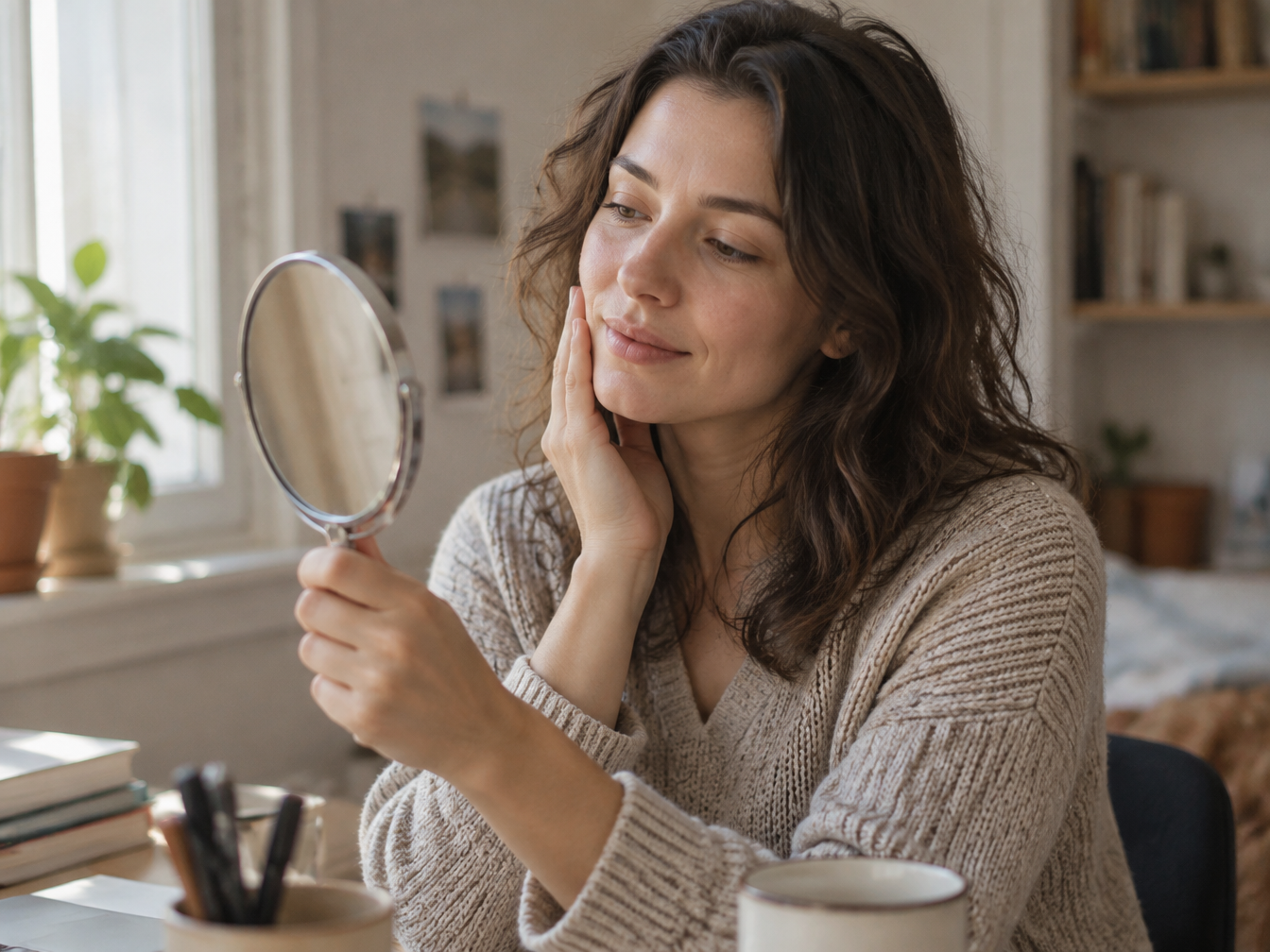
By week three, I started to see someone in the mirror I did not recognize, and I do not mean my hair.
I mean that I was looking at my own face for the first time in years without the frame I had built around it. For nine years, every outfit, every photo and every mood had been arranged around the smooth, straight line of my hair. Take that away and my face looked different. Softer, maybe. A little more tired, a little more alive.
I thought a lot about why a bad hair day feels like a bad everything day. I wrote a whole piece about it, about why a bad hair day is never really about your hair, and the short version is that hair is one of the few parts of us we can change fast and in public. So when it fails, it feels like we failed in public too. It is a very small stage for a very large feeling.
A coworker said, unprompted, “Your hair looks really natural lately.” She meant it as a compliment. I said thank you, and then went to the bathroom and stood there for a minute, because I did not know how to feel about the word “natural.” Had I been looking unnatural? For nine years? Apparently the answer was yes, and also no, because I had liked it. I had genuinely liked it. Both things were true.
Why I Really Started Straightening It
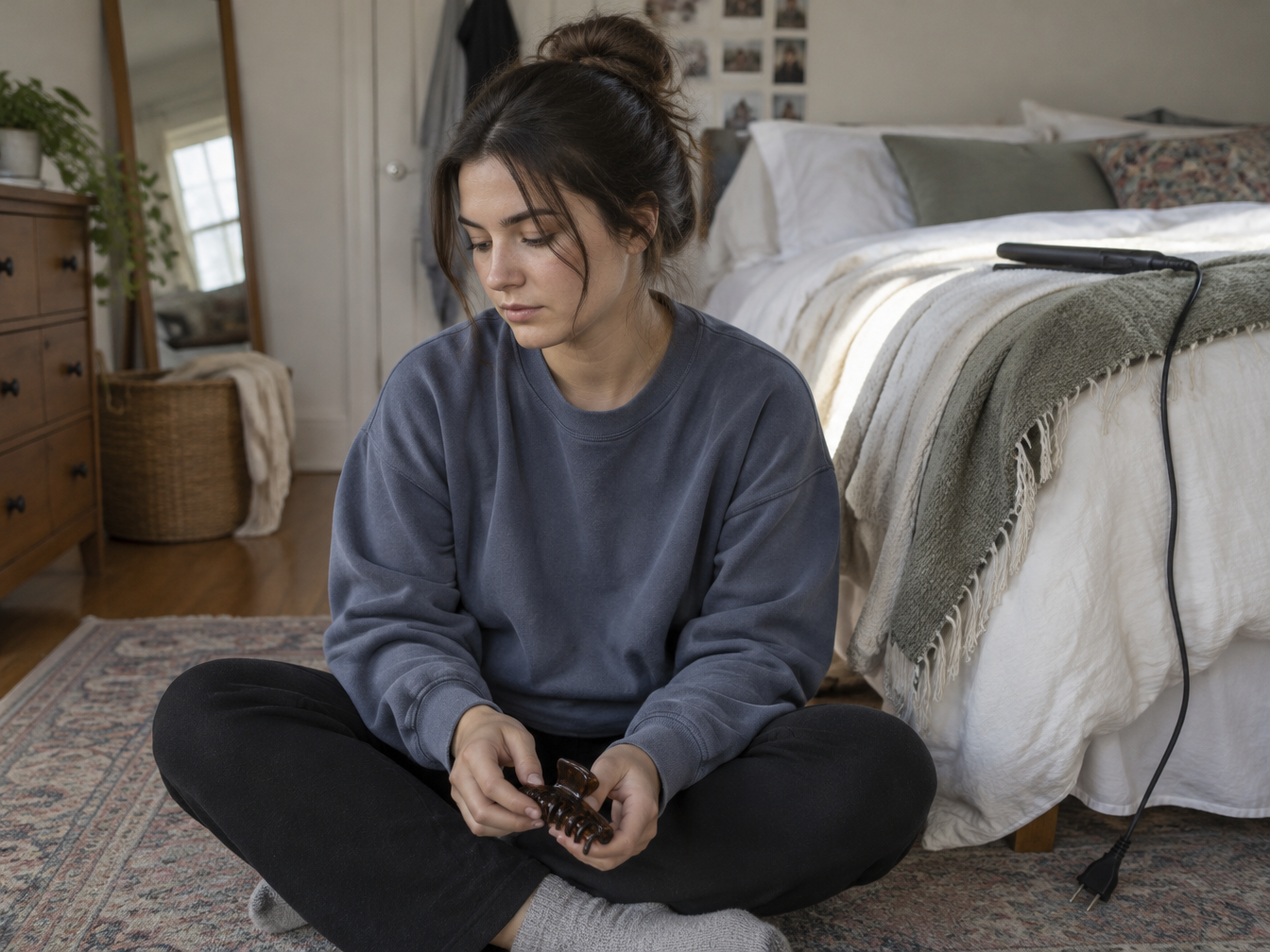
In the last week I finally let myself ask the question I had been avoiding. Why did I start?
I was fifteen. A girl in my grade said my hair looked “like a science project,” and everyone laughed, including me, because that is what you do. I went home and begged my mother for a flat iron. She bought me one with a look I did not understand until I was much older.
That was it. A single sentence from a fifteen year old, and I built almost a decade of mornings on top of it. The iron was never really about style. It was armor, and I had been wearing it so long I forgot it was heavy.
This is the part of the month I did not see coming. I thought I would write about split ends and shine. Instead I found myself crying on the floor of my bedroom, holding a claw clip, grieving a girl who thought her hair was a problem to be solved. It is strange how a haircut, a color or a style can carry that much. I felt the same pull when I wrote about the winter haircut that made me start over, because hair is never only hair. It is a diary we wear on our heads.
Going Back to the Iron Without Going Back to the Old Me
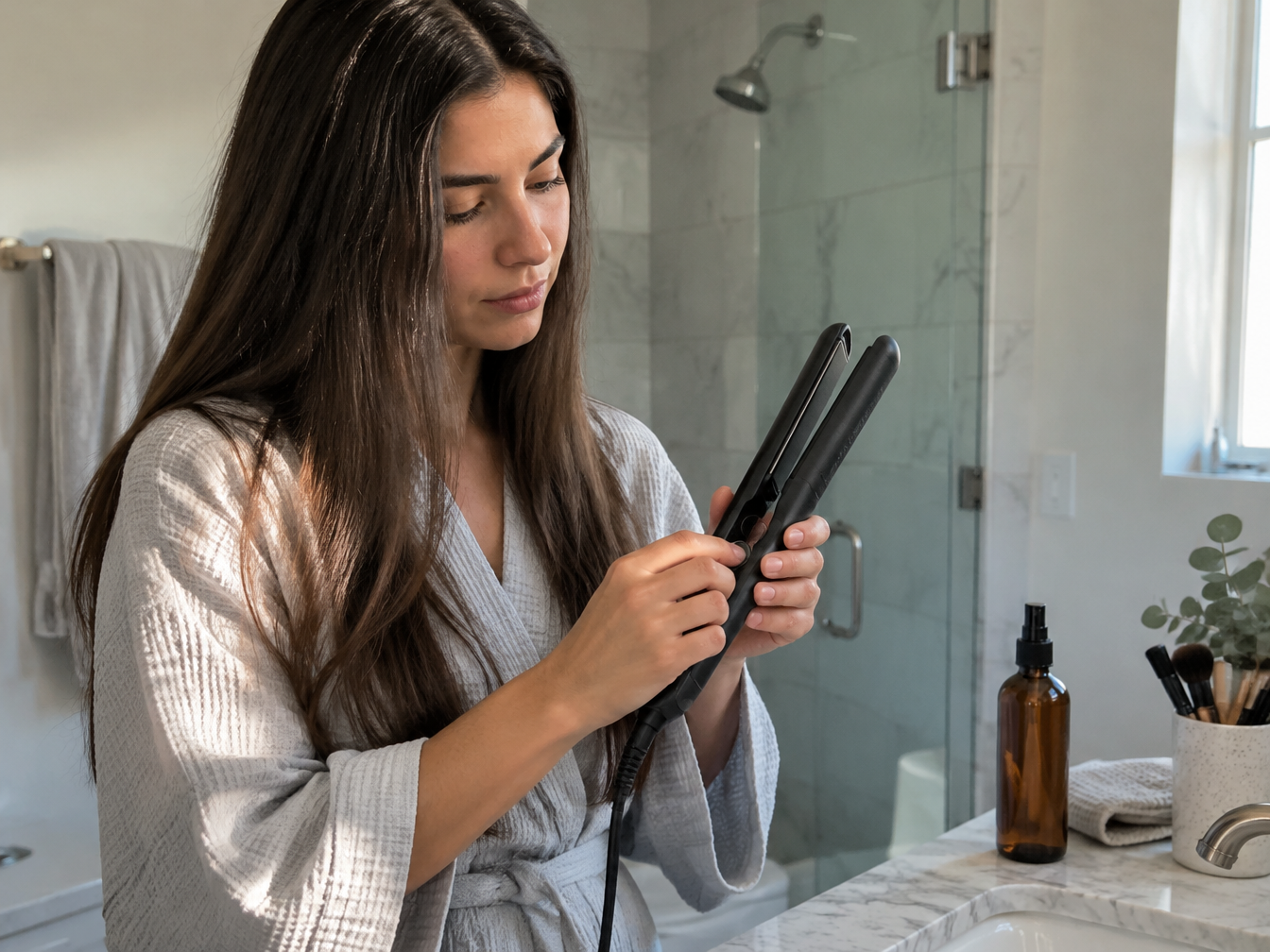
On day thirty-one, I plugged the iron back in. Not out of defeat, and not out of triumph either. Just because I wanted to, which turned out to be the entire difference.
I did a few things differently, and they are the most practical part of this whole story, so here they are.
I turned the temperature down. A salon guide I trust suggests fine or thin hair stay around 250 to 300°F, and thick or coarse hair somewhere around 350 to 450°F, with a heat protectant every single time [2]. A stylist piece I read goes even lower and says normal healthy hair rarely needs more than about 170 to 180 degrees, with a ceiling around 200 [3]. I checked the unit on my iron, realized I had been running it at the highest possible number for nine years, and laughed out loud.
I made sure my hair was completely dry first. The same stylist article is firm that you should never use an iron on damp hair, because trapped water turns to steam and can create tiny cavities inside the strand [3]. I had definitely done this. Many times.
I kept the blow dryer moving and a good distance away. The advice was at least fifteen centimeters, because damage increased as the dryer got closer [3]. And I decided on two or three no-heat days a week, which is not a rule so much as a mercy.
If you want help getting a smoother blowout without frying your hair, this guide on fixing a puffy, flat or fried blowout routine is a good place to start, and it fits the new, gentler way I handle my own.
The surprising part is that I do not reach for the iron every day anymore. Some mornings I want it. Most mornings I do not. My hair has started to feel like a roommate I finally like, not a project I am failing.
The month did not teach me to love my hair. It taught me to stop apologizing to a mirror, and that turned out to be the part I actually needed.
Sources
- Establishment of Heat-Damaged Model for Hair, Journal of Cosmetic Dermatology, 2025. https://pmc.ncbi.nlm.nih.gov/articles/PMC12308778/
- How to Repair Heat Damaged Hair, Wella Professionals. https://www.wella.com/professional/en-US/blog/hair-care/repair-heat-damaged-hair
- Hair Styling Temperature, Kevin Murphy. https://au.kevinmurphy.com.au/blogs/news/hair-styling-temperature
Leave a Reply