The Chair I Sat Down In Already Crying
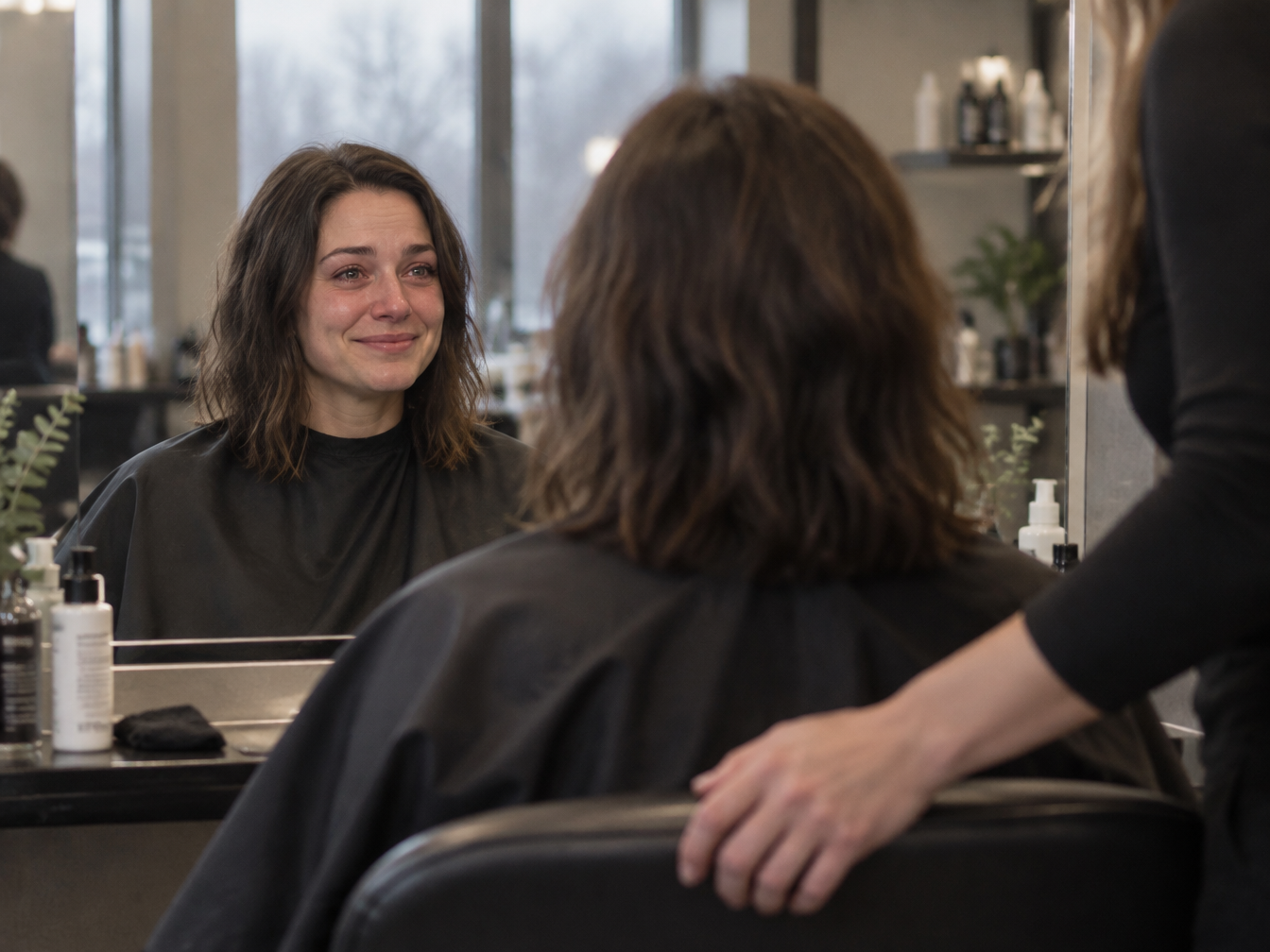
I did not plan to cry at the salon. I want that on the record.
I planned to walk in, say “just a trim,” and walk out with exactly the hair I walked in with, minus half an inch of split ends. A reasonable adult errand. Instead, the second the stylist wrapped the cape around my shoulders and met my eyes in the mirror, I said, “I think I need something different,” and my voice cracked on the last word.
She did not flinch. She had clearly seen this before. She just set down her comb, rolled her chair a little closer, and said, “Okay. Tell me what’s going on.”
It was a gray Thursday in late November. I had spent the whole autumn feeling like I was wearing someone else’s life. A job I’d outgrown. A relationship that had ended so quietly I could not point to the day it stopped. A mirror that kept showing me a version of myself I had last updated about three years ago, the same long, heavy, center-parted hair I’d had since college.
That hair had started to feel like a costume I was too tired to take off.
So I did the thing so many women do. I sat in a chair and asked someone to help me start over.
Why It Is Always Hair
If you have ever had a big life change and immediately wanted a haircut, you have company. It’s one of the most recognizable moves there is, and there is a pretty clear reason for it.
Dr. Adaline Ng, a clinical psychologist quoted by Singapore’s Women’s Weekly, explains that for some women a new hairstyle symbolizes a new beginning, and for others it’s a way to regain a sense of control. She also notes that changing your hair is a relatively safe way to enact change, because it will grow back, and it’s less drastic than something like moving or making a big purchase [1].
That landed hard for me. When your life feels like it’s happening to you, hair is one of the few things you can decide about before lunch. You can’t undo a breakup or rewrite a résumé in an afternoon. You can change your part.
The same piece quotes hairstylists who say the big-change requests aren’t always breakup-related. Sometimes it’s a promotion, a move, or a new chapter, and clients often say they want to start loving and caring for themselves [1]. Which is exactly what I said in that chair, just with more crying.
I’ve written before about things women do to their hair before a big life moment, and what struck me is how consistent the ritual is. Nobody walks in asking for a haircut. They walk in asking for permission.
What I Asked For, and What She Heard

My stylist’s name is Dana. I will not tell you the salon, because Dana does not need more people trying to book her.
I opened with the vague, desperate version: “Something that feels lighter. Something that feels like me.” She nodded gravely, as if that were a normal request, and then asked the questions that actually mattered.
How do you wear your hair on a regular day? (Up, mostly, in a clip, in the car.) What do you do when it gets in your face? (Get mad.) What did you love about your hair when you were happiest with it? (Silence. A long one.)
I realized I had no answer, because I hadn’t been happy with it in years. I had been keeping it long out of loyalty to a person who no longer looked at it.

Dana set a boundary I’ll always be grateful for. She said, “I’ll cut it. But I won’t cut it in anger.” She told me to pick a length I’d still want in six weeks, not just in the heat of tonight. We landed on a soft, collarbone-grazing cut with face-framing layers and a bit of movement at the ends. Not a dramatic chop. A real change, but a survivable one.
If you’re standing at that edge yourself, steal her question. (And if color is what’s calling you instead, what your hair color change is actually about covers the same instinct from the other side of the chair.) Not “What do I want to get rid of?” but “What would I still want in six weeks?” The first question is about escaping. The second is about arriving.
The Part Where I Panicked
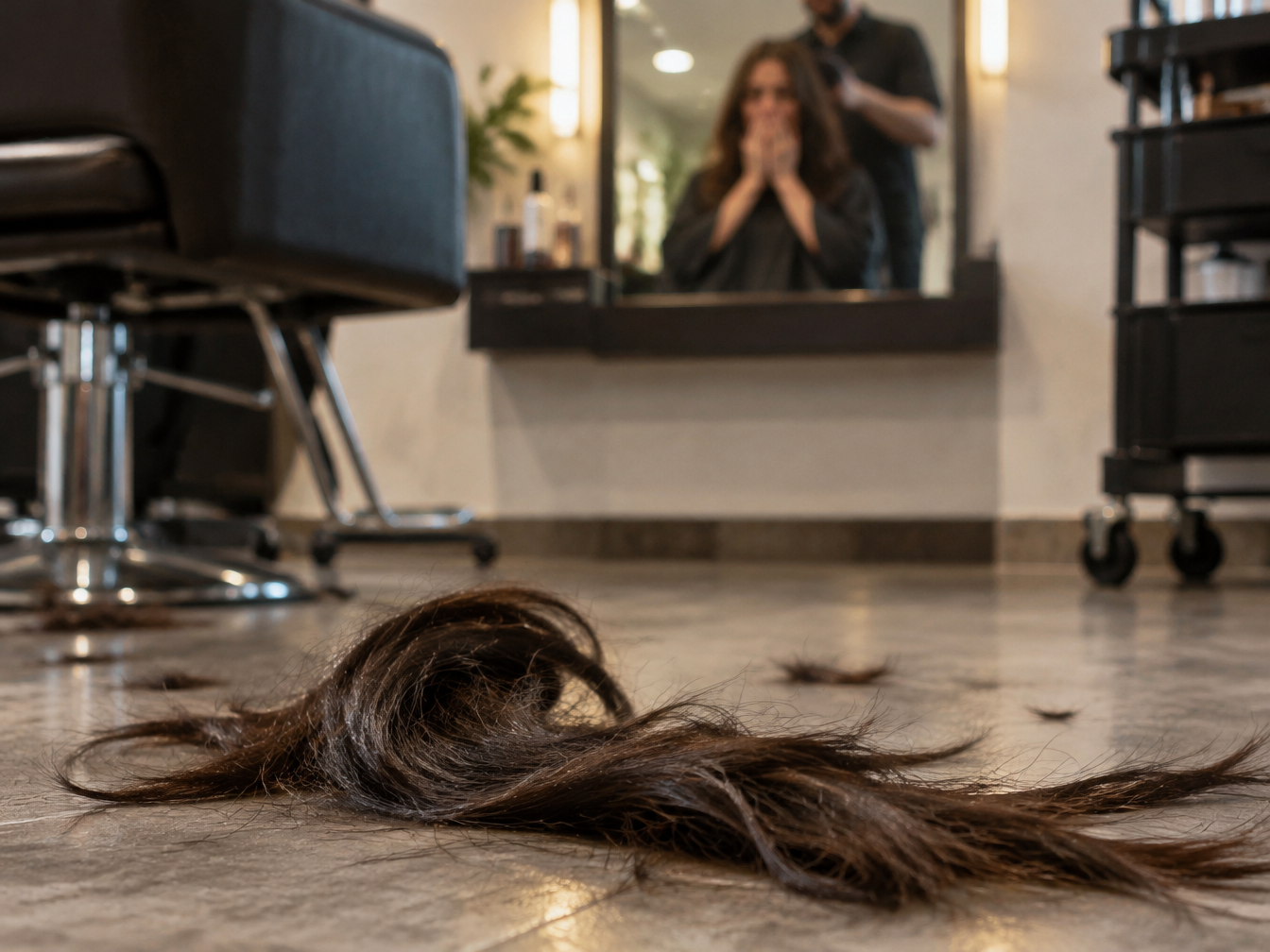
Eight inches of hair fell to the floor. It was a lot more dramatic than I expected. I watched it land in a dark, heavy curve around the chair, and for one awful second I thought: *what did I just do.*
I think everyone has that moment. Even if you love the result, there is a flicker of grief for who you were. The stylists in that Women’s Weekly article say it takes a couple of days to adjust to a big change [1]. Nobody mentions it takes a couple of hours for your stomach to catch up.
Dana, who has apparently seen every stage of this, handed me a tissue and a glass of water without a word. There’s an unspoken kindness in a salon that I think we undervalue. A stranger holds a mirror up to you, literally, and then makes sure you’re okay. Then Dana turned the chair toward the mirror, and the strangest thing happened. I looked at the woman in the glass and felt something I hadn’t felt in months: I recognized her.
Not because the hair was perfect. Because it had a decision in it. For the first time in a long while, something about my appearance was a choice instead of a leftover.
I touched the ends. They swung. I laughed, a small, wet, embarrassed laugh, and Dana grinned like someone who had been waiting for it.
The short version of why a haircut is rarely about the hair is that we are always telling ourselves a story, and the mirror is where we revise it.
What It Quietly Fixed

I expected a better silhouette. I did not expect the quieter repairs.
First, my mornings got easier. When my hair was long and heavy, I’d spend twenty minutes wrestling it into a bun I didn’t love. Now I wash it, scrunch in a little leave-in, and I’m done. That’s twenty minutes of every day returned to me, which over a winter is a small mountain of time. And on the days when my new shorter hair has other plans, I still reach for a clip. I just have more fun with it now, which is a lot of what claw clip hairstyles that look intentional is about. A cut that can be clipped, tucked or left alone is a cut that forgives you.
Second, my posture changed. I know that sounds ridiculous. But when my hair was a weight, I carried myself like I was carrying a weight. With the shorter cut, my neck felt exposed in a way that made me stand up straighter, like someone with a reason to be seen.
Third, and this is the one I did not see coming, I stopped hiding. I’d had a habit of pulling my hair forward over my shoulders like a curtain. Without it, I had to let people see my face. And it turned out that my face was fine. It was tired and honest and mine. I also noticed that I stopped checking my reflection in every window I passed. When you’re no longer trying to hide, there’s less to monitor.
I would not say the haircut fixed my life. That’s too much to ask of a pair of scissors. But it did something more useful. It gave me a visible starting line. The job, the breakup, the lonely autumn, all of it was still there, but now I was standing in front of it looking like a person who had decided to begin.
I think that’s why this ritual endures. A haircut is a small, public, reversible vow. It says: *from here, things are different.* And the world, usually, believes you.
The Winter Rules Nobody Warned Me About
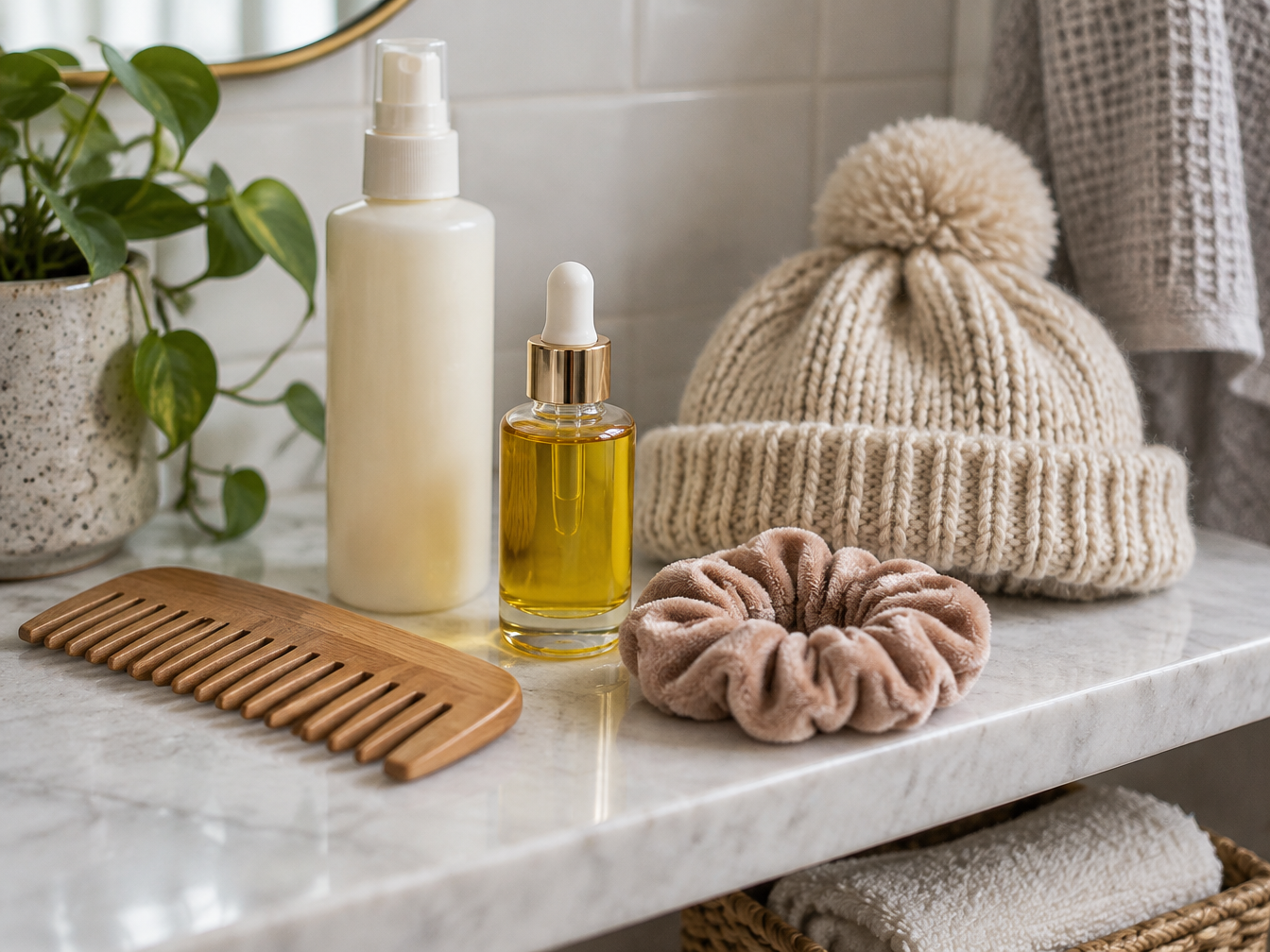
Here’s the practical part, because a good winter cut needs a good winter plan. If you’re already eyeing a new shade to go with the cut, copper and chocolate hair colors for fall and winter is where I’d start, but hold that thought for a few weeks.
Cold weather is hard on hair. A Cleveland Clinic article describes the combination of cold outside air, dry indoor air, static electricity, harsh water chemicals and hat hair, and quotes dermatologist Wilma Bergfeld, who says to treat your hair like a cashmere sweater [2]. I loved that. It’s gentle, it’s a little luxurious, and it’s the right mindset for a fresh cut.
Some of the habits I’ve adopted, based on her advice and my own trial and error:
- Keep it moisturized. Dr. Bergfeld says static happens when moisture can’t penetrate the hair strands, and that keeping hair hydrated is the best way to fight it [2]. A leave-in conditioner is now a permanent resident in my bag.
- Go easy on the brush. She recommends being especially gentle with wet hair, because wet strands are more fragile, and using a wide-tooth brush [2].
- Do not skip the trims. The same article suggests trimming roughly every six weeks to remove damaged ends [2]. Which, funny enough, is the exact timeline Dana made me imagine.
- Be careful with tight styles. Buns and tight bands can cause breakage, so she suggests softer fabric bands over rubber ones [2]. This was a humbling note for a woman who spent a decade yanking her hair into rubber bands.
- Space out color. The article mentions the American Academy of Dermatology’s advice to wait eight to ten weeks or longer between chemical services in the dry months [2].
On that last point, if you’re tempted to go from a new cut to a new color, give your hair a minute. A cut is a hello. Color can wait for the second date.
The Version of Me It Gave Back

It has been a few weeks. The grief is gone, and what’s left is something plain and good.
I get compliments, which is nice, but that’s not the point. The point is a Tuesday morning when I caught my reflection in the elevator doors on the way to work and didn’t flinch. I just thought, *oh, there she is.*
I used to believe a bad hair day meant I was failing at something. Now I lean on what I learned in why a bad hair day is never really about your hair: the day’s mood leaks into the mirror, not the other way around. Some mornings the layers sit perfectly. Some mornings they do not. Both versions of me still get to leave the house.
She looks a little different from the woman who walked into that salon. She stands taller. She’s lighter around the shoulders. She seems like someone who knows what she’s doing, even on days when she’s just guessing.
I know a haircut cannot rebuild a life. But sometimes you need a doorway before you can walk through it, and a good stylist can build you one in forty-five minutes.
If you’re hovering over a booking button right now, cry in the chair if you have to. Let the hair fall. Let someone kind hold the scissors while you decide who you’re going to be next.
It grows back. That’s the whole beauty of it. You’re allowed to start over, and you’re allowed to start small.
Sources
- “Why Do We Change Our Hair Dramatically After Going Through A Break-Up?,” The Singapore Women’s Weekly, May 31, 2022. https://www.womensweekly.com.sg/your-life/why-do-we-change-our-hair-dramatically-after-going-through-a-break-up
- “How to Keep Your Hair Healthy This Winter,” Cleveland Clinic Health Essentials. https://health.clevelandclinic.org/your-best-strategies-for-beautiful-hair-in-the-winter
Leave a Reply