The Crack I Decided Not to Notice

The crack showed up on a Tuesday, in the corner of my bottom lip, and I decided on the spot that it did not exist. I had a deadline, a landlord to email, a group chat I was avoiding, and a long list of problems that deserved a real adult’s attention. A tiny split in my mouth was not on the list.
By Friday it stung every time I laughed. By the following Wednesday it bled when I bit into a sandwich, and I stood at my desk with a napkin pressed to my face, feeling strangely betrayed by my own body.
Here is what bothered me afterward. I wasn’t ignoring the crack because it was small. I was ignoring it because dealing with it meant admitting I had been running on empty for weeks. The lip was just the first thing to break loudly enough to hear.
Why Lips Are the Most Honest Part of Your Face
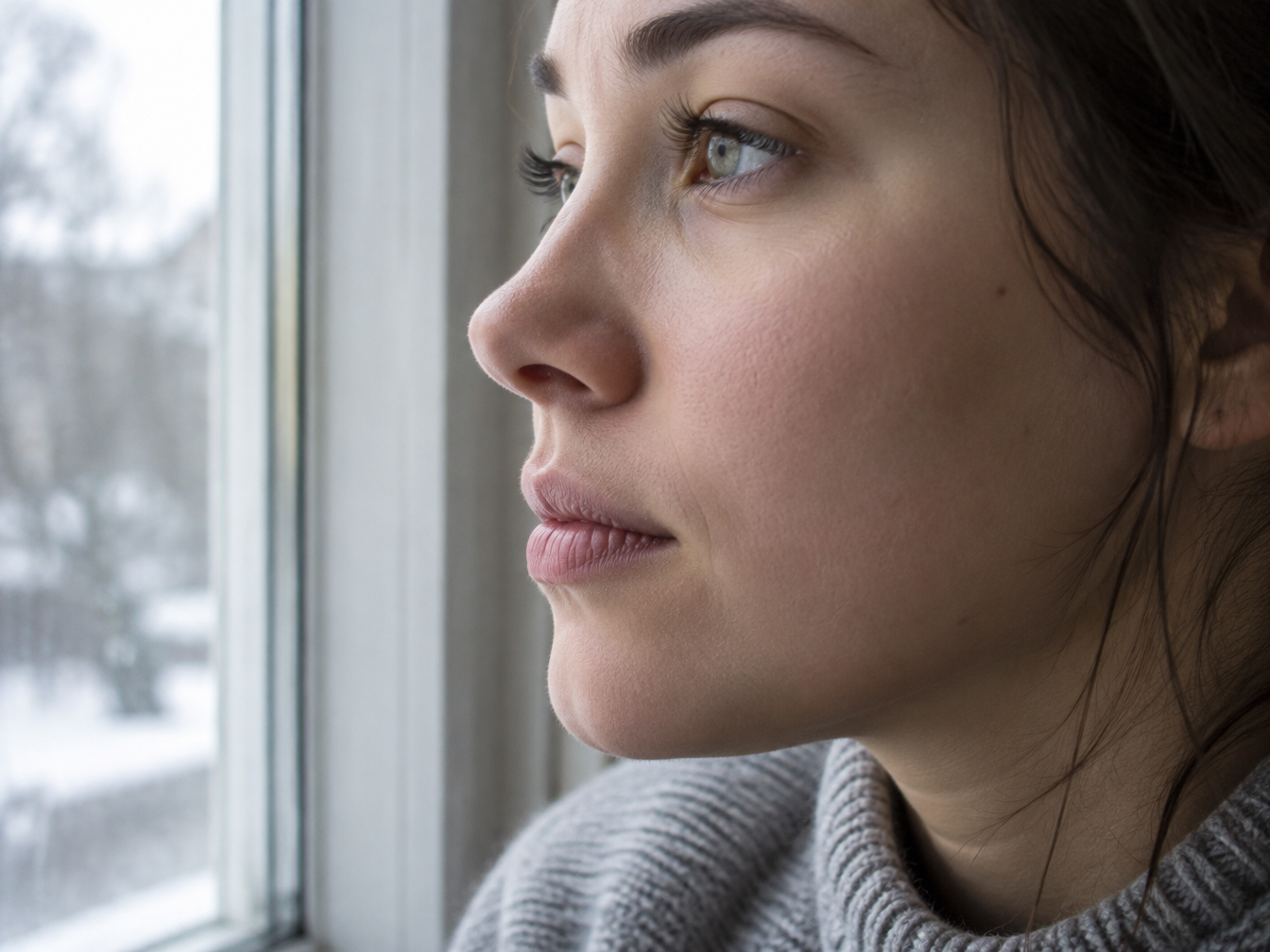
Your lips cannot lie to you, and that is not poetry, it is anatomy. Lip skin is thinner and more sensitive than skin elsewhere on the body, and lips have no oil glands of their own, which is why they dry out so easily [1]. One dermatologist quoted by Live Science put it plainly: the skin on your lips has a thinner protective barrier than the rest of your face. The tissue has only three to five layers and no hair follicles or sweat glands, while the skin on the rest of your face can be up to six times thicker [2].
So your lips don’t get to hide. Everything shows up there first, the cold air, the sun, the dehydration, the weeks of sleeping badly and surviving on iced coffee. Cleveland Clinic lists sun exposure, cold or hot weather, dehydration and frequent lip licking among the usual causes, and notes that allergies, thyroid problems and some vitamin deficiencies can also play a part [3].
I think that is why a dry mouth feels so personal. A dry elbow is an inconvenience. A cracked lip is the first thing someone sees when you talk to them, and you can feel it every time you speak, eat or smile.
The same thing happened to my skin the winter I first noticed it. I wrote about the tearful bathroom moments in the winter skin routine that finally helped, and the lesson was the same one my lips were now repeating. The body whispers first. We just get good at ignoring whispers.
The Licking Habit Nobody Admits To

Let me confess something that I did not know was a problem. Every time my lips felt dry, I licked them. It felt like relief. It was the opposite of relief.
Saliva contains enzymes, including amylase and lipase, and when it dries it strips away the lips’ thin oily layer. Over time those enzymes can irritate the skin even more [2]. The American Academy of Dermatology says the same thing in simpler words: saliva evaporates and leaves your lips drier than before, so when you feel the urge to lick, reach for balm instead [1].
I had built a habit out of a feeling, and the habit kept the feeling alive. Lick, dry, lick, dry. It is a small loop, and most of us have a version of it somewhere in our lives. A text we check, a pimple we pick, a worry we press on like a bruise because pressing is easier than sitting with it.
Cleveland Clinic also lists picking and biting among the things to stop, along with holding pens, jewelry or metal objects in your mouth [3]. I looked down at the pen cap I had been chewing on for the entire length of that deadline week and laughed out loud, which, naturally, hurt.
What Winter Air Does While You’re Not Looking
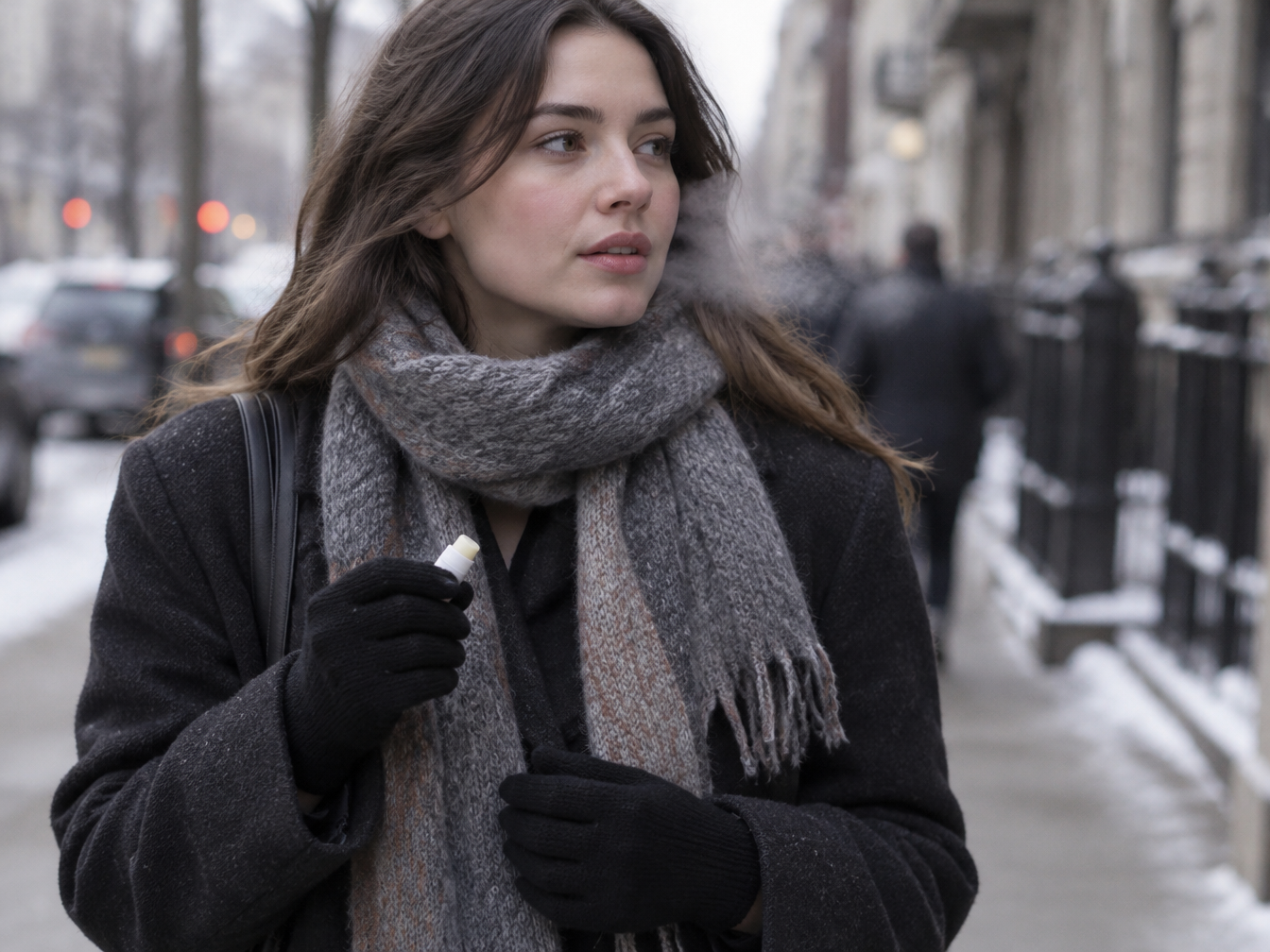
Cold air holds less moisture, and indoor heating dries out whatever is left. Live Science describes the result as cracking, peeling and sometimes bleeding, and points out that a stuffy nose can push you into mouth breathing, which exposes your lips to even more air [2].
That detail changed how I thought about my nights. I had been waking up with a mouth like sandpaper and blaming the heater, the wine or the universe. Nobody told me that a cold plus a dry bedroom plus a sleeping mouth hanging open was basically a recipe. The American Academy of Dermatology suggests a humidifier, especially if you breathe through your mouth at night [1].
Sun matters too, which surprised me in November. The same dermatology advice says to use a lip balm with SPF 30 or higher before heading outdoors, even in winter, and to reapply about every two hours while you are outside [1]. Cleveland Clinic gives the same guidance [3]. I had spent years carefully putting sunscreen on my face and forgetting that my mouth was standing right there in the same daylight.
I started keeping a humidifier by the bed and an SPF balm in my coat pocket. It sounds like nothing. It was the first time in weeks that I had done something for myself before it hurt. It lives in the same family as cozy socks and slippers, the most underrated self-care, the kind of care that nobody applauds and your body quietly thanks you for.

The Lip Balm Aisle Is Lying to You a Little
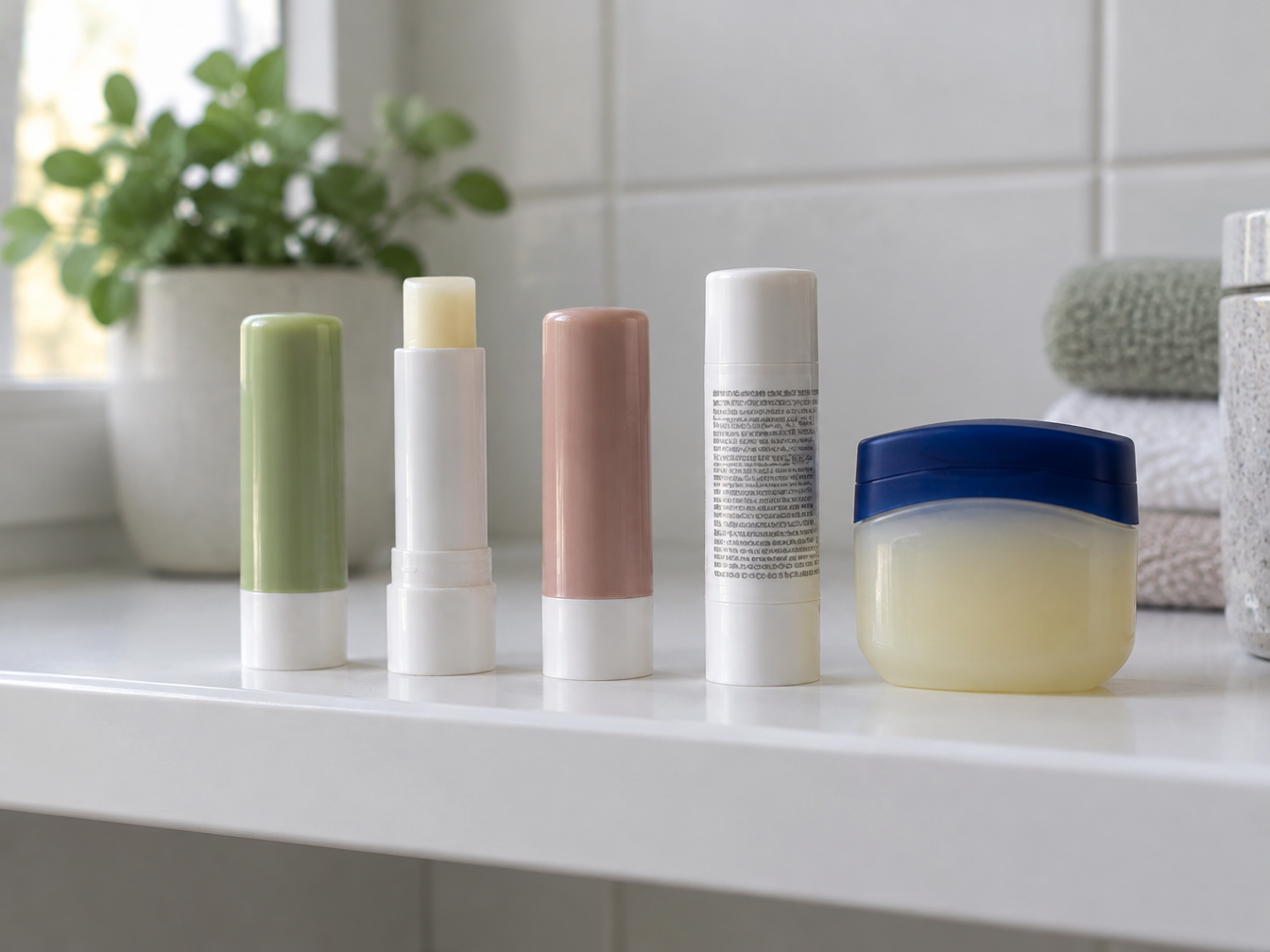
Here is the part that made me feel slightly scammed. Some of the lip products I had been using for years were irritating my lips.
The American Academy of Dermatology recommends avoiding camphor, eucalyptus, menthol, lanolin and fragrance while your lips are chapped, along with strong flavorings such as citrus, mint, peppermint and cinnamon. It also flags octinoxate, oxybenzone, phenol, propyl gallate and salicylic acid. And it gives a rule I now live by: if a product burns, stings or tingles, stop using it, because that feeling means you are irritating your lips [1].
I had always assumed the tingle meant it was working. That cooling, minty buzz felt like proof. It was just a very pleasant way of poking an open wound.
What they recommend instead is almost boring. Petrolatum, mineral oil and dimethicone. Shea butter, castor seed oil, hemp seed oil and ceramides. Zinc oxide or titanium oxide if you want sun protection. Fragrance-free and hypoallergenic when you can find them. For very dry, cracked lips, a thick ointment like plain petroleum jelly [1]. Cleveland Clinic’s list is nearly identical, adding glycerin to the helpful column [3].
The beauty industry loves to sell us something exciting. My lips wanted something dull. It is the same instinct behind the gentle night skincare routine I tried for three weeks, where the quiet, unexciting steps did all the real work.
The Test I Use Now
Before I buy any balm, I turn it over and read the back. If it has fragrance, a flavor or a cooling ingredient high on the list, it goes back on the shelf. If it feels like a product designed to be loved at first sniff, I assume it was not designed for healing. This is my own rule of thumb, not a medical one, but it has saved me from several expensive little tubes.
A Boring Routine That Quietly Works
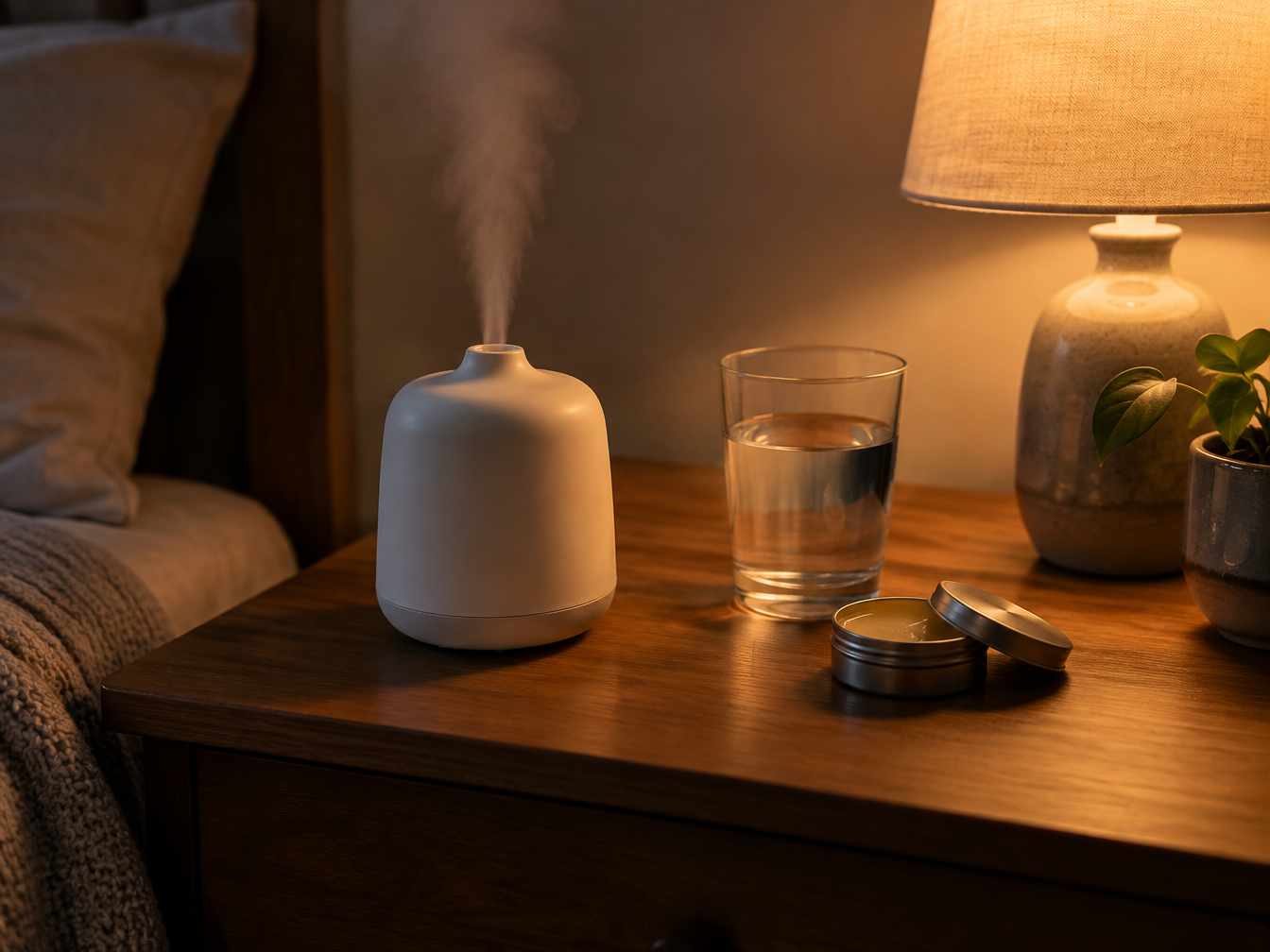
Once I stopped looking for a miracle, I built a routine so simple I almost felt embarrassed describing it.
In the morning, I put on balm with SPF before I leave the house. After meals, I reapply, because Cleveland Clinic advises using balm through the day, after eating and drinking, and at night [3]. Before bed, I put on a thick layer of ointment and let it do its work while I sleep. I drink water. I run the humidifier. When I catch myself licking, I swap the habit for the balm.
I noticed something that I think is true of most self-care. The routines that work are rarely the ones that feel glamorous. They are the ones you can do half asleep.
The American Academy of Dermatology says most people see noticeable improvement within two to three weeks of consistent care [1]. Cleveland Clinic says chapped lips typically take two to three weeks to heal fully, and that treating them early speeds recovery and lowers the risk of infection [3]. Two to three weeks is not long. It is also long enough for an ignored problem to teach you something about patience.
When Lipstick Became a Question Instead of a Cover-Up
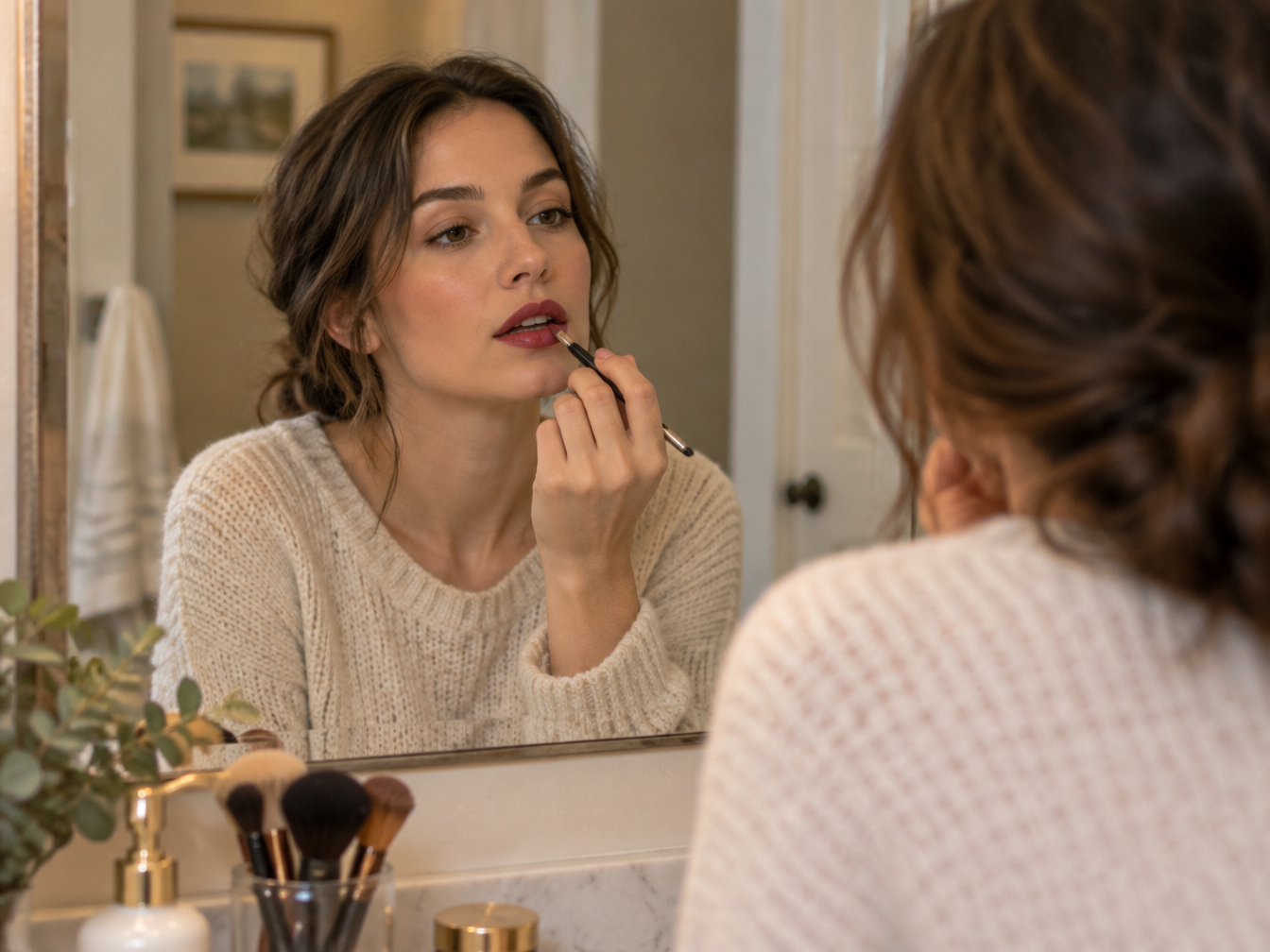
I will tell you something that I did not expect. For the first week, I could not wear lipstick at all. Anything that wasn’t ointment felt like an insult.
I used to reach for color the way some people reach for a good coat, quickly and without thinking, to feel put together from the outside while something else stayed unsolved. I have written about the red lipstick I was too scared to wear and about how much of that fear was really about being looked at. This time it was the opposite. I was scared to wear it because I knew what was underneath.
When my lips began to heal, I tried color again, carefully. Winter shades can be forgiving once the skin is calm, and a dark berry has an easy, moody confidence that doesn’t need a perfect canvas. But I started doing something new first. Prep, then pigment. Balm for ten minutes, a tissue to blot, then color. Lipstick on cared-for lips looks like a decision. Lipstick on neglected lips looks like a bandage.
I think the best makeup is a continuation of kindness, not a replacement for it.
When a Small Thing Is Telling You Something Bigger

Here is the part that matters most, and it is not very glamorous. Sometimes chapped lips are not just chapped lips.
The American Academy of Dermatology says that if your lips do not improve after two to three weeks of self-care, you should see a board-certified dermatologist. Other causes include allergic reactions and yeast infections, and actinic cheilitis, a precancerous condition that makes lips dry and scaly, needs a proper diagnosis [1]. Cleveland Clinic gives similar guidance: see a provider if the problem gets worse, if the bleeding is frequent and does not respond to home care, or if symptoms are persistent or severe, since they can point to an underlying condition [3]. Live Science adds that cracked lips can become infected by microbes such as Staphylococcus aureus and Candida albicans [2].
I am not a doctor, and nothing here replaces one. What I can tell you is what I wish someone had said to me sooner. A symptom that lasts more than a few weeks is not a personality flaw or a sign that you are being dramatic. It is information. Please go ask someone who can read it.
That goes for the small stuff in your life that isn’t lips, too. The fatigue you keep calling a busy season. The friend you keep meaning to call. The thing you decided did not exist.
The Small Things Are Not Small

A few weeks later, I was at a coffee shop, and the crack was gone. I noticed because I laughed at something and nothing stung. It was such a small relief that I almost missed it.
I keep thinking about how long I stood at my desk with that napkin, convinced I had no time for something that cost me almost nothing to fix. It took a balm, a bit of water and a humidifier. It took a willingness to stop and say, okay, I see you. That is really all a self-care Sunday is supposed to be, a standing appointment to notice yourself.
Most of us don’t fall apart in one big dramatic moment. We fray, quietly, at the corners. The unreturned messages, the skipped meals, the dry skin that we shrug off because we are too busy being strong.
So take the tiny thing seriously. Treat the small crack as if it were a person asking for your attention, because it is.
Your lips were never asking for much. Neither, I suspect, are you.
Sources
- How to Heal Dry, Chapped Lips, American Academy of Dermatology
- Why Do Lips Get So Chapped in Winter?, Live Science
- Chapped Lips, Cleveland Clinic
Leave a Reply