For about six years, I woke up at 6 a.m. to get ready for a job that started at nine. That’s three hours. I wasn’t doing anything impressive in those three hours. I was just standing in my bathroom, negotiating with myself.
Should I do the winged liner today? Do I have the energy? Is my hair worth washing? Did I wear this sweater on Monday? Would anyone notice? Did I even care?
By the time I finally left the house, I was already tired. Not tired from effort, exactly. Tired from deciding. And I’d carry that tiredness to my desk like a bag I couldn’t put down.
I want to tell you how I got my morning down to fifteen minutes, but I have to start with a confession. It wasn’t about efficiency. It was about the fact that I’d built my mornings into a performance, and I was the only audience member, and I was a terrible critic.
The Morning I Finally Counted
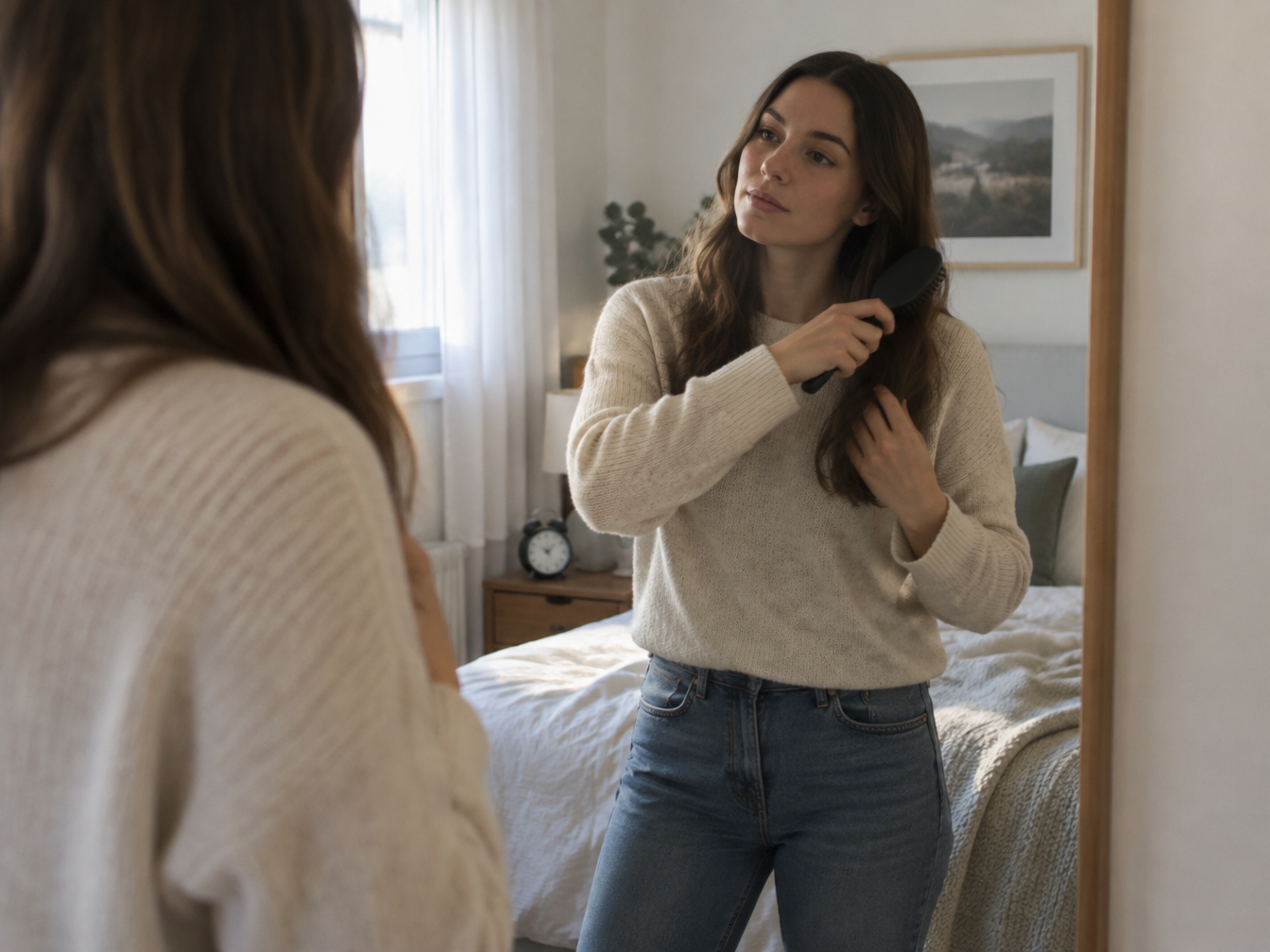
One Tuesday I set a timer on my phone and let it run while I got ready. I wasn’t trying to speed up. I just wanted to know.
Eighty-four minutes. That’s how long it took me to do a routine I would have described, if asked, as “pretty quick.” Eighty-four minutes of mirror, product, outfit swaps, a little spiral of doubt, a rescue attempt with dry shampoo, and one last glance at the full-length mirror that always ended with me adjusting something that didn’t need adjusting.
I stared at the number for a while. Then I did the thing I do when I’m embarrassed, which is I laughed.
The problem wasn’t that I’d been lazy or vain. The problem was that I’d been treating every morning as a fresh audition, and nobody had told me I could stop auditioning.
I think a lot of us do this. We inherit a picture of what “put together” looks like, and we try to rebuild it from scratch every single day, with no memory of what worked yesterday. Imagine a chef who invented the menu fresh each morning before service. It’s exhausting, and nobody asked for it.
Why My Counter Looked Like a Pharmacy
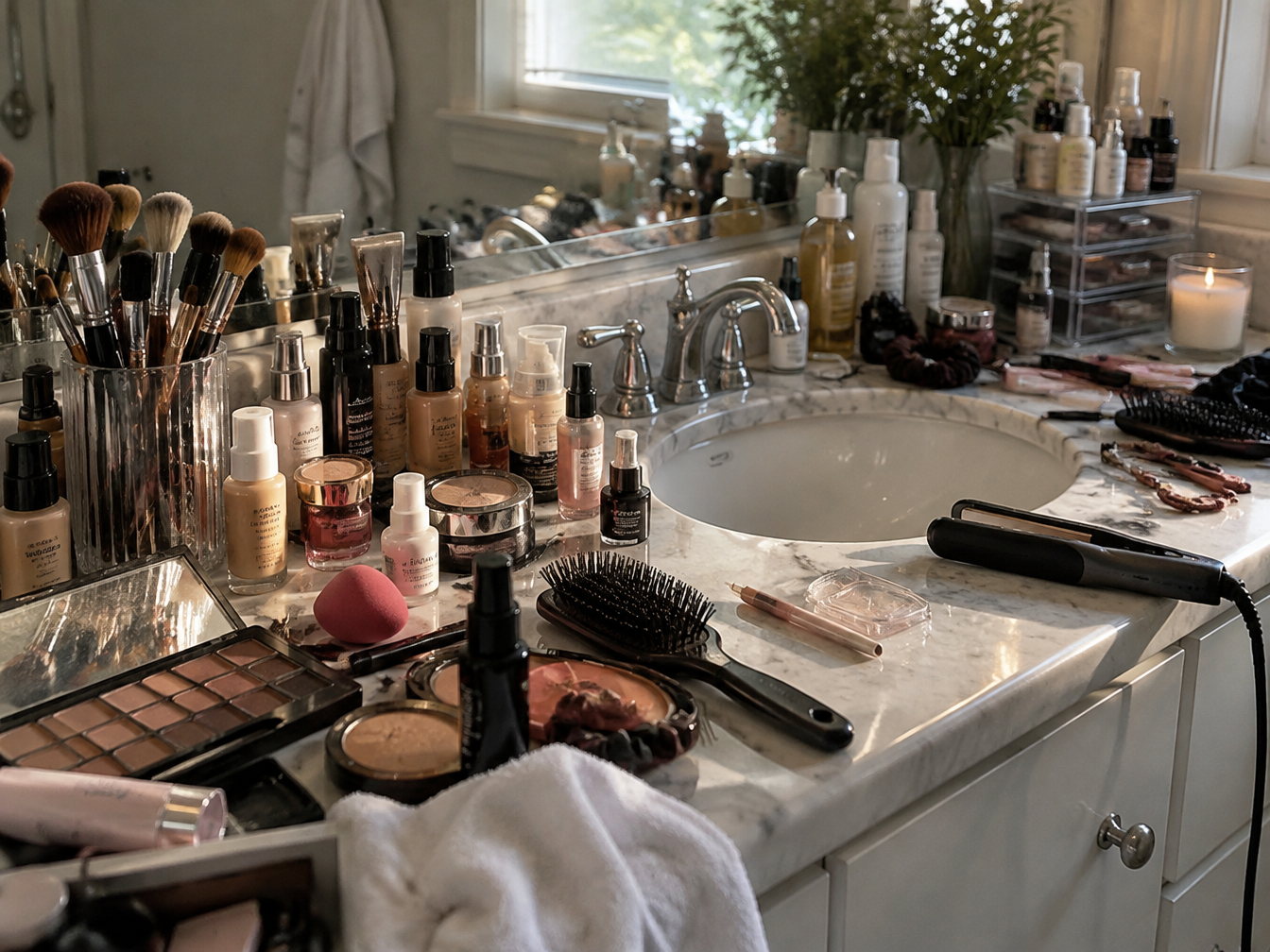
Here’s what my bathroom looked like at the time. Eleven lipsticks, four of which I’d worn once. Three foundations, none of which were quite right, so I’d mix two and hope. A drawer of brushes I couldn’t name. Two hair tools that lived on the counter permanently because moving them felt like admitting defeat.
More choices, I assumed, meant more freedom. What it actually meant was more morning homework.
I’d started to see the same pattern I’d noticed in other parts of my life. I wrote about it when I tried the clean girl aesthetic and found out what it really costs, because that look sold me the idea that effortless was a purchase. Eleven products to look like you used none. It’s a funny trick, and I paid for it for years.
What changed my mind was not a trend. It was a quiet realization that every product on that counter was a question I’d have to answer before breakfast. Which one? How much? Which shade today? Do I need the primer? Every question is a small decision, and small decisions pile up.
The Decision Fatigue Nobody Warned Me About
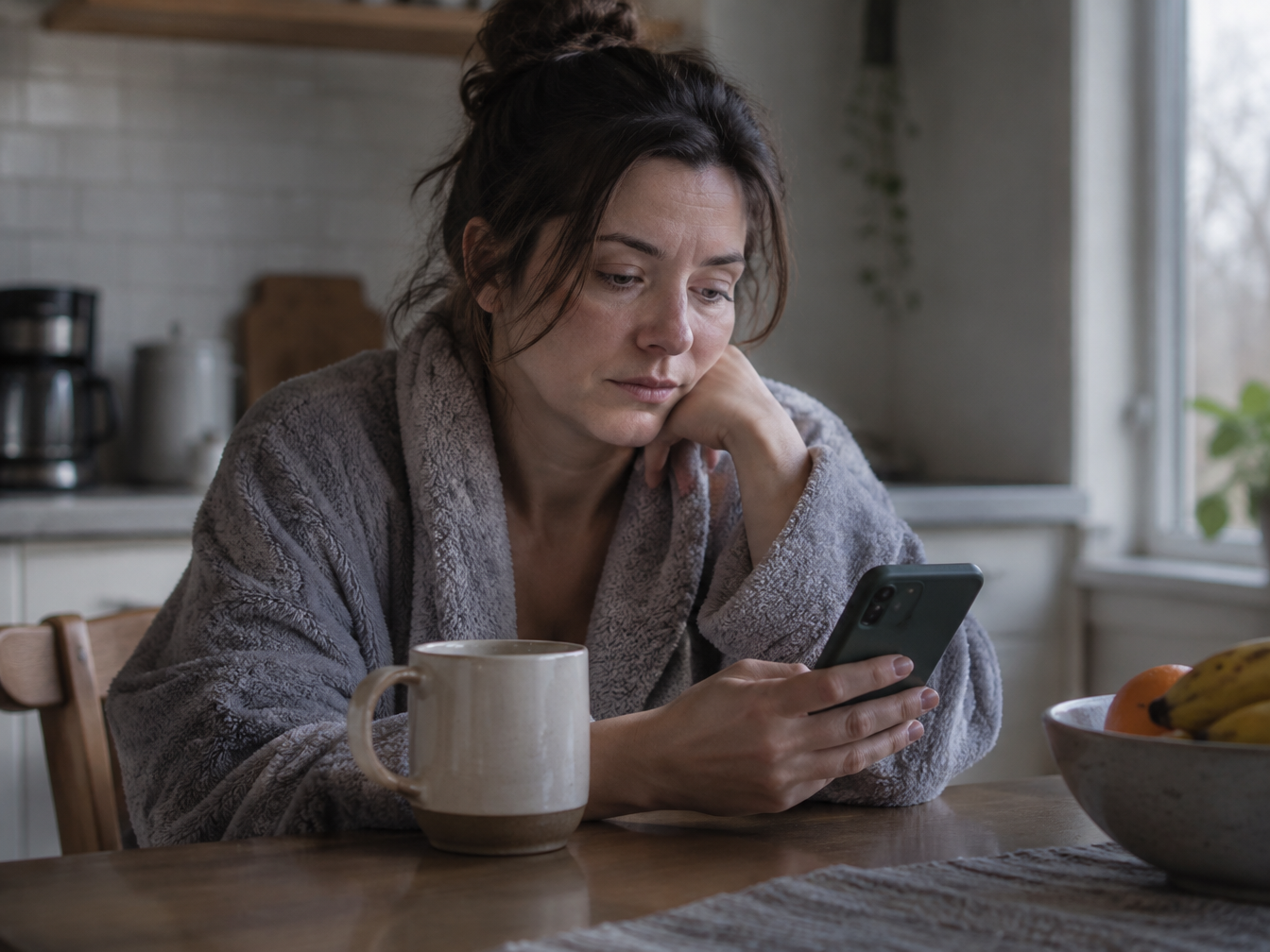
I came across a piece from the American Medical Association that finally gave me language for the weight I’d been carrying. Lisa MacLean, MD, a psychiatrist and chief wellness officer at Henry Ford Health in Detroit, describes decision fatigue as a state of mental overload that makes it harder to keep making decisions. The more choices you make in a day, the more drained you can feel, and the harder the next decision gets [1].
She lists the signs, and reading them felt like reading my own mood board. Tiredness or brain fog. Procrastination. Impulsivity, like impulse buying. Avoidance. Indecision, going back and forth between options. And irritability with the people around you [1].

That last one stopped me. I’d been snapping at my roommate on weekday mornings for months, and I’d always blamed my personality.
The tips she offers are refreshingly practical. Limit your choices. Lay out clothes the night before. Cut tasks that aren’t important. Keep a consistent wake-up time. Eat the same breakfast regularly and keep a few go-to outfits [1]. Make bigger decisions in the morning, when judgment tends to be sharper, and avoid them when you’re tired or hungry [1].
I’ll be clear about my own limits here. I’m a writer, not a doctor, and a morning routine isn’t a treatment for anything. But reading her list, I realized I’d been spending my sharpest hours of the day on the lowest-stakes decisions I’d ever make. Lipstick before coffee. Sweater before sense.
There was one more detail that surprised me. The routines I’d kept without trying were the ones that asked almost nothing of me. My nighttime skincare, the one I described in three weeks with a gentle night routine, took four minutes and zero decisions, because the steps never changed. My mornings had every ingredient of a bad routine. The steps changed daily, the stakes felt high, and I’d decide everything while half asleep.
The Night Before Rules
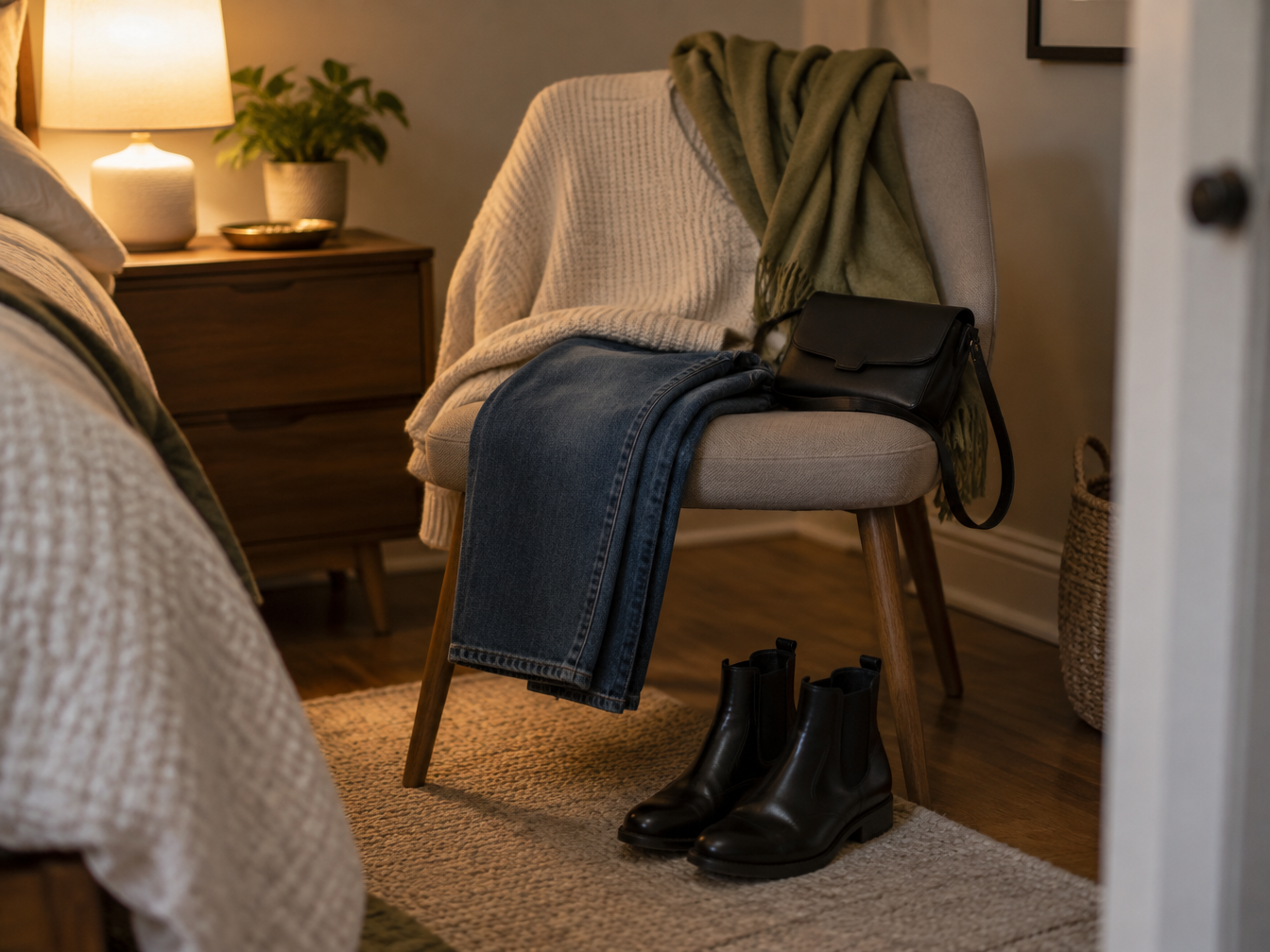
If you take only one idea from this article, take this one. The routine doesn’t happen in the morning. It happens the night before.
Here’s mine. It takes about six minutes, and I do it while a show plays in the background.
Pick the outfit, shoes included. I lay it on a chair, or hang it on the closet door. If I’m unsure, I try it on once and decide. The outfit has to be something I’ve worn before and liked. Nothing experimental, because mornings aren’t the time for science.
Check the weather. One glance, and I add or remove a layer. This single habit has saved me from at least a dozen shivering commutes.
Set out the tools. Hair clip, one lip product, one earring pair. I put them in a small tray by the bathroom door so my morning self doesn’t have to hunt.
Decide the “if.” This is my favorite part. I tell myself in advance what I’ll do if I’m running late. If I have fewer than ten minutes, I skip everything but moisturizer and lip balm. The decision is already made, so there’s no guilt, just a plan.
I’ve written before about my love of getting ready as a pleasure, in why getting ready for a party is my favorite part of the night. I want to be clear that I haven’t given up the slow, glamorous version. I’ve just moved it to nights and weekends, where it belongs. Regular mornings are for something kinder.
The Five Product Face
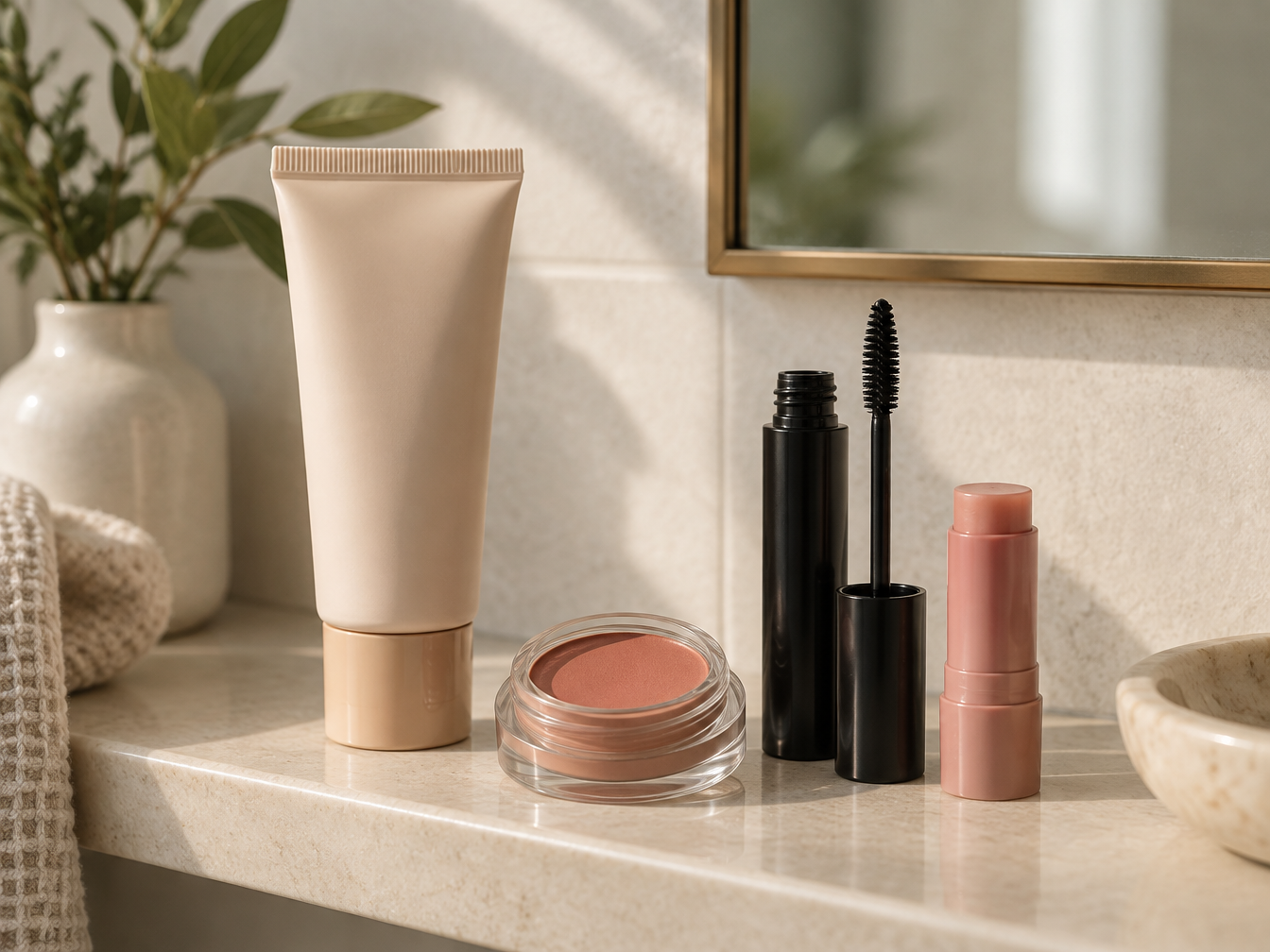
When I finally cleared my counter, I kept only what I reached for when no one was watching. I call it the five product face, and it goes like this.
A tinted moisturizer that evens things out without trying to rewrite my skin. A cream blush, because a little warmth near the cheekbones makes me look awake. A mascara. A lip balm with a hint of color. And a pencil for my brows, which I use maybe four days a week.
That’s it. Everything else went into a box under the bed, with a note to myself to revisit it in three months. I never opened the box again, and eventually I gave it away.
The result wasn’t a worse face. It was a more consistent one, and honestly a more me one. I stopped looking like a different person from day to day, and my coworkers stopped asking if I was “doing something different.”
If winter is wrecking your routine, I’d point you to my notes on cold weather makeup that still looks like skin. It’s a short-list approach to the season, and it fits nicely into a fifteen minute morning.
There’s an upside I didn’t expect. When you use fewer products, you learn them well. I know exactly how much blush I need. I know how my tinted moisturizer behaves on a dry day. That kind of familiarity is its own luxury.
Hair in Ninety Seconds
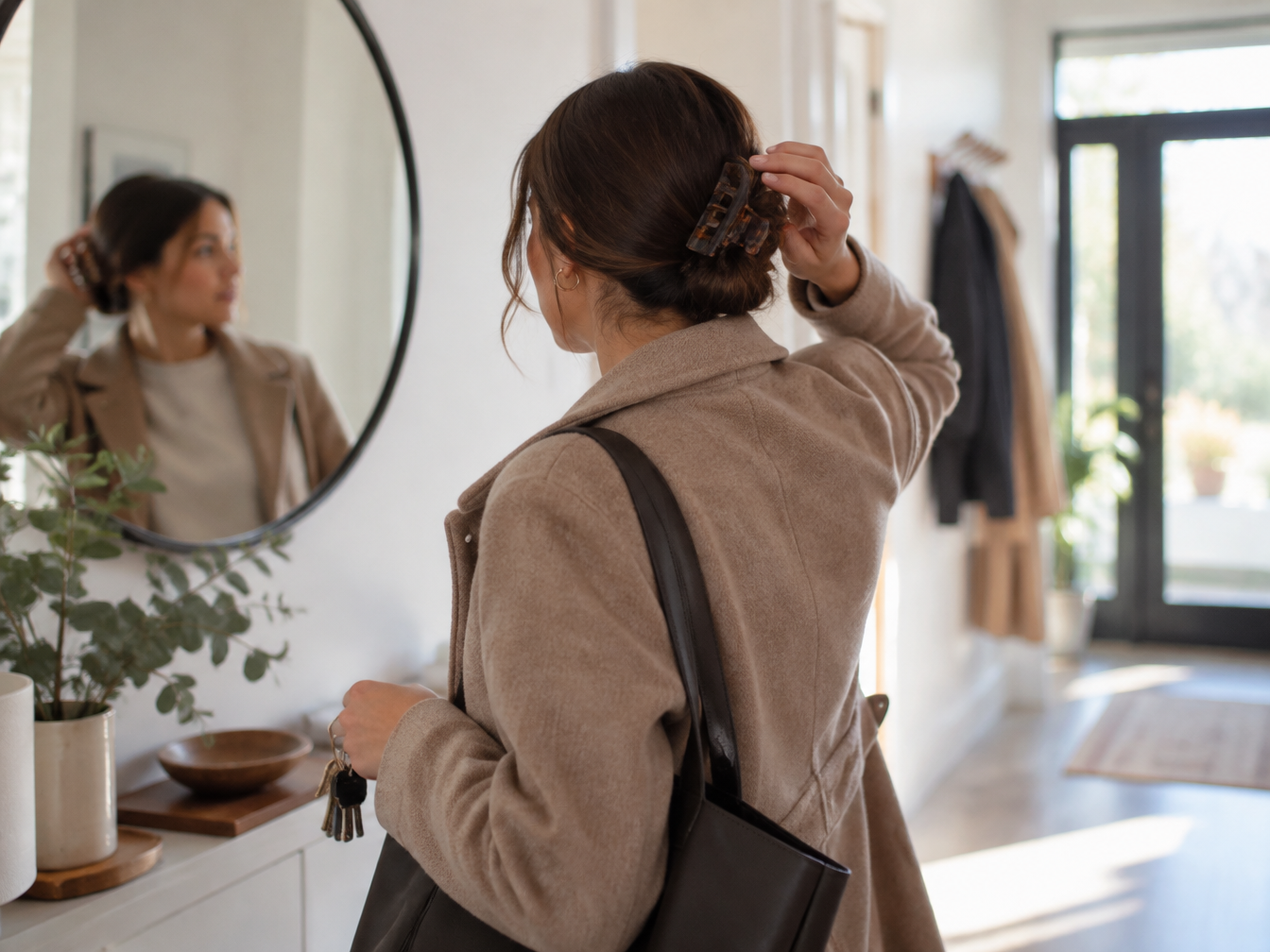
Hair was the real enemy. It always had been. It was the part of my morning where I lost the most time and the most confidence, and it was where my perfectionism lived.
I used to try to style my hair into something it wasn’t, every single day. I’d blow-dry, then straighten, then fix a spot, then re-straighten. I’d end up with the same hair I started with, only warmer and more resentful.
What worked was admitting I’d have two hairstyles, and that was enough. A low bun with a clip, and a loose wave I make by letting hair air-dry overnight. That’s the whole menu.
I experimented with this when I stopped heat styling for a month, and the lesson stuck. My hair was nicer when I stopped fighting it. It was shinier, calmer, and more forgiving, which meant I was too.
On rough hair mornings, I don’t spiral anymore. I clip it, put on a good earring, and move on.
Ninety seconds. That’s the budget. If a hairstyle can’t survive that, it isn’t a hairstyle I’ll keep.
What I Got Back

Here’s the math, and I like math, so I’ll do it. I used to spend eighty-four minutes. Now I spend fifteen. That’s sixty-nine minutes back, every weekday morning, which adds up to more than five hours a week.
I don’t use all of them well. Some mornings I sleep in. Some mornings I stand at the window with coffee and just look at the street. Occasionally I use the time to write, and a few chapters of a book I’ve been avoiding exist because of it.
But the real gift wasn’t the time. It was the feeling of walking out the door without a leftover argument in my head. I arrive at my desk with something I hadn’t had in years, which is a mind that hasn’t already been used up.
I still love getting dressed up. I still enjoy a glittery eyelid and a good red lip when the occasion calls for it. The difference is that now I’m choosing it, rather than being forced into it by a morning that’s been bloated by doubt.
If your mornings feel like a performance, try the timer. Just once, without judging the number. Then take one thing off the stage.
One more thing before I let you go. On the mornings when it all still goes sideways, I don’t treat it as a failure. Some days a ponytail is just a ponytail. Other days I come to the mirror with a heaviness that has nothing to do with my hair, and no number of minutes will fix it. I’ve made peace with the fact that a bad hair day is never really about your hair. It’s usually about something I haven’t said out loud yet.
On those days I keep the same short routine, but I add one thing for the person underneath it. A walk around the block. A text to a friend. A real breakfast sitting down. The fifteen minutes gives me the space to notice what I actually need.

The audience was never as demanding as you were.
Sources
- American Medical Association, “What doctors want patients to know about decision fatigue” (Lisa MacLean, MD, Henry Ford Health). ama-assn.org
Leave a Reply