The invitation landed in my inbox on a Tuesday afternoon, and my stomach did a small, familiar drop.
Join us for an evening of food, fun and festive cheer. A time, a restaurant name, a line about a cash bar. No dress code. Of course there was no dress code. A dress code would have been a gift, something to follow like a recipe. Instead I had an open field, forty colleagues and exactly two weeks to decide who I wanted to be in front of them.
I closed the email and told myself I’d think about it later. I thought about it that night in the shower. I thought about it in a meeting about quarterly numbers, staring at the middle distance while someone else talked. I thought about it on the weekend, standing in front of my closet holding a green dress and a black dress and a different black dress, feeling the way I did in middle school before a dance.
If you have ever spent more time choosing an outfit for a work party than the party itself will last, this is for you. I went looking for reasons I was being ridiculous. What I found was that I’m in very large company.
The Two Weeks I Spent Dressing for a Room Full of Coworkers
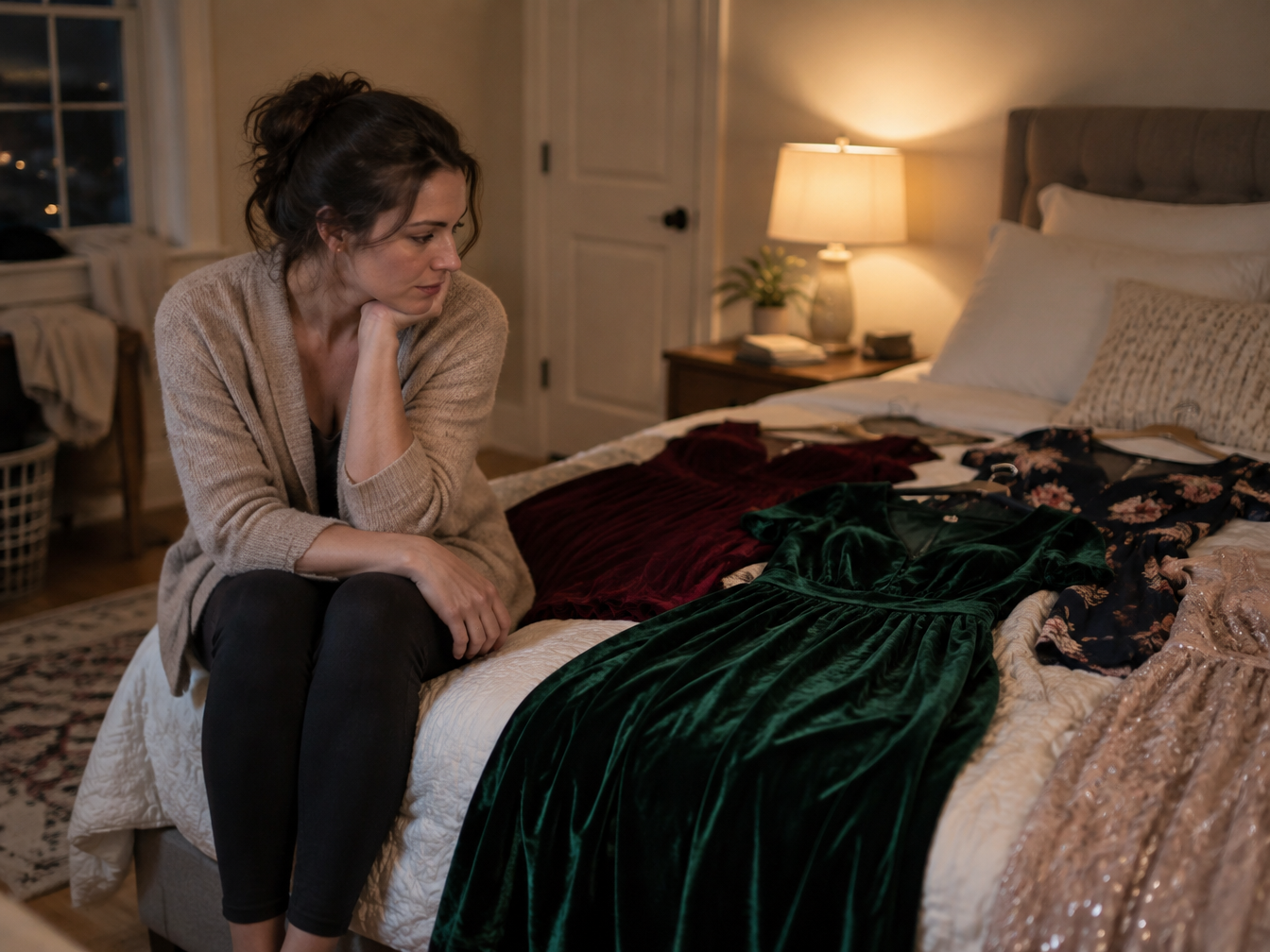
Here is the honest timeline, in case you want to feel better about your own.
Day one, I decided on a velvet dress I already owned. Day three, I decided the velvet was too much for people who had only ever seen me in cardigans. Day five, I bought a navy jumpsuit online and spent forty minutes imagining the walk from the coat check to the bar. Day eight, I returned the jumpsuit in my head before it even arrived. Day eleven, I tried on everything I owned while a podcast about sleep played in the background, which was not helping.
What I was really doing was auditioning. Not for the party, but for a version of myself that I wanted my coworkers to meet. The person who answers emails at 4:55 is a very specific person. She is competent and a little tired and she says “circling back.” The woman who walks into a restaurant on a Friday night is allowed to be someone else, and the problem with that freedom is that you have to choose who.
I had done this before, in a smaller way. I wrote about the week I wore sparkle to work and found out how quickly a room decides who is allowed to shine. A party outfit is that same test with the volume turned up and a drink in your hand.
What the Numbers Say About Why Work Parties Feel So Loaded

Somewhere around day nine I stopped feeling silly and started feeling curious. Was this just me?
It is not just me. The Harris Poll surveyed 1,238 employed adults across the United States in late November 2024 about their company holiday parties, and the results read like a transcript of my brain. Among workers whose company holds a party, 83 percent said they were likely to attend. But 46 percent of all workers agreed they feel pressured to go, and 72 percent said they had concerns about attending. Among Gen Z workers that last number was 88 percent, and among Millennials it was 81 percent [1].
The top worries were not dramatic. They were awkward conversations with colleagues, cited by 30 percent of workers, followed by excessive alcohol consumption at 28 percent and feeling uncomfortable in a professional setting at 22 percent. Nearly a third, 31 percent, said they had regretted their own behavior at a company holiday party [1].
The poll did not ask about clothing at all, and I want to be clear about that. Nobody measured outfit anxiety. But I recognized my two weeks of wardrobe panic in those numbers. When you’re about to stand in a room where your manager, your peers and the person who controls the thermostat will all see you off script, your clothes become the one part of the evening you can actually control.
That is a lot of weight to put on a dress. It also explains why I picked it up and put it down thirty times.
The Dress Code Is Written in Invisible Ink

Here is what makes work parties harder than weddings or birthdays: the rules exist, but nobody prints them.
Career expert Ronda Suder, writing for TopResume, gives a piece of advice that sounds almost too simple. Confirm the dress code first. If the party happens during work hours, she says, stick to your office dress code unless you’re told otherwise, and dress up a little, perhaps a nice dress and shoes or a sparkly blazer. If it’s after hours, treat it as a work function anyway, because the colleagues you see every day will remember both what you wore and how you acted [2].

I texted a coworker I trust and asked what people usually wore. She answered in four seconds: “Nice but not trying. Last year Dana wore a sequin skirt and people still talk about it, in a good way.” That one sentence told me more than three hours of scrolling.
So the first move, before you buy anything, is to find your informant. Someone who attended last year. Someone who will tell you the truth about the room. It’s the cheapest and fastest research you can do, and it works because the real dress code of any office party lives in what people did last time.
I had, years earlier, bought a dress to impress someone who wasn’t even invited, and I can still feel how little that purchase had to do with the room I was actually walking into. I wrote about that in the holiday party dress I bought for someone who wasn’t there. The lesson hasn’t changed: dress for the real room, not the one in your head.
The Rules I Actually Followed
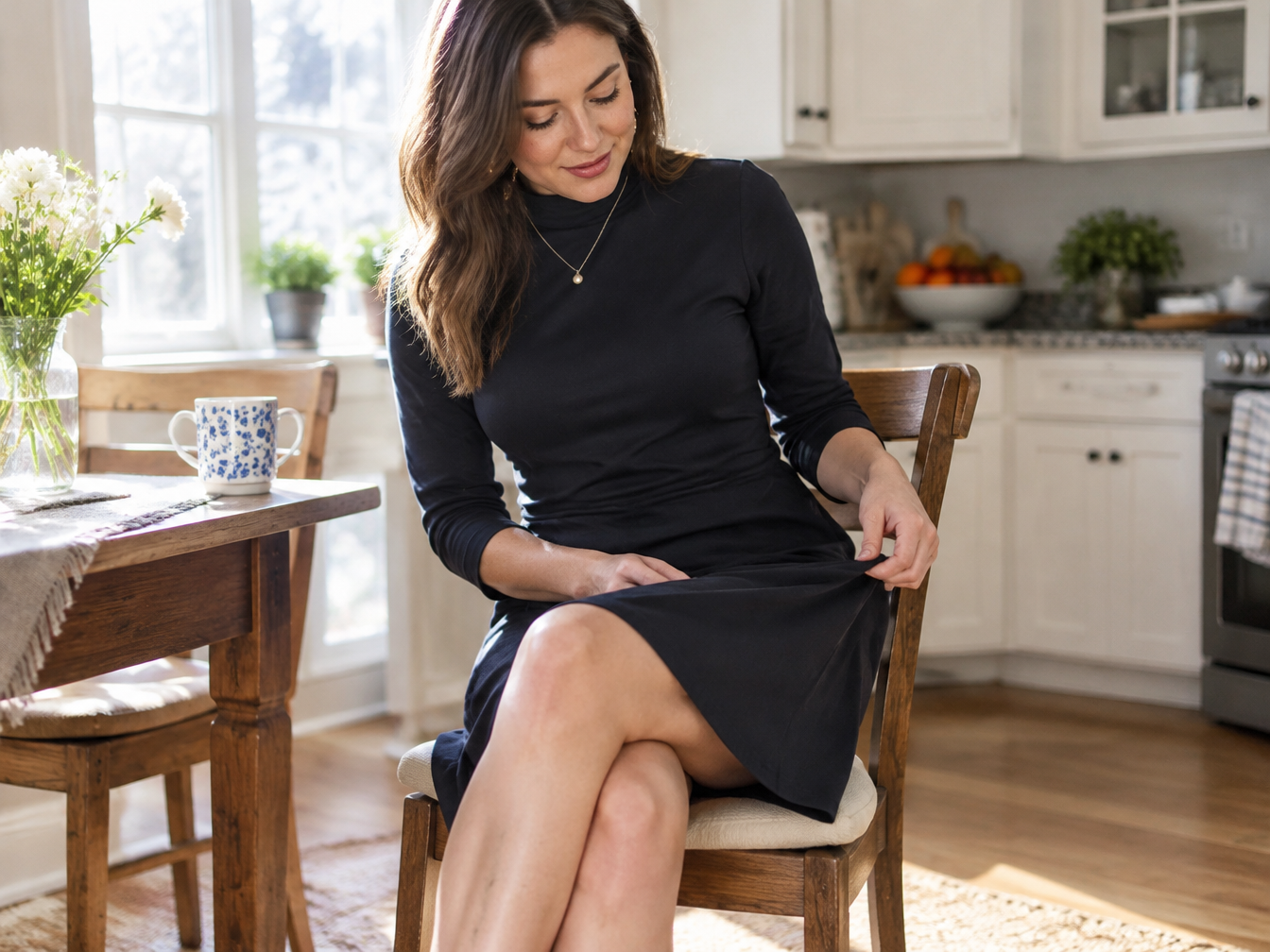
Once I had my informant’s answer, I used a short list of practical checks. Most of them came straight from the TopResume guide, and they saved me from at least two bad decisions [2].
Pick a Higher Neckline and Let Jewelry Do the Work
The guide’s advice for women is to beware of low-cut necklines and to choose a higher one, then add a necklace for sparkle. I’ve found that a quiet neckline gives you permission to be bolder elsewhere, like a color, a texture, a pair of earrings that earns a compliment [2].
Sit Down in It Before You Commit
Her recommendation is to keep the hemline modestly above the knee and, importantly, to sit down in the outfit beforehand. I did this on a kitchen chair and then on the edge of my bed. It exposed a wrap dress that gaped at the waist and a skirt that rode up the moment I crossed my legs [2].
Beware of Sheer Fabric Under Bright Lights
The same guide warns against sheer fabrics and anything that restricts movement or won’t stay buttoned. A restaurant’s overhead lights are less forgiving than your bedroom mirror. I held each candidate outfit up to my phone flashlight, and one very pretty top went straight back into the closet [2].
Dress for Comfort Because You Will Be Standing
The guide also suggests dressing for comfort since you’ll likely be dancing and walking, with a classy, conservative look that still shows personality [2]. I learned a version of this the hard way at another party, which is why I’m still telling people about the holiday party where I wore flats and finally danced. If your feet hurt by nine o’clock, you spend the whole night near a chair, looking at the room instead of being in it.
The Formula That Ended My Spiral
On day twelve I did something that should have been day one. I wrote down three words for how I wanted to feel at the party: warm, steady, a little bright.
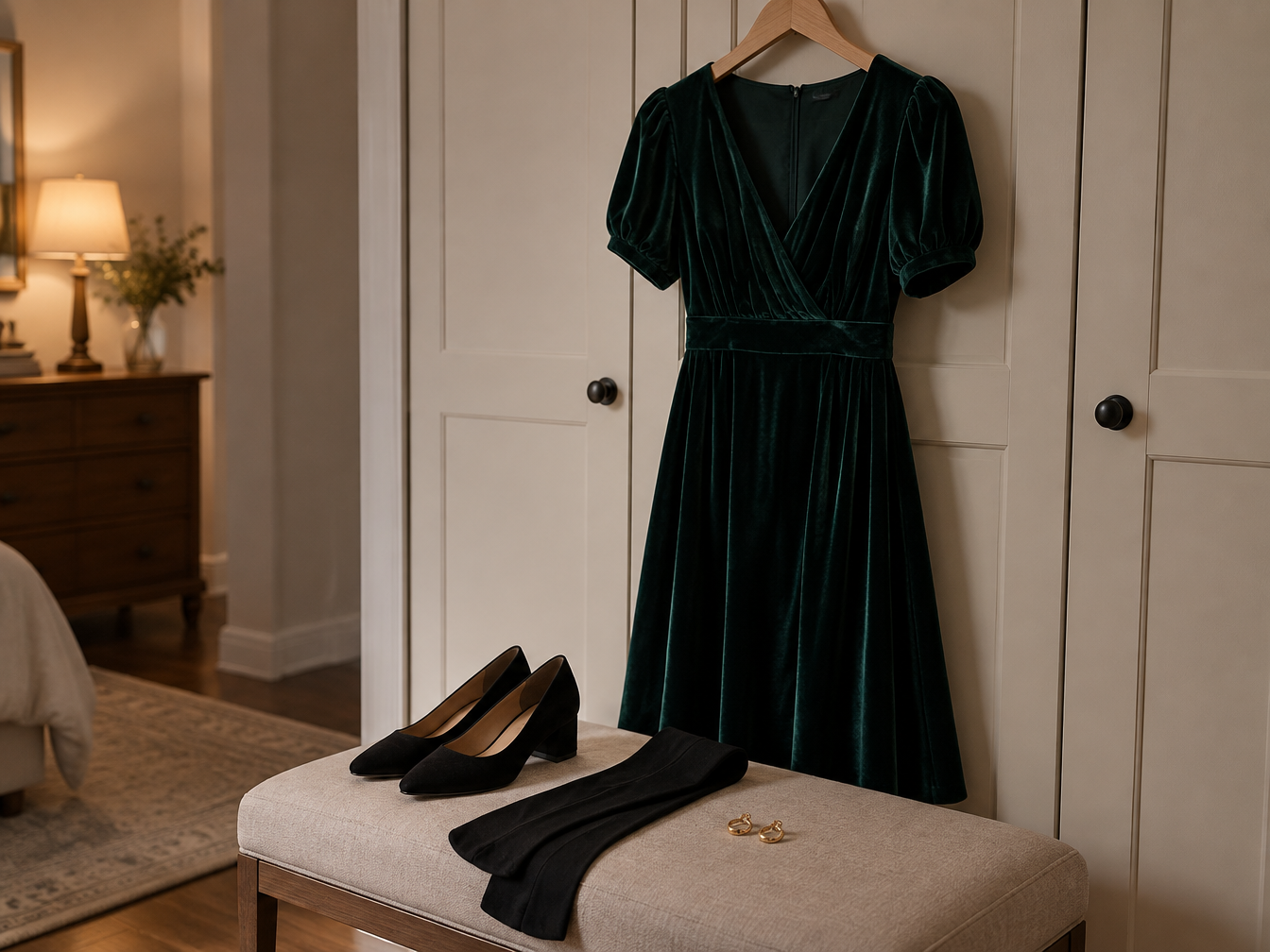
Then I held each outfit up against those words. The black dress was steady but not warm. The navy jumpsuit was bright but not steady, and in truth not that comfortable. The green velvet dress, the one from day one, was all three. I’d been talking myself out of it because it was too good for a Friday dinner with people from accounting.
That’s the formula, and it’s embarrassingly simple. Choose the feeling first, then audition the clothes against the feeling instead of against an imaginary critic. It will not guarantee a perfect outfit. It will stop you from buying one you don’t need. In my case that meant keeping my money, which tied into something I’d been practicing for months, the habit of not buying a new outfit for every event. The best party outfit is often something you already own and have never given a stage.
I wore the velvet dress with black tights, low block heels, small gold earrings, and a cardigan folded in my bag in case the restaurant was freezing. It was one of the most considered outfits I’d ever put together and it looked, I hope, like I hadn’t tried.
Makeup, Hair and the Fifteen Minute Rule
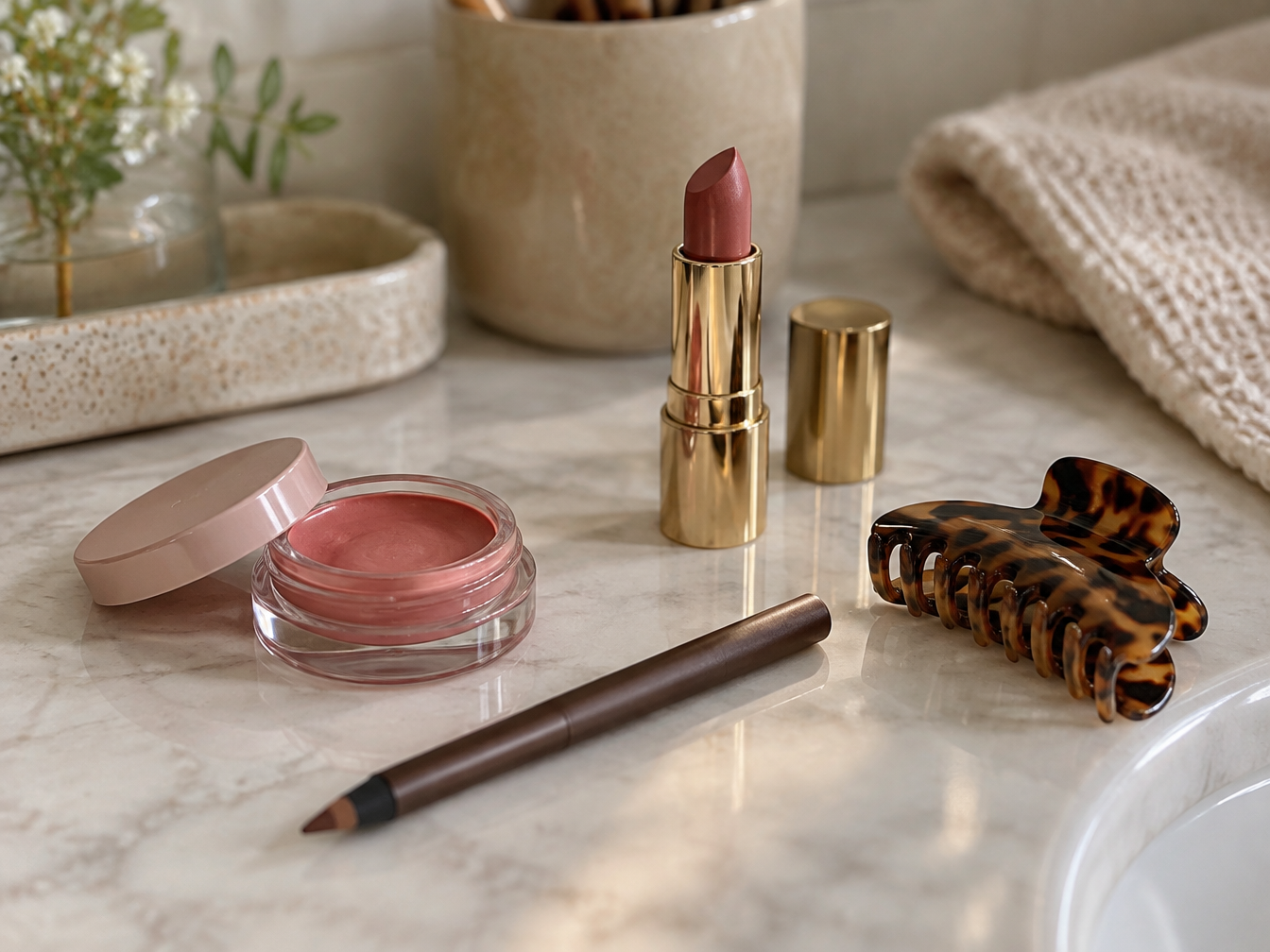
I gave myself fifteen minutes to get ready, because anything longer would have given me time to second guess.
Skin first, a little concealer where I needed it, and cream blush pressed on with my fingers. A soft brown liner on the top lid only. Then a lip color close enough to my own that I could apply it in the car. I’d been reading about soft glam makeup for holiday parties and I stole the central idea, which is that the goal is to look like yourself on a very good night, not like somebody else on a stage.
Hair was the easiest decision of all. I washed it the night before, let it air dry, and clipped half of it back. No heat, no drama. Work parties, I’ve decided, are not the place to introduce a hairstyle you haven’t practiced.
Then I put my phone in my bag and left, because every minute spent adjusting is a minute spent doing the one thing that already exhausted me for two weeks.
What Nobody Remembered the Next Monday
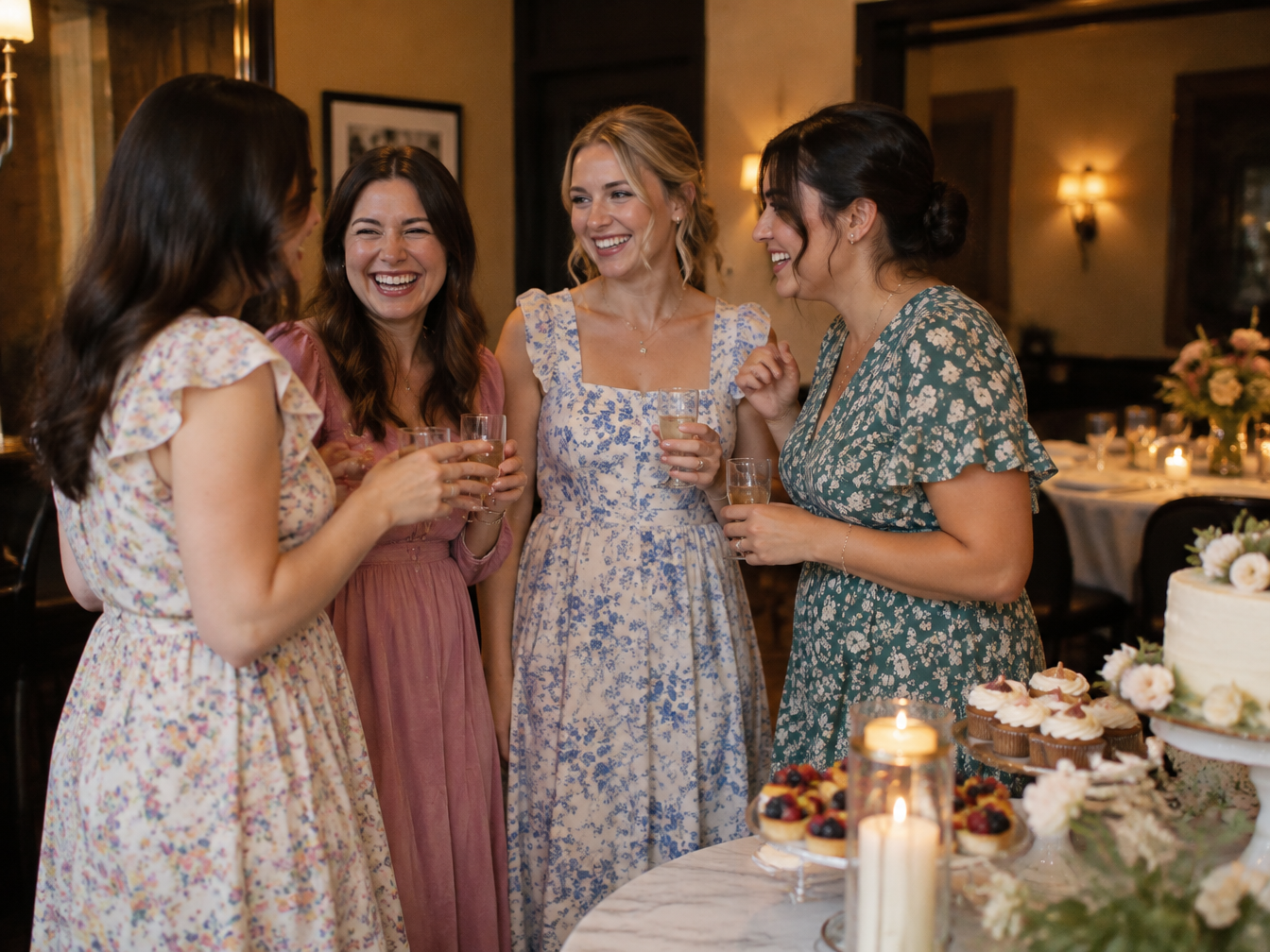
The party was fine. It was better than fine.
I stood near the dessert table, laughed at a story about someone’s disastrous Secret Santa gift, and learned that a woman I’d worked next to for three years had a twin sister. Dana from accounting did wear a sequin skirt and it looked wonderful. A manager I was slightly scared of told me the velvet was a great color on me, and then asked what I was doing for the break. That was it. That was the whole judgment.
On Monday morning, the conversation in the kitchen was about the food, about who had danced, about the intern who sang karaoke far better than anyone expected. Nobody discussed my neckline. Nobody mentioned my shoes. The outfit I had worn on my back for two weeks, in my head, for hours at a time, left almost no trace in anyone else’s memory except the faint, pleasant sense that I’d seemed relaxed.
I think that’s the secret hiding inside every overthought outfit. You aren’t dressing for them. You’re dressing for the version of you who has to walk through the door, and she needs to feel like herself more than she needs to be admired. I’ve written about how I stopped comparing my holiday outfit to everyone’s feed, and the same truth holds in a real room with real faces: the people around you are far too busy worrying about their own clothes to grade yours.
So choose the dress that makes you feel warm, steady and a little bright. Sit down in it. Then go and let somebody tell you a story.
The outfit is only the doorway. The evening is on the other side.
Sources
- State of Work Holiday Parties, December 2024 — The Harris Poll, December 2024 (online survey of 1,238 U.S. employed adults, November 21 to 23, 2024).
- A Guide for Dress Attire at Company Holiday Parties — Ronda Suder, TopResume, last updated November 7, 2024.
Leave a Reply