The Dress I Almost Returned
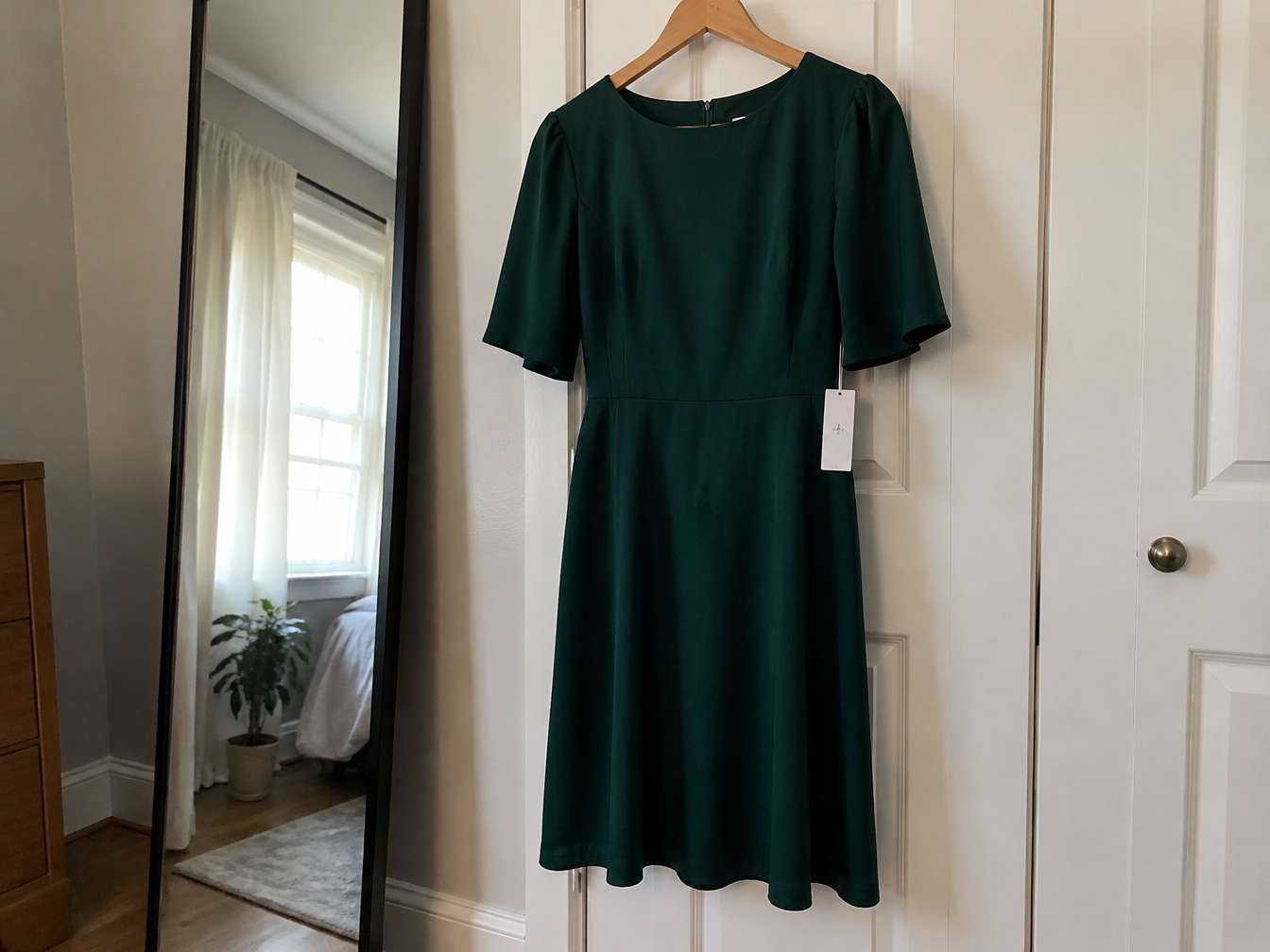
I stood in front of my bedroom mirror in a dark green dress with the tags still tucked into the sleeve, trying to decide whether I was brave enough to keep it.
It was not a cheap dress. It was not an extravagant one either. It sat in that dangerous middle where you tell yourself you will wear it everywhere, and then you wear it once, and then it hangs in the back of your closet looking like a promise you made to someone else.
I had a dinner that Friday. I had a work thing the following Thursday. I had a friend’s birthday on the weekend after that. And I had a stubborn, slightly embarrassing rule in my head that said you cannot wear the same dress to three events in a row, because people will notice, and people will talk, and people will know.
I took the tags off anyway. I decided, on a gray Wednesday night, to run a small experiment on myself. One dress, three events, three completely different rooms. I wanted to know what actually happened when I stopped treating an outfit like a one-night rental.
What happened was not what I expected. The dress did its job. The compliment I got on the third night is the reason I am writing this at all.
The First Night Was Easy

The first dinner was at a small restaurant with low lighting and a long table. A friend of a friend’s engagement, the kind of evening where you hug people you have met twice.
I wore the green dress with black tights, ankle boots and my good gold earrings. I felt put together without feeling dressed up, which is the exact mood I buy dresses for. Several people said something kind. One woman asked where I found it. I said I could not remember, which was a lie, because I remembered it perfectly and wanted to keep the moment for myself.
Nothing about that night made me nervous. A new dress at a new event is the easy version of this story. You feel crisp, you feel a little proud, and the only voice in your head is the one saying you did well.
I have been on the other side of that, the side where a dress is bought for a single purpose and carries the weight of someone else’s opinion. I wrote about that in the holiday party dress I bought to impress someone who was not even invited, and the contrast with this dress was strange. This one was not bought for anybody. It was just mine.
I hung it back up that night and noticed I was already thinking about the next time. That small flicker is what the whole experiment is really about. The first wear is easy. It is the second one that asks you a question.
Why Repeating an Outfit Feels Like a Confession

By Thursday morning, I was nervous, and I could not fully explain why. Nobody at my office had seen the dress. It was a brand new room full of people who had never laid eyes on it. And still my stomach did a small flip when I took it off the hanger.
Here is the thing I had to remind myself of. Psychologists have a name for the sense that everyone is watching you. It is called the spotlight effect. The research that made it famous, by Thomas Gilovich and colleagues in 2000, had people wear a T-shirt with a large face on it and walk into a room of seated students. Afterward the shirt wearers estimated how many people would remember the face, and the people in the room were asked whether they actually did. The wearers overestimated how much they had been noticed [2].
The part I like best is a small follow-up. When participants waited fifteen minutes before making their guess, they assumed others noticed the shirt less, which suggests they had been projecting their own awareness of the shirt onto everyone else [2]. In other words, the person most obsessed with your outfit is you.
That does not mean no one notices anything. People noticed my dress. They simply did not hold a trial about it.
I am also not pretending the shame is imaginary. Writer India Roby, in a piece for Highsnobiety, describes outfit repeating as something treated like a social misstep, a feeling she ties to social media and a buy-wear-discard cycle that hits people with smaller budgets hardest [3]. She cites a Business of Fashion survey in which 74 percent of consumers said social media influences their shopping more than before the pandemic [3]. When your feed is a parade of new looks, a repeat can feel like a flaw.

So the nervousness was not stupidity. It was a learned reflex, and I wanted to see what happened when I walked straight past it.
The Second Night and the Phone in Everyone’s Hand
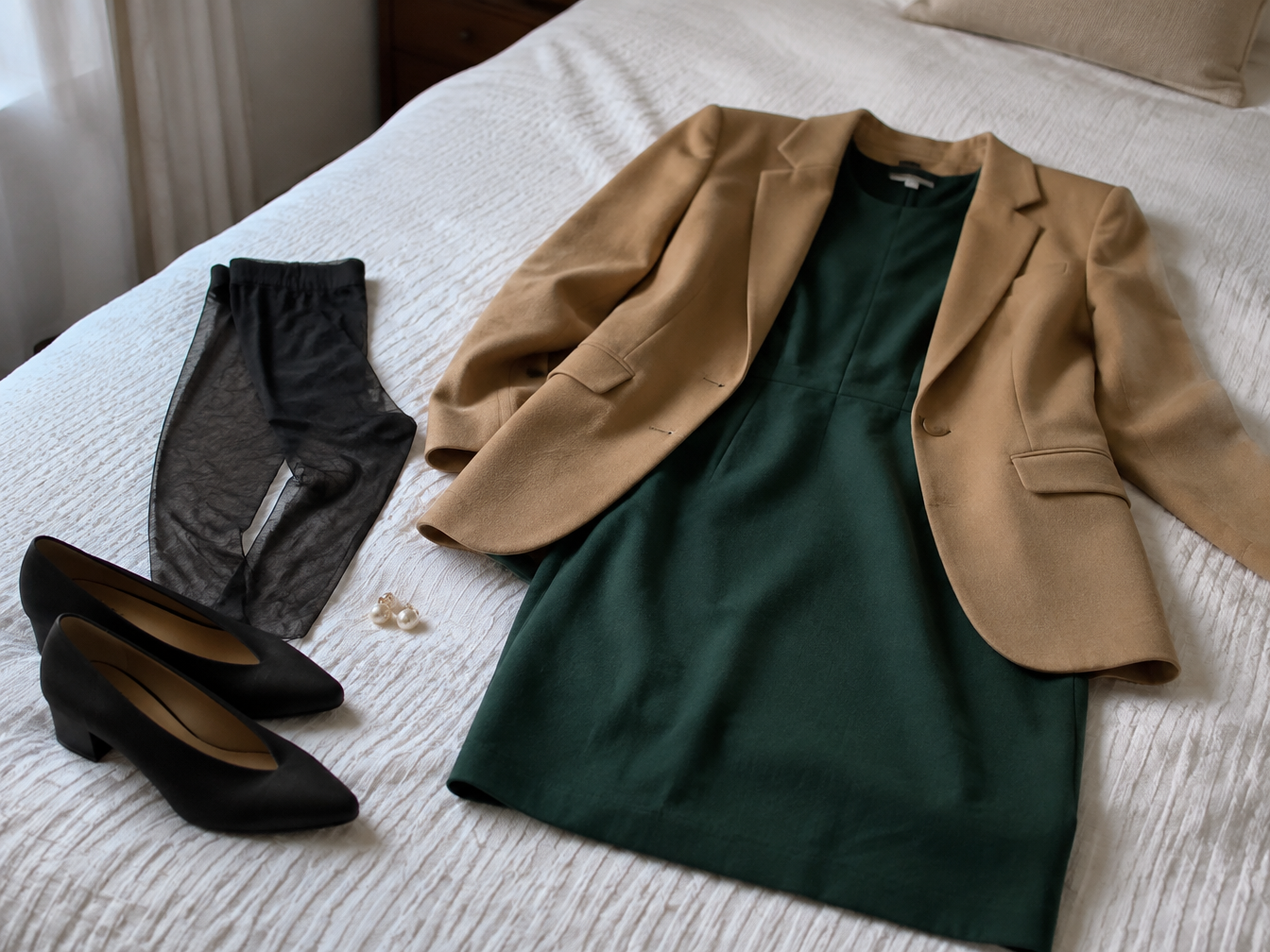
For the work dinner, I changed almost everything except the dress. I swapped the black tights for sheer ones, pulled on a camel blazer, and traded the gold earrings for a pair of small pearls. I wore my hair down instead of up. It was the same silhouette and an entirely different woman.
Nobody mentioned it. I will say that again, because it was the loudest silence of the week. Nobody said a word about the dress, and nobody looked at it twice. I got a compliment on the blazer, a question about my earrings, and a long conversation about someone’s dog.
What I did notice was how many phones came out. Photos of the table, photos of the dessert, a group picture at the end of the night. I felt the old tension rise, the one that says this is going to be on a screen forever and everyone will see you in the same dress.
I had a similar feeling around the holidays last year, and I wrote about how I stopped comparing my holiday outfit to everyone’s feed. The short version is that a photo of a dress is just a photo, and the audience for it is mostly people who will forget it by Monday. The version of me in the picture was smiling. That was the only part anyone would remember.
There is a gendered edge to this that I do not want to skip. In a Marie Claire piece, Chelsea Peng argues that women face far more scrutiny than men over repeat outfits, even when celebrities from Kate Moss to Keira Knightley, who wore her Chanel couture wedding gown twice, do it openly [4]. If it is hard on a woman with a stylist, it is harder on the rest of us with a closet and a credit card statement.
What Wearing It Again Does Beyond Your Mirror
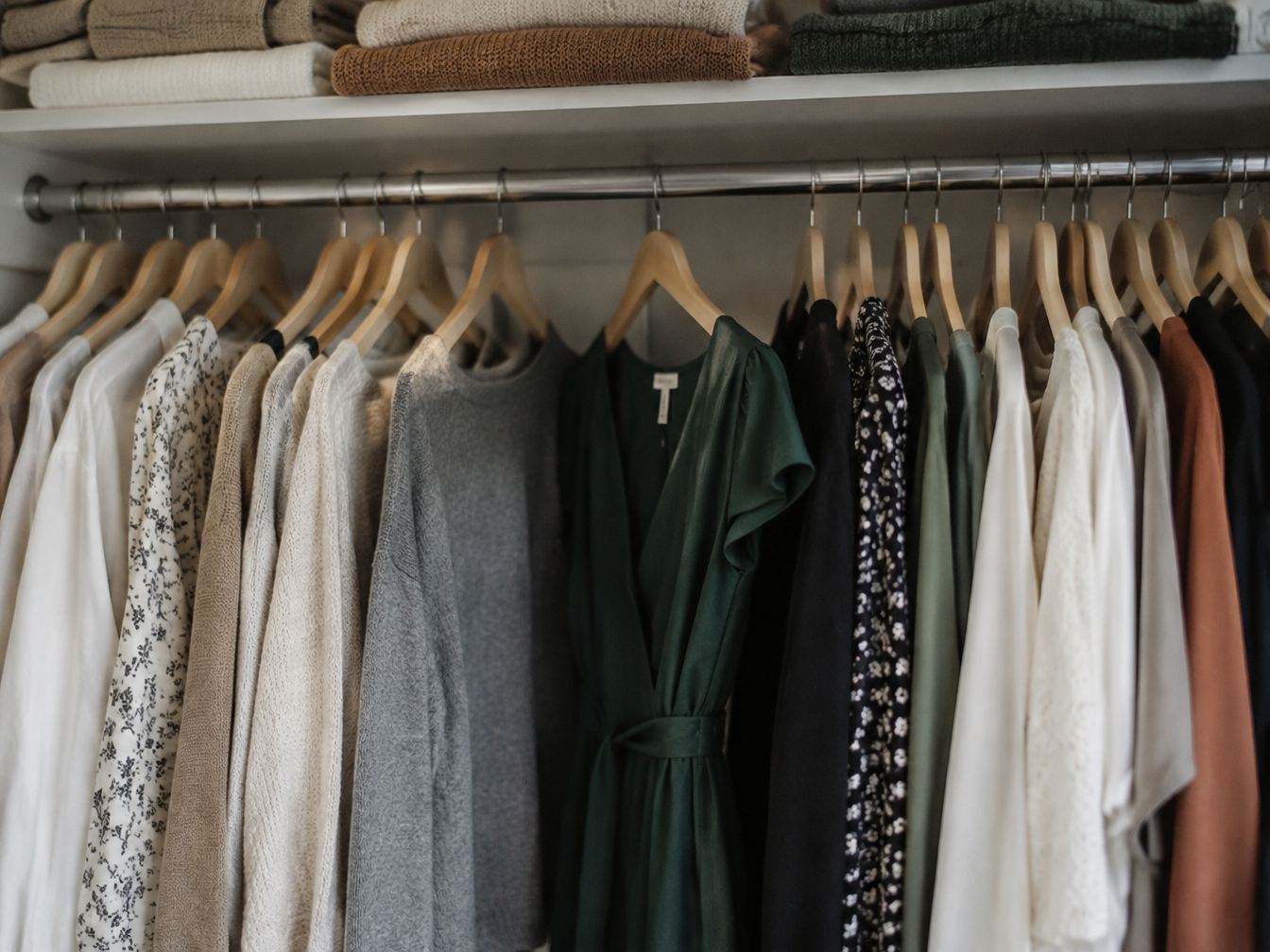
I did not start this to save the planet, but it would be dishonest to leave it out, because the numbers are what finally made the experiment feel bigger than vanity.
The UK charity WRAP has said its research shows that extending the active life of clothing by nine extra months would reduce the carbon, water and waste footprints of clothes by around 20 to 30 percent each [1]. That is a figure from 2015, so treat it as a rough marker and not a current measurement, but the idea behind it is hard to argue with. The simplest thing most of us can do for a garment is wear it for longer.
I am not saying a dress is a moral decision. I am saying that every extra wear is the cheapest sustainable choice available, because it costs nothing and requires no new purchase. There is no checkout, no shipping box, no return bag by the door.
I also noticed something about my own habits. I had always thought of repeating an outfit as a failure of imagination. Now I think it is the opposite. It takes more creativity to make one dress feel different three times than to buy three different dresses and call it a day. I had already tested a milder version of this in the week I wore the same outfit and learned what people actually notice, and the answer then was the same as now. Almost nothing.
The Third Night and the Compliment That Stopped Me

The third event was a birthday dinner at a friend’s apartment. A dozen people, one long table, wine in jelly jars. Casual, loud, warm. The kind of room where the dress code is whatever you were wearing when you arrived.
I almost did not wear the green dress. I stood at the closet with three other options in my hands, and I felt that old reflex tug on my sleeve, the one that said three times is too many, this is the one where somebody will say something.
I wore it anyway. Boots again, no tights this time, a denim jacket, my hair in a loose twist. I had stopped thinking of it as the green dress and started thinking of it as a favorite.
About an hour in, a woman I barely knew, a friend’s college roommate, came over to refill her glass and said something I have replayed in my head ever since. She said, “I love that you wear things you love. It always looks like you.”
I did not know what to say. She had not met me before that week. She did not know it was my third event in the same dress. She had no idea I had spent days bracing for judgment. What she saw was a person who looked comfortable in her own clothes, and she called it by its real name.
I wrote about the compliment I carried for years from someone else, and how much weight one sentence can hold, in the compliment I never forgot about my style. This one landed differently. It did not describe the dress. It described the woman who kept choosing it.
I thanked her and walked to the kitchen and stood by the window for a minute, because my eyes had gone a little hot. A stranger had looked at my supposed fashion crime and read it as a signature.
How I Made the Same Dress Feel Different
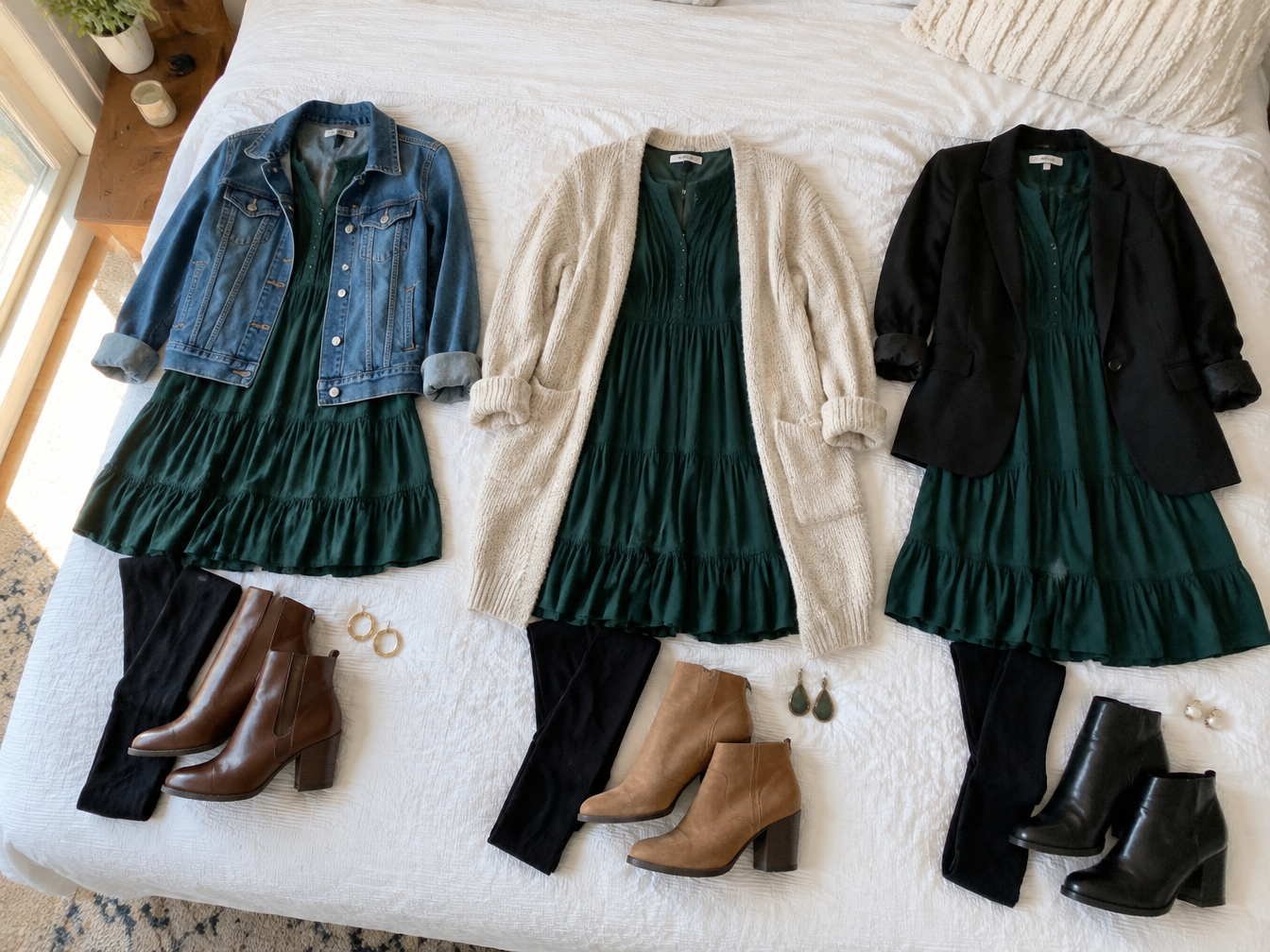
If you want to try this yourself, here is the practical part, and it is simpler than it sounds.
Change the layers first. A blazer, a denim jacket and a long cardigan will give one dress three totally different outlines. Layers do most of the work, and they are also warm, which matters this time of year.
Change the legs and feet next. Opaque tights, sheer tights and bare legs with boots read like three different outfits, especially in photos. A change in shoe height changes the way you stand, which changes the way the dress falls.
Change one small thing near your face. Earrings, a scarf, a different lip color. People look at faces first, so a small shift up top moves the whole picture. A single color near the neck can reset a whole mood, and the same trick works on a repeat dress.
Change your hair. Up, down, braided, slicked back. It is the fastest costume change available to you.
Finally, wear it somewhere new. The point of repeating is not to hide the dress. It is to let it collect more memories. A dress that has been to three rooms has more stories than a dress that has been to one.
None of this requires money. It requires a willingness to be seen twice in something you like.
The Dress Is Still Hanging There
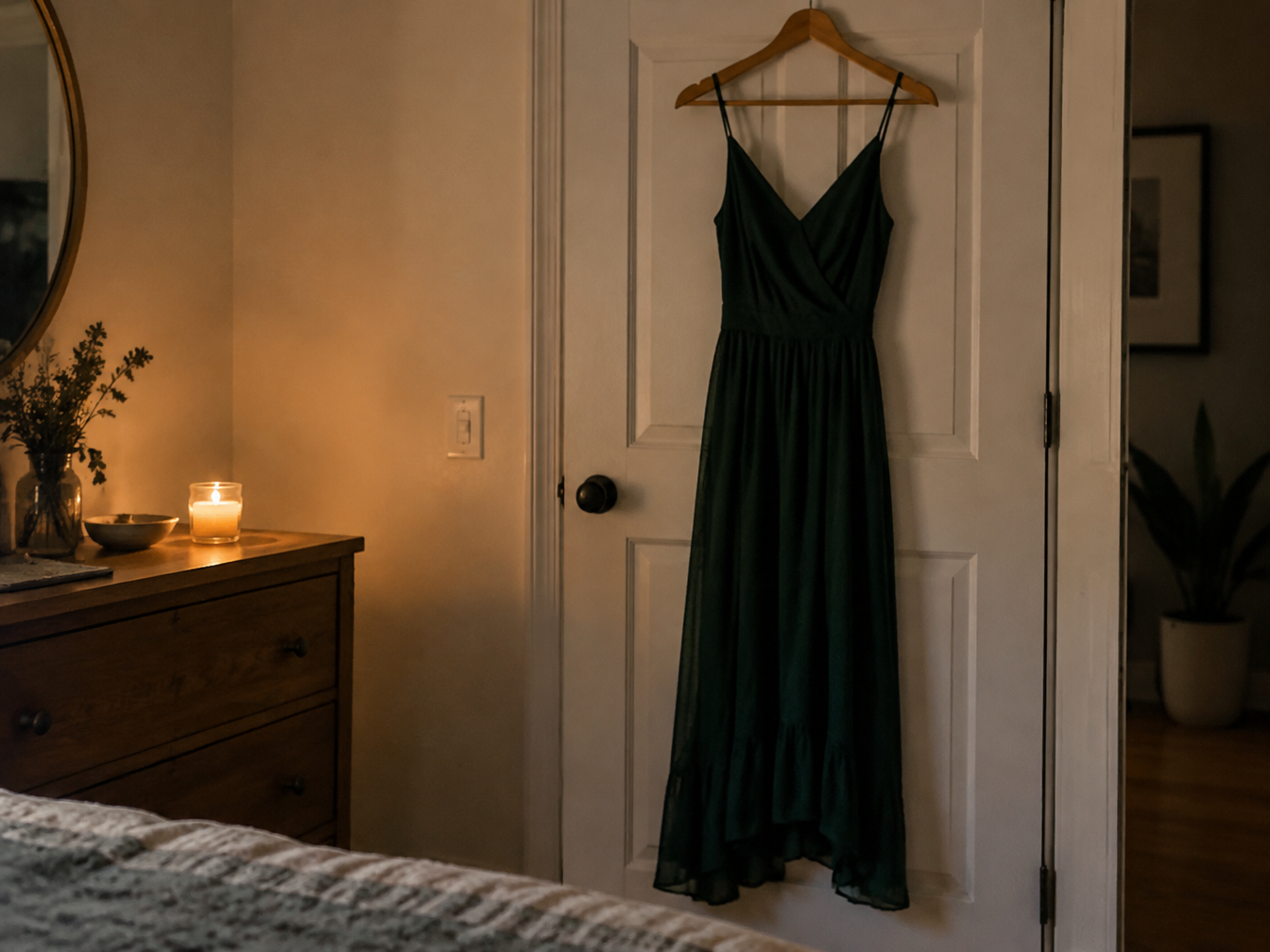
The green dress is back on its hanger, a little more rumpled than when I bought it, with a faint ring of birthday candle smoke somewhere near the hem. I like it more than I did the day I took the tags off.
I have been thinking about the last outfit of the year, the one I always save for myself, which I wrote about in the last outfit of the year and why I always save it for myself. I think this dress is going to be that one. Not because it is the fanciest thing I own. Because it has been brave three times already.
Here is what I understand now that I did not understand on that gray Wednesday. The spotlight is mostly in your head. The people who matter are not keeping score of your closet. And the best compliment you can get is not that you look new. It is that you look like yourself.
Wear the dress again.
Sources
- WRAP Publishes Clothing Sustainability Guide, letsrecycle.com, December 15, 2015.
- Have You Fallen Prey to the “Spotlight Effect”?, Amie M. Gordon, Ph.D., Psychology Today, November 21, 2013.
- Why Are We So Ashamed to Wear the Same Outfit Twice?, India Roby, Highsnobiety, October 24, 2023.
- Why Are We Still So Surprised When Celebrities Repeat Outfits?, Chelsea Peng, Marie Claire, February 22, 2017.
Leave a Reply