The Drawer I Was Afraid to Open
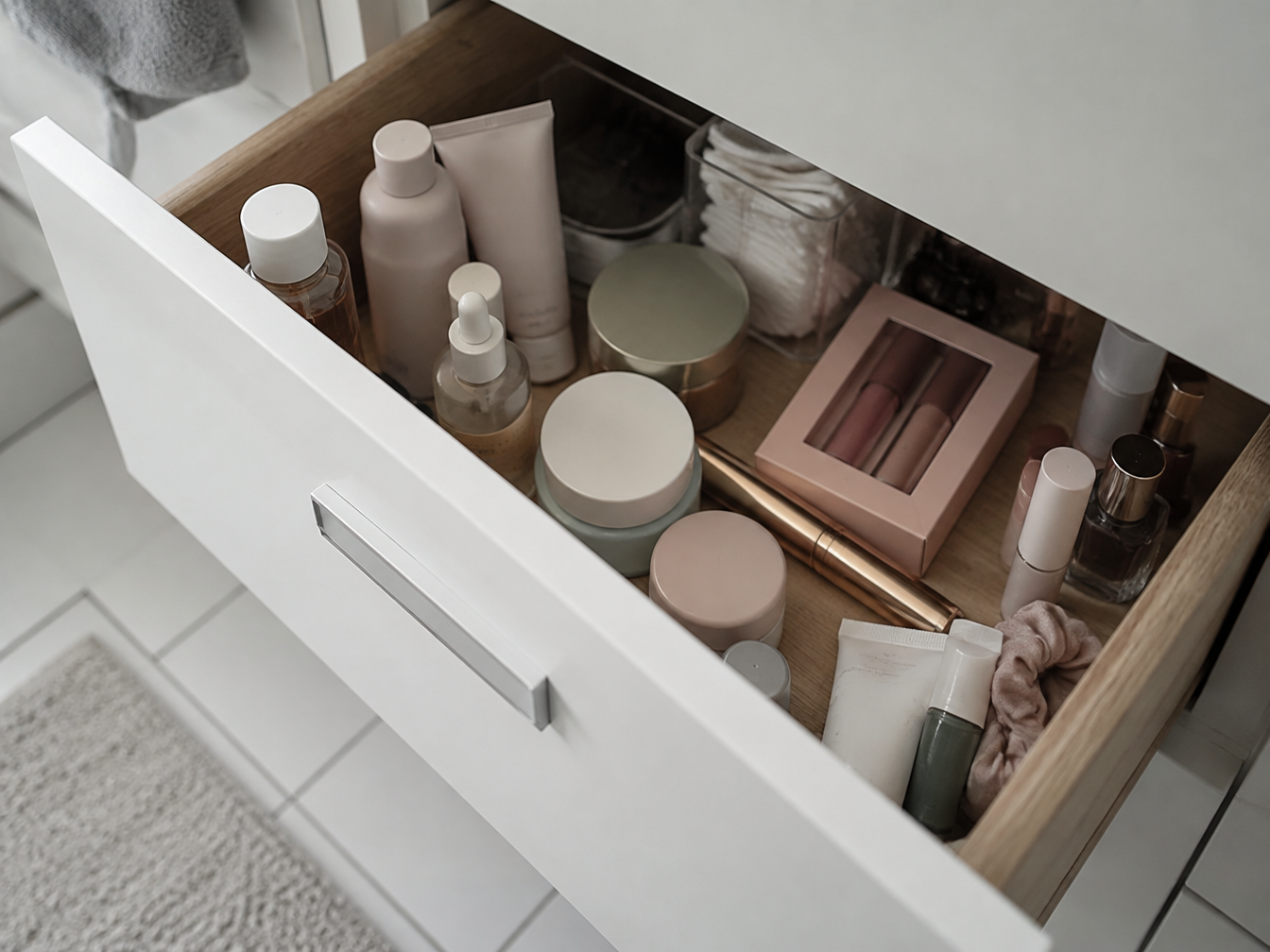
There is a drawer in my bathroom that I open the way you open a text from someone you owe an apology. Quickly, a little sideways, hoping nothing falls out.
On a Sunday night in November I finally pulled it all the way out and set it on the floor. A mascara I had been apologizing to since March. Three half-used serums with a very expensive shine on the label. A lip kit I bought because a stranger on my phone made it look like a personality. A bottle of toner that smelled like a cheap hotel. I sat on the tile and did the math in my head. Then I stopped doing the math, because the number was embarrassing, and the embarrassment was the real reason the drawer had stayed closed.
Every item in that pile was a small receipt for a version of me who did not exist. The woman who did a seven-step routine at night. The woman who wore berry lips on a Tuesday. The woman who treated a bad week with a clay mask and a candle. I had paid for her over and over, and she had never once shown up.
That night I threw out every single product I had bought out of guilt, hope, pressure or plain boredom. This is what I learned from the pile, including the part where it turned out some of it was never safe to keep.
What Guilt Looks Like When You Can Buy It
Psychologist Alice Boyes has a line of thinking about clutter that landed hard on me. In a Psychology Today piece on why decluttering is so hard, she describes how unused or expired purchases can reflect a gap between the person you are and the person you hoped to be, and she recommends meeting that gap with self-compassion instead of shame [1].
I read that and felt caught. The guilt in my drawer was never really about money. It was about hope that had gone stale.
Boyes also points out something simple and useful. When you are staring at a regretted purchase, the question that helps is not “how much did I spend?” It is “what is the best decision I can make now?” [1] The money is gone either way. The only thing left to decide is whether the object keeps taking up room in your head.
There is a second kind of guilt hiding in there too, and it is even sneakier. The products that came from other people. A coworker’s secret Santa gift. A birthday set from an aunt who meant well. Boyes writes that letting go of an unwanted gift does not make you ungrateful [1], which is the sentence I wish someone had read aloud to me ten years ago.
I have written before about how a similar feeling showed up in my closet, and it was the same weight in a different room. If you want the clothing version, I wrote about the year-end closet clean-out that turned into a therapy session, and the main lesson carries over to anything with a drawer.
The Expiration Dates Nobody Reads
Here is the part that stopped being emotional and started being practical. Some of what I was holding onto was not just regretful. It was past its useful life.
The FDA states plainly that there are no U.S. laws or regulations requiring cosmetics to have specific shelf lives or expiration dates on their labels [2]. That surprised me, because I had assumed the lack of a date meant the product was fine. It means the opposite. Nobody is making the brand tell you.
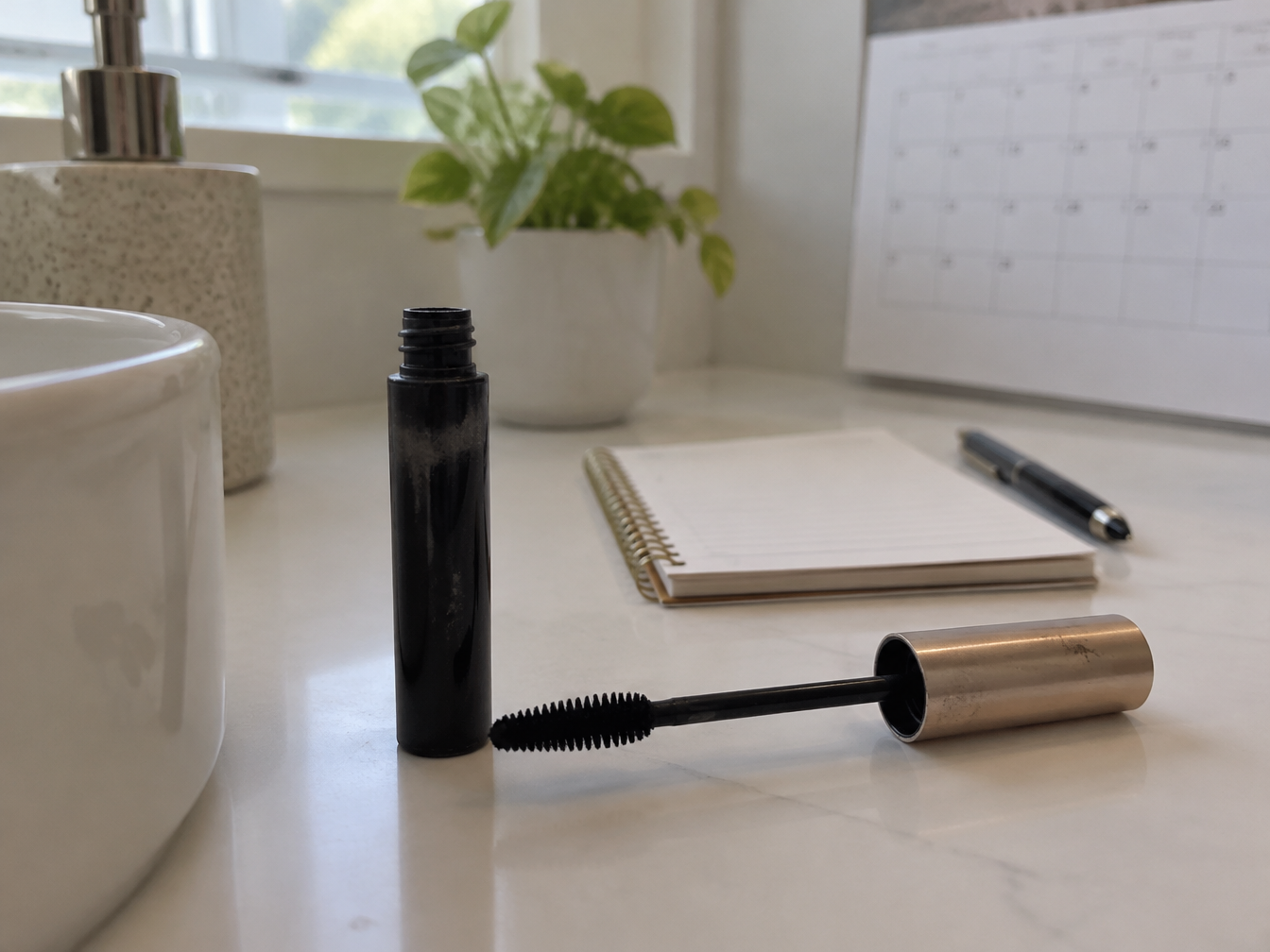
The FDA also says shelf life varies by product type, how it is used and how it is stored, and that eye-area products tend to have the shortest lives because they can cause serious eye infections [2]. For mascara, manufacturers usually recommend discarding it two to four months after purchase [2]. The American Academy of Dermatology puts mascara at three months [3].
I counted. My mascara was eight months old. I had been dragging it across my lashes like a small, sticky time capsule.
Both organizations list similar warning signs. Throw it out if it separates, dries out, hardens, cracks, clumps, changes color, feels different on your skin or smells off [2][3]. The FDA specifically warns against adding water or saliva to dried-out mascara, because that introduces bacteria [2]. I have done this. I will not pretend otherwise.
The AAD also points to a small symbol that most of us ignore. It is a little open jar with a number next to the letter M, called a Period After Opening symbol, and it tells you how many months the product lasts once you open it [3]. The AAD notes that it is not required in the United States, so plenty of products do not carry it [3]. If yours does, check it. If it does not, write the date you opened the product on the bottom with a marker.

Sunscreen is the exception to the no-date rule. The AAD says sunscreen does carry an expiration date and is required to keep its strength for three years, and that heat, like a hot car, can spoil it early [3]. Expired sunscreen gives you less protection and can cause irritation or even infection from mold or bacteria [3]. I found a bottle in the pile that had spent a summer in my glove compartment. That one went in the trash without a single feeling attached.
I am not a doctor, and I am not telling you how to judge any particular product. I am telling you what two serious sources say, and that I wish I had checked a year ago.
The Serum I Bought to Become Someone Else
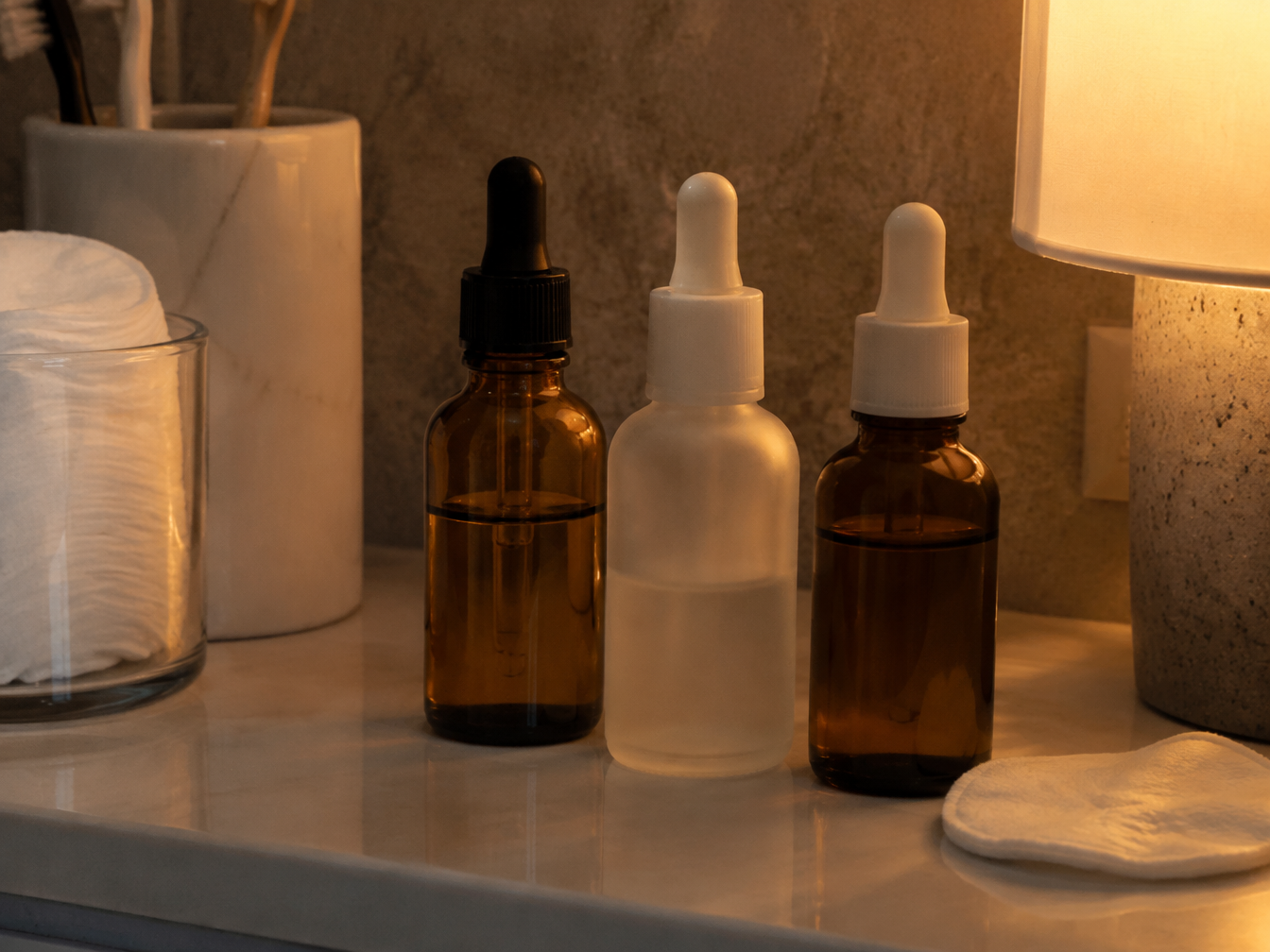
The serums were the hardest, so I saved them for the middle of the night.
I bought the first one after a breakup. I remember the exact feeling in the store, a flat fluorescent hope that the right bottle might make me look like someone who had been fine all along. The second came after a bad review at work. The third was a Black Friday deal I did not need, bought because the discount felt like a debt I would owe the universe if I skipped it.
Looking at the three of them, I realized they were not skincare. They were a record of every time I had tried to fix a feeling with a purchase.
I wrote a whole piece about this pattern after a different experiment, in the skincare routine that made me realize I was treating myself like a project. That was about doing too much to my face. This was about the cabinet that grew behind all of it.
So I did something I had not tried before. I put each bottle in my hand, opened the cap, and asked one question. Would I buy this today, at full price, with my own eyes open? Two were a hard no. One I genuinely liked, and I felt a little cheated that I had forgotten it was good.
That is one of Boyes’s suggested rules in disguise. She recommends personal rules like not buying sale items you would not purchase at full price [1], and I have taken that one as my own. It saves me from a surprising amount of regret.
The Gift Set I Was Too Polite to Toss
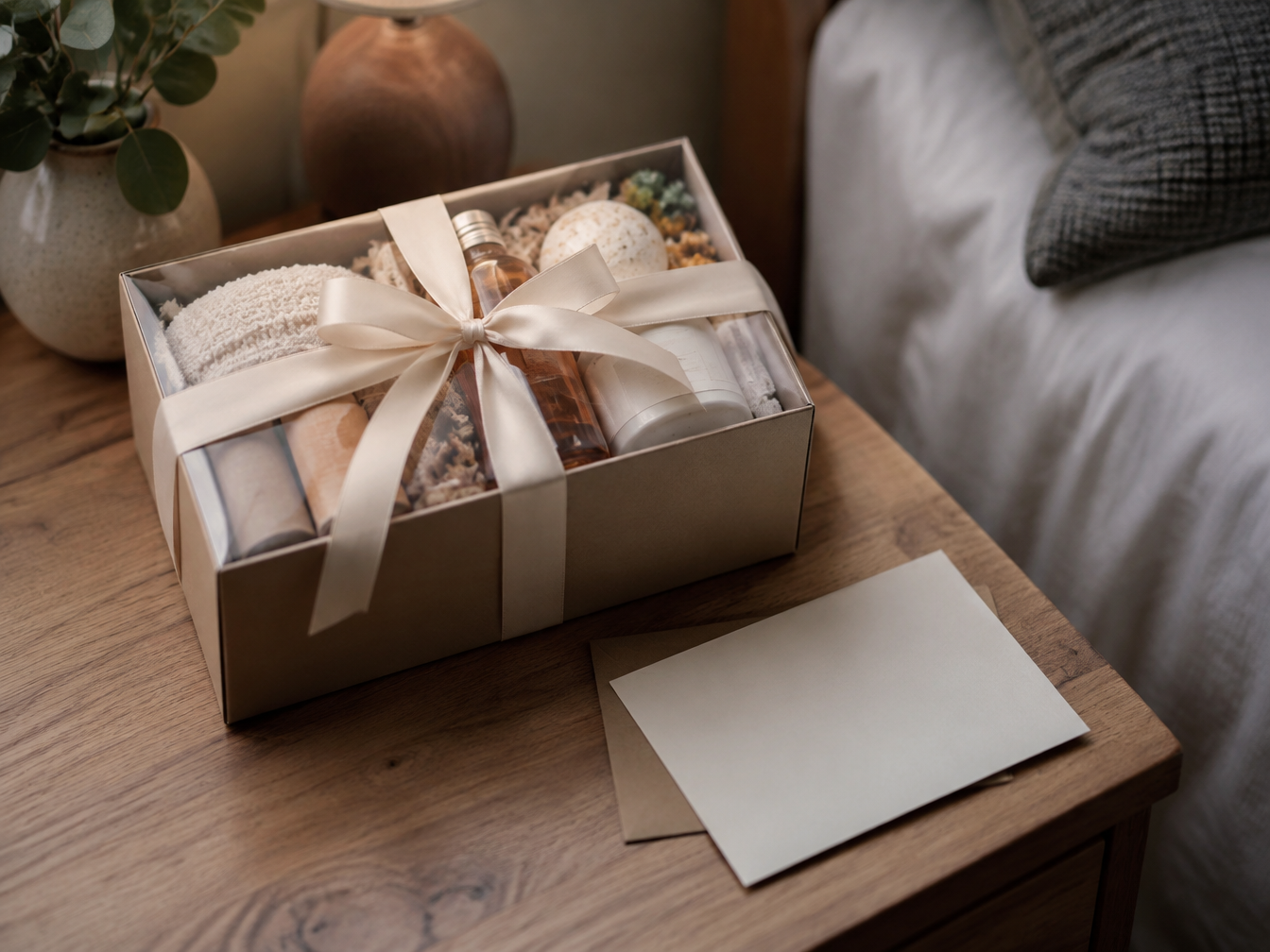
At the very back of the drawer was a boxed gift set from someone I love. I will not say who. It had a body butter I am allergic to the smell of, and a bath bomb shaped like a dessert, and a card in beautiful handwriting that said I deserved to relax.
I kept that box for over a year. Every time I opened the drawer, it looked at me.
This is the part where Boyes’s permission slip mattered most. She says that letting go of a gift does not make you ungrateful [1], and she is right, but I had to say it out loud before I believed it. I stood in the bathroom and said to nobody, “I can be thankful for the thought and not keep the thing.”
I kept the card. I put the card in a book. The body butter went to a friend who loves that scent, which felt like a better ending than the trash for something that was given with care.
How I Sorted the Pile Without Crying
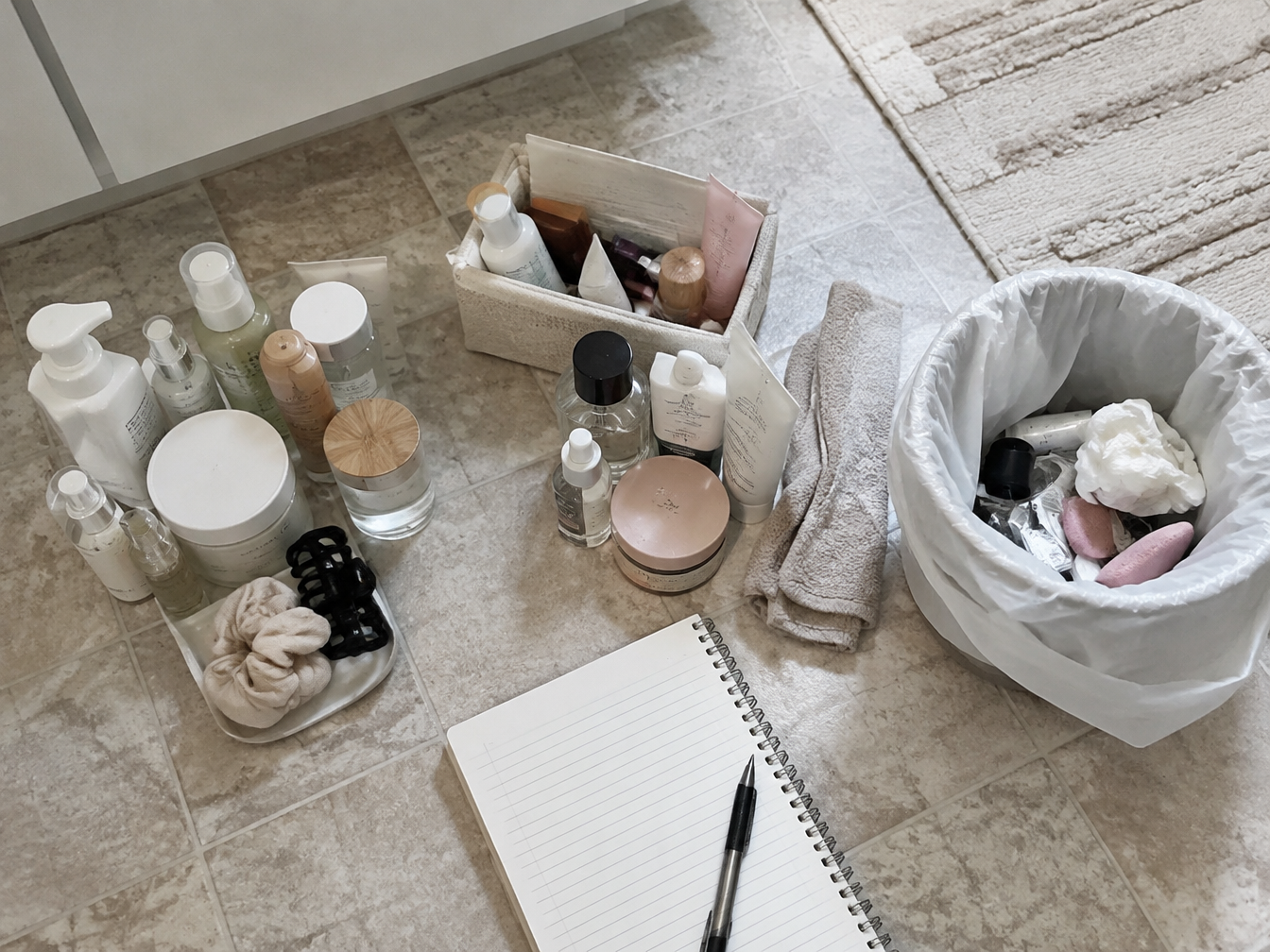
Before I touched the pile, I looked honestly at my recent purchases, including a returns bag still sitting in my hallway. I wrote about a similar reckoning in the Black Friday haul I returned and what I actually wanted, and it is worth a read before the sales start this week.
I am a person who can cry over a mascara, so I needed a system with no room for feelings. This is the one I used, and it took about forty minutes.
First, I made three piles on the floor. Keep, give away, and throw out. No fourth pile called maybe, because maybe is where this drawer came from.
Second, I handled safety before emotion. Anything near my eyes went in the throw-out pile if it was older than a few months or had changed in texture or smell, following the guidance above [2][3]. Anything with a sunscreen label went by its date. Open jars with a smell I did not recognize went too.
Third, I put the remaining items through the full-price question from earlier. If I would not buy it again today, it left. If I loved it and used it, it stayed. If it was fine but not for me, it went to a friend.
Fourth, I wrote down the total, because Boyes suggests calculating the real cost of holding on to excess [1]. I will not tell you the number. It was less than I feared and more than I wanted to know, and writing it down turned it from a fog into a fact.
What I Kept and Why It Surprised Me
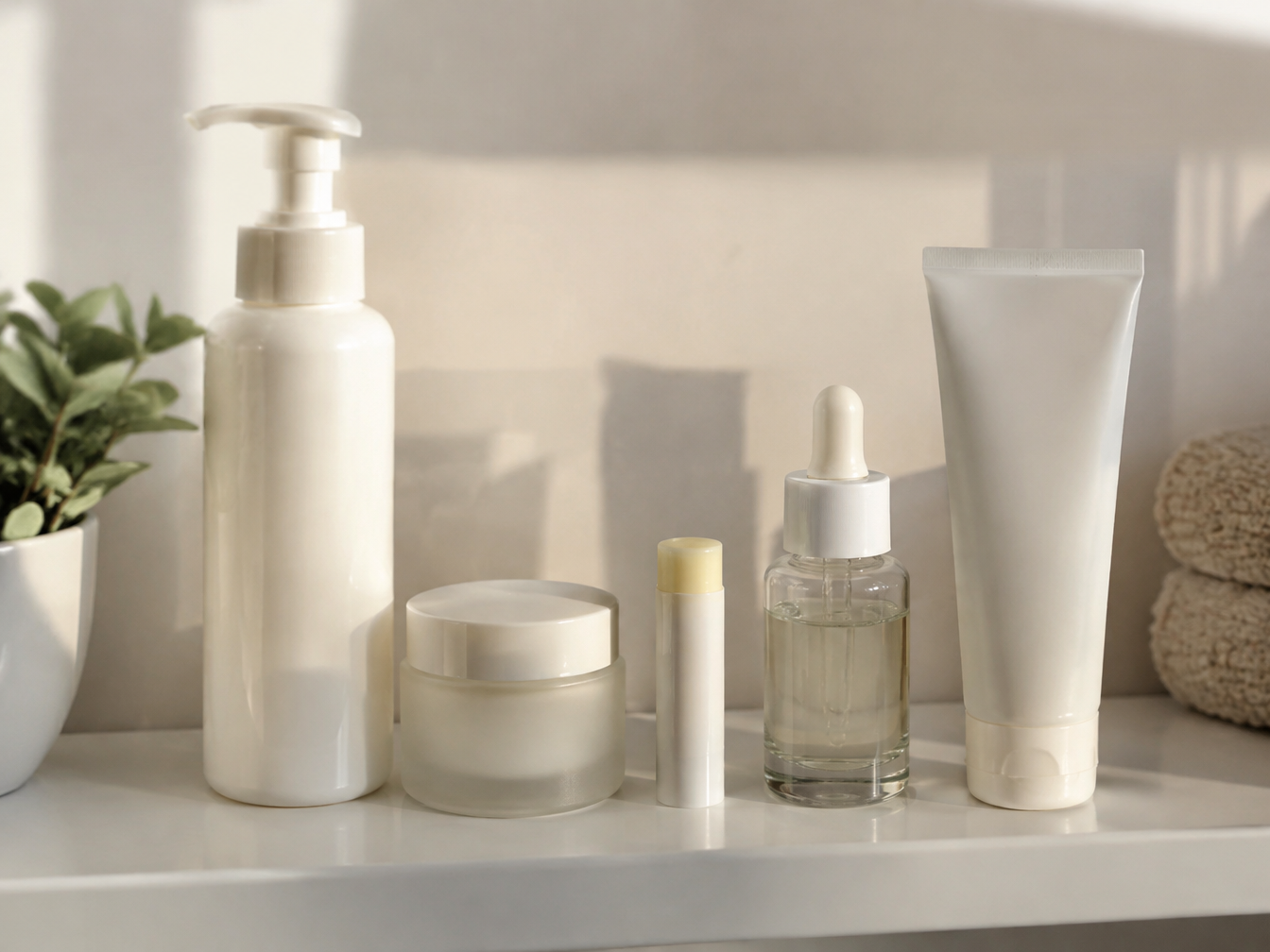
When the sorting was done, the keep pile was tiny. A cleanser I had used up and repurchased twice. A moisturizer. A lip balm. One serum, the good one. A sunscreen that was in date and had never touched a hot car.
I stared at it. Six things. That was my actual routine, the one I had been living the whole time while a second, imaginary routine sat in the drawer collecting dust and judgment.
The strangest part was how my mornings changed. I had already written about how I learned to get ready in fifteen minutes, and I thought I had solved it. But the drawer was still stealing minutes. Every morning I scanned those bottles and felt a tiny pang for each one I was not using.
With the pile gone, there was nothing to feel behind on. I opened the drawer, grabbed what I needed and shut it. The silence in there was almost eerie.
If you try this, expect to feel lighter and a little silly. Both are normal. You are not mourning a mascara. You are mourning the woman it was supposed to turn you into, and she was never going to come out of a tube.
The Quiet Rule I Follow Now
Before I buy anything for my face, hair or nails, I wait seven days and write the purchase down with the feeling that is pushing me toward it. Not the product. The feeling.
Most of the time, the feeling is loneliness or boredom or a tight little fear that I am falling behind. A bottle cannot fix any of those. When I know what I am actually shopping for, I can usually skip the checkout and call a friend instead.
Sometimes I still buy it. That is fine. But I buy it knowing what I am hoping for, and I write the opening date on the bottom the first day I use it. It is the same instinct behind why I stopped buying a new outfit for every event, just pointed at a smaller drawer.
Boyes’s question has become my default whenever I find something I regret. What is the best decision I can make now? [1] It works on mascara, and it works on bigger things. It works on the apartment I stayed in too long and the job I outgrew and the friendship that ended quietly.
The drawer is empty enough now that it closes easily. I did not realize how much effort I had been spending on holding it shut.
Whatever you are keeping out of guilt, you are allowed to put it down tonight.
Sources
- Why Decluttering Is So Hard, Alice Boyes, Ph.D., Psychology Today, September 7, 2018.
- Cosmetics Safety Q&A, Shelf Life, U.S. Food and Drug Administration.
- How to Know When to Replace Your Makeup and Sunscreen, American Academy of Dermatology Association.
Leave a Reply