The Gray Morning That Started This
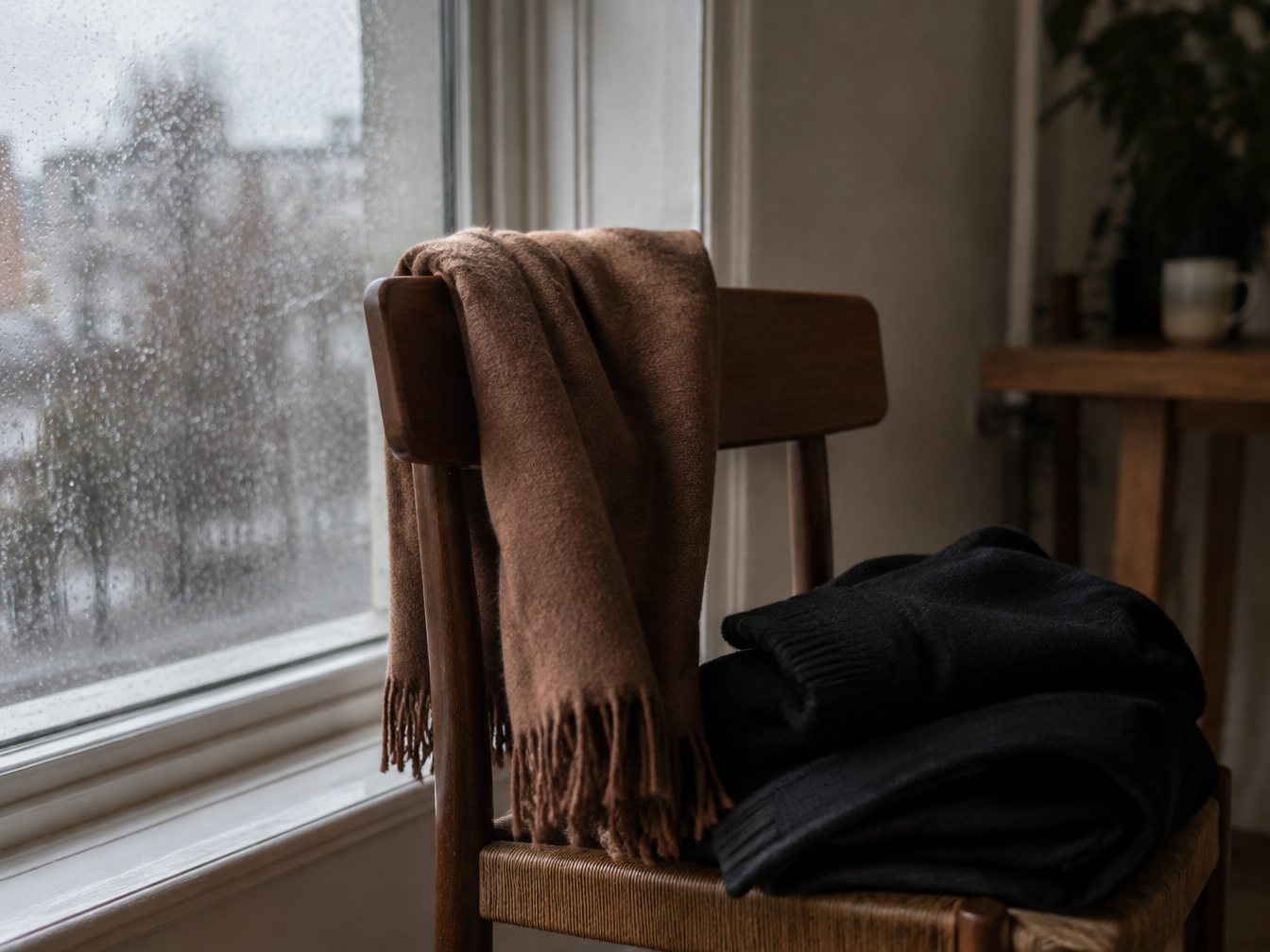
There is a specific kind of cold that lives in your chest, not your hands. I felt it on a Tuesday in late November, standing at my closet door in a black coat, black sweater and black jeans, waiting for a feeling that was not coming.
The sky outside was the color of dishwater. My commute was forty minutes. My phone was already buzzing with things that needed me. And I remember thinking, with total clarity, that I was dressed like someone who had given up on the season.
I grabbed the first thing on the shelf, a scarf the color of toasted cinnamon that I had bought on a whim and never worn. I wrapped it twice and looked in the mirror. Nothing about my life had changed. My face looked the same. But something in my shoulders dropped about an inch, and I stood there feeling faintly ridiculous and strangely better.
That scarf started a small obsession. For the past few winters I have been quietly collecting the colors that make me feel warm from the inside out, and I have opinions. This is the honest version of that list, including the parts that are science, the parts that are my own superstition, and the one color I keep buying and never wear.
Why a Color Near Your Face Hits Differently
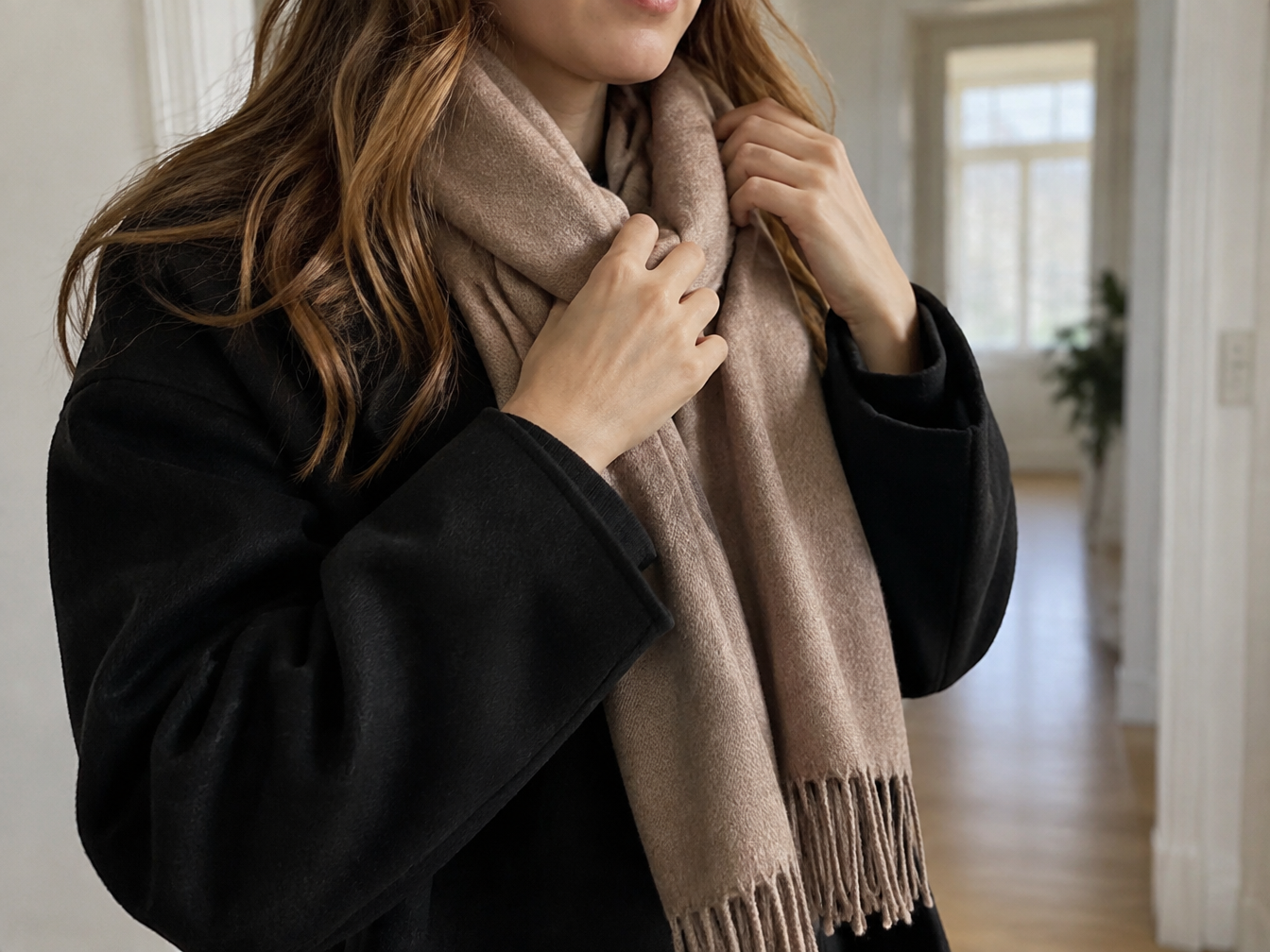
Here is what I can tell you for sure, and what I cannot. The idea that clothes change how we feel has a name, enclothed cognition, coined by researchers Hajo Adam and Adam Galinsky in 2012. Their work suggests that a garment affects you when two things happen together: the clothing carries a symbolic meaning, and you are actually wearing it [1]. The famous example is a white coat. People who wore one described as a doctor’s coat paid closer attention than people who wore the same coat described as a painter’s coat [1].
Notice what that study measured. Attention, not happiness. And it was about meaning, not color. A Queensland University of Technology page on the topic is refreshingly honest about this gap. It describes a project to test whether bright clothing improves mood, and it reports no results yet [2]. So when someone online tells you that wearing yellow cures the winter blues, they are ahead of the evidence.
What does exist is a lot of expert opinion. Color specialists quoted in a HuffPost piece say warm, bright shades read as cheerful, and a fashion psychologist in the same article points out that there is nothing written against wearing brighter colors in winter [3]. That is permission, not proof. I will take permission.
My own theory, and I want to be clear that it is mine, is that a scarf works because of where it sits. It is the one piece of clothing that lives between your chin and your collarbone, right in your own peripheral vision and right in everyone else’s. You see it every time you glance down. It is a color you cannot get away from, in the best way.
Black had been my winter default for years, and I have argued that wearing black all winter is not giving up on color, but that morning it felt like surrender. I gave myself a rule from that Tuesday on. If I cannot change the weather, I can change the thing touching my skin. That is how I ended up with a small, specific rotation, and the first color in it is the one I trust most.
Camel and Cinnamon for the Days I Feel Behind
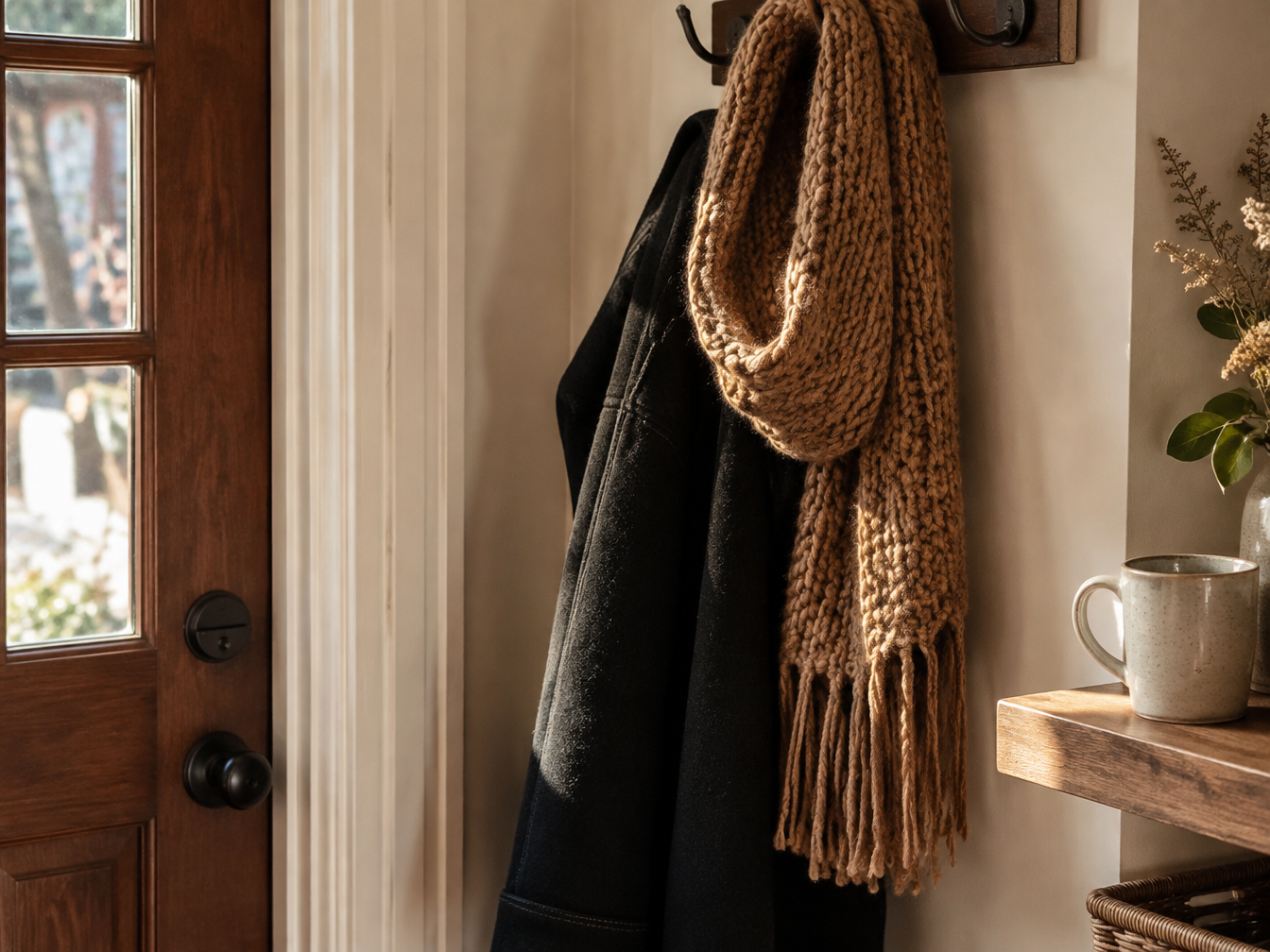
If you made me choose one scarf for the rest of my life, it would be that cinnamon one, or anything in the camel and caramel family. These colors feel like a mug held with both hands. They are warm without asking for attention, and they sit in an odd sweet spot where they look expensive on a bad day and intentional on a good one.
I wear camel when I feel behind. Behind on email, behind on laundry, behind on the version of my life I was supposed to have by now. There is something quietly competent about it. It says you are handling things, even when you are only handling the next ten minutes.
It also solves the problem I used to have with black, which is that black asks nothing of you and gives nothing back. The short version of my black debate is that black is a fine foundation. It just needs something warm to lean against. A camel scarf over a black coat is the easiest upgrade I know. Same outfit, different weather inside.
Practical note. Camel and cinnamon wash out some cooler complexions, and I have seen it happen on friends. If you are pale with pink undertones, try a deeper toffee or add a layer of something brighter near your face.
Mustard for the Mornings I Need to Be Seen
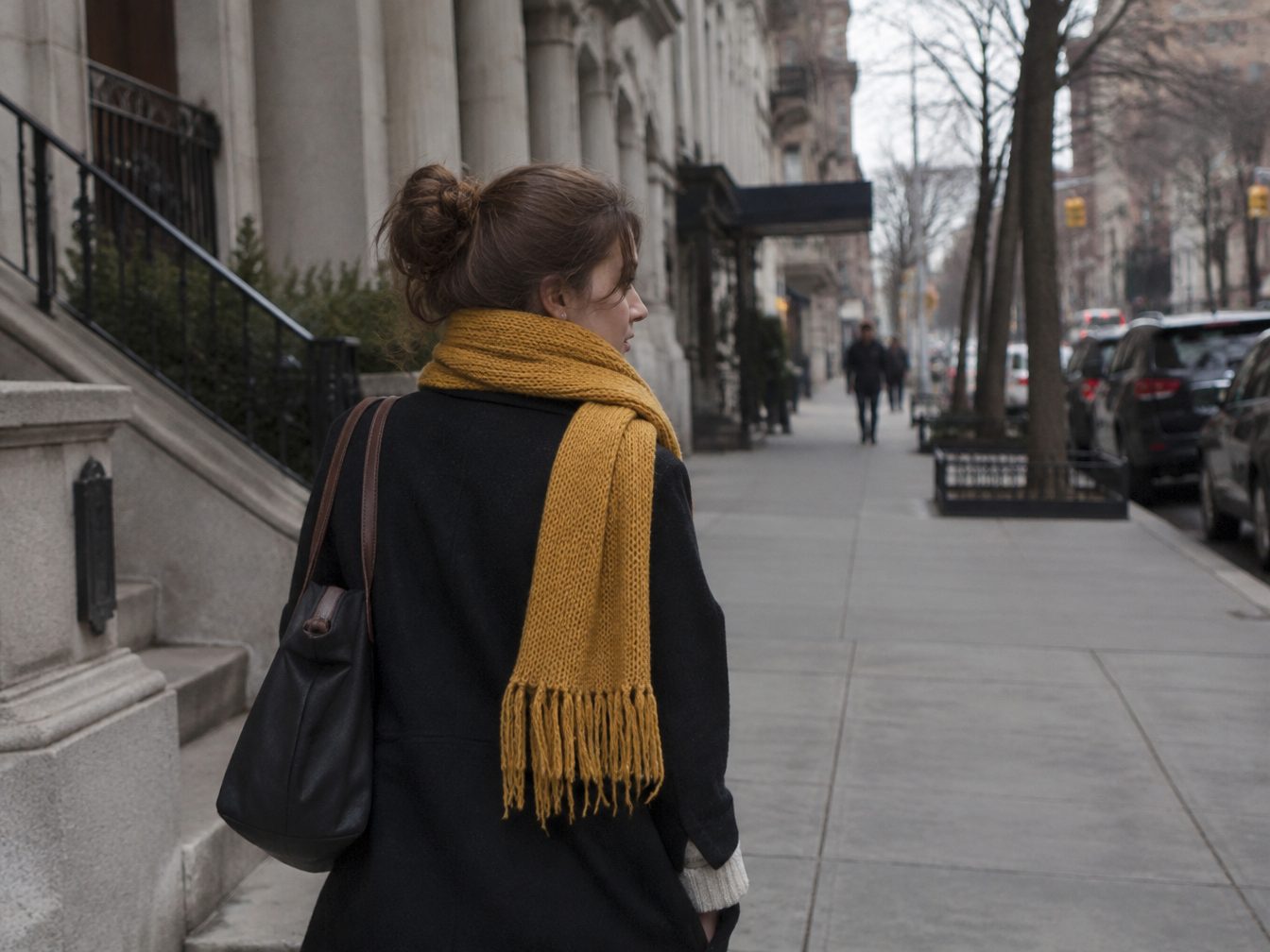
I came to mustard late and angrily. For years I told people it was a color for other women, women with olive skin and better posture. Then one December I had a hard week at work, the kind where you start doubting your own judgment, and a friend handed me her mustard scarf in a parking lot and said, just try it.
I tried it. I got three compliments before lunch.

I will not pretend that compliments are a mood stabilizer, but the HuffPost piece makes a point I think is true. Bright colors can start a small loop, where people notice, say something kind, and you feel a bit better, which makes you stand differently, which makes people notice again [3]. The loop is social, not magical. It still counts.
Mustard is my I-need-to-be-seen scarf. I wear it on presentation days, on first dates, on the mornings I would rather disappear into a hoodie. It is a little loud, a little retro, and it makes gray winter light look turned up one notch.
Here is the part nobody warns you about. Bright scarves are easier to wear than you think if everything under them is quiet. A mustard scarf over an oatmeal sweater and dark jeans looks effortless. A mustard scarf over a patterned top looks like a decision you will regret by noon. Let the scarf be the only loud thing in the room. If you want a wider map of the season’s shades, the guide to winter outfit colors that make the cold months look good is a good place to wander.
Burgundy for the Nights I Want to Feel Held
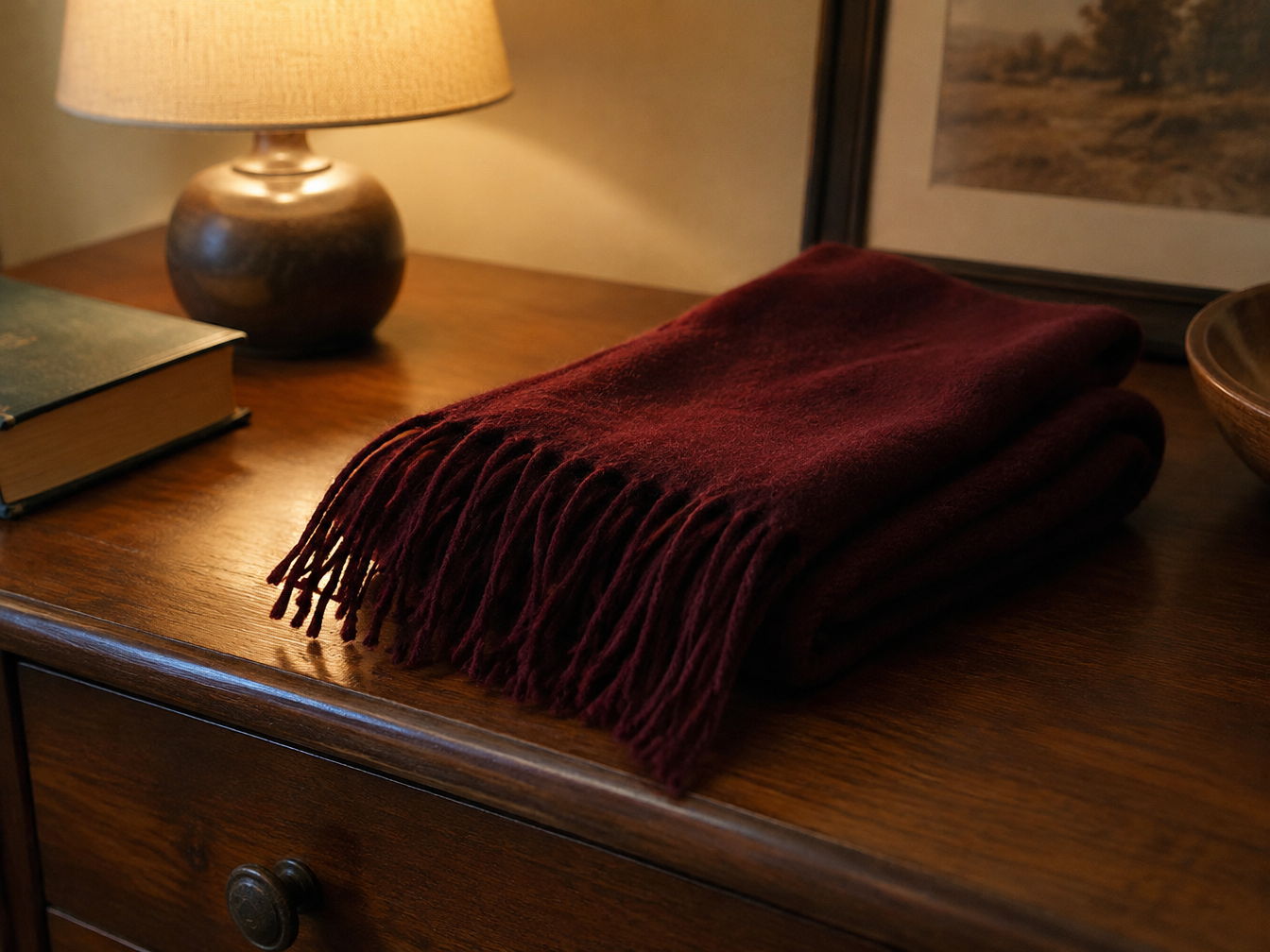
Burgundy is the color I wear when I am sad but trying to be elegant about it.
It has weight. It looks like velvet even when it is wool. It sits on the shoulders like a hand. When I am heading to a dinner I did not want to attend, or to a family gathering where I know I will be asked about my plans, I reach for burgundy because it feels like armor that happens to be soft.
There is a reason burgundy looks so good in winter, and it is mostly practical. Deep reds and wines read as rich against dull light, where pastels wash out and neon looks harsh. That is my observation, not a lab result, but this scarf has survived rain, snow and office lighting without once looking cheap.
I pair it with a lip color I used to be terrified of. If you have ever stood in front of a mirror with a dark berry shade and chickened out, you are not alone. A burgundy scarf and a berry lip is the most dramatic thing I do all year, and I do it in a very quiet way.
One small warning. Burgundy sheds dye in the first few washes, and a pale gray collar of mine learned that the hard way. Wash it separately, cold, the first two times.
Cream for the Scarf My Grandmother Would Have Loved
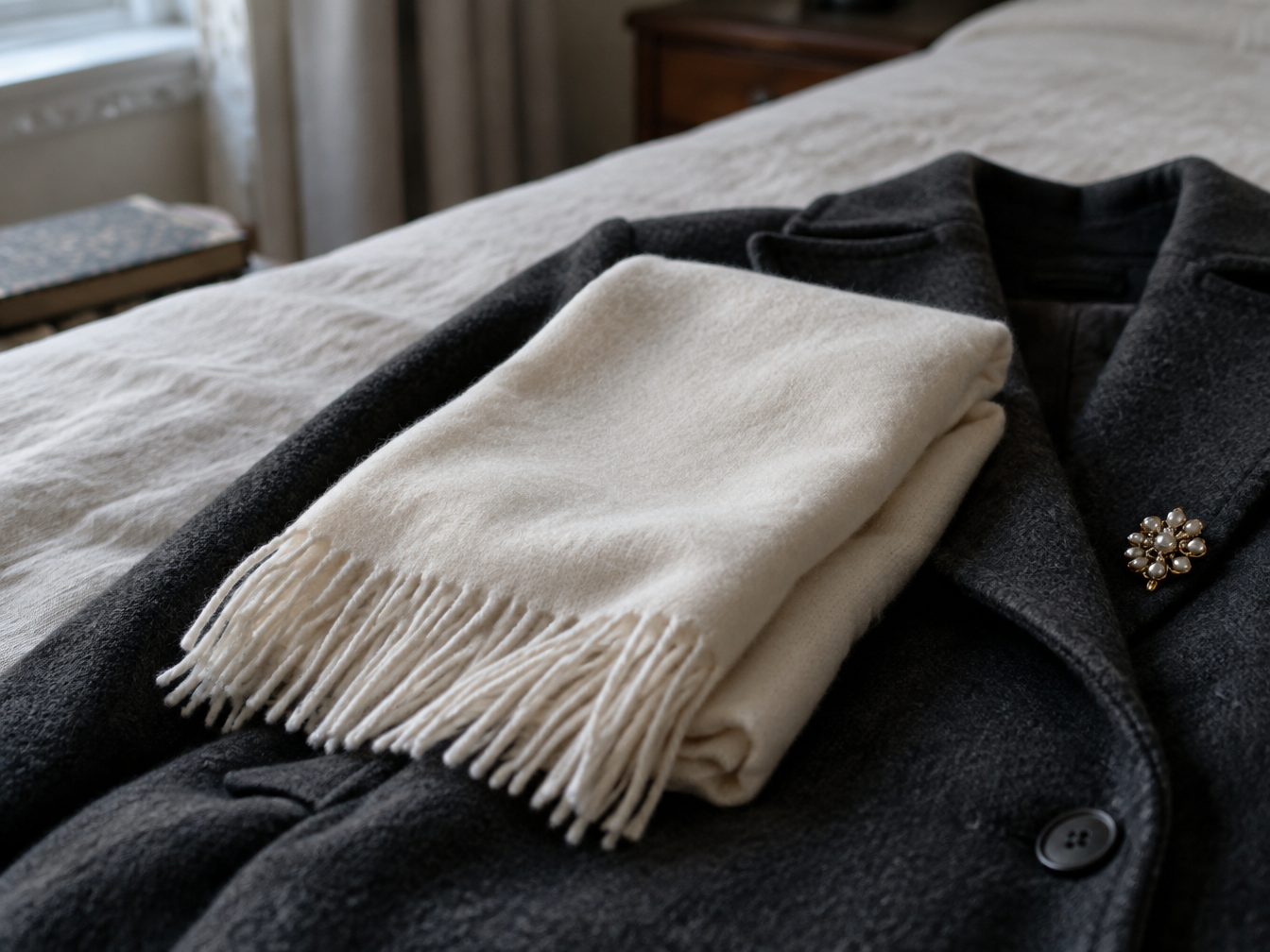
Cream is the color of nostalgia. When I put on a cream scarf I think of an older woman in a long coat, tucking the ends into her lapels before stepping out into snow, and I think about how many women in my family have done that exact gesture without ever calling it style.
My grandmother wore a pale scarf with every coat she owned. She called it her good scarf, which meant it was washed by hand and never left on a restaurant chair. I inherited her habit, if not her scarf, and I think of her every time I fold mine in thirds before I put it on. I wrote more about that feeling in a piece on my grandmother’s coat and the style lessons it keeps teaching me, and cream is the color where it all comes flooding back.
Cream is also the most honest color in my rotation, because it shows everything. Foundation, coffee, mascara, the day you cried on the train. It forces you to take care of it, and in return it makes dark winter wardrobes look lit from within. Against a charcoal or navy coat, a cream scarf is like opening a window.
It brightens your face in a way that stark white sometimes does not, because white can be cold against skin that has gone pale from winter. Cream adds a little warmth back. If you tend to look tired in the gray months, try cream near your face before you try more makeup.
How I Test a Color Before I Trust It
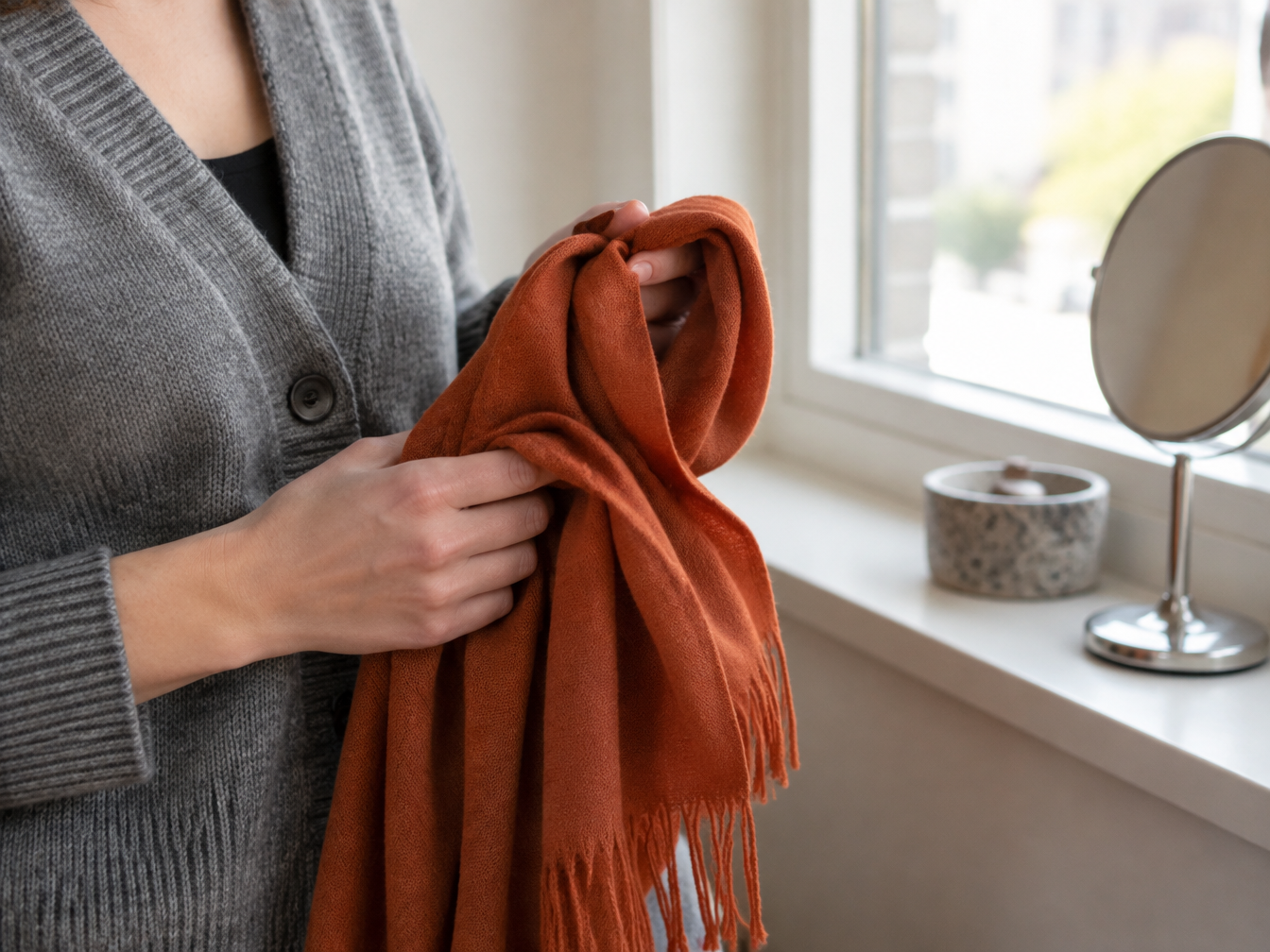
I am not a color analyst, and I do not believe one palette fits one person forever. But I have a quick routine, and it comes from basic undertone guidance that I have found useful. For how your metals and your scarf should talk to each other, there is a good breakdown of gold versus silver jewelry colors for your outfit.
Undertone is the hue under your skin, usually described as warm, cool or neutral. One London style guide suggests warm undertones tend to suit earthy shades such as rust, camel and burgundy near the face, while cool undertones tend to suit crisper tones such as navy, rose, charcoal and forest green [4]. Neutral undertones can wear most of both families [4]. The same guide describes two simple checks. Greenish veins in natural light suggest warm and bluish veins suggest cool, and gold jewelry tends to flatter warm undertones while silver tends to flatter cool ones [4].
I treat that as a starting point, not a verdict, because veins are unreliable in cold weather and my own skin changes by February. My actual test is more stubborn. I stand by a window in daylight, hold the scarf under my chin, and ask one question. Do I look more awake or more tired?
Then I do the thing most guides skip. I ask whether I actually feel good. A color can be technically perfect for your undertone and still feel like a costume. The best scarf in your drawer is not the most flattering one on paper. It is the one you reach for without negotiating.
Wearing Warm on the Days You Cannot Feel It

I want to end somewhere honest, because I have spent all these words on fabric.
A scarf will not fix a hard season. It will not make the sky less dishwater or the commute shorter or the grief lighter. What it can do is give you one small, deliberate act of care before you walk out the door. You looked at the day, decided it deserved a little warmth, and wrapped it around your own neck.
That is the same quiet logic behind a sweater you keep because of the person who gave it to you. I think about this a lot, and I wrote about it in the sweater I keep because of the person who gave it to me. The clothes that warm us rarely do it by thread count. They do it by meaning. The cinnamon scarf from that Tuesday is now attached to the memory of the morning I decided to try, and that is worth more than whatever it cost.
So here is my small, unscientific suggestion. Pick one color from this list, or find your own. Put it on the next gray morning when you feel nothing. Do not wait to feel warm first.
Dress as if the warmth is already on its way, and notice how often it shows up.
Sources
- Dress for Who You Want to Become, Rebekka Grun von Jolk, Ph.D., Psychology Today, November 23, 2025.
- Dopamine Dressing, Do Brightly Coloured Outfits Make Us Happier?, Queensland University of Technology.
- This Simple Wardrobe Trick Can Help You Beat the Winter Blues, Julia Brucculieri, HuffPost via Yahoo Life, 2017.
- Color Analysis, the Right Colors for Your Undertone, Artefact London.
Leave a Reply